 5-minute briefs
Hormuz Oil Negotiation Analysis: Trump Restraint and Mining War
#Strait of Hormuz#oil price#Brent crude
The stage is the Strait of Hormuz. Oil has priced in a negotiation, while the waterway keeps showing escalation. That fork is Monday’s open.
Weekend scoreboard: two tankers Saturday, three Sunday — burning tankers
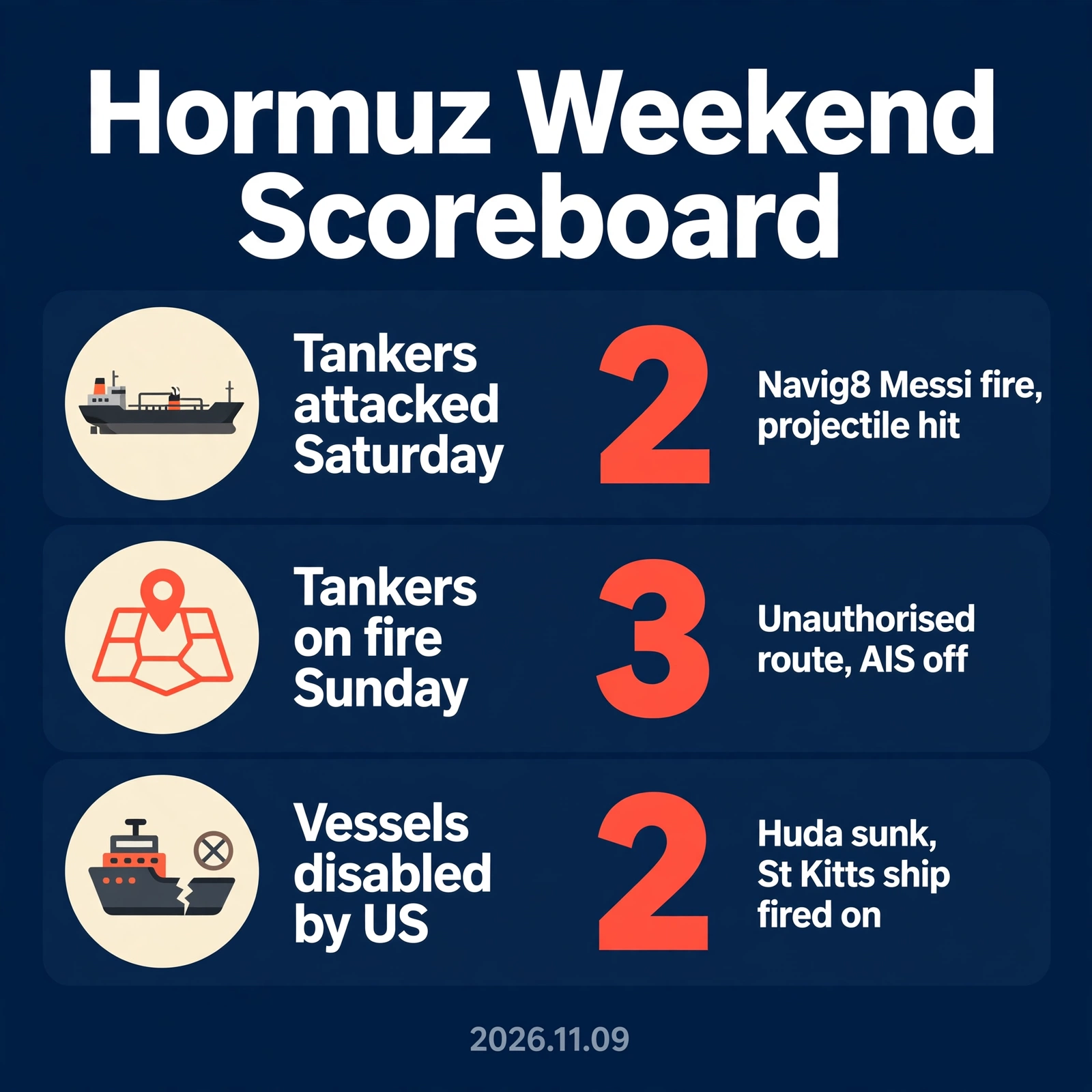
The fires started on Saturday. At least two tankers were attacked in the Strait of Hormuz on Saturday, and one of them caught fire. The burning vessel was transiting about eight nautical miles off Khasab, on Oman’s Musandam Peninsula, when it caught fire. Open-source analysts tentatively identified it as the Navig8 Messi, an oil products tanker indirectly owned by UAE-based ADNOC L&S. The same ship was hit by an IRGC drone on August 13 on an outbound transit, was repaired, and returned to the same trade lane. The crew was evacuated, no injuries were reported, and two firefighting tugs worked the blaze. A second tanker was reported hit by a projectile during an outbound transit; all crew are safe. That followed Friday, when two tankers hit mines — Saturday’s attacks showed ships transiting the strait were still targets.
The US disabled two vessels on Saturday as well. US Air Force aircraft fired at the stern of a St Kitts-flagged cargo vessel in the Gulf of Oman, disabling it. US Central Command said the ship had visited an Iranian port and tried to breach the blockade. US forces also targeted and disabled the Huda, an Iran-linked bulker built in 1999. CENTCOM said the crew ignored repeated warnings and attempted to violate the US naval blockade on Iranian ports. The United Kingdom Maritime Trade Operations (UKMTO) also reported an incident involving a bulk carrier and military forces about 18 nautical miles east of Khor Fakkan.
Sunday brought more fires. The IRGC Navy said three tankers exploded and caught fire starting in the early hours of Sunday, on an unauthorised shipping route, with their navigation and identification systems switched off. The UAE Coast Guard rescued all 22 crew from a burning vessel in the Gulf of Oman. The cause of that fire has not been confirmed.
The explosions heard in southern Iran on Saturday evening are still unexplained, with accounts in conflict. Iranian state television said the blasts heard in Qeshm, Sirik, Jask and Bandar Abbas might be related to Iranian military activity, and officials had not confirmed any missile strikes. The Tasnim news agency said two missiles had struck Qeshm Island. Neither account has been independently confirmed.
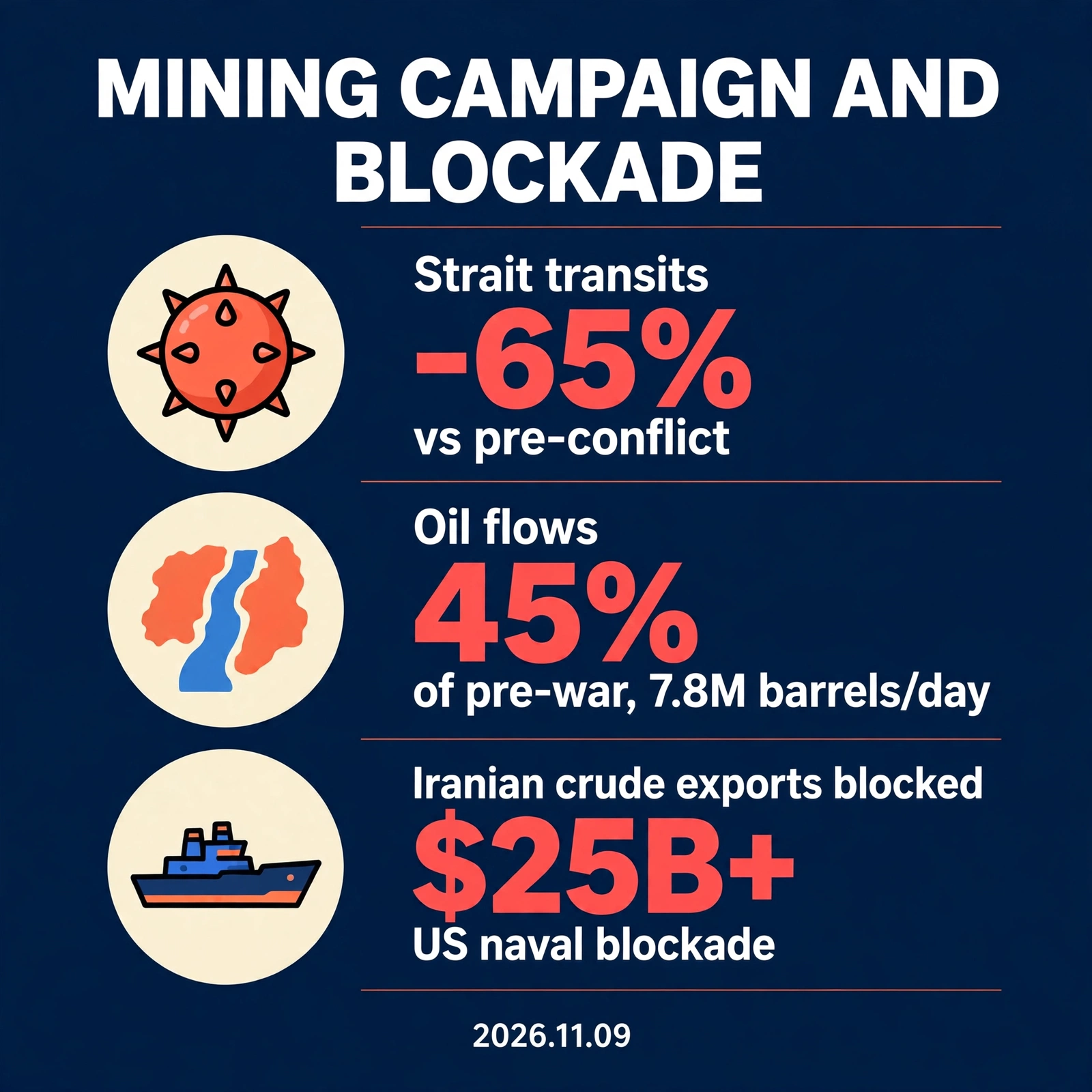
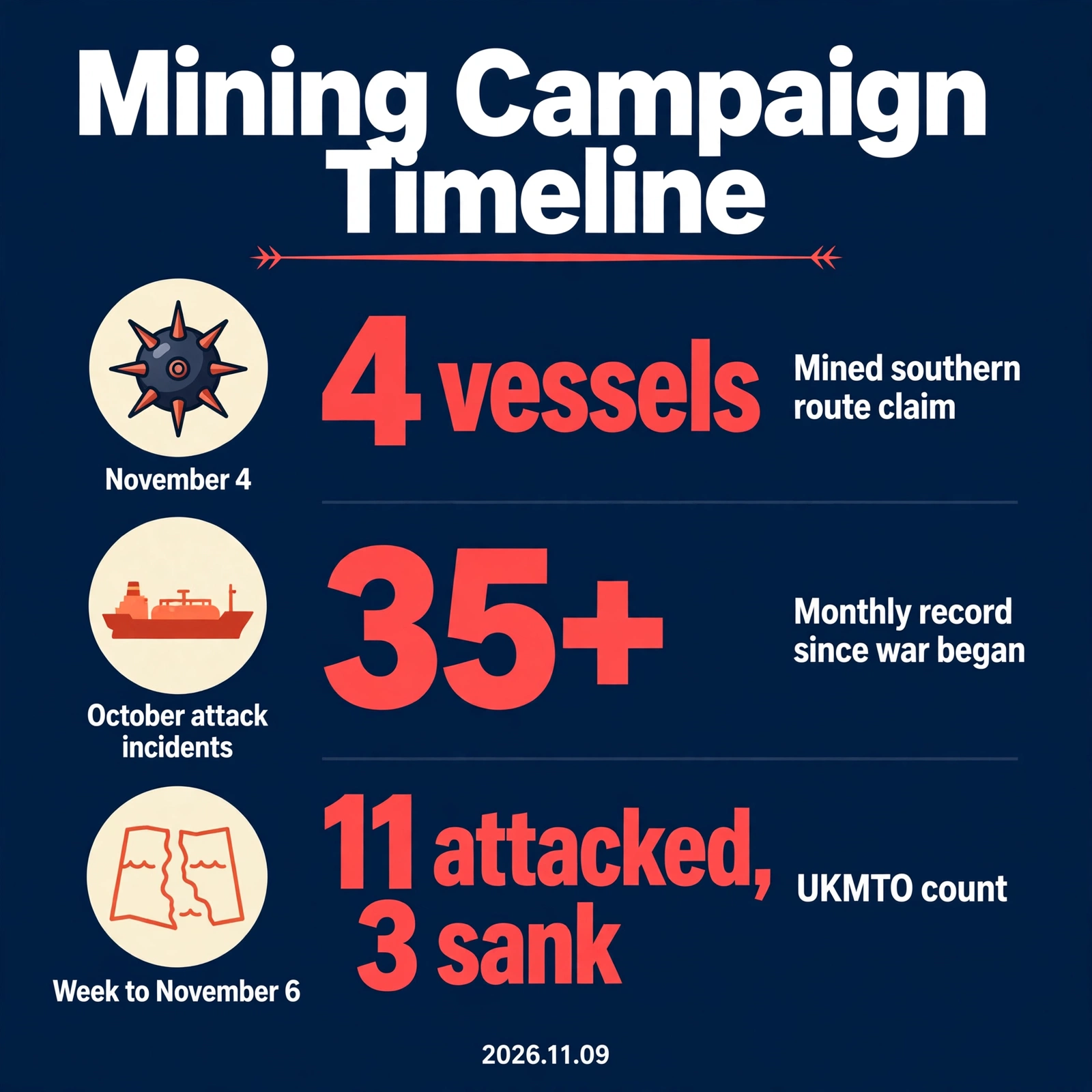
The pace of attacks is not slowing. At least 11 ships were attacked in and around the strait in the week to November 6, and three of them sank. Projectile attacks since hostilities resumed in early July total 88. Attack-related incidents in October passed 35, the most in a month since the war began. Transits through the strait are down about 65% from before the conflict, and actual crude flows have fallen below 60% of normal.
The negotiation track: Trump says “highly unlikely” five times
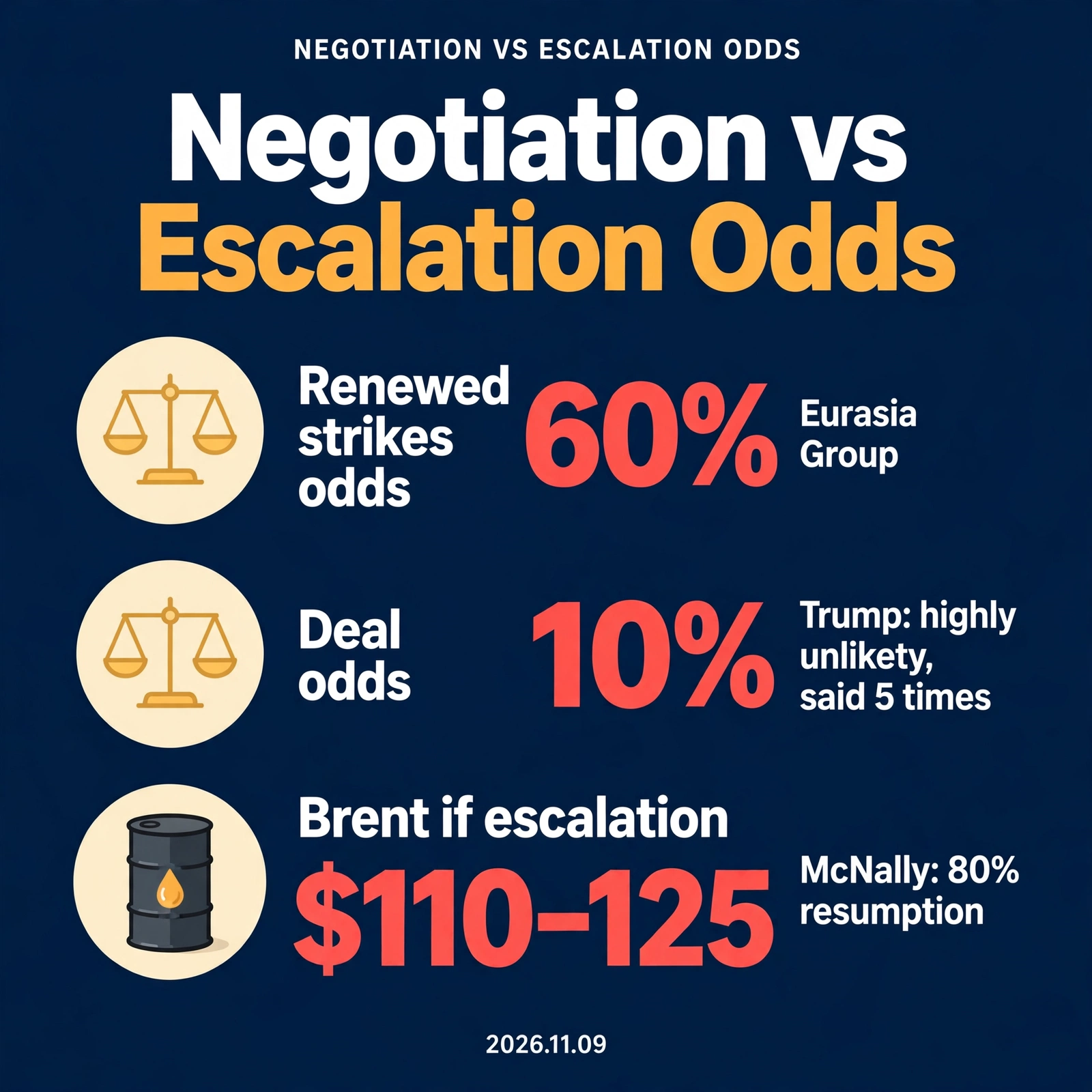
The weekend’s biggest news was what Trump said. In a 20-minute phone interview with CNN on November 8, Trump said it is “highly unlikely” the US will have to go back to war with Iran as long as there is progress in negotiations over Tehran’s nuclear programme and reopening the Strait of Hormuz. He repeated “highly unlikely” five times. “It depends on whether or not they sign a very strong agreement,” he said. He added “I would if necessary,” and said three US aircraft carriers in the region are ready. It was a signal for talks and a reminder that the military option is still on the table, delivered in the same interview.
The diplomatic channel is open. Qatar is mediating, and the Qatari emir discussed the mediation effort with Trump by phone on Friday. Reuters, citing a senior Iranian official, reported that Iran delivered a nuclear-related proposal to the US through Qatar. But Iran is demanding the lifting of the naval blockade, sanctions relief and the release of frozen assets before fully reopening the strait. The IRGC has said there will be no change to the waterway’s current state unless the US meets Iran’s seven conditions. No deal has been announced.
Analysts’ odds are far from the market’s optimism. Eurasia Group puts renewed US strikes at 60%, a deal at 10% and a continued standoff at 30%. After the midterms, the strike odds fell from 65% to 60% and the deal odds from 20% to 10%, while the odds of a continued standoff rose from 15% to 30%. If the conflict escalates again, Eurasia sees Brent at $110–125. Bob McNally of Rapidan Energy puts the odds of resumed military operations at 80% and expects Brent and WTI back above $100.
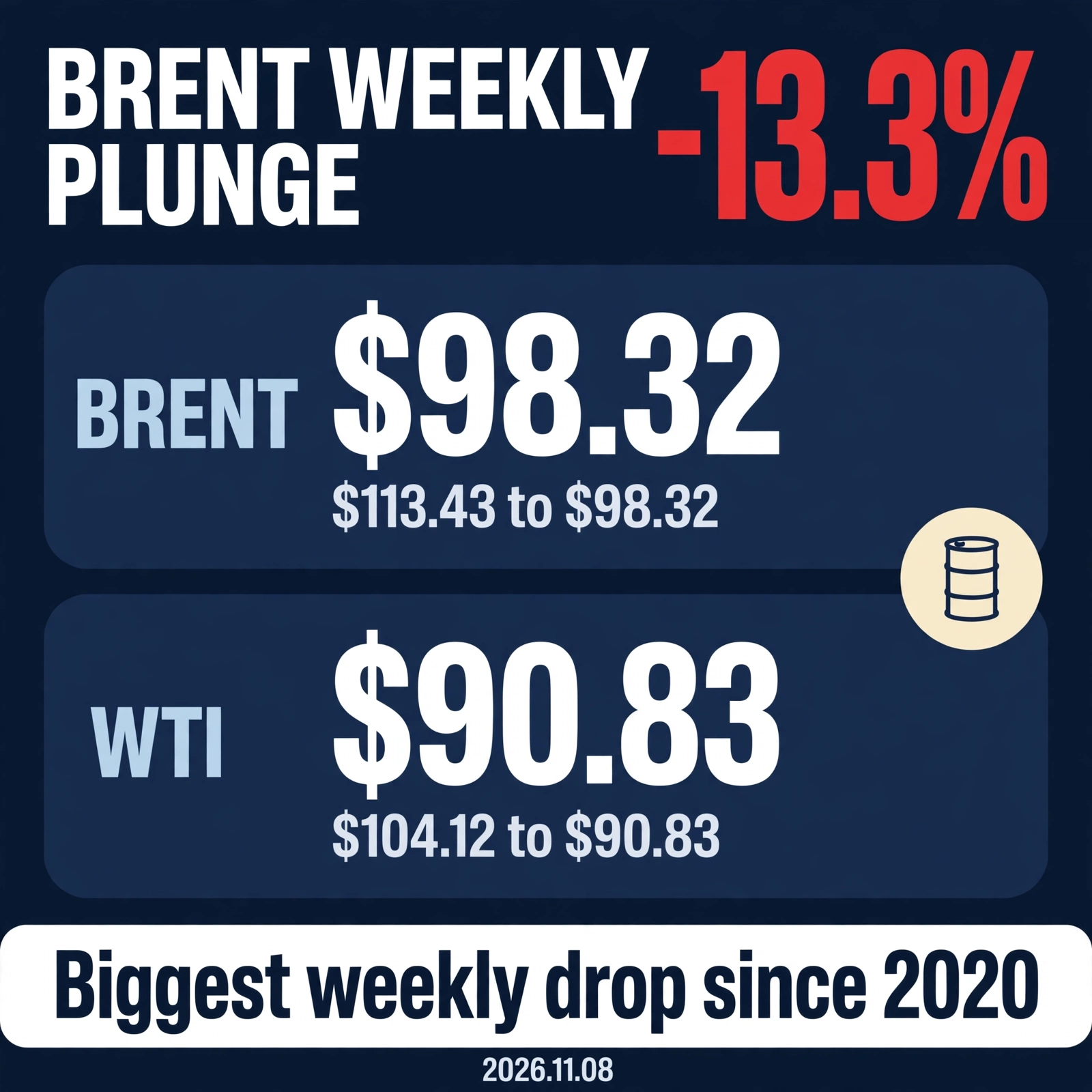
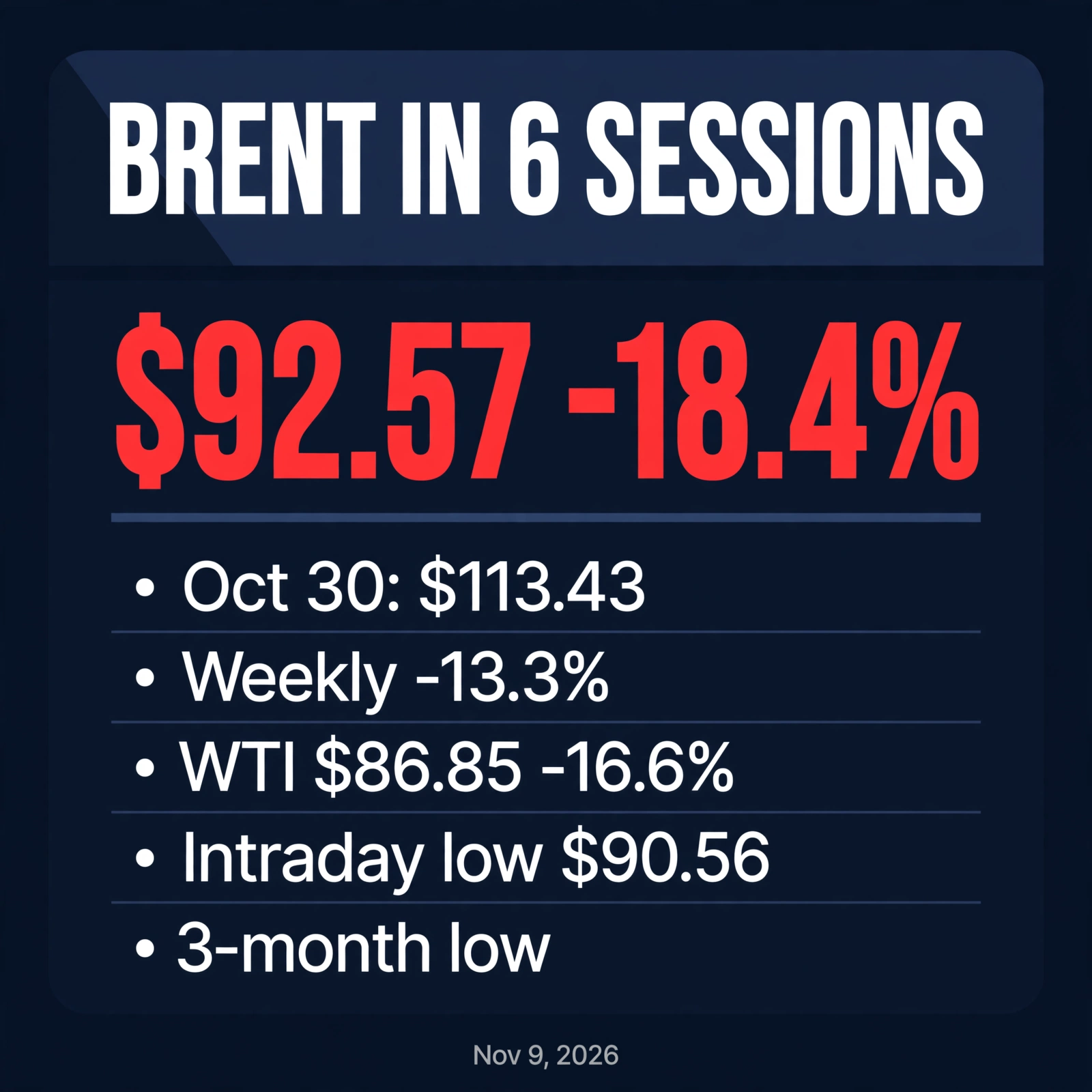
Oil has already bet on talks. Brent for January settled Friday up $0.03 at $98.32 a barrel, and WTI for December rose $0.31 to $90.83. For the week, Brent fell $15.11, or 13.3%, from $113.43 on October 30 to $98.32, and WTI fell $13.29, or 12.8%, from $104.12 to $90.83. That is the largest weekly drop since 2020. The market bet on the 10% deal; analysts see a 60–80% chance of renewed strikes. Whether Trump’s “highly unlikely” narrows that gap, or his conditional warning keeps it open, is Monday’s first question.
The mining campaign goes on: southern routes blocked, only the north allowed
While the talks are discussed, a different set of rules is operating in the strait. Iran allows only designated northern corridors and has declared southern routes unauthorised and mined them. The IRGC has said repeatedly that vessels attempting the southern routes after disabling their AIS systems have struck mines, exploded and caught fire. Since February 28, after US and Israeli attacks on Iran, Tehran has barred safe passage for Israeli- and US-owned or linked vessels and tightened its control of the strait.
Mines are the cheapest weapon in this blockade. Explosive underwater drones, limpet mines, rocket-propelled grenades and small-boat approaches are all in use. On October 30, a small boat approached a tanker just north of Oman and attached two explosives to the hull above the waterline. The main targets are the shuttle tankers carrying Gulf crude out of the strait, but attacks have widened to container ships, bulk carriers and gas carriers, and even to vessels anchored outside the strait. The US has run near-daily operations since a June ceasefire memorandum collapsed, keeping the blockade while letting other ships and oil exit — but experts say detecting or stopping this surveillance activity is not easy.
The way out of the strait has changed too. At least 63 tankers are taking part in the “Hormuz shuttle”. A shuttle loads crude in the Gulf, crosses the dangerous strait to the Gulf of Oman, transfers the oil ship-to-ship to a long-haul tanker, and returns. Shuttle vessels switch off their AIS to avoid Iranian surveillance. Switching AIS off is itself what makes them targets in the IRGC’s account. According to Kpler, oil passing through the strait averaged about 7.8 million barrels a day in the week to November 1, including ship-to-ship transfers — about 45% of the pre-war level. Flows had nearly recovered to pre-war levels in early to mid-October, then slipped again as attacks intensified.
The other half of the blockade targets Iran’s exports directly. The US maintains its naval blockade on Iranian ports and has reportedly prevented Iran from exporting over $25 billion in crude oil. The advocacy group United Against Nuclear Iran (UANI) assesses that no Iranian crude has been exported overseas since the blockade resumed in July. At least nine Iranian vessels have nevertheless slipped the blockade carrying oil or LPG, including the sanctioned SOGL, which carried about 500,000 barrels of Iranian LPG to China via Malaysia. The blockade is overwhelmingly effective, but not airtight.
- Strait of Hormuz: the narrow strait between the Persian Gulf and the Gulf of Oman, the key corridor for seaborne oil. Transits down about 65% from before the conflict means the supply chain is that much more blocked.
- Naval mine: an explosive placed in the sea that detonates when a ship touches it. Iran says tankers using unauthorised routes have hit its mines.
- AIS (Automatic Identification System): the system that broadcasts a ship's position, course and speed. Switching it off avoids surveillance, but Iran treats AIS-dark vessels as unauthorised-route traffic and targets them.
- Naval blockade: using naval power to stop ships entering or leaving specific ports or waters. The US maintains a blockade on Iranian ports, while Iran controls transit through the strait itself.
- Qatar mediation: the diplomatic channel in which Qatar passes proposals between the US and Iran. Iran's nuclear-related proposal reached the US through Qatar.
- Eurasia Group odds: scenario probabilities from the political-risk firm Eurasia Group. Renewed strikes 60%, deal 10%, continued standoff 30% shows how far apart market optimism and analyst caution sit.
The summary: oil fell 13% in a week on hopes of a deal, but five more tankers were attacked in the strait over the weekend. Two tankers were hit on Saturday and three more caught fire on Sunday, while the US disabled a bulker in the same weekend. Trump said fresh strikes are “highly unlikely” if talks progress, but he conditioned that on a “very strong agreement” and left three aircraft carriers in place. Monday’s open will show which side of the fork the market weighs first. If the negotiation track wins, oil’s 13% drop holds; if the mining news keeps coming, the war premium comes back. Friday’s official US closes were Nasdaq 24,579.42 (+1.09%), S&P 500 7,376.86 (+0.31%), Dow 51,285.73 (-0.46%), with spot gold at $4,070.59 (+4.5% for the week). Ahead of Tuesday’s October CPI and Wednesday’s OPEC monthly report, Monday’s first move will reflect the weekend’s Hormuz news directly.
Sources & references
- Reuters via Daily Maverick — Trump says he is highly unlikely to order Iran strikes if talks progress — Trump on Sunday: highly unlikely to order fresh attacks as long as talks progress; both sides reported shipping hit
- Free Malaysia Today — Iran says 3 tankers caught fire in Hormuz — IRGC: three tankers exploded and caught fire on Sunday on an unauthorised route; 22 rescued from a burning vessel in the Gulf of Oman
- The Maritime Executive — Tanker Burns After Strike in Strait of Hormuz — Navig8 Messi identified, hit off Khasab; second tanker hit by projectile; US disabled the bulker Huda; UKMTO on persistent IRGC harassment
- The Hindu — Iran says two tankers caught fire in Hormuz after hitting mines — IRGC: two tankers hit mines on unauthorised routes with navigation systems off; explosions heard in Qeshm, Sirik, Jask and Bandar Abbas
- Times Now — Fresh Flashpoint In Gulf: US Hits Iran-Bound Ship, Tankers Hit Mines Near Strait Of Hormuz — US naval blockade reportedly preventing Iran from exporting over $25 billion in crude oil; 11 ships attacked in the week to November 6, 3 sank
Related articles
- Strait of Hormuz Oil Price Analysis US Iran Strikes and 13% Weekly Drop
Brent crude fell 13.3% in a week to $98.32 as deal hopes drained the war premium — while attacks on Hormuz shipping ran at a near-record pace and the US struck Qeshm Island. The gap between market pricing and events on the water.
- Brent Crude Analysis: 18.4% Drop in Six Sessions on Negotiation Hopes
Brent crude has fallen 18.4% in six sessions, from $113.43 on October 30 to $92.57 on November 9. The war premium is unwinding fast — but analysts put renewed strikes at 60%, and that gap sets the terms for a reversal.
- Hormuz Naval Mining Campaign: Southern Route Blockade and AIS-Dark Targeting
The mining campaign in the Strait of Hormuz is not a series of accidents but a designed blockade tactic. Mined southern routes, AIS-dark vessels as targets, underwater drones and limpet mines — the tactics behind October's record 35 attacks, and the mine-clearance problem left for any deal.
5minbrief on YouTube
The briefs also come as videos. Get the daily market wrap on YouTube.
Subscribe on YouTube