 5-minute briefs
Brent Crude Analysis: 18.4% Drop in Six Sessions on Negotiation Hopes
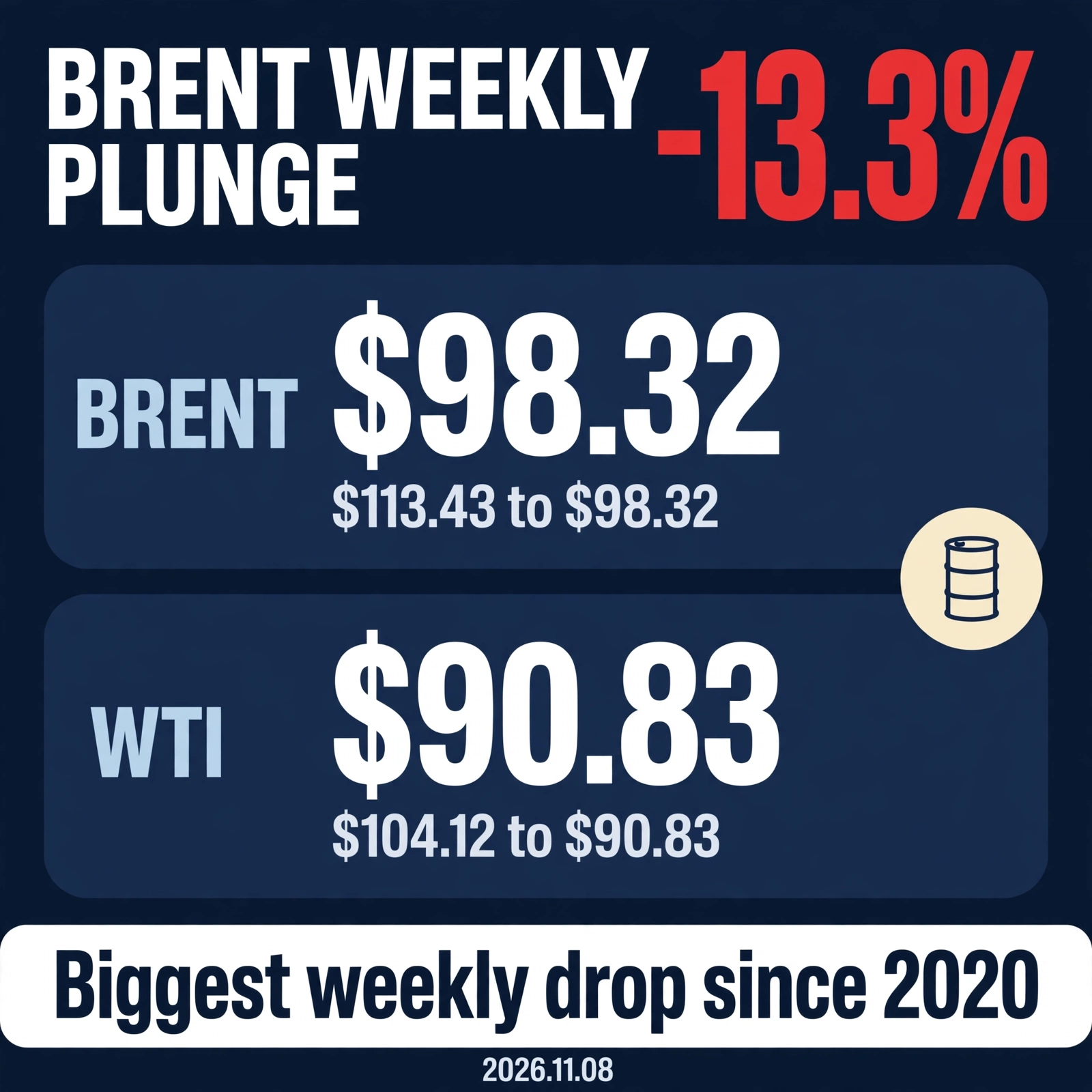
The speed of oil’s fall is striking. Brent for January fell $5.75 (−5.85%) on Monday to $92.57 a barrel, and WTI for December dropped $3.98 (−4.38%) to $86.85. Both benchmarks are at three-month lows. Brent fell 13.3% in the week to November 6 — from $113.43 to $98.32 — and 18.4% over six sessions including Monday. WTI fell 16.6% over the same stretch, from $104.12 to $86.85, touching $85.02 intraday — its lowest since August.
Why it fell so fast: negotiation hopes and an unwinding war premium
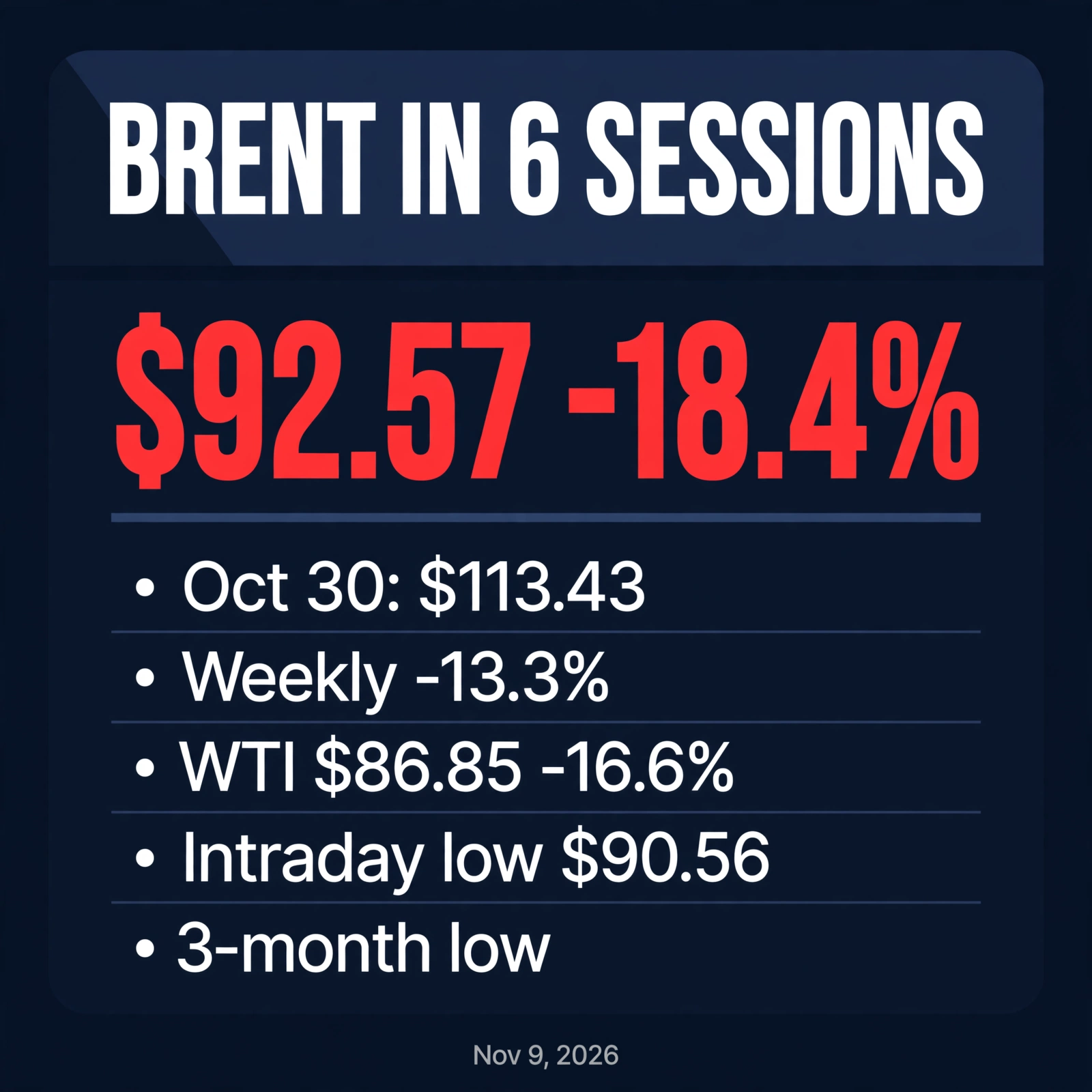
Negotiations did the direct work. Trump said fresh strikes on Iran were “highly unlikely” as long as talks make progress. Qatari mediators delivered Tehran’s latest proposal in person on Monday, and Qatar’s prime minister met Trump at the White House the same day. The market bet on the 10% deal, and oil priced that hope first. Last week’s 13.3% weekly drop in Brent was the largest since 2020.
Negotiation hopes are not the whole story. On supply, analysts see a global surplus of about 1.4 million barrels a day pressing on prices. The crude market was already in surplus before the war premium arrived; talks were only the trigger that stripped the premium away. Brent falling from $113.43 to $92.57 means much of that premium is already gone.
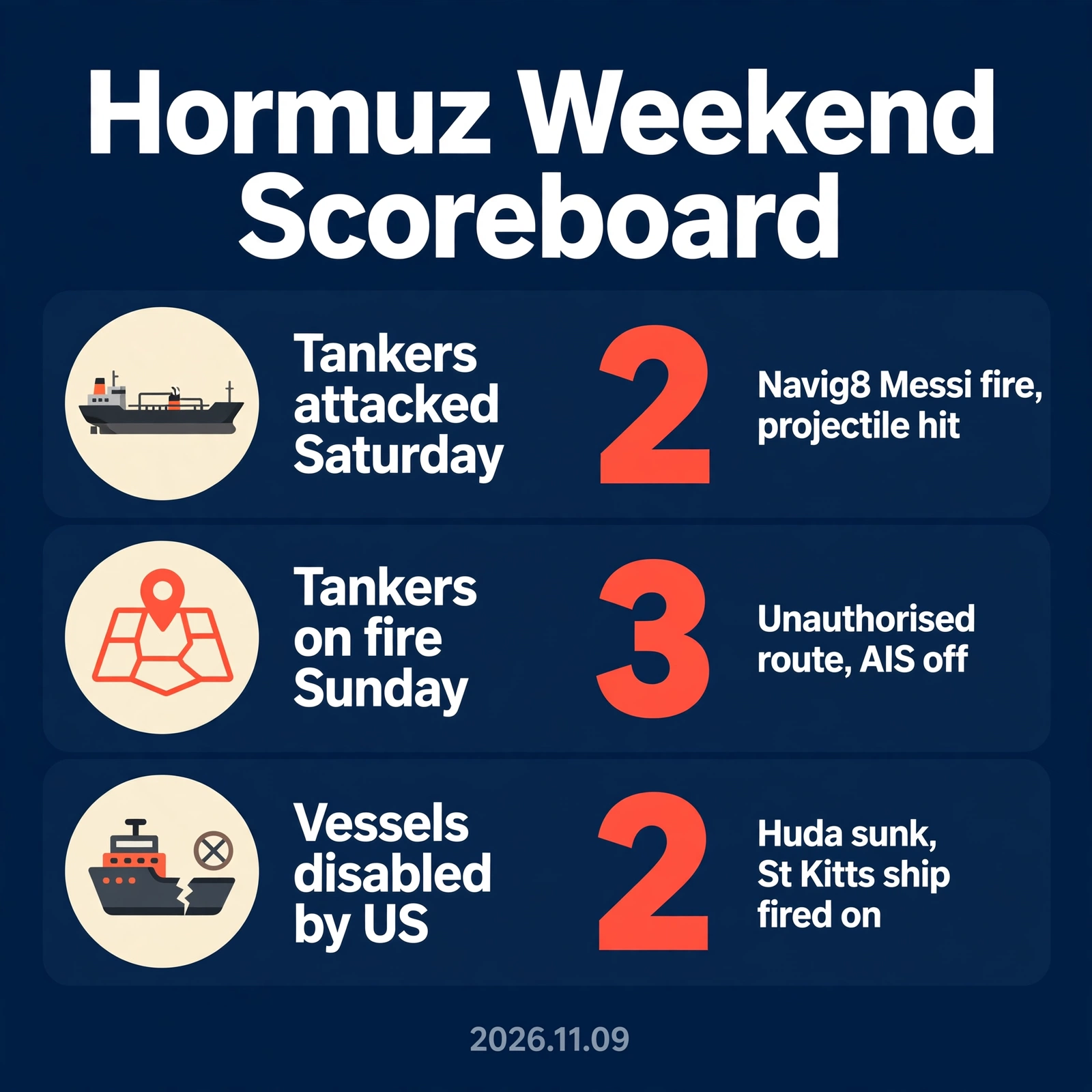
The tension on the water has not gone away. A tanker was reported hit by an unknown projectile near the Strait of Hormuz over the weekend, and a Houthi missile damaged a Saudi Aramco administrative building in Riyadh on Sunday. Maritime insurance for Hormuz transits still runs 6–10% of hull value, putting a single tanker voyage at $6–10 million. Iran’s foreign minister said no formal agreement has been reached, and Secretary of State Marco Rubio called Tehran’s demands “unacceptable”. Oil bet on talks; the strait has not negotiated yet.
The reversal test: 60% strike odds and the $110 scenario
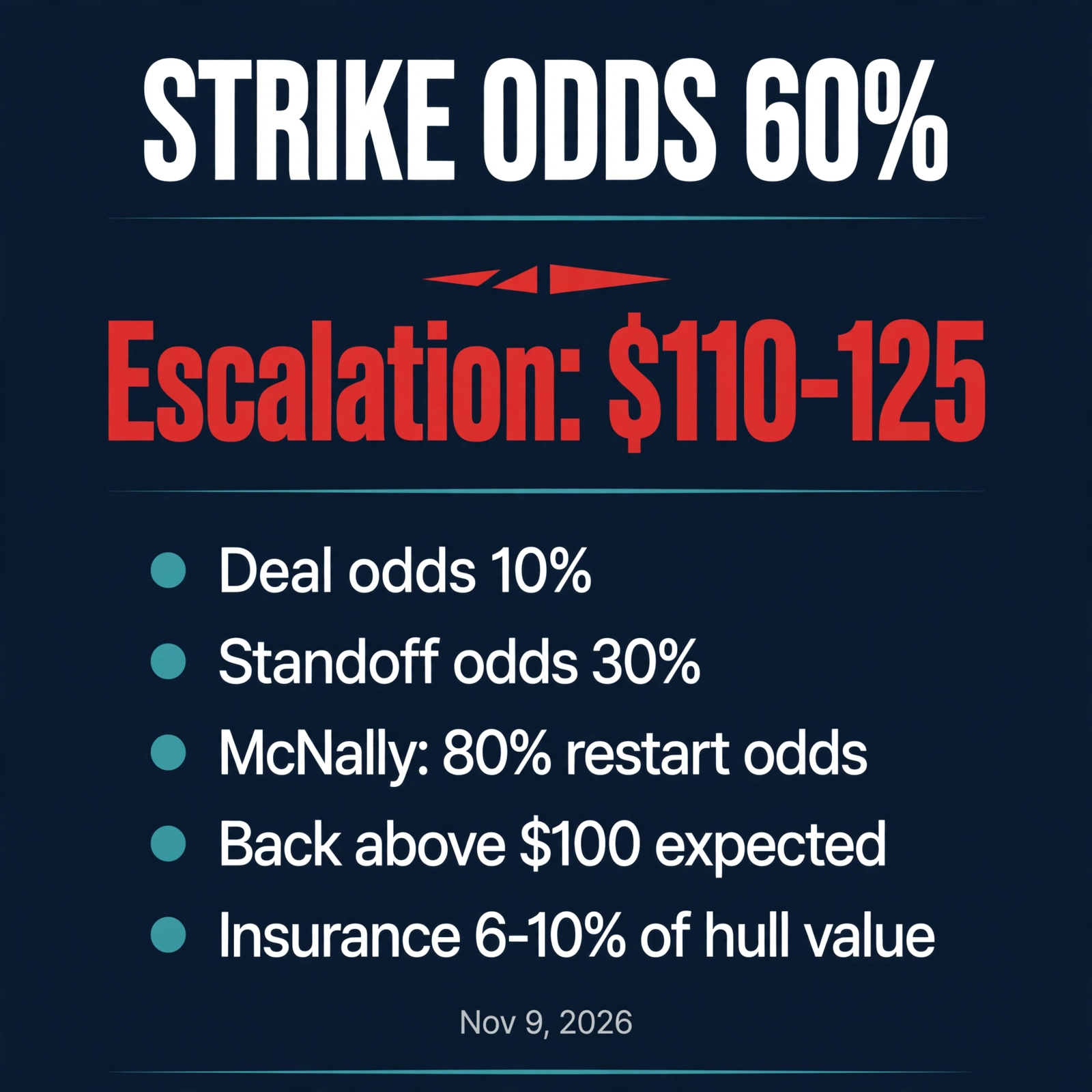
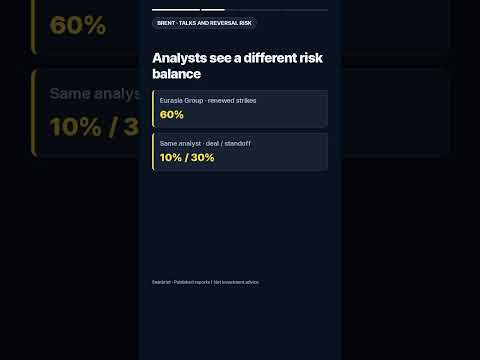
Market optimism and analysts’ pessimism are far apart. Eurasia Group puts renewed US strikes at 60%, a deal at 10% and a continued standoff at 30%. Bob McNally of Rapidan Energy puts resumed military operations at 80% and expects Brent and WTI back above $100. If the conflict escalates, Eurasia sees Brent at $110–125. From $92.57, $110 is about 19% higher and $125 about 35% higher.
That gap decides oil’s next direction. If talks progress, more premium comes off and oil can test below $90. If strikes resume, much of the six-session drop reverses in a day. Oil fell fast — and it can snap back just as fast. The record itself shows the volatility: last week’s 13.3% drop was the biggest weekly fall since 2020.
The effect on stocks is already visible. US stocks rose more than 2% on Monday on the oil slide, as cheaper energy eased inflation worries. But December Fed hike odds still stand at 82.2%. Oil alone has not changed the rate path. Tuesday’s CPI is the first checkpoint that can move those odds — and if oil rises again, inflation worries come back with it.
What to watch
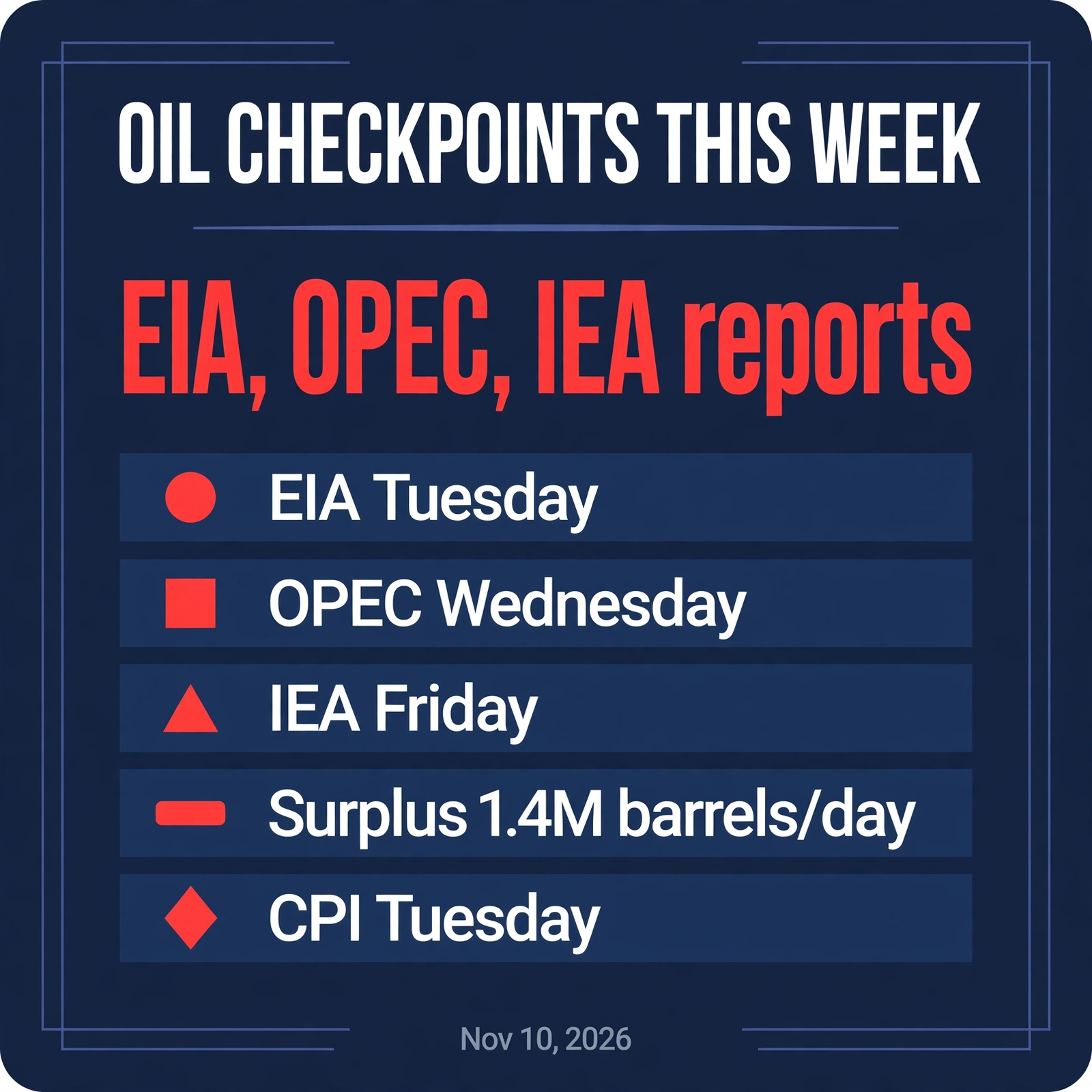
Three things matter for oil this week. First, the EIA Short-Term Energy Outlook on Tuesday, the OPEC monthly report on Wednesday and the IEA report on Friday — whether the surplus is confirmed in numbers. Second, whether the Qatari mediation channel advances — a formal deal announcement, or more “not yet” language. Third, strait transits and insurance rates — if premiums stay at 6–10% while oil falls, the tension on the water is unchanged. $92.57 is the price of negotiation hopes, not of a negotiation result.
- War premium: The extra price crude carries for geopolitical risk. It falls as talks progress and rises if conflict escalates.
- Brent vs WTI: The two crude benchmarks — Brent from the North Sea, WTI from the US. On Monday Brent fell 5.85% and WTI 4.38%.
- Weekly drop: The fall over one week. Brent's 13.3% drop last week was its largest weekly fall since 2020.
- Maritime insurance: War-risk cover for ships and cargo. Hormuz transits cost 6–10% of hull value, so logistics costs stay high even as oil falls.
- OPEC monthly report: The producers' group's monthly supply-and-demand outlook. It lands on Wednesday.
Not investment advice. Oil prices are November 9, 2026 settlement values.
Watch the video
Sources & references
- DTN — WTI Tests $85 as U.S.-Iran De-Escalation Seen — WTI settled $86.85 (−4.38%), Brent $92.57 (−5.85%); session lows $85.02/$90.56; surplus near 1.4 million barrels a day; insurance 6–10% of hull value
- Reuters via Kitco — Wall St jumps back as oil slide eases inflation worries; Nvidia slumps — Oil's slide easing inflation worries behind the stock rebound; Trump 'highly unlikely' comment
Related articles
- Hormuz Oil Negotiation Analysis: Trump Restraint and Mining War
Three more tankers caught fire in the Strait of Hormuz over the weekend. Trump said fresh strikes are 'highly unlikely' if talks progress, while the IRGC keeps mining the strait. The fork Monday's open has to price.
- Strait of Hormuz Oil Price Analysis US Iran Strikes and 13% Weekly Drop
Brent crude fell 13.3% in a week to $98.32 as deal hopes drained the war premium — while attacks on Hormuz shipping ran at a near-record pace and the US struck Qeshm Island. The gap between market pricing and events on the water.
- Strait of Hormuz Oil Spike Korea Cost Impact Analysis WTI 104 Dollars Refiners Airlines Chemicals
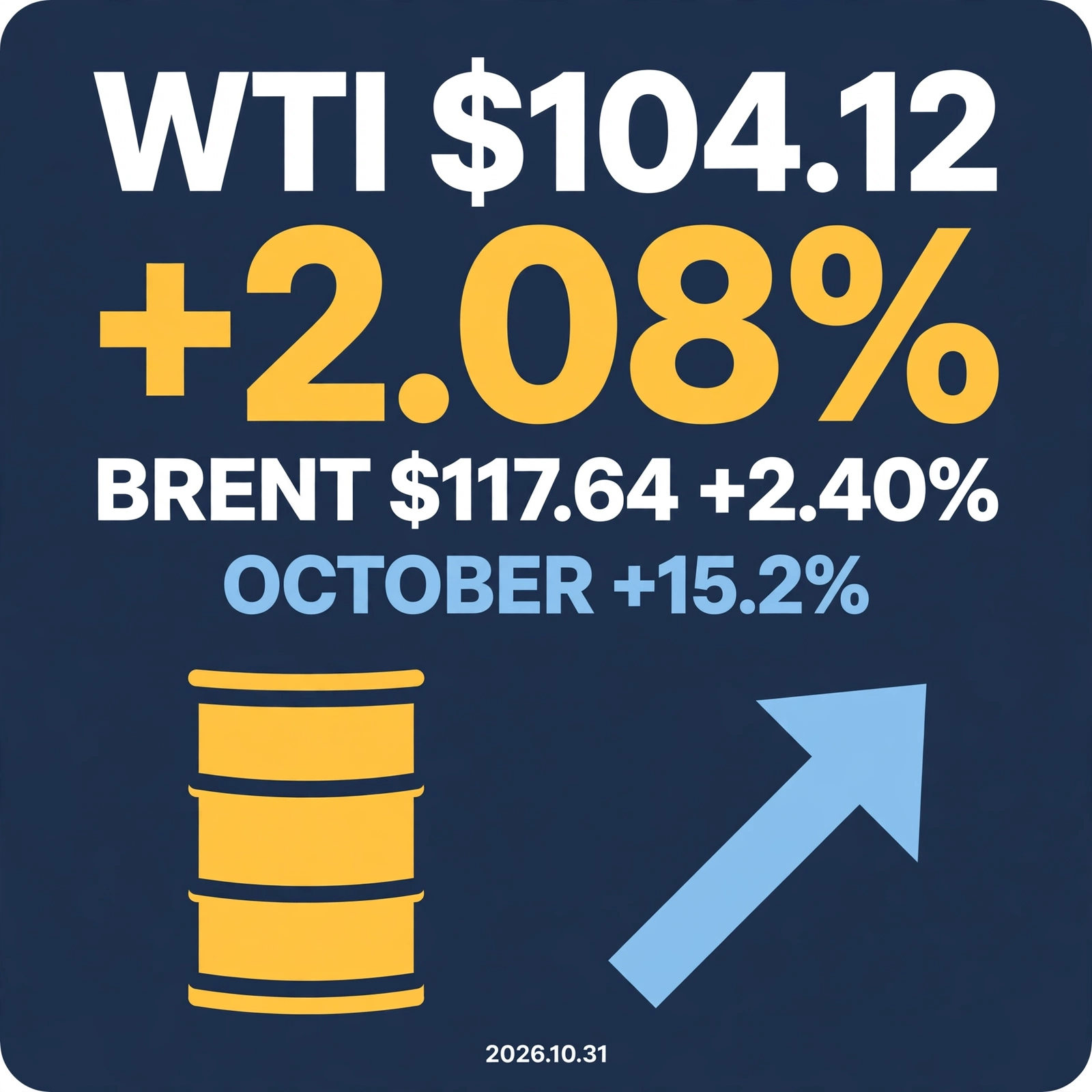
WTI crude rose to $104.12 and Brent to $117.64 after a tanker incident in the Strait of Hormuz. For foreign investors in Korea, the same oil spike cuts both ways: refiners gain margin while airlines, shipping and chemicals absorb cost pressure, and higher import prices feed the inflation debate around the Bank of Korea.
5minbrief on YouTube
The briefs also come as videos. Get the daily market wrap on YouTube.
Subscribe on YouTube