 5-minute briefs
Strait of Hormuz Shipping Costs Analysis War Risk Insurance and Tanker Freight Surge
Freight and insurance scoreboard: $3.24 to $49.42 a barrel
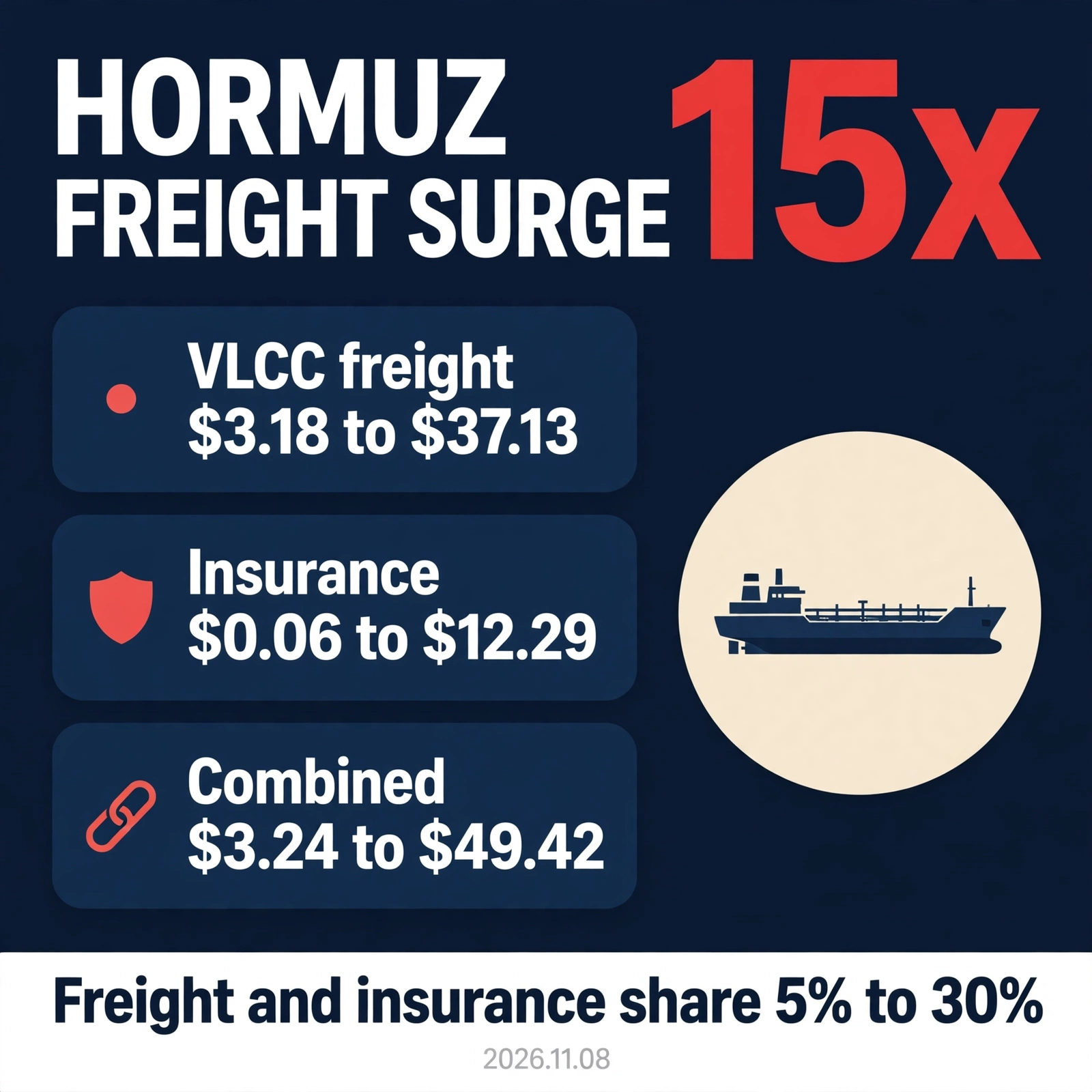
Start with the numbers. According to OPEC, VLCC freight from the Middle East to East Asia rose from $3.18 a barrel at the end of January to $37.13 at the end of October — about 12 times. Insurance rose over the same period from $0.06 to $12.29 a barrel, more than 200 times. Combined, freight and insurance went from $3.24 to $49.42 a barrel, about 15 times, and their share of crude procurement costs jumped from about 5% to about 30%. The figures were shared at a joint IEA–IEF–OPEC workshop on November 4.
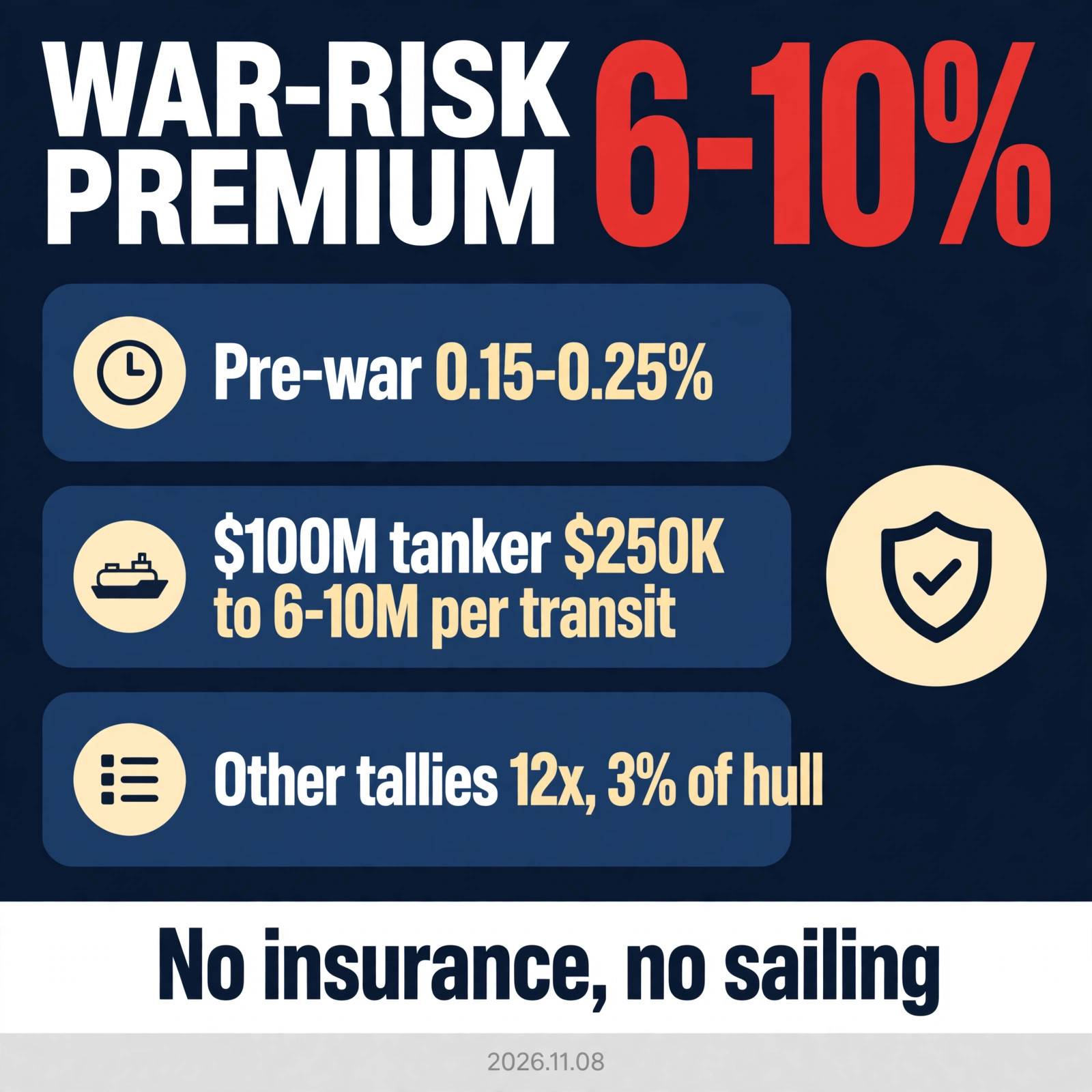
War-risk insurance alone tells the story. Before the war, war-risk cover for a Hormuz transit cost 0.15–0.25% of hull value; by early October brokers were quoting 6–10%. For a $100 million tanker, the premium for one transit rose from about $250,000 to $6–10 million. Other tallies put it at 12 times higher, around 3% of hull value. The exact multiple varies by source, but the direction is one way: premiums are up dozens of times.
Why ships are not sailing: attacks, withdrawn cover, diversions
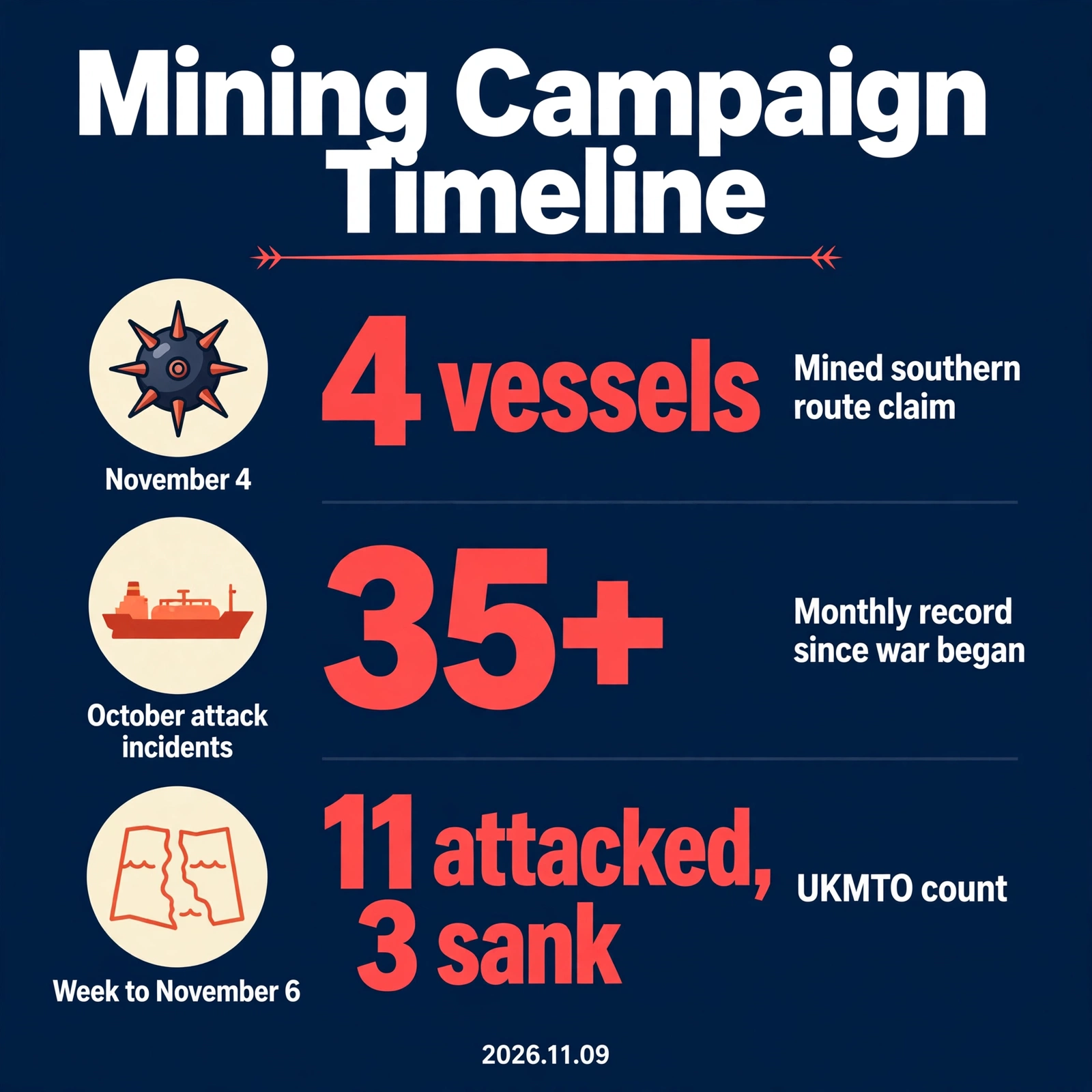
Costs rose because the strait got dangerous. The UK Maritime Trade Operations agency counts at least 11 ships attacked in and around the Strait of Hormuz in the week ending November 6, with three sunk. Transits are about 65% below pre-conflict levels, and actual oil flows are under 60% of capacity. On November 5, the Marshall Islands-flagged products tanker MT Velos Sapphire was hit by a suspected missile explosion that killed one crew member.
Insurers are pulling back outright. Major marine insurers including Gard, Skuld, NorthStandard and American Club have cut exposure in the Gulf, and some have withdrawn war-risk cover altogether. No insurance means no sailing: more than 150 vessels are delayed or anchored around the strait. Maersk, Hapag-Lloyd and CMA CGM have already changed routes.
The remaining option is an expensive detour. Rerouting around the Cape of Good Hope adds 10–14 days. Fuel and charter costs rise, ship-to-ship transfers increase, and available tonnage shrinks further. The International Energy Agency’s October 21 analysis found vessel delays, more ship-to-ship transfers, diversions and shrinking available tonnage amplifying the freight surge. The VLCC shortage is spilling into Suezmax, Aframax and product tankers. The strait carries about a fifth of the world’s oil consumption. When it closes, the detour is paid for in cost.
Who pays, and how much: 70% of the inflation rise
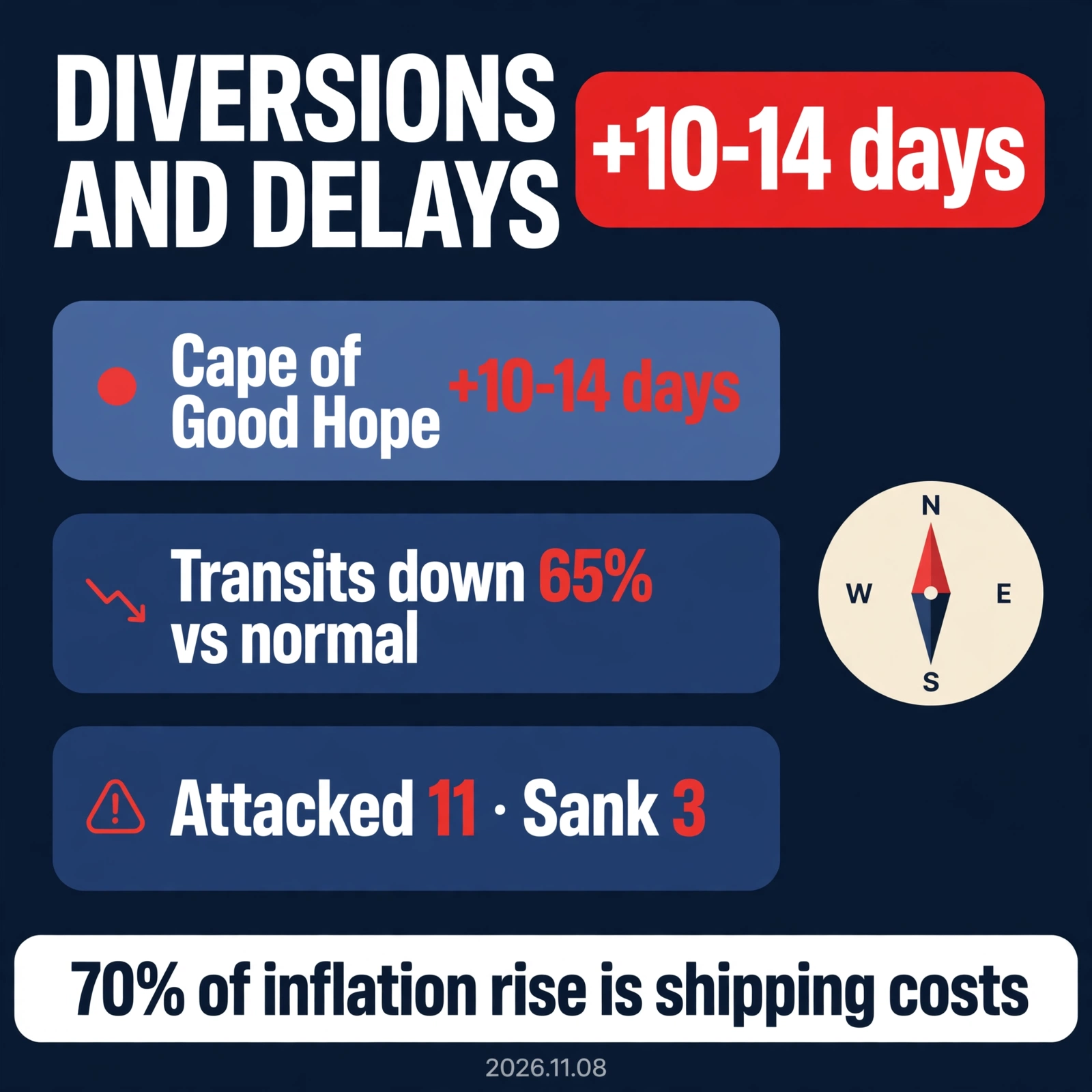
The bill ends up in prices. The International Energy Forum estimates that about 70% of the rise in global inflation since February 2026 — and about 40% in advanced economies — comes from higher maritime transport costs. That is one reason inflation is not coming down even as oil falls.
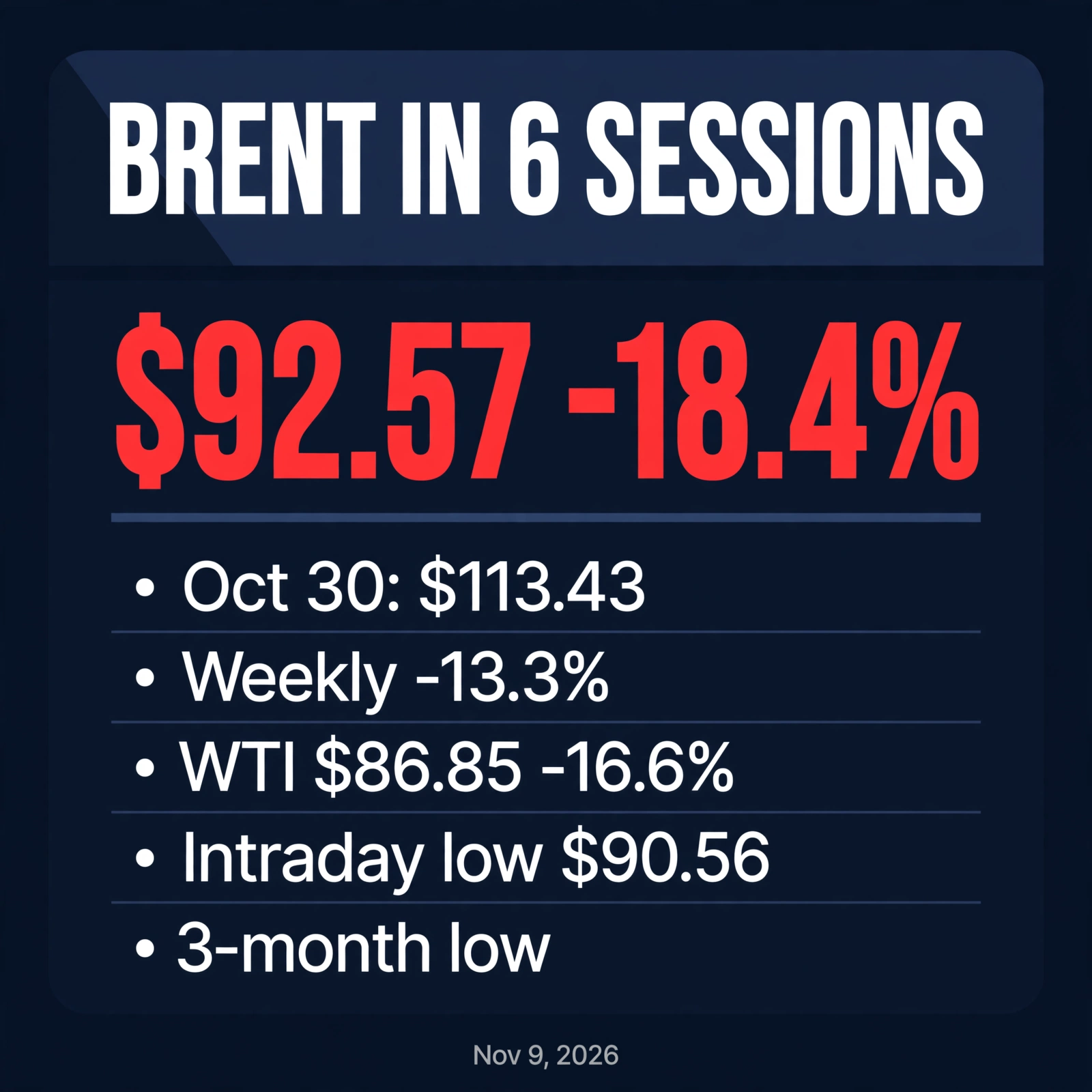
Here is the week’s paradox. Brent fell from $113.43 to $98.32, down 13.3%, while the cost of delivering oil hit record levels in the same week. The market cut the oil price on deal hopes while the cost of actually moving crude rose. Oil below $100 does not mean energy got cheaper. More than $49 a barrel in freight and insurance sits on top of the crude price.
- War-risk premium: extra insurance a ship buys for a single voyage through a listed war-risk area, charged as a percentage of hull value on top of ordinary hull insurance. It multiplies when risk rises.
- VLCC: Very Large Crude Carrier, the biggest class of oil tanker, carrying about 2 million barrels — the workhorse of the Middle East–Asia route.
- Ship-to-ship transfer (STS): moving cargo from one vessel to another at sea. A workaround when a strait cannot be crossed directly, but slow and costly.
- Cape of Good Hope diversion: routing around the southern tip of Africa to avoid the Suez Canal or the Strait of Hormuz. It adds 10–14 days to a voyage.
- Joint War Committee: a committee of Lloyd's market underwriters that designates high war-risk waters as "Listed Areas". Entering one triggers war-risk premiums.
- Tonnage: a ship's cargo-carrying capacity. When available tonnage falls, freight rates rise.
To sum up: freight and insurance through Hormuz went from $3.24 to $49.42 a barrel — 15 times — and war-risk premiums jumped from 0.25% to 6–10% of hull value. Eleven ships attacked and three sunk in a week, transits down 65%, explain why. Oil fell on deal hopes; shipping costs rose because the water is still at war. Until that gap closes, energy costs will stay higher than the oil price suggests.
Watch the video
Sources & references
- Sumitomo SCGR — Rising crude and transport costs become a global issue — OPEC figures: VLCC freight $3.18 to $37.13 a barrel, insurance $0.06 to $12.29, combined $3.24 to $49.42, transport and insurance share of procurement cost 5% to 30%, IEF inflation contribution estimate
- WarBrief — War Risk Insurance Explained: The Hormuz Surcharge — War-risk premium from 0.15–0.25% of hull value pre-war to 6–10% in early October via FT brokers, $100 million tanker premium from $250,000 to $6–10 million per transit
- BeInSure — Strait of Hormuz Attacks Increase Marine War-Risk Insurance Concerns — War-risk insurance up twelvefold to 3% of hull value, MT Velos Sapphire missile-suspected explosion killed one seafarer, mine claims unverified
- Al Jazeera — Qeshm island and Hormuz hit, as mediators try to prevent US-Iran escalation — UKMTO count of 11 ships attacked and 3 sunk in the week to November 6, transits 65% below pre-conflict levels
Related articles
- Brent Crude Analysis: 18.4% Drop in Six Sessions on Negotiation Hopes
Brent crude has fallen 18.4% in six sessions, from $113.43 on October 30 to $92.57 on November 9. The war premium is unwinding fast — but analysts put renewed strikes at 60%, and that gap sets the terms for a reversal.
- Hormuz Naval Mining Campaign: Southern Route Blockade and AIS-Dark Targeting
The mining campaign in the Strait of Hormuz is not a series of accidents but a designed blockade tactic. Mined southern routes, AIS-dark vessels as targets, underwater drones and limpet mines — the tactics behind October's record 35 attacks, and the mine-clearance problem left for any deal.
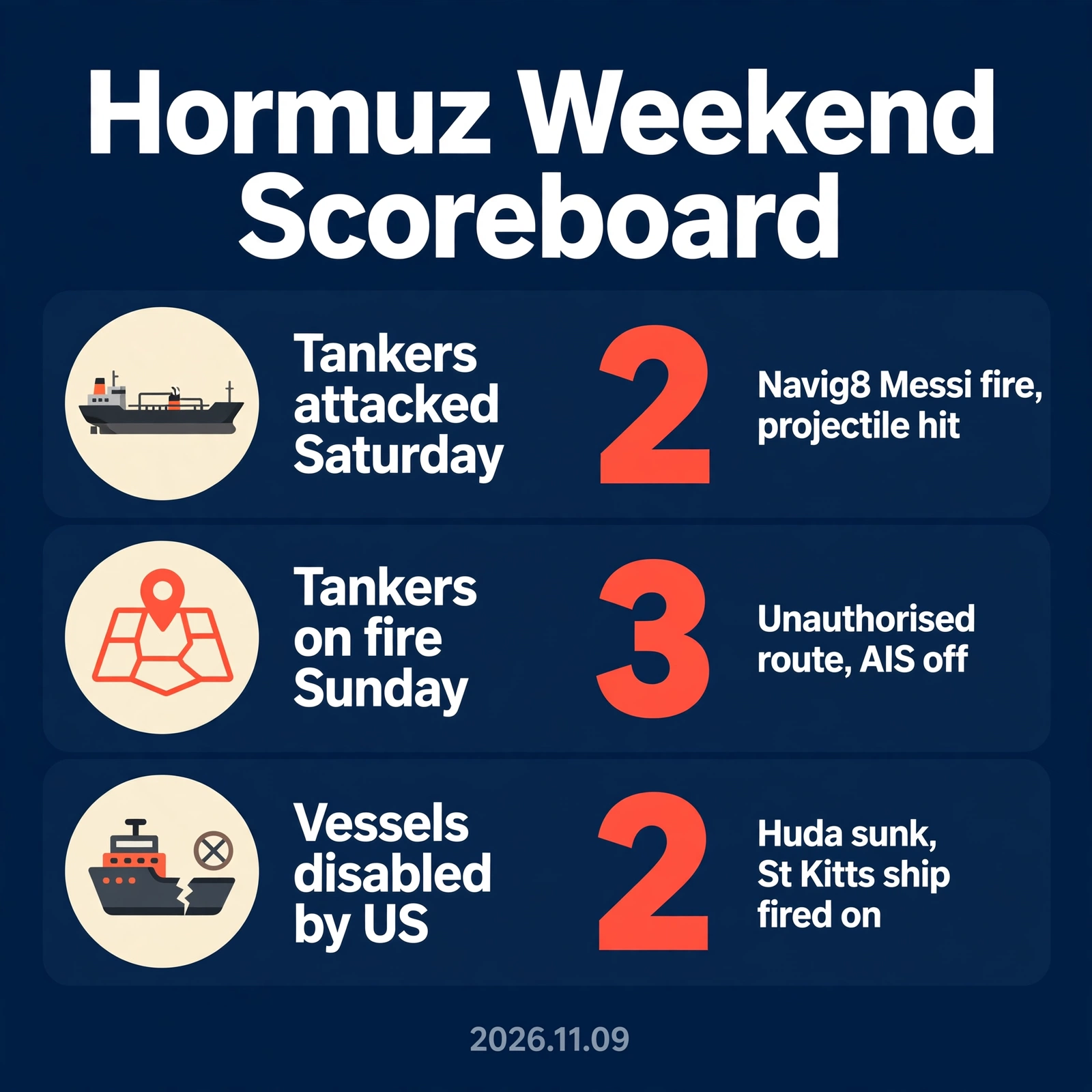
- Hormuz Oil Negotiation Analysis: Trump Restraint and Mining War
Three more tankers caught fire in the Strait of Hormuz over the weekend. Trump said fresh strikes are 'highly unlikely' if talks progress, while the IRGC keeps mining the strait. The fork Monday's open has to price.
5minbrief on YouTube
The briefs also come as videos. Get the daily market wrap on YouTube.
Subscribe on YouTube