 5-minute briefs
UK Fund Selling Slowdown Analysis 97 Trillion Won Sold and the Foreign Flow Turning Point
The numbers — UK funds are nearly half of all foreign selling
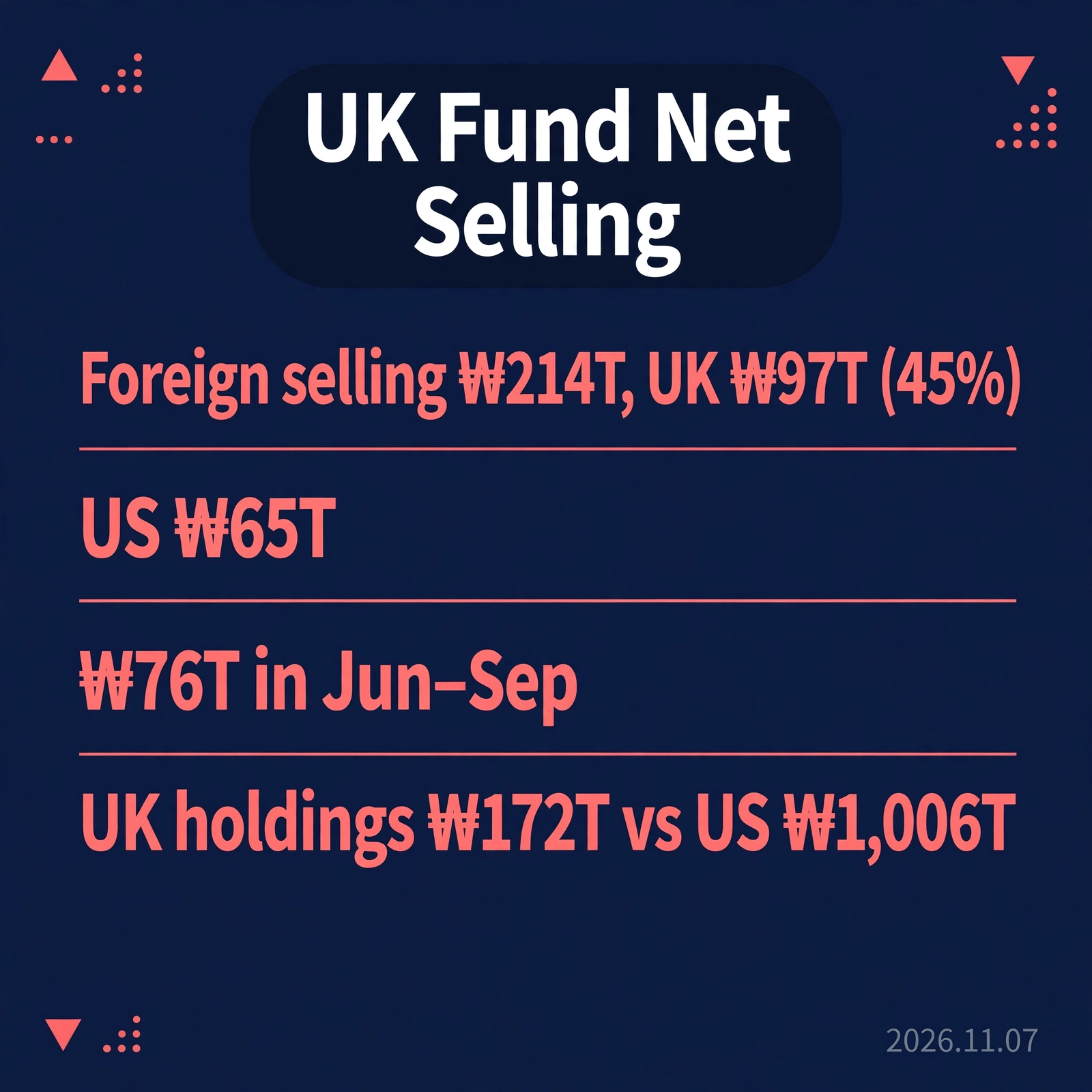
The numbers first. According to Korea’s Financial Supervisory Service, total foreign net selling of Korean shares in January–September was 214 trillion won. Of that, UK-based funds sold 97 trillion won, about 45%, while US funds sold 65 trillion won. 76 trillion won of the UK selling came in just four months, June to September. On Friday alone, foreigners sold 2.77 trillion won, a sixth straight session of selling.
The scale is what makes it striking. UK funds hold 172 trillion won of Korean shares, against 1,006 trillion won for US funds — about a sixth as much. A pool one-sixth the size sold 1.5 times as much. That is an unusual scale, in the judgement of Korea Investment & Securities researcher Yeom Dong-chan. Reading foreign selling as purely a verdict on Korea, or on AI, misses nearly half of the flow.
Why the UK — the butterfly effect of an inheritance-tax change
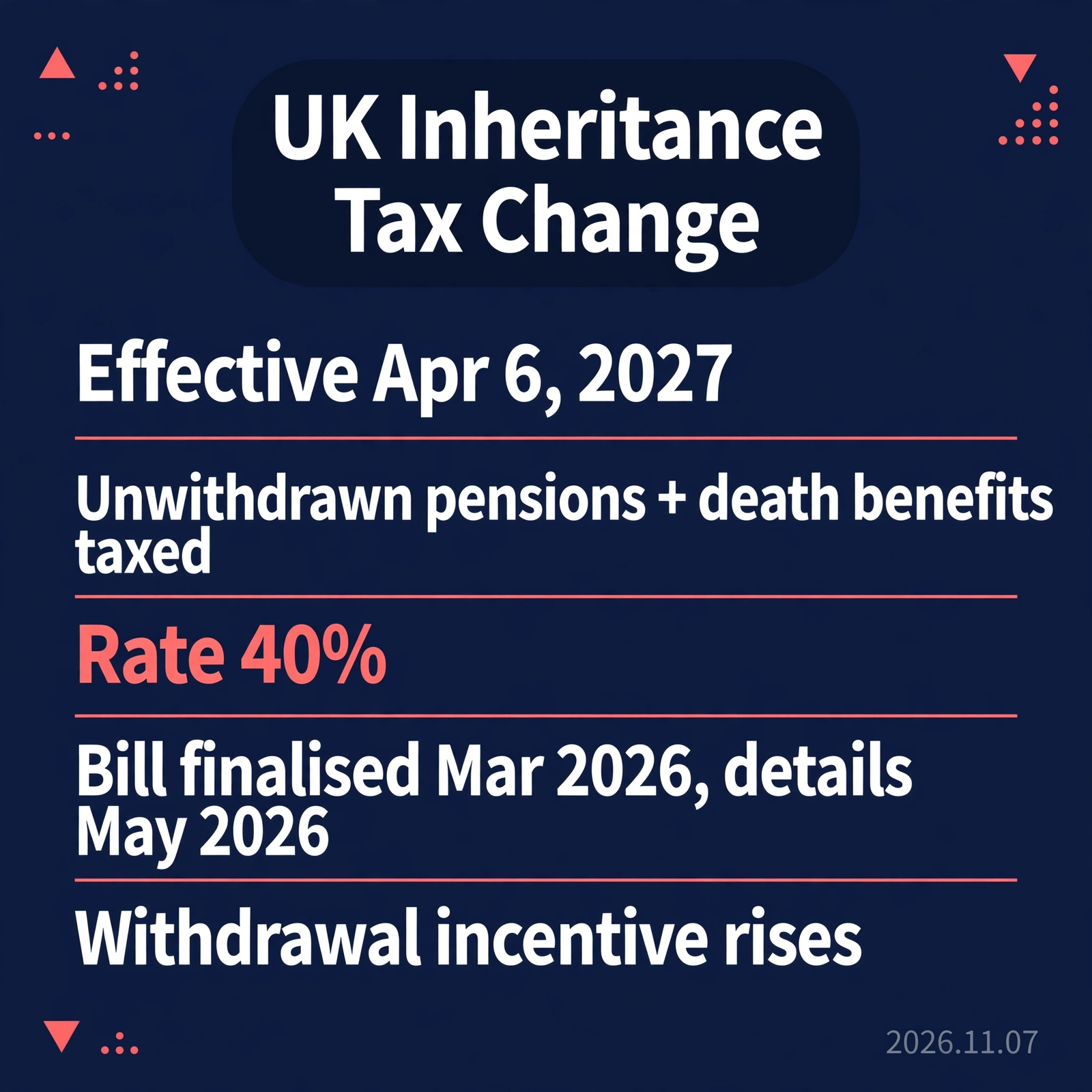
Yeom’s report of November 6, “Foreign Fund Trends and British Selling: The Butterfly Effect of the UK Inheritance Tax Revision,” traces the selling to the tax change. The UK used to exclude unwithdrawn pension assets and pension death benefits from the 40% inheritance tax. From April 6, 2027, they will be included. The bill was finalised in March 2026 and the detailed procedures published in May, giving pensioners a growing incentive to withdraw pensions as living funds rather than leave them for inheritance. The Financial Times reported a surge in client inquiries to pension firms about gifting large sums to help children buy homes.
The timing fits. UK net selling surged from June, just after the details were published in May. Yeom cautions that it is difficult to separate how much of the UK selling of Korean shares is the pension outflow, but the selling since June can be interpreted as affected by it. The tax change is not the whole story, but it looks like a trigger for the post-June acceleration.
Tax is not the only explanation. UK money in Korea leans heavily toward quant funds and hedge funds with short-term horizons — Man Group, the world’s largest listed hedge fund, is the representative UK name. Position unwinds by asset managers and hedge funds likely added to the selling. If the tax change was the trigger for withdrawals, the short-term character of UK funds set the speed of the selling.
Signs of exhaustion — and their limits
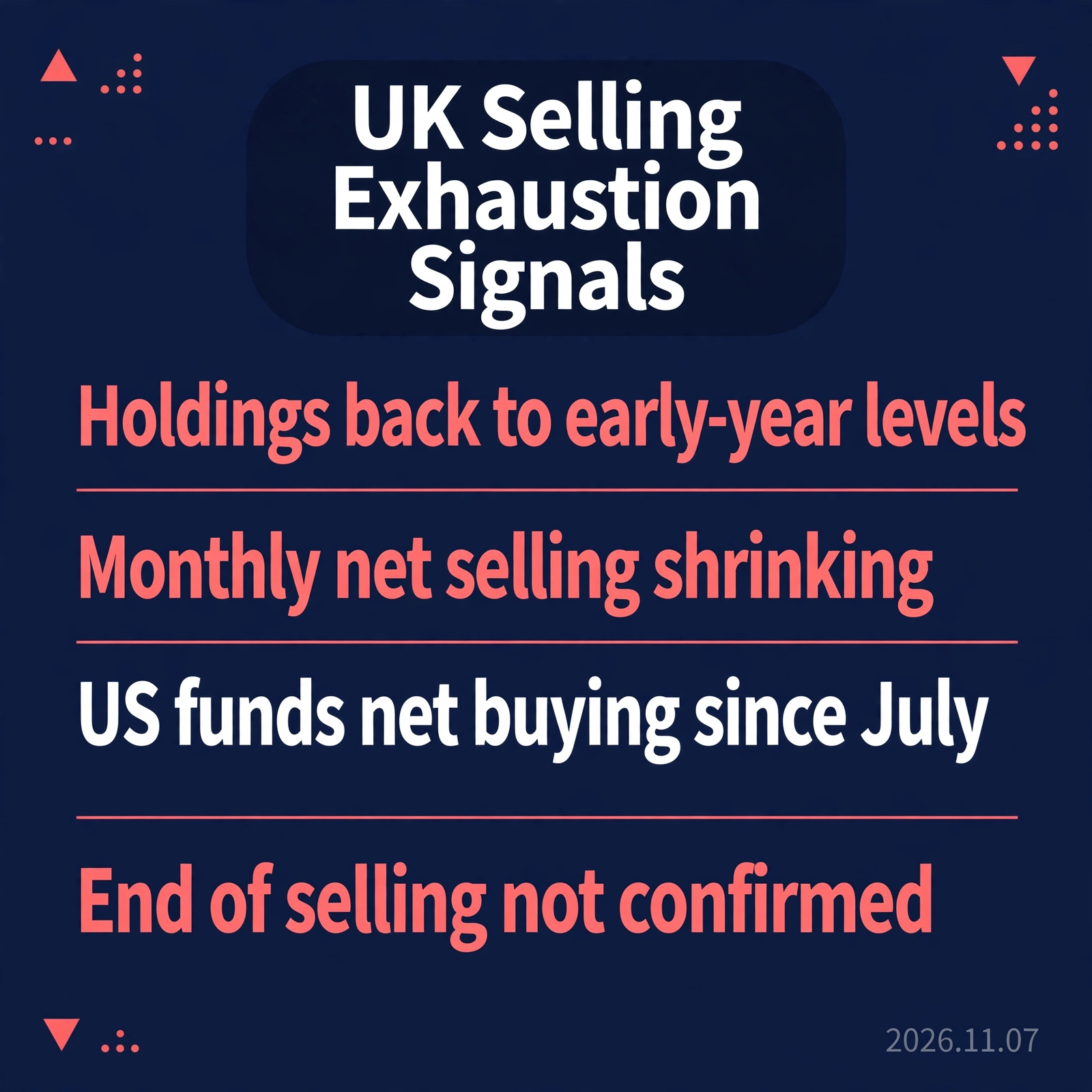
There are signs the selling is exhausting itself. Yeom notes that compared with US funds, UK funds’ holdings have shrunk enough to reduce their capacity to keep selling, and that while it is difficult to conclude that net selling has ended, holdings have fallen to early-year levels and monthly net selling has shrunk, which can be read positively. The logic is simple: fewer holdings mean less left to sell. US funds, by contrast, have been net buyers since July, even though they sold 65 trillion won over the year as a whole.
Three limits apply. First, the end of net selling cannot be concluded: holdings at early-year levels mean less capacity to sell, not proof that selling has stopped. Second, the pension-driven share of the selling cannot be measured — the researcher himself says the portion attributable to the tax-driven outflow cannot be separated. Third, the main AI-investment concern remains: even if UK selling fades, foreign flows overall may not turn until the US data-center regulation worry and the rate burden ease.
What confirms a turn — whether foreign flows improve
What to watch next week is whether the slowdown in UK selling feeds through into better foreign flows overall. The key level is the KOSPI at 5,000. If US tech stabilises and foreign net selling shrinks, the index can attempt to re-enter the 5,100s. If foreign selling continues, the fight over holding 5,000 will intensify.
Three numbers to check: foreign net trading after Monday’s open — whether the UK slowdown shows up in total foreign flows, or whether selling from other countries fills the gap; CoreWeave earnings (after the US close on November 10) and US October CPI (November 10, 22:30 Korea time), which test whether the doubt about AI investment sustainability is easing; and the won–dollar rate, which reached 1,356.6 on Friday and adds a further burden on won assets for foreign holders.
Not investment advice. Figures verified as of November 7, 2026, from the Financial Supervisory Service, Maeil Business Newspaper, Korea Investment & Securities, Aju Press and KBI Intelligence.
Watch the video

Sources & references
- Maeil Business Newspaper — Analysts say UK inheritance tax reorganization raised net foreign selling — UK funds net sold 97 trillion won in January–September, 76 trillion won in June–September, US funds net buying since July, holdings down to early-year levels
- Aju Press — KOSPI plunges over 6% as AI selloff triggers trading halt — Foreign investors sold 2.77 trillion won on November 6, sixth consecutive session, institutions bought 1.7 trillion won
- KBI Intelligence — This Week in Korean Industry, 6th November 2026 — KOSPI fell 6.02% to 5,059.69, foreign net selling 2.7692 trillion won, KOSDAQ down 5.03% to 644.27
Related articles
- KOSPI Failed Rebound Analysis 5,018 Close Foreign Selling Streak and Nvidia Probe
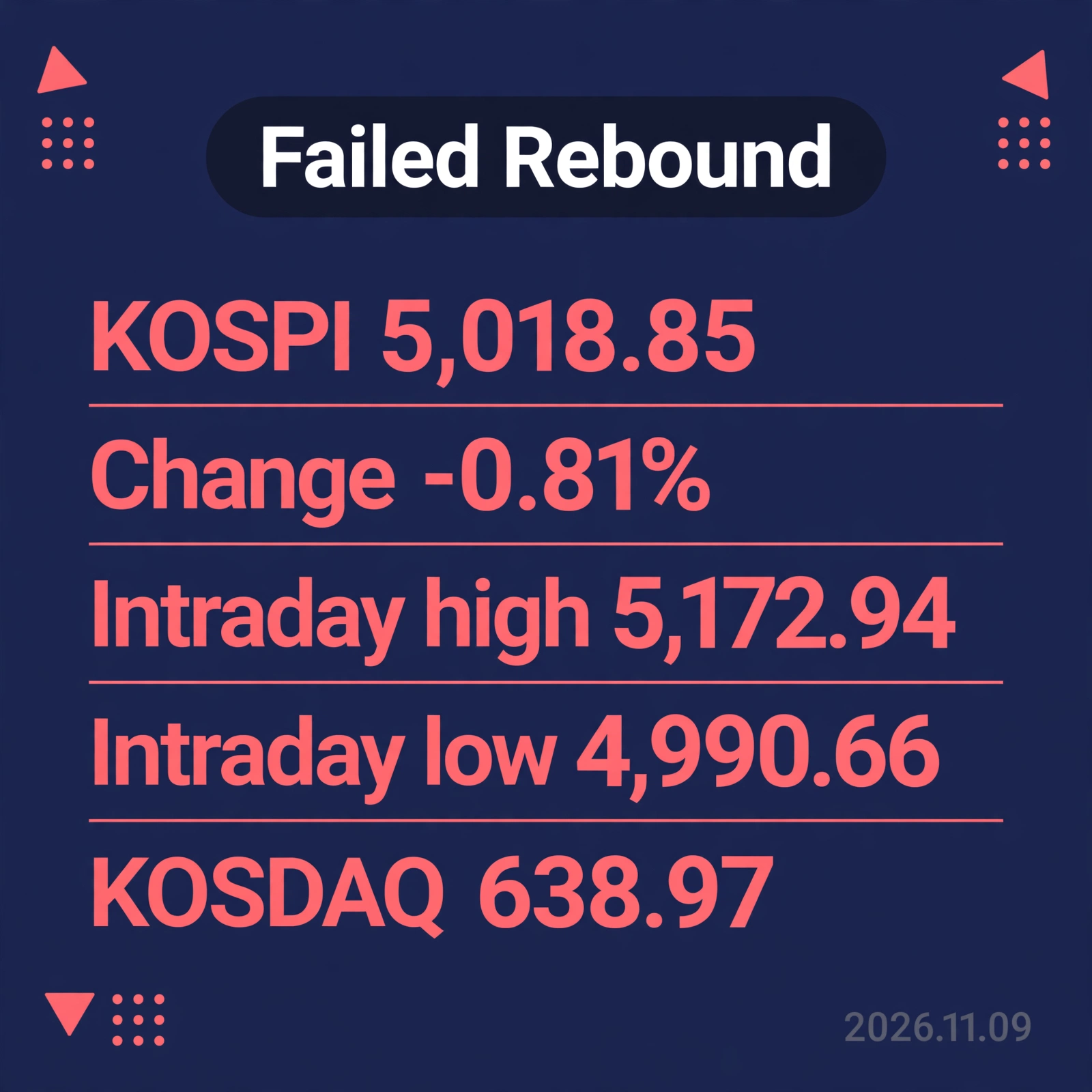
November 9 in Seoul: the KOSPI rallied 2.24% intraday to 5,172.94 but closed at 5,018.85 (−0.81%). Foreigners sold a seventh straight session, an Nvidia board probe capped the rally, and battery stocks gave back the blue-wave rally.
- KOSPI Monday Preview: 10.4 Trillion Won Foreign Selling, Won at 1,356.6, Margin Relief Starts
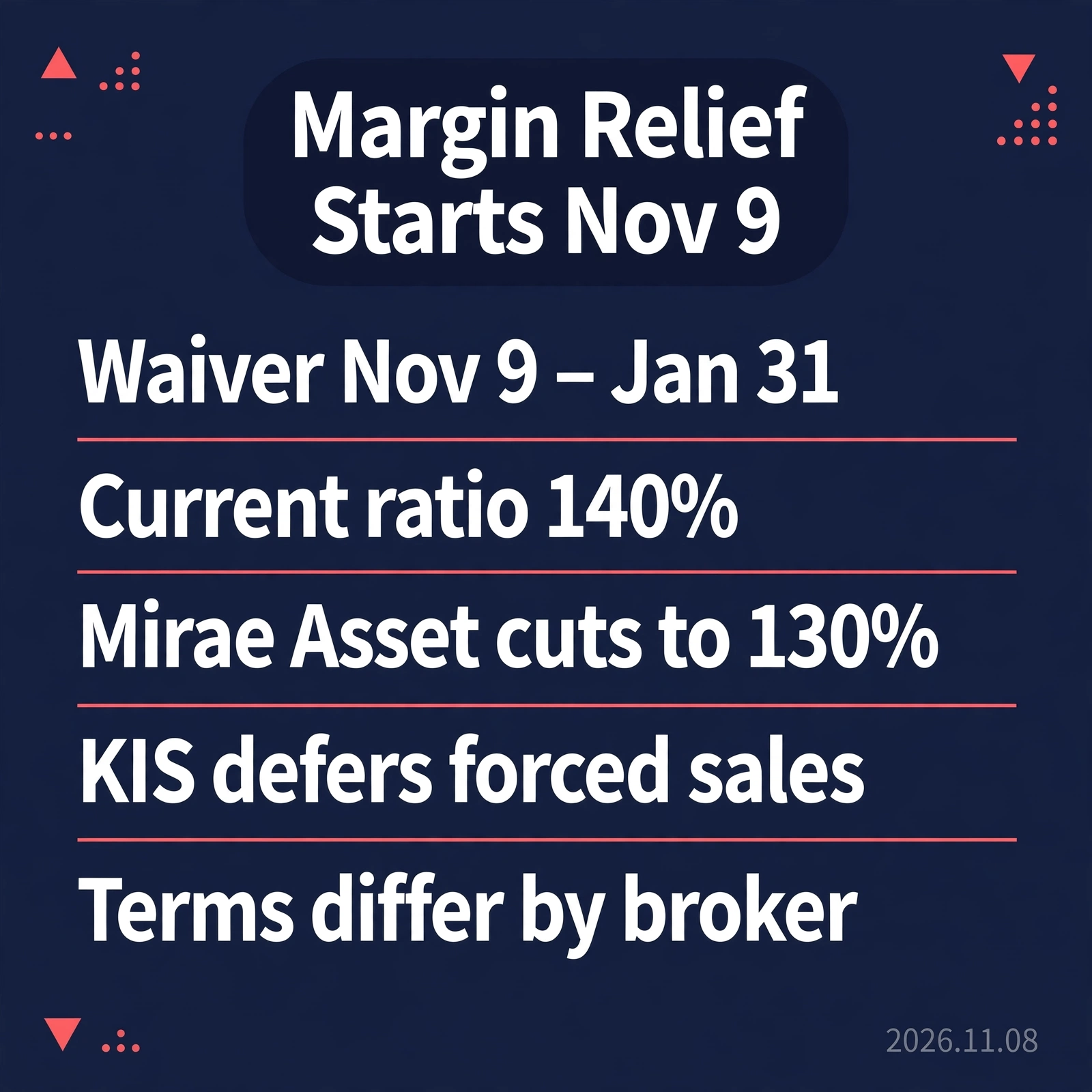
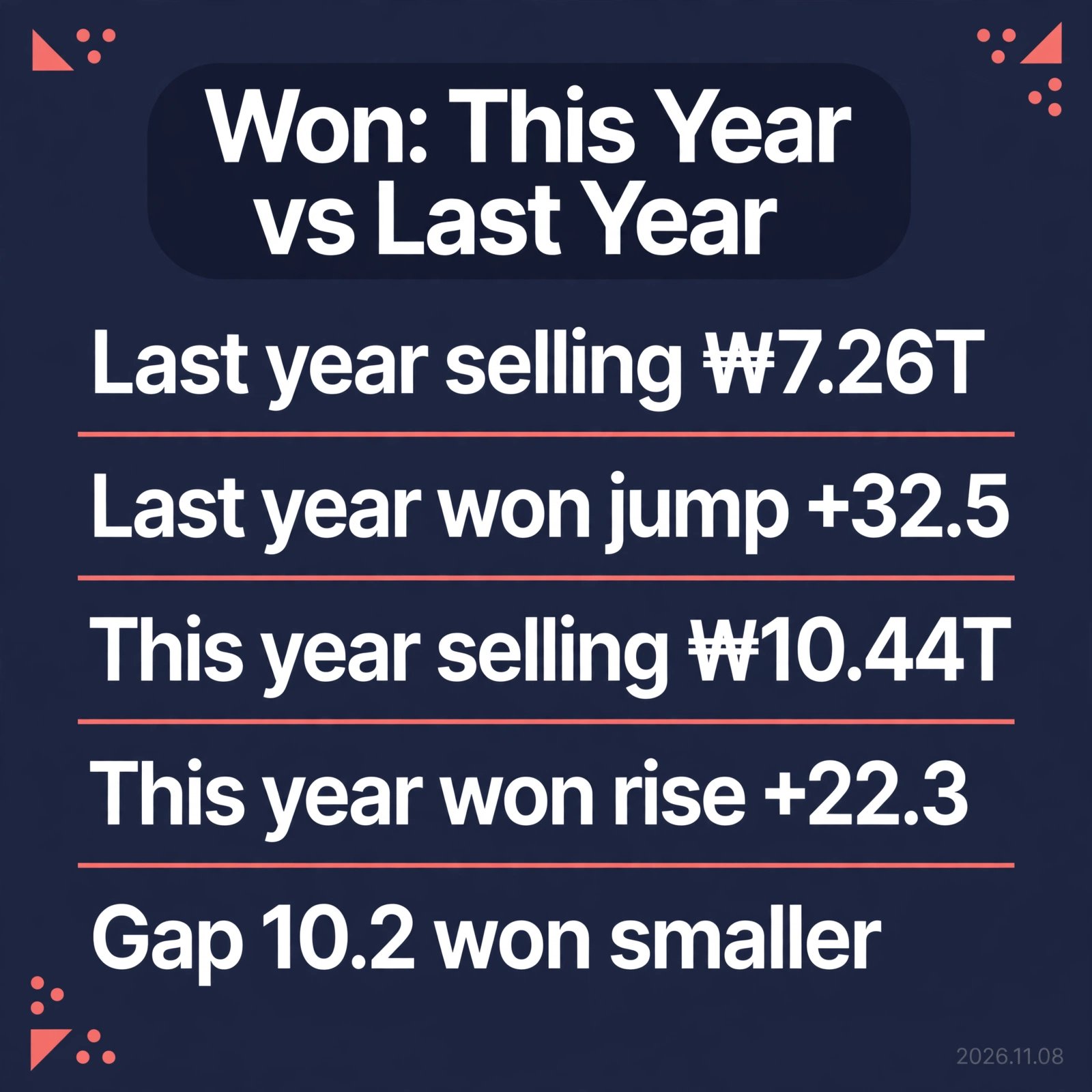
Korea market Sunday edition: Seoul is closed today, but the weekend formalized three months of margin-loan relief starting Monday. Foreigners sold about 10.4 trillion won of KOSPI shares last week, yet the won held at 1,356.6 — semiconductor export dollars and a record current-account surplus did the holding.
- Won-Dollar Defense Analysis: Semiconductor Export Dollars, Record Surplus, Dividend Repatriation Risk
Foreigners sold about $7.7 billion of Korean shares in a week, yet the won held at 1,356.6. A record $61.46 billion current-account surplus and $56.44 billion of October chip exports did the holding. The next test is $9.8–12.6 billion of dividend repatriation.
5minbrief on YouTube
The briefs also come as videos. Get the daily market wrap on YouTube.
Subscribe on YouTube