 5-minute briefs
Binance Withdrawal Resumption Net Outflow $3.64 Billion FBI North Korea Attribution Analysis
#Binance#TraderTraitor#proof of reserves
The first day of reopening: money moved for nine and a half hours
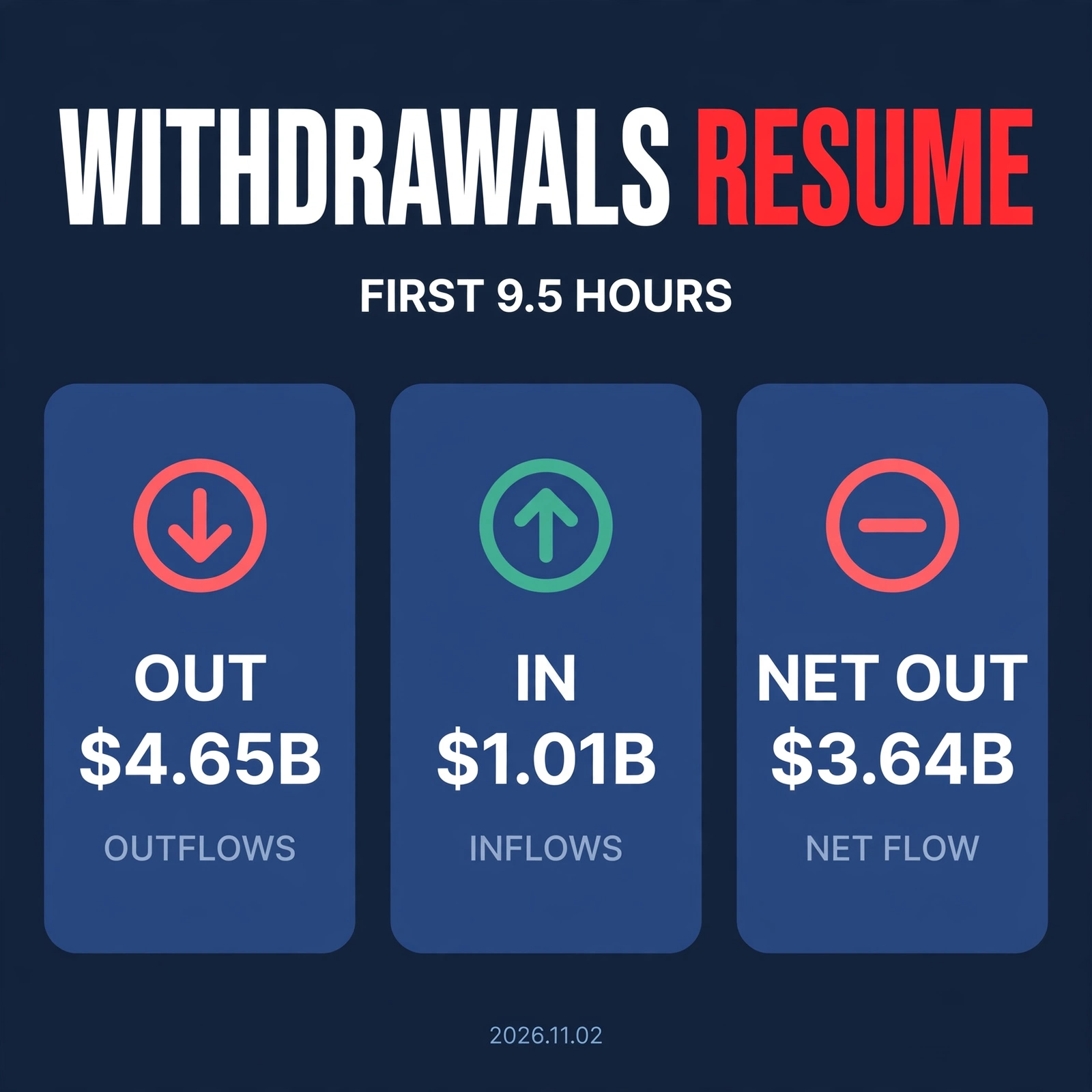
Start with the timeline. Binance began restoring withdrawals in phases at 3:00 p.m. Korea time on November 1. The Bitcoin network opened first, and founder Changpeng Zhao confirmed it with a short post: “BTC withdrawal is live.” By 9:36 p.m. Korea time, withdrawals had resumed for all 15 networks and assets in the first phase, including Ethereum, BNB Smart Chain, Tron, Solana, XRP Ledger, Zcash, and Dogecoin. The remaining networks and assets are still being tested, and no date has been given for the second phase.
The flows, on Binance’s own accounting, are as follows. From 3:00 p.m. on November 1 to 12:30 a.m. on November 2, Korea time, Binance processed $4.649 billion in withdrawals and $1.01 billion in deposits, for a net outflow of approximately $3.64 billion. Binance said withdrawal volumes briefly surged at first, then declined and gradually stabilized, while deposit volumes remained high. There was no report of withdrawals freezing again. The first day’s central question — “does money actually leave?” — was answered with “yes, it does.”
One caveat must stay attached to these numbers. They are Binance’s own figures, not real-time figures verified by an outside auditor or an independent body. An updated proof-of-reserves report is due on November 2, and comparing its snapshot with the actual withdrawal record is the next verification step. User-side verification through zero-knowledge proofs was previously guided for November 3. Whenever these numbers are quoted, the source — “according to Binance” — belongs with them.
How to read a 2.1% net outflow
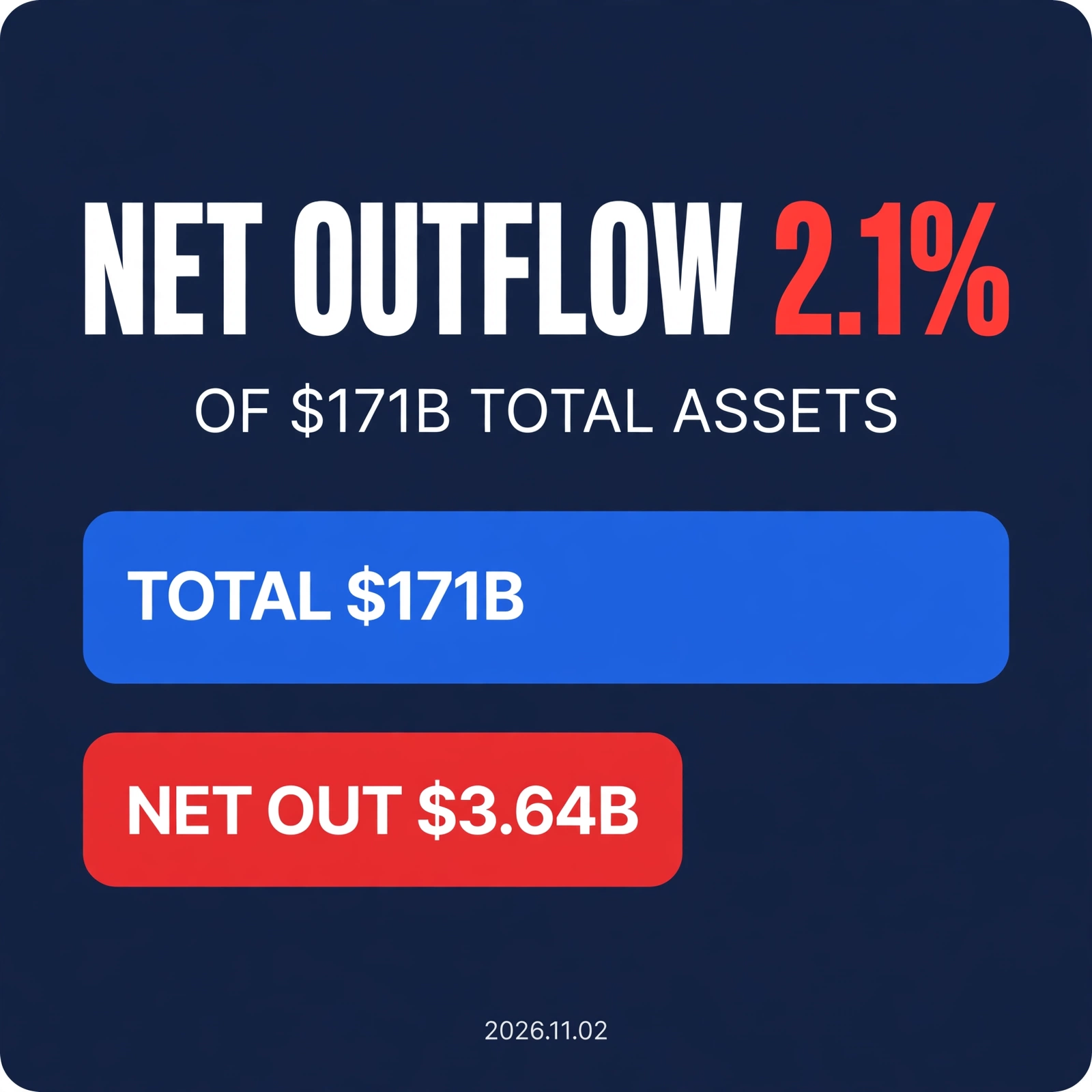
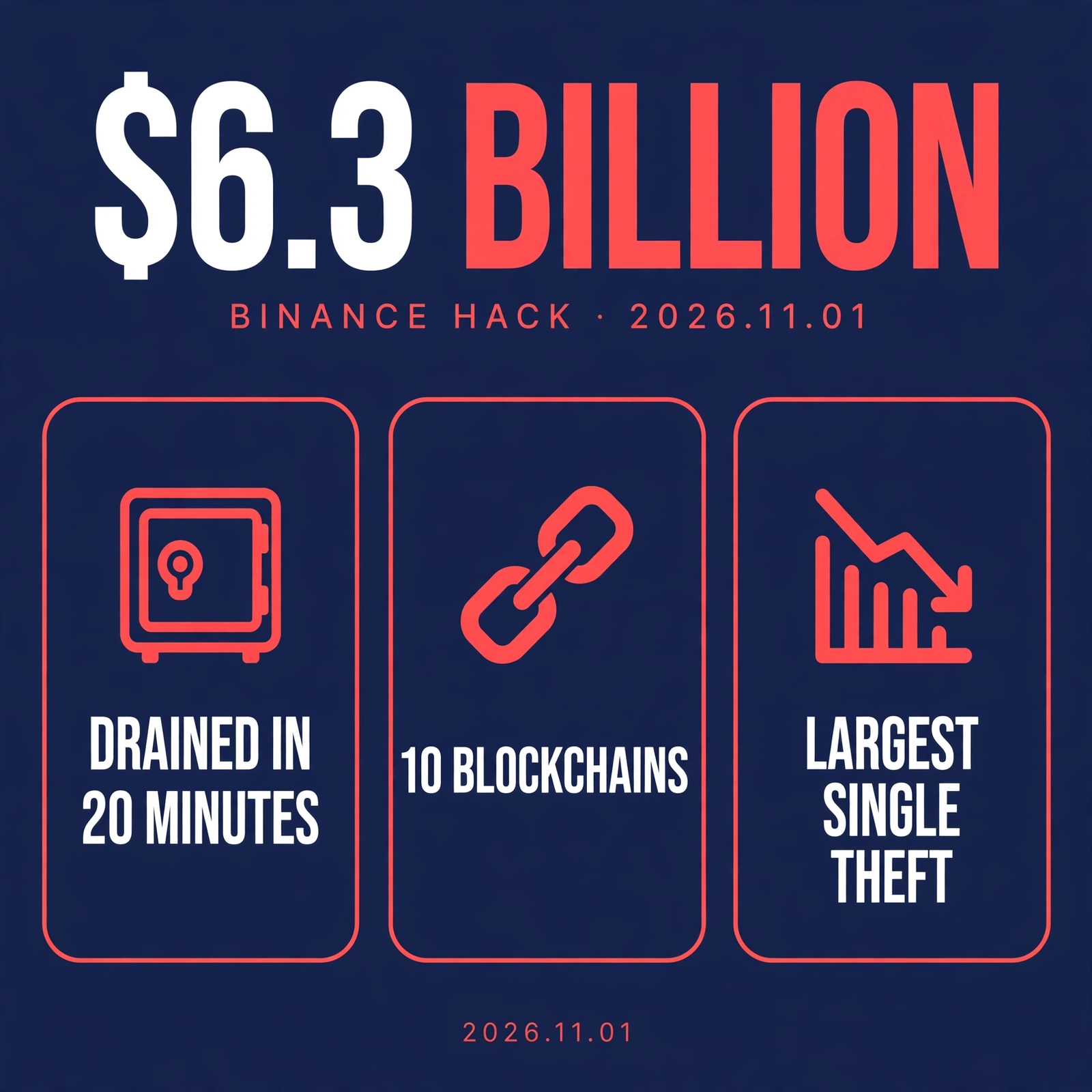
$3.64 billion is large in absolute terms — more than half of the $6.3 billion hack itself left in under ten hours. But the denominator matters. Binance said the net outflow equals 2.1% of $171 billion in total assets, based on proof-of-reserves data as of October 28. As a ratio, this is not a picture of an exchange being drained in a bank run. The $1.01 billion that flowed in during the same window matters too: money did not only leave, it also came back.
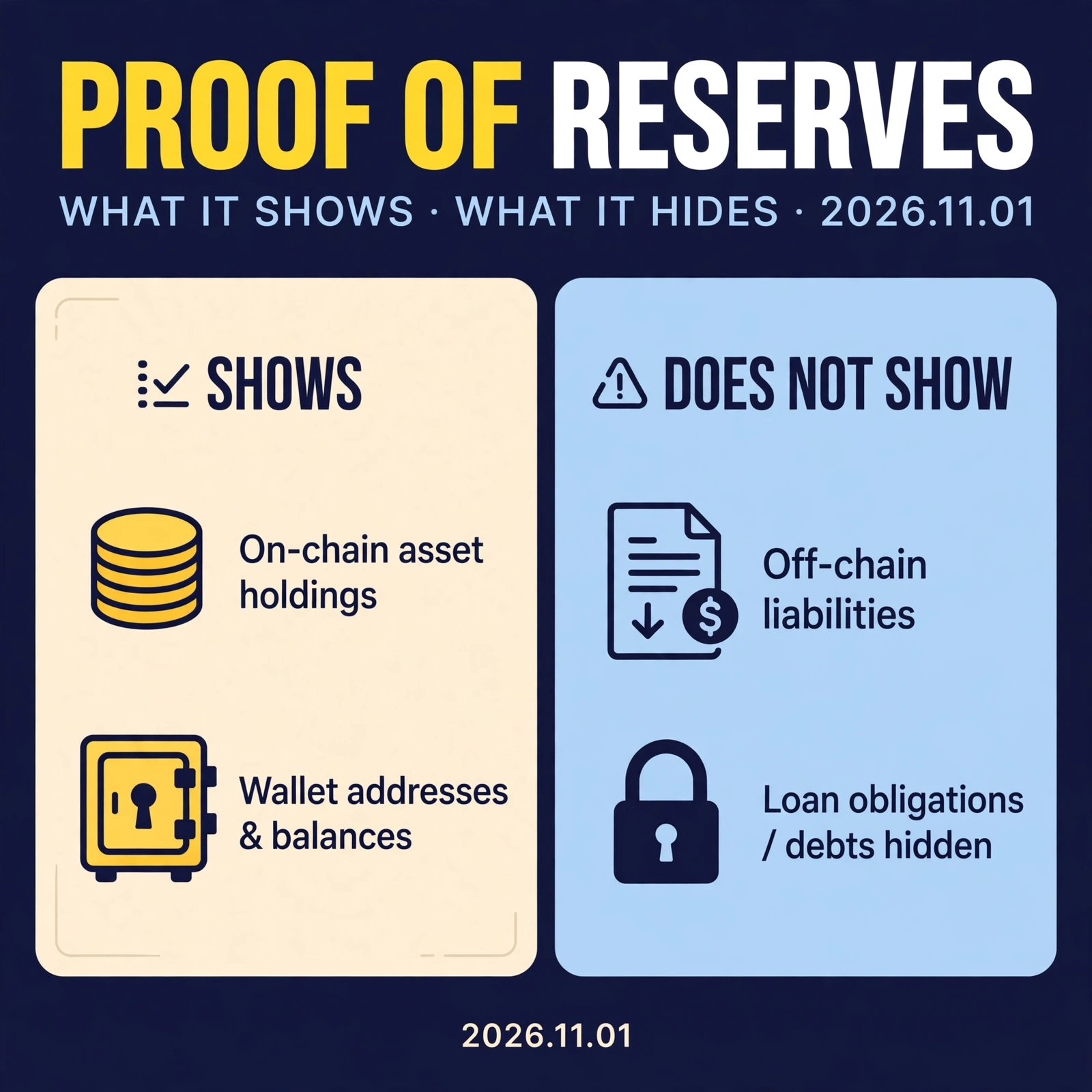
That does not settle the question of restored trust. First, this is only the first phase’s result. Withdrawal demand on networks and assets that are still closed is not in these numbers, and a second outflow wave could arrive when phase two opens. Second, a small net outflow ratio is not the same as completed replenishment. Binance said replenishment rose from 90% to 95%, but the remaining ≈5% consists of lower-liquidity tokens that take longer to source. Third, withdrawals being processed and customer balances being fully backed are different layers of the problem. The first proves the system runs; the second must be confirmed by the proof-of-reserves report.
For investors, the reading standard is simple. Watch withdrawal delays and post-phase-two flows, not the outflow ratio alone. Large-scale withdrawals being processed without delay over nine and a half hours is a positive sign. But until phase two opens and flows stay at this level, it is too early to call the test passed.
The FBI’s formal attribution: from allegation to official finding
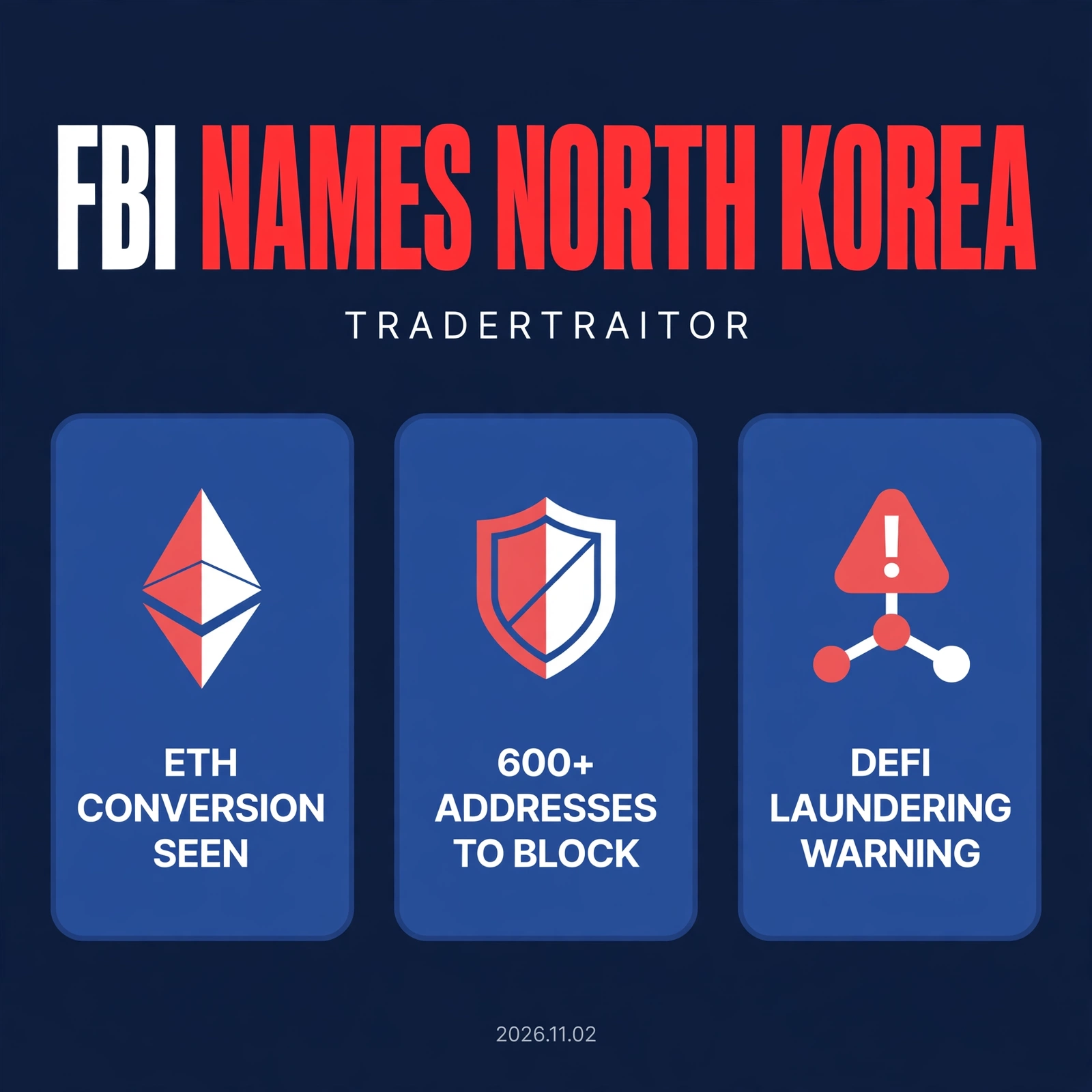
The weekend’s second major development came from investigators. In an October 31 statement, the FBI said North Korea was responsible for the theft of more than $6 billion in virtual assets from Binance on or around October 29, naming North Korea’s elite hacking unit TraderTraitor as the actor. The FBI is investigating jointly with the US Secret Service (USSS) and the IRS Criminal Investigation division (IRS-CI). The November 1 brief described attribution as alleged by analytics firms but not yet officially concluded; this statement moves it one step further.
The FBI’s statement carried three elements. First, it observed TraderTraitor actors converting stolen assets primarily into Ethereum. Second, it expects further laundering through DeFi and instant-swap services. Third, it published more than 600 Ethereum addresses, just under 20 Bitcoin addresses, and a single Solana address, urging private firms to block transactions from or derived from them. Chainalysis said the attackers had already used thousands of addresses and expects tens of thousands to be used in the coming weeks — a reminder that one address list cannot stop laundering on its own.
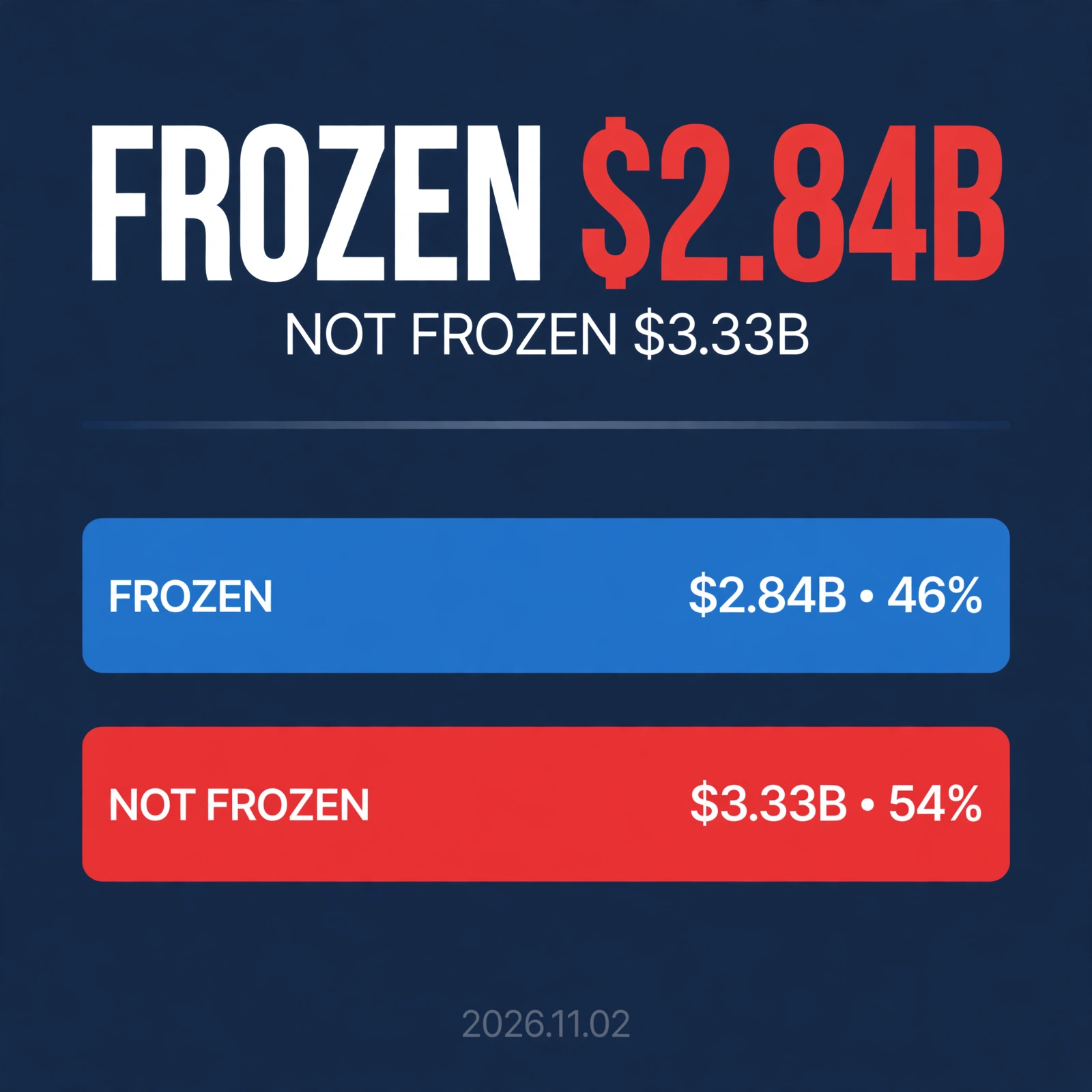
One tension should also be recorded. President Donald Trump told reporters late on Saturday that it was not yet known whether North Korea was involved. The FBI’s formal attribution and the president’s remark landed in the same weekend and point in different directions. Binance itself has not named a culprit. The precise sentence to carry forward is “the FBI formally attributed the hack to North Korea’s TraderTraitor,” not “all authorities agree on the culprit.” Formal attribution strengthens the case for freezing, blocking, and sanctions discussions, but how much of the roughly $3 billion frozen is actually recovered is a separate tracing job. Analytics firm Elliptic estimated about $2.8 billion frozen and about $3.3 billion not frozen. Freezing and recovery are different stages, exactly as the November 1 brief stressed.
- Net outflow: withdrawals minus deposits. A $3.64 billion net outflow means $4.649 billion left while $1.01 billion came in.
- Share of total assets (AUM): net outflow divided by the exchange's total assets. The 2.1% figure uses a $171 billion denominator, so it does not hide the size of the absolute amount.
- TraderTraitor: the FBI's name for a North Korea-linked hacking group. The FBI blamed the same group for the February 2025 Bybit hack of about $1.5 billion.
- Zero-knowledge proof: a cryptographic method that verifies holdings without exposing personal data or individual transactions. Binance said the computation takes 40–50 hours.
- Phase one and phase two withdrawals: Binance's staged reopening, opening networks and assets as security checks finish. Phase one covers 15 networks; the rest have no announced date.
What investors should take from this test
The first day’s report card in one sentence: the withdrawal system worked, the outflow was a manageable share of assets, and the attribution debate moved to a formal finding. But the test is not over. Four things remain to be confirmed. First, the phase-two schedule and the flows that follow it. Second, whether the remaining ≈5% replenishment is actually completed. Third, what the November 2 updated proof-of-reserves report and the November 3 zero-knowledge verification show. Fourth, how much of the frozen funds is actually recovered.
If any of the four slips, the 2.1% first-day figure will stand only as a record of clearing the first hurdle. If all four check out smoothly, this case will be remembered as one in which withdrawals did not stop even after the largest hack on record. Either way, the standard of proof stays where the November 1 brief put it: not in Binance’s announcement wording, but in withdrawal processing and proof verification as actual operations.
Sources & references
- Binance — Phased withdrawal restoration and first-day flows — Outflows $4.649 billion, inflows $1.01 billion, net outflow $3.64 billion, 2.1% of $171 billion in assets
- Binance — $4.65 billion processed after reopening, net outflow $3.64 billion — All 15 first-phase networks live within seven hours, updated proof-of-reserves report due November 2
- CoinDesk — FBI confirms North Korea's role in $6 billion Binance hack — FBI October 31 statement, TraderTraitor attribution, ETH conversion, address blocking request
- Crypto.news — Binance reopens Bitcoin withdrawals after $6.3B hack, says 95% restored — Bitcoin first, 95% replenishment, 15-network first phase, full proof of reserves by November 3
Related articles
- Stablecoin Freeze Paradox Tether Circle $3 Billion Block Decentralization Analysis
Binance hack freeze paradox: Tether froze $1.567B and Circle $823M, yet Elliptic counts $2.84B frozen versus $3.33B beyond freezing, plus the Aave loan bypass.
- Crypto Exchange Proof of Reserves SAFU Custody Investment Analysis
After the Binance hack, a plain-language guide to proof of reserves and SAFU: what a proof shows, what it cannot show, how hot and cold wallets differ, and a custody checklist users can verify themselves.
- Binance Hack $6.3B Crypto Exchange Security Investment Analysis
Sunday single-issue deep dive: how $6.3B left Binance in about 20 minutes in the largest crypto theft on record, what the 90% replenishment really means, and what the November 1 withdrawal restart and November 3 proof-of-reserves check will prove.
5minbrief on YouTube
The briefs also come as videos. Get the daily market wrap on YouTube.
Subscribe on YouTube