 5-minute briefs
Crypto Exchange Proof of Reserves SAFU Custody Investment Analysis
What a proof of reserves shows, and what it does not
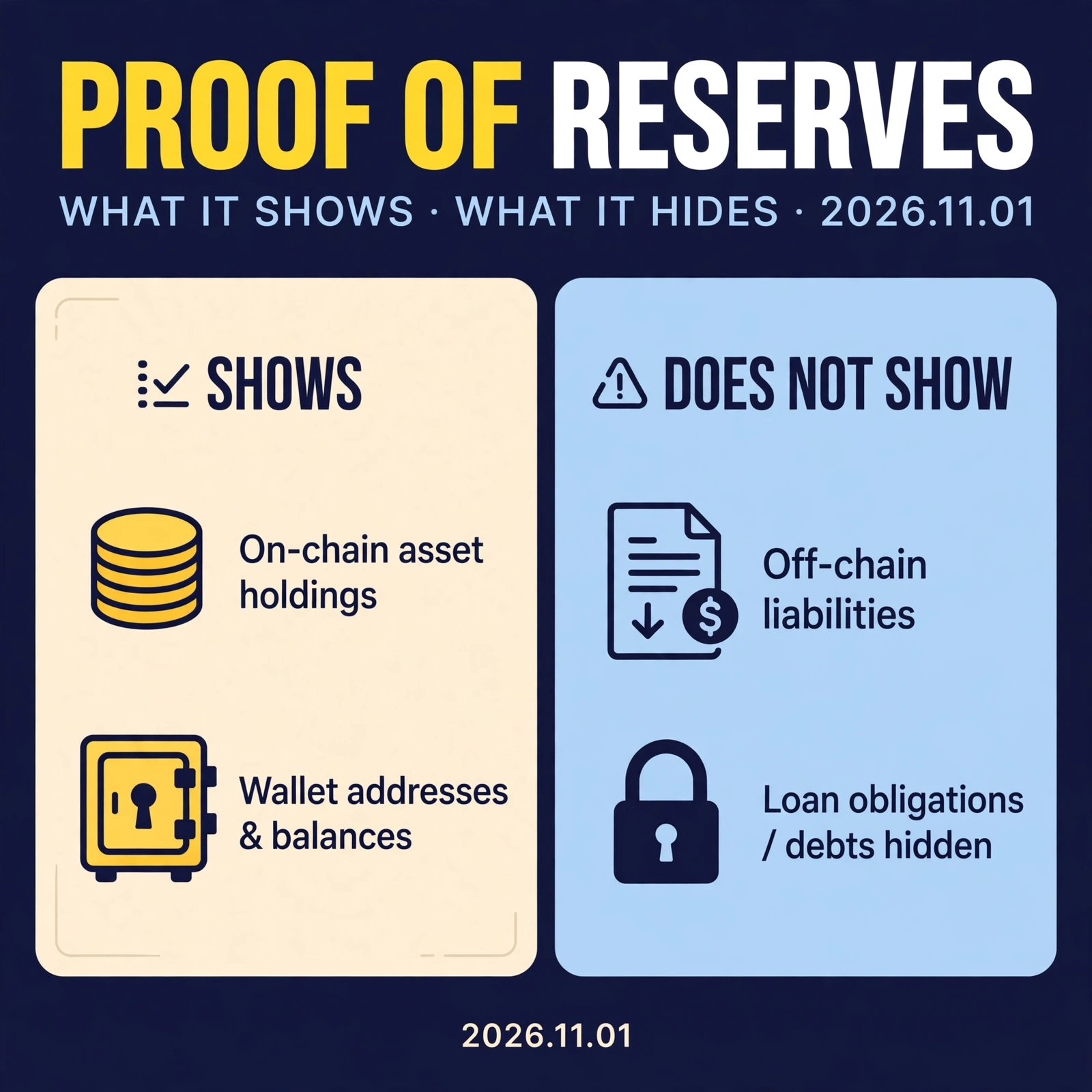
A proof of reserves starts from a simple idea: prove cryptographically that an exchange actually holds customer assets. Binance took a snapshot as of 00:00 UTC on October 31 and said its top 10 assets, bitcoin, Ether, USDT, BNB, SOL, USDC, XRP, USD1, RLUSD, and ZEC, are 100% backed. The zero-knowledge proof computation takes 40–50 hours because it verifies holdings without exposing personal data or individual transactions, so users can verify directly from November 3.
The limits matter as much as the promise. A proof of reserves covers the asset side only. Total customer liabilities, borrowings, pledged collateral, and related-party transactions are not visible in the proof alone. Assets can be 100% present yet already pledged elsewhere, or technically blocked from withdrawal, and the user would be no safer. A proof is therefore a minimum anti-fraud device, not a bankruptcy guarantee, and it is not the same as a full financial audit. A snapshot is also a photograph of one moment; what happens the next day stays invisible until the next proof.
The second device in this case is SAFU, Binance’s Secure Asset Fund for Users. Created in July 2018, SAFU was reported at about $1 billion as of October 13. Binance says it will use part of SAFU in this recovery and restore the fund to about $1 billion. That a fund exists is positive, but a roughly $1 billion fund cannot alone absorb a $6.3 billion loss. In practice, this recovery combined SAFU with the futures insurance fund and the corporate treasury. What matters more than the fund’s existence is how quickly and transparently company money is added when a loss exceeds the fund.
Hot wallets versus cold wallets: why the withdrawal wallet was the target
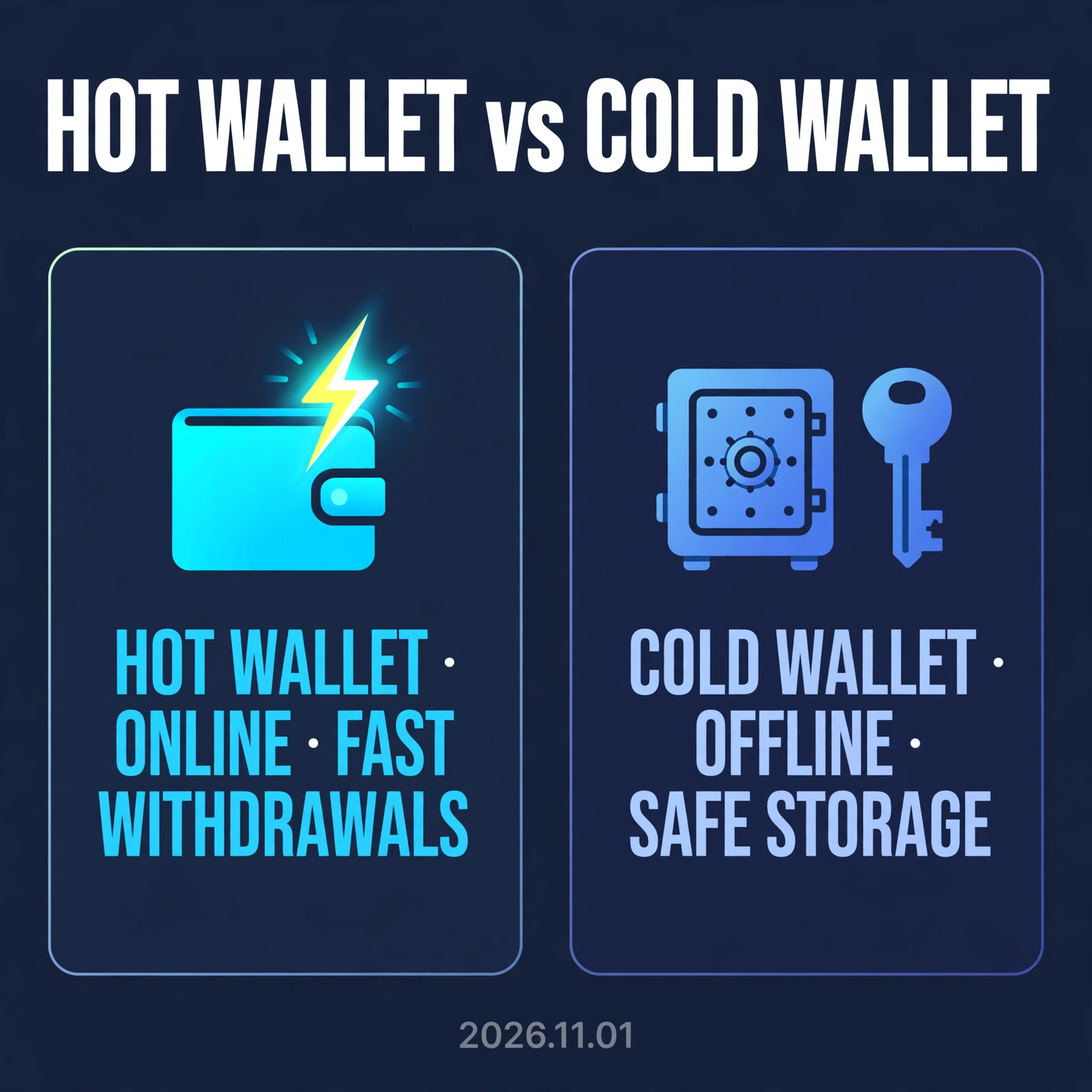
The attack path exposes a custody weakness directly. In Binance’s preliminary account, a DevOps engineer’s laptop was compromised, and the attacker reached a service container and submitted unauthorized withdrawals. The funds left through hot wallets, wallets kept online to process customer withdrawals immediately. Convenience and exposure are traded against each other. Cold wallets, kept offline, cut the hacking route but require separate procedures for every withdrawal.
Exchanges normally split the two: only the minimum needed for daily withdrawals sits in hot wallets, and the rest stays cold. The problem is the size of that minimum. For the world’s largest exchange, daily withdrawal volume can run into hundreds of millions of dollars, so the hot wallet balance itself is an attractive target. And when a person’s device is compromised, as here, who holds signing authority, and how it is separated, matters more than whether a wallet is online or offline. If signing authority concentrates in one path, that path becomes the bottleneck for the whole security system. When reading an exchange’s security claims, ask about withdrawal approval and separation of authority, not only the cold-storage ratio.
A user custody checklist: what to verify before trusting an exchange

What users can do is surprisingly concrete. First, verify the proof of reserves directly after November 3: check that your own account’s assets are included, and that the snapshot time and asset list match the announcement. Second, run a withdrawal test: a small withdrawal clearing promptly is stronger evidence than any announcement, and the first days after the November 1 restart matter most. Third, split custody: do not keep everything on one exchange, and move long-term holdings to self-custody. Self-custody carries its own loss and phishing risks, so the point of splitting is to avoid losing everything to a single failure.
Fourth, assume stablecoin freezes are possible. Tether’s roughly $1.57 billion freeze and Circle’s freeze of more than $0.8 billion limited the damage this time, but they also show how much control issuers hold. Fifth, read emergency funds in numbers: compare the fund size with daily withdrawal volume, and check the source of company money added when a loss exceeds the fund. A proof existing, a withdrawal clearing, and a fund being replenished are three separate actions, and trust should rest on all three working in practice. The Binance case leaves one lesson: exchange security is proven by actions, not announcements.
Watch the video

Sources & references
- The National — Binance covers 90 per cent of assets stolen in $6.3 billion hack — Top 10 assets fully backed, SAFU restoration, November 1 withdrawal restart
- QUE — Binance Covers 90% of $6.3 Billion Hack Losses as Withdrawals Set to Resume — $6.34B company funds, top 10 assets fully backed, proof-of-reserves verification from November 3
- The National — How a $6 billion hack became the world's biggest crypto theft — DevOps laptop attack path, $3B frozen
Related articles
- Binance Withdrawal Resumption Net Outflow $3.64 Billion FBI North Korea Attribution Analysis
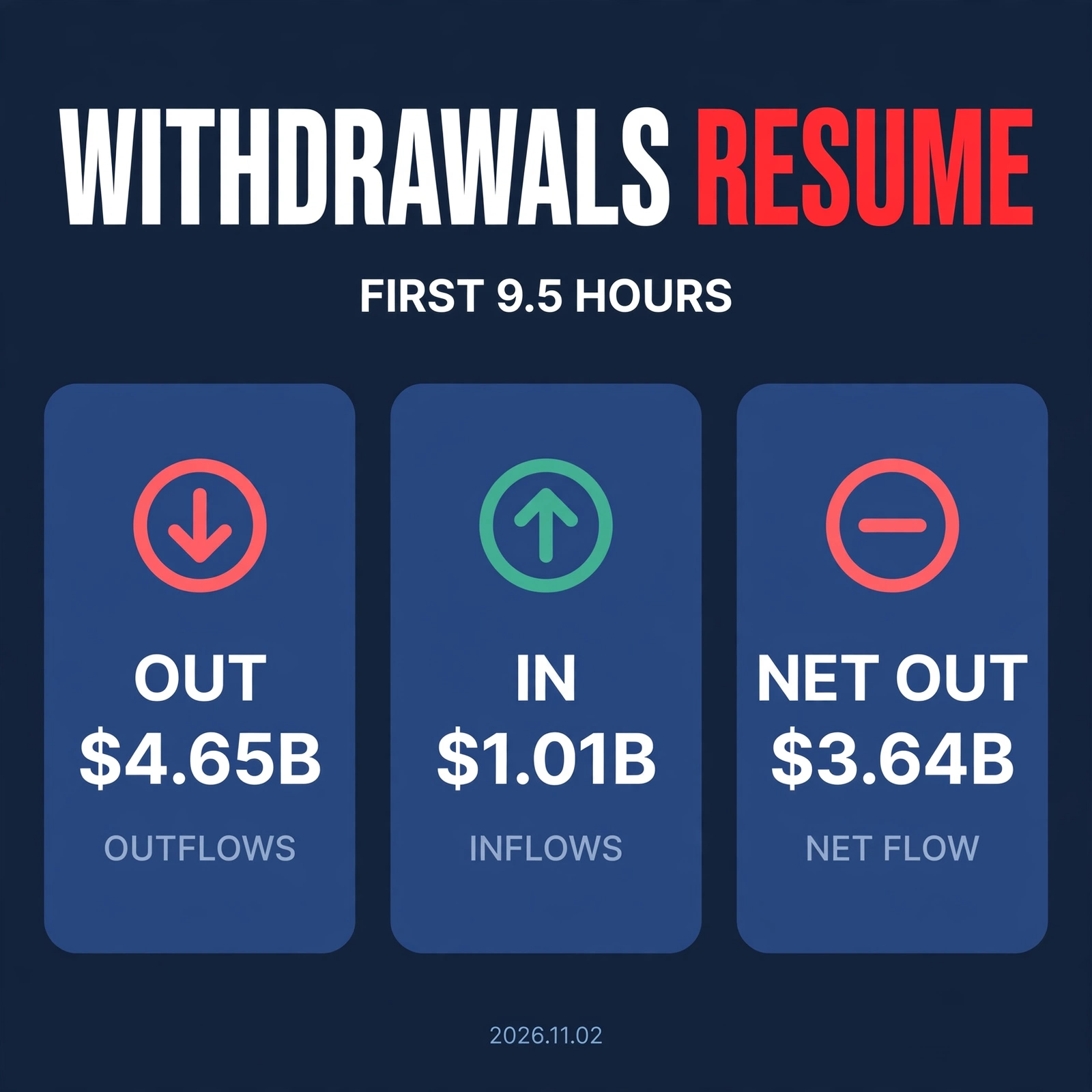
Binance's November 1 withdrawal reopening, day one: $4.649B out, $1.01B in, $3.64B net outflow (2.1% of assets), withdrawals processed normally, and the FBI formally attributed the hack to North Korea's TraderTraitor.
- Binance Hack $6.3B Crypto Exchange Security Investment Analysis
Sunday single-issue deep dive: how $6.3B left Binance in about 20 minutes in the largest crypto theft on record, what the 90% replenishment really means, and what the November 1 withdrawal restart and November 3 proof-of-reserves check will prove.
- Stablecoin Freeze Paradox Tether Circle $3 Billion Block Decentralization Analysis
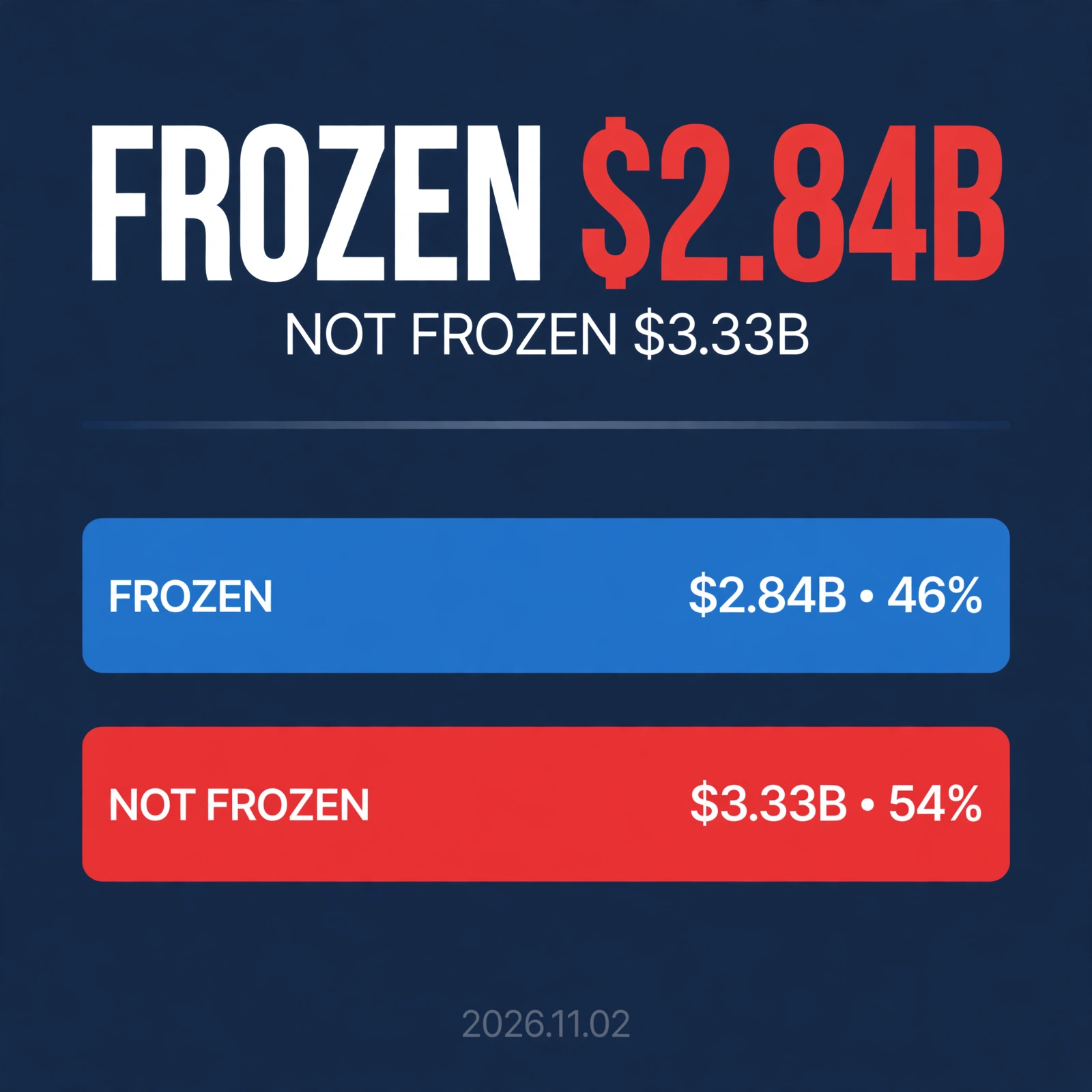
Binance hack freeze paradox: Tether froze $1.567B and Circle $823M, yet Elliptic counts $2.84B frozen versus $3.33B beyond freezing, plus the Aave loan bypass.

5minbrief on YouTube
The briefs also come as videos. Get the daily market wrap on YouTube.
Subscribe on YouTube