 5-minute briefs
Stablecoin Freeze Paradox Tether Circle $3 Billion Block Decentralization Analysis
Who stopped what: Tether’s $1.567 billion and Circle’s $823 million
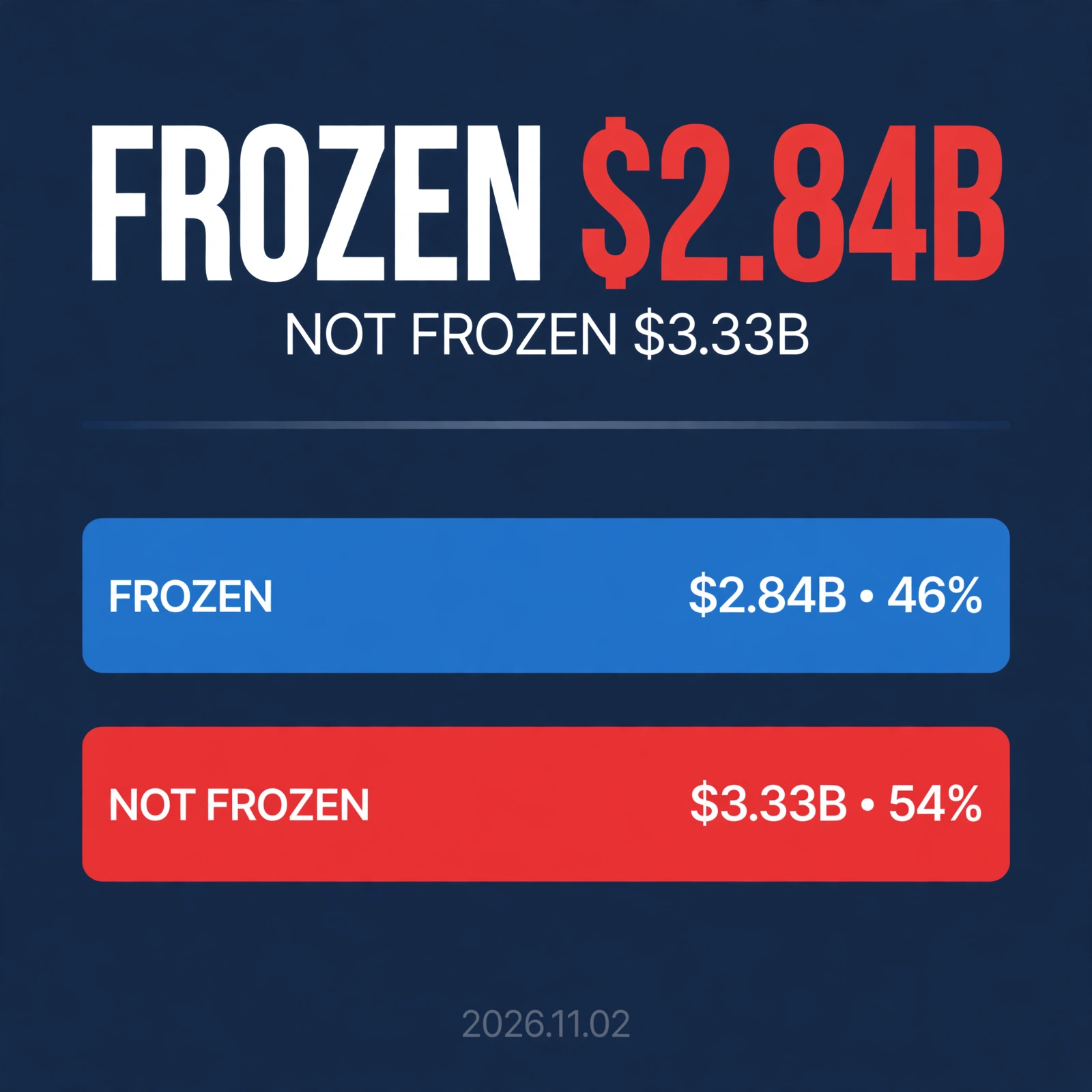
Two companies did most of the stopping. Tether froze approximately $1.567 billion in USDT, and Circle froze approximately $823 million in USDC. Tether’s first intervention came about 37 minutes after the tokens arrived in the attacker’s principal Ethereum wallet. Add Ripple’s RLUSD of roughly $200 million, Trump-affiliated World Liberty Financial’s USD1 in the tens of millions, and the Arbitrum Security Council’s move of roughly $30 million in ETH and ARB, and the total reaches the approximately $3 billion Binance reported as frozen. Elliptic verified $2.84 billion frozen as of 7:00 a.m. UTC on October 30, about 44% of its $6.43 billion theft estimate. Different tallies reflect different times and counting bases.
How freezing works must be stated precisely. Centralized stablecoins such as USDT and USDC carry an issuer-controlled blacklist function in their token contracts. Once an address is blacklisted, the tokens at that address cannot move. Later, the issuer can burn the frozen balance and reissue it to a legitimate claimant through legal process. Freezing therefore means “the money cannot move further,” not “the money has been recovered.” Recovery is a separate legal step.
One shift deserves attention. Circle had previously said it would not freeze USDC without a court order or direction from law enforcement. This time, it moved within roughly an hour of the first movements of hacked funds, according to Gizmodo’s account. Whether that reflects a changed policy or an exception driven by the scale of this case and law-enforcement coordination still needs Circle’s own explanation. What is clear is that issuer freezing has moved from a theoretical function to a tool actually used in a crisis.
Why only half stopped: assets that changed form before the freeze
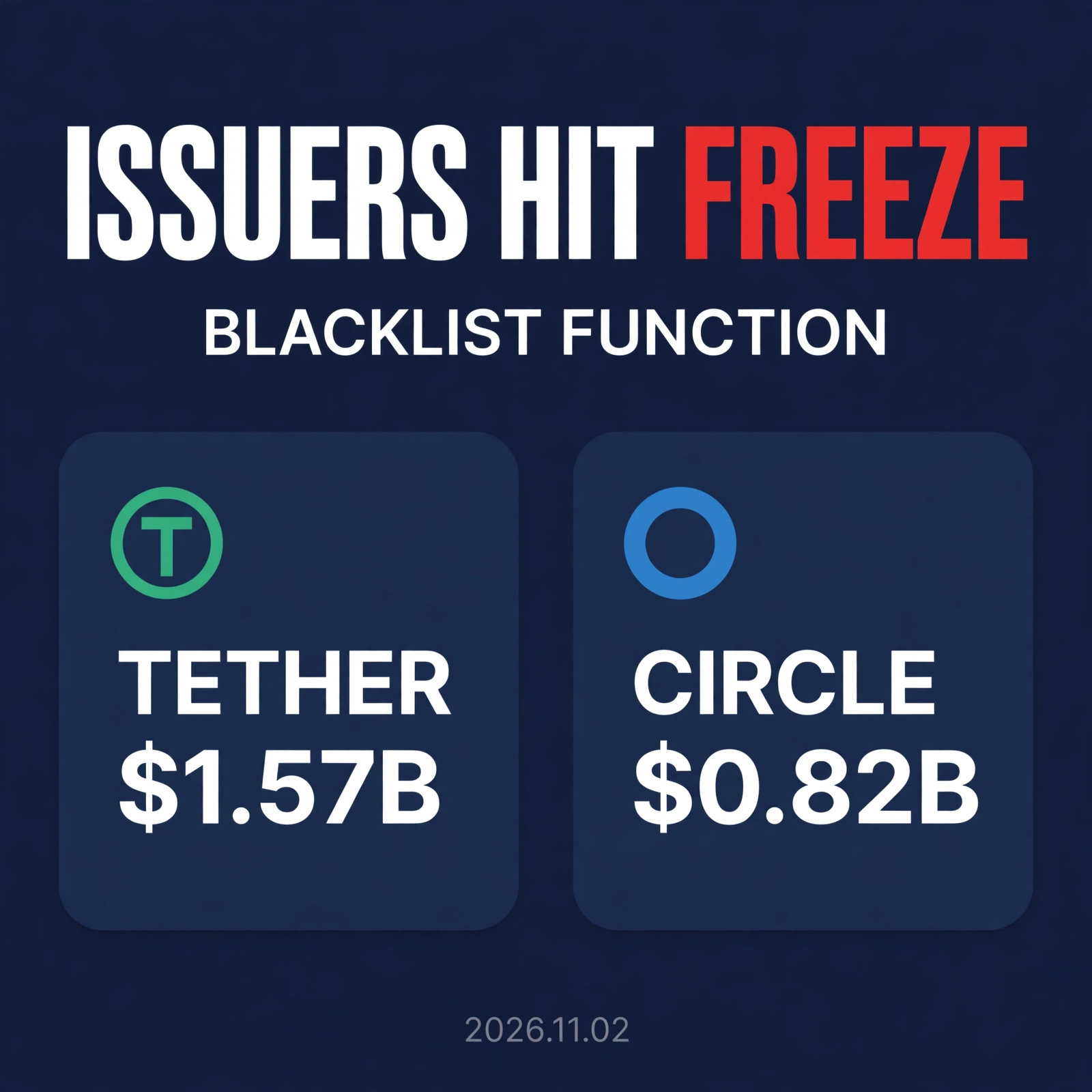
The $3.33 billion that was not frozen looks like this. Elliptic identified about $3.33 billion across roughly 43 addresses, including 18,270 BTC and more than 511,000 ETH — assets no issuer can directly freeze. Bitcoin and Ether have no central issuer like Tether or Circle. There is no one to put an address on a blacklist. The FBI’s request that firms block transactions from hundreds of addresses is, for these assets, the strongest available move — and a request relies on cooperation, not compulsion.
Speed also mattered. Attackers converted approximately $786 million in stablecoins into ETH and TRX before freezes took effect. On Ethereum, about 434 million USDT was exchanged for 160,451 ETH. A stablecoin is a freezable asset; Ether is not. The moment of conversion moves value beyond the issuer’s reach. The freeze race was a speed contest: issuers moved in about 37 minutes, but attackers converted part of the loot faster. Elliptic’s finding that stablecoins made up 94% of frozen assets also means freezing worked on essentially one asset class.
The Aave bypass: one loan that exposed the gap
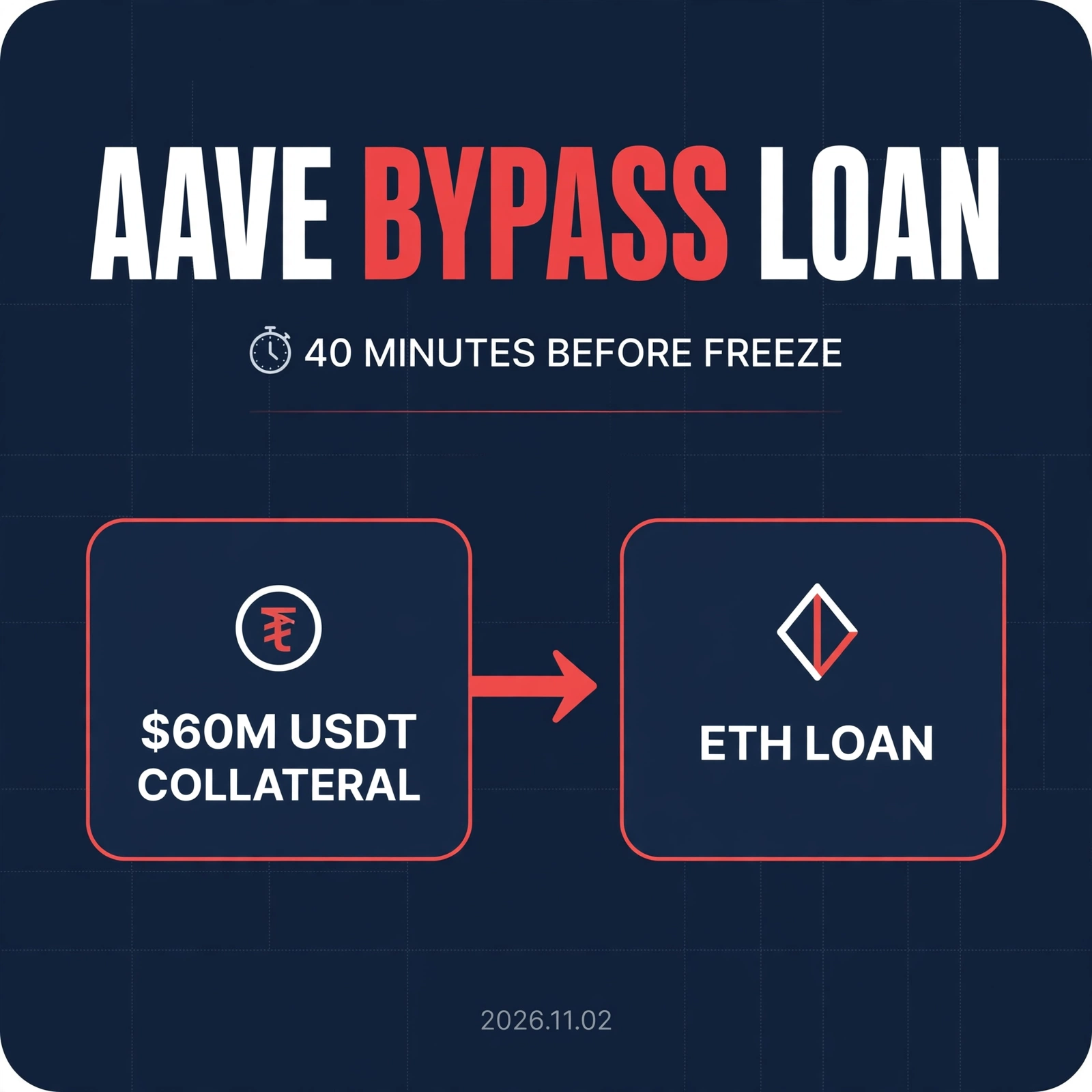
The most ingenious bypass ran through the decentralized lending protocol Aave. Between 20:58 and 21:01 UTC on October 29, an attacker-linked wallet deposited approximately $60 million in USDT into Aave V3 on Ethereum and borrowed 19,762 wrapped Ether, worth roughly $44.6 million at the time. The transaction happened about 40 minutes before the first relevant freeze. The mechanics explain why it counts as a bypass. The attackers did not sell the USDT; they posted it as collateral and borrowed Ether, which cannot be frozen, against it. The USDT stayed inside Aave’s lending pool, while the borrowed Ether came under the attacker’s control. Freezing the original wallet afterwards does not return the collateral or cancel the loan.
Aave later paused new deposits and borrows across 16 networks as a precaution, then reopened. Aave risk provider LlamaRisk confirmed the position remained overcollateralized and did not endanger protocol suppliers. That point matters. From Aave’s perspective it was a normal overcollateralized loan; from a security perspective it was laundering past a freeze. The same transaction reads in two languages. Decentralized protocols do not ask who the wallet owner is, so they have no built-in way to refuse a loan collateralized with stolen funds. When freezable assets, unfreezable assets, identity-checking issuers, and identity-blind protocols share one system, the gap between them becomes the attack path.
- Blacklist freeze: an issuer function that blocks movement of tokens at a specific address. It exists in centralized stablecoins such as USDT, USDC, RLUSD, USD1, and FDUSD.
- Burn and reissue: the recovery path in which frozen tokens are destroyed and newly issued to a legitimate claimant. Freezing and recovery are different stages.
- Wrapped Ether (WETH): Ether wrapped into token form for use as collateral and in trading inside decentralized finance protocols.
- Overcollateralized: a loan backed by collateral worth more than the amount borrowed. The Aave position in question stayed overcollateralized.
- Decentralized finance (DeFi): lending and trading run by smart contracts without an intermediary. Many protocols do not require identity checks.
What investors should take away: whose switch covers your coins
The question this case leaves is not “are stablecoins safe?” It is “whose switch covers the asset I hold?”. Holding USDT or USDC means accepting that the issuer can freeze your address. For a hack victim that is rescue; for a sanctions target or a mistakenly flagged holder it is risk. Holding Bitcoin or Ether means no freeze switch — and also fewer ways to recover stolen funds. Under the single label “crypto,” the presence or absence of a switch creates opposite risks.
Two things remain to be confirmed. First, how much of the frozen stablecoin value actually returns, and how fast the burn-and-reissue and legal review process moves. Second, what safeguards protocols such as Aave add against loans collateralized with stolen funds. Adding identity checks would shake the core of decentralization; not adding them leaves the same bypass open. The paradox, in one line: what stopped the crisis was a centralized switch, and the places that switch cannot reach are where the next crisis starts.
Sources & references
- FinanceFeeds — Binance Hack: $3.33B Still in Hackers' Hands, $2.84B Frozen — Elliptic $2.84B frozen, $3.33B beyond freezing, Tether $1.567B, Circle $823M, Aave $60M loan
- Gizmodo — Crypto Industry Responds to Binance Hack by Acting Like Banks — Tether and Circle freezes, Circle's prior no-freeze stance, Aave borrowing of freezable funds
- CryptoRank — The Binance Hack Breakdown — $786M converted before freezes, 434M USDT swapped for 160,451 ETH, Aave loan details
Related articles
- Binance Withdrawal Resumption Net Outflow $3.64 Billion FBI North Korea Attribution Analysis
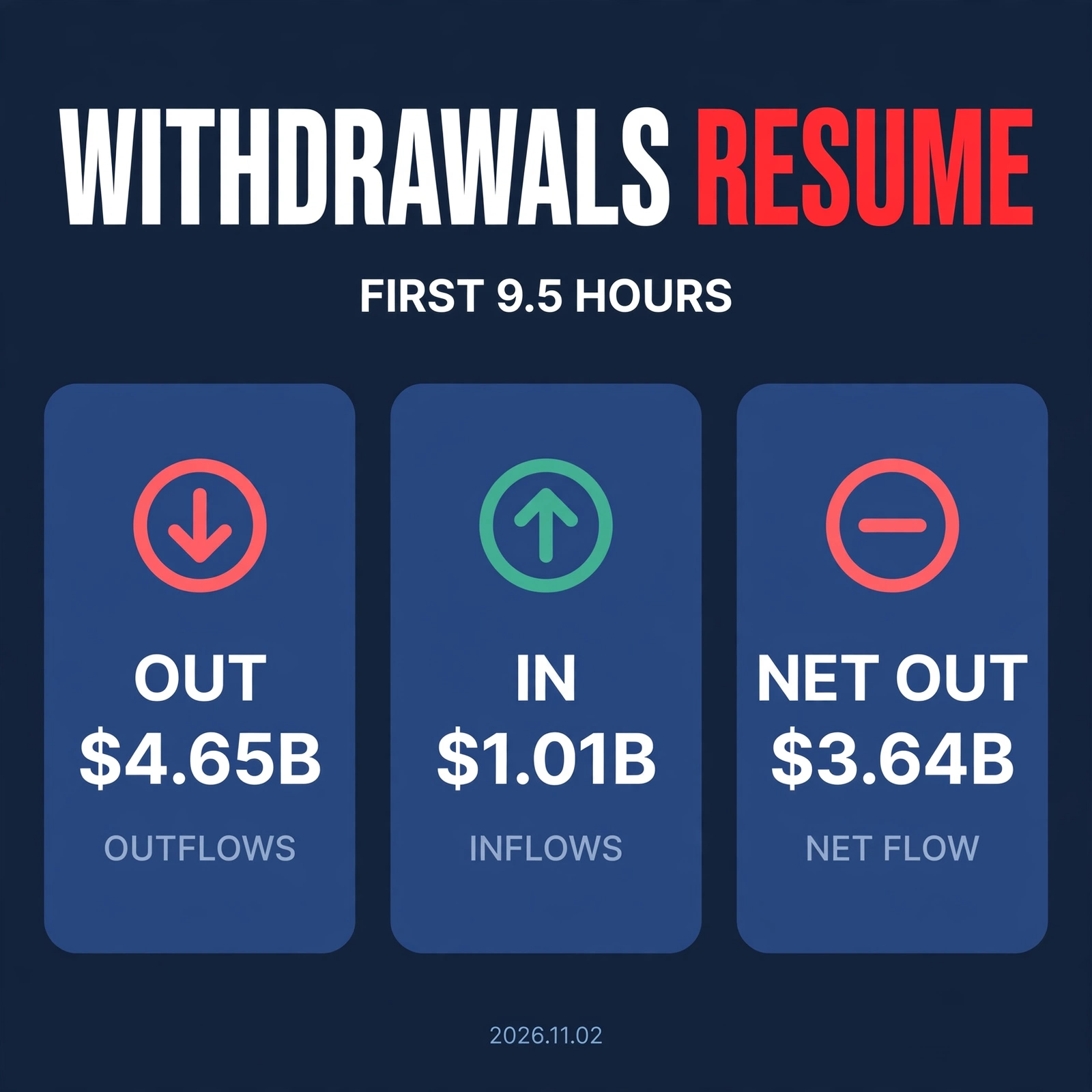
Binance's November 1 withdrawal reopening, day one: $4.649B out, $1.01B in, $3.64B net outflow (2.1% of assets), withdrawals processed normally, and the FBI formally attributed the hack to North Korea's TraderTraitor.
- Crypto Exchange Proof of Reserves SAFU Custody Investment Analysis
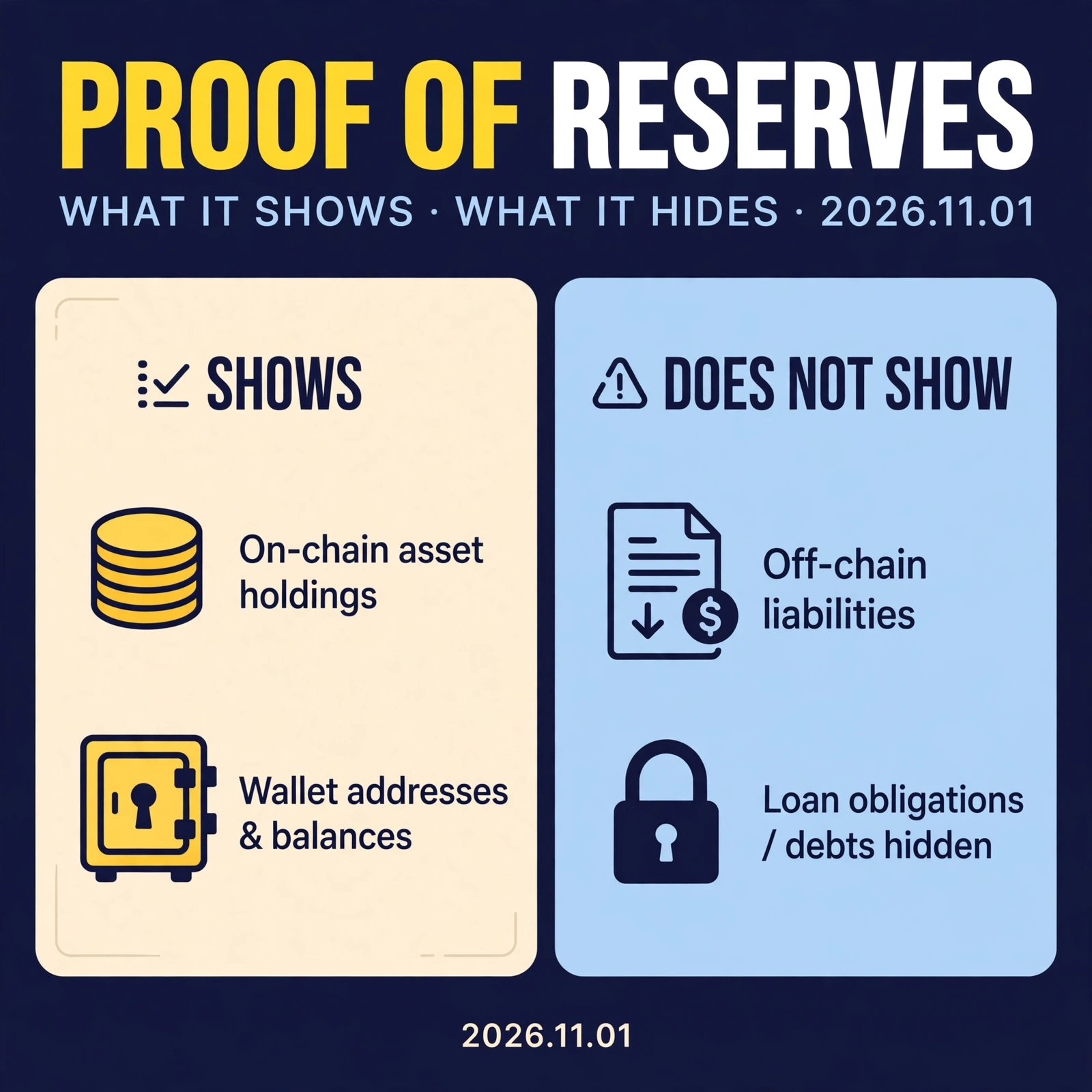
After the Binance hack, a plain-language guide to proof of reserves and SAFU: what a proof shows, what it cannot show, how hot and cold wallets differ, and a custody checklist users can verify themselves.
- December FOMC 50bp Hike Scenario Analysis Core CPI 0.3% and Waller Comments
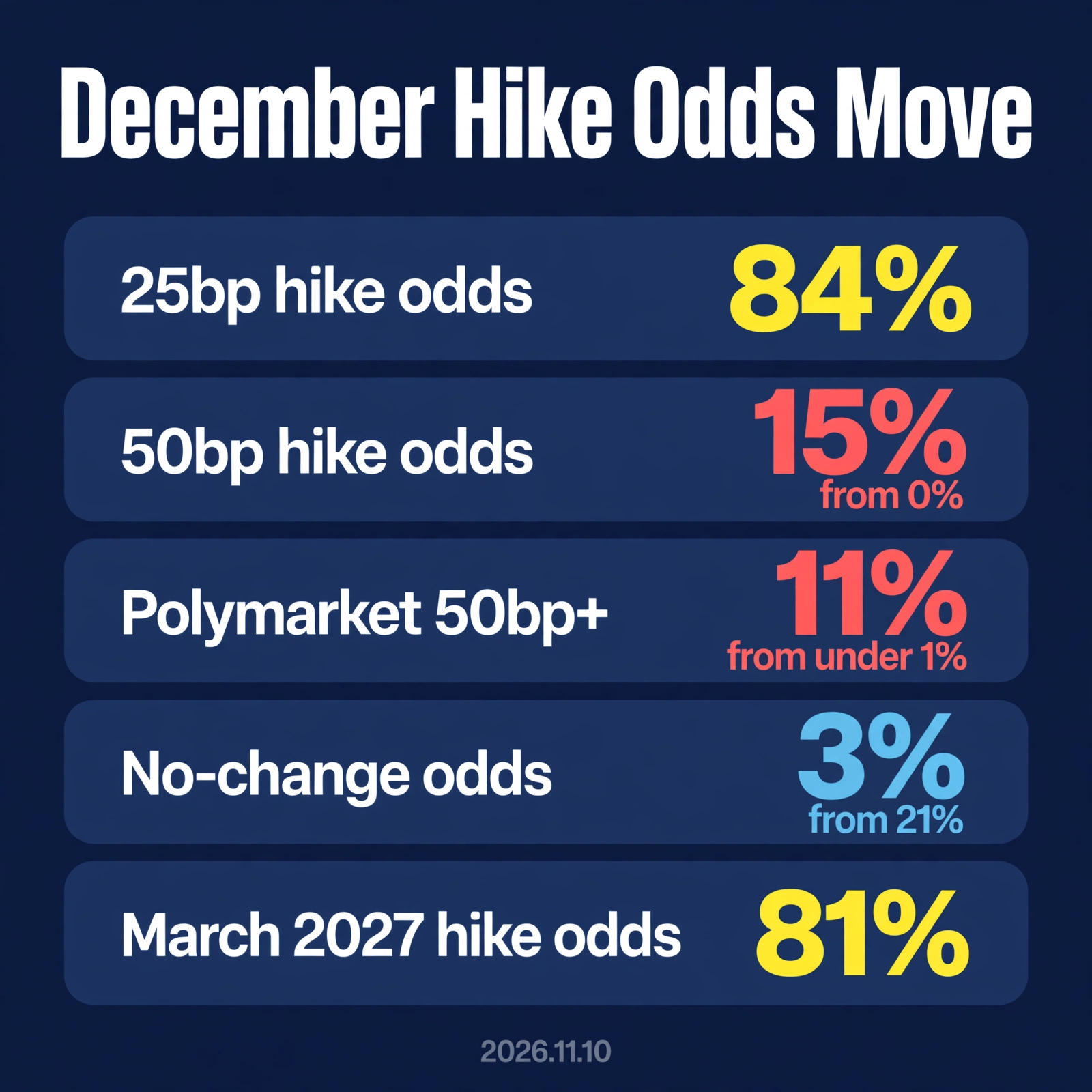
October core CPI ran at 0.3% for a third straight month, and December 50bp hike odds jumped from 0% to 15%. Governor Waller had named 0.3% core as the condition for considering a 50bp move, and November CPI comes out the day after the FOMC. What separates a 25bp hike from a 50bp one.
5minbrief on YouTube
The briefs also come as videos. Get the daily market wrap on YouTube.
Subscribe on YouTube