 5-minute briefs
Binance Hack $6.3B Crypto Exchange Security Investment Analysis
#Binance hack#proof of reserves#TraderTraitor
How $6.3 billion left in about 20 minutes
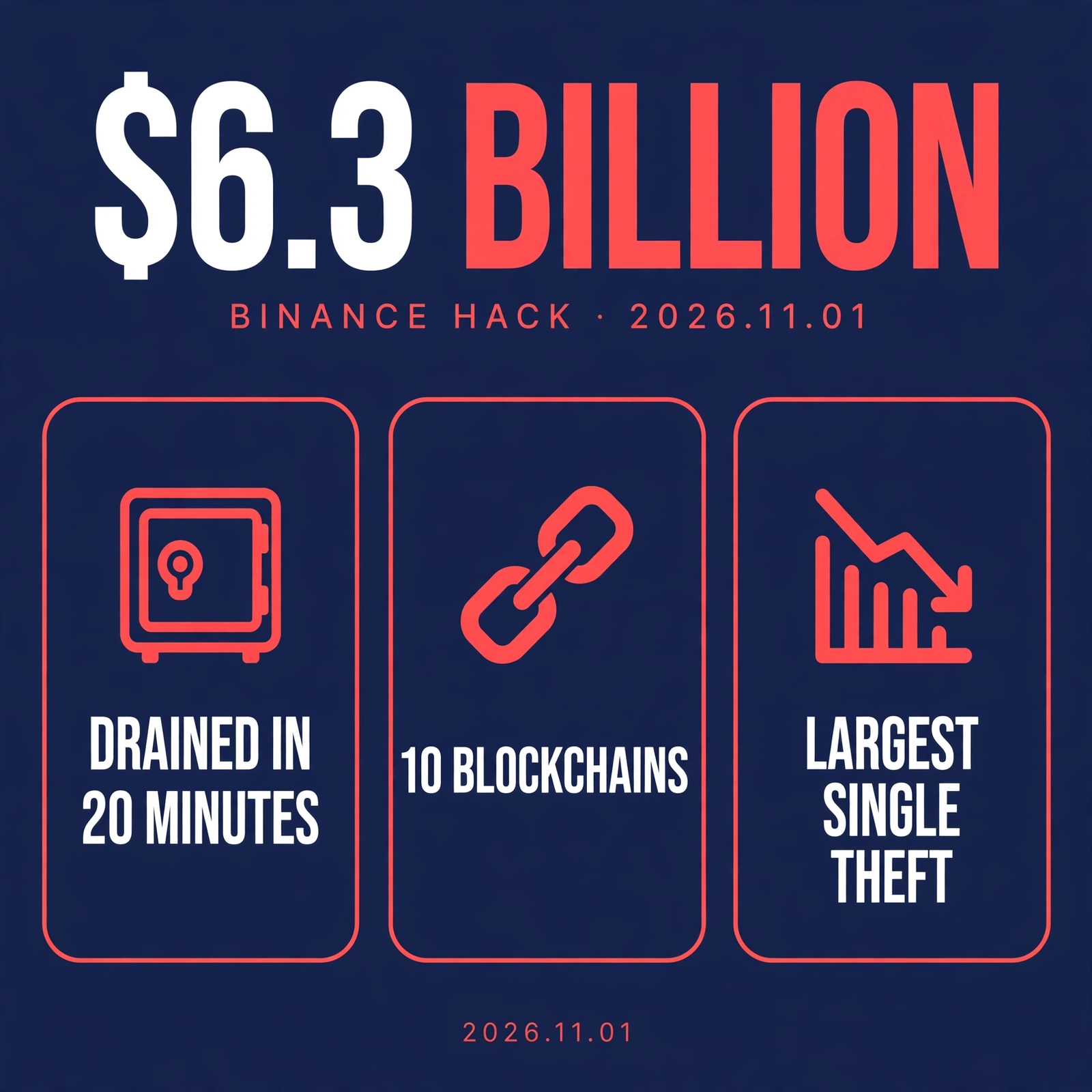
The theft began at about 4:05 p.m. US Eastern time on October 29, or 5:05 a.m. Korea time on October 30. In Binance’s preliminary account, a DevOps engineer’s laptop was compromised, and the attacker used that route to reach a service container and submit unauthorized withdrawals, bypassing normal approval steps. Funds moved across 10 blockchains in roughly 20 minutes, including a single transaction of about 167,464 Ether, worth about $388 million.
The size is hard to overstate, whichever estimate is used. Binance puts the impact at about $6.3 billion; TRM Labs counts about $6.36 billion, while Chainalysis estimated about $5.912 billion at the time of the theft. The differences reflect price moves and counting methods. All agree on the ranking: more than four times the previous record, the roughly $1.5 billion Bybit hack of February 2025. The stolen bitcoin alone, 18,270 BTC worth about $1.4 billion, exceeds Tesla’s 11,509 BTC and is more than twice El Salvador’s national reserve of about 7,820 BTC.
The market reaction was amplified because the hack landed on the same day as a tech selloff. Bitcoin fell at one point to $76,368, its lowest in six weeks, and traded near $77,224 on the morning of October 31. BNB fell below $698, down about 7% in a day, and in Friday’s US session Coinbase fell 10.62% and Robinhood fell 7.21%. US spot bitcoin ETFs saw about $643.33 million in net outflows on October 30, and forced liquidations of leveraged crypto positions reached about $1.53 billion. It was not one hack in isolation; it was a hack colliding with a risk-off day.
What 90% replenished really means: company money, not recovered funds
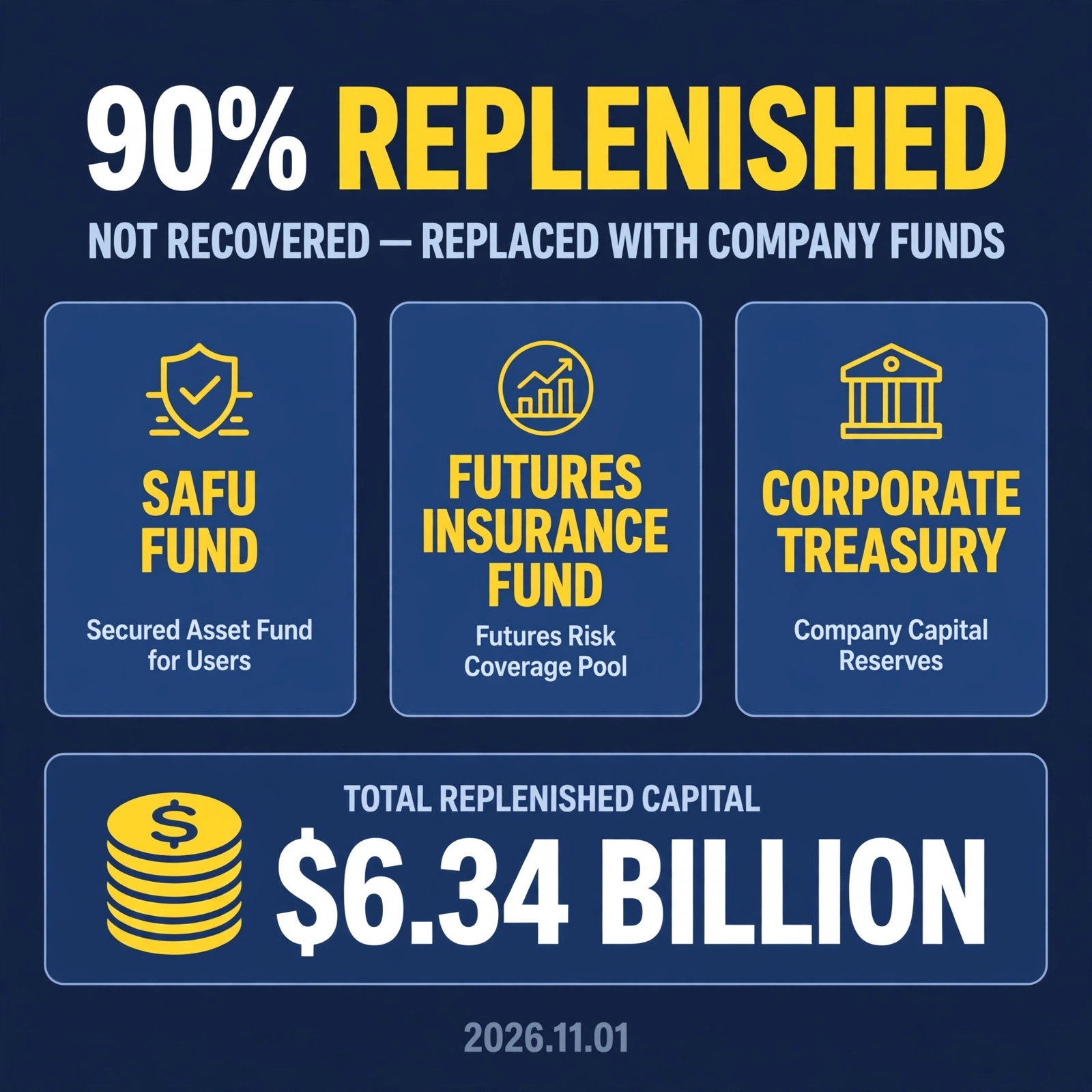
On October 31, Binance said it had replenished 90% of the stolen assets, up from about 80% in its previous update. The distinction matters. That 90% was not clawed back from the attacker. Binance used its own money to buy replacement tokens so customer balances are backed again. Binance itself said it, not users, would absorb the financial impact.
The money came from three sources: the Secure Asset Fund for Users (SAFU), part of the futures insurance fund, and the corporate treasury. Binance set aside more than $6.34 billion in company funds, about $5 billion of it already held in the affected cryptocurrencies, with the rest bought on the market and over the counter. The top 10 assets are now fully backed: bitcoin, Ether, USDT, BNB, SOL, USDC, XRP, USD1, RLUSD, and ZEC. The remaining roughly 10% consists of less liquid tokens that take longer to source in the required amounts. Binance also pledged to restore SAFU to about $1 billion. SAFU, created in July 2018, was reported at about $1 billion as of October 13.
In parallel, about $3 billion in assets was frozen with the help of industry partners, including stablecoin issuers Tether, reported at about $1.57 billion, and Circle, reported at more than $0.8 billion. Freezing stops the attacker from cashing out those tokens, but it is not the same as returning them to customers; recovery still has to go through investigation and legal process. And funds swapped before the freeze, including about $325 million converted into about 122,300 Ether, are harder to trace.
November 1 and November 3: the two dates that will test the story
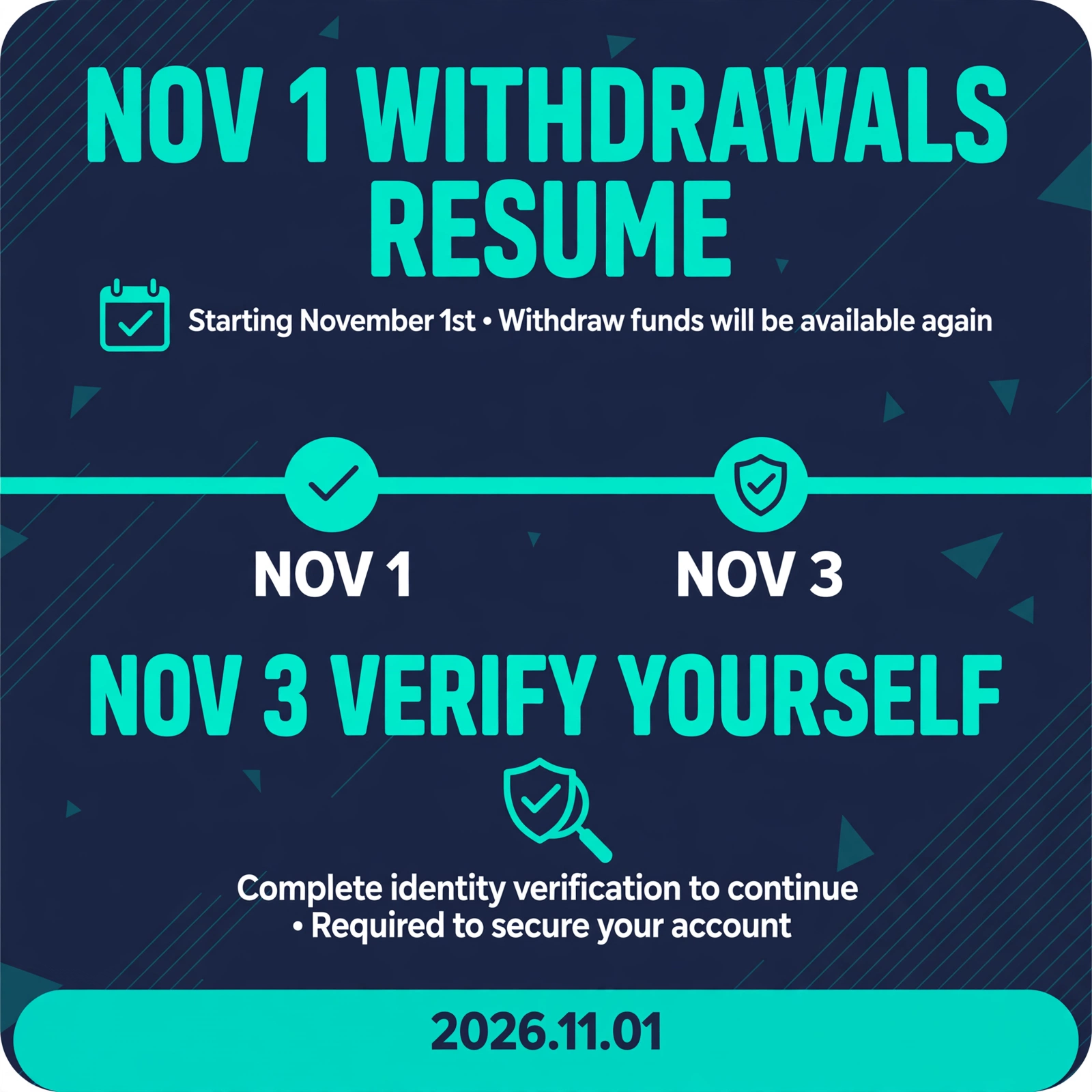
Binance aims to reopen withdrawals in phases from November 1, subject to final security checks. Withdrawals were fully suspended after the attack while deposits and trading continued, so the first day of processing is the first real test of the recovery story. The question is not whether an announcement is made, but whether withdrawals actually clear without delays or asset-specific bottlenecks.
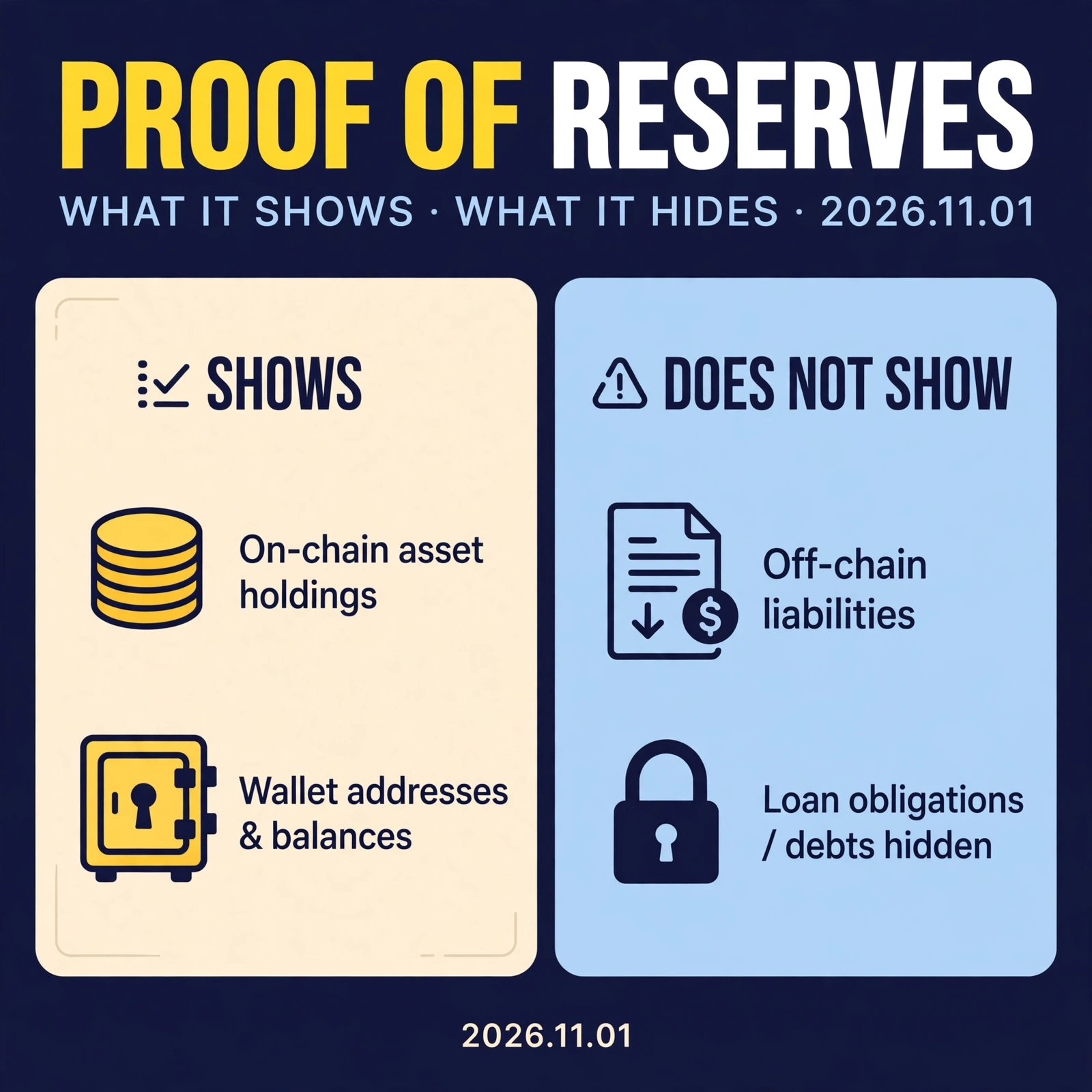
The second date is November 3. Binance took a proof-of-reserves snapshot as of 00:00 UTC on October 31, or 9:00 a.m. Korea time, and said the zero-knowledge proof computation, which verifies holdings without exposing personal data or individual transactions, takes 40–50 hours, so users can verify directly from November 3. A proof of reserves shows that an exchange held a stated amount of assets at a stated moment. It does not by itself prove liabilities, borrowings, or collateral arrangements. That gap is why a single proof document cannot settle the safety question, and it is the subject of a separate derivative post.
Attribution is also still open. TRM Labs and Chainalysis attribute the attack with high confidence to TraderTraitor, a North Korea-linked hacking group, and the FBI previously attributed the Bybit theft to the same group. But Binance has not named the attacker, and President Trump said on October 30, “We don’t know,” adding that authorities are investigating. The FBI and the US Secret Service have opened a joint investigation. An analyst attribution and an official investigative conclusion are different stages of fact, and the wording should stay precise until the latter arrives.
- Hot wallet: a wallet connected to the internet, used to process withdrawals. Convenient, but more exposed to attack than offline cold storage.
- Proof of reserves (PoR): a cryptographic method for showing an exchange actually holds customer assets. It shows assets, not the full liability picture.
- SAFU: Binance's Secure Asset Fund for Users, an emergency fund set aside to cover customer losses.
- Freeze: a stablecoin issuer blocking a specific address from moving tokens. A freeze is a step toward recovery, not recovery itself.
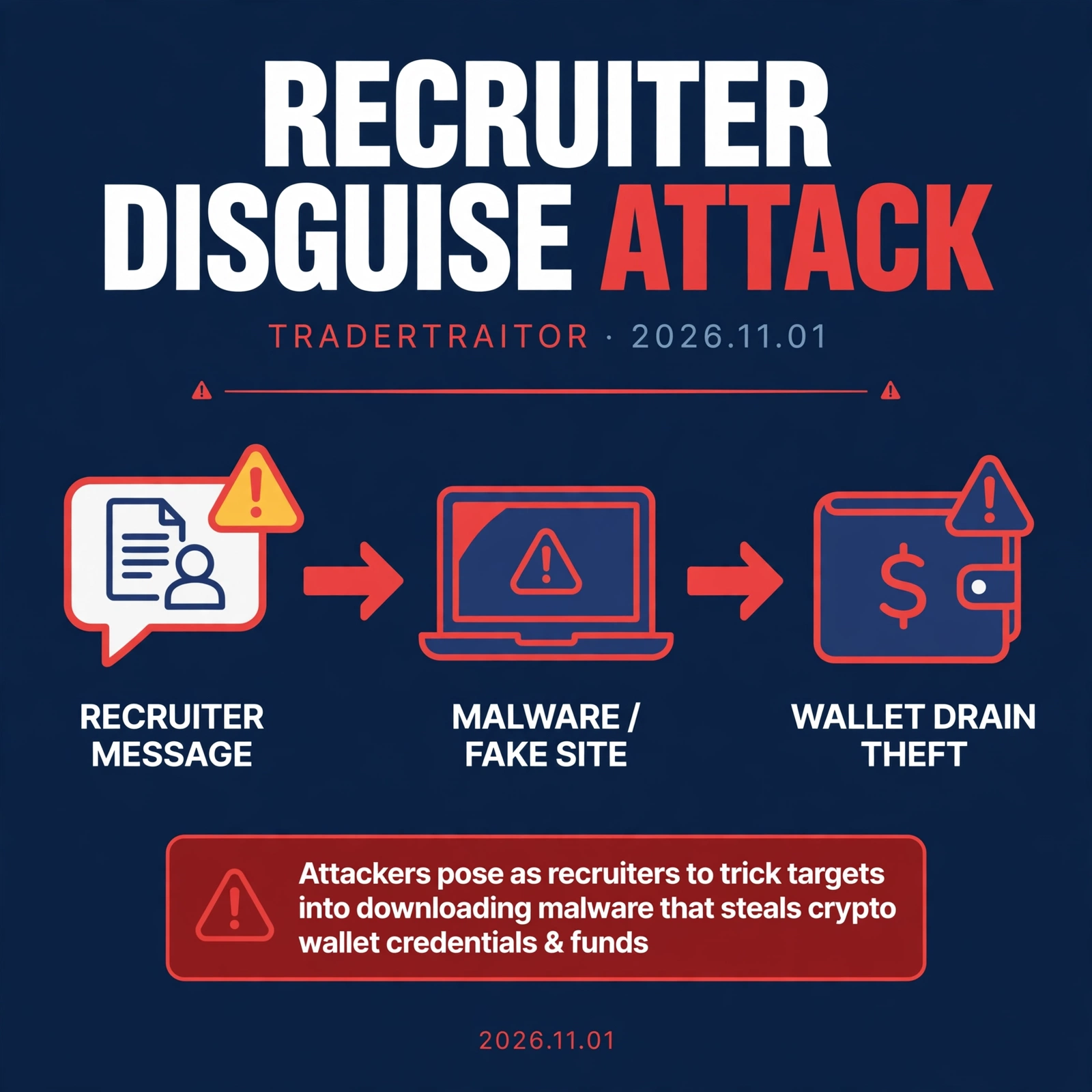
- TraderTraitor: the FBI's name for a North Korea-linked hacking group known for posing as recruiters to plant malware.
What investors should take from this
This event raises more than one question. First, the boundary between assets left on an exchange and assets held directly: exchange convenience can stop all at once, in the form of a withdrawal suspension. Second, the stablecoin freeze paradox: freezing limited the damage, yet it also showed how much control issuers hold in a supposedly decentralized system. Third, the price of state-linked theft risk: if this is a recurring pattern rather than a one-off breach, the whole crypto market’s security premium needs repricing. Analysts counted about $2.6 billion stolen by North Korea-linked hackers between January 2024 and September 2025, which points in that direction.
Watch three facts, not three announcements: whether withdrawals actually resume on November 1, what direct verification of the proof of reserves shows from November 3, and how far recovery of the roughly $3 billion frozen progresses. If any of them slips, the 90% figure alone will not restore trust. If all three check out, this will be remembered as the largest hack an exchange absorbed without passing the loss to customers. Either way, the evidence will be withdrawals processed and proofs verified, not press statements.
Sources & references
- The National — Binance covers 90 per cent of assets stolen in $6.3 billion hack — 90% replenishment, SAFU and treasury funding, November 1 withdrawal restart
- The National — How a $6 billion hack became the world's biggest crypto theft — 20-minute theft across 10 blockchains, $3B frozen, DevOps laptop attack path
- QUE — Binance Covers 90% of $6.3 Billion Hack Losses as Withdrawals Set to Resume — Top 10 assets fully backed, $6.34B in company funds, covered versus recovered distinction
- Crypto Briefing — FBI links $6B Binance hack to North Korea's TraderTraitor group — TraderTraitor attribution, Bybit $1.5B precedent, $3B frozen
Related articles
- Binance Withdrawal Resumption Net Outflow $3.64 Billion FBI North Korea Attribution Analysis
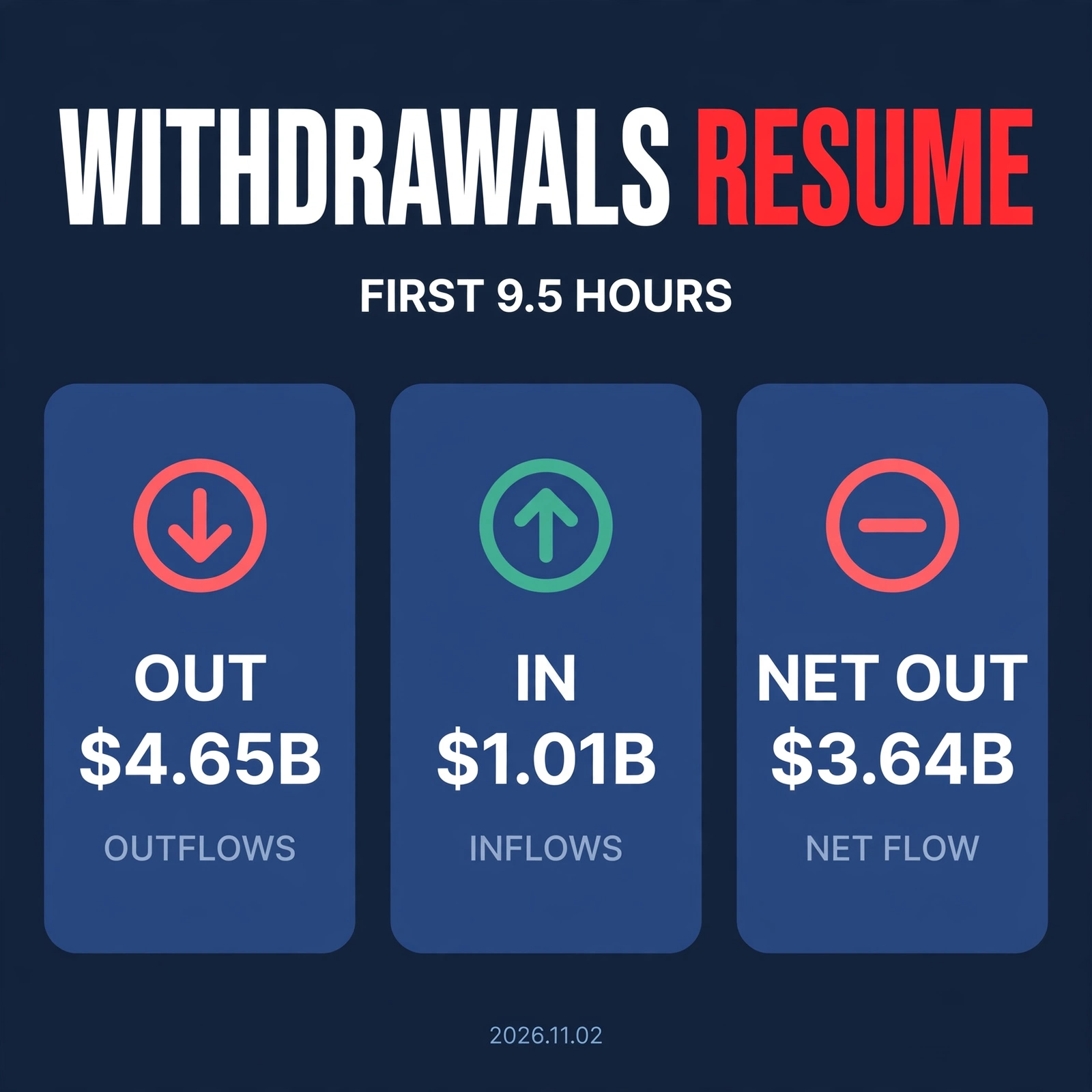
Binance's November 1 withdrawal reopening, day one: $4.649B out, $1.01B in, $3.64B net outflow (2.1% of assets), withdrawals processed normally, and the FBI formally attributed the hack to North Korea's TraderTraitor.
- Crypto Exchange Proof of Reserves SAFU Custody Investment Analysis
After the Binance hack, a plain-language guide to proof of reserves and SAFU: what a proof shows, what it cannot show, how hot and cold wallets differ, and a custody checklist users can verify themselves.
- North Korea Crypto Theft TraderTraitor Sanctions Investment Analysis
The group blamed for the Binance hack: how TraderTraitor's recruiter-disguise malware works, the $1.5B Bybit precedent, the $2.6B theft pattern since 2024, and what official confirmation would change for sanctions, freezes, and markets.
5minbrief on YouTube
The briefs also come as videos. Get the daily market wrap on YouTube.
Subscribe on YouTube