 5-minute briefs
Korea Low PBR First Day Analysis 106 of 151 Rise Hyundai Steel Surge
The day-one scoreboard — 106 up, 35 down, 10 flat
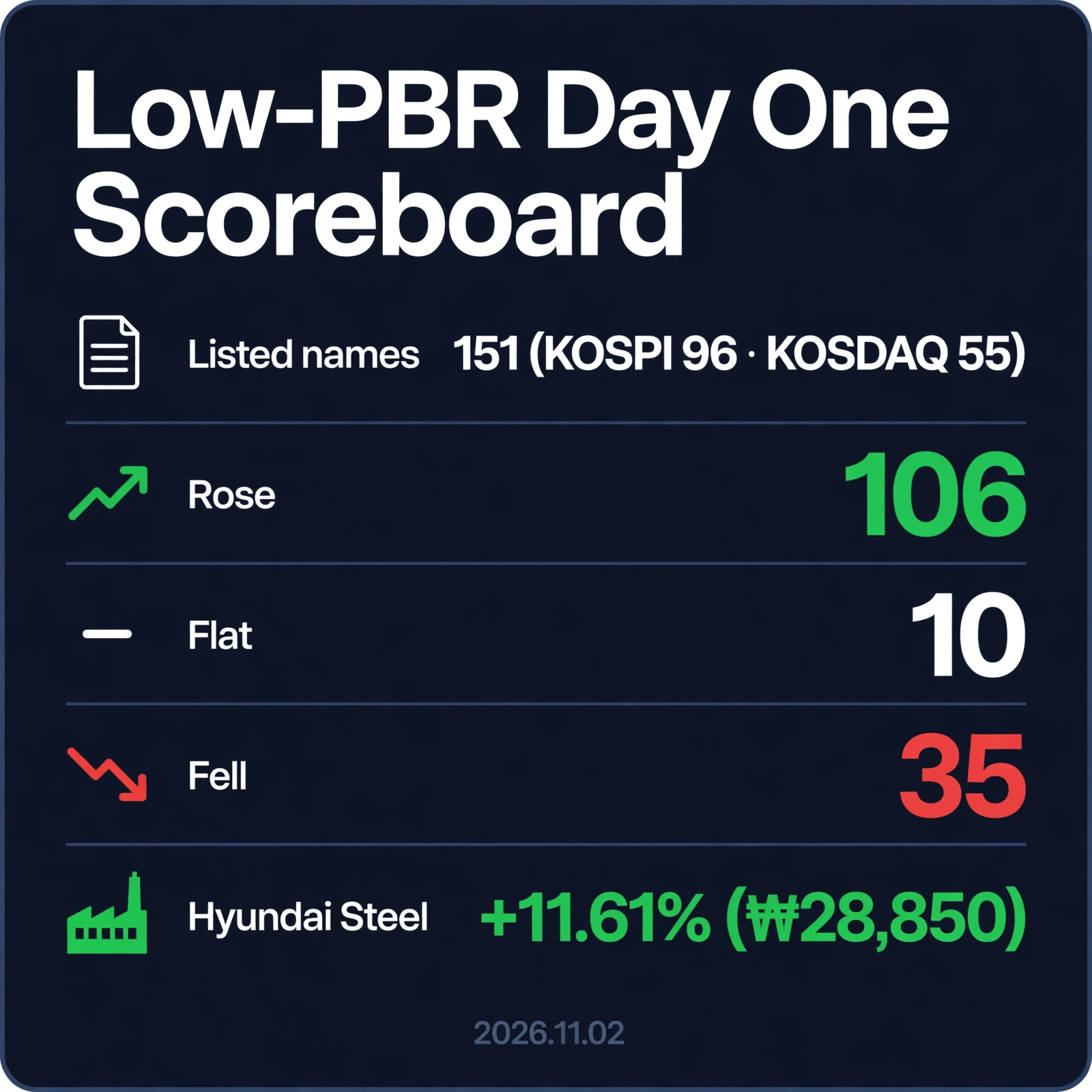
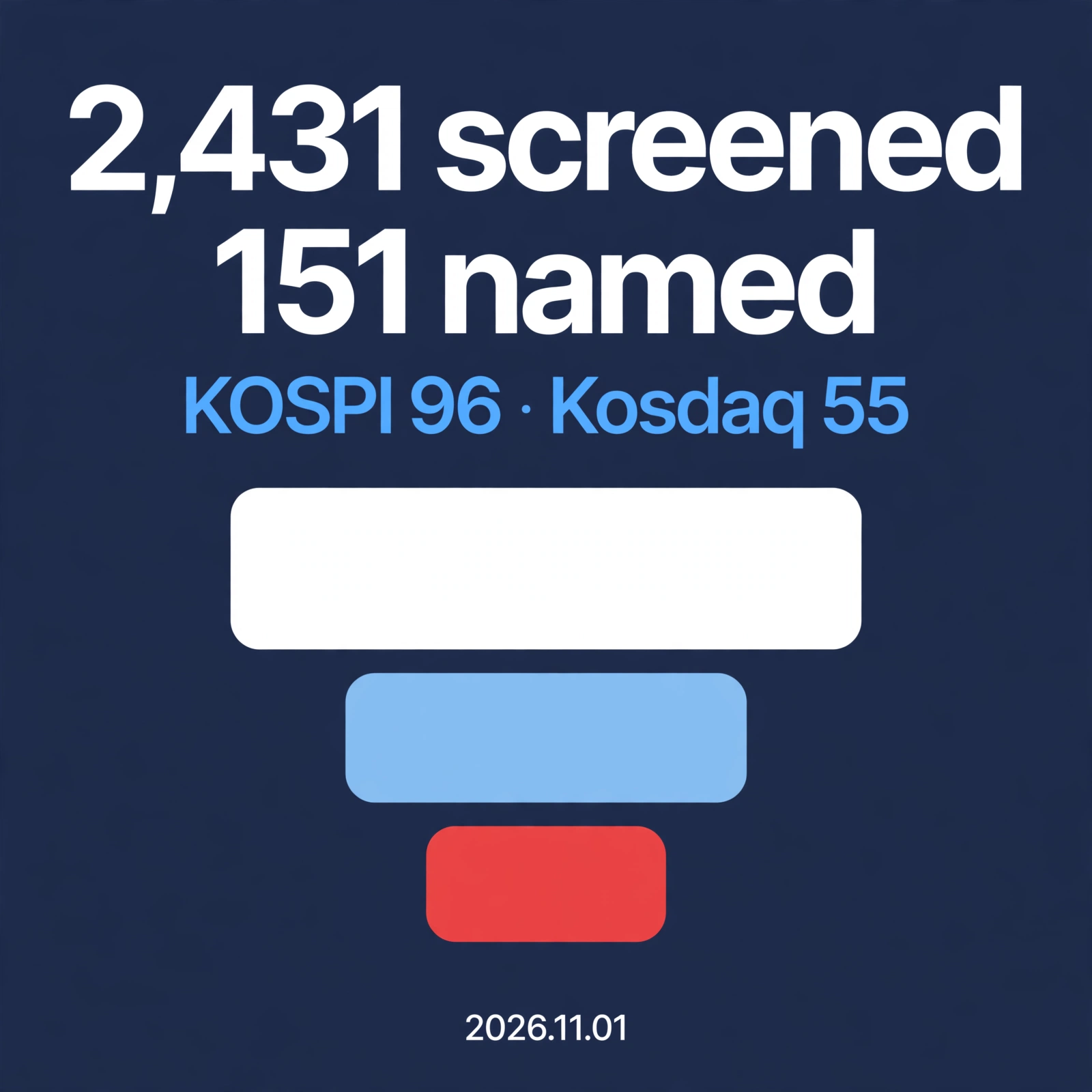
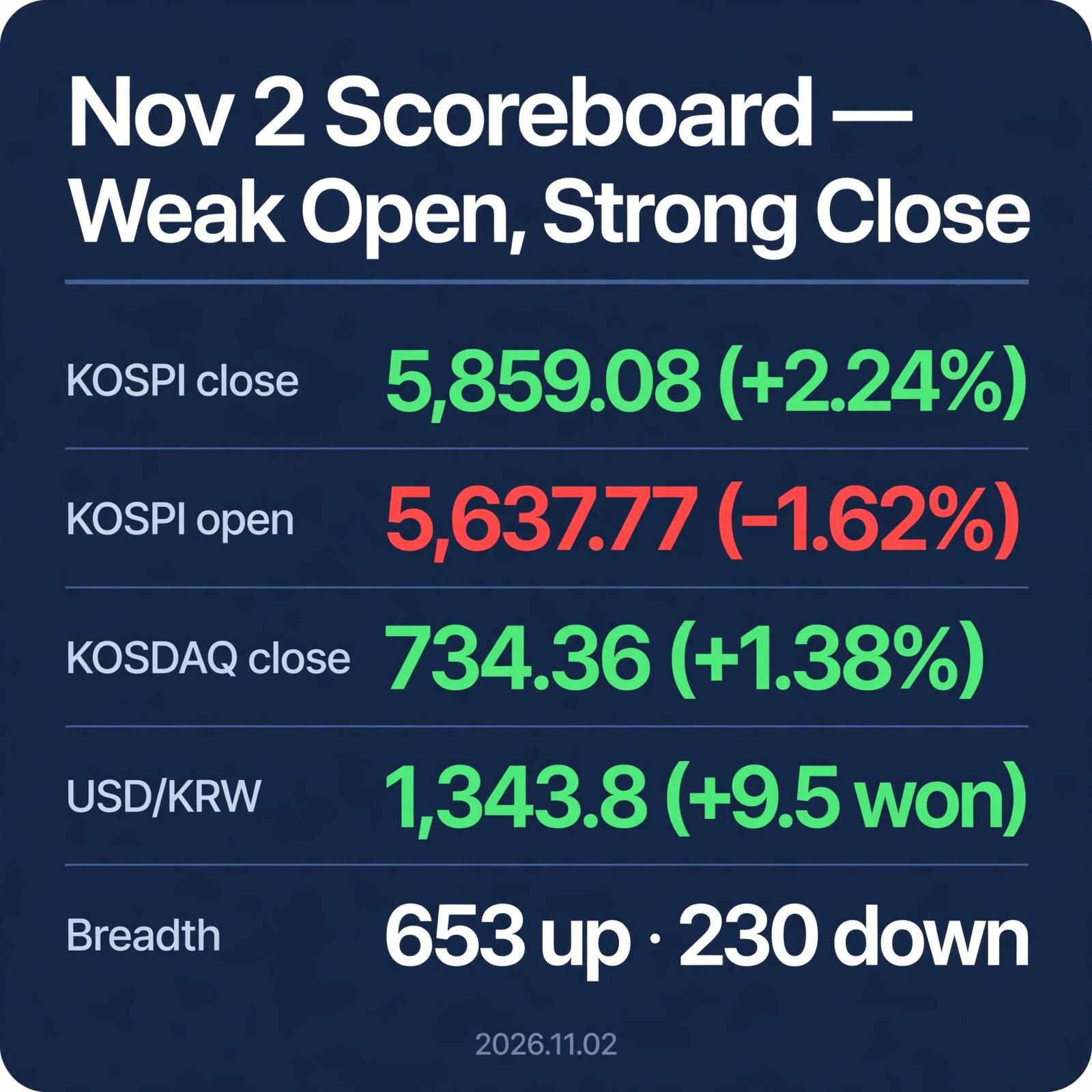
The Korea Exchange published its first low-PBR list on November 1: 96 KOSPI names and 55 KOSDAQ names, 151 in total. From November 2, the label appears next to these stocks on broker trading screens. According to Newsis, by 10:51 a.m., 106 were rising, 10 were flat, and 35 were falling — about 70% advancing. For context, the broader KOSPI had 653 advancers against 230 decliners that day, so the list’s breadth was not dramatically different from the market’s. The moves in individual names were large: Hyundai Steel closed up 11.61% at 28,850 won, while Lotte Shopping (+6.96%) and E-Mart (+5.93%) were strong in the morning. Their price-to-book ratios — Lotte Shopping 0.17, E-Mart 0.15, Hyundai Steel 0.19 — show how far below book value these companies have traded for years.
Why the list effect cannot be isolated — sector strength is the confounder
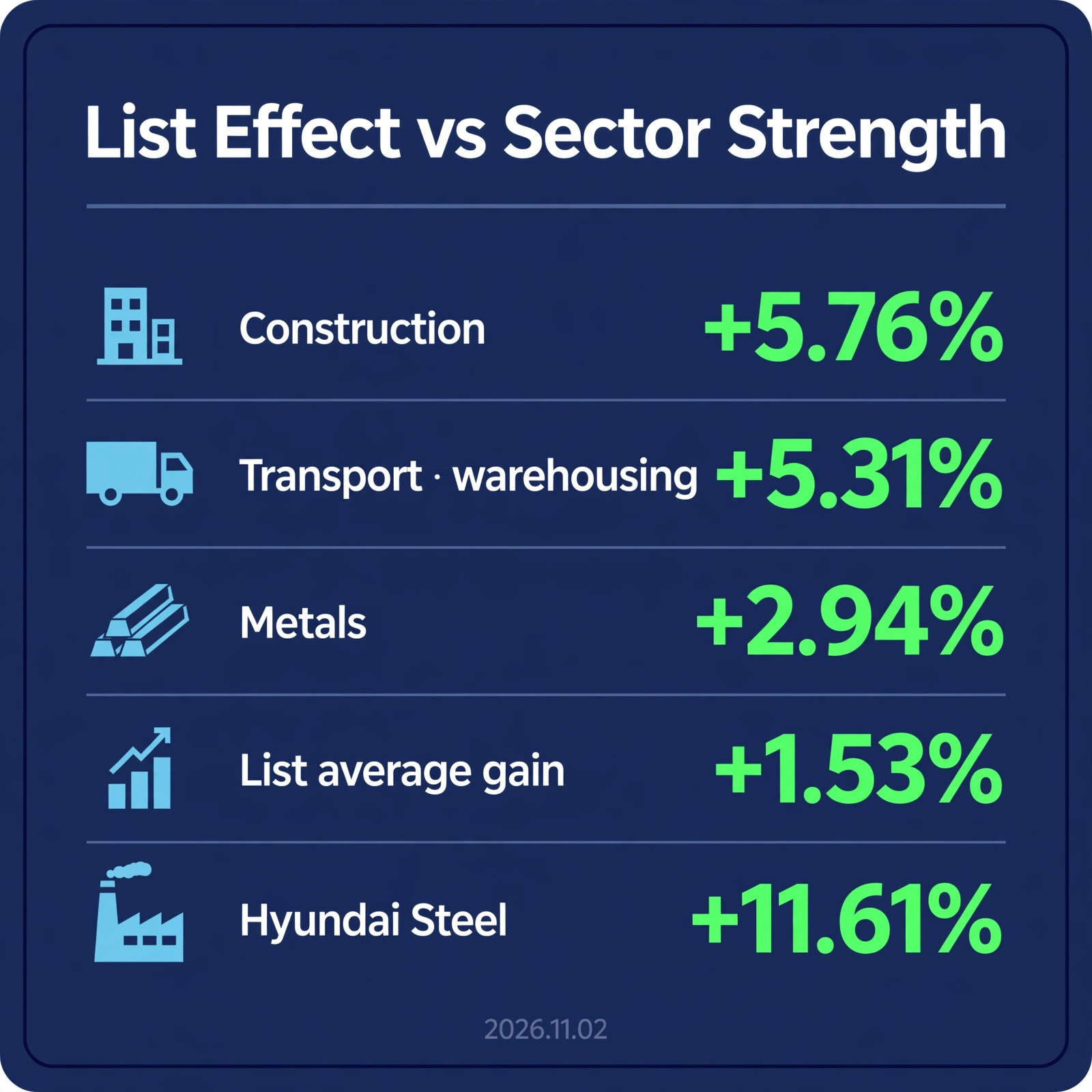
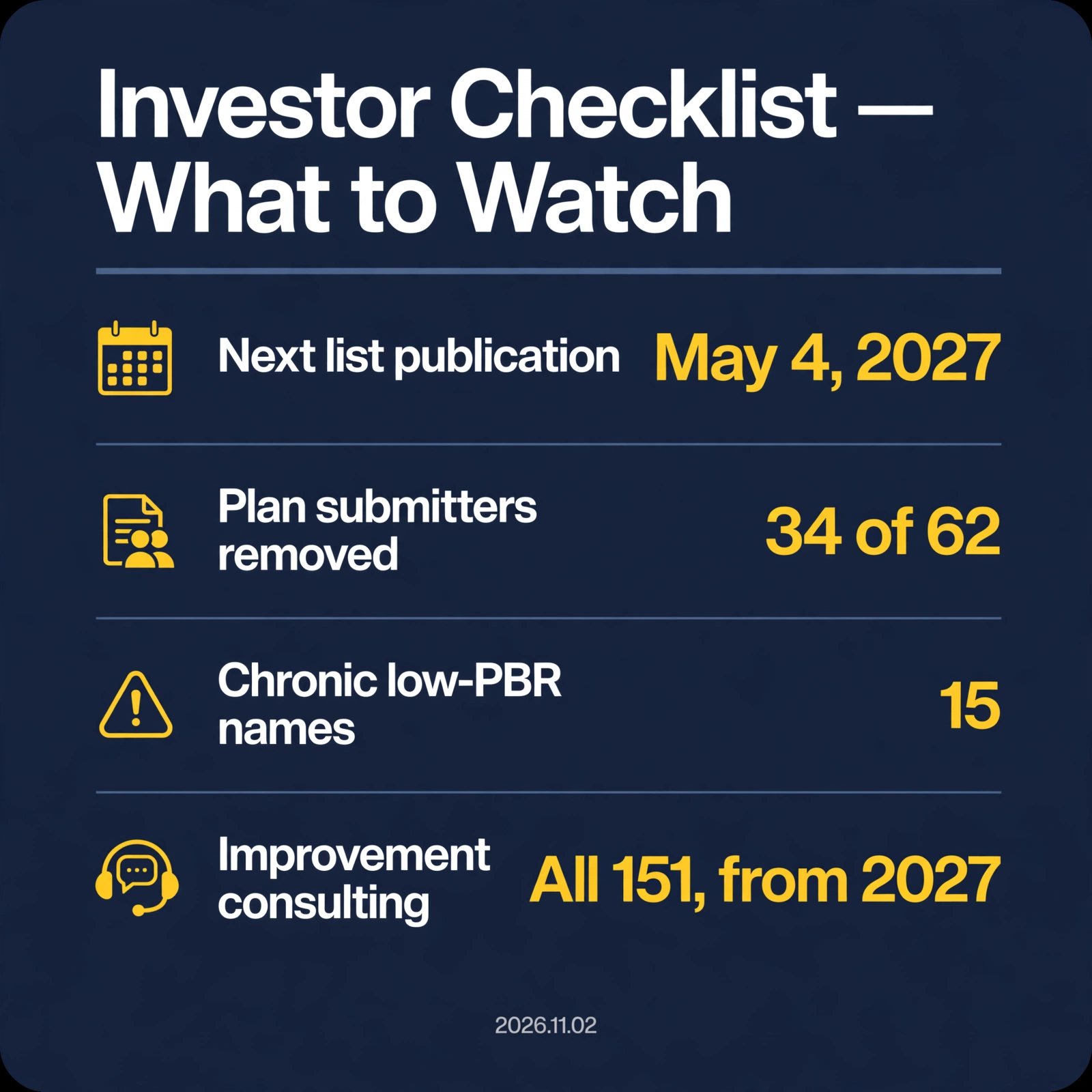
November 2 was a strong day for cyclicals generally: construction rose 5.76%, transportation and warehousing 5.31%, and metals 2.94%. Hyundai Steel’s surge could be a list effect, a steel-sector effect, or — most likely — both at once. Intraday reports put the list’s average gain at about 1.53%, but that figure, read without the sector backdrop, overstates the list’s contribution. This distinction is not academic. An investor who chases day-one gainers on the list thesis alone risks holding a stock whose gain evaporates when sector momentum cools. Conversely, dismissing the list entirely risks missing a structural shift: a dated, public scoreboard with a refresh date of May 4, 2027 and one-on-one improvement consulting promised from 2027.
The selection design itself carries a message foreign investors should note. Companies qualified only after sitting in the bottom quartile of their industry’s PBR for years, and 34 of the 62 companies that submitted improvement plans by October 22 were removed from the list. Submitting a plan already mattered. But 15 long-term low-PBR companies stayed on the list even after submitting plans — chronic undervaluation is treated differently from temporary undervaluation. The market’s next question is what the remaining 151 do, not what the list says.
The real test — three executions to watch before May 2027
First, concrete improvement plans: which of the 151 publish a plan with numbers and dates, rather than general language. Second, cash returned to shareholders: dividend increases and buybacks with timetables. A tag without cash changes nothing about PBR. Third, institutional engagement: whether revisions to the stewardship code actually amplify institutional voices at shareholder meetings of listed names. As KB Securities researchers put it, the list’s value lies less in the list itself than in pushing management to care about the share price and participate in Value-Up.
- Compare each gainer with its sector index. A stock beating its sector by a wide margin is a stronger list signal than one merely riding the sector.
- Do not buy the tag. Inclusion records years of low valuation; it is not evidence of undervaluation about to correct.
- Track execution dates, not headlines. Note each holding's plan filing, dividend policy announcement, and buyback disclosure between now and May 4, 2027.
- Watch the 15 chronic names. They stayed listed despite submitting plans. Their change, when it comes, will be the slowest — and the most meaningful signal.
November 2 was the first day Value-Up was priced by the market, and the pricing was positive. But 70% advancing on day one is not proof the policy works; it is the market’s first question to it. The answer will come from execution, and foreign investors holding Korea through EWY or direct KRX access have a dated calendar — May 4, 2027 — by which to judge it.
Not investment advice. Figures are from the Korea Exchange, Newsis and JoongAng Ilbo, checked November 2, 2026.
Watch the video

Sources & references
- Newsis — 106 of 151 low-PBR stocks rise, Hyundai Steel up 11%, Lotte Shopping up 7% — First-day morning breadth (106 up, 10 flat, 35 down), Hyundai Steel, Lotte Shopping and E-Mart gains
- Newsis — No Black Monday: KOSPI recovers 5,850 on Intel shock — Sector moves (construction +5.76%, metals +2.94%), KOSPI close at 5,859.08
- JoongAng Ilbo — Lotte Shopping, E-Mart among 151 low-PBR names under value-improvement pressure — Low-PBR selection criteria, next publication date May 4, 2027, representative PBR levels
Related articles
- Korea Low PBR List 151 Firms Value Up Naming Governance Analysis
The Korea Exchange named 151 persistently low-valued firms for the first time, with a public tag on trading apps from Monday. How the list was built, what Japan's reform teaches, and the four things foreign investors should watch next.
- KOSPI Rebound Analysis 2.24% Rally Institutional Buying Low PBR First Day
November 2 Korea market brief for foreign investors: the KOSPI opened down 1.62% on the US chip selloff, then rallied 2.24% to 5,859.08 on institutional buying and a strong first day for the low-PBR name list. Foreigners sold a net 373.1 billion won overall but bought Samsung Electronics.
- KOSPI 1.24% fall Samsung shareholder return delay 5937 close analysis
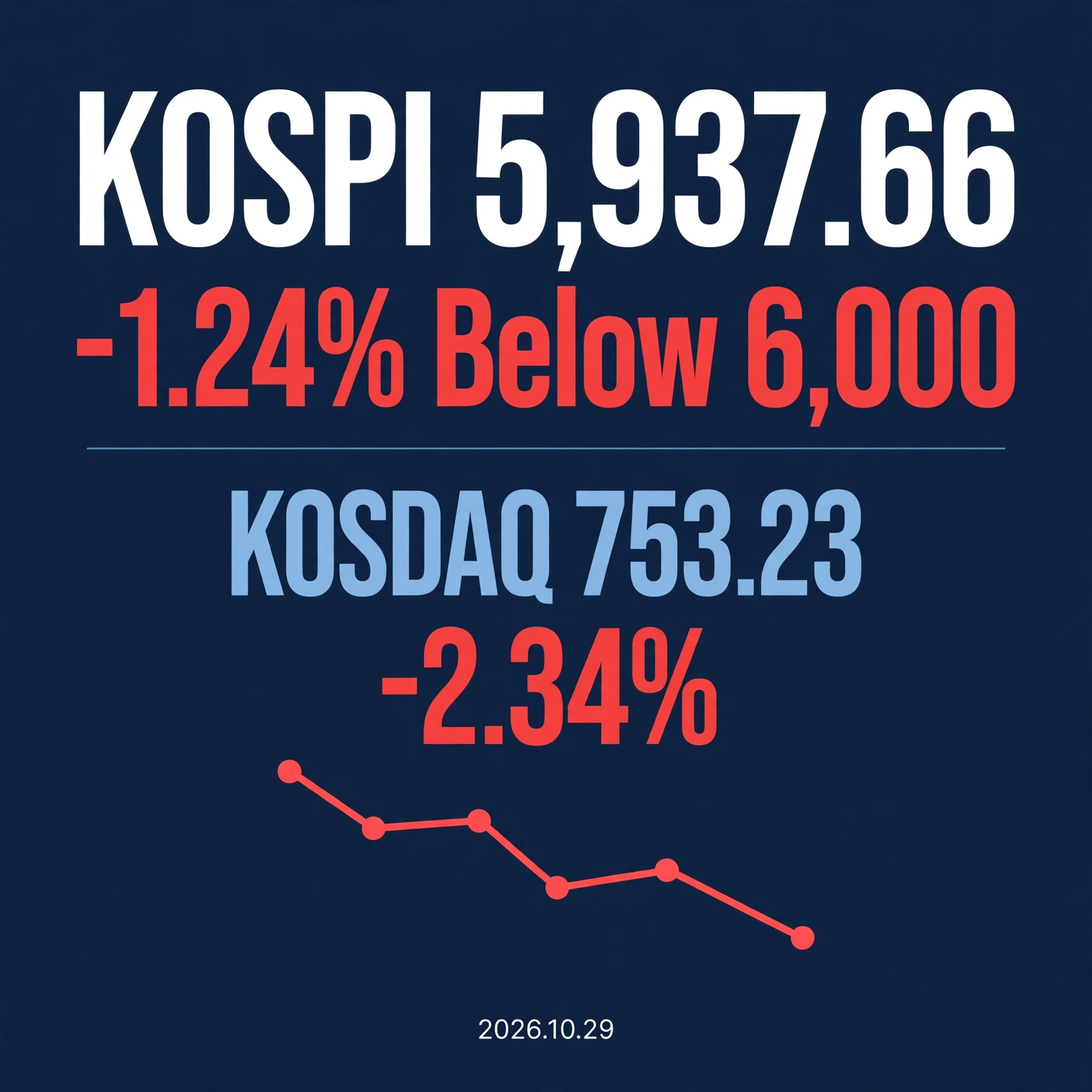
October 29 Korea market brief for foreign investors: the KOSPI fell 1.24% to 5,937.66, giving back the 6,000 line one day after retaking it, and the KOSDAQ fell 2.34% to 753.23. Samsung posted record third-quarter operating profit of KRW 107.44 trillion yet fell 4.13% after deferring shareholder-return details to January, while SK hynix, which spelled out a KRW 100 trillion ($74.8 billion) return plan, rose 2.62%. LG Energy Solution plunged more than 8%. The won firmed to 1,336.8 per dollar.
5minbrief on YouTube
The briefs also come as videos. Get the daily market wrap on YouTube.
Subscribe on YouTube