 5-minute briefs
Korea Low PBR List 151 Firms Value Up Naming Governance Analysis
How the list was built — from 2,431 firms to 151
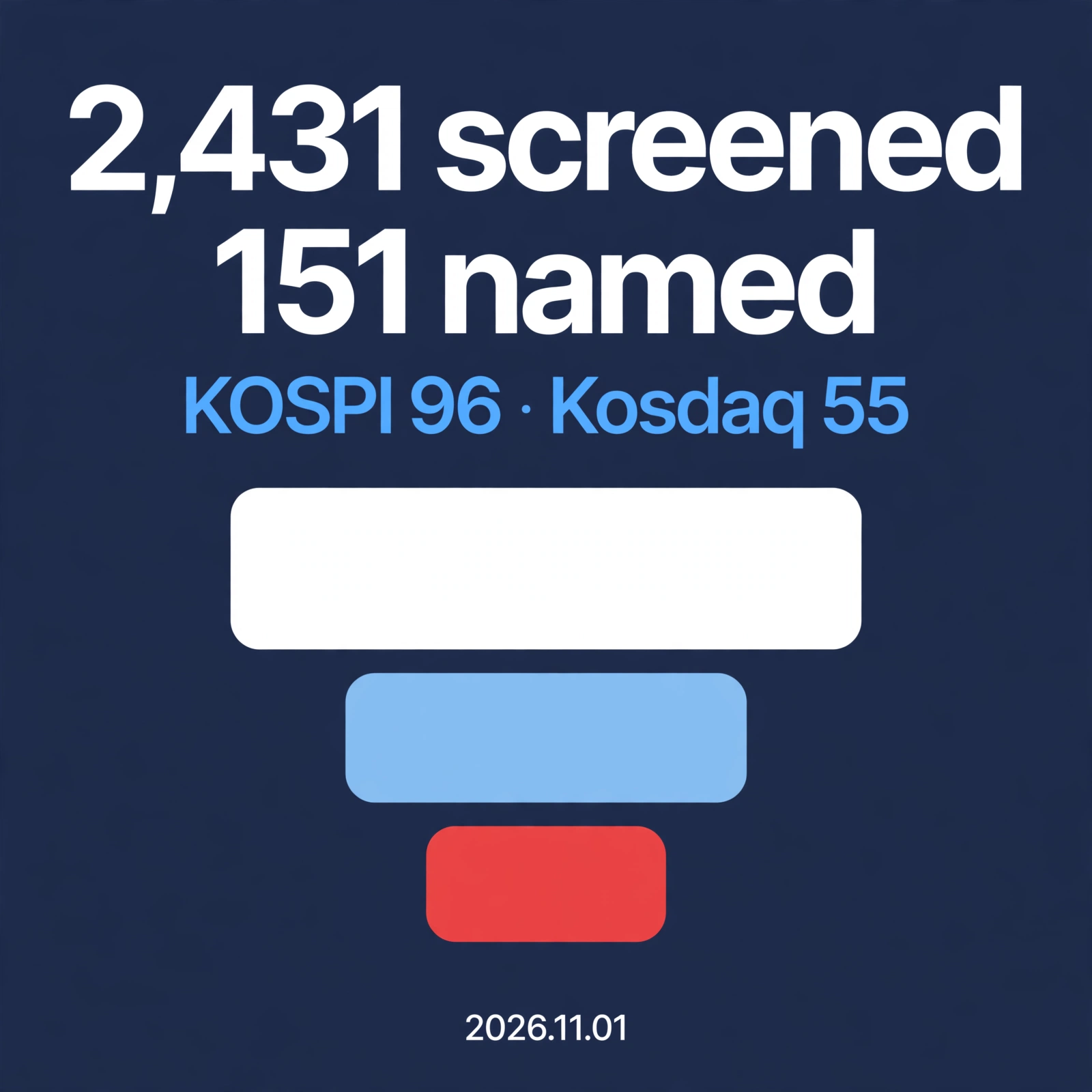
The funnel matters because it defines what the list is — and is not. The exchange screened 2,431 listed firms (779 on the KOSPI, 1,652 on the Kosdaq) as of October 22, excluding firms facing delisting. A firm qualified if its sector-adjusted PBR ranked in the bottom 25% on the KOSPI or bottom 10% on the Kosdaq over three years, for six consecutive half-year periods or six of the last seven. 185 firms (115 KOSPI, 70 Kosdaq) met that test.
Then came the fork that reveals the design. Of 62 firms that had disclosed a PBR improvement plan by October 22, 34 were excluded from publication for one year — disclosure bought a reprieve. But 15 chronic cases stayed on the list despite disclosing plans, because they met a six-year long-term low-PBR test. The message is deliberate: a temporary dip gets the benefit of the doubt, but a multi-year discount does not. The final list is 96 KOSPI firms and 55 Kosdaq firms. The exchange’s own explanation is telling: some firms could have avoided the list by submitting a plan but apparently struggled to diagnose why they were cheap or to design concrete remedies. That is why the exchange will offer one-on-one tailored consulting to all 151 firms from 2027 — diagnosis first, then targets and action plans covering capital efficiency, shareholder returns and governance.
What the list looks like — an average of 0.25 times book
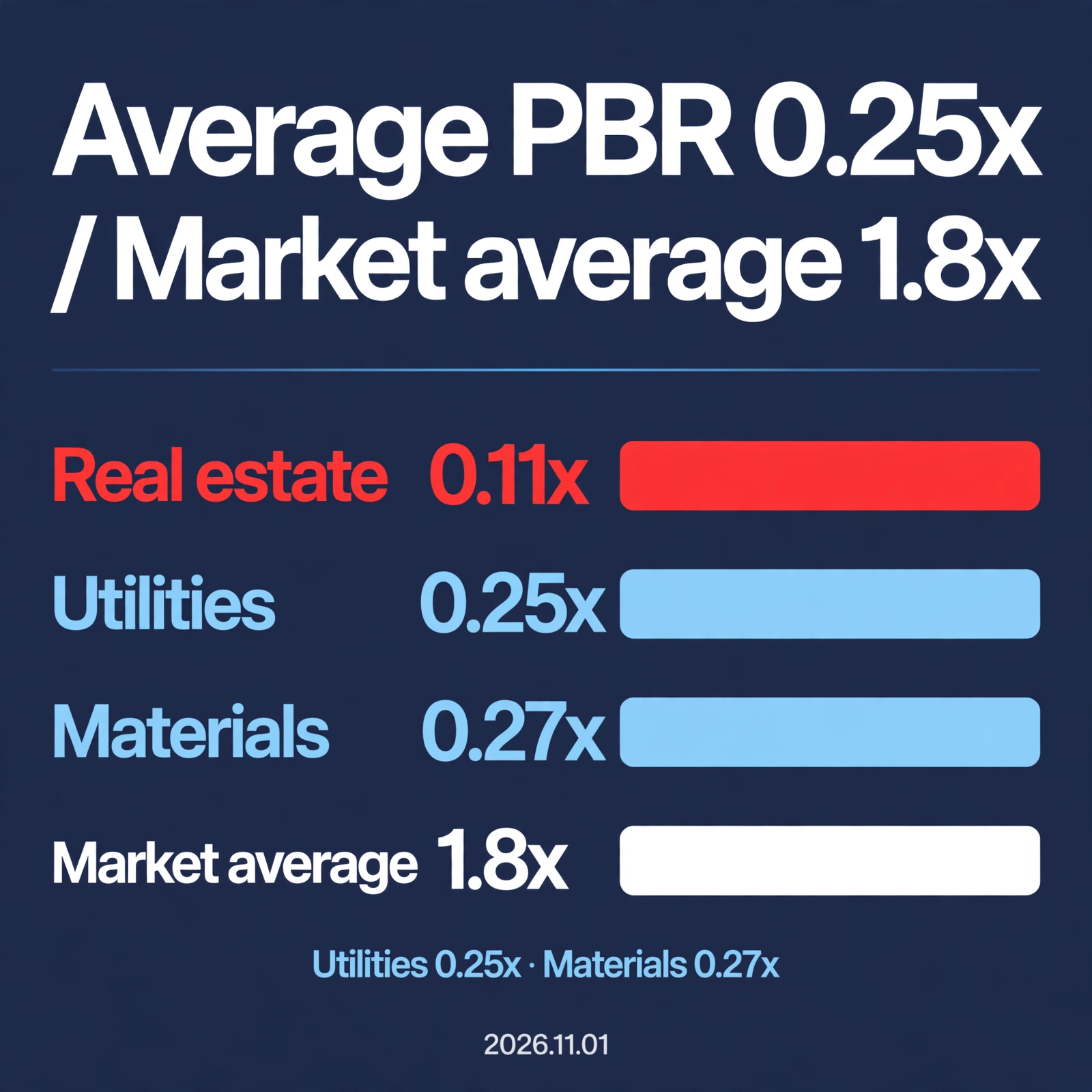
Sector averages show where the discount is deepest. On the KOSPI, real estate averages 0.11 times book, utilities 0.25, consumer discretionary and materials 0.27 each, and energy 0.28 — all below 0.3. Information technology (0.63) and health care (0.51) are the highest, which is consistent with a market where growth sectors escape the discount and asset-heavy old-economy sectors do not. On the Kosdaq, information technology contributed the most names (17), followed by health care and industrials (10 each), while real estate and energy averaged just 0.17 times.
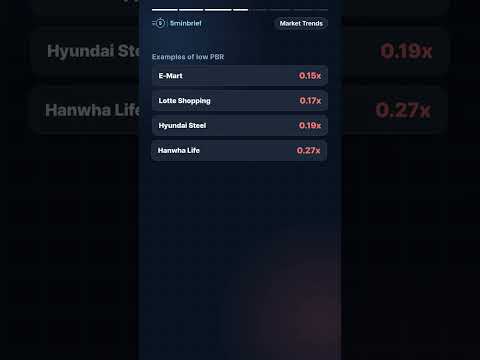
The headline names are familiar to anyone who has shopped for “cheap Korea”: E-Mart at 0.15 times, Lotte Shopping at 0.17, Lotte Chemical at 0.18, Hyundai Steel at 0.19 and Hanwha Life at 0.27. Several named firms carry market capitalizations above KRW 1 trillion ($750 million); Hanwha Life, at more than KRW 3.5 trillion ($2.62 billion), is the largest. A 0.15 multiple means the market values the firm at 15% of its accounting net worth. Foreign investors should resist the value-trap reflex: a low PBR is a symptom with at least three possible causes — weak profitability, inefficient capital allocation, or governance distrust — and each demands a different remedy. The list asks which cause applies, firm by firm.
What Japan teaches — disclosure worked, profitability lagged
Korea’s experiment has an obvious precedent. In March 2023 the Tokyo Stock Exchange (TSE) asked listed firms to pursue “management conscious of cost of capital and stock price,” pressing in particular on firms below 1.0 times book. At the time, roughly half of Prime Market firms traded below 1.0 times. Three years on, the below-1.0 share has fallen to 20–30% and the disclosure rate on the Prime Market has reached 93%. But the profitability side moved more slowly: firms with return on equity (ROE) below 8% fell only from about half to about 40%. Part of Japan’s PBR improvement came from rising share prices themselves, not from earnings power alone.
Korea’s design differs in three ways, and each raises the stakes. First, Japan requested disclosure; Korea publishes the names and tags the tickers — publicity is stronger. Second, Korea formalized the incentive (disclosure earns a one-year reprieve) and the exception (chronic cases get none). Third, Korea bundles the list with institutional engagement: the stewardship code, first set in 2016, faces its first comprehensive revision in a decade, with three-year reviews of necessity and compliance and a requirement for institutions to check whether investee boards fulfilled their duty of loyalty to shareholders. Combined with Commercial Act amendments since 2025 — directors’ duty of loyalty to shareholders, cumulative voting, separate election of audit committee members — the list sits inside a broader governance package, not alone.
Four things to watch — reactions, not the tag itself
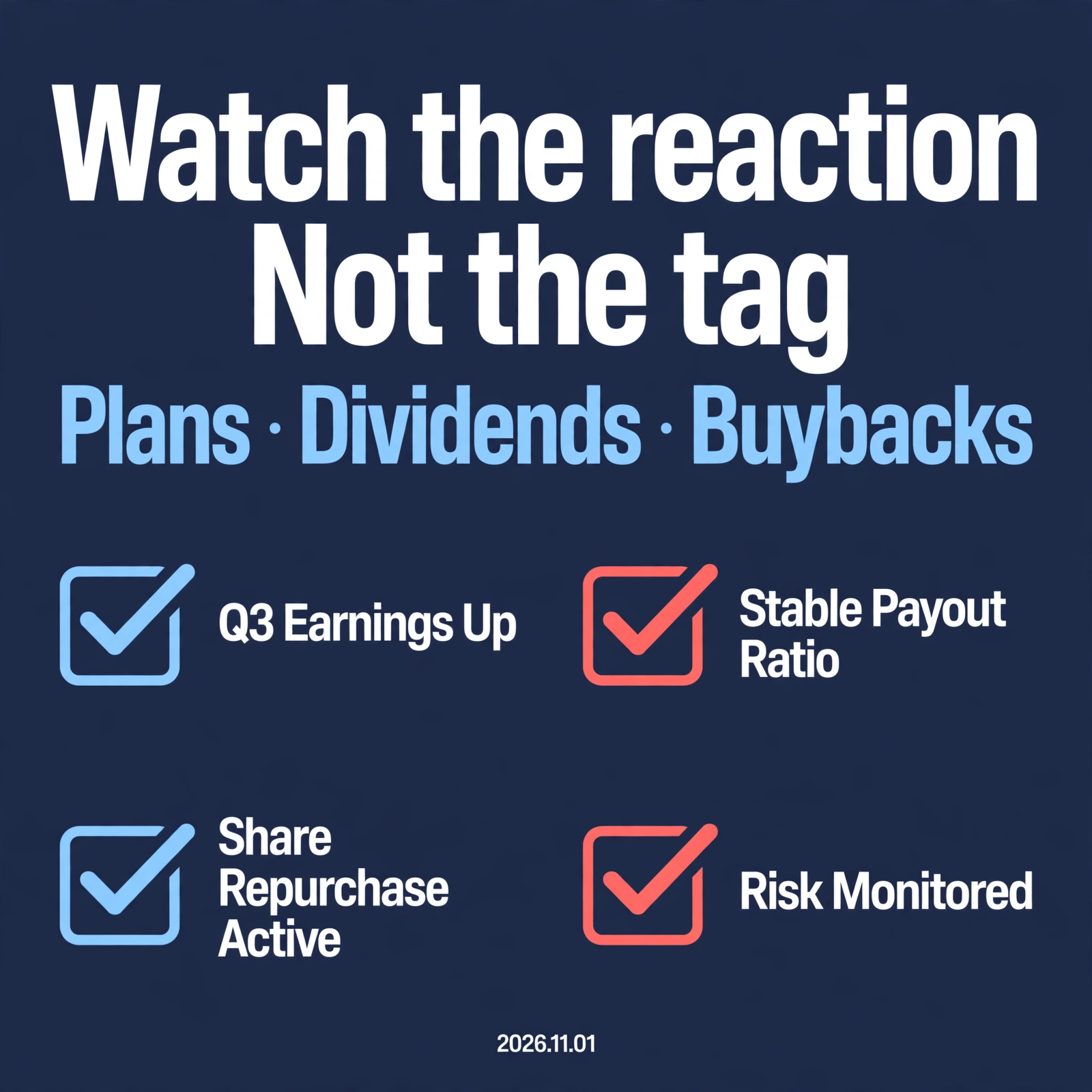
What matters next is corporate reaction. First, value-up disclosure with numbers: ROE targets, payout ratios, buyback and cancellation schedules, non-core asset sales — not slogans. Second, execution of dividends and buybacks: filings without follow-through will be priced quickly. Third, institutional engagement in practice: whether asset managers use dialogue, improvement demands and voting rights with named firms, and whether model cases emerge as the regulator promises. Fourth, the next list on May 4, 2027: which firms exit is the reform’s first report card.
Not investment advice. Figures from the Korea Exchange, The Korea Times, The Korea Herald and Seoul Economic Daily, checked November 1, 2026. Won–dollar conversions use KRW 1,334.3 per dollar.
Watch the video
Sources & references
- The Korea Times — Hanwha Life, Hyundai Steel, Lotte Shopping among 151 firms flagged for persistently low valuations — 151 firms, trading-app tags, institutional engagement expectations
- The Korea Herald — Korea Exchange names 151 low-PBR firms for first time — Average PBR 0.25 times versus market 1.8 times, sector averages, stewardship code revision
- Seoul Economic Daily (English) — Korea Exchange Names 151 Low-PBR Companies in First Disclosure — Selection criteria, 185 candidates, 34 exclusions, consulting from 2027
Related articles
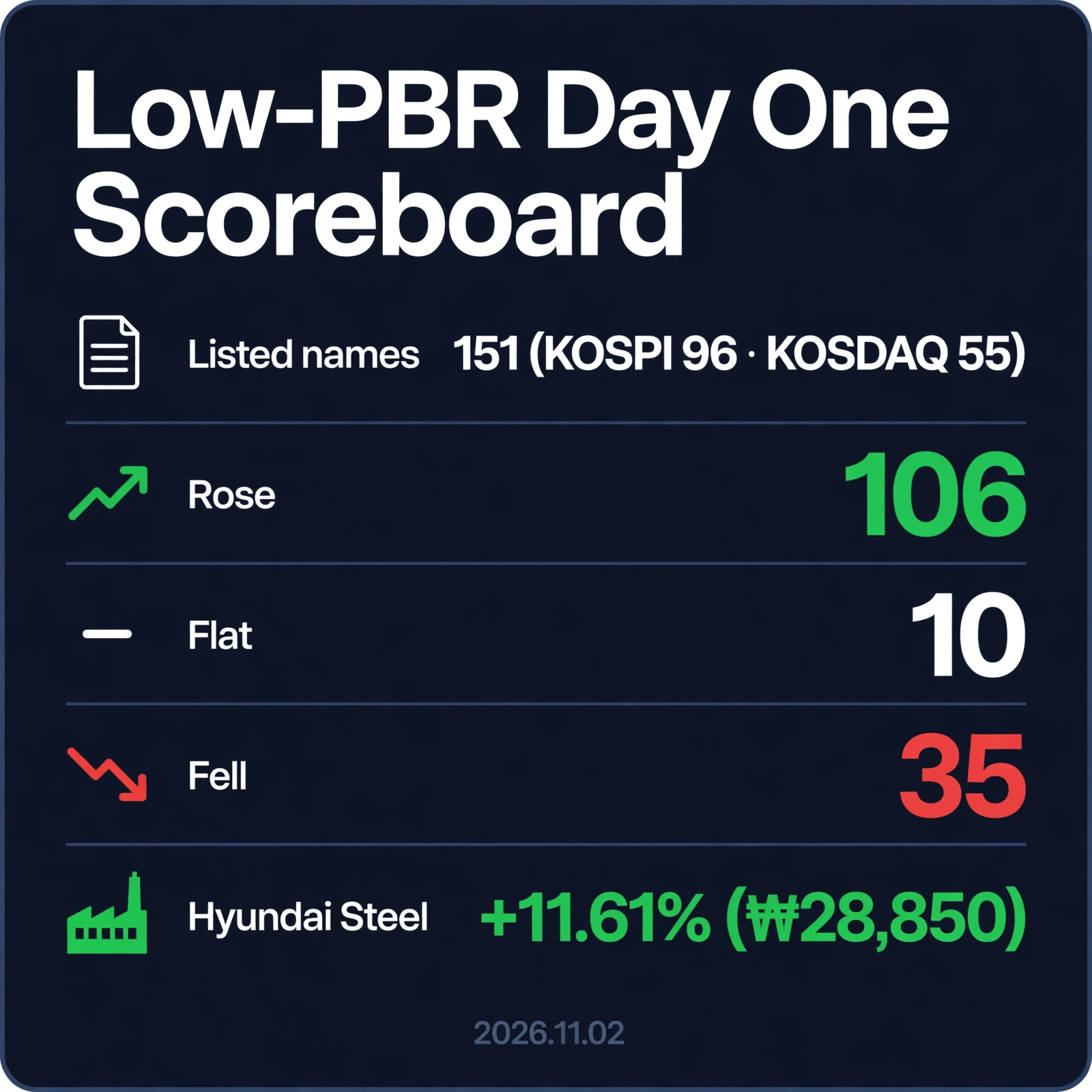
- Korea Low PBR First Day Analysis 106 of 151 Rise Hyundai Steel Surge
For foreign investors: on the first trading day of Korea's low-PBR name list, 106 of 151 stocks rose and Hyundai Steel surged 11.61%. But steel and construction rose across the board, so the list effect cannot be separated from sector strength. The real test is execution.
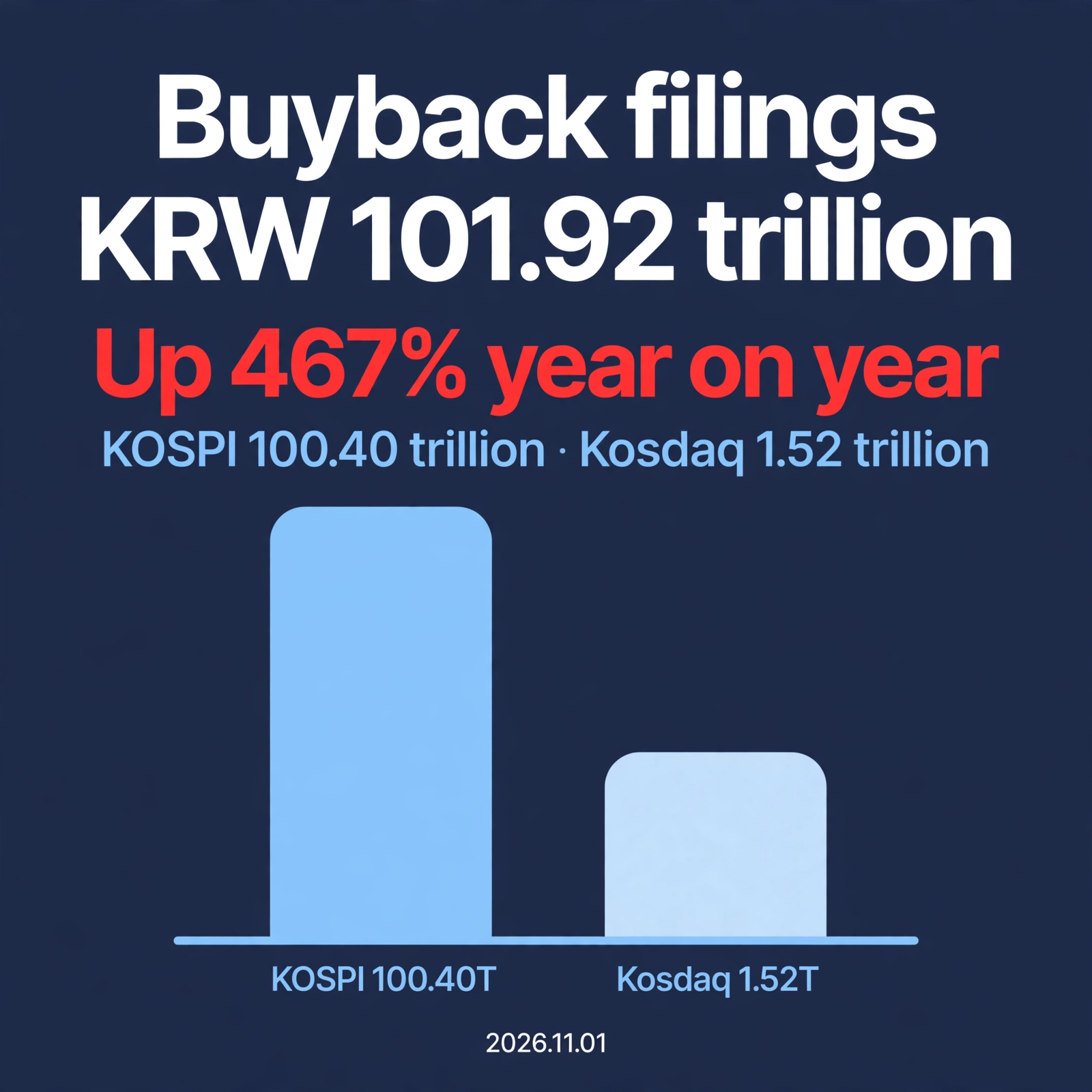
- Korea Buyback Boom 102 Trillion Won Samsung SK Hynix Concentration Analysis
Korean listed firms filed KRW 101.92 trillion in treasury-share transactions this year, up 467% — but Samsung and SK hynix account for 80.45%. Filings versus execution, cancellation versus holding, and what foreign investors should check.
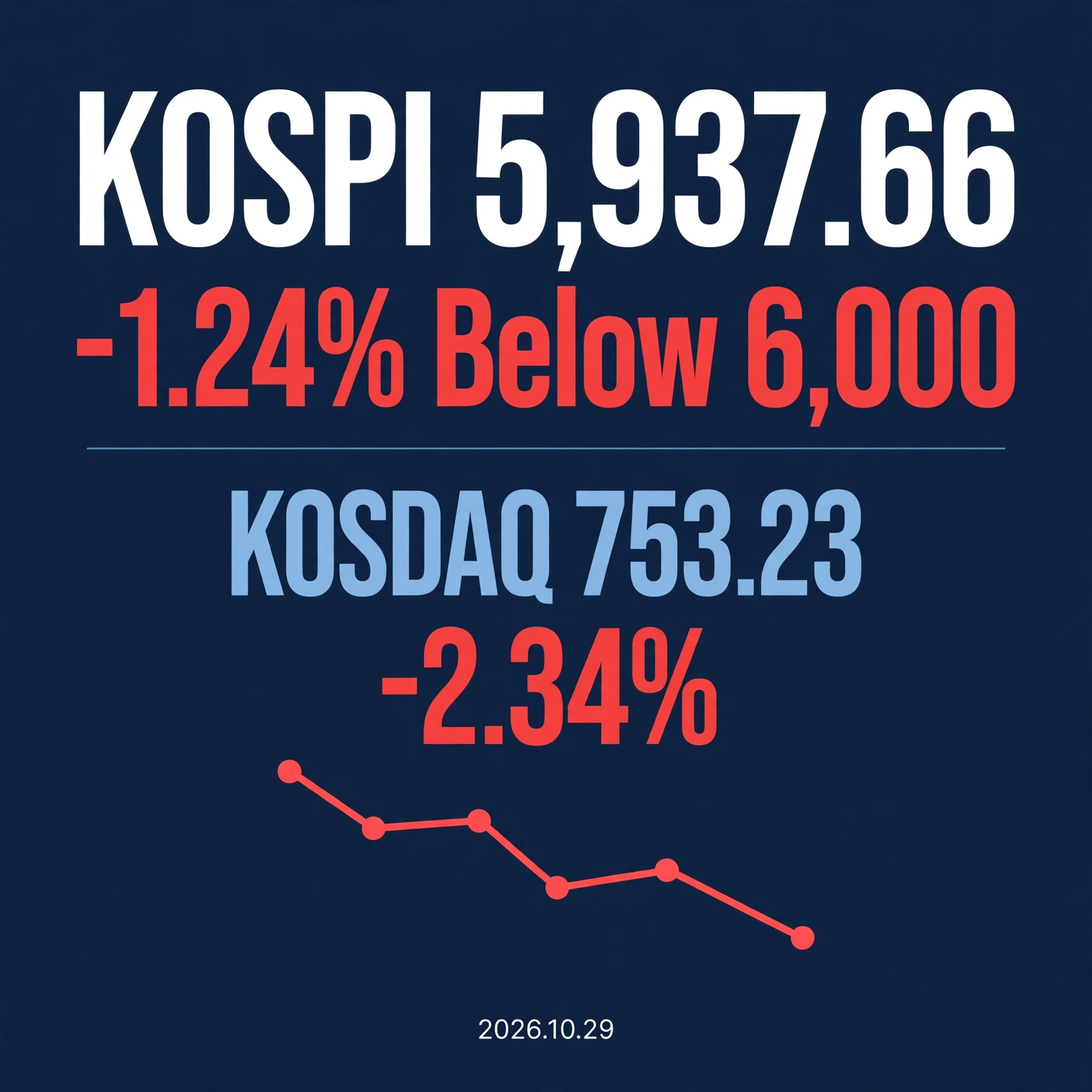
- KOSPI 1.24% fall Samsung shareholder return delay 5937 close analysis
October 29 Korea market brief for foreign investors: the KOSPI fell 1.24% to 5,937.66, giving back the 6,000 line one day after retaking it, and the KOSDAQ fell 2.34% to 753.23. Samsung posted record third-quarter operating profit of KRW 107.44 trillion yet fell 4.13% after deferring shareholder-return details to January, while SK hynix, which spelled out a KRW 100 trillion ($74.8 billion) return plan, rose 2.62%. LG Energy Solution plunged more than 8%. The won firmed to 1,336.8 per dollar.
5minbrief on YouTube
The briefs also come as videos. Get the daily market wrap on YouTube.
Subscribe on YouTube