 5-minute briefs
North Korea Crypto Theft TraderTraitor Sanctions Investment Analysis
TraderTraitor’s method: infiltration disguised as recruitment
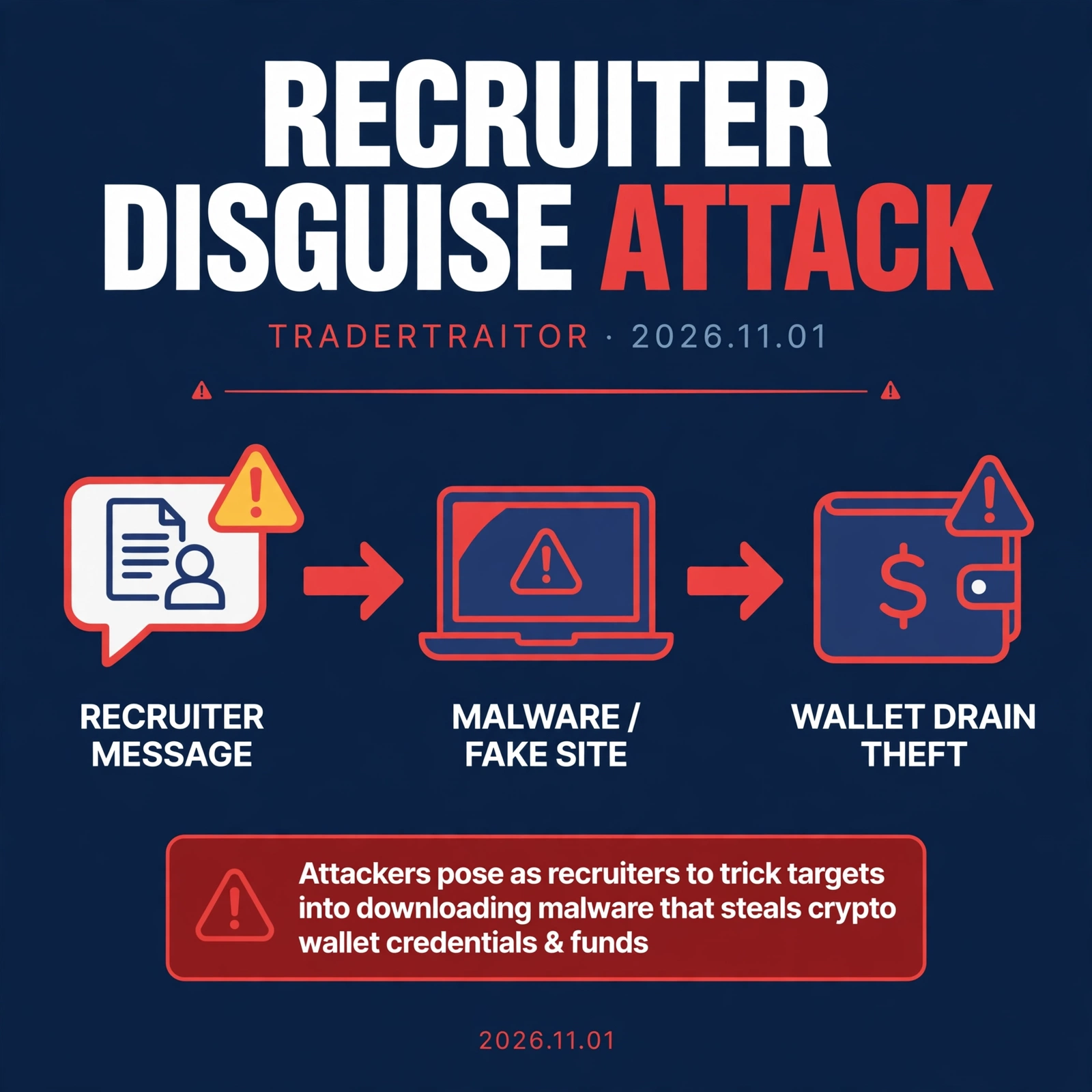
TraderTraitor is the FBI’s name for a North Korea-linked hacking group. Its known method is to pose as recruiters, approach target employees, and plant malware. A malicious file disguised as an interview task or hiring document enters an employee’s device, and the attacker widens access from there. The preliminary path in the Binance case, from a compromised DevOps engineer’s laptop to a service container, shows how one device can become the key to an entire withdrawal route. The weak link may be people and permission management, not the firewall.
The group is reported to have been formed under a North Korean intelligence agency around 2016–2017, and North Korea has denied the allegations. The core of the method is infiltration through trust, not merely clever code. Crypto firms, with frequent remote work, job moves, and contractor collaboration, are fertile ground for disguised contact. That is why exchange security cannot end at server defenses. Device management, separation of signing authority, and multi-approval for abnormal withdrawals must work together. This case should be read less as “which exchange was breached” and more as “which permission path was breached.”
Precedent and scale: from Bybit’s $1.5B to Binance’s $6.3B
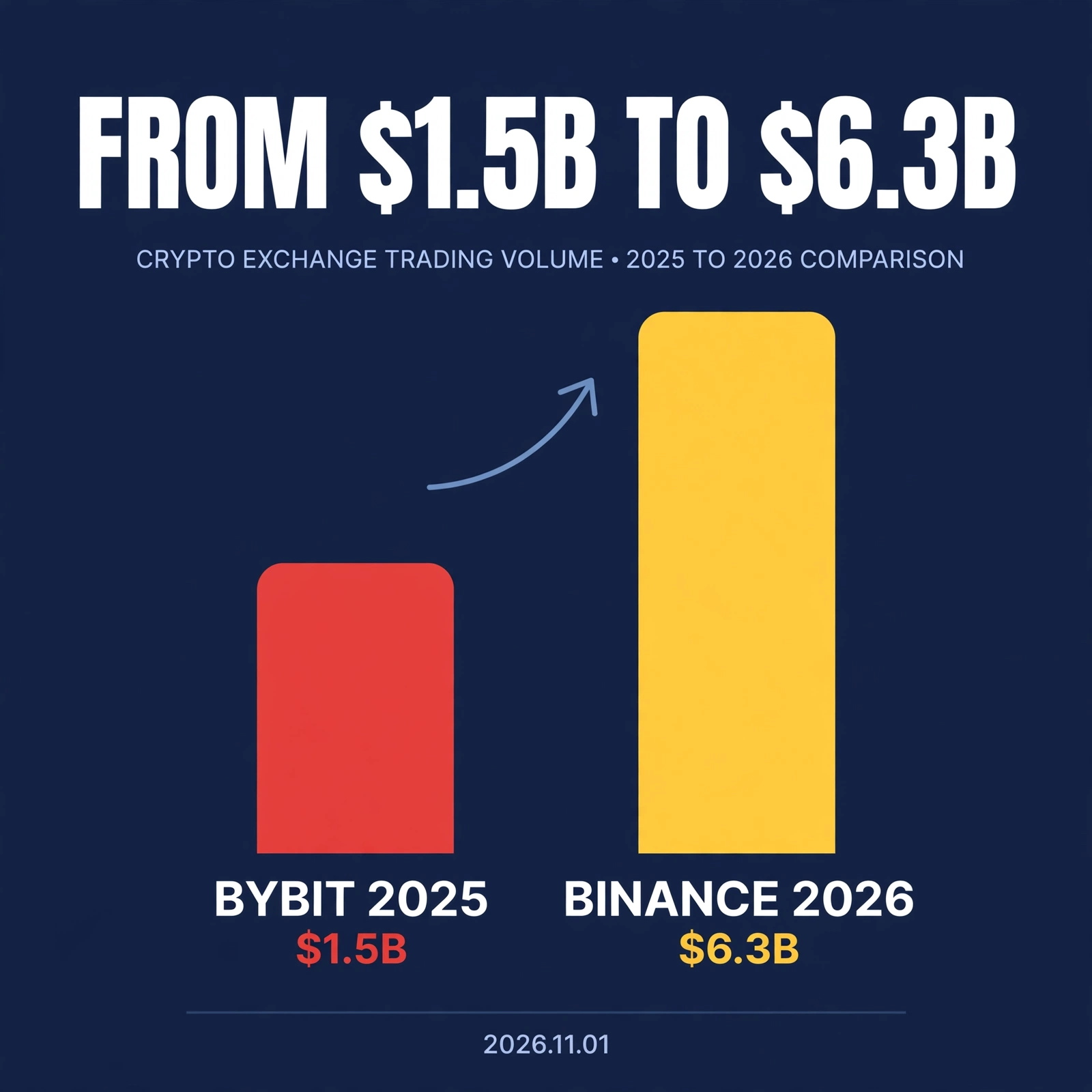
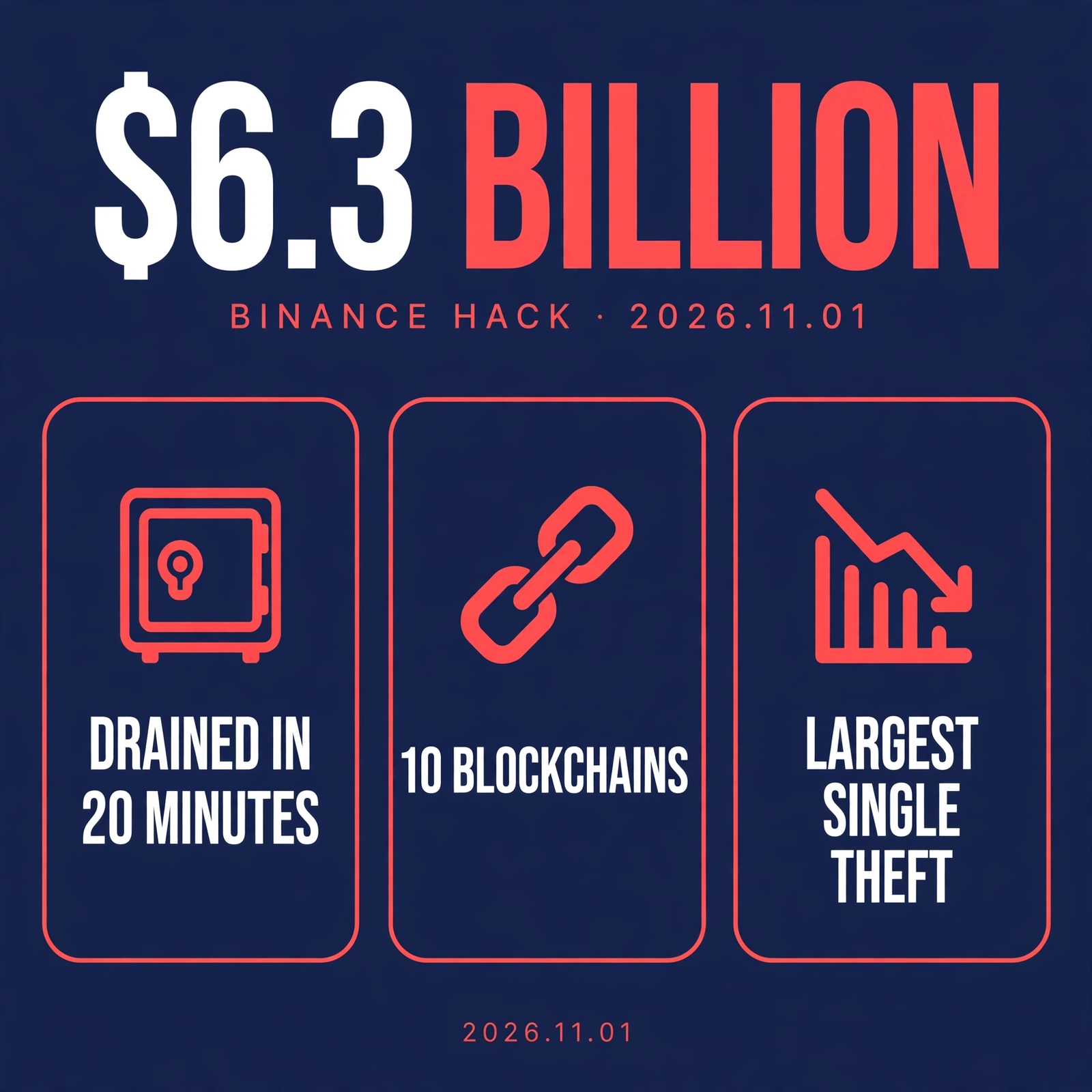
The pattern argument rests on precedent. The February 2025 Bybit hack, about $1.5 billion, was attributed by the FBI to TraderTraitor. TRM Labs says the Binance attack resembles the Bybit method. The scale is more than four times larger. Analysts counted about $2.6 billion stolen by North Korea-linked hackers between January 2024 and September 2025, and reports suggest the cumulative total could pass $5 billion including this case. Estimates differ by source, but the direction is consistent: thefts are growing larger, and the target has moved to the world’s largest exchange.
A crucial distinction follows. An analyst attribution is an evidence-based estimate, not an official investigative conclusion. Binance said it had not identified the attacker, and President Trump said on October 30, “We don’t know,” adding that authorities are investigating. The FBI and the US Secret Service have opened a joint investigation. Unlike Bybit, where an FBI attribution followed, the Binance case has not reached that stage. Headlines that state “North Korea did it” and reports that say “attributed to a North Korea-linked group” carry different factual weight. Investors reading the news should not miss that one-word difference.
Sanctions, freezes, and markets: what confirmation would change
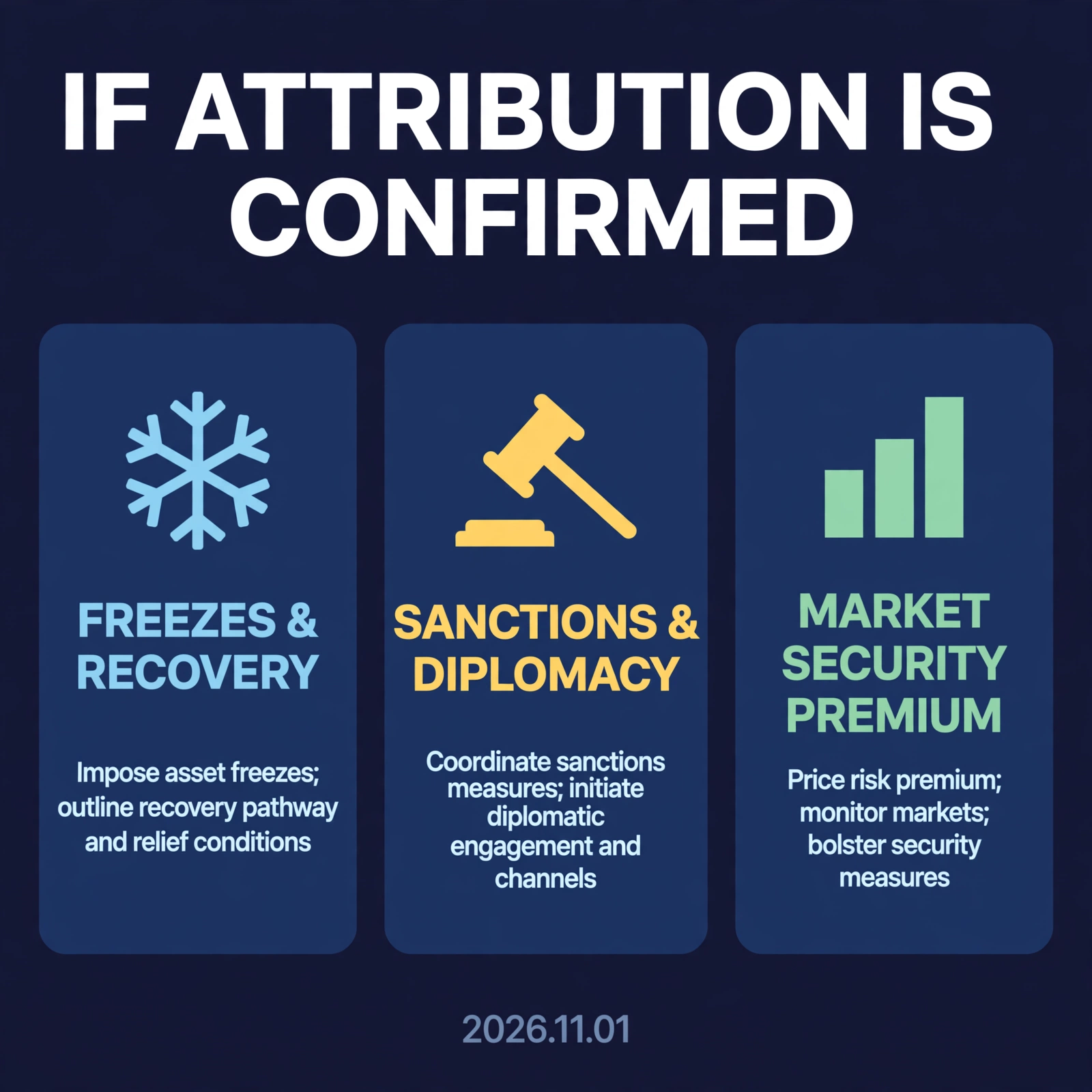
If the attribution is officially confirmed, the fallout spreads in three directions. First, freezes and recovery: about $3 billion has already been frozen, including about $1.57 billion by Tether and more than $0.8 billion by Circle. Official confirmation strengthens the case for moving frozen assets into seizure and recovery proceedings, though funds swapped before the freeze remain hard to recover. Second, sanctions and diplomacy: crypto theft has long been cited as a foreign-currency source for North Korea, so confirmation would support tougher sanctions and allied investigative cooperation, and could weigh on any resumption of US–North Korea dialogue. Third, the market’s security premium: if state-linked attacks recur, exchanges and listed crypto stocks must price security spending and regulatory risk more heavily. Friday’s 10.62% fall in Coinbase shows that repricing has already begun.
If the attribution is not confirmed, or another actor emerges, the reading narrows to an exchange-specific failure of permission management, and the sanctions and diplomatic fallout shrinks. Either way, what users and investors should do now is the same: separate official investigation statements from analyst reports, and track freeze and recovery progress in numbers. State-linked hacking should be judged less by dramatic headlines and more by how much frozen money actually returns, and how exchange permission controls change. The Binance attribution debate is the first test of that judgment.
Watch the video

Sources & references
- Crypto Briefing — FBI links $6B Binance hack to North Korea's TraderTraitor group — TraderTraitor attribution, Bybit precedent, $3B frozen
- The National — How a $6 billion hack became the world's biggest crypto theft — 20-minute theft, $3B frozen, DevOps laptop path
- QUE — Binance Covers 90% of $6.3 Billion Hack Losses as Withdrawals Set to Resume — FBI attribution history, $6.34B company funds, withdrawal restart
Related articles
- Binance Withdrawal Resumption Net Outflow $3.64 Billion FBI North Korea Attribution Analysis
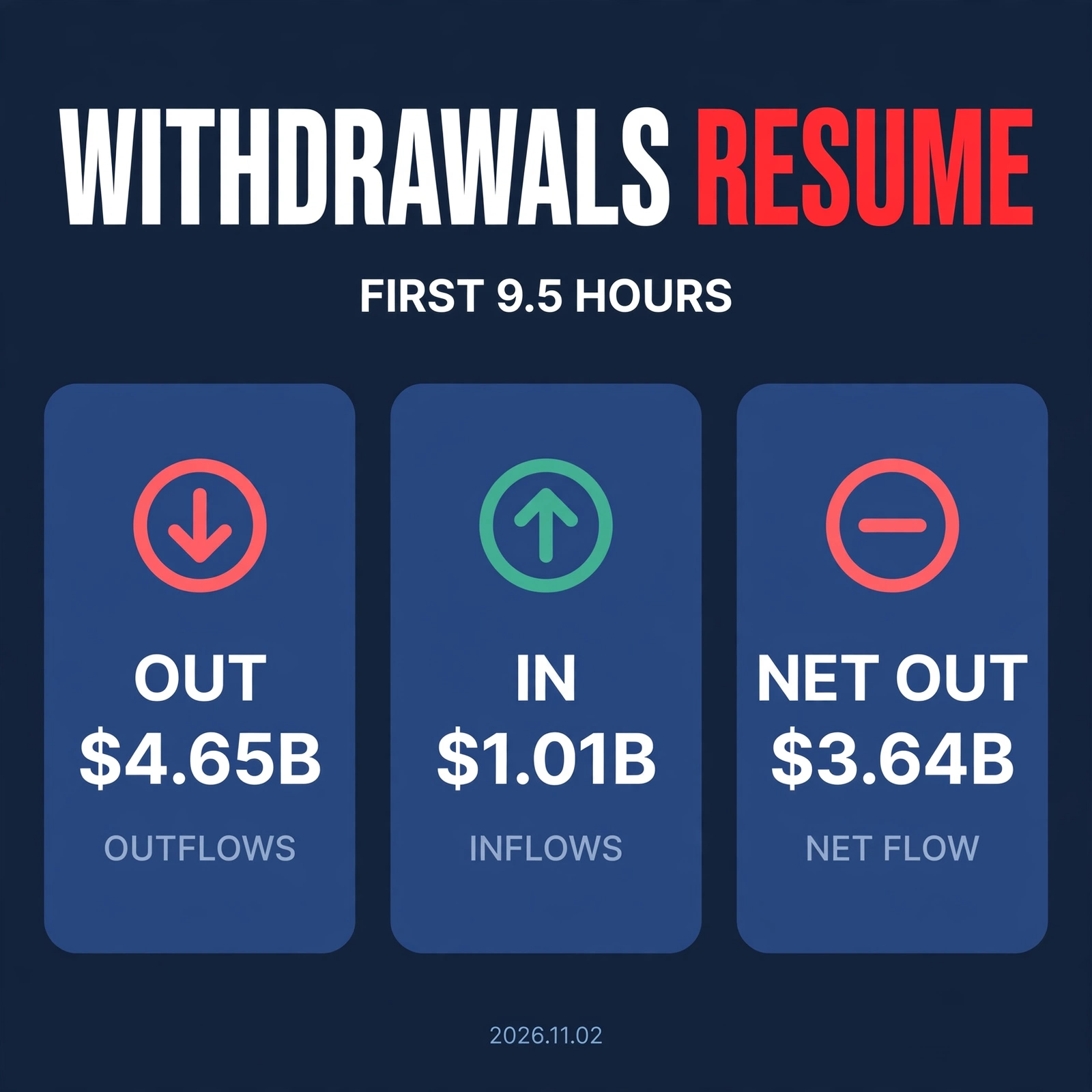
Binance's November 1 withdrawal reopening, day one: $4.649B out, $1.01B in, $3.64B net outflow (2.1% of assets), withdrawals processed normally, and the FBI formally attributed the hack to North Korea's TraderTraitor.
- Binance Hack $6.3B Crypto Exchange Security Investment Analysis
Sunday single-issue deep dive: how $6.3B left Binance in about 20 minutes in the largest crypto theft on record, what the 90% replenishment really means, and what the November 1 withdrawal restart and November 3 proof-of-reserves check will prove.
- US Stock Market Weekly Recap Nasdaq Falls 2 Percent AI Spending Doubts Energy Strength Analysis
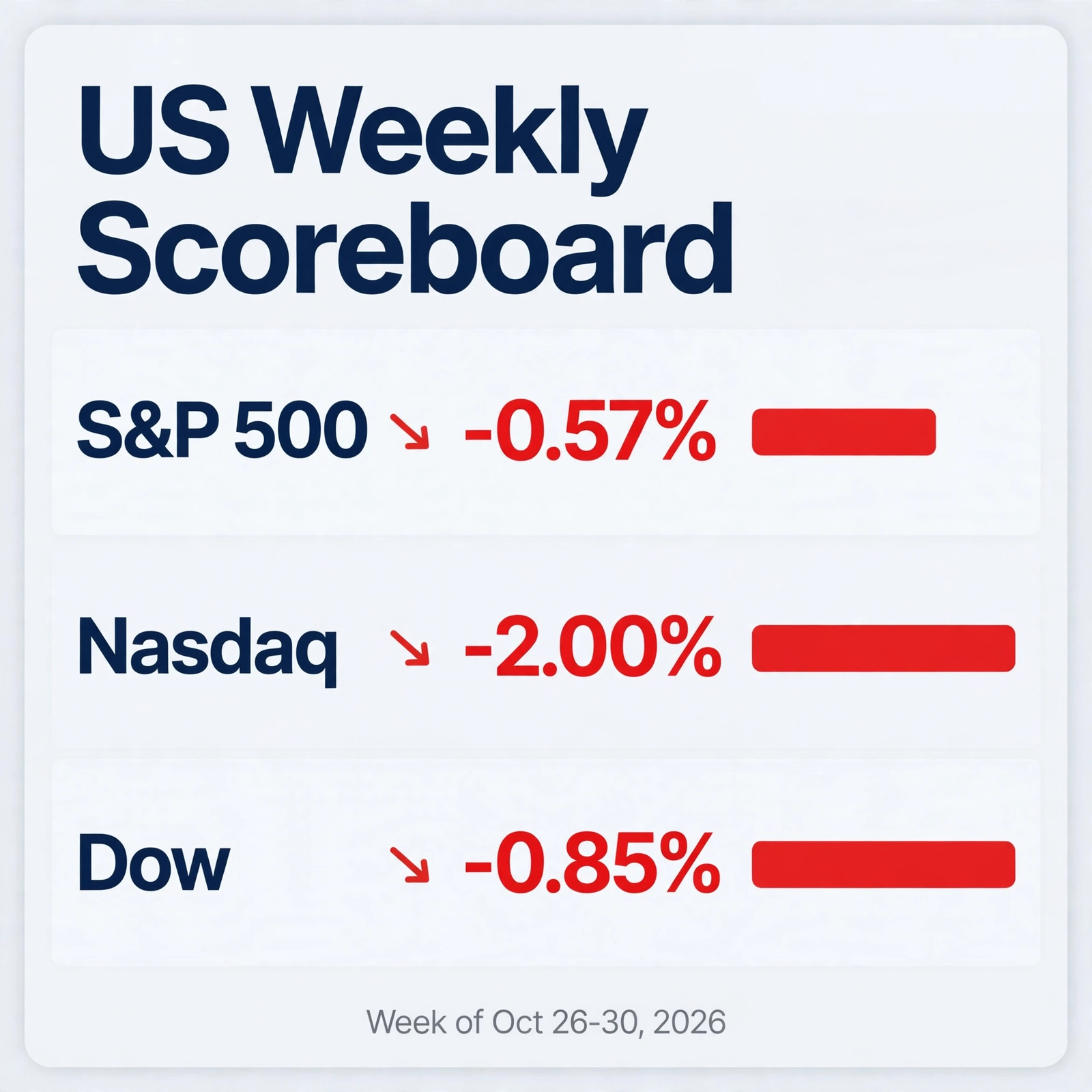
US stock market weekly recap for October 26–30. The S&P 500 fell 0.57%, the Nasdaq 2.00% and the Dow 0.85%, while small-cap Russell 2000 rose more than 1%. A Fed hold, Big Tech earnings, the Binance hack and an oil surge split the week. Next week brings the midterms and the October jobs report.
5minbrief on YouTube
The briefs also come as videos. Get the daily market wrap on YouTube.
Subscribe on YouTube