 5-minute briefs
Strait of Hormuz Oil Spike Korea Cost Impact Analysis WTI 104 Dollars Refiners Airlines Chemicals
#Strait of Hormuz#Brent#oil prices#inflation#EWY
The numbers — $104.12, and a four-month climb underneath
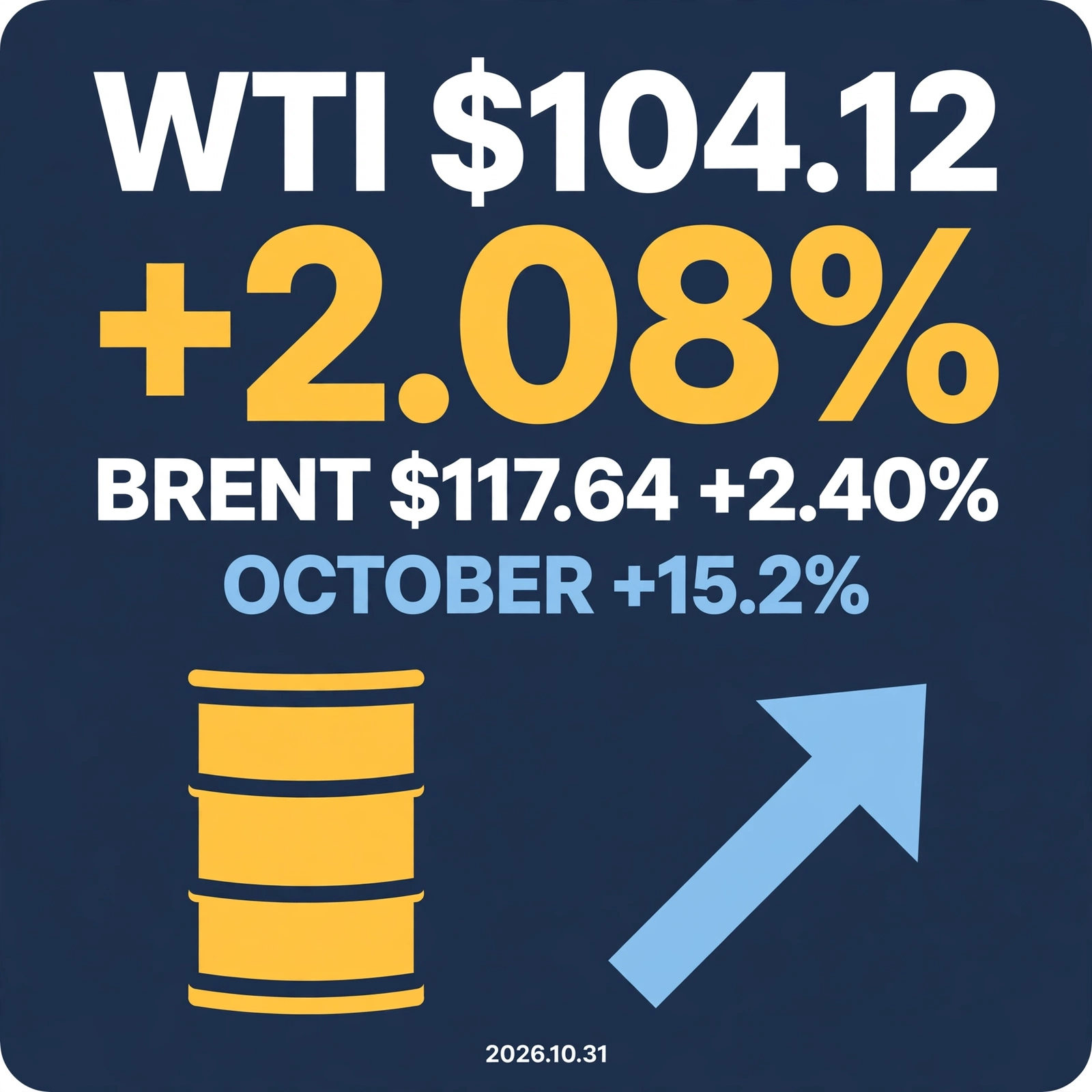
October 30 closes put oil at its highest in about six months: WTI December futures at $104.12 (+2.08%) and Brent December futures at $117.64 (+2.40%). The more important fact is the trend beneath the day’s jump — WTI gained 15.2% in October alone, its fourth consecutive monthly rise. The Hormuz incident did not start the oil rally; it added a geopolitical premium to a rally already four months old.
The risk has two layers. First, physical chokepoint risk: according to the United Kingdom Maritime Trade Operations (UKMTO), a tanker struck by a small boat carrying explosives was temporarily disabled in the strait on October 29, and Iranian media reported on October 30 that several tankers hit mines after using unauthorized routes. The Strait of Hormuz is the core transit route for Middle Eastern crude, so any threat to passage translates directly into supply disruption fears. Second, political calendar risk: markets are pricing concern that the US could resume strikes on Iran after the midterm elections, while the path of US–Iran ceasefire talks versus escalation stays uncertain — a combination that widens oil volatility rather than settling it.
The sector map — the same spike, opposite reactions
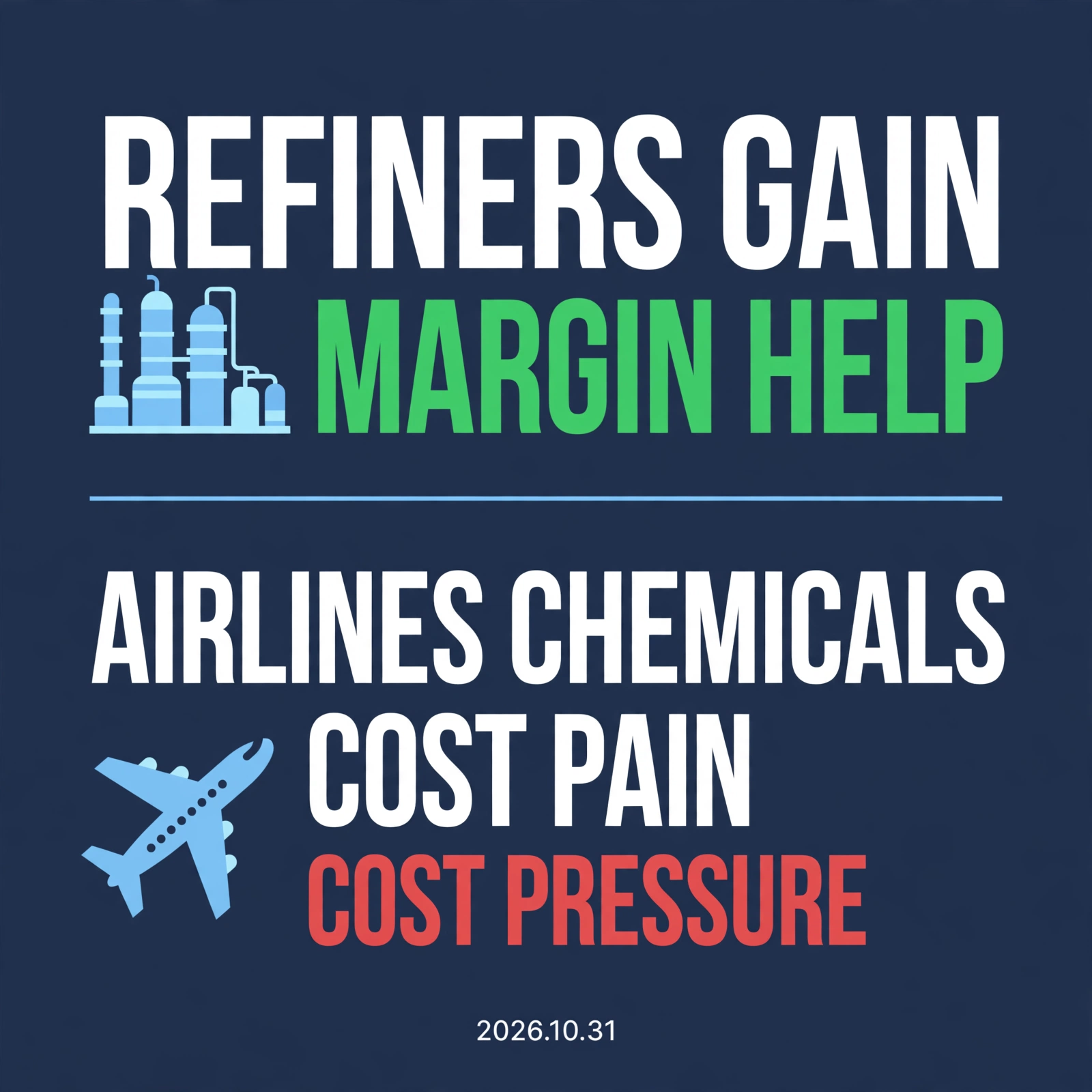
Asking whether higher oil is “good or bad for Korean stocks” is the wrong question, because the answer splits by sector.
Refiners and energy: the near-term winners. Rising crude supports inventory valuation gains and refining margins, and on Friday US energy stocks rose while Exxon Mobil and Chevron hit record highs. Korean refiners can open stronger on Monday on the same logic — with one caution: refining margin is the spread between crude and product prices, not the crude price itself, so a crude-only rally can compress margins if product prices lag.
Airlines, shipping and chemicals: the cost-bearers. Jet fuel, bunker fuel and naphtha feed directly into their cost bases, and chemicals in particular face a lag before higher naphtha costs can be passed into product prices — so margins get squeezed first in a sharp oil rise. Consumer and retail: the indirect losers. Higher import prices erode real purchasing power, which weighs on domestic consumption over weeks rather than days.
Inflation and rates — what gold’s fall adds to the picture
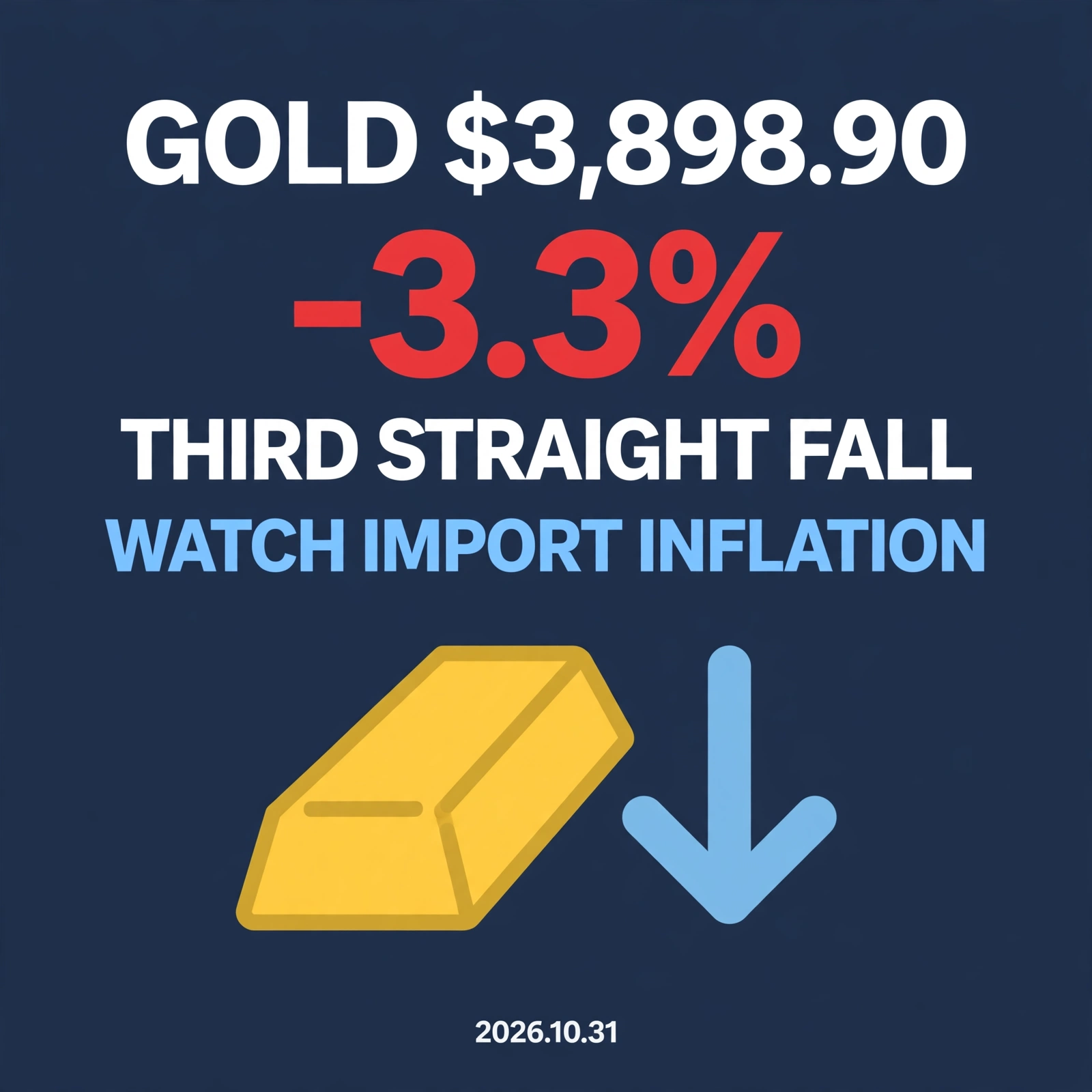
Gold moved the other way on the same day. December gold futures fell $132.50 (3.3%) to $3,898.90 per ounce, a third straight daily decline and a 6.9% fall for October, the second monthly decline in a row. Remarks raising the possibility of further Federal Reserve rate hikes were cited as a driver — gold pays no interest, so higher rate expectations reduce its relative appeal — alongside selling to cover equity losses after the tech rout.
For foreign investors, the combination carries two messages. First, higher oil lifts Korea’s import prices and therefore domestic inflation expectations, which feeds into market expectations for the Bank of Korea’s (South Korea’s central bank) rate path. Second, do not read gold’s fall as simple fading of safe-haven demand: loss-covering sales and rate-expectation shifts are mixed into it. When oil and gold move in opposite directions, separate the two forces behind them — inflation concern and liquidity raising — rather than treating either price as a single signal.
Three things to check on Monday
First, does Hormuz passage normalize, or do further incident reports emerge? A one-off incident lets the premium fade fast; continued disruption keeps it. Second, do Korean refiners, airlines and chemicals diverge on the open? If they split, the market is reading this spike as a cost story, not an energy-strength story. Third, does US–Iran rhetoric change around the November 3 midterms? The premium’s character may shift once the election calendar passes. This post’s angle differs from our October 23 Iran oil post: that post tracked where geopolitics pushes the oil price, while this one maps how an already-higher oil price passes through Korean refiners’ margins and fuel consumers’ costs.
Not investment advice. Figures from Newsis and UKMTO reporting, checked October 31, 2026.
Watch the video

Sources & references
- Newsis (Korean) — Oil rebounds on Middle East tension, WTI up 2.08%, Brent up 2.4% — WTI and Brent closes, Hormuz tanker incident, gold futures fall
- Investopedia — Markets News, Oct. 30, 2026: Tech Sell-Off Sends Nasdaq, S&P 500 Reeling — US energy strength and oil levels cross-check
Related articles
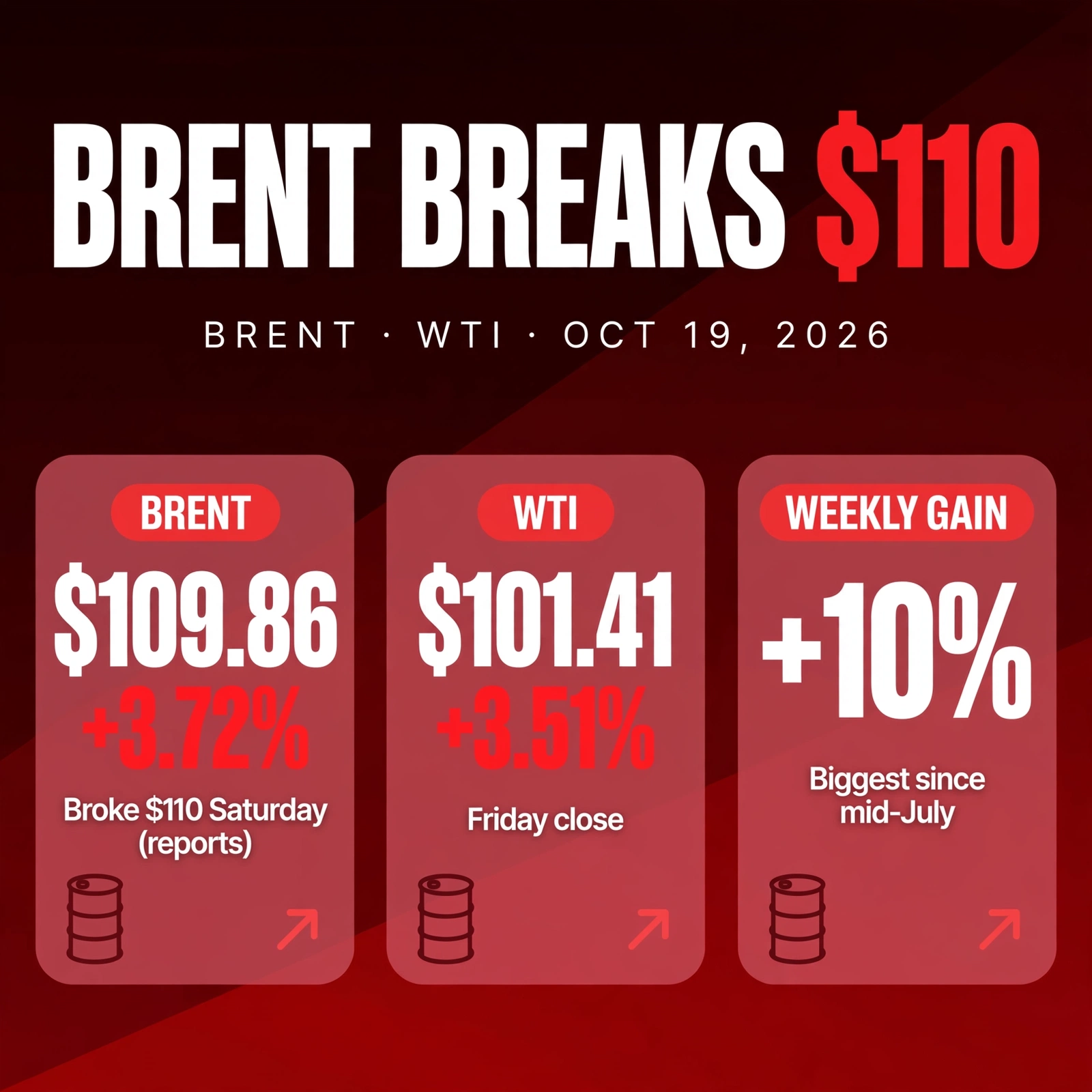
- Brent Crude $110 Inflation Fears Meta Tesla Earnings Super Week (Oct 19)
Monday, October 19: no newly closed US trading day (Friday's close was covered in the October 17 brief).
- Brent $110 Oil Inflation Rates Valuation Transmission Path Analysis
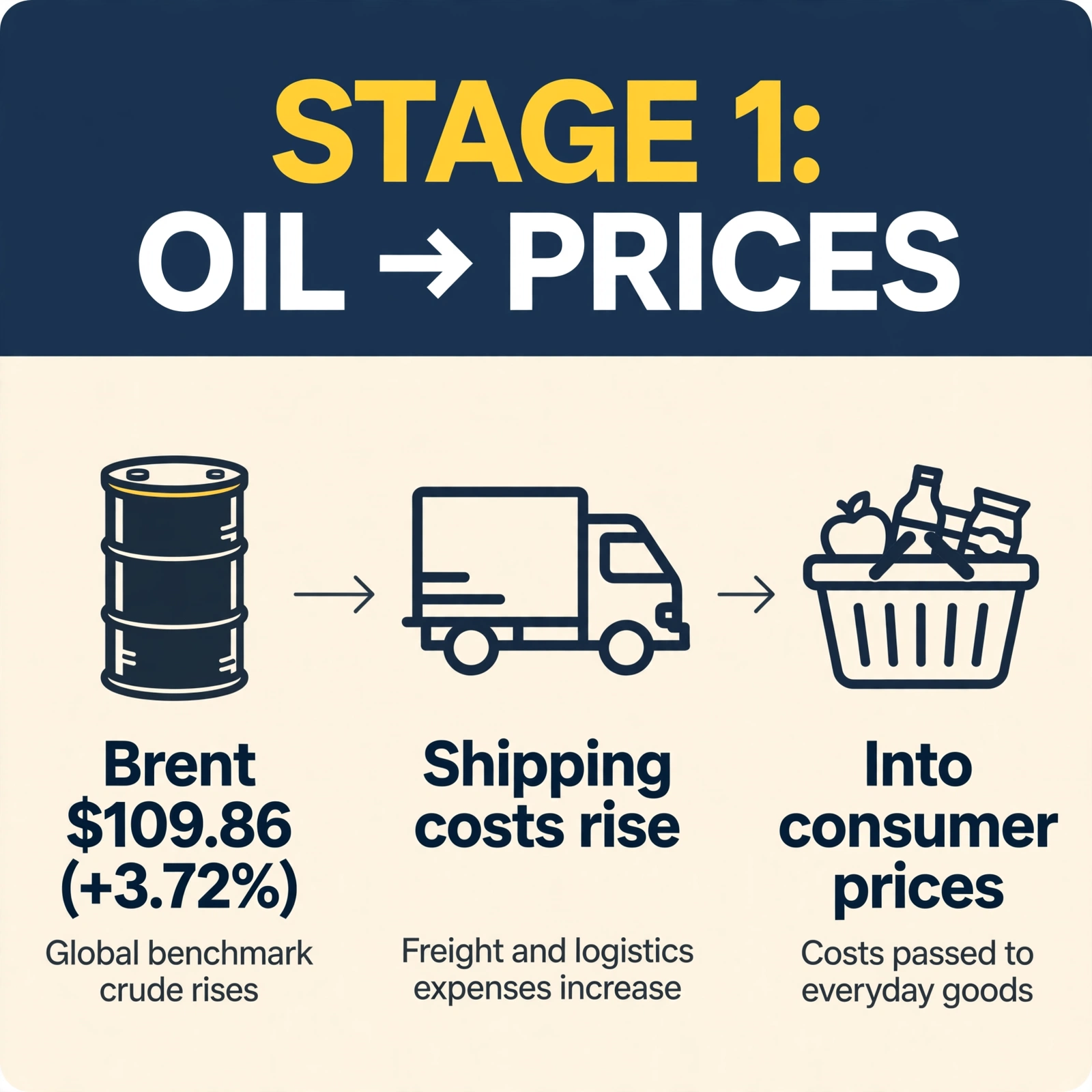
Brent crude broke above $110. Oil shakes stocks through three stages: oil→prices (fuel lifts transport and goods), prices→rates (the Fed turns hawkish...
- Brent Crude Analysis: 18.4% Drop in Six Sessions on Negotiation Hopes
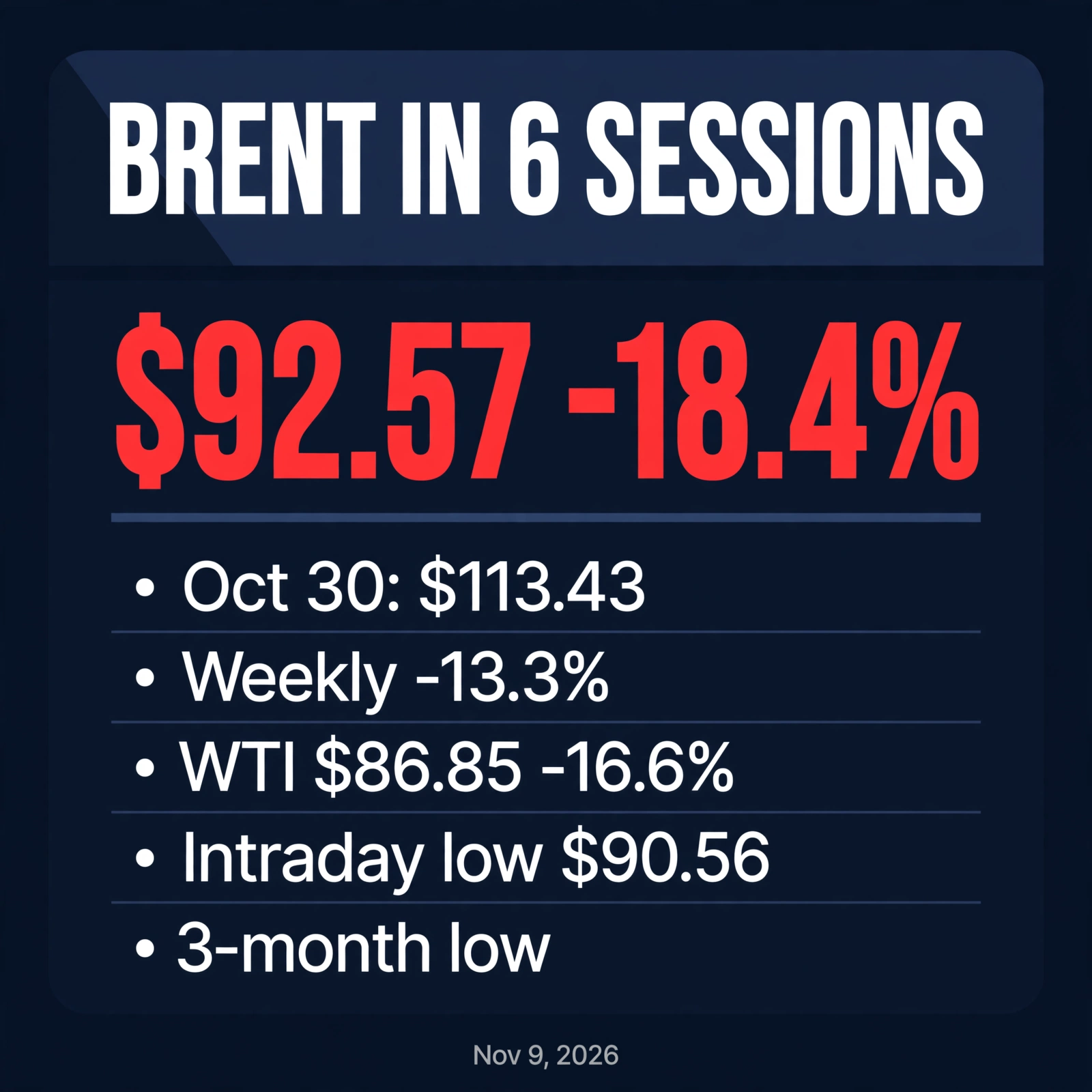
Brent crude has fallen 18.4% in six sessions, from $113.43 on October 30 to $92.57 on November 9. The war premium is unwinding fast — but analysts put renewed strikes at 60%, and that gap sets the terms for a reversal.
5minbrief on YouTube
The briefs also come as videos. Get the daily market wrap on YouTube.
Subscribe on YouTube