 5-minute briefs
Korea Buyback Boom 102 Trillion Won Samsung SK Hynix Concentration Analysis
The shape of KRW 102 trillion — a KOSPI story, and mostly a two-stock story
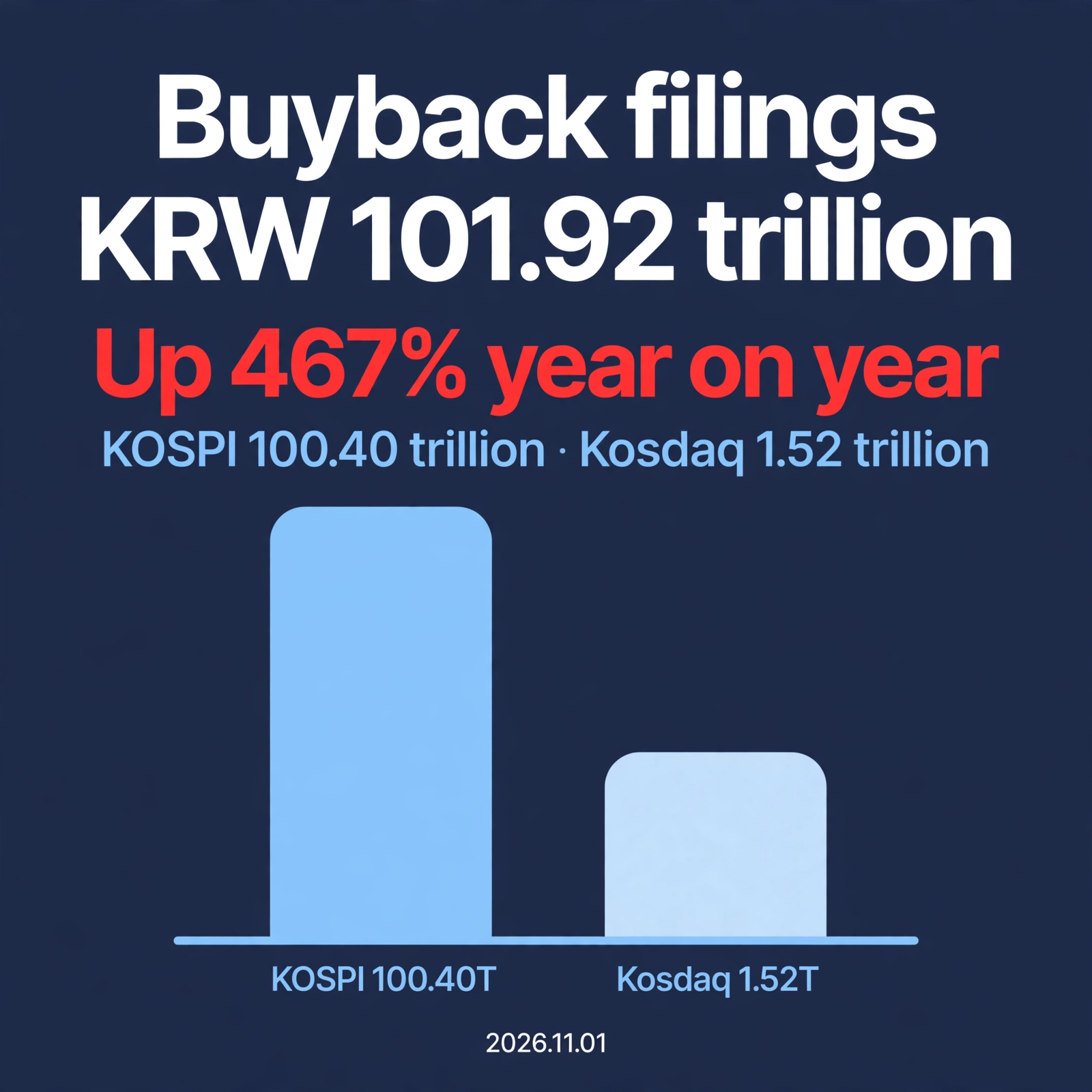
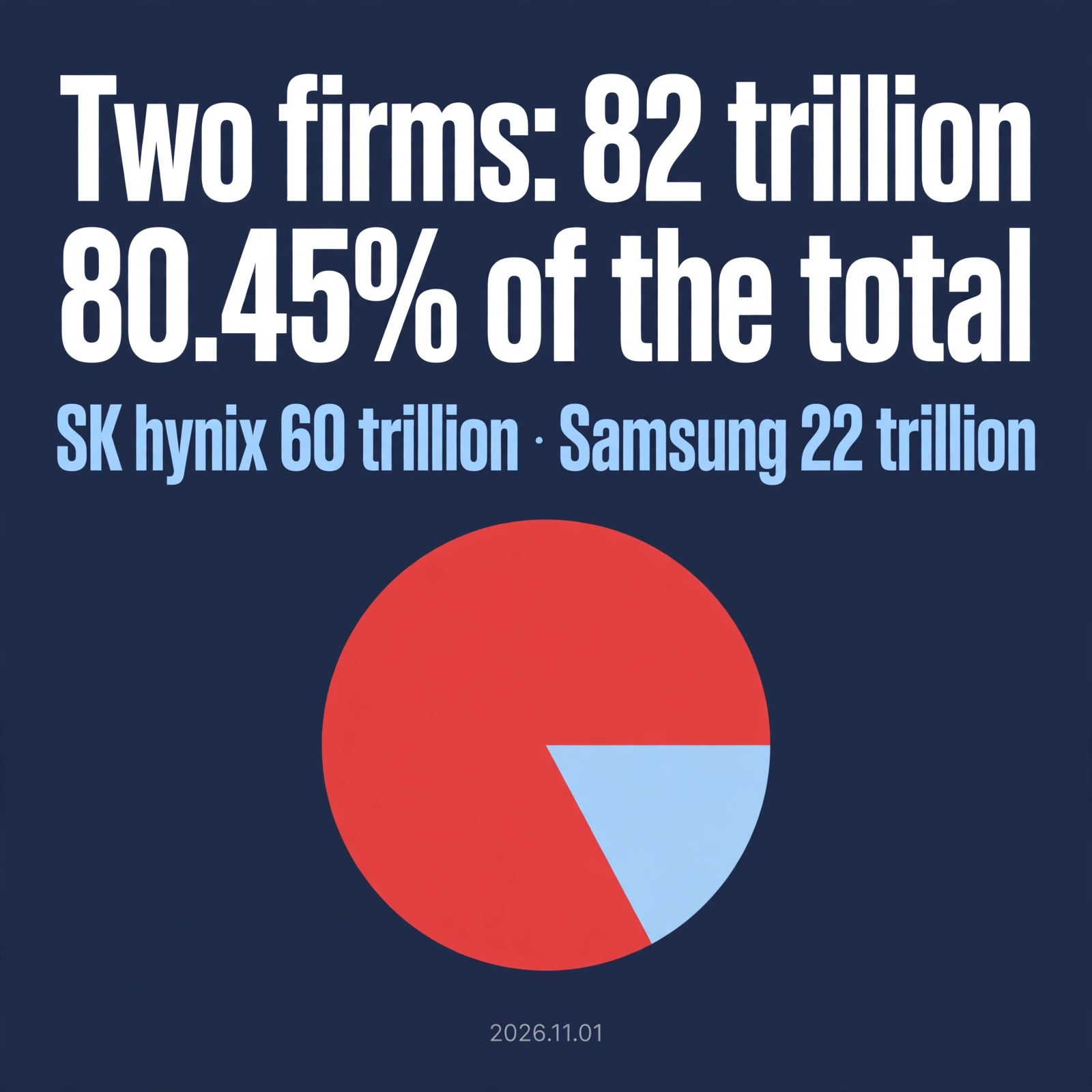
Korea Exchange data show the split clearly. The KOSPI accounted for KRW 100.40 trillion ($75.25 billion) of filings, up 494.78% year on year, while the Kosdaq contributed just KRW 1.52 trillion ($1.14 billion), up 40.22%. The filing total covers direct purchases, trust arrangements and stock-option-related transactions, so it is a measure of announced activity, not of shares already retired. Within the KOSPI total, SK hynix filed KRW 60 trillion ($44.97 billion) across August and October, and Samsung filed about KRW 22 trillion ($16.49 billion). The remaining listed universe — thousands of firms — filed roughly KRW 20 trillion ($14.99 billion) combined.
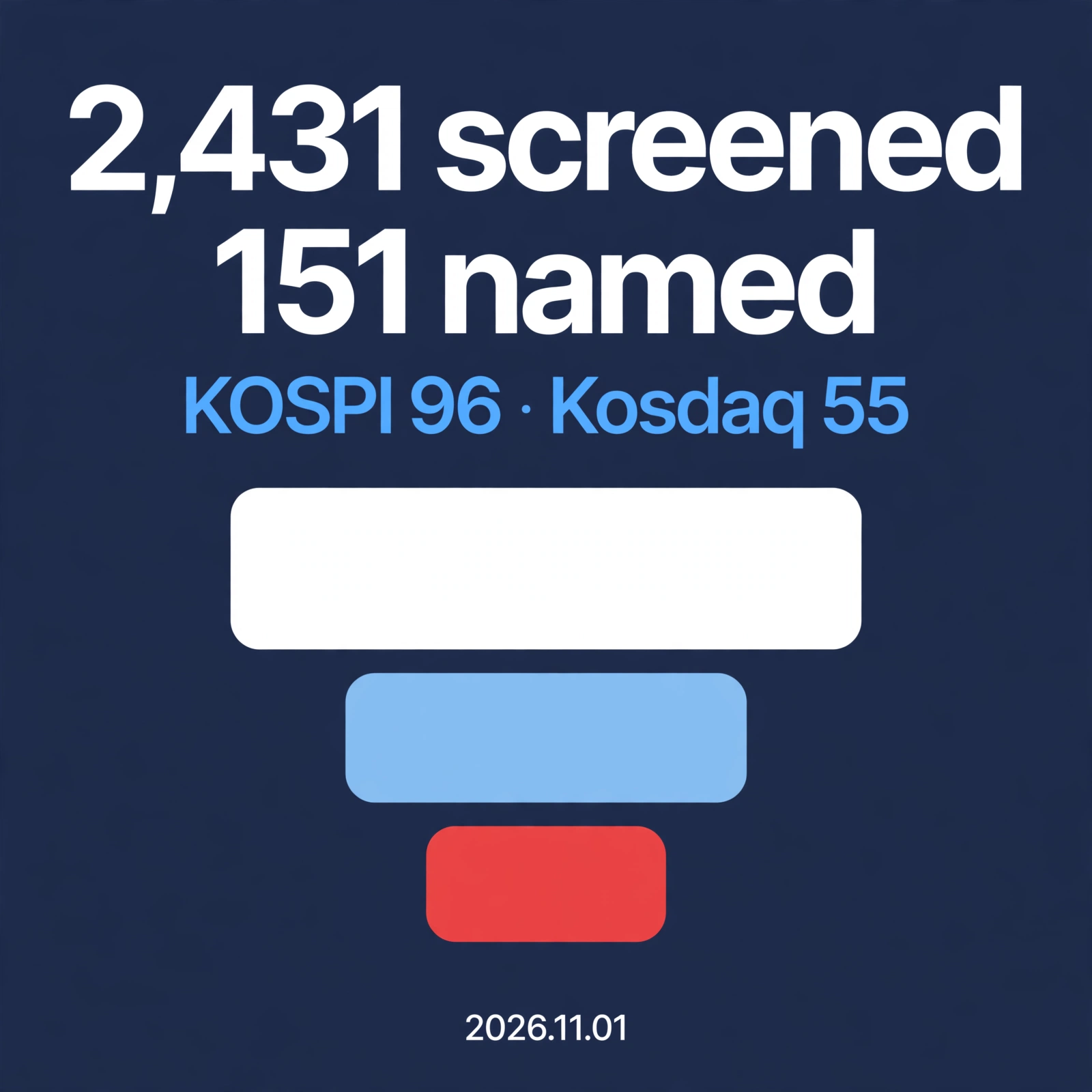
Why this matters for EWY holders: index-level shareholder yield statistics for Korea will now look dramatically better, but that improvement is concentrated in the index’s two largest weights. An investor buying broad Korean exposure is, in effect, buying a buyback story written by two memory-chip makers. If the question is whether Korean corporate governance has changed market-wide, the filing total answers “not yet.” The low-PBR list published the same weekend — 151 firms publicly tagged for persistent undervaluation — is the exchange’s parallel attempt to push the rest of the market in the same direction.
Execution gap — SK hynix is buying, Samsung’s plan waits for January
Filings are plans; execution is what shrinks the share count. Here the two firms diverge. SK hynix completed its first KRW 40 trillion ($29.98 billion) tranche by October 21 and began a second KRW 20 trillion ($14.99 billion) tranche on October 29, running to January 28, 2027, for about 14.92 million shares. Schedule and share count are public, and buying is under way. Samsung completed a KRW 15 trillion ($11.24 billion) tranche on October 6, but its broader return plan — the use of the remaining KRW 55–75 trillion ($41.22–56.21 billion) of its KRW 90–110 trillion ($67.46–82.45 billion) full-year return envelope — awaits a board meeting in late January. Samsung has confirmed a third-quarter cash dividend of KRW 30 trillion ($22.49 billion); the part the market most wants detailed is the part still undecided.
As Yuanta Securities put it, the market’s question is not return capacity but “execution visibility.” That distinction explains the divergent share reactions to two record earnings reports: SK hynix specified its returns in numbers and rose; Samsung deferred its specifics and fell. For foreign investors, the January board meeting is now the single most important governance date on the Korean calendar, alongside SK hynix’s January 28 tranche deadline.
Three checks — filings, cancellation, and funding
Three checks separate a real return story from a headline. First, filings versus executed purchases: a trust agreement or a filed plan does not immediately reduce shares outstanding; only completed buying does. Second, cancellation versus holding: cancelled treasury shares permanently raise per-share value, while held treasury shares remain a potential overhang — shares that can return to the market later and cap upside. Korean firms have historically held large treasury balances, so investors should ask, for each program, how much is cancelled and how much is warehoused. Third, funding durability: both firms’ programs ride record chip earnings. Whether the same pace continues if memory prices soften is a separate question from whether this year’s filings set a record.
What January decides — two deadlines in the same month
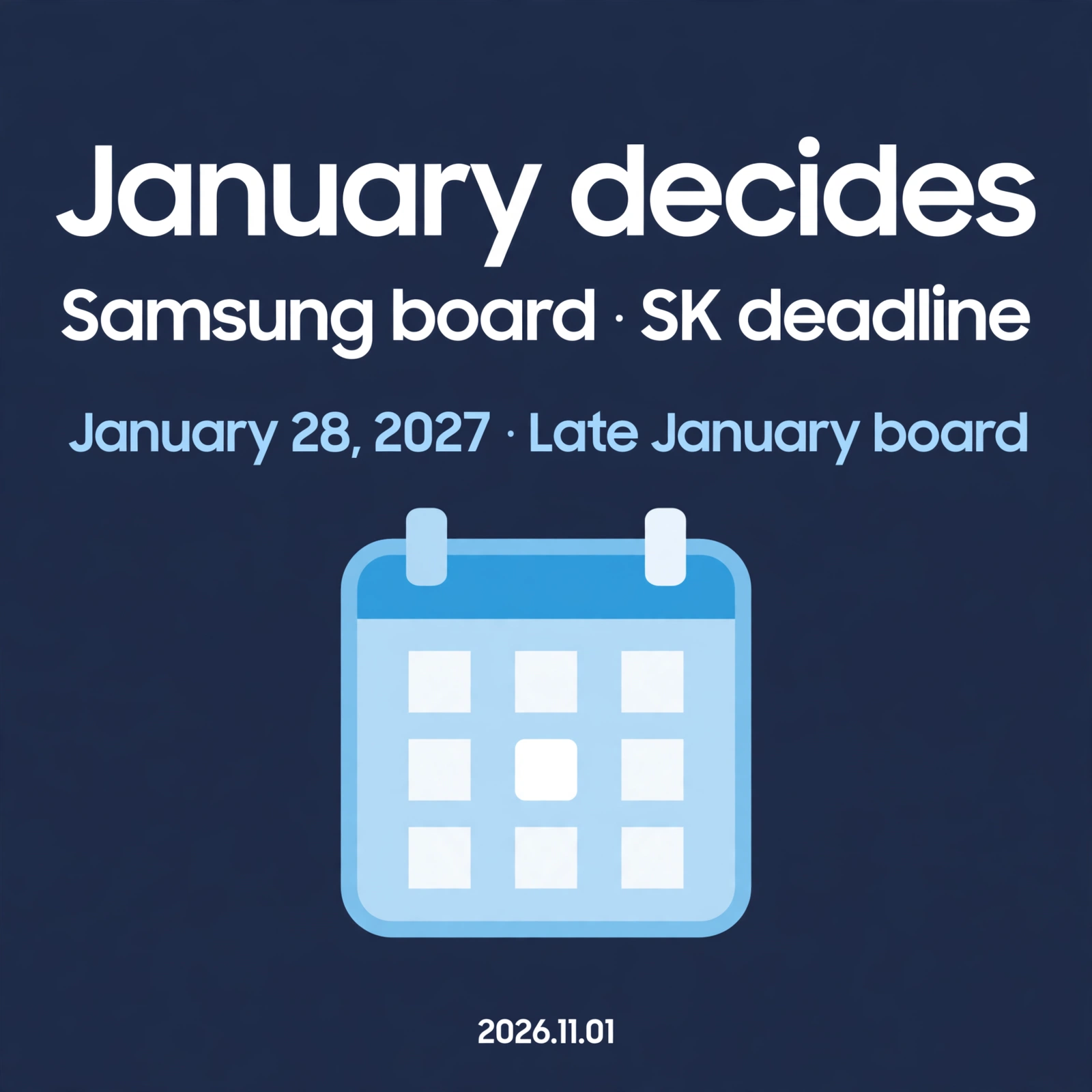
The calendar converges in January 2027: SK hynix’s second tranche ends January 28, and Samsung’s board decides the remaining return envelope in late January. After that, the market’s question shifts from “how much was announced?” to “how much was bought and cancelled?” If the rest of the market stays near KRW 20 trillion in filings while two firms dominate, the buyback boom remains a two-stock story. If named low-PBR firms respond with their own executed programs, it becomes a market story. Until then, foreign investors should treat the KRW 102 trillion headline as what it is: a record built by two companies, with the breadth test still to come.
Not investment advice. Figures from the Korea Exchange, YTN and The Korea Herald, checked November 1, 2026. Won–dollar conversions use KRW 1,334.3 per dollar.
Watch the video

Sources & references
- ChosunBiz (English) — Samsung, SK hynix drive fivefold surge in Korea share buybacks — January–October filings KRW 101.9217 trillion, KOSPI versus Kosdaq split, two firms at 80%
- The Korea Herald (English) — Korea Exchange names 151 low-PBR firms for first time — Governance context: low-PBR list and shareholder-return pressure
Related articles
- Korea Low PBR List 151 Firms Value Up Naming Governance Analysis
The Korea Exchange named 151 persistently low-valued firms for the first time, with a public tag on trading apps from Monday. How the list was built, what Japan's reform teaches, and the four things foreign investors should watch next.
- Korea Weekend Brief China PMI Contraction US Tech Selloff Samsung Shareholder Return Analysis
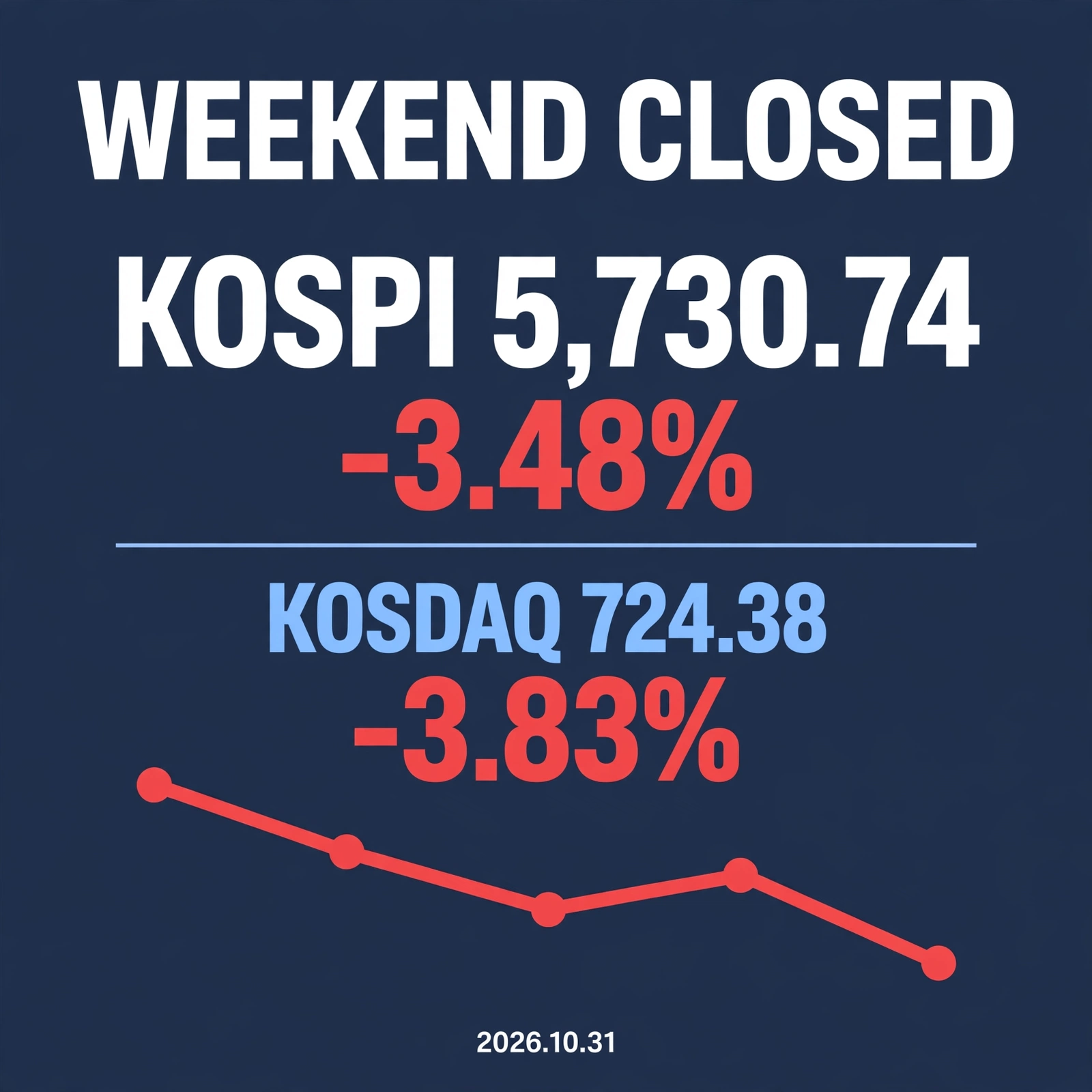
October 31 Korea weekend brief for foreign investors: Seoul is closed for the weekend, with the KOSPI last at 5,730.74 (-3.48%). Overnight the Nasdaq fell 2.86% on Intel's plunge, China's October manufacturing PMI slipped to 49.3, and WTI crude rose to $104.12 on a Strait of Hormuz incident. Samsung's remaining KRW 55–75 trillion ($41–56 billion) of returns awaits a January board decision.
- AI capex returns analysis Alphabet Amazon cash flow deficit semiconductor repricing
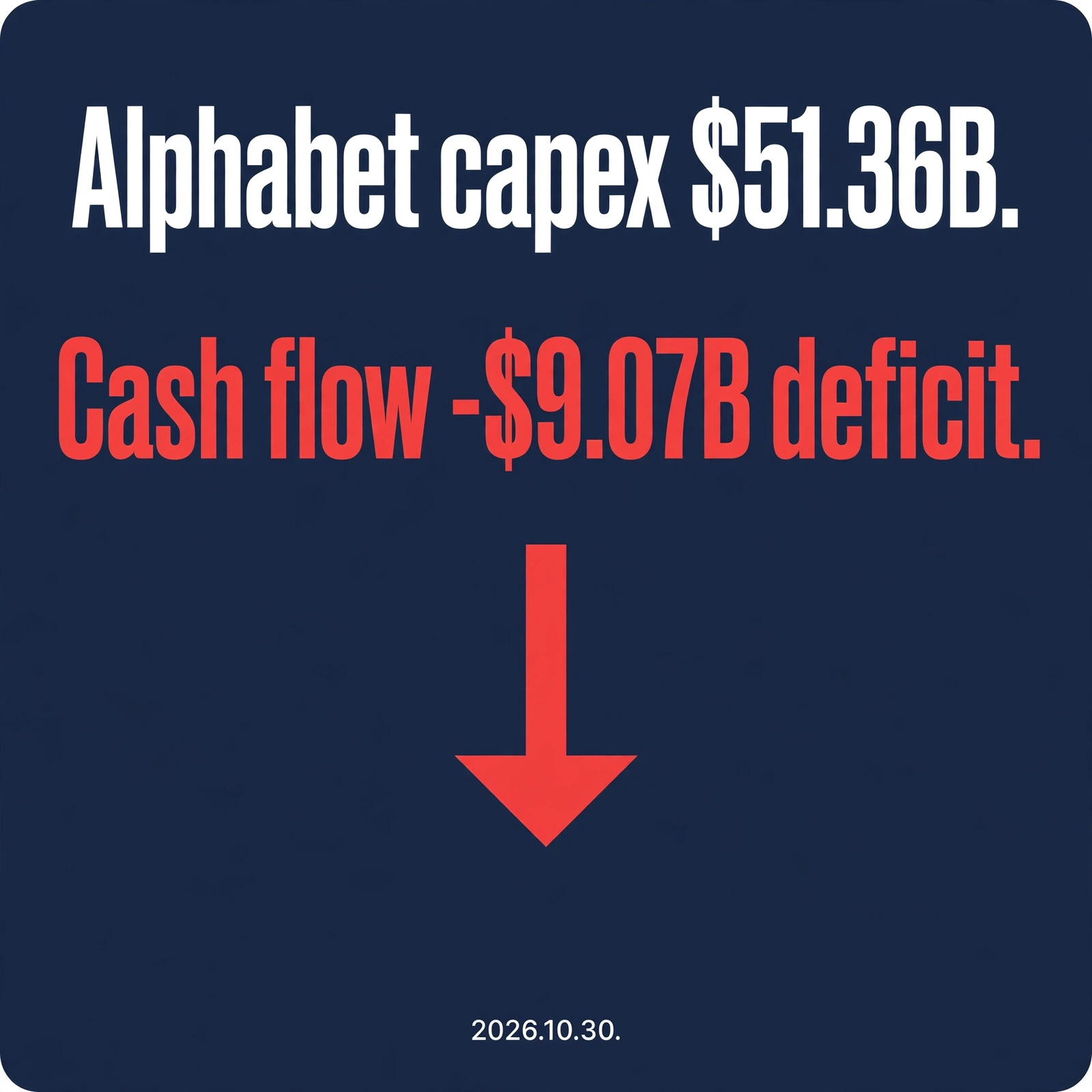
AI capex returns analysis: Alphabet spent $51.36 billion in Q3 capex and posted a $9.07 billion free cash flow deficit, while Amazon kept a $220 billion 2026 capex plan with a $42.4 billion twelve-month cash outflow. Cloud grew 39–103%, yet cash leaked — and that contradiction repriced Korean chip stocks.
5minbrief on YouTube
The briefs also come as videos. Get the daily market wrap on YouTube.
Subscribe on YouTube