 5-minute briefs
Shareholder return specificity stock impact Samsung SK hynix LG Chem comparison
#SK hynix shareholder returns#Korea discount#value-up
Three announcements side by side — where the numbers are, and where they are not
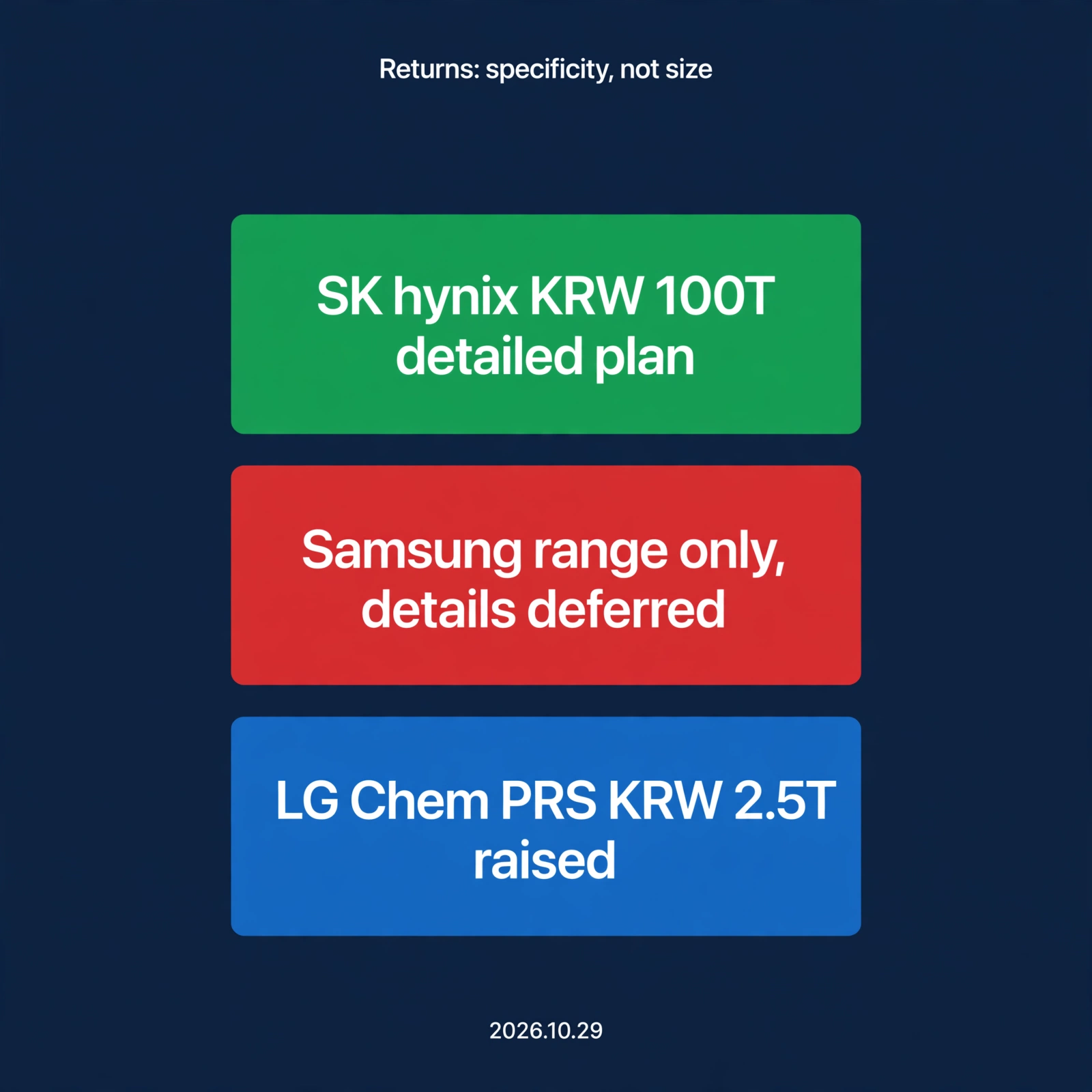
| SK hynix | Samsung | LG Chem | |
|---|---|---|---|
| Announced | Oct 28 | Oct 29 | Oct 28 disclosure |
| Total size | About KRW 100 trillion ($74.8 billion) | KRW 90–110 trillion ($67.3–82.2 billion) | KRW 400 billion ($299 million) for returns (KRW 2.5 trillion raised) |
| Dividends | At least KRW 30 trillion | KRW 30 trillion ($22.4 billion) confirmed | Part of the KRW 400 billion, for fiscal 2026 |
| Buybacks and cancellations | At least KRW 60 trillion | A substantial portion (direction only) | KRW 300 billion ($224 million) over six months |
| Execution schedule | KRW 20,000 per share for Q3–Q4; KRW 20 trillion buyback started Oct 29, running three months | Details and next policy at end-January 2027 board meeting | PRS proceeds Nov 27, then buybacks begin |
| Share reaction | +10.89% on Oct 28, +2.62% on Oct 29 | –4.13% on Oct 29 (KRW 232,000) | Subsidiary LG Energy Solution plunged more than 8% |
The decisive difference is not the headline total. It is whether the announcement contains a schedule: how much, from when, and by what method. SK hynix gave all three. Samsung gave the total as a range and pushed the rest to January. LG Chem gave the funding method (PRS) and the return split, but the shares that fell were those of the subsidiary whose stake was used — a distinction that matters in chaebol structures.
Why specificity moves prices — three channels
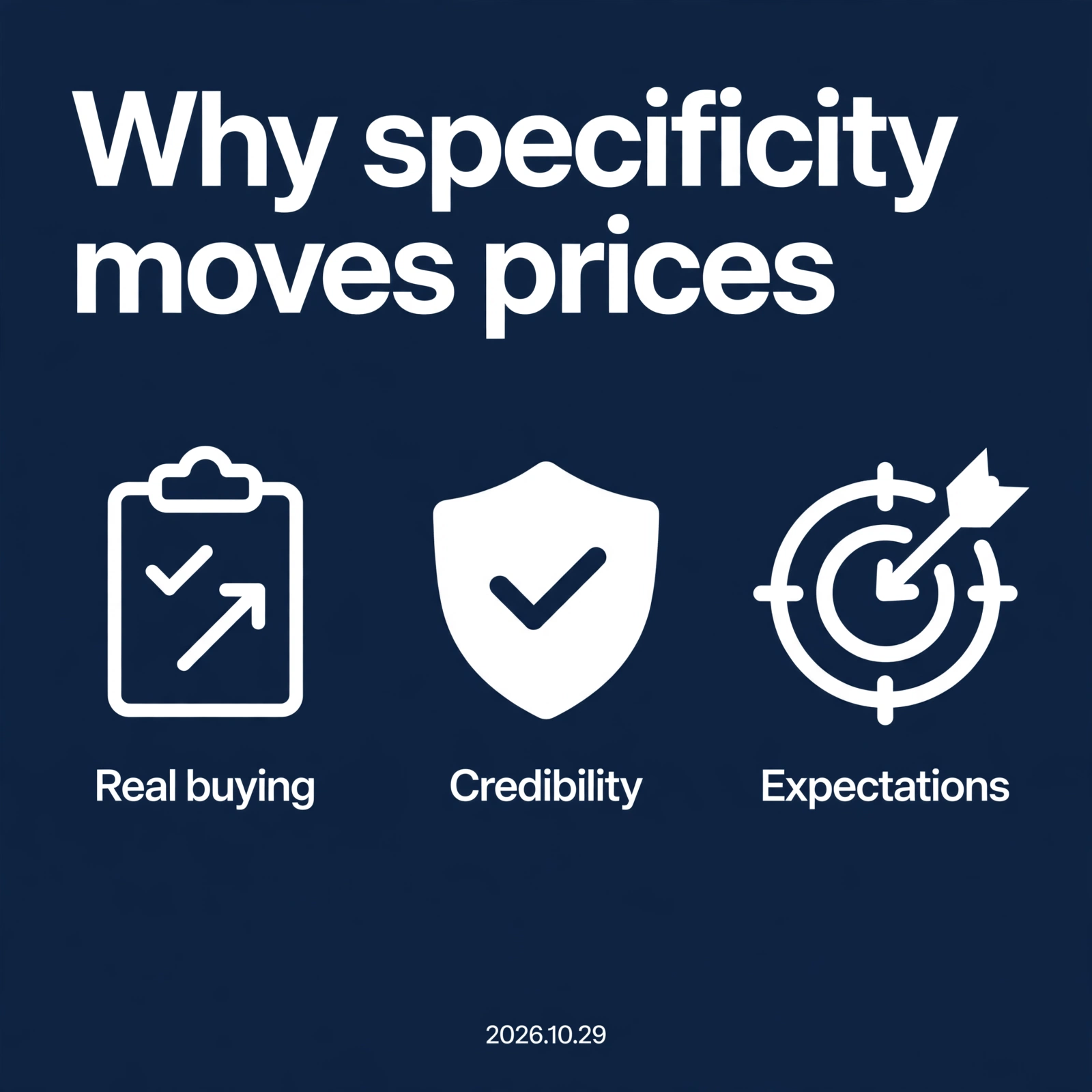
First, real buying. A buyback is the company itself buying shares in the market. SK hynix’s KRW 20 trillion buyback starting October 29 and running three months puts steady bid orders into the market for that whole period. With no start date or size, there is nothing for the market to price in. As Toss Securities’ research head noted, Samsung’s problem was the absence of an immediate, concrete buyback plan that could improve supply and demand.
Second, accumulated credibility. The Korea discount — the persistent valuation gap on Korean stocks — is less about earnings power than about whether profits visibly reach shareholders. SK hynix’s special dividend sharing gains from its Kioxia investment sets a precedent: investment gains flow to holders. Deferring details leaves the uncertainty intact, and the market prices that uncertainty. For foreign investors, this is the governance lens in action: each announcement is a data point on whether a chaebol-controlled company treats minority holders as owners or as bystanders.
Third, expectation management. Samsung had already jumped 9.01% the day before, pricing in return hopes. The higher the priced-in expectation, the larger the fall when the announcement merely confirms rather than exceeds it — the classic “sell the news” pattern. SK hynix beat expectations with specifics; Samsung confirmed expectations and postponed the rest. Same record-profit territory, opposite directions.
The LG Chem lesson — separate the funding source from the beneficiary
LG Chem adds a second lesson: the source of return funding and the beneficiary of the return are different things. LG Chem raised about KRW 2.5 trillion through a PRS on its LG Energy Solution shares and will spend about 20% of after-tax proceeds — KRW 400 billion — on returns, including KRW 300 billion of treasury-share purchases and cancellations. That is a concrete return for LG Chem holders. But the shares that plunged were LG Energy Solution’s, because the market read the stake transaction as a supply overhang on the subsidiary. Last year LG Chem did a similar deal at about KRW 2 trillion and spent about 10% of after-tax proceeds on returns; this year’s 20% ratio is an improvement, but a parent’s return can be a subsidiary holder’s headwind — a standing check whenever a chaebol parent monetizes a listed subsidiary.
Note also that a PRS is not a clean sale. Over the two-year term, gains and losses from share-price moves are settled with the counterparty, so LG Chem’s exposure to LG Energy does not fully disappear. Its stake falls from 79.38% to about 76.6% on completion, with proceeds arriving November 27. Read together — size, ratio, timing, residual exposure — the picture is far richer than the headline “stake sale.”
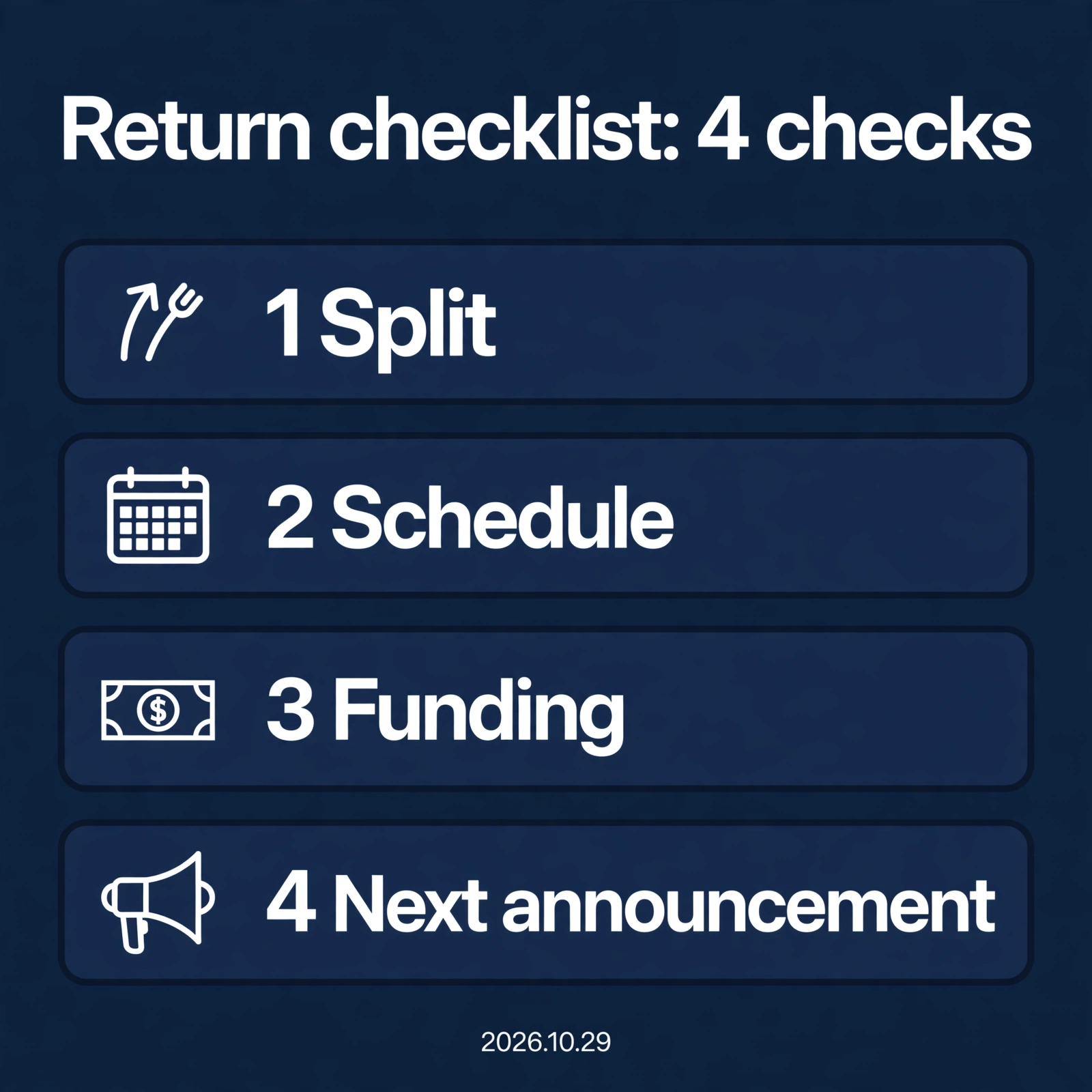
Investor checklist — four things to check in any return announcement
First, split before total: how much is dividends, how much is buybacks and cancellations. Dividends put cash directly in holders’ hands; cancellations shrink the share count and lift per-share value. Both need numbers. Second, schedule: buyback start date and duration, dividend payment timing. Schedules create real flows. Third, funding source: retained earnings, a subsidiary stake, or borrowing — each implies a different sustainability. Fourth, the next announcement date: when details are deferred, as with Samsung, that date (the end-January 2027 board meeting) becomes the window in which the stock trades on hope and disappointment. In the gap, earnings expectations do the supporting work — Samsung’s 2027 operating-profit consensus was raised 3.55% over three months, which is why broker targets still imply more than 110% upside for both Samsung and SK hynix despite today’s divergence.
- Price return swap (PRS): a derivative in which a company uses shares it holds as the underlying asset, pays fees to a securities firm over the contract term, and settles price-move differences — cash now against a stake, without an outright sale.
- Buyback and cancellation: the company buys its own shares and retires them. Fewer shares outstanding lifts per-share value.
- Korea discount: the persistent valuation gap on Korean stocks, widely attributed to governance and return uncertainty rather than earnings power.
- Sell the news: selling after an expected positive event, because the price already reflected the expectation.
- Consensus: the average of broker estimates for earnings or other metrics.
Conclusion — the next three months are the test
The message of the three announcements is simple: returns are an execution contest, not a size contest. SK hynix bought credibility with a schedule, Samsung bought time with a range, and LG Chem paired funding with a return split but burdened its subsidiary’s shares. The three-month test is now concrete: does SK hynix’s KRW 20 trillion buyback actually execute, do LG Chem’s November 27 proceeds and KRW 300 billion buyback proceed as planned, what details does Samsung’s board produce at the end of January? Credibility will be repriced in the order those schedules are filled.
Not investment advice. Figures are from company disclosures and reporting (Financial News, MoneyToday, Asia Business Daily), verified October 29, 2026.
Watch the video
Sources & references
- Financial News — Samsung and SK hynix diverge on return-plan specificity — Comparison of return plans and share-price reactions
- MoneyToday — KOSPI gives back 6,000 after one day on Samsung return disappointment — Cross-check of Samsung's fall and LG Energy's plunge
- Asia Business Daily — LG Chem sells KRW 2.5 trillion LG Energy stake, retires KRW 300 billion in treasury shares — PRS contract terms and return allocation
Related articles
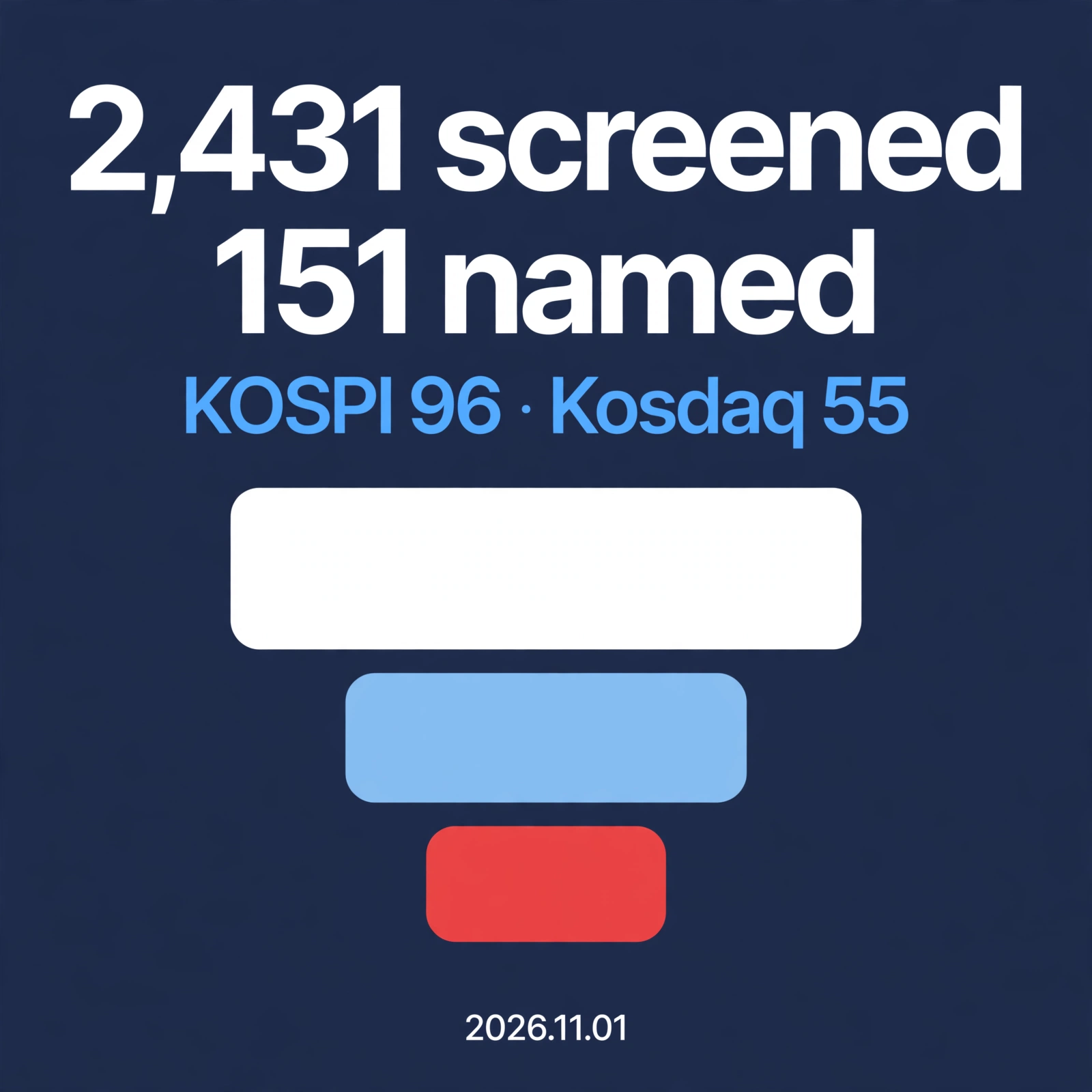
- Korea Low PBR List 151 Firms Value Up Naming Governance Analysis
The Korea Exchange named 151 persistently low-valued firms for the first time, with a public tag on trading apps from Monday. How the list was built, what Japan's reform teaches, and the four things foreign investors should watch next.
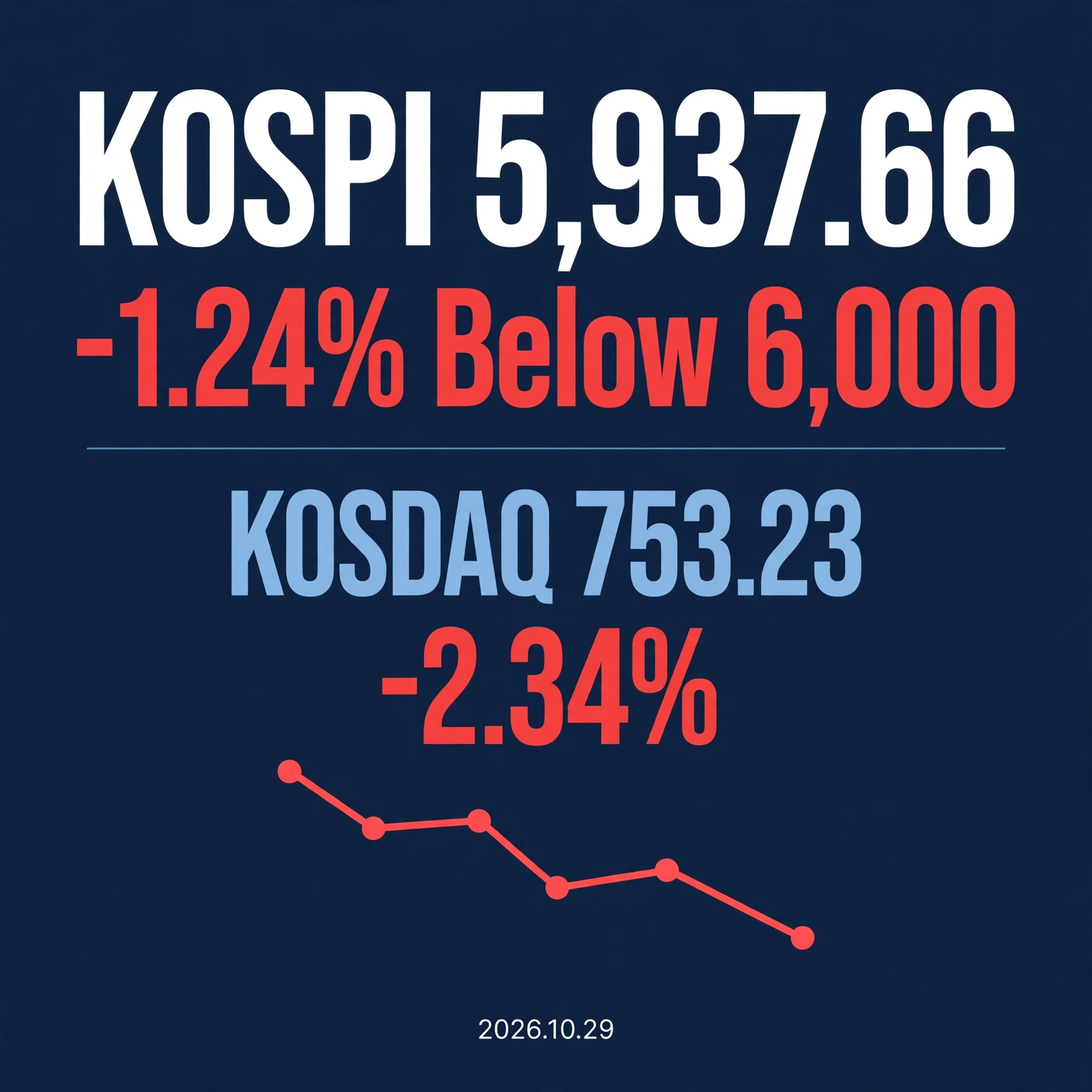
- KOSPI 1.24% fall Samsung shareholder return delay 5937 close analysis
October 29 Korea market brief for foreign investors: the KOSPI fell 1.24% to 5,937.66, giving back the 6,000 line one day after retaking it, and the KOSDAQ fell 2.34% to 753.23. Samsung posted record third-quarter operating profit of KRW 107.44 trillion yet fell 4.13% after deferring shareholder-return details to January, while SK hynix, which spelled out a KRW 100 trillion ($74.8 billion) return plan, rose 2.62%. LG Energy Solution plunged more than 8%. The won firmed to 1,336.8 per dollar.
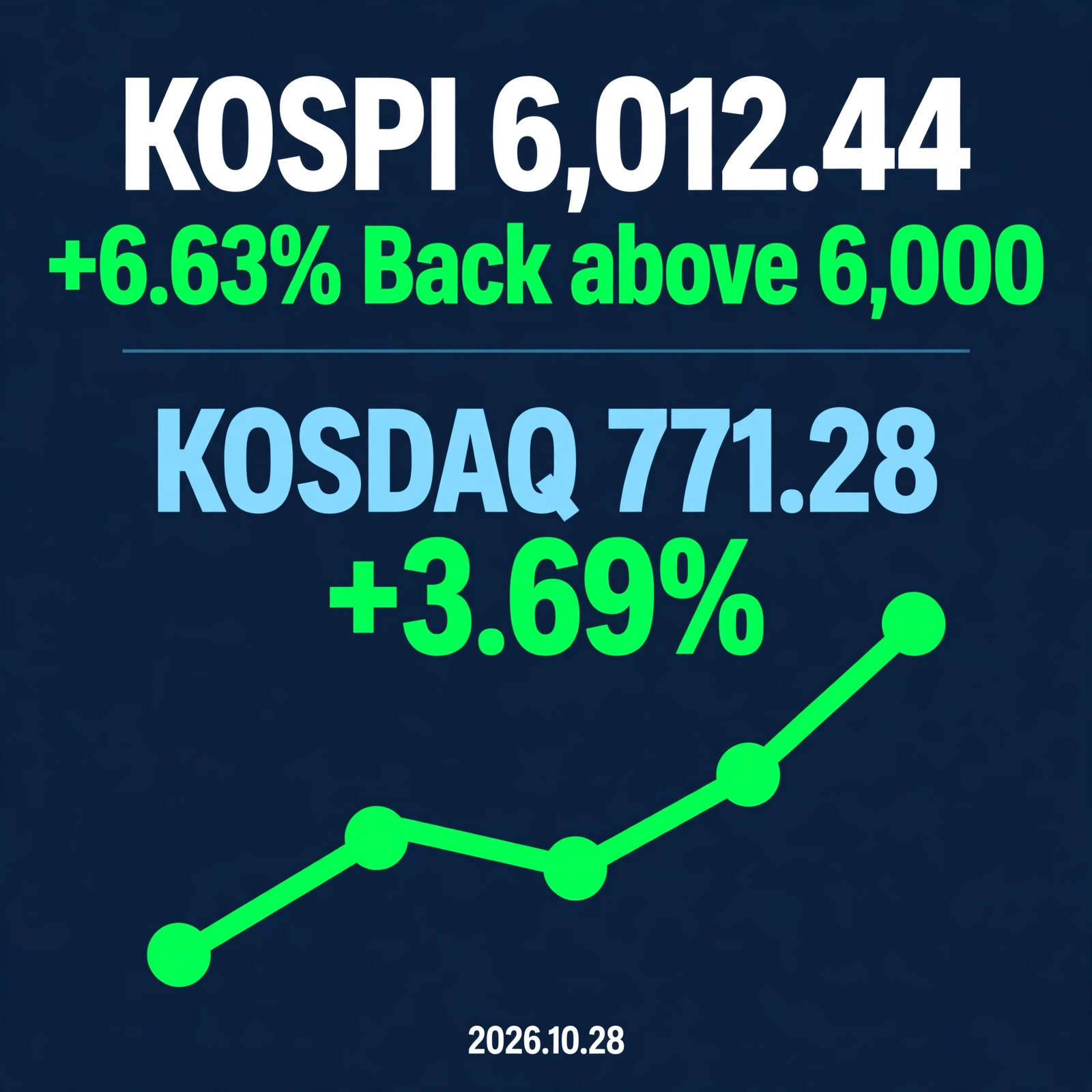
- KOSPI 6.63% surge back above 6000 SK hynix record profit foreign buying
October 28 Korea market brief for foreign investors: the KOSPI jumped 6.63% to 6,012.44, its first close above 6,000 in 10 sessions, after SK hynix posted record third-quarter profit and a KRW 100 trillion shareholder-return plan. Foreigners and institutions bought together for a second day, Samsung rose 9.01% and SK hynix 10.89%. The won weakened to 1,337.7 per dollar.
5minbrief on YouTube
The briefs also come as videos. Get the daily market wrap on YouTube.
Subscribe on YouTube