 5-minute briefs
Microsoft Alphabet Earnings Analysis Azure 48% Growth vs Alphabet Profit Drop AI Spending Contrast
#Microsoft#Alphabet#earnings#AI spending#free cash flow
Microsoft: spending less, earning more
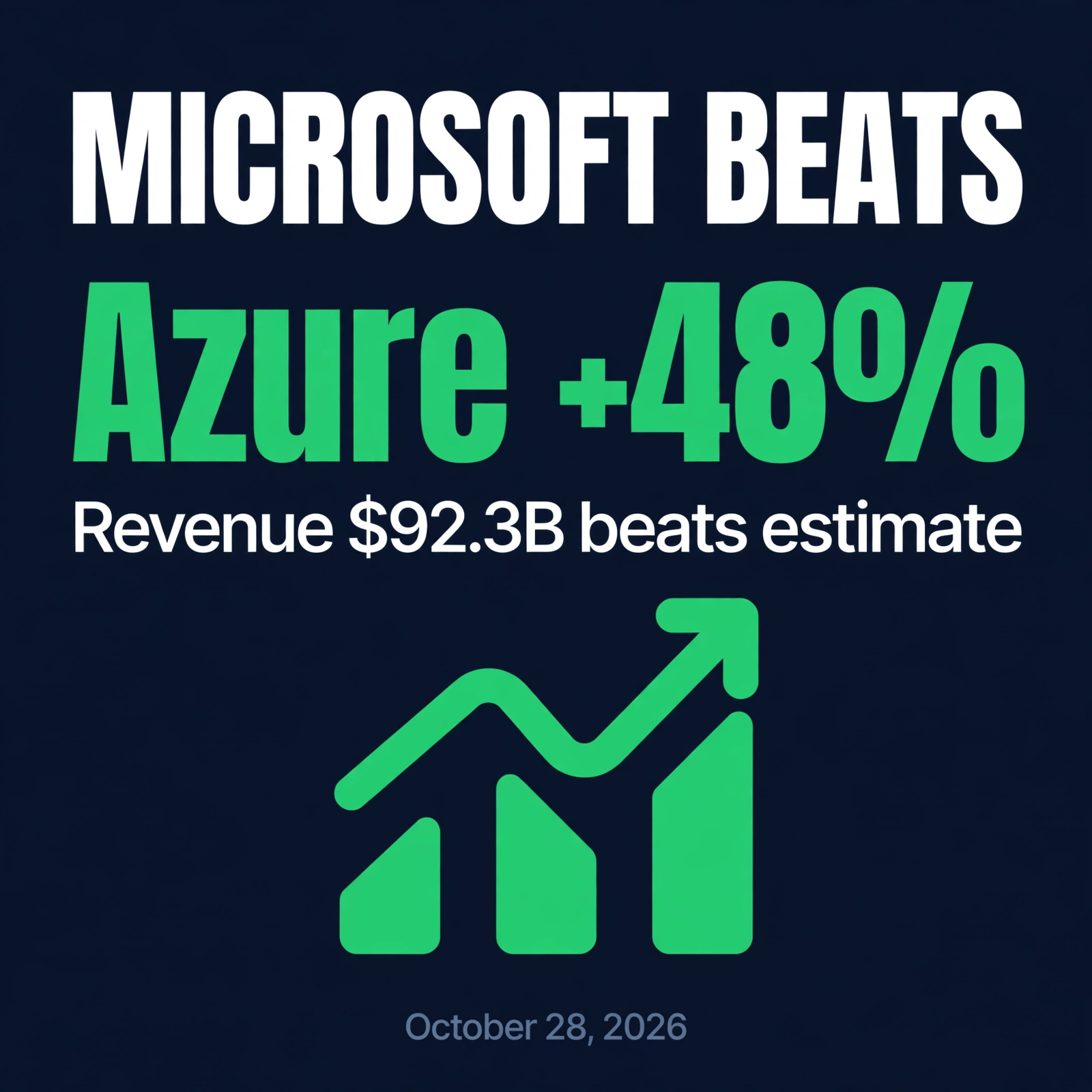
Microsoft’s fiscal first quarter beat in three places. Revenue of $92.3 billion topped the $90.7 billion consensus, and adjusted earnings per share of $4.89 beat the $4.73 estimate. Azure revenue grew 48% year over year, well ahead of the 44.8% estimate, and total Microsoft Cloud revenue rose 30% to $63.9 billion. Operating income of $45.9 billion and net income of $36.6 billion also beat expectations.
The most striking number is on the spending side. Capital spending of $39.4 billion came in below the $45.9 billion consensus. If market anxiety about AI spending was “it never stops growing,” this quarter pushed back on that fear once. Add a $207 million net gain from the OpenAI investment and $10.2 billion returned to shareholders through dividends and buybacks, and this was a quarter that showed growth, profit and cash together.
Alphabet: a strong core business, a broken bottom line
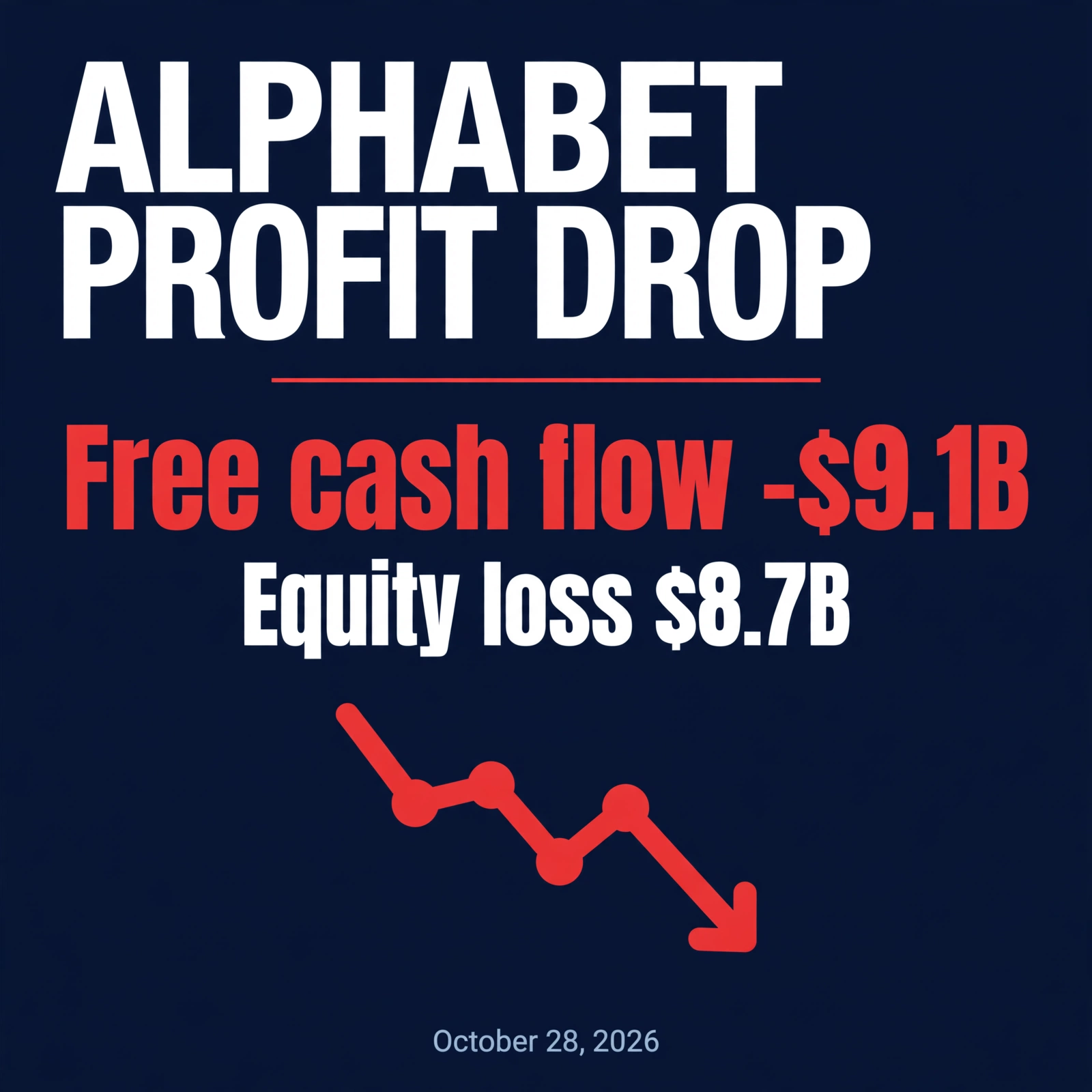
Alphabet’s third quarter looks different on the surface and underneath. Revenue grew 25% year over year to $127.6 billion, operating income rose 30% to $40.6 billion and Google Cloud revenue jumped 103% to $30.7 billion. On the core business alone, this is a strong quarter. But earnings per share fell to $2.12 from $2.87 a year ago, and revenue just missed the $128.2 billion estimate.
Two things broke. First, an $8.7 billion loss on equity securities swung other income from a positive $12.8 billion a year ago to a negative $8.2 billion. Second, capital spending of $51.4 billion pushed free cash flow to a negative $9.1 billion. Google Search revenue of $63.4 billion and YouTube advertising revenue of $11.2 billion also missed estimates. Markets weighed earnings quality and cash direction more heavily than core growth, and the after-hours price reflected that verdict.
What the funding contrast says
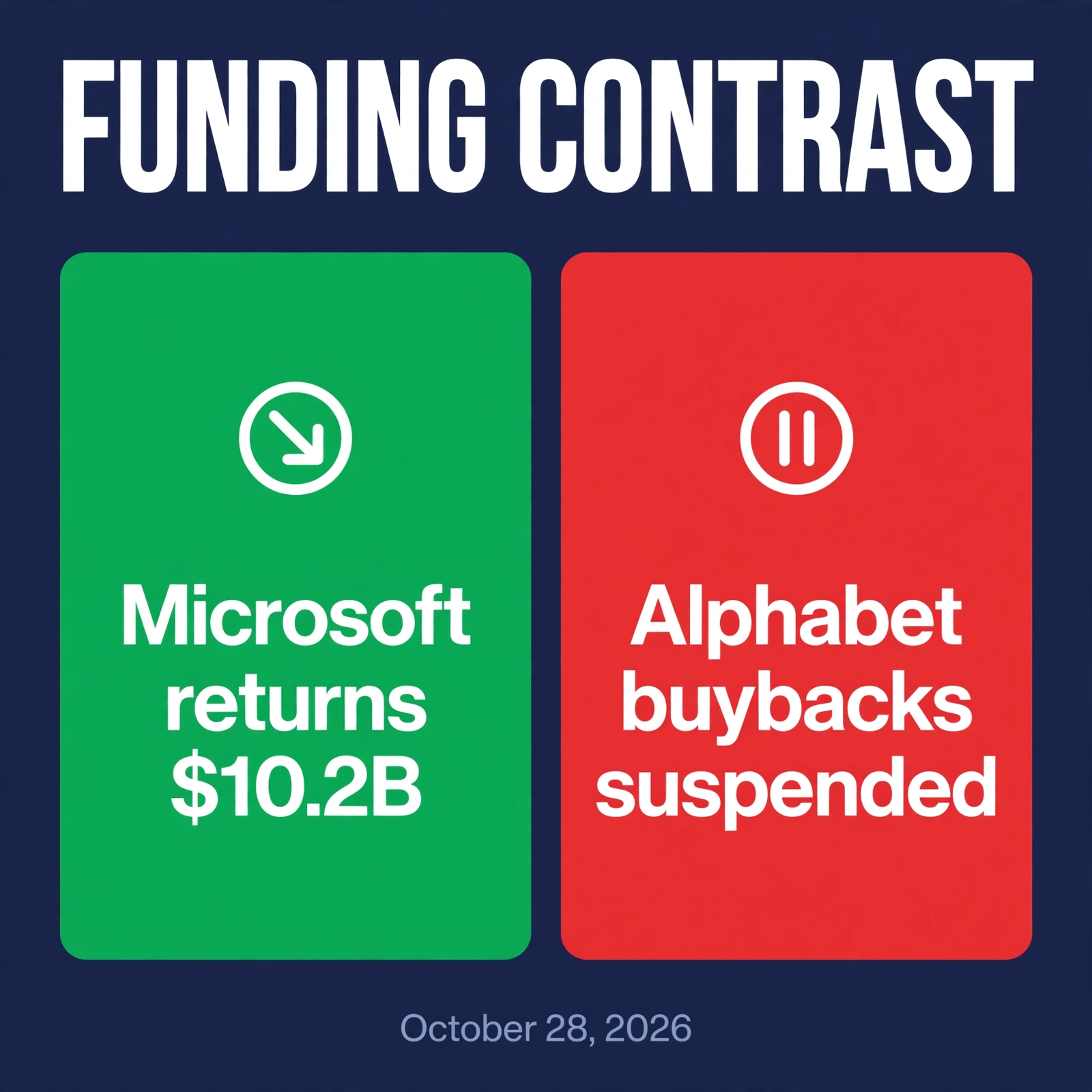
Put the two funding pictures side by side and the contrast sharpens. Microsoft stood on the side of earning cash and returning it: $10.2 billion in dividends and buybacks is the evidence. Alphabet, by contrast, issued $28.7 billion in senior notes and sold $12.4 billion of stock through its at-the-market program. A year ago it spent $11.5 billion on buybacks; this quarter it suspended buybacks.
That contrast matters because the core of the AI spending debate is not “how much” but “paid for with what.” This quarter, Microsoft funded its spending from cash it earned. Alphabet reached for debt and equity issuance, and shareholder returns stopped as the price. Neither company cut AI investment. What shrank was Alphabet’s headroom; what held was Microsoft’s.
- Azure: Microsoft's cloud service, a leading enterprise cloud platform.
- Free cash flow: operating cash flow minus capital spending. With AI capital spending this large, it has become a central earnings verdict.
- Equity securities loss: an accounting loss from a fall in the value of stocks held. It can swing net income even when the core business is fine.
Investor checklist: three things to watch next quarter
Three points will tell whether this split is a one-off or a trend. First, Alphabet’s capital spending pace: if it stays near $51.4 billion a quarter, negative free cash flow can repeat. Second, whether Microsoft’s spending normalizes: whether $39.4 billion, below consensus, was timing or a new pace. Third, cloud growth durability: whether Azure’s 48% and Google Cloud’s 103% hold at similar speeds next quarter. That is the verdict on AI monetization.
The conclusion is not “AI spending is right or wrong.” It is that the same AI spending gets priced differently: a company funding it from cash is judged differently from one funding it with debt. After the close on October 28, the market priced that difference.
Watch the video

Sources & references
- Microsoft — Microsoft Announces First Quarter Results (Fiscal Year 2027 Q1) — Microsoft's quarterly results, from the earnings release
- Alphabet — Third Quarter 2026 Results (SEC Form 8-K Exhibit 99.1, October 28, 2026) — Alphabet's quarterly results and cash flows, from the release
Related articles
- AI Stocks Investment Analysis Earnings Beats Shares Fall Western Digital Meta Comfort Systems Valuation Reset
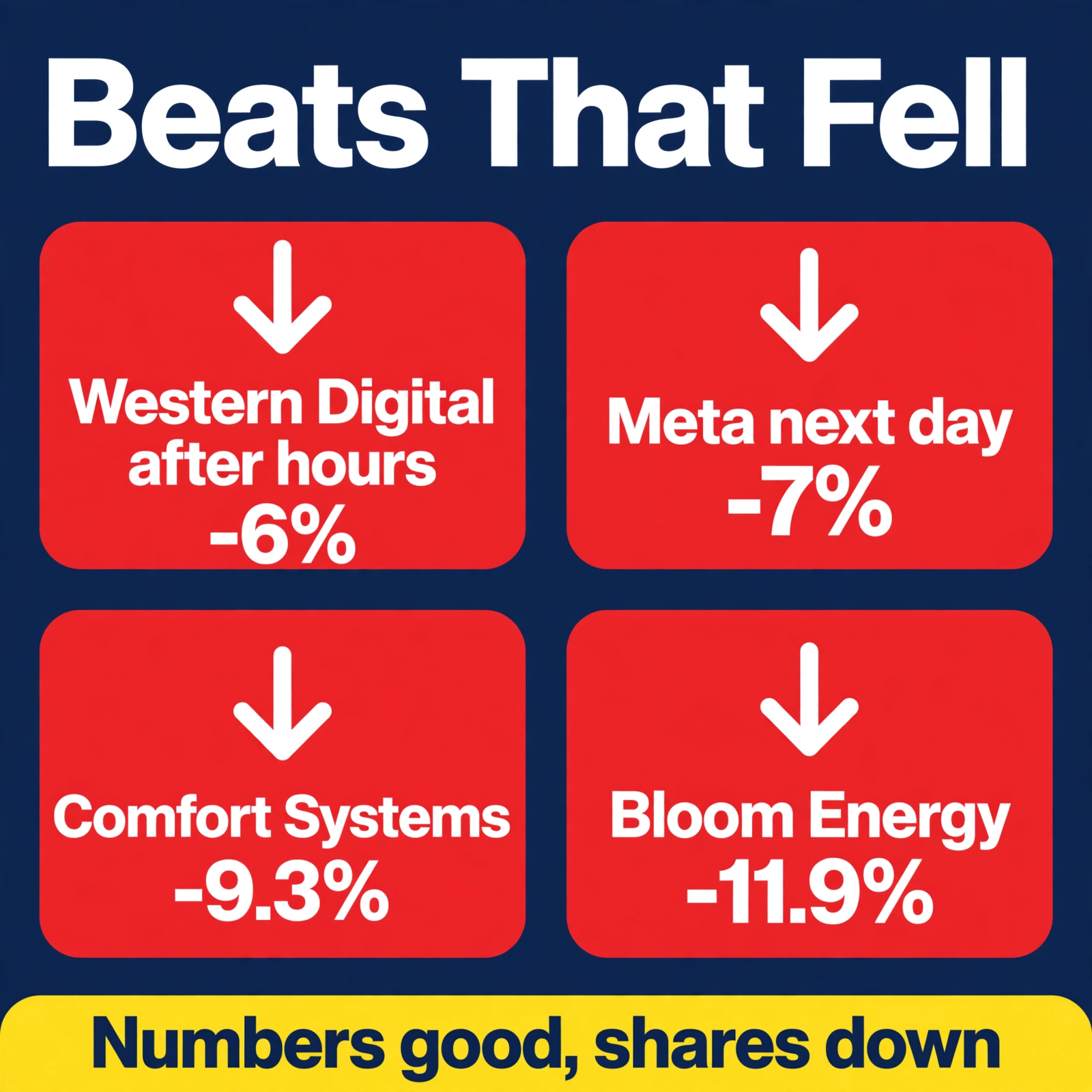
Four cases of AI-linked stocks falling despite earnings beats: Western Digital revenue +55% and EPS +161% yet down about 6% after hours, Meta -7%, Comfort Systems -9.3%, Bloom Energy -11.9%. Three mechanisms — priced-in expectations, a 5% 10-year yield, and payback doubts on capital spending — plus the October 28 Microsoft and Alphabet checkpoint.
- US Market Close Analysis FOMC Holds Rates at 3.75–4.00% in 10-2 Vote as Microsoft and Alphabet Earnings Split (October 29)
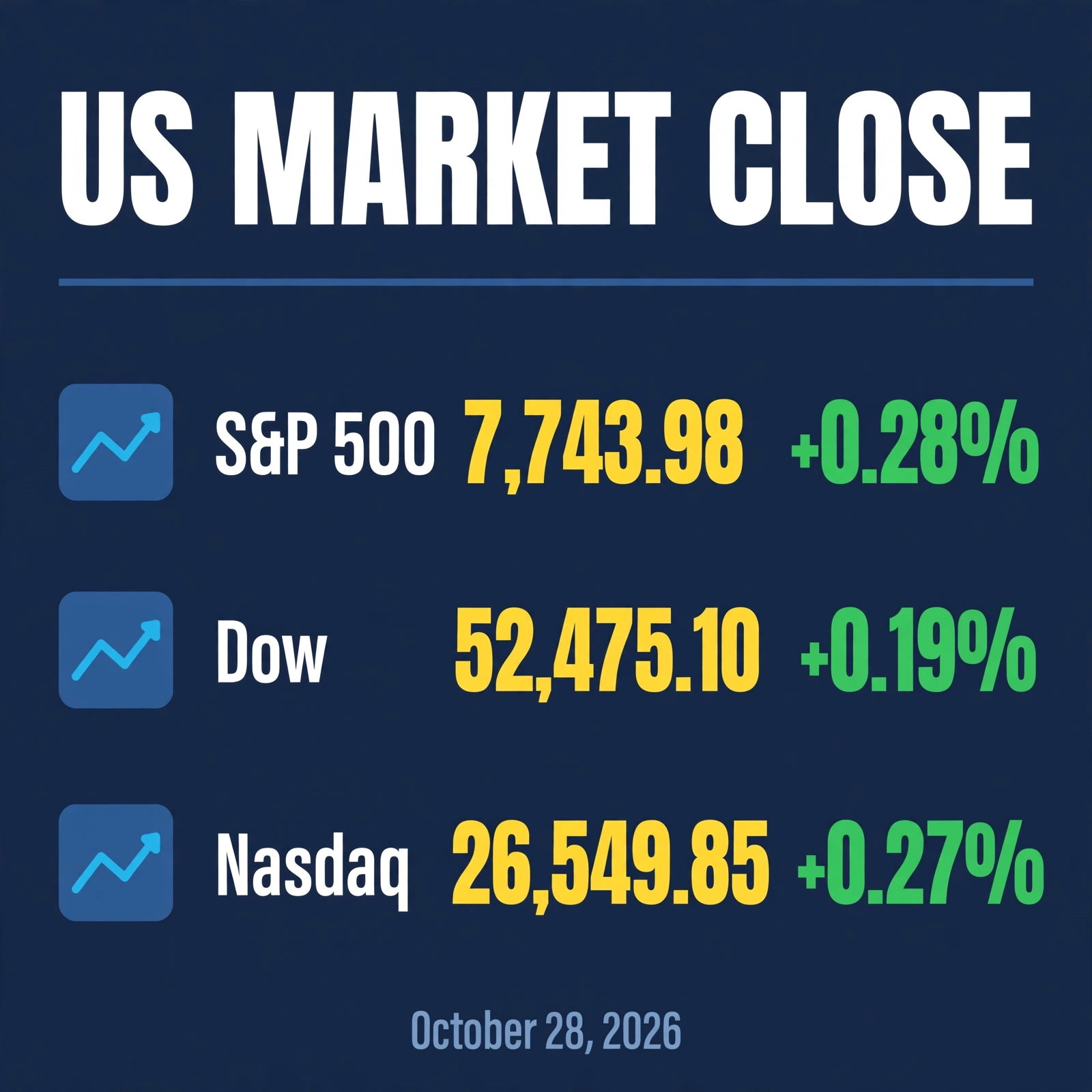
Wednesday, October 28 US close: S&P 500 7,743.98 (+0.28%), Dow 52,475.10 (+0.19%), Nasdaq 26,549.85 (+0.27%). The Fed held rates at 3.75–4.00%, and after the close Microsoft beat estimates while Alphabet's net income fell sharply.
- US Stock Market Weekly Recap S&P 500 Down Dow Up AI Spending Selloff Oil Surge Analysis
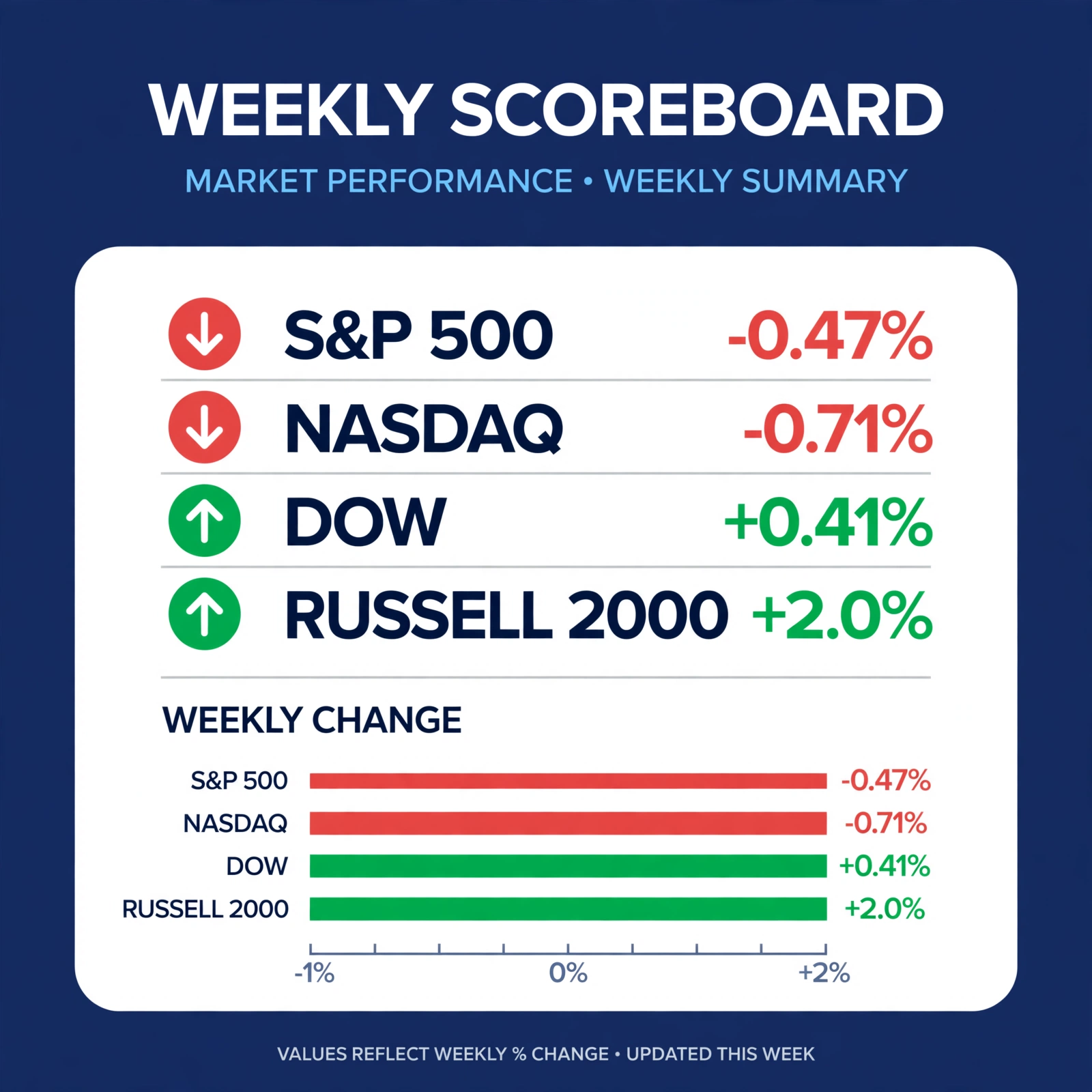
US stock market weekly recap for October 19–23: S&P 500 -0.47%, Nasdaq -0.71%, Dow +0.41%, Russell 2000 +2.0%. A Thursday AI spending selloff and an oil surge split the week. Next: FOMC, Microsoft, Alphabet, GDP, PCE.
5minbrief on YouTube
The briefs also come as videos. Get the daily market wrap on YouTube.
Subscribe on YouTube