 5-minute briefs
AI Stocks Investment Analysis Earnings Beats Shares Fall Western Digital Meta Comfort Systems Valuation Reset
#AI stocks#earnings#earnings surprise#Meta#valuation#Microsoft#Alphabet
Four cases: the numbers were good, the shares fell
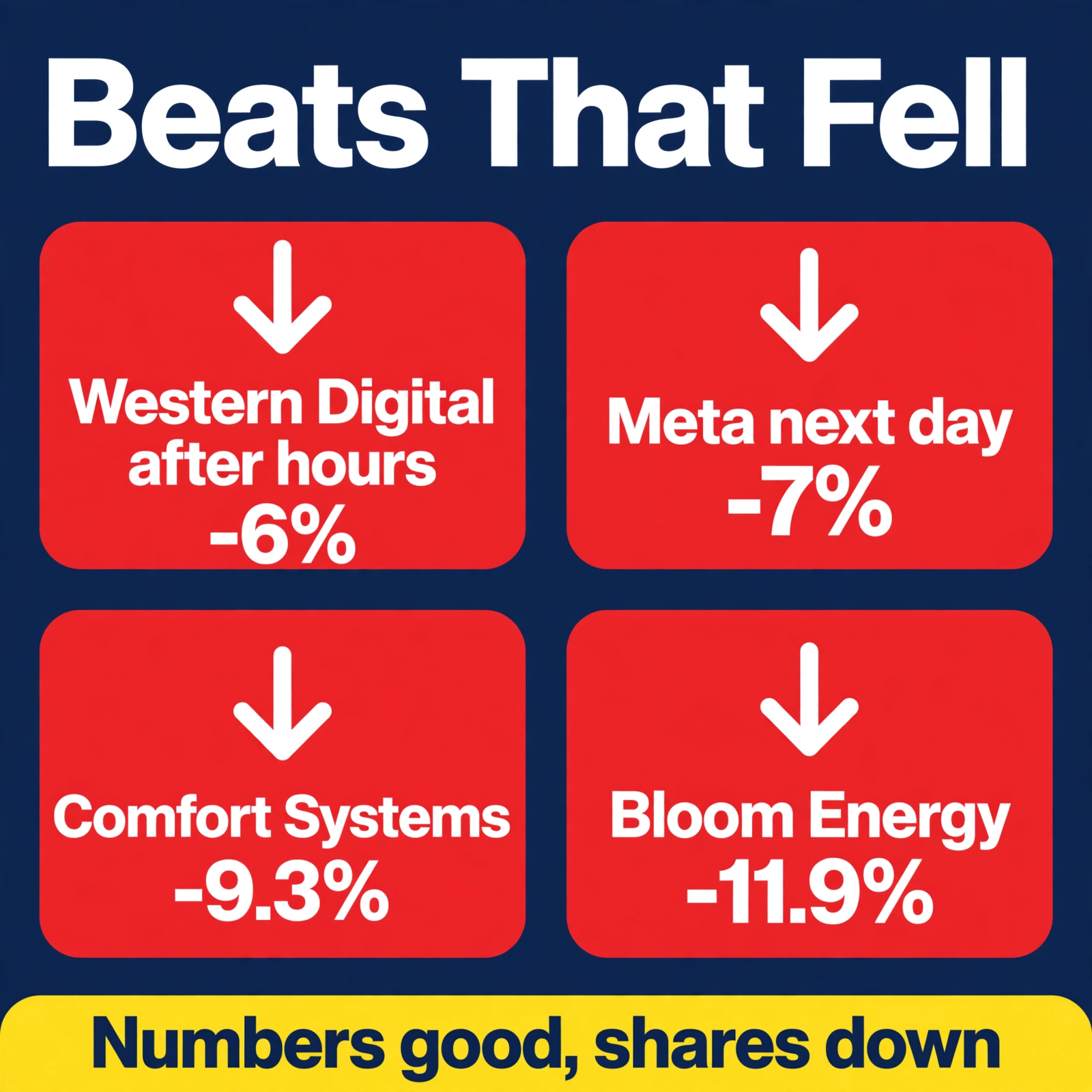
Start with the numbers. Western Digital (fiscal Q1) reported revenue of $4.38 billion (+55%) and adjusted earnings per share of $4.64 (+161%, versus about $4.10 expected). Its next-quarter guidance — revenue of $5.0–$5.2 billion and adjusted earnings of $5.60–$6.00 per share — also beat consensus, and it raised its dividend 17%. Yet the shares fell about 6% in after-hours trading and closed Friday at $343.67 (−2.97%), down −23.68% over the past month.
Meta beat third-quarter expectations and raised its outlook, yet fell 7% the next day and −9.4% for the week. Comfort Systems saw its order backlog roughly double year over year, yet fell −9.3% on Friday and −19.3% for the week. Bloom Energy beat expectations yet fell −11.9% on Friday, the S&P 500’s worst performer that day, and −12.7% for the week. Add Quanta Services −13.5% and GE Vernova −11.5% for the week, and this is not a single-stock story — it is a repricing of the whole AI value chain.
There are counterexamples. CrowdStrike (+8.25%) rose on a fresh demand event. So markets are not selling everything — they are selectively selling names where the price already assumed the good result.
Why they fell: three mechanisms overlapped

First, priced-in expectations. Western Digital had already fallen about 24% from its recent high before reporting, and Meta and Comfort Systems entered their reports after strong runs. When a “good” result is exactly what was expected, there is no reason for the price to rise. That is what priced in means.
Second, the 10-year yield at 5.00%. Higher rates shrink the present value of distant profits, and AI infrastructure companies are valued mostly on profits they have yet to earn. Even gold fell to $4,007.50 (−1.3%) on Friday, a sign that higher real yields weighed on safe havens too.
Third, payback doubts on capital spending. After Western Digital’s report, discussion centered less on revenue and more on elevated spending plans for the next two years. For Meta, the debate was whether cash flow keeps up with spending. AI credit-default swaps sitting at record highs tell the same story: investors are asking when the spending turns into profit.
- Priced in: good or bad news already reflected in the share price. A priced-in beat does not lift the price.
- De-rating: a share-price adjustment driven not by worse results but by a shrinking valuation premium.
- CDS (credit-default swap): a derivative that insures against a company's default. Rising CDS prices mean markets see higher credit risk.
- Guidance: a company's outlook for next quarter. Guidance often moves shares more than the reported quarter itself.
This has happened before: the AI trade’s credibility test
The AI trade has faced credibility tests before — the DeepSeek shock of early 2025 questioned whether AI could be built cheaply. Today’s question is different and harder to answer quickly: when does this much capital spending turn into profit? That makes October 28, when Microsoft and Alphabet report, the verdict day. For Microsoft, watch Azure growth guidance of 45%, quarterly capital spending of around $50 billion and the cash flow that funds it. Alphabet faces the same test on cloud growth and spending plans. Also watch the Philadelphia Semiconductor Index (SOX): it rebounded 0.44% to 10,779.46 on Friday after Thursday’s 6.7% plunge, but whether the rebound holds depends on earnings.
Investor checkpoints: what to confirm
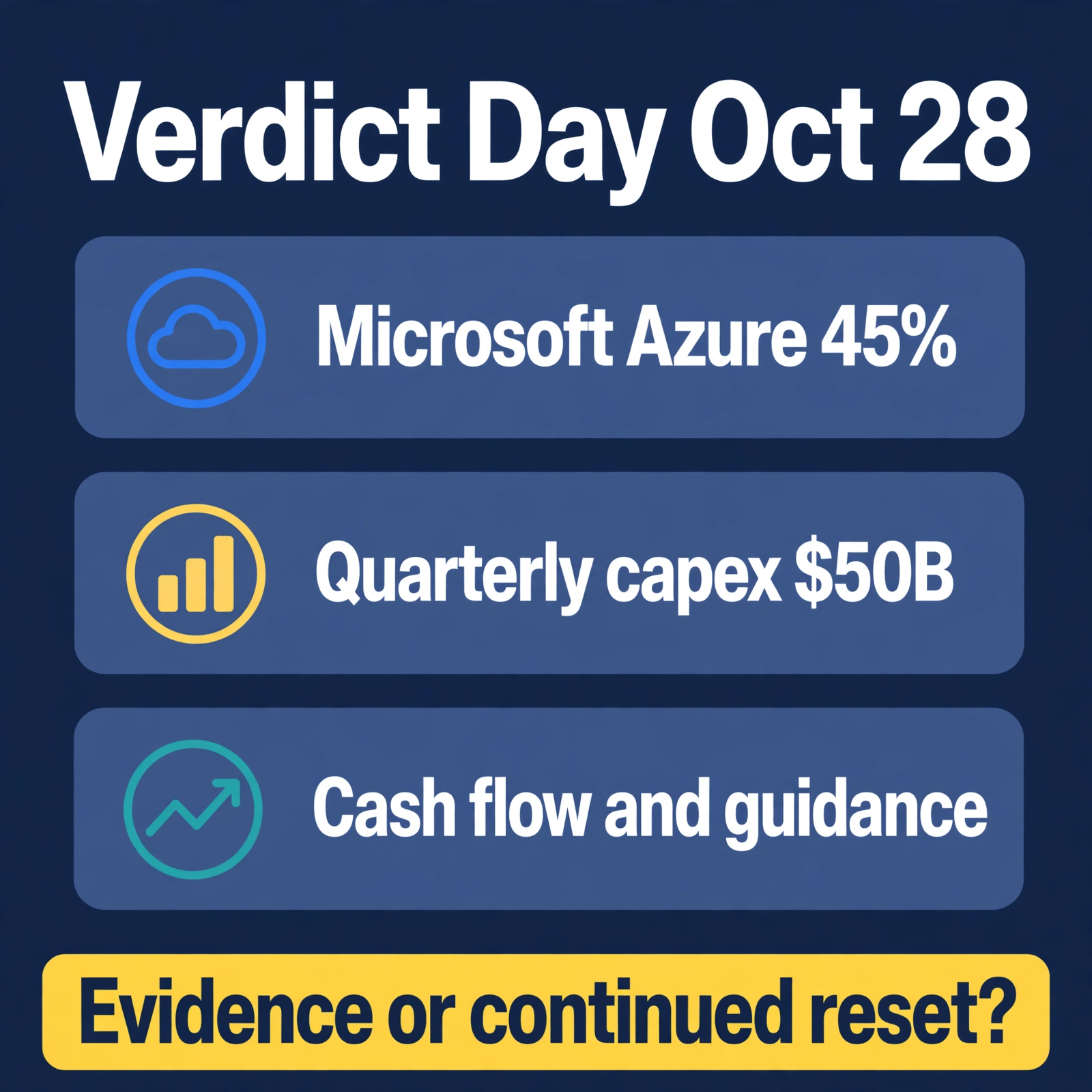
Three checkpoints matter. First, does Azure growth reach its 45% guidance? Second, is the spending plan explained together with cash flow? More spending is not itself bad news — unexplained spending is. Third, is guidance raised? In this phase, a beat alone does not move shares; the next-quarter outlook has to improve too.
If two or more of the three are met, the “beat but fall” pattern can ease. If Azure misses guidance while spending keeps rising, the repricing can spread from mega-caps deeper into the AI value chain. What matters now is not one company’s quarter but evidence of the speed at which capital spending converts into profit.
Watch the video

Sources & references
- Western Digital — Fiscal First Quarter 2027 Results — Revenue, EPS, guidance and dividend figures (company release, republished)
- Meta — Third Quarter 2026 Results — Meta's official earnings release via PR Newswire
- Bloom Energy — Third Quarter 2026 Financial Results — Record quarterly results and raised full-year guidance
- U.S. Department of the Treasury — Daily Treasury Par Yield Curve Rates — Official daily Treasury yield data
Related articles
- Microsoft Alphabet Earnings Analysis Azure 48% Growth vs Alphabet Profit Drop AI Spending Contrast
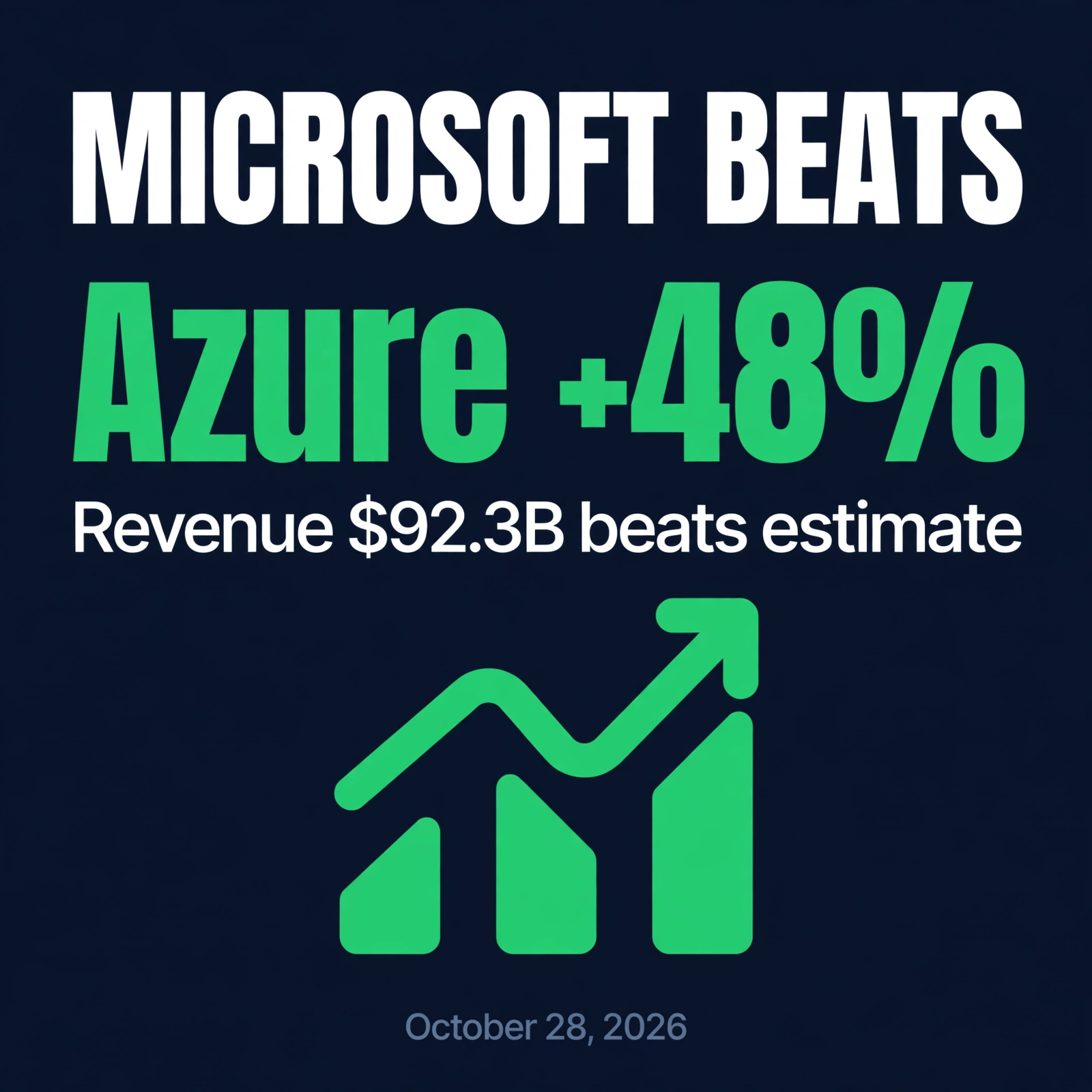
After the close, two big-tech reports split in opposite directions. Microsoft beat with $92.3 billion revenue and 48% Azure growth, while Alphabet's $8.7 billion equity securities loss cut EPS to $2.12 and free cash flow turned negative $9.1 billion.
- US Market Close Analysis FOMC Holds Rates at 3.75–4.00% in 10-2 Vote as Microsoft and Alphabet Earnings Split (October 29)
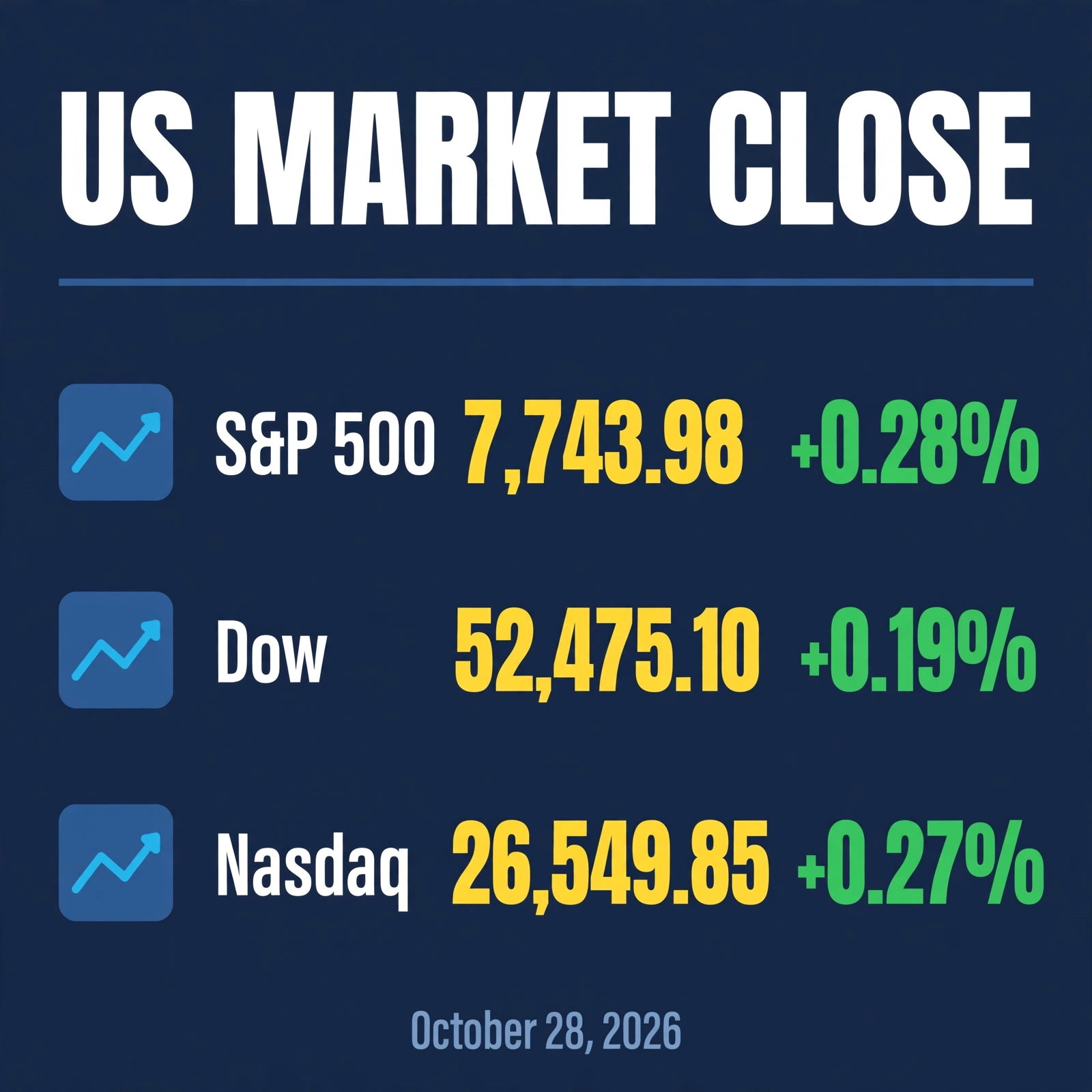
Wednesday, October 28 US close: S&P 500 7,743.98 (+0.28%), Dow 52,475.10 (+0.19%), Nasdaq 26,549.85 (+0.27%). The Fed held rates at 3.75–4.00%, and after the close Microsoft beat estimates while Alphabet's net income fell sharply.
- US Market Close Analysis S&P 500 Up 0.70% Nasdaq Up 0.82% Anthropic IPO Filing AI Rebound (October 27)
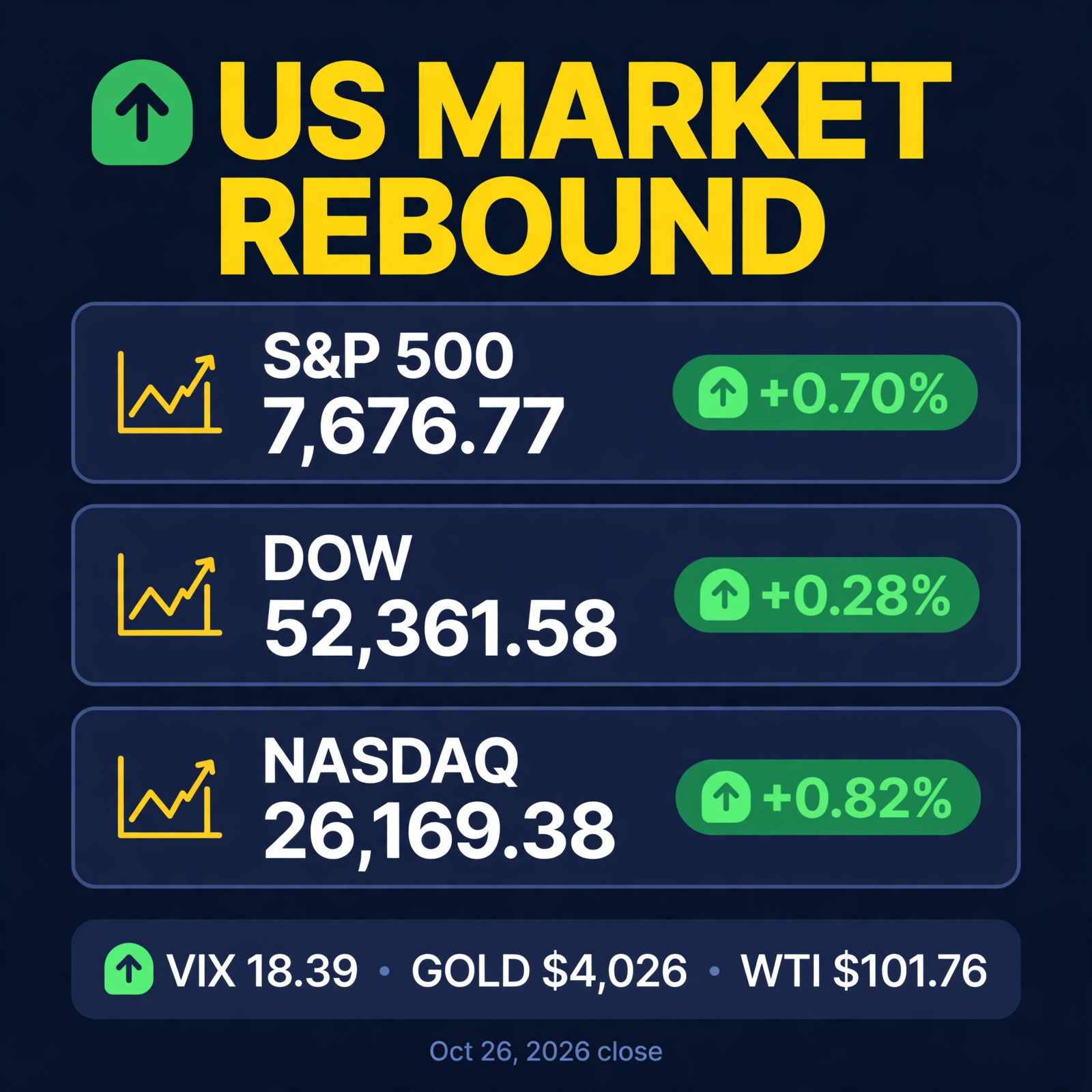
Monday, October 26 US close: S&P 500 7,676.77 (+0.70%), Dow 52,361.58 (+0.28%), Nasdaq 26,169.38 (+0.82%). Anthropic's IPO filing brought AI buyers back and semiconductors led the rebound, while Meta fell 1.88% on a $95 billion equity raise plan.
5minbrief on YouTube
The briefs also come as videos. Get the daily market wrap on YouTube.
Subscribe on YouTube