 5-minute briefs
US Market Close Analysis FOMC Holds Rates at 3.75–4.00% in 10-2 Vote as Microsoft and Alphabet Earnings Split (October 29)
#US stocks#S&P 500#Nasdaq#FOMC#Fed#Microsoft#Alphabet#oil prices#gold
Closing scoreboard: all three up, but the gains shrank
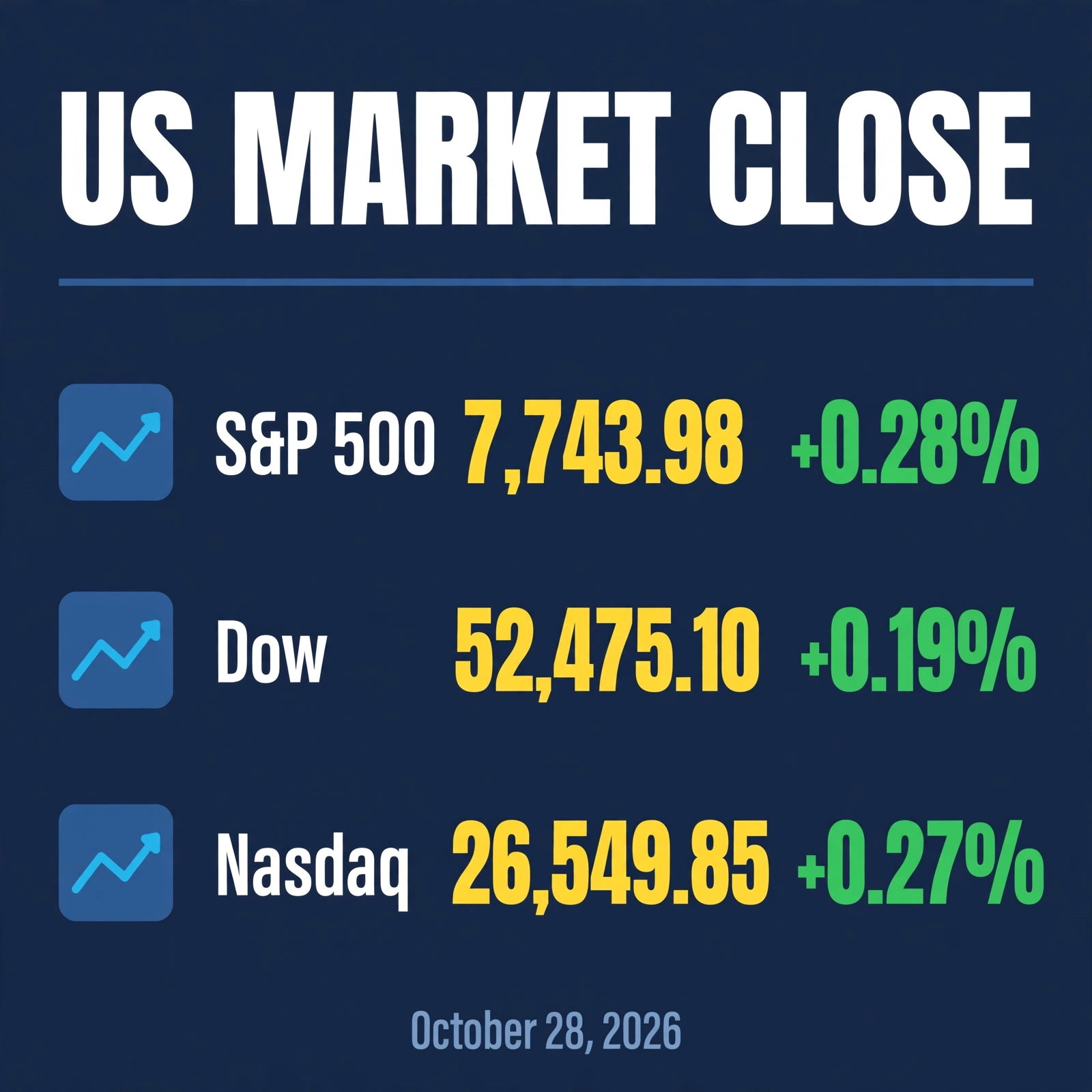
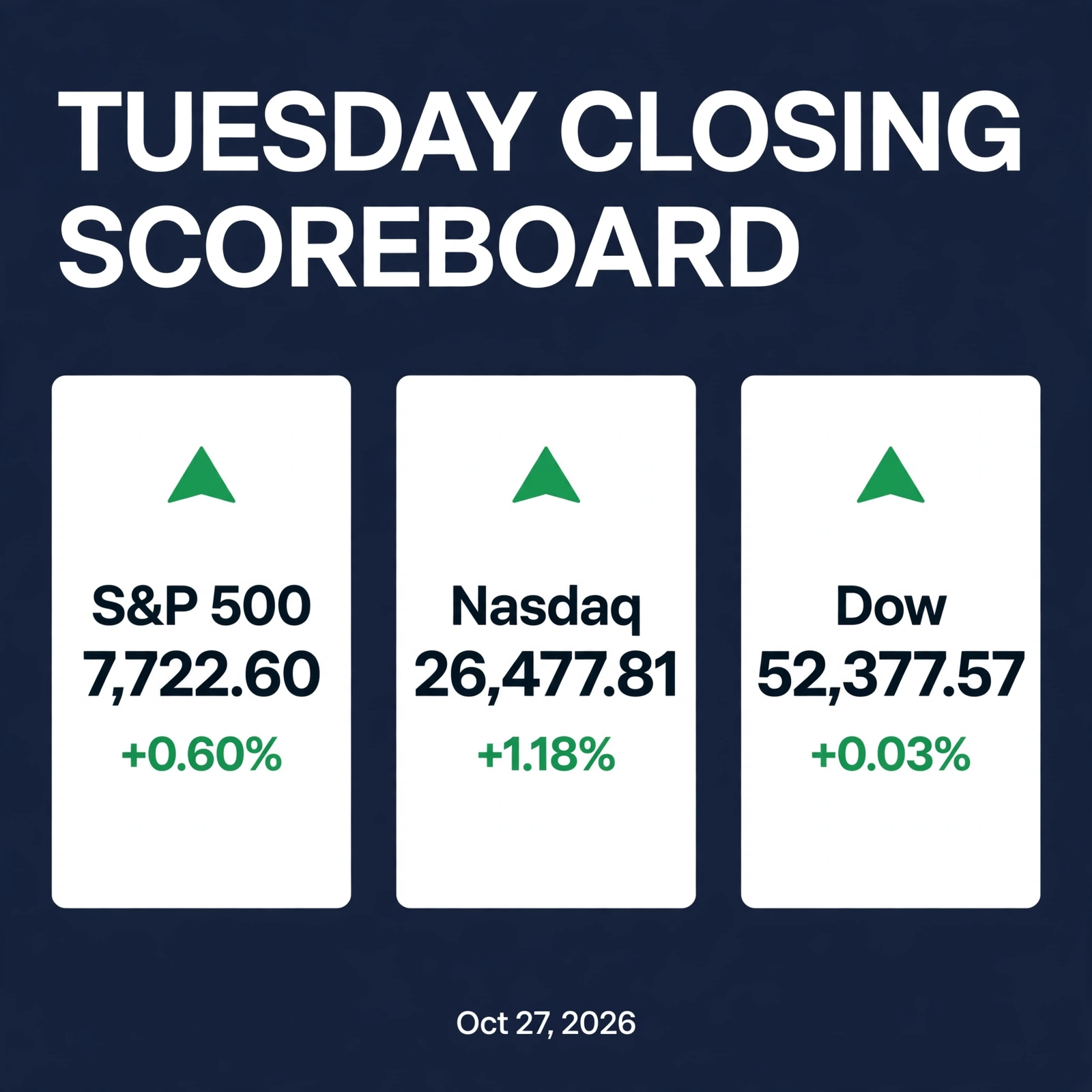
Against Tuesday’s close, the smaller size of the gains stands out first. Tuesday ended with the S&P 500 at 7,722.60 (+0.60%), the Dow at 52,377.57 (+0.03%) and the Nasdaq at 26,477.81 (+1.18%). Wednesday added 21.38 points on the S&P 500 to 7,743.98, 97.53 points on the Dow to 52,475.10 and 72.04 points on the Nasdaq to 26,549.85. The small-cap Russell 2000 rose 0.41% to 2,830.51, and all three major indexes have now risen for three straight sessions.
The safety gauges say the market is not fully relaxed. Gold rose 0.10% to $4,068.14 and the 10-year Treasury yield rose 0.02 percentage points to 5.02%. West Texas Intermediate crude rose more than $2 to $102.59 a barrel. During the session, the Energy Information Administration reported a 1.9 million barrel drop in commercial crude inventories, while gasoline inventories rose 3.9 million barrels. By sector, energy led the gains while real estate and utilities retreated.
Do not read this as a broad rebound yet. The indexes rose, but by less than half of Tuesday’s pace, and oil and long yields sit at high levels. Wednesday’s real drivers were the Fed decision at 2 p.m. Eastern Time and the two big-tech reports after the close.
The Fed decision: a hold, with a hawkish 10-2 split
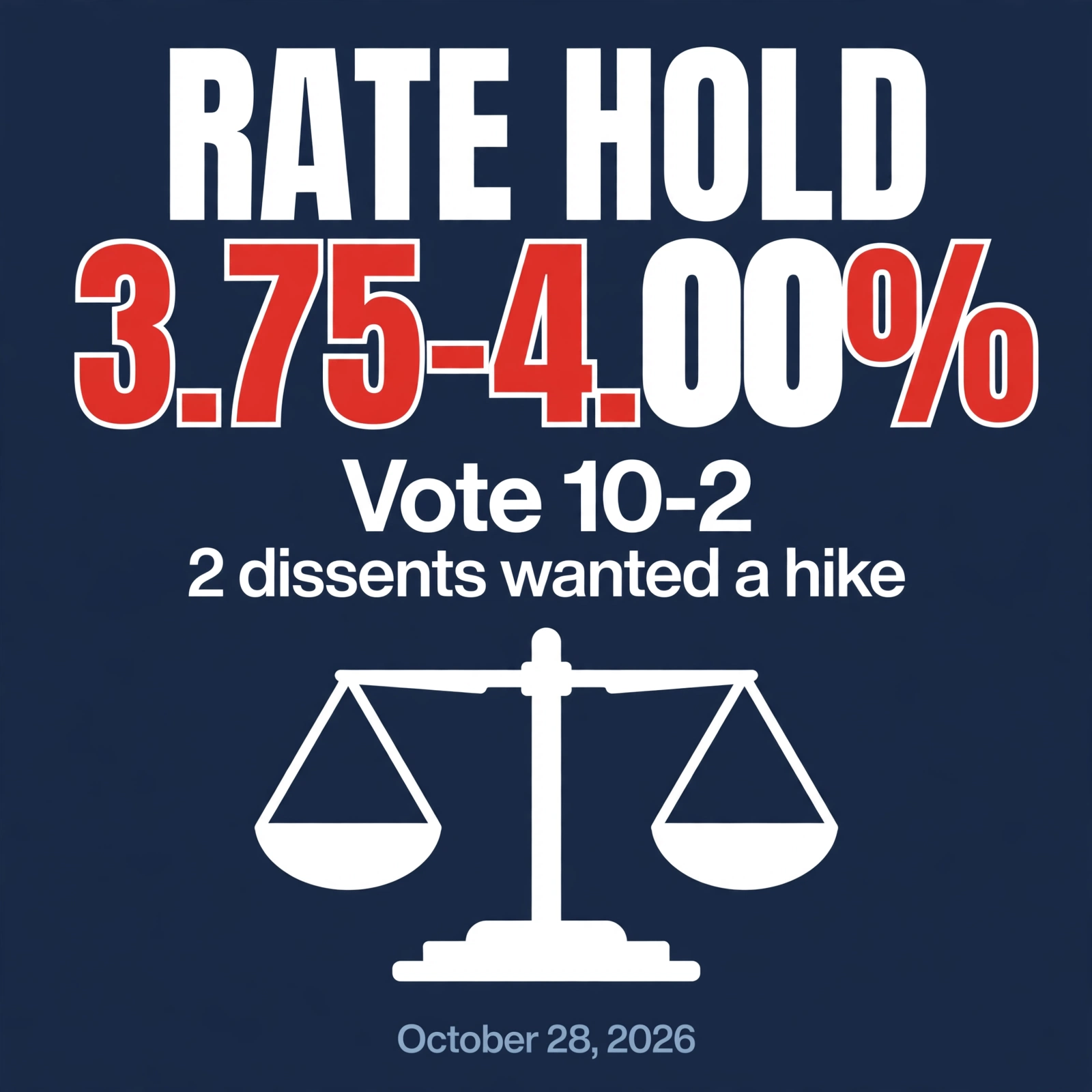
The Fed held its benchmark rate in the 3.75–4.00% range. The vote was 10-2. Governor Lisa Cook and Cleveland Fed President Beth Hammack dissented, preferring a 0.25 percentage point hike. The statement said inflation “remains elevated” and that the “accumulation of more information” would help the committee judge the right policy stance. After the September 16 hike of 0.25 percentage points, the Fed has paused once while leaving the door open to another increase.
Chair Kevin Warsh gave no hint about December at the press conference. He said he does not “prejudge meetings” and that “politics played no role” in the decision. He did announce one structural change: starting next year, one of the eight annual meetings will be devoted to broad monetary policy strategy instead of rate setting. Markets are likely to chew longer on two things than on the hold itself: the hawkish color of the dissents and the open December hike path. With September consumer inflation at 3.7% year over year, the Fed’s 2% goal is still some distance away.
After the close: Microsoft smiles, Alphabet stumbles
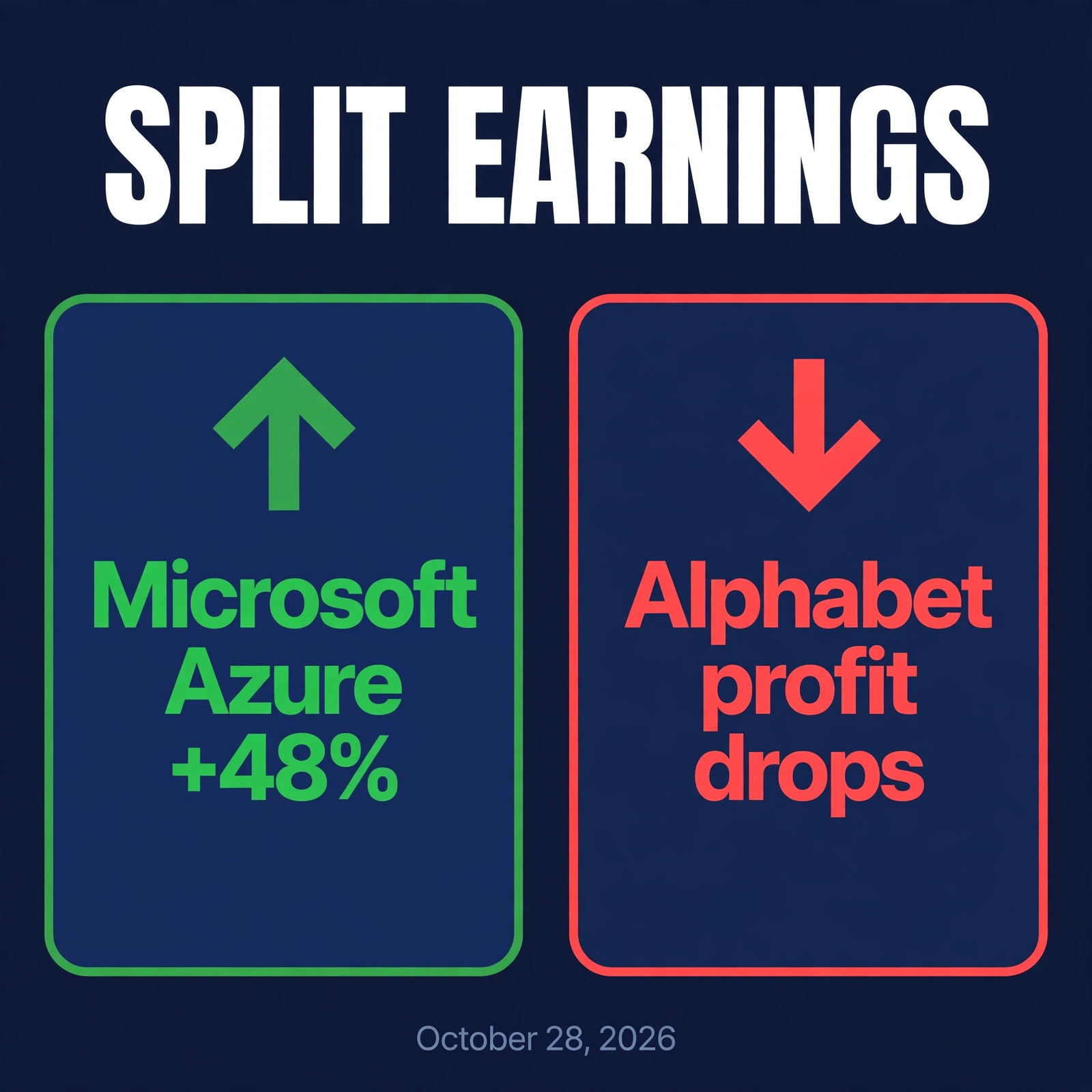
The two reports after the close gave opposite report cards on AI spending. Microsoft’s fiscal first-quarter revenue of $92.3 billion beat the $90.7 billion consensus, and adjusted earnings per share of $4.89 beat the $4.73 estimate. Azure revenue grew 48% year over year, well ahead of the 44.8% estimate, and total Microsoft Cloud revenue rose 30% to $63.9 billion. Operating income was $45.9 billion and net income was $36.6 billion. Capital spending of $39.4 billion came in below the $45.9 billion consensus. The first read: spending less than feared to grow faster than expected.
Alphabet went the other way. Third-quarter revenue of $127.6 billion (+25%) just missed the $128.2 billion estimate, and earnings per share of $2.12 fell sharply from $2.87 a year ago. The cause was not the core business but an $8.7 billion loss on equity securities. Google Search revenue of $63.4 billion and YouTube advertising revenue of $11.2 billion both missed estimates, and free cash flow turned negative at $9.1 billion as capital spending reached $51.4 billion. On the brighter side, Google Cloud revenue jumped 103% to $30.7 billion and operating income rose 30% to $40.6 billion. In after-hours trading, Alphabet fell about 7% while Microsoft rose. The summary: both clouds grew well, but cash flow and earnings quality split apart.
Split single names: Oracle and Vertiv surge, Robinhood and Boston Scientific fall
In the regular session, AI infrastructure demand names led. Oracle surged 11% after an investor day set out new financial targets, and Vertiv jumped about 17% on bullish long-term AI infrastructure demand forecasts. Micron rose 5.9% and was the strongest force lifting the S&P 500, as memory demand expectations spread after SK Hynix jumped 10.9% in Seoul. Wendy’s jumped 15.1% after Trian Fund Management offered to buy the chain.
The other side was just as clear. Robinhood sank 3.3% after reporting weaker profit and revenue than expected, and Boston Scientific fell 5.8% even though its profit drop was milder than expected, because its current-quarter profit forecast fell short. F5 plummeted more than 20% on its guidance and an analyst downgrade. The “good results, falling stock” pattern and the “raised outlook, rising stock” pattern appeared side by side on the same day.
- FOMC: the Federal Open Market Committee, the Fed's rate-setting body. It meets eight times a year to set the benchmark rate target range.
- Dissent: a vote against the majority. A hawkish dissent signals "we should tighten more," and markets read it as a clue about the next meeting.
- Free cash flow: operating cash flow minus capital spending. A negative reading means the company spent more cash on investment than its operations produced.
- After-hours trading: trading after the regular close. The first stock reaction to an earnings report usually shows up here.
Today and this week: Thursday is the second superday
Thursday, October 29, is the second superday. Before the open come advance third-quarter GDP (forecast: 3.0% annualized), September PCE inflation (core forecast: 3.1% year over year) and weekly jobless claims. The European Central Bank also decides, and after the close Amazon reports. Before the open, Eli Lilly, Mastercard, Merck and Caterpillar also report. Friday, October 30, brings the Employment Cost Index and the Bank of Japan decision, plus ExxonMobil and Chevron earnings.
Three questions to check today. First, does the after-hours Microsoft-Alphabet split carry into the regular session? Second, what direction do GDP and PCE add to the Fed’s “more information”? Third, can the indexes stretch three straight gains to four with oil above $102 and the 10-year yield above 5%? If two or more answers come back positive, Wednesday’s small gain looks like the start of a trend; if not, it reads as a breather after the FOMC.
Sources & references
- Federal Reserve — FOMC statement, October 28, 2026 — Rate-hold decision statement (primary source)
- Reuters (via DZRH) — Global stocks hold gains after Fed decision, oil prices rise — Oct 28 closing indexes and oil
- Microsoft — Fiscal Year 2027 First Quarter Results — Microsoft quarterly results release (primary source)
- Alphabet (SEC 8-K Exhibit 99.1) — Third Quarter 2026 Results — Alphabet quarterly earnings exhibit (primary source)
Related articles
- US Stock Market Weekly Recap S&P 500 Down Dow Up AI Spending Selloff Oil Surge Analysis
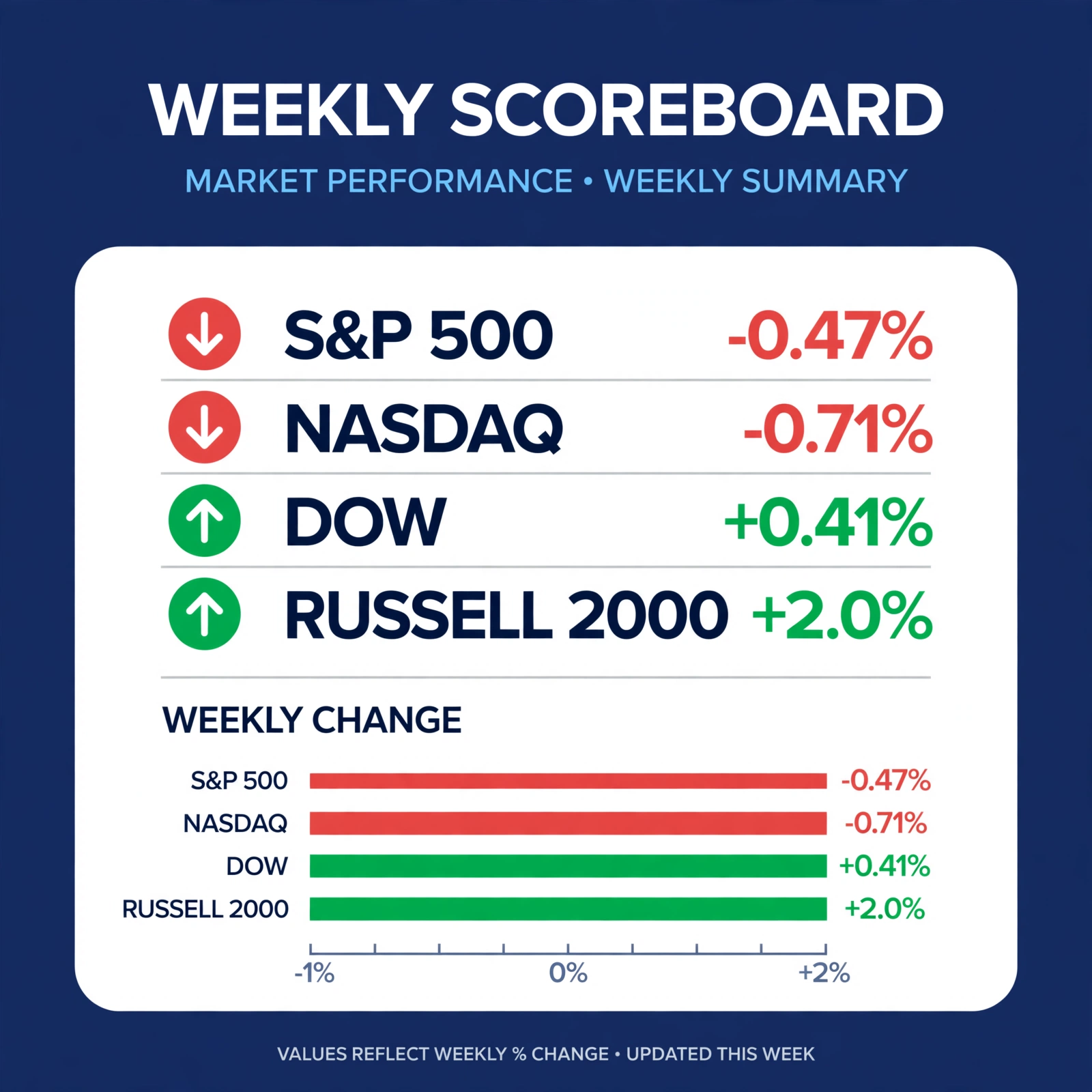
US stock market weekly recap for October 19–23: S&P 500 -0.47%, Nasdaq -0.71%, Dow +0.41%, Russell 2000 +2.0%. A Thursday AI spending selloff and an oil surge split the week. Next: FOMC, Microsoft, Alphabet, GDP, PCE.
- US Market Close Analysis Nasdaq Up 1.18% Semiconductors Up 3.60% Consumer Confidence Rebound Before FOMC (October 28)
Tuesday, October 27 US close: S&P 500 7,722.60 (+0.60%), Dow 52,377.57 (+0.03%), Nasdaq 26,477.81 (+1.18%). Semiconductors rose 3.60% to lead the rally and consumer confidence rebounded to 91.7, while Boeing plunged 10.69% on a Q3 earnings miss.
- US Market Close Analysis S&P 500 Up 0.70% Nasdaq Up 0.82% Anthropic IPO Filing AI Rebound (October 27)
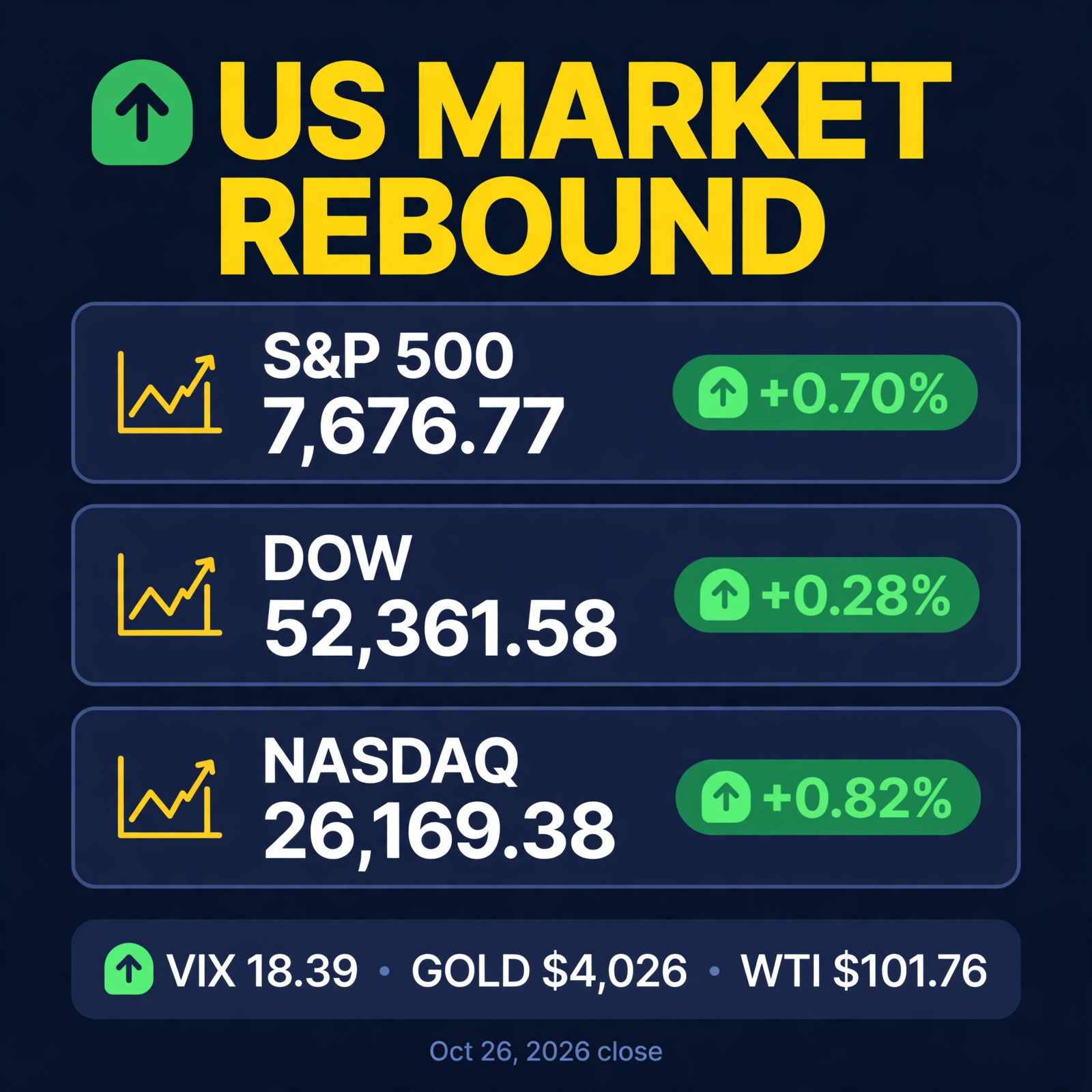
Monday, October 26 US close: S&P 500 7,676.77 (+0.70%), Dow 52,361.58 (+0.28%), Nasdaq 26,169.38 (+0.82%). Anthropic's IPO filing brought AI buyers back and semiconductors led the rebound, while Meta fell 1.88% on a $95 billion equity raise plan.
5minbrief on YouTube
The briefs also come as videos. Get the daily market wrap on YouTube.
Subscribe on YouTube