 5-minute briefs
SK hynix KRW 100 trillion shareholder returns record profit analysis
#SK hynix shareholder returns#SK hynix buyback#Korea discount
Anatomy of KRW 100 trillion — dividends 30 trillion, buybacks 60 trillion
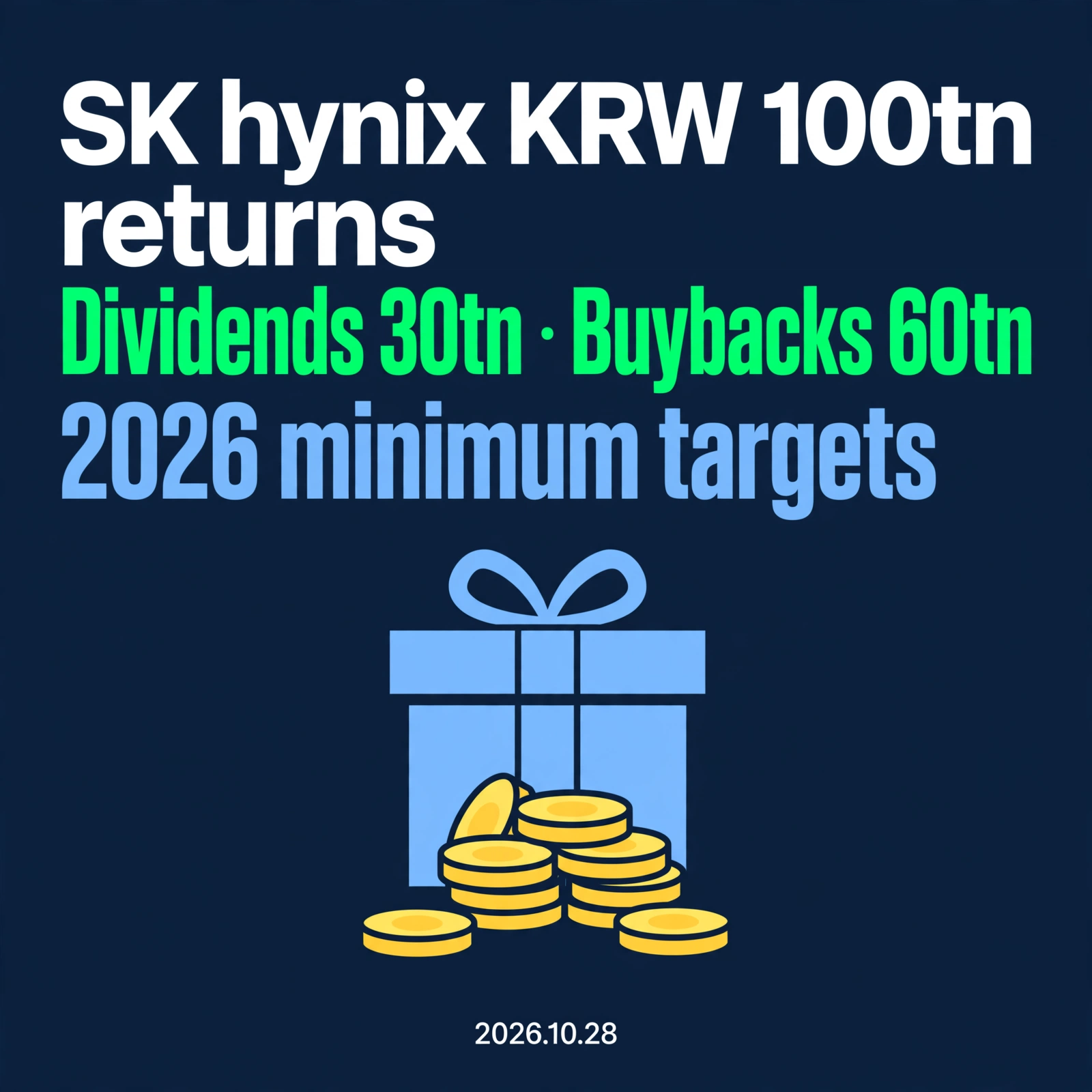
The KRW 100 trillion figure is a floor, not a one-off announcement. Its components, as disclosed, are:
| Component | Size | Note |
|---|---|---|
| Cash dividends | At least KRW 30 trillion | Includes the Q3 dividend of KRW 20,000 per share |
| Buybacks and cancellations | At least KRW 60 trillion | Includes KRW 40 trillion approved in August |
| Total | About KRW 100 trillion | 2026 execution basis |
The Q3 dividend of KRW 20,000 per share combines a KRW 10,000 regular dividend with a KRW 10,000 special dividend sharing gains from the company’s Kioxia investment. SK hynix joined the consortium that bought Toshiba’s NAND business in 2018 — the business later named Kioxia — and partially sold its Kioxia stake in the first half of the year. Rather than keeping that windfall inside the company, it is paying it out. That choice is the symbolic core of the announcement.
The new execution step is a KRW 20 trillion buyback starting October 29, running for three months. Analysts read it as a supply-demand buffer: a credible buyer of last resort that supports the share price while the broader market digests the rally. One detail to verify separately: the split between shares actually cancelled and shares held for other purposes will only be clear from later disclosures. A buyback announcement and a cancellation are different steps, and foreign investors should track the cancellation filings, not just the headline purchase amount.
Execution timeline — the KRW 20 trillion buyback starts tomorrow
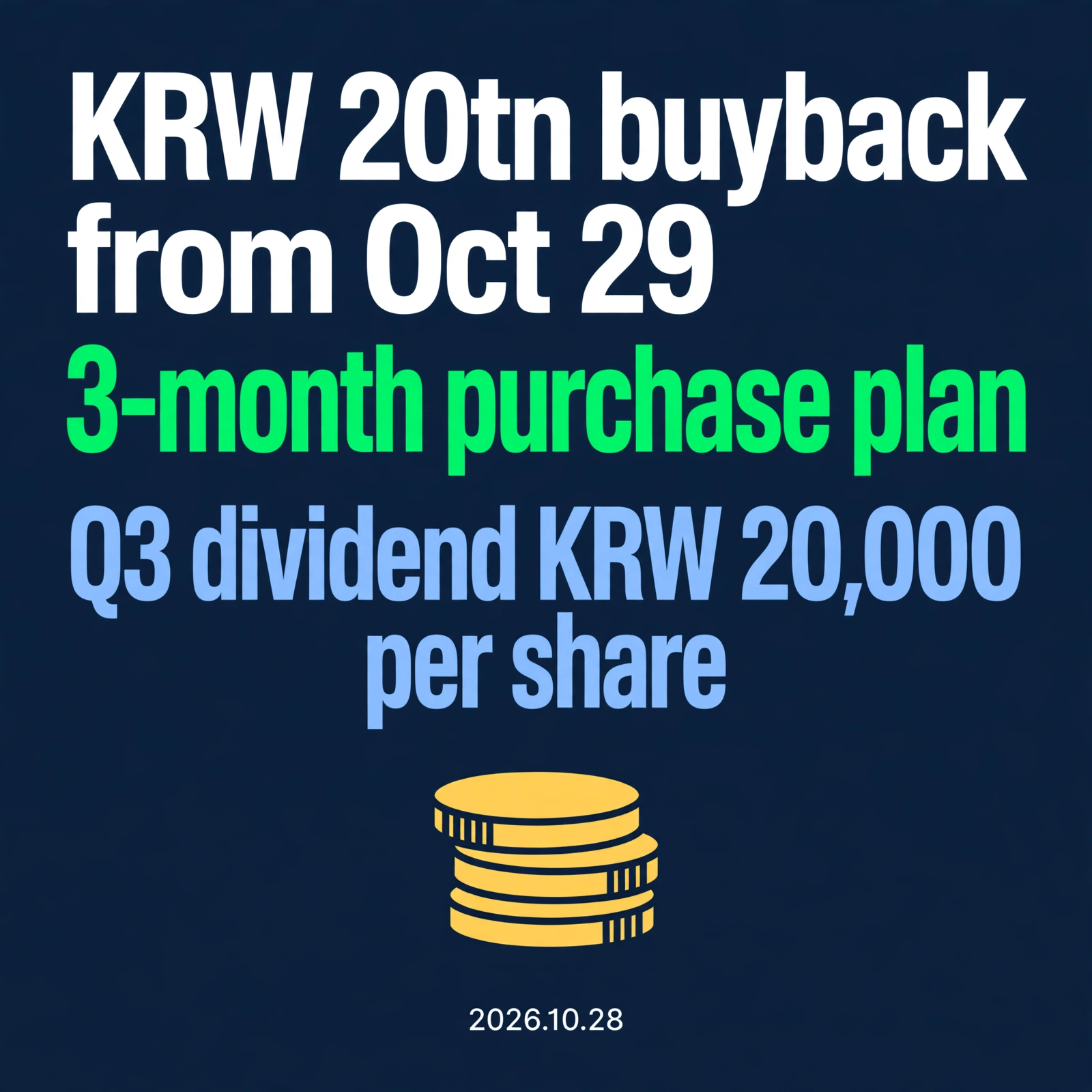
The timeline is why the market trusts the plan. The Q3 dividend of KRW 20,000 per share is already decided, and the KRW 20 trillion buyback starts tomorrow (October 29) — one day after the announcement, not next quarter. A three-month window is short, which is the point: the gap between promise and execution is almost zero. But the start of buying is not the same as cancellation. The cancellation schedule and scale must be confirmed in later filings, and only then can the KRW 100 trillion plan be judged complete.
Does the profit back it up — first KRW 100 trillion revenue quarter, 80% margin
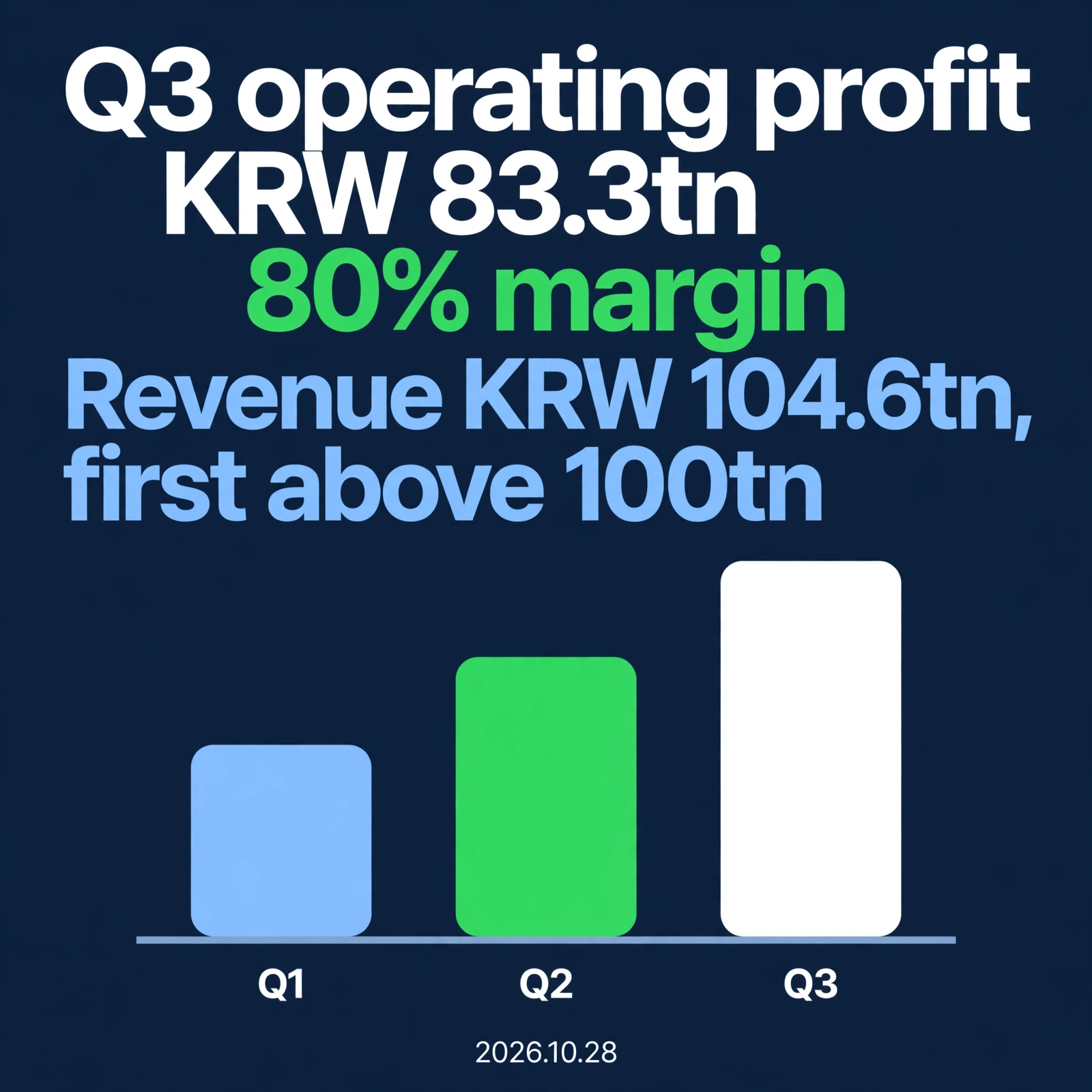
The return plan is credible because the cash is real. Third-quarter revenue was KRW 104.6 trillion, the first quarter above KRW 100 trillion, with operating profit of KRW 83.3 trillion and net profit of KRW 39.8 trillion. Revenue rose 32% from the previous quarter and 328% from a year earlier; operating profit rose 38% quarter-on-quarter and 632% year-on-year. Net profit fell 58% from the previous quarter but rose 216% year-on-year. HBM4 shipments are ramping up and are expected to overtake HBM3E as the mainstream product in both units and revenue from the fourth quarter. Server DDR5 sales grew, and long-term agreements with 14 customers already cover more than half of planned 2027–2028 capacity.
The balance sheet backs the payout. Cash and equivalents stood at KRW 114.5 trillion at the end of September, up KRW 26.5 trillion from the previous quarter, while borrowings fell to KRW 15.8 trillion — a net cash position of KRW 98.7 trillion. The returns are funded by cash generation, not by new borrowing. That distinction matters: a debt-funded buyback would deserve skepticism; this one does not carry that problem.
The governance lens — why this moved the whole market
The Korea discount — the persistent valuation gap of Korean stocks — rests heavily on one fear: that controlling shareholders and management hoard cash instead of returning it. Treasury-share overhang (shares bought back but never cancelled, ready to be reissued) and low payout ratios (around 20–22% for the market) are the usual exhibits. SK hynix’s plan attacks both directly: a dividend floor, a buyback-and-cancellation floor, and a special dividend that explicitly shares an investment gain with shareholders.
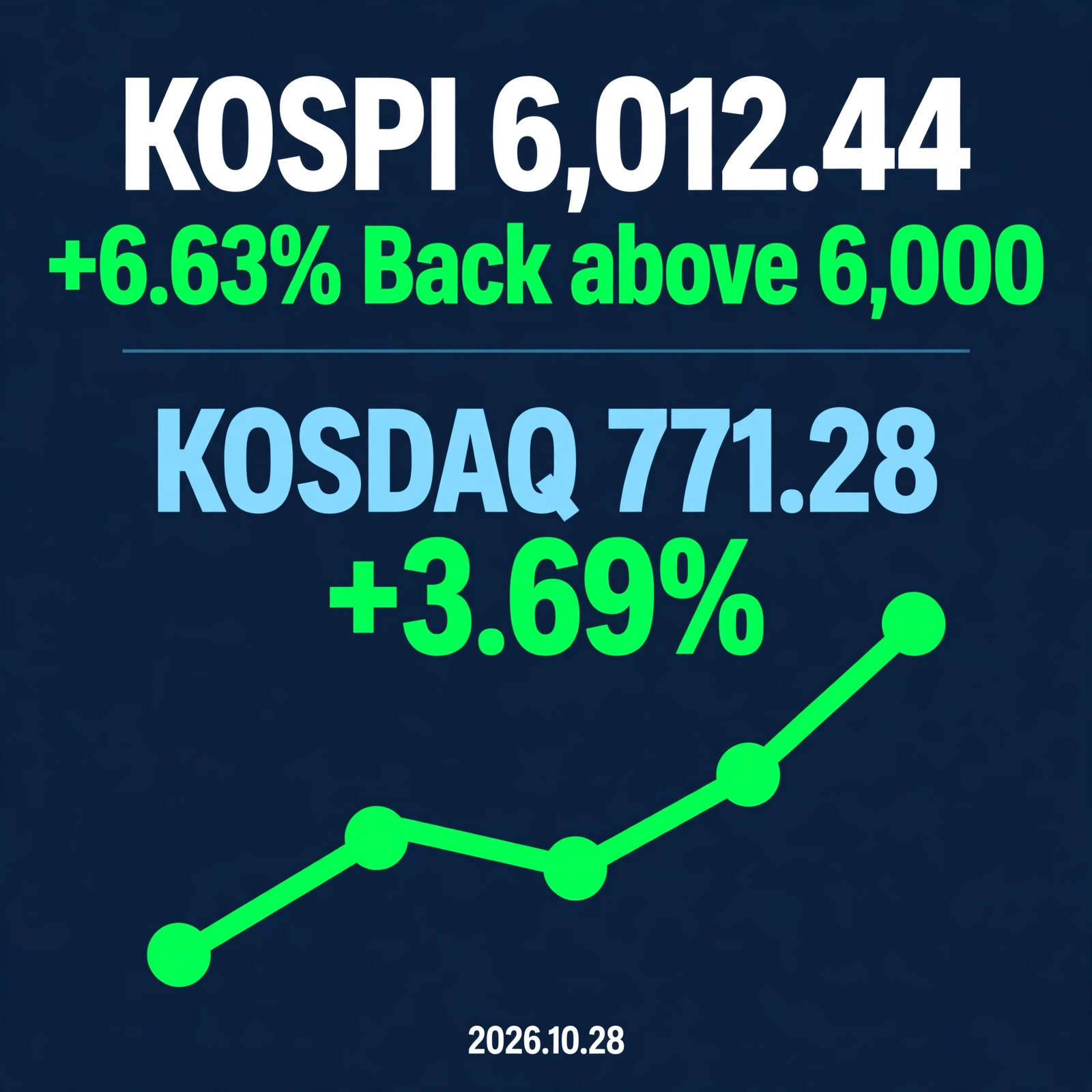
It also fits Korea’s value-up program, which nudges companies to publish return and valuation plans voluntarily. If SK hynix’s plan becomes the template and Samsung — which reports detailed third-quarter results and its own return plan tomorrow, October 29 — matches the standard, the re-rating story extends from one stock to the market. That is why today’s KOSPI surge (+6.63% to 6,012.44) is best read as a governance repricing, not just an earnings beat.
What to verify — three risks
First, margin durability. An 80% operating margin reflects extraordinary memory pricing. The company projects demand ahead of supply through 2030, but that is a forecast, not a guarantee — a memory downcycle would cut both profit and return capacity. Second, execution detail: the cancellation schedule and the treatment of repurchased shares must be confirmed in filings. Third, priced-in expectations: SK hynix rose 10.89% today and Samsung 9.01% ahead of its own announcement. If Samsung’s plan disappoints, part of today’s gain could reverse.
- Shareholder return: cash handed back to shareholders via dividends and buybacks/cancellations.
- Buyback and cancellation: a company buys its own shares and retires them, shrinking the share count and lifting per-share value.
- Special dividend: a one-off extra dividend, here funded by Kioxia investment gains.
- Net cash: cash minus borrowings. Positive means the company holds more cash than debt.
- Korea discount: the valuation gap of Korean stocks, often attributed to governance — low payouts, complex chaebol structures and treasury-share overhang.
Three questions for investors
First, does Samsung’s return plan match SK hynix’s bar tomorrow? A single company’s plan is a story; two giants setting the same standard is a market re-rating. Second, what do the cancellation filings show? Track cancelled shares, not just the buyback headline. Third, does HBM4 actually become the mainstream product in the fourth quarter? Units and revenue overtaking HBM3E is the next earnings checkpoint — and the test of whether the 80% margin has legs.
Not investment advice. Figures are based on SK hynix’s third-quarter results announcement and shareholder-return plan and Yonhap News, checked October 28, 2026.
Watch the video

Sources & references
- SK hynix Newsroom — SK hynix Announces 3Q26 Financial Results — Original release for earnings figures and the shareholder-return plan
- Yonhap News — SK hynix adds KRW 60 trillion in shareholder returns, KRW 20,000 dividend — Dividend and buyback filing details (Korean)
- THE ELEC — SK hynix Q3 2026 earnings conference call transcript — Management remarks (Korean)
Related articles
- Shareholder return specificity stock impact Samsung SK hynix LG Chem comparison
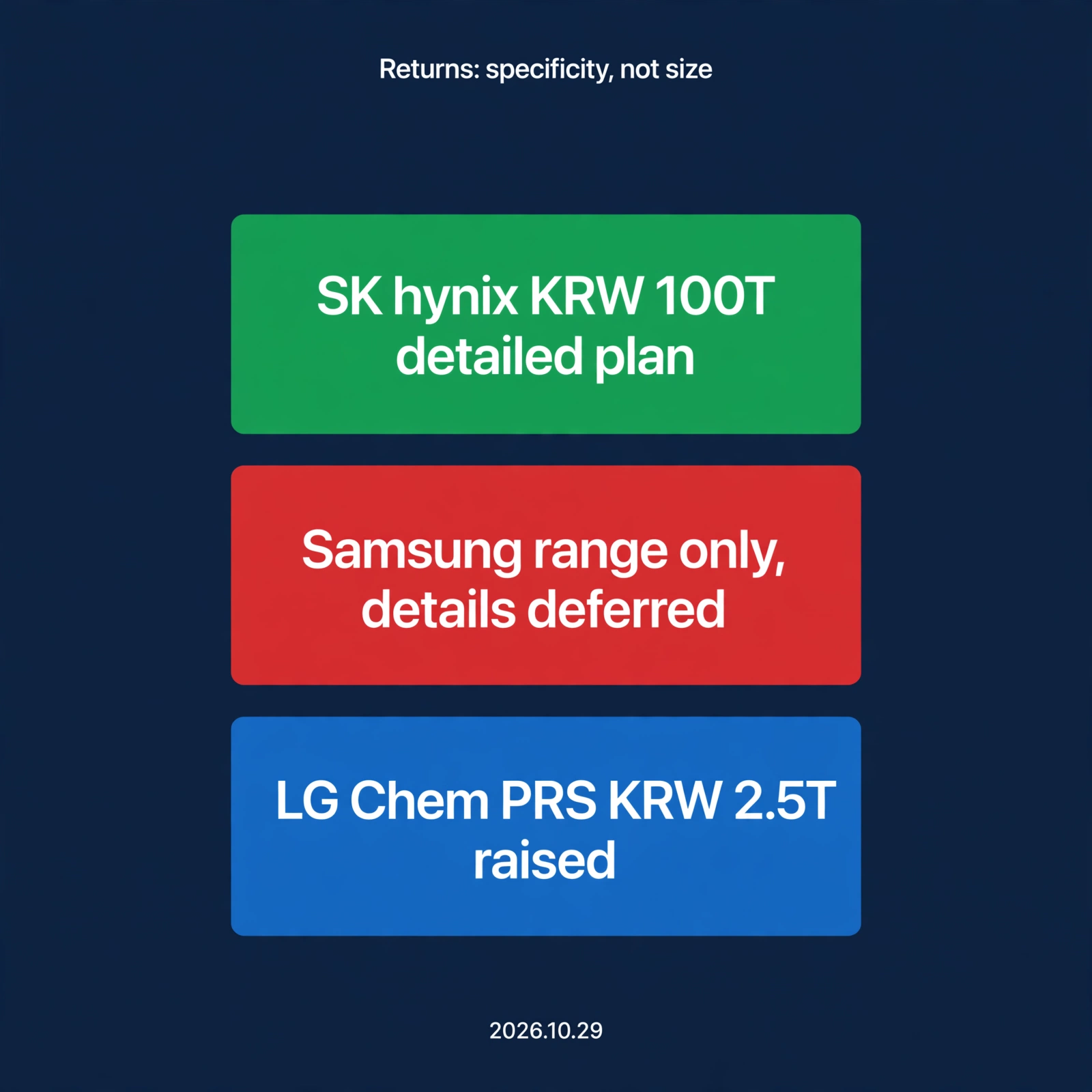
Comparing three shareholder-return announcements from October 28–29: SK hynix spelled out a KRW 100 trillion ($74.8 billion) plan in dividend and buyback numbers and rose two days running; Samsung gave a KRW 90–110 trillion ($67.3–82.2 billion) range but deferred details to January and fell 4.13%; LG Chem raised KRW 2.5 trillion ($1.9 billion) through a PRS on its LG Energy stake and earmarked KRW 400 billion ($299 million) for returns. What moved prices was not size but specificity.
- KOSPI 6.63% surge back above 6000 SK hynix record profit foreign buying
October 28 Korea market brief for foreign investors: the KOSPI jumped 6.63% to 6,012.44, its first close above 6,000 in 10 sessions, after SK hynix posted record third-quarter profit and a KRW 100 trillion shareholder-return plan. Foreigners and institutions bought together for a second day, Samsung rose 9.01% and SK hynix 10.89%. The won weakened to 1,337.7 per dollar.
- Korea Low PBR First Day Analysis 106 of 151 Rise Hyundai Steel Surge
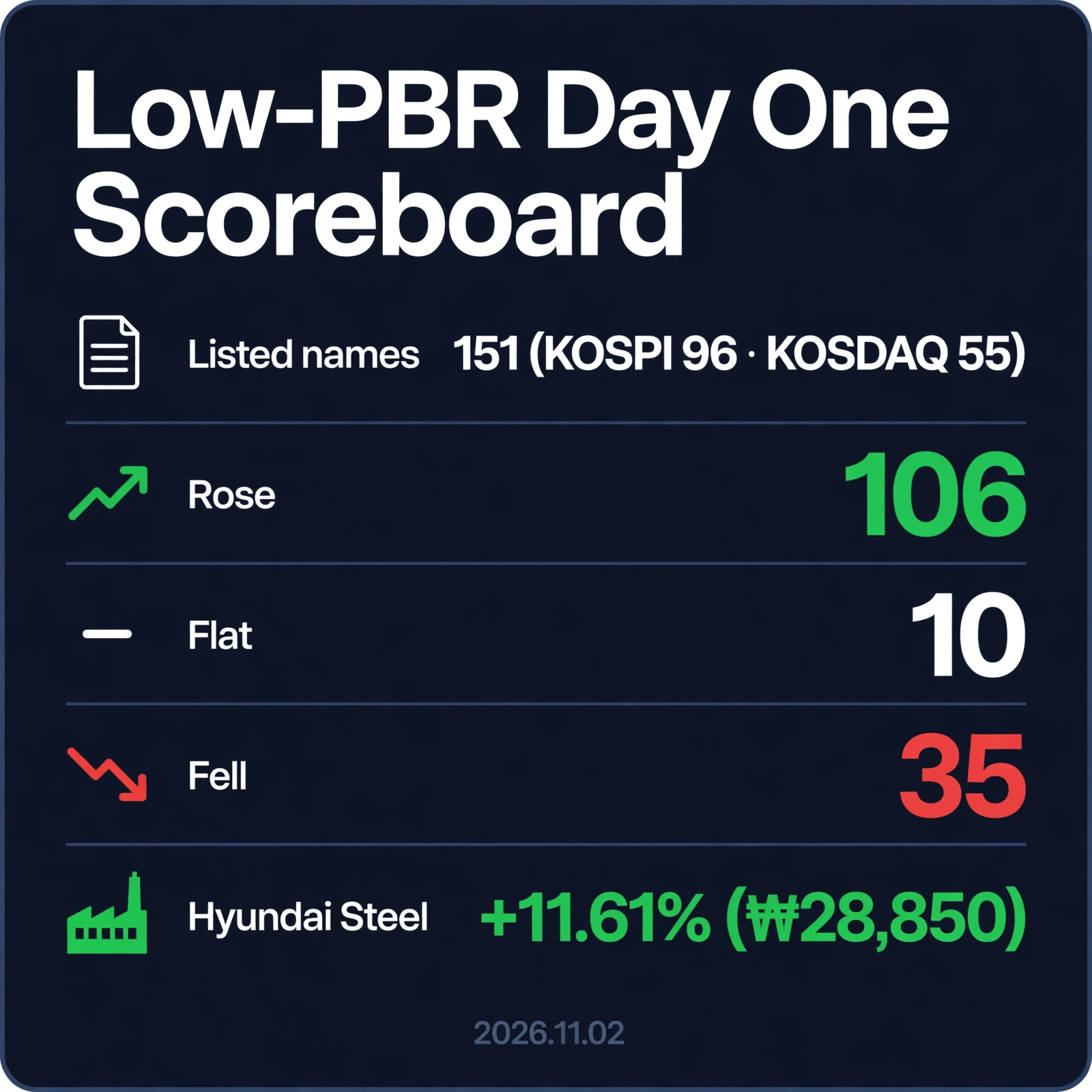
For foreign investors: on the first trading day of Korea's low-PBR name list, 106 of 151 stocks rose and Hyundai Steel surged 11.61%. But steel and construction rose across the board, so the list effect cannot be separated from sector strength. The real test is execution.
5minbrief on YouTube
The briefs also come as videos. Get the daily market wrap on YouTube.
Subscribe on YouTube