 5-minute briefs
Meta AI Investment Analysis $95 Billion Equity Raise Nvidia AMD Broadcom Circular Capital Dilution
#Meta#AI investment#Nvidia#AMD#Broadcom#capex
The $95 billion structure: $35 billion now, $60 billion later, and Class C
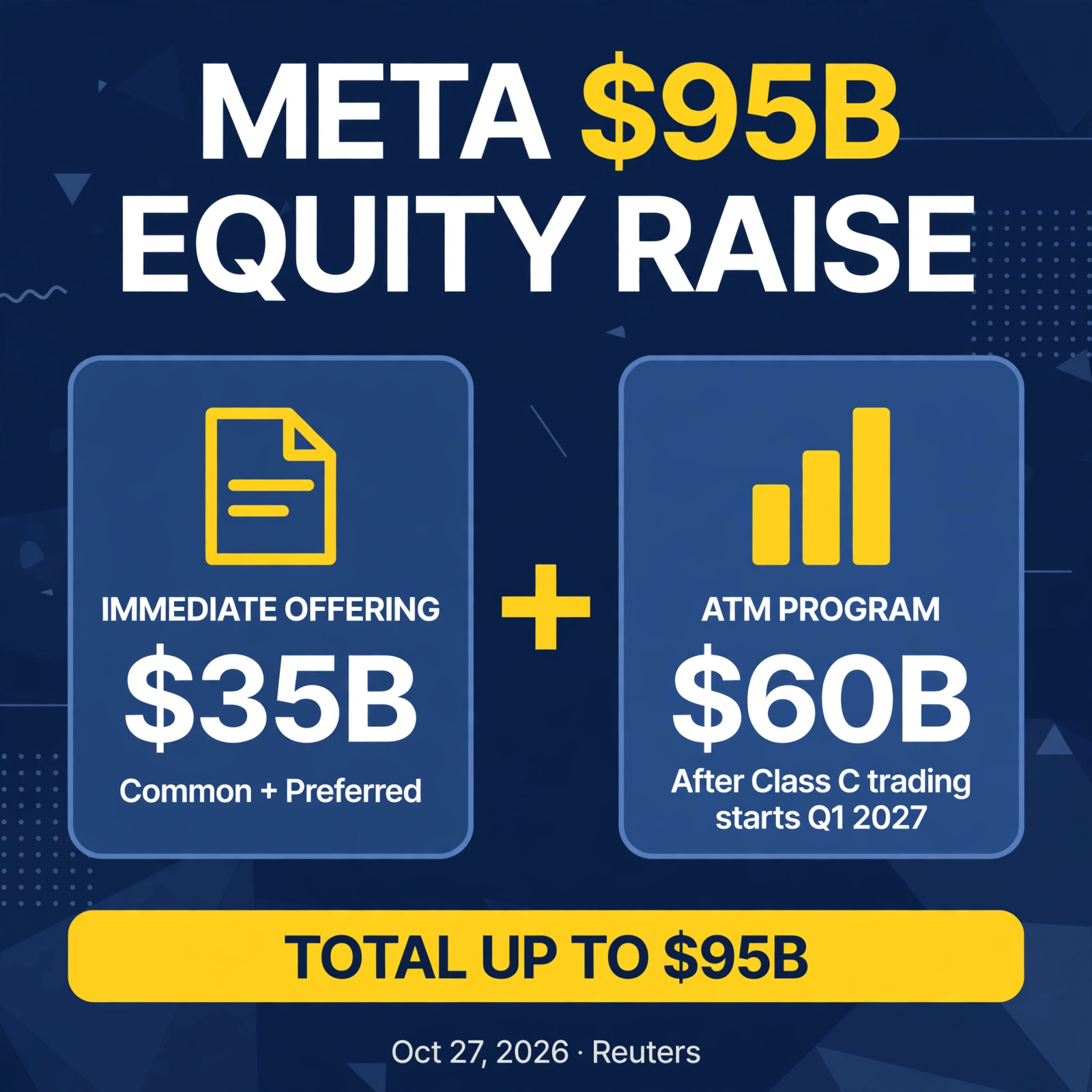
Start with the numbers. On October 26, 2026, Meta launched public offerings worth about $35 billion in common and preferred stock. It also plans a separate at-the-market share sale program worth up to $60 billion. Together, that is up to $95 billion. An ATM program does not dump shares on the market at once; it sells them gradually at market prices, so the company can adjust timing and size.
The key mechanism is a new non-voting Class C share. The ATM program will launch after the new Class C shares begin trading, expected in the first quarter of 2027, and Meta has not yet finalized the timing and terms. Non-voting matters: this design raises money without diluting existing shareholders’ voting power. But voting dilution and ownership dilution are different things. No loss of voting control does not mean no dilution of ownership — that distinction is explained below.
Why now, and why this big? The backdrop: Meta’s third-quarter revenue was $64.6 billion, up 26% year over year, but its 2026 capex outlook was raised to $135–145 billion, and quarterly free cash flow was negative $2.1 billion. Spending on AI infrastructure is outrunning the cash the business generates. Alphabet moved in the same direction earlier this year, increasing its equity offering size to $84.75 billion.
- Equity raise: a company issues new shares to raise money from investors. It is not debt — there is no interest to pay and no principal to repay.
- At-the-market (ATM) program: shares are sold gradually at market prices, letting the company control timing and size instead of issuing everything at once.
- Non-voting shares (Class C): shares that provide funding but carry no vote on company decisions.
- Dilution: when new shares are issued, each existing shareholder owns a smaller slice of the company, and earnings are split across more shares.
- Circular capital: money that loops — A invests in B, and B uses the money to buy A's products — making it hard to tell how much demand is real outside demand.
The circular-capital debate: chipmakers funding their customer
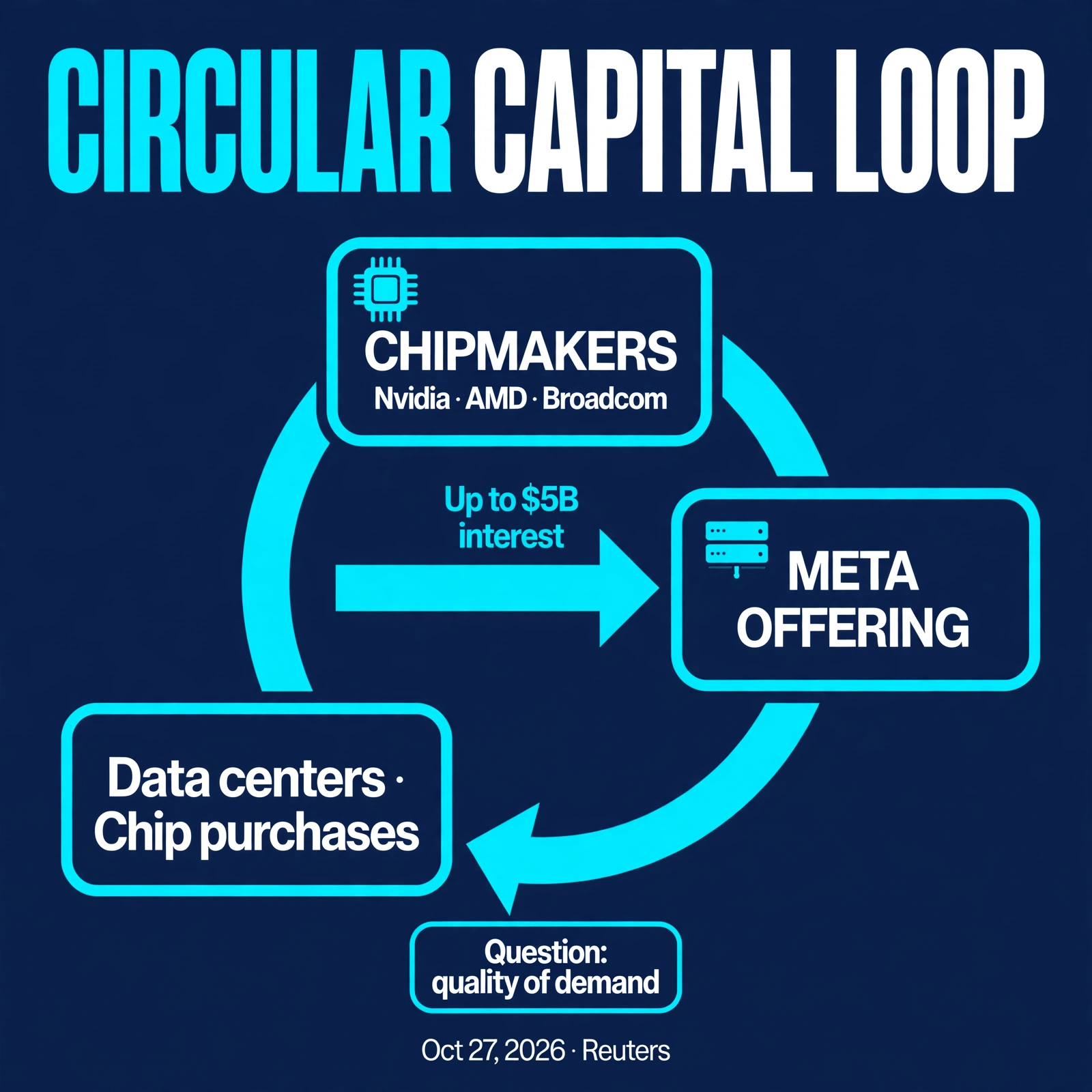
The market reacted most sharply not to the size but to the structure. Nvidia, AMD and Broadcom expressed interest in up to $5 billion in total for Class A shares. Reuters reported that this adds to concerns about an increasingly circular flow of capital in the AI industry, as chip suppliers help finance the expansion of one of their biggest customers.
Draw the loop: the three chipmakers buy Meta shares. Meta uses the money to build data centers and buy the chipmakers’ chips. Money leaves the chipmakers, passes through Meta, and comes back to the chipmakers. The concern is straightforward: it becomes harder to tell whether chip demand comes from genuine end demand or from demand created by financing itself. The quality of demand becomes the question.
One line needs drawing, though. The chipmakers’ interest is an expression of interest, not a finalized investment, and $5 billion is roughly 5% of the $95 billion total. It is a signal that a circular structure exists, not proof that Meta’s AI spending as a whole is circular money. The market’s question is therefore less “how much loops” than “does this structure keep growing?” William Blair analysts put it the same way: investors will keep questioning the financing and the potential for future capital raises, and the financing shows both confidence in the long-term returns from AI investment and the increasingly capital-intensive nature of pursuing that opportunity.
For context, Meta’s credit-risk indicators reaching record levels were covered in a separate post last week. This post focuses on the equity financing structure, not on credit risk.
Dilution vs. debt: the trade-off investors must weigh
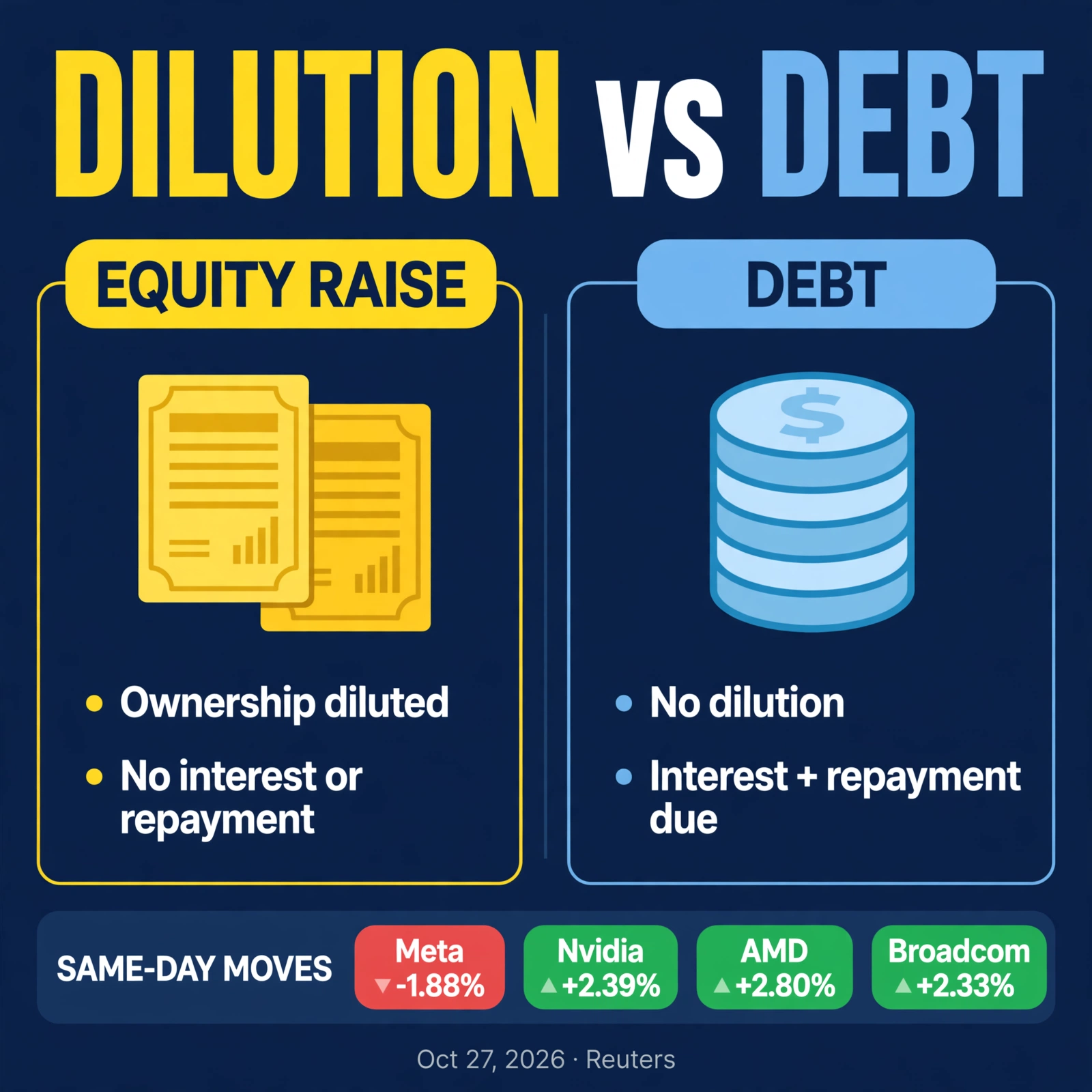
Equity and debt financing are different animals. An equity raise is not debt. There is no interest obligation and no maturity to repay. What it costs instead is dilution of existing shareholders’ ownership. Because earnings are split across more shares, earnings per share shrink even if total earnings stay the same. Debt financing, by contrast, avoids dilution but leaves interest costs and repayment obligations behind. Meta choosing equity over debt reads as a decision to accept dilution rather than add cash-flow burden.
The day’s stock moves graded that choice in opposite directions. Meta fell -1.88%, and the Communication Services sector (XLC) fell -1.57%, the worst sector of the day. Meanwhile Nvidia rose +2.39%, AMD +2.80% and Broadcom +2.33%. The side paying in and the side receiving moved in opposite directions. Reuters had reported Meta down about 1.4% in morning trading, so the decline widened somewhat into the close.
Three checkpoints for investors. First, when and on what terms the ATM program actually launches after Class C trading begins in the first quarter of 2027. Second, whether the chipmakers’ interest turns into finalized investment, and whether it grows beyond $5 billion. Third, the possibility of further raises. As William Blair noted, the market will keep asking whether this is the last round. With a $135–145 billion capex outlook in place, that question is not going away soon.
In short, this equity raise sends two messages at once. Meta showed its confidence in AI returns through the sheer size of the fundraising. At the same time, the price of that confidence — shareholder dilution and a circular-capital debate — is now on the record. What investors must judge is not just when AI spending pays off, but how much dilution shareholders will absorb before it does.
Watch the video

Sources & references
- Reuters — Meta eyes record $95 billion equity raise to fund AI expansion — The raise structure, chipmaker interest and circular-capital debate (full Reuters text)
- Meta Platforms — Meta Reports Third Quarter 2026 Results (SEC Form 8-K Exhibit 99.1) — Q3 results, capex outlook and free cash flow, from the release
Related articles
- Big Tech $1.2T AI Capex: Profitability Outlook Analysis
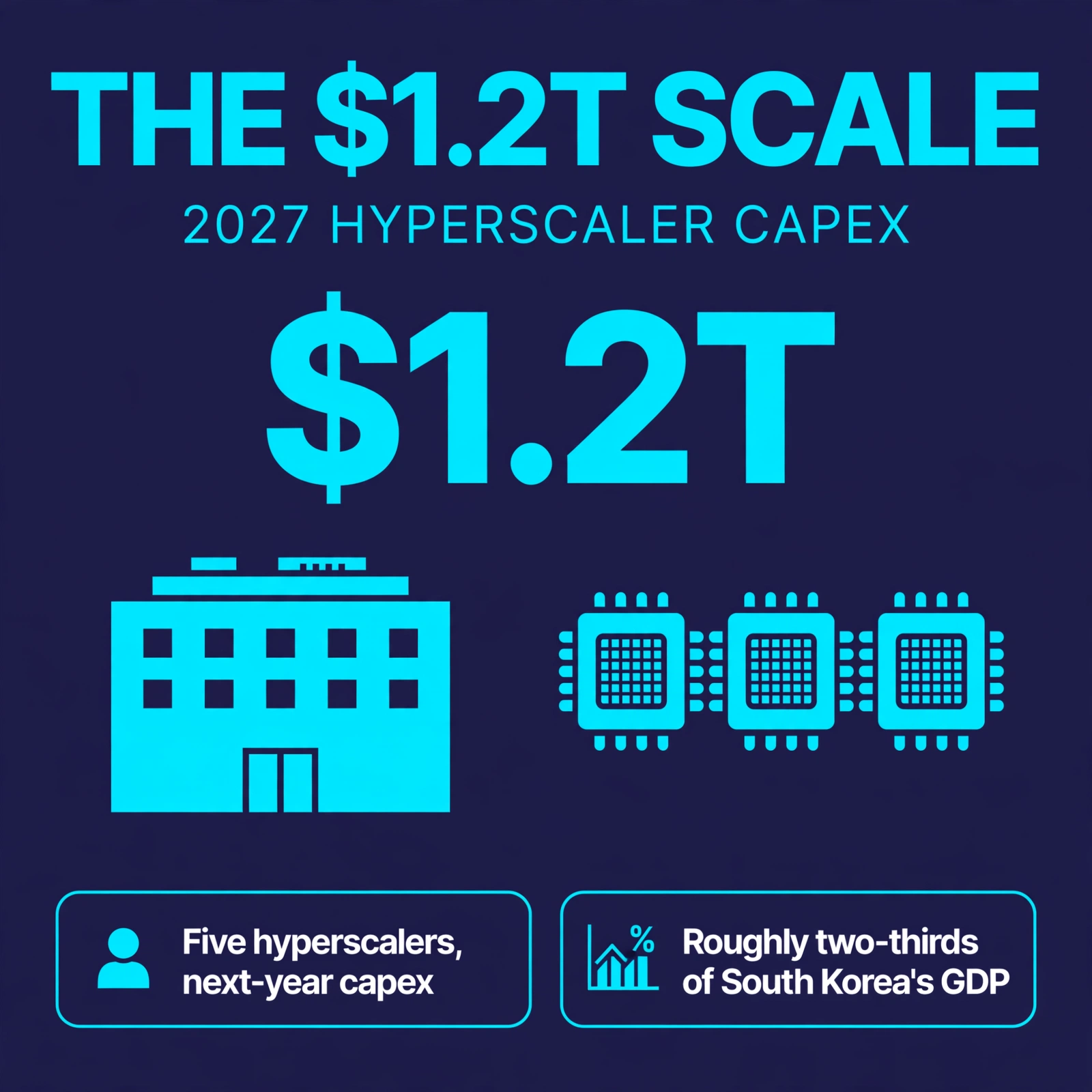
Goldman Sachs estimates the five AI hyperscalers will spend about $1.2 trillion on capex next year.
- Nasdaq Rebound Semiconductor Index 4.21% Recovery Jobs Surprise Rate Hike Fears Analysis
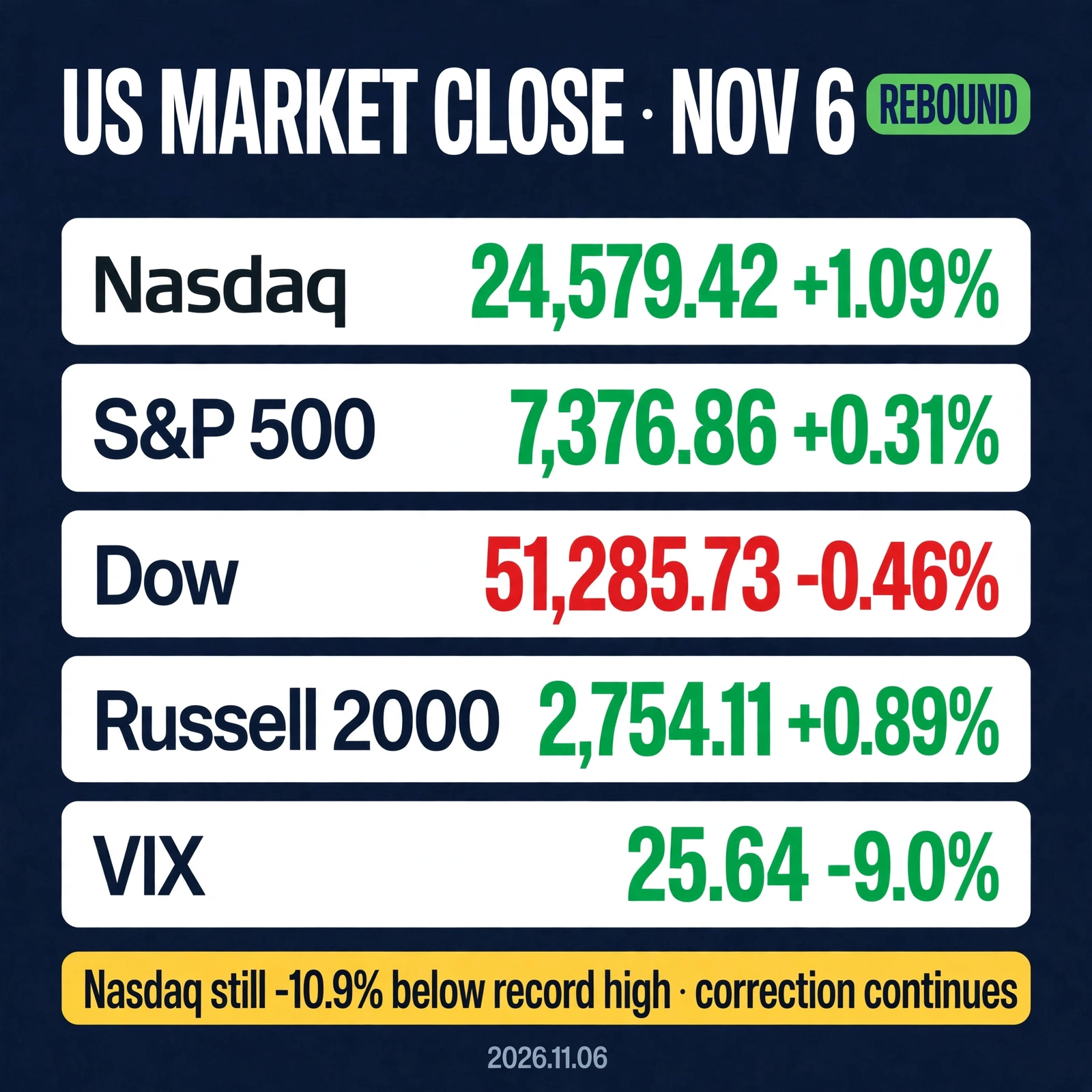
On November 6, US stocks bounced as chip stocks recovered: the Nasdaq rose 1.09%, the S&P 500 gained 0.31%, and the Dow slipped 0.46%. October payrolls jumped 165,000, far above forecasts, lifting December Fed hike odds to 76.8%.
- Semiconductor Rebound Analysis SOX 4.21% Recovery and Three Bottom Confirmation Conditions
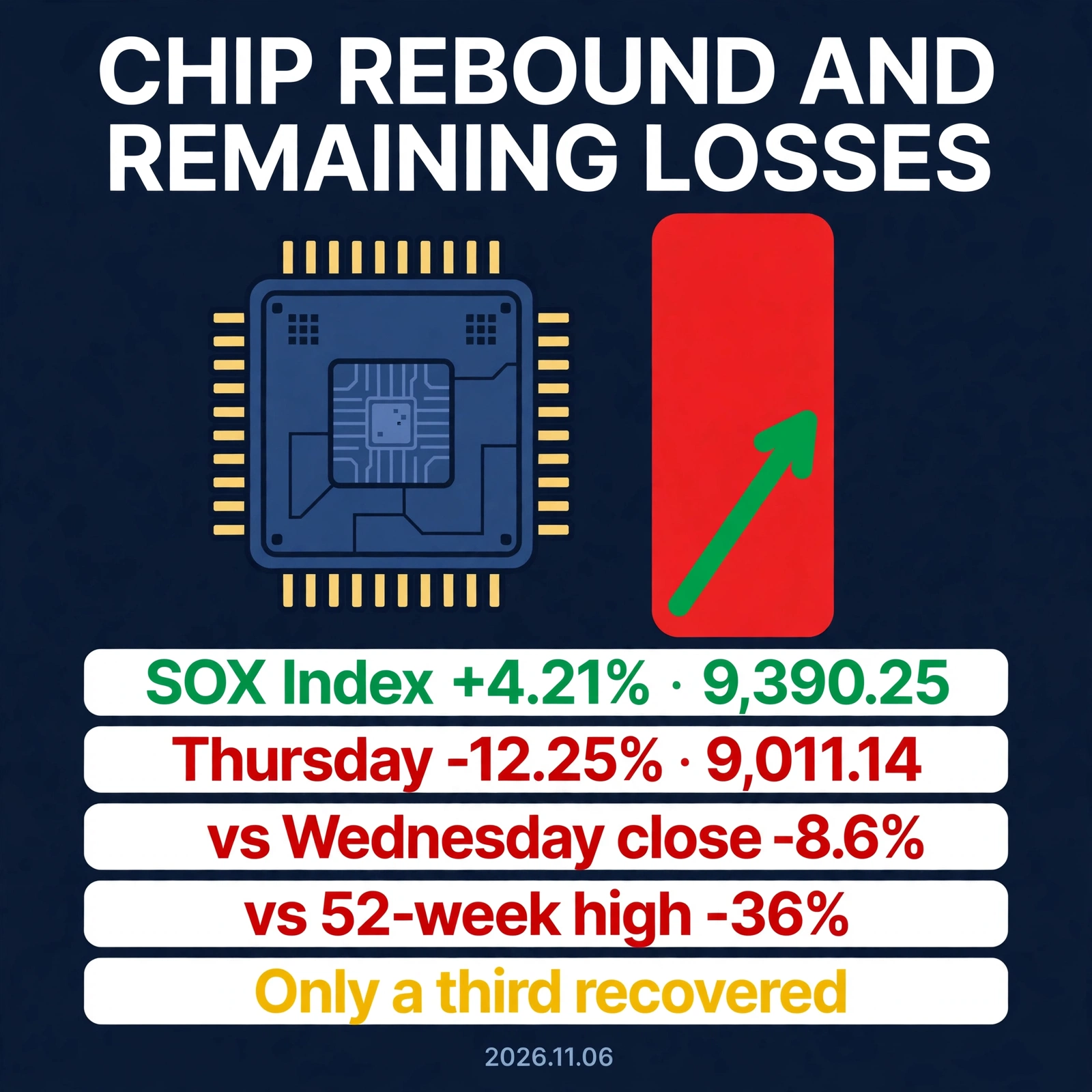
The Philadelphia Semiconductor Index rebounded 4.21% but recovered only a third of Thursday's losses, and gains faded from a 6.6% intraday high. Whether the bounce is a bottom or a retracement turns on three conditions: policy signals, AI demand evidence, and technical support.
5minbrief on YouTube
The briefs also come as videos. Get the daily market wrap on YouTube.
Subscribe on YouTube