 5-minute briefs
Nasdaq Rebound Semiconductor Index 4.21% Recovery Jobs Surprise Rate Hike Fears Analysis
#US stock market#Nasdaq rebound#semiconductor rebound#S&P 500#Fed rate hike#Nvidia#AMD
Index close: Nasdaq and S&P rebound, Dow slips — a mixed bounce
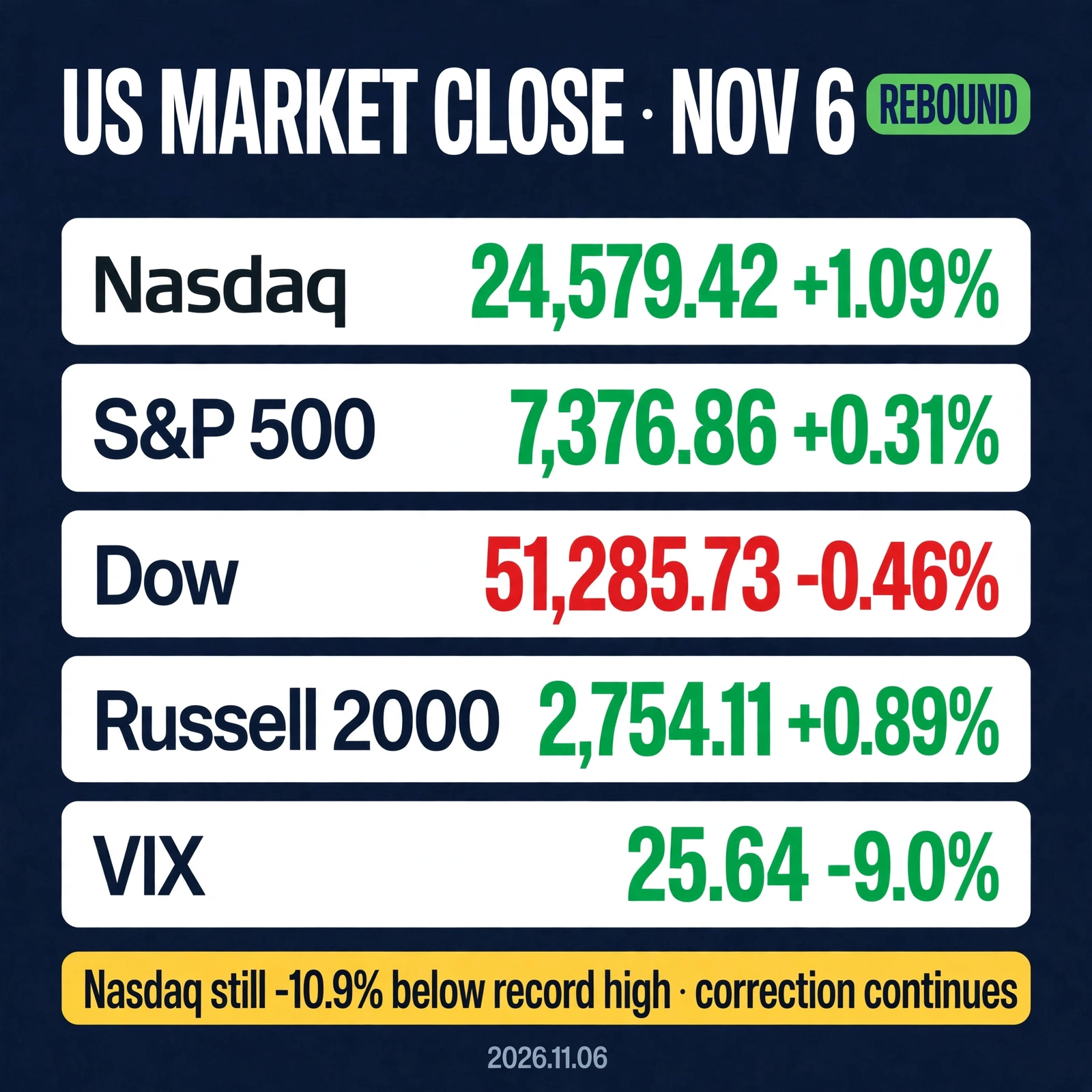
The closing numbers first. The Nasdaq Composite gained 264.43 points to 24,579.42 (+1.09%). The S&P 500 rose 0.31% to 7,376.86, while the Dow Jones Industrial Average fell 0.46% to 51,285.73. The Nasdaq-100 rose 1.35% to 26,989.99, and the small-cap Russell 2000 gained 0.89% to 2,754.11.
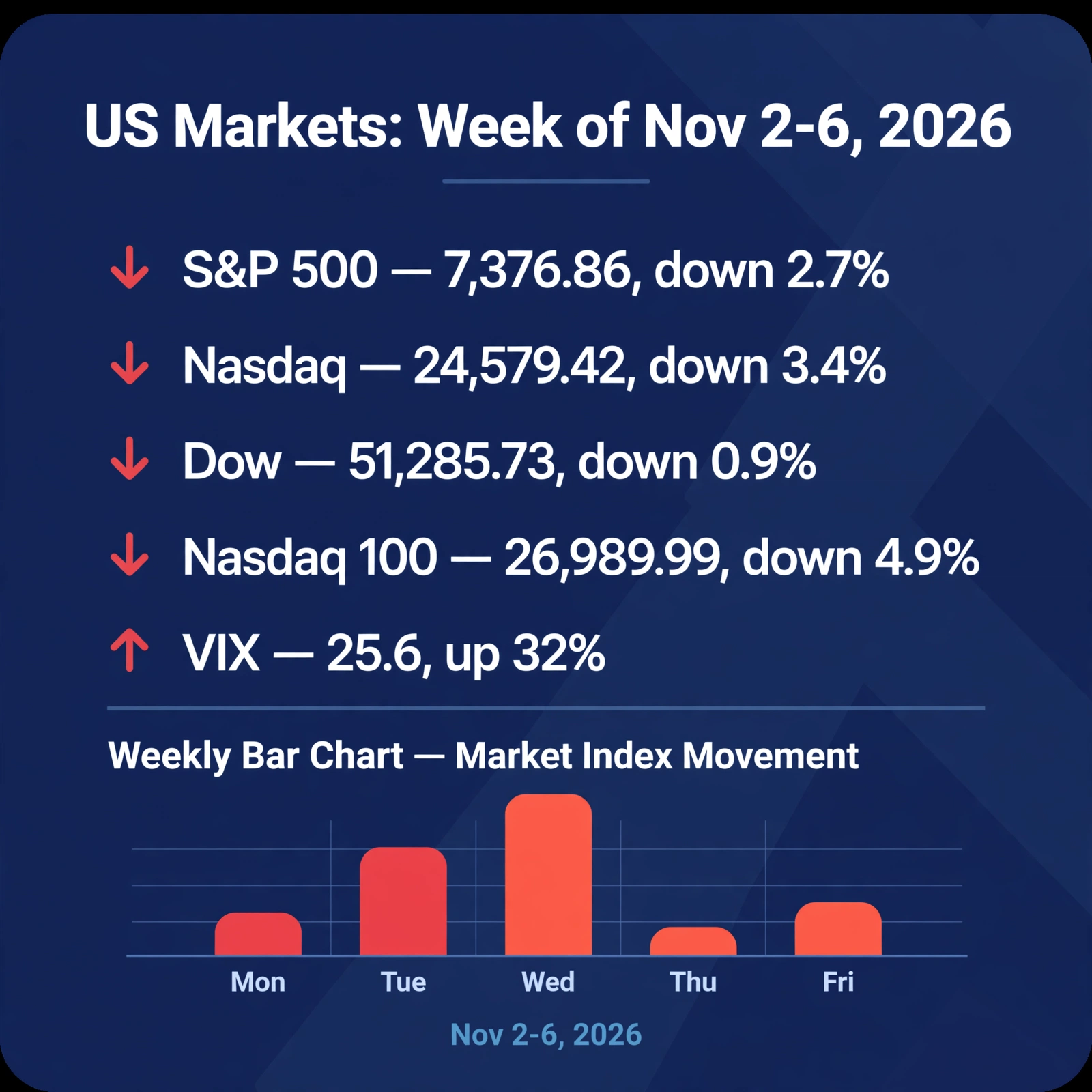
Set against Thursday, the bounce looks modest. On Thursday, the Nasdaq fell 5.52% to 24,315.00, the S&P 500 dropped 4.36% to 7,353.73, and the Dow lost 3.44% to 51,523.06. Friday recovered only about a fifth of Thursday’s losses. The Nasdaq remains 10.9% below its record closing high of 27,599.89 from October 6, so it has not left correction territory. For the week, the S&P 500 fell 2.7%, the Nasdaq 3.4%, and the Dow 0.9%.
The Dow moved on its own. Salesforce fell 3.94% to $213.65, Nike dropped 2.45% to $38.59, and Home Depot lost 1.85%, dragging the index down. Nvidia, up 2.78% to $186.64, was the Dow’s strongest name. Breadth was positive: on the NYSE, 1,623 stocks rose against 1,193 decliners, and on the Nasdaq, 2,045 rose while 1,295 fell. The VIX fell 9.0% to 25.64, so Thursday’s fear eased noticeably.
Chip rebound: AMD up 11.04%, Nvidia up 2.78% — dip buying, fading gains
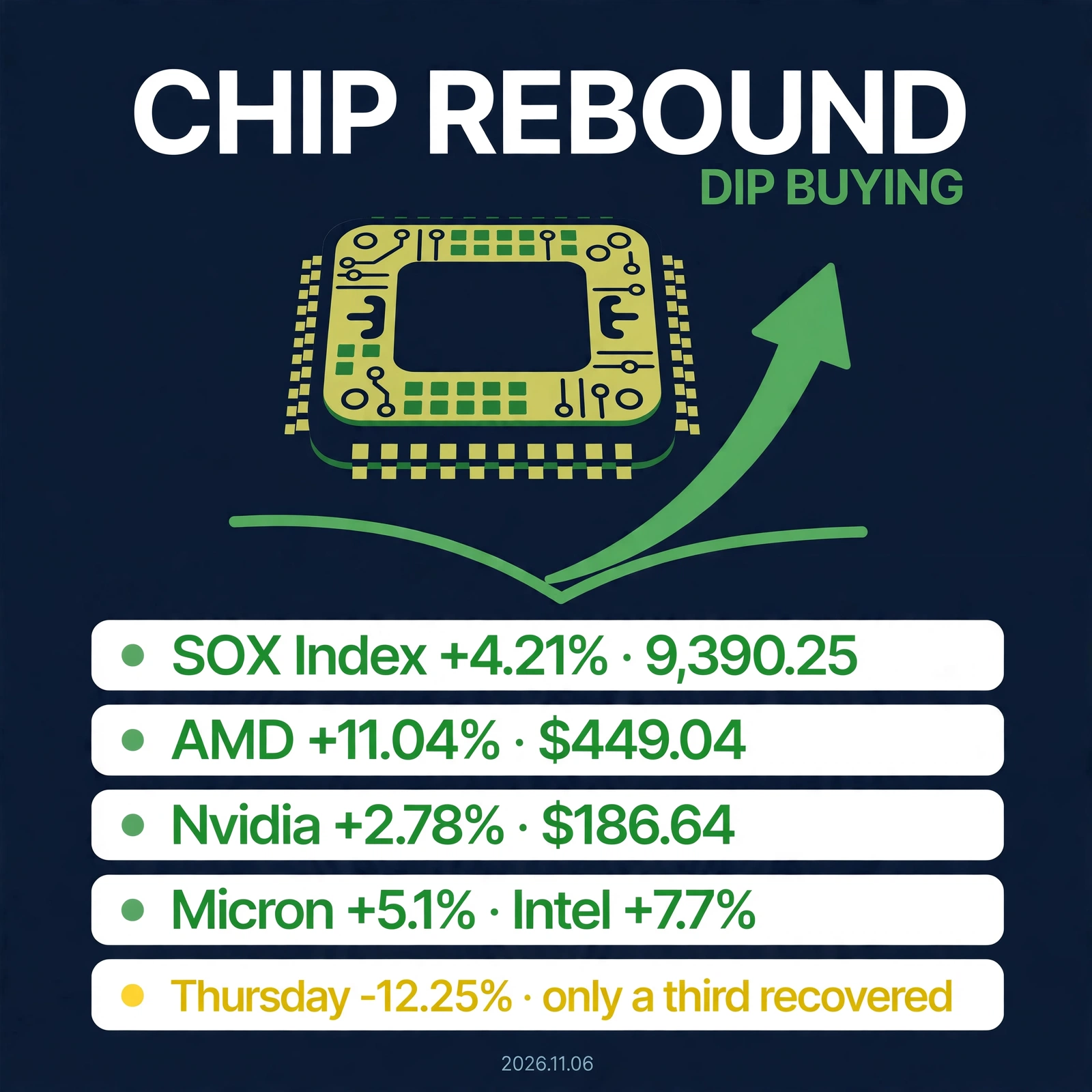
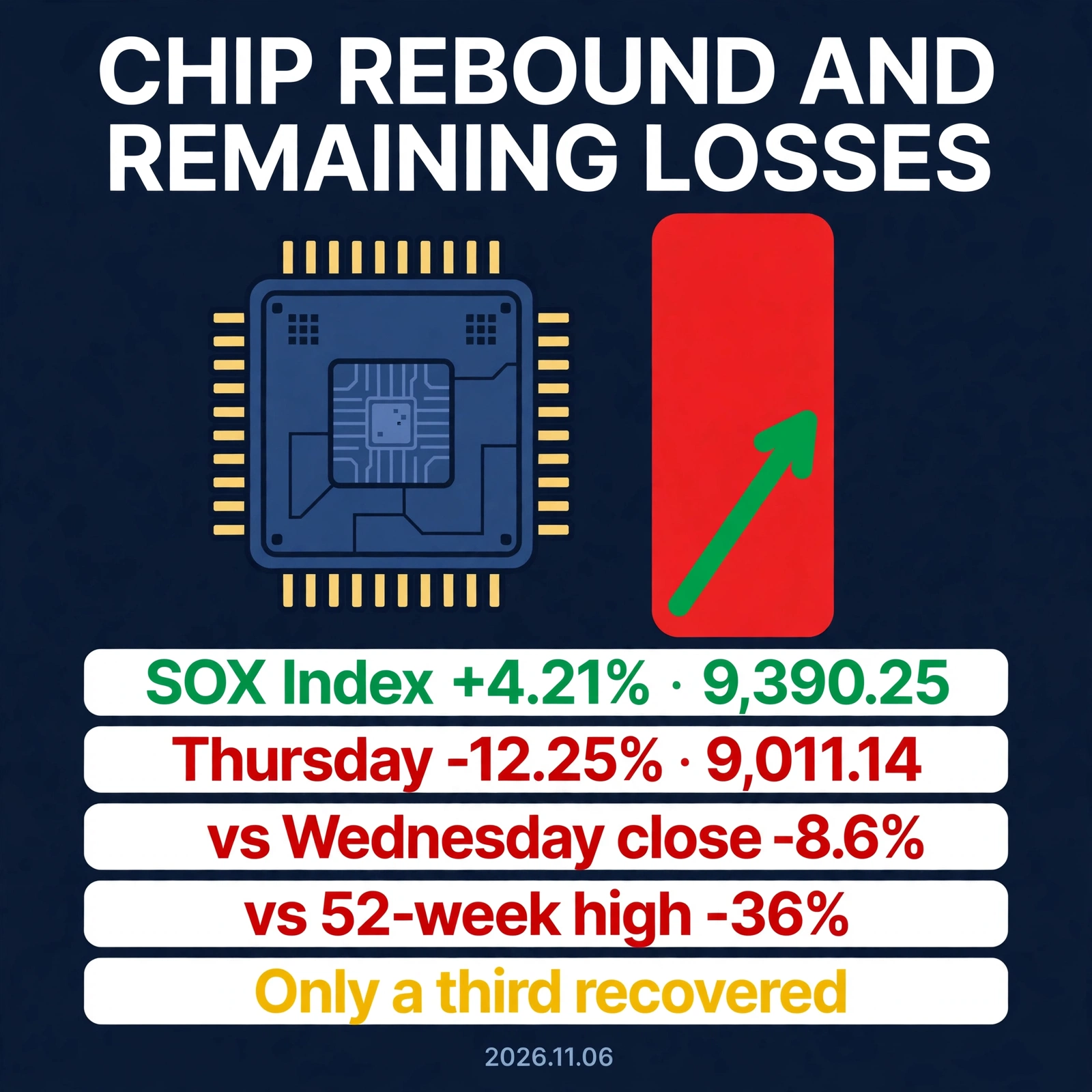
Chips led the bounce. The Philadelphia Semiconductor Index (SOX) rebounded 4.21% to 9,390.25, a day after plunging 12.25% to 9,011.14. But it is still about 8.6% below Wednesday’s close of 10,268.65 and 36% below its 52-week high. One day of buying cannot fill a hole that size.
Among individual names, AMD jumped 11.04% to $449.04, among the S&P 500’s top gainers, after rising more than 13% in early trading. Nvidia gained 2.78% to $186.64, though it had been up 6.4% in the morning — more than half the gain faded. Micron rose 5.1%, Intel 7.7%, Qualcomm 5.5%, Lam Research 8.2%, and Tesla 4.2%. Nearly every chip stock rose, but the defining feature of the day was gains shrinking as the session went on.
The jobs report capped the rally. Strong payrolls pushed Treasury yields higher, weighing on rate-sensitive growth stocks. Bank of America analyst Vivek Arya said “indiscriminate selling of chip stocks on AI capex fears could start to run its course” by early 2027. Dip buyers returned, but that is not the same as a confirmed bottom. Whether the rebound lasts depends on next week’s October CPI and the first AI and data-center policy signals from the Democratic Congress.
Jobs surprise and rates: 165,000 new jobs, December hike odds at 76.8%
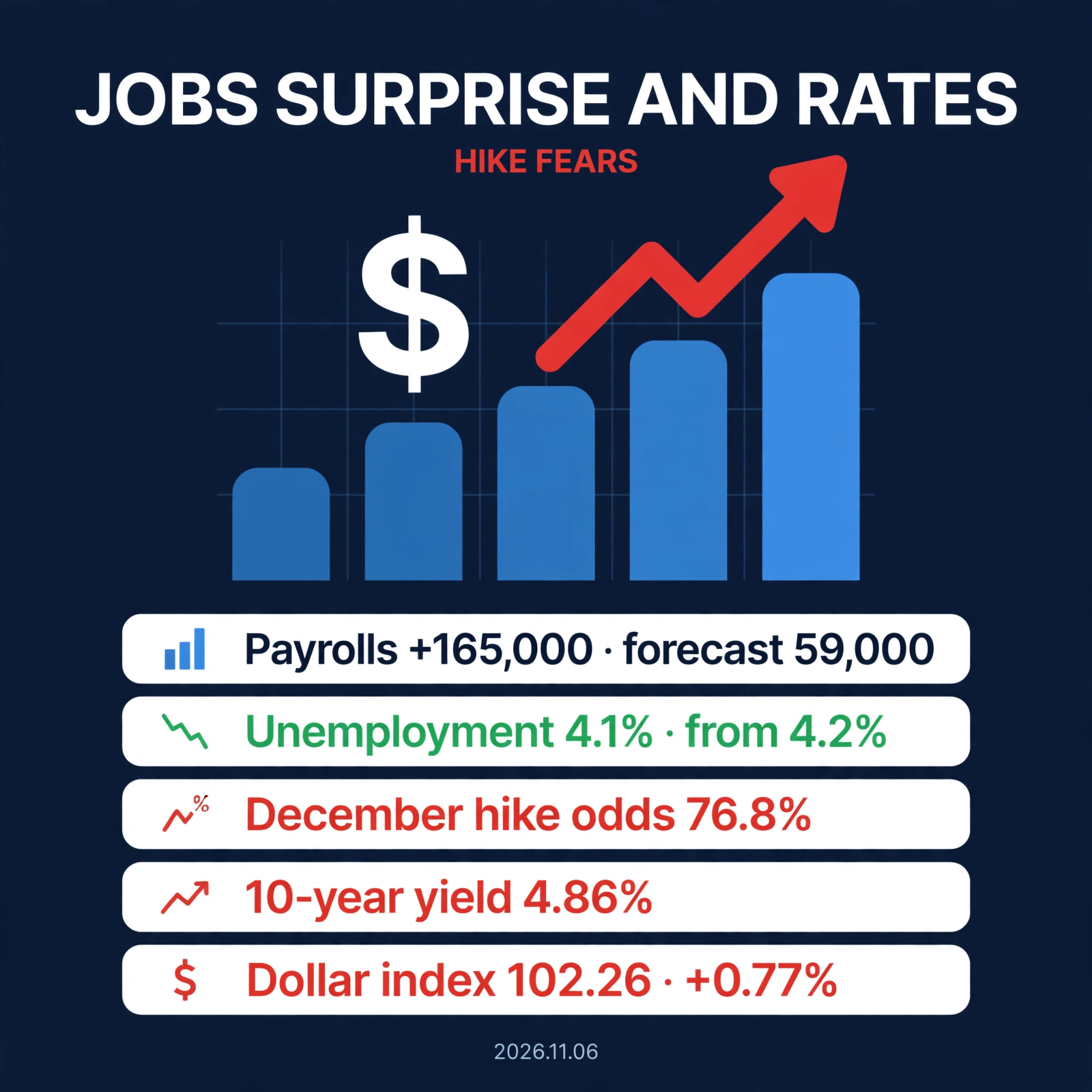
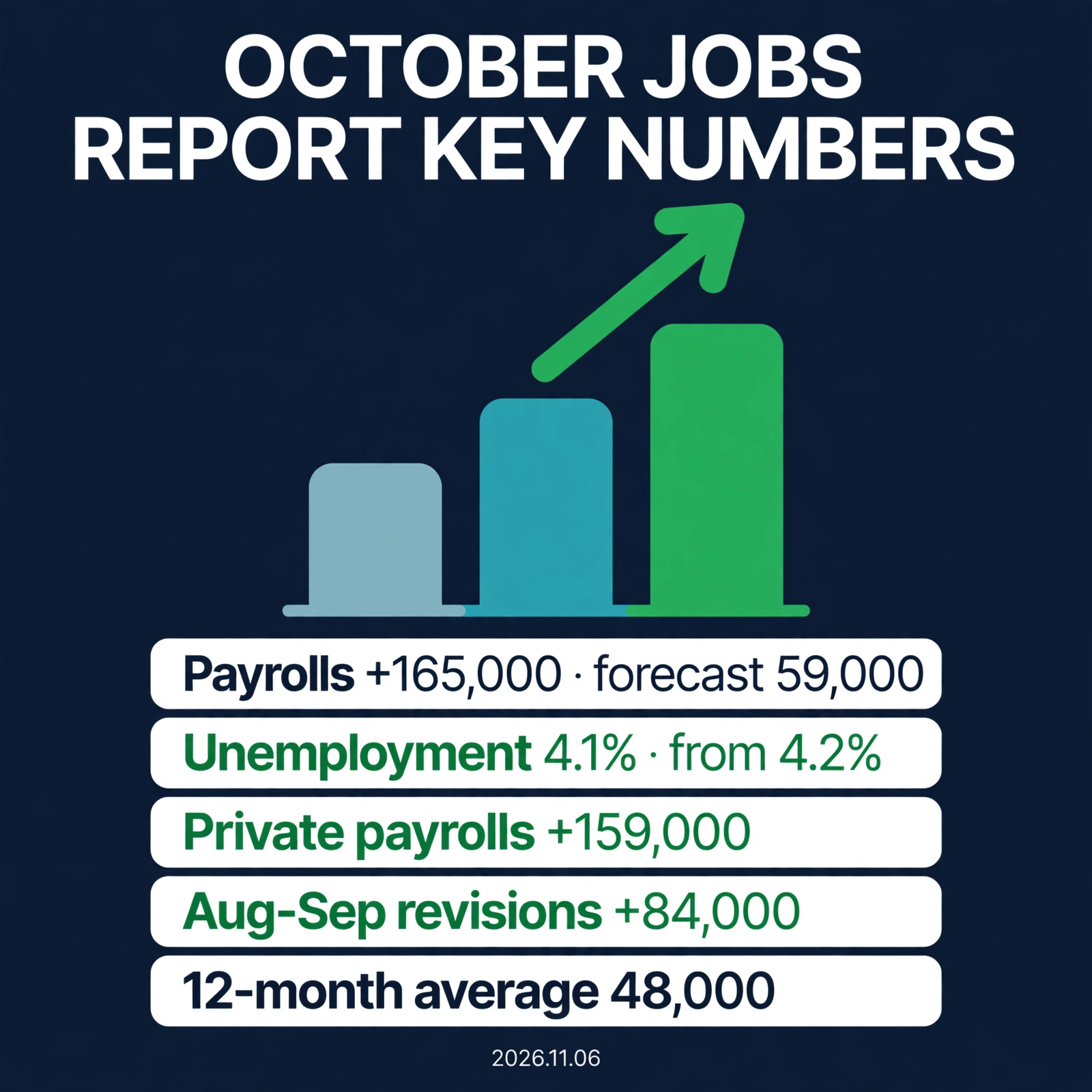
The other story of the day was the jobs report. Nonfarm payrolls rose 165,000 in October, nearly three times the Dow Jones consensus of 59,000. The unemployment rate fell to 4.1% from 4.2%, and August and September payrolls were revised up by a combined 84,000. Private payrolls rose 159,000. The labor market is far stronger than expected.
The catch is that strong hiring changed the Fed’s rate path. CME FedWatch puts the odds of a 25-basis-point hike in December at 76.8%, up from around 70% on Thursday. The Fed held its benchmark at 3.75–4.00% on October 28, and even then two officials dissented in favor of a hike in a 10–2 vote. The market is now pricing a December hike, not a cut. The next meeting is December 8–9, and October CPI arrives first, on Tuesday, November 10.
Rates, the dollar, and safe havens moved together. The 10-year Treasury yield rose to around 4.86%, and the dollar index gained 0.77% to 102.26. December gold futures fell 0.96% to $4,074.05 an ounce, WTI crude for December rose 0.22% to $90.72 a barrel, and Brent for January slipped 0.13% to $98.16. Bitcoin edged down to around $75,800. Strong jobs lifted the dollar and pressed gold. The technology ETF (XLK) fell nearly 8% for the week, its worst week since April 2025.
- Nonfarm payrolls: the number of new jobs outside farming, published monthly by the Bureau of Labor Statistics. It is one of the biggest inputs to the Fed's rate decisions.
- CME FedWatch: probabilities for Fed decisions derived from federal funds futures prices. A 76.8% December hike probability means the market sees a hike as roughly a 3-in-4 outcome.
- Correction: a decline of 10% or more from a recent high. The Nasdaq is 10.9% below its record close, so it remains in correction territory.
- Dip buying: buying after a sharp fall on the view that prices have become cheap. Friday's chip buying after Thursday's rout is a textbook case.
- 10-year Treasury yield: the interest rate on the 10-year US government bond. When it rises, bond prices fall and growth-stock valuations come under pressure.
- Dollar index (DXY): the dollar's value against six major currencies. It rose 0.77% to 102.26 on Friday.
Three things to watch
First, October CPI on Tuesday, November 10. With hiring beating forecasts, the question is whether inflation data pushes December hike odds even higher. A hot CPI could lift Treasury yields again and stall the tech rebound. Second, the first AI and data-center policy signals from the Democratic Congress. The permit and regulation debate behind Thursday’s rout will either take concrete shape or fade as post-election overreaction — and that sets the terms for any semiconductor recovery. Third, whether the bounce holds. Watch whether the Nasdaq stays below its 200-day moving average, whether the semiconductor index holds above 9,000, and whether dip buying continues into next week. What matters more than one day’s rebound is whether the rate pressure and policy uncertainty that cut it short start to clear.
Sources & references
- Investing.com — Dow slips 0.26% as Nasdaq and S&P 500 gain on tech strength — November 6 close, checked against official closing prints: Dow –0.46%, S&P 500 +0.31%, Nasdaq +1.09%; Nvidia +2.78%, Airbnb +12.03%, AMD +11.04%, VIX 25.64, gold and WTI closes
- FundSpec — Market edition, 6 November 2026 — November 6 closing index levels: Dow 51,285.73 (–0.46%), Nasdaq 24,579.42 (+1.09%), S&P 500 7,376.86 (+0.31%)
- Reuters — US STOCKS-Nasdaq rebounds as chip stocks recover from steep losses — Chip rebound, jobs report raising December hike concerns, Nasdaq in correction territory
- WSJ — Chip Stocks Recover Some Losses After Rout — PHLX Semiconductor Index rebound, individual chip moves, BofA analyst Vivek Arya outlook (official close: SOX +4.21% at 9,390.25)
- World Money Roadmap — October Jobs: 165,000 Added vs 59,000 Expected, Jobless 4.1% — October payrolls 165,000 vs 59,000 Dow Jones consensus, unemployment 4.1%, CME FedWatch December hike odds 76.8%
Related articles
- Semiconductor Rebound Analysis SOX 4.21% Recovery and Three Bottom Confirmation Conditions
The Philadelphia Semiconductor Index rebounded 4.21% but recovered only a third of Thursday's losses, and gains faded from a 6.6% intraday high. Whether the bounce is a bottom or a retracement turns on three conditions: policy signals, AI demand evidence, and technical support.
- US Stock Market Weekly Recap Nasdaq Falls 3.4 Percent Thursday AI Rout and Correction Analysis
US stock market weekly recap for November 2–6. The S&P 500 fell 2.7%, the Nasdaq 3.4% and the Dow 0.9%, and Thursday's AI sell-off pushed the Nasdaq into correction territory. Midterms, the jobs report and the Hormuz oil plunge, plus next week's CPI and PPI checkpoints.
- October Jobs Report Analysis 165,000 Payrolls Surprise and December Fed Hike Odds 76.8% Flip
October nonfarm payrolls rose 165,000, nearly three times the 59,000 consensus, and unemployment fell to 4.1%. December Fed hike odds jumped from 60% intraday Thursday to 76.8% on Friday. The next test is CPI on November 10.
5minbrief on YouTube
The briefs also come as videos. Get the daily market wrap on YouTube.
Subscribe on YouTube