 5-minute briefs
KOSPI Rebound Anatomy Analysis 3.09% Surge Buy Sidecar Foreign Return Anthropic Monetization
What the sidecar tells you: buying arrived in a rush
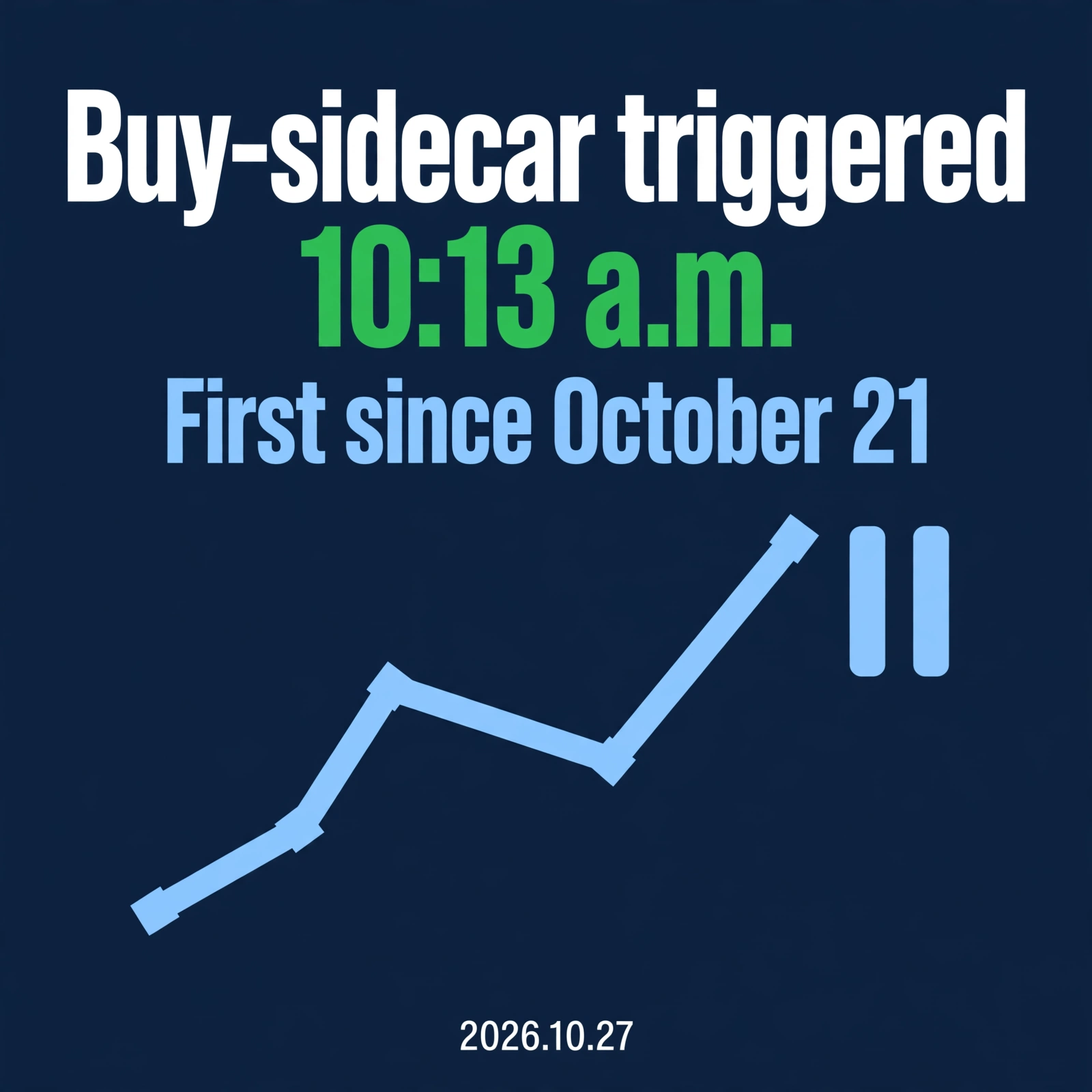
The most informative number today is not the close of 5,638.34 but the time 10:13 a.m. The KOSPI opened 189.18 points (3.46%) higher at 5,658.65, and at 10:13 a.m. a buy-sidecar halted program buying for five minutes, the first such trigger since October 21. A sidecar fires when futures surge too fast, so its message is simple: buying did not accumulate gradually, it arrived all at once. The intraday high reached 5,737.61, and the close of 5,638.34 sits below that high, which means some profit-taking appeared in the afternoon without breaking the rally. Breadth confirms it was not a two-stock story: 595 KOSPI stocks rose against 275 decliners.
Compare the money behind the move with Monday’s. Monday’s KOSPI trading value was a quiet 10.95 trillion won, a fall on light volume that read as cautious selling. Today it jumped to 15.29 trillion won. When quiet money turns into heavy money in one session, the rebound has a different character from a short-covering bounce on thin volume.
The foreign flip: from selling to buying in one day
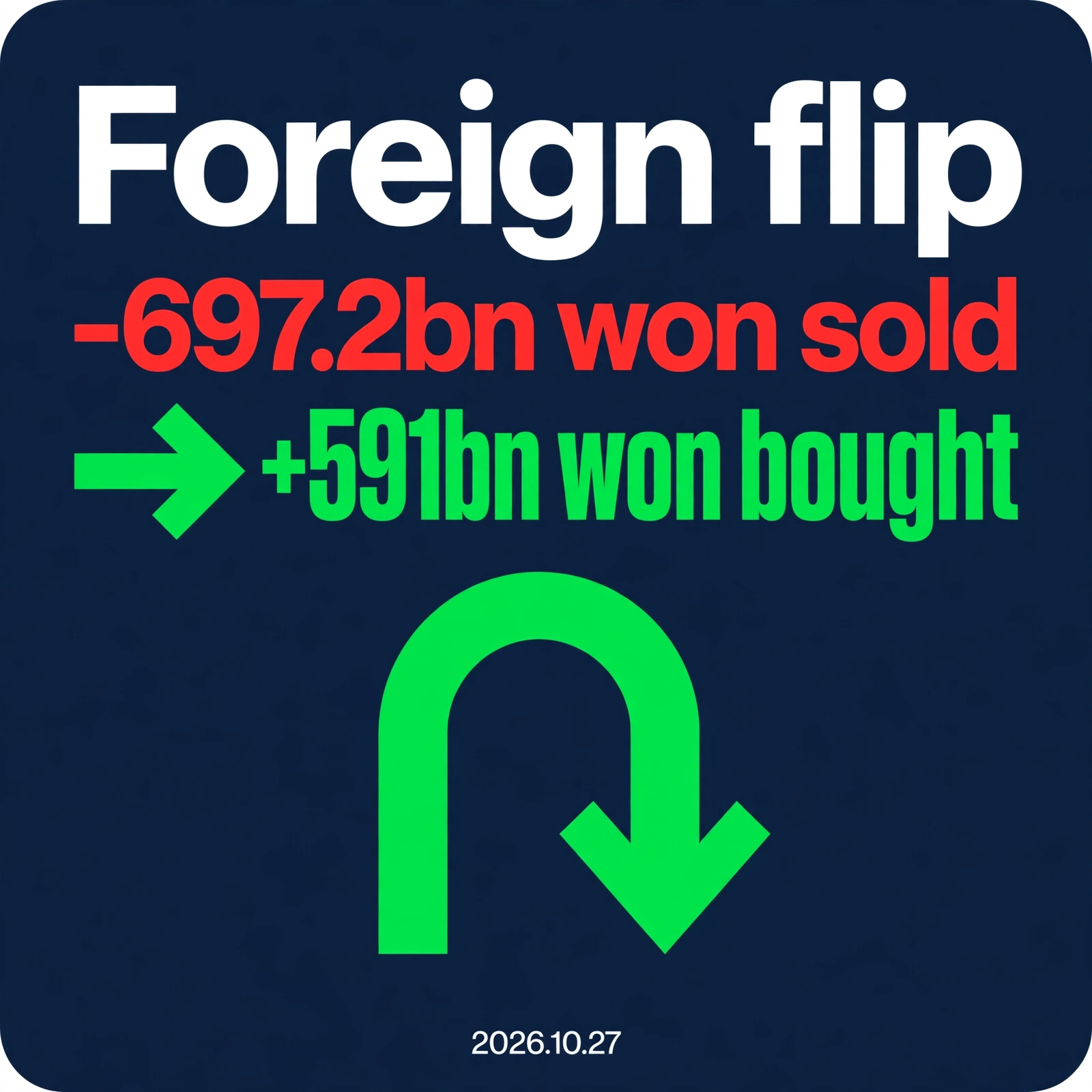
The second leg is the foreign flow flip. Foreign investors sold a net 697.2 billion won on Monday and bought a net 591 billion won on Tuesday, while institutions bought 282 billion won and individuals sold 949 billion won. Over two days foreigners are still net sellers, but a one-day reversal of this size is what powers a 3% index move in a market where two semiconductor stocks dominate the weights.
One caution belongs in the same paragraph. In KOSPI 200 futures, foreigners were still net sellers by 94 billion won. They bought the cash market and sold futures, which reads more like a short-term snap-back trade than a full conviction return. Whether cash buying continues tomorrow is the first test of whether this rebound has legs. On the KOSDAQ, the same pattern held: individuals sold 166 billion won while foreigners bought 24.5 billion won and institutions bought 150 billion won, lifting the index 2.29% to 743.83.
Anthropic’s numbers: the monetization answer the market wanted
The third leg came from the United States. Anthropic, the maker of the Claude AI model, filed its S-1 for a U.S. listing, reportedly targeting a valuation of up to $2 trillion. The filing’s numbers matter more than its size. First-half 2026 revenue was $16.286 billion, up from $1.163 billion a year earlier, and second-quarter revenue of $11.555 billion grew 1,368% year on year. Second-quarter operating profit of $974 million marked the company’s first profitable quarter.
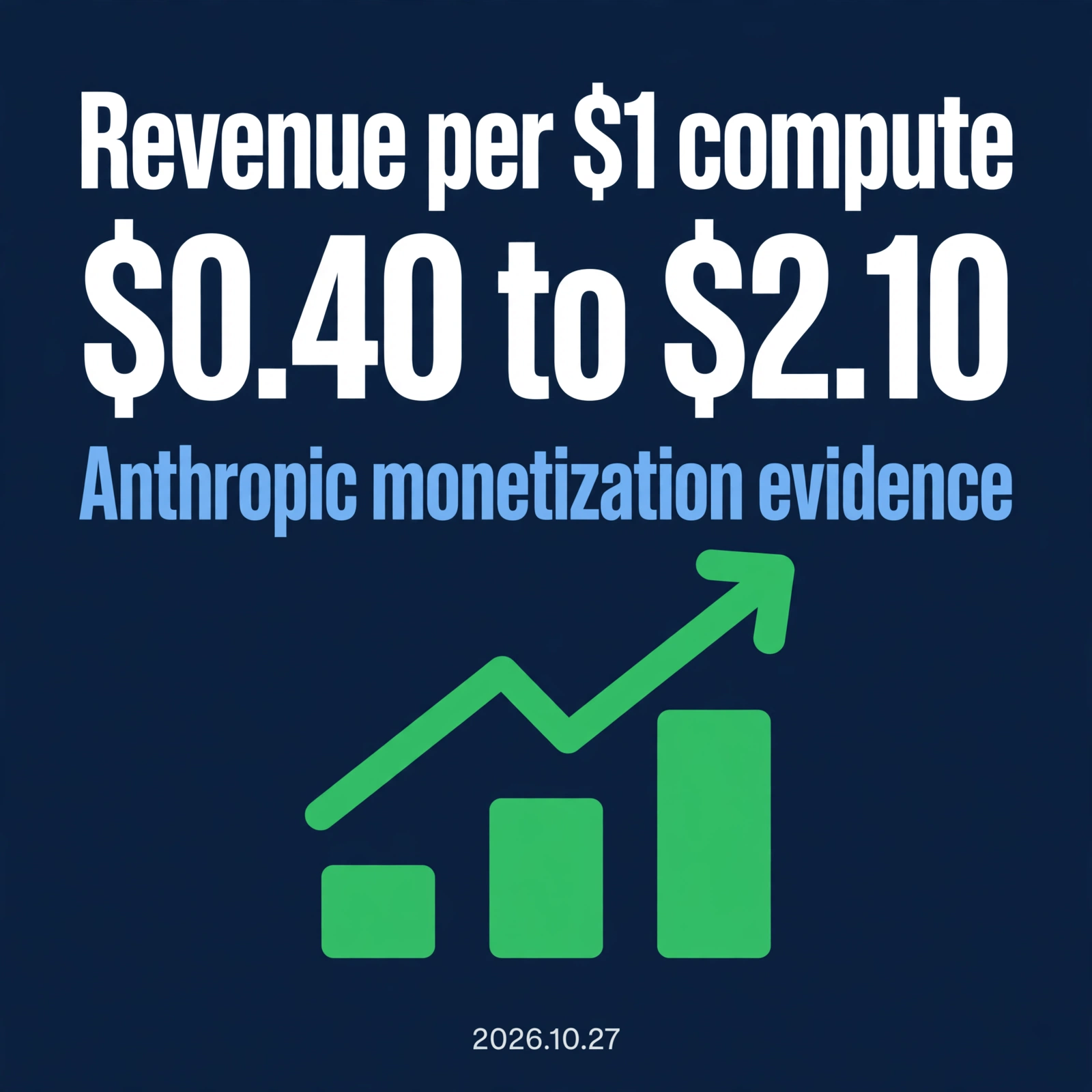
The number that moved Seoul is the cost curve. Computing and infrastructure costs fell from 251% of revenue in the first quarter of 2025 to 48% in the second quarter of 2026. Revenue per dollar of computing cost improved from $0.40 to $2.10 over the same span, and more than 11,900 customers generated over $100,000 in trailing twelve-month revenue. Enterprise AI, in other words, is moving from pilot projects to real spending.
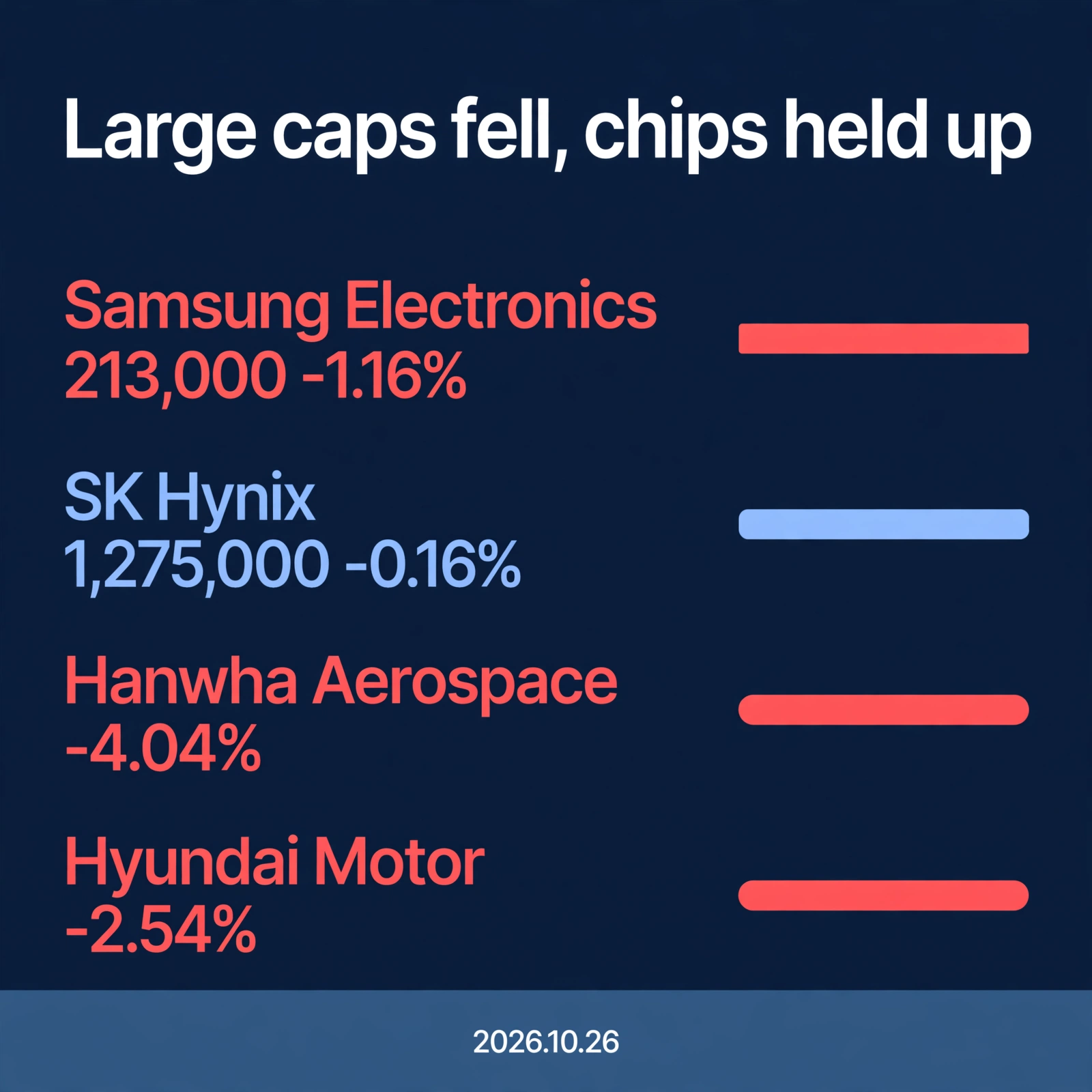
Why does a U.S. IPO filing move Korean chip stocks? Because it reframes what Korean memory and chips are selling into. If AI companies are monetizing faster than their costs grow, chip demand is the raw material of a business that already makes money, not a bet on a future payoff. Samsung Electronics rose 4.23% and SK Hynix rose 5.18% on exactly that repricing.
Read the filing’s surface carefully, though. Anthropic’s first-half net loss exceeded $80.7 billion, but roughly $72.3 billion of that was non-cash cost from convertible-note fair-value changes, while operating cash flow was positive at $3.9 billion. Quoting the $80.7 billion loss as cash burn would misread the document. What the market reacted to was the inside of the numbers: revenue growth outrunning cost growth.
What would confirm, or break, this rebound
A single 3% day does not end a pattern. Since October 19, the KOSPI has alternated up and down day by day, and the U.S. 10-year Treasury yield still sits near 5.00%. Three checks decide the next phase. First, does SK Hynix announce additional shareholder returns with its third-quarter results on Wednesday, October 28? Much of today’s rally was pre-earnings buying, so a return announcement would confirm it and a silent report could unwind it. Second, does foreign cash buying continue tomorrow, despite the futures selling? Third, does the KOSPI hold above 5,600? Holding 5,600 after reclaiming 5,500 would turn a one-day rebound into a recovery phase.
- Buy-sidecar: a five-minute halt on program buying when futures surge too fast. It signals a rush of buy orders.
- S-1: the registration statement a company files with the U.S. Securities and Exchange Commission (SEC) before listing. It discloses revenue, profit, and cost structure.
- Non-cash cost: an accounting expense with no cash leaving the company, such as fair-value changes on convertible notes.
- Cash market versus futures: buying actual shares versus trading contracts on future prices. When foreigners buy one and sell the other, the return may be short-term rather than structural.
Not investment advice. Figures are from the Korea Exchange, Yonhap News, Anthropic’s S-1 filing, and Yuanta Securities, as confirmed on October 27, 2026.
Watch the video

Sources & references
- Yonhap News — KOSPI rebounds 3% to close at 5,638.34; KOSDAQ up 2.3% — Original closing report: index levels and the buy-sidecar
- Yonhap News — KOSPI jumps 3.09% to 5,638.34 as foreigners return and chip stocks rally (via Kangwon Domin Ilbo) — Intraday high and the leading chip stocks
- U.S. Securities and Exchange Commission (SEC) EDGAR — Anthropic, PBC Form S-1 Registration Statement — Anthropic's revenue and cost structure, from the filing itself
Related articles
- KOSPI Falls Below 5500 Mark Analysis Foreign Selling KOSDAQ 727 and Earnings Super Week Outlook
October 26, 2026 Korea market brief for foreign investors: the KOSPI closed at 5,469.47 (-1.46%), its first close below 5,500 since April 7, while the KOSDAQ fell 3.26% to 727.21. Foreign investors sold a net 695.5 billion won, yet the won strengthened to 1,323.1 per dollar as semiconductor exporters sold dollars. This week brings the FOMC decision, SK Hynix results on Wednesday, and Samsung Electronics results on Thursday.
- KOSPI Rebound Analysis 2.24% Rally Institutional Buying Low PBR First Day
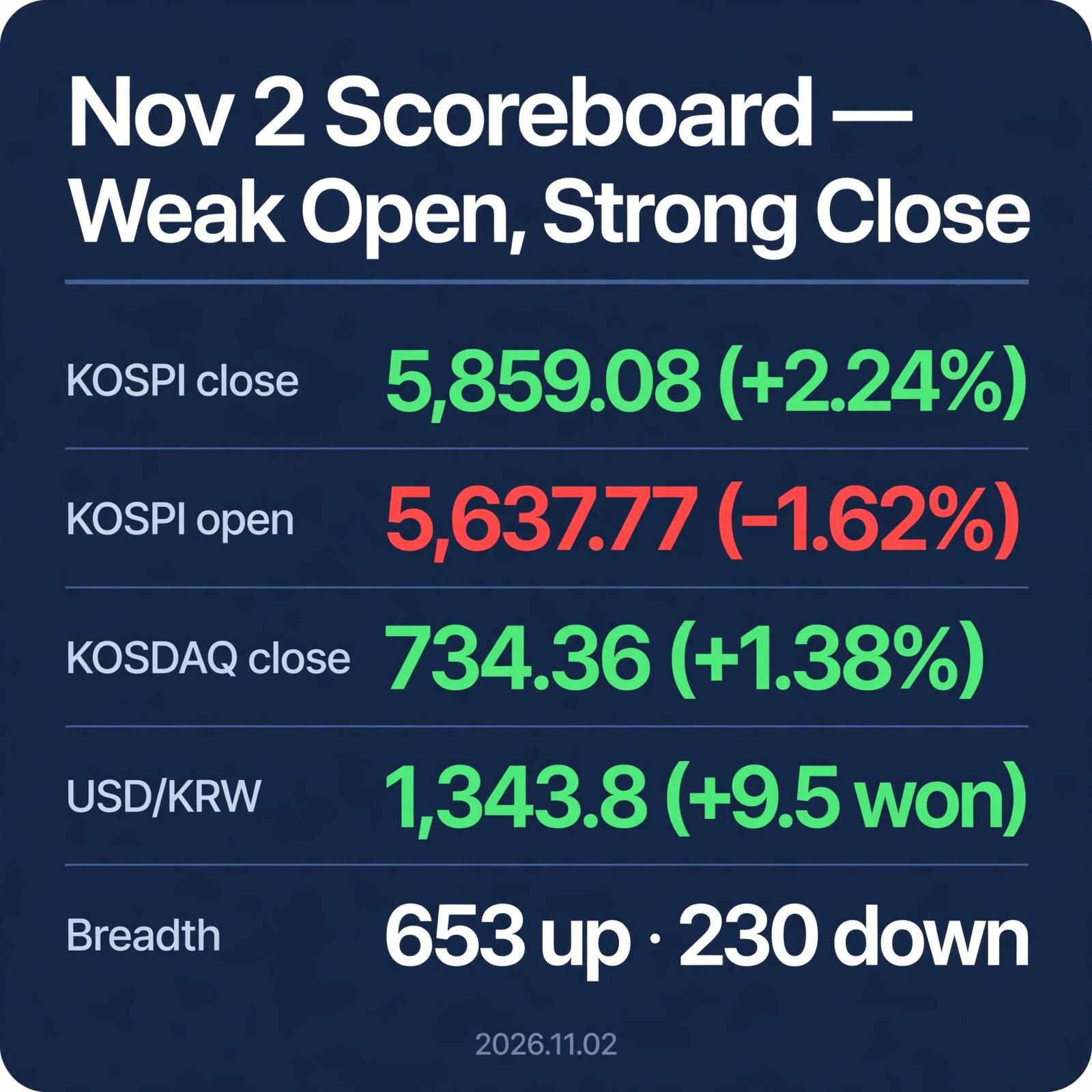
November 2 Korea market brief for foreign investors: the KOSPI opened down 1.62% on the US chip selloff, then rallied 2.24% to 5,859.08 on institutional buying and a strong first day for the low-PBR name list. Foreigners sold a net 373.1 billion won overall but bought Samsung Electronics.
- Korea Low PBR First Day Analysis 106 of 151 Rise Hyundai Steel Surge
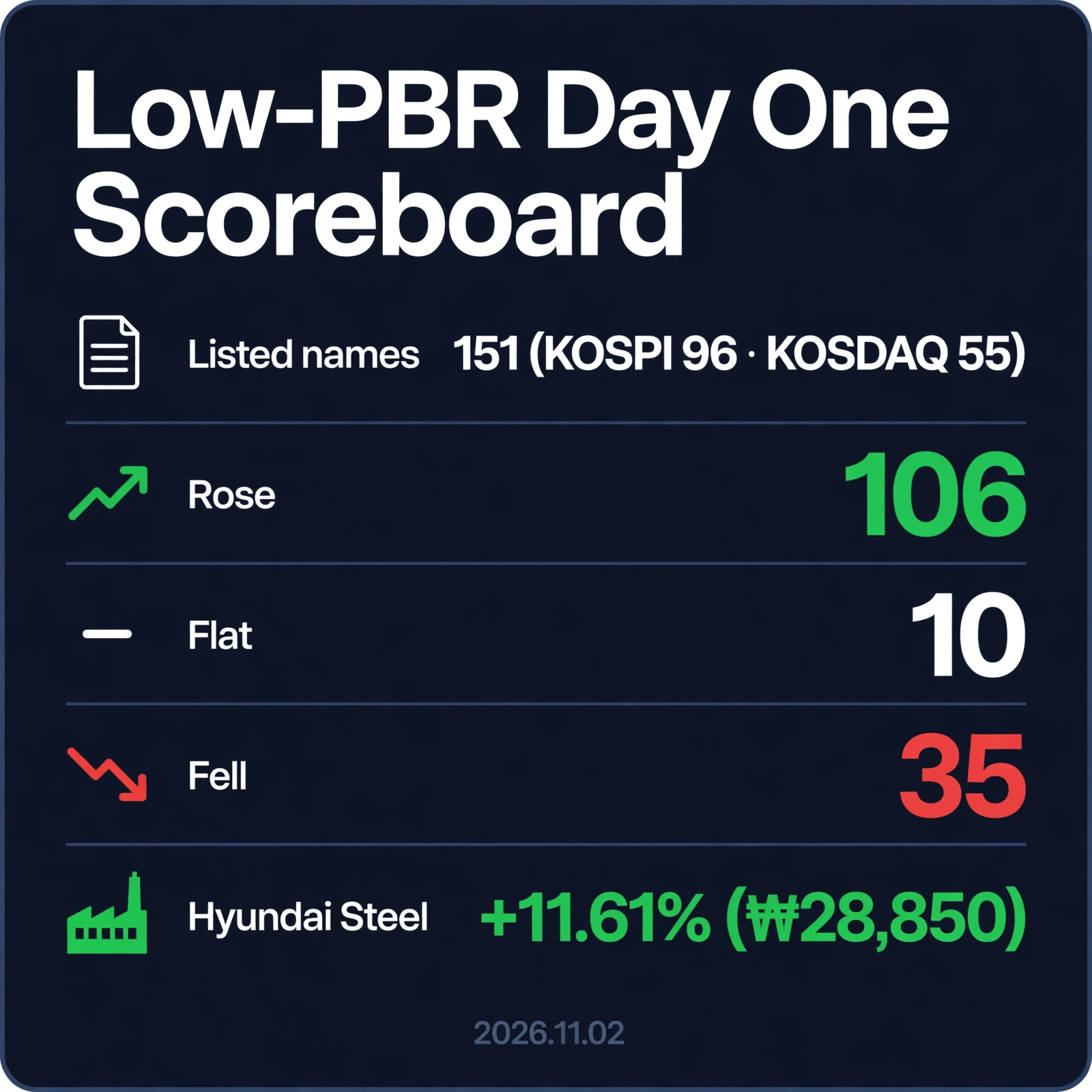
For foreign investors: on the first trading day of Korea's low-PBR name list, 106 of 151 stocks rose and Hyundai Steel surged 11.61%. But steel and construction rose across the board, so the list effect cannot be separated from sector strength. The real test is execution.
5minbrief on YouTube
The briefs also come as videos. Get the daily market wrap on YouTube.
Subscribe on YouTube