 5-minute briefs
Anthropic IPO Analysis S-1 Revenue 16.3 Billion First Profitable Quarter AI Listing Investment Analysis
The S-1 filing and the revenue surge: more than 100x in three years
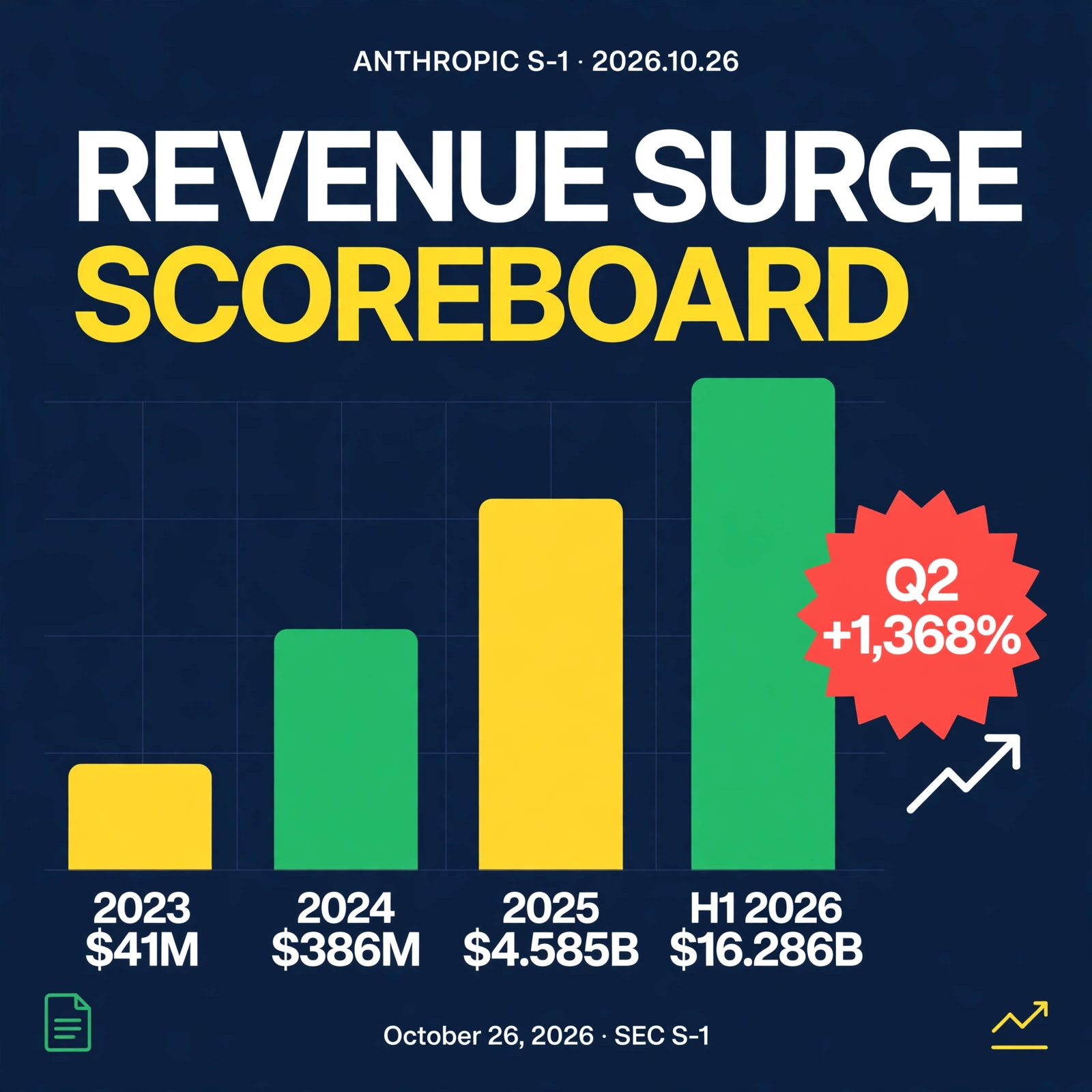
Start with the listing terms. Anthropic plans a Nasdaq listing under the ticker ANT. The offering price and the number of shares are not yet set, and the underwriters are Goldman Sachs and Morgan Stanley. An unset price means no valuation can be confirmed at this stage. An S-1 is a filing that says “we plan to list,” not a recommendation to buy at a given price.
The revenue path looks like this. Revenue went from $41 million in 2023, to $386 million in 2024, to $4.585 billion in 2025, and then to $16.286 billion in the first half of 2026. That is roughly 14 times the $1.163 billion of the same period a year earlier. Q2 2026 revenue alone was $11.555 billion, up 1,368% year over year. In three years, selling AI models to business customers has grown from a small startup revenue line to large-software-company scale.
- S-1: the registration statement filed with the SEC before a US listing. It discloses revenue, profit and loss, costs and risks in an official document.
- Offering price and share count: the price and quantity of new shares sold at listing. They are often unset at the S-1 filing stage.
- Underwriter: the bank managing the listing. It gauges demand and helps set the offering price.
- Operating income: revenue minus cost of revenue and operating expenses. It shows whether the core business itself makes money.
Behind the $80.748 billion net loss: it is not cash burn
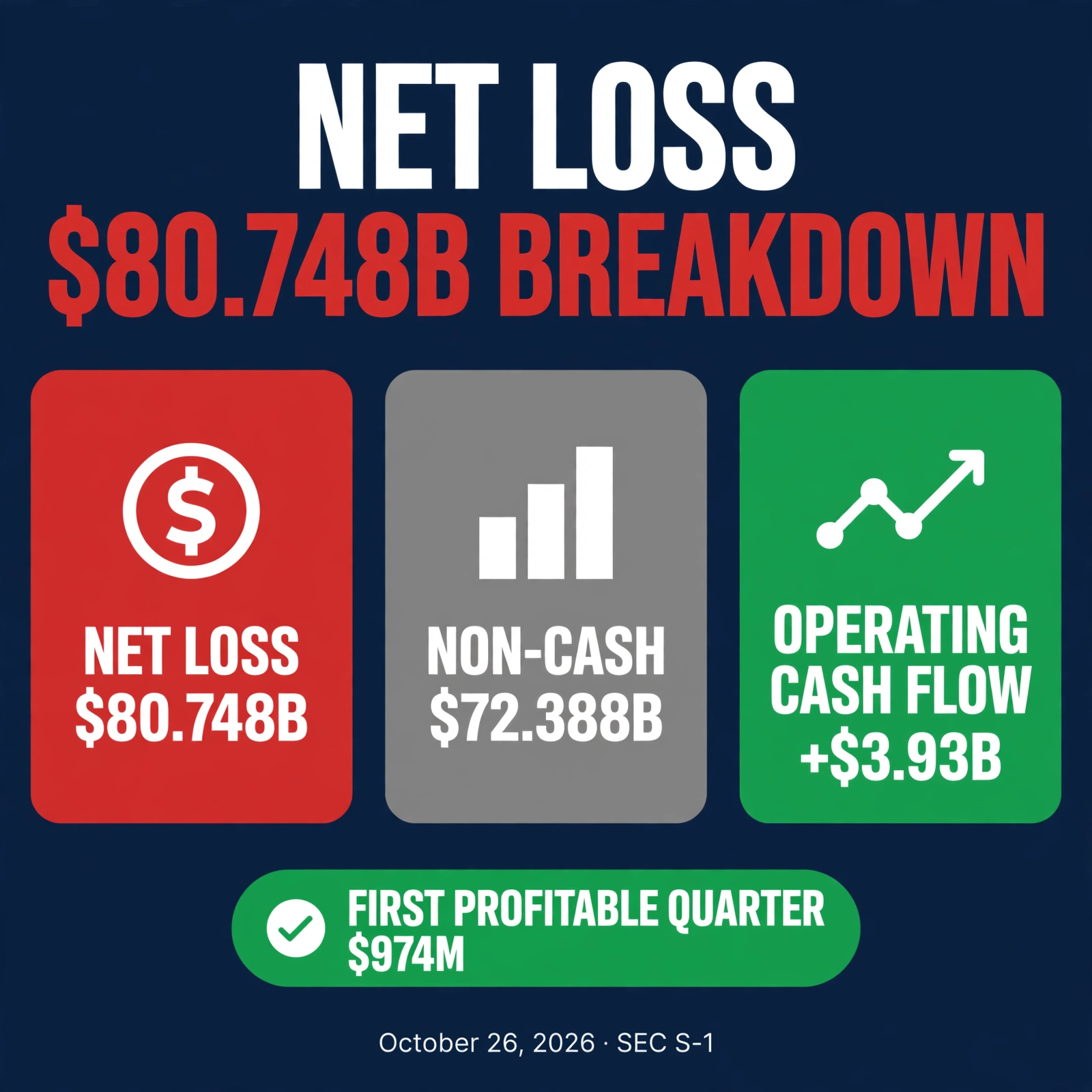
The net loss is the easiest number to misread. The first-half 2026 net loss was $80.748 billion, about five times first-half revenue of $16.286 billion. On its own, it looks like a company losing five times what it earns. The breakdown changes the conclusion.
Of that net loss, $72.388 billion was a non-cash charge from fair-value changes on convertible notes, derivatives and SAFEs. In plain terms, as the company’s value rose, the book value of those instruments rose too, and accounting recorded it as a loss. No cash left the company through that charge. Strip it out, and the picture is different: the first-half operating loss was $693 million, much smaller than the $2.135 billion loss a year earlier, and Q2 delivered operating income of $974 million, the first profitable quarter. The most direct evidence is cash: first-half operating cash flow was +$3.93 billion, meaning the core business is bringing cash in. Those two facts, the swing to quarterly operating profit and positive operating cash flow, matter more than the headline net loss.
One caution remains. Non-cash does not mean irrelevant. This charge grows when the company’s value rises, so it can move in the other direction if valuations wobble. And the first half as a whole was still an operating loss. One profitable quarter alone does not make it a fully profitable company yet.
Falling compute intensity and three risks
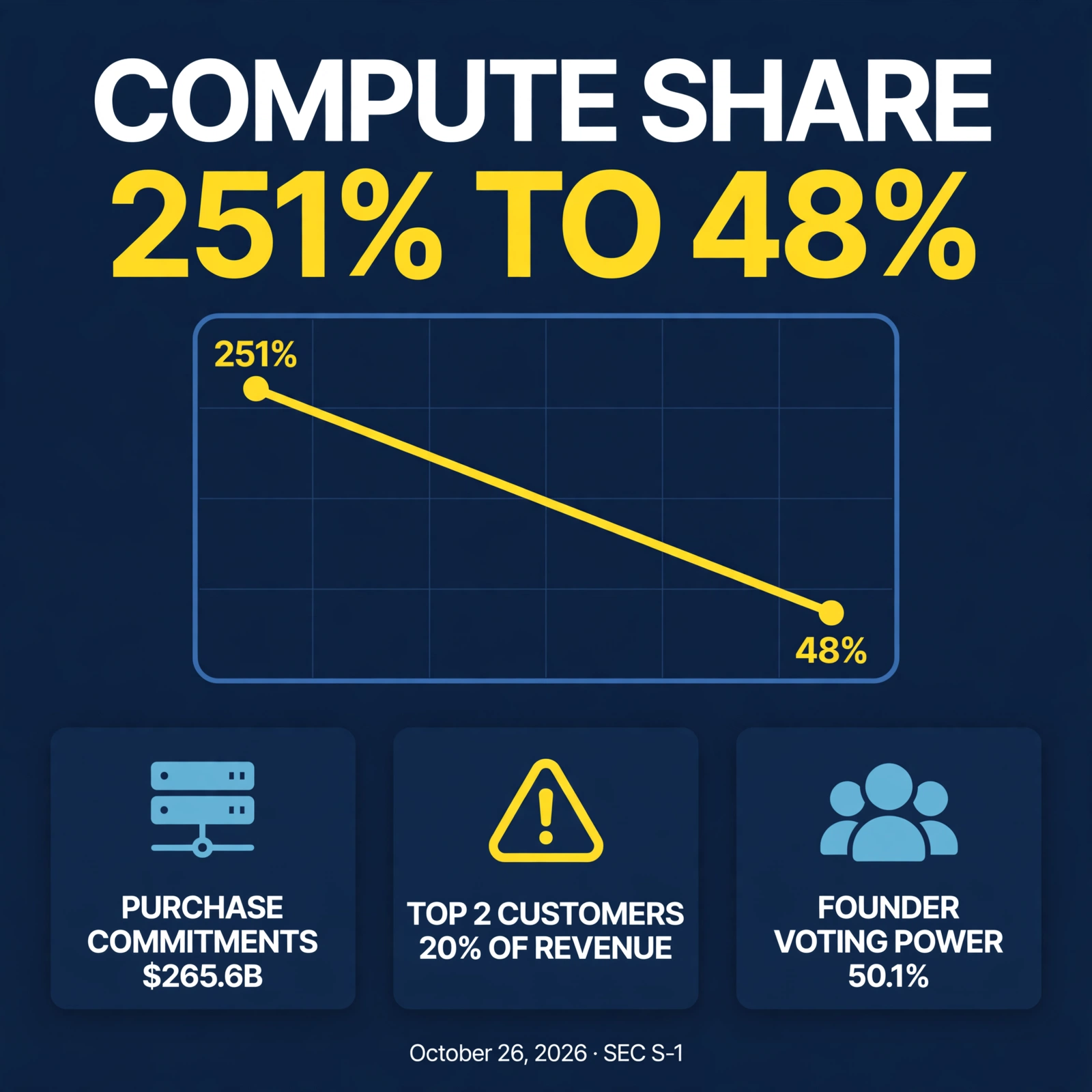
The key cost for an AI company is compute, the computing power used to train models and serve customers. First-half 2026 compute and infrastructure costs were $8.945 billion, up from $2.334 billion a year earlier. The absolute amount rose, but the ratio improved fast. Compute costs as a share of revenue fell from 251% in Q1 2025 to 48% in Q2 2026. The business went from spending 251 on compute for every 100 of revenue to spending 48. That is the single most important efficiency signal in the S-1.
Three risks stand out. First, compute purchase commitments. Expected fixed or minimum guaranteed commitments stood at about $265.6 billion as of June 30, 2026, and non-cancelable contractual commitments alone were $54.6 billion. These are long-term contracts to buy compute, so the cost burden stays even if demand cools. Second, customer concentration. Customers spending at least $100,000 a year numbered more than 11,900 as of September 30, 2026, up from 950 a year earlier, yet about 20% of first-half revenue came from just two customers. Third, governance. Anthropic is a public benefit corporation, and seven founders hold 50.1% of voting power through one special share. That limits the voting influence of ordinary shareholders.
Market reaction on the day and investor checkpoints
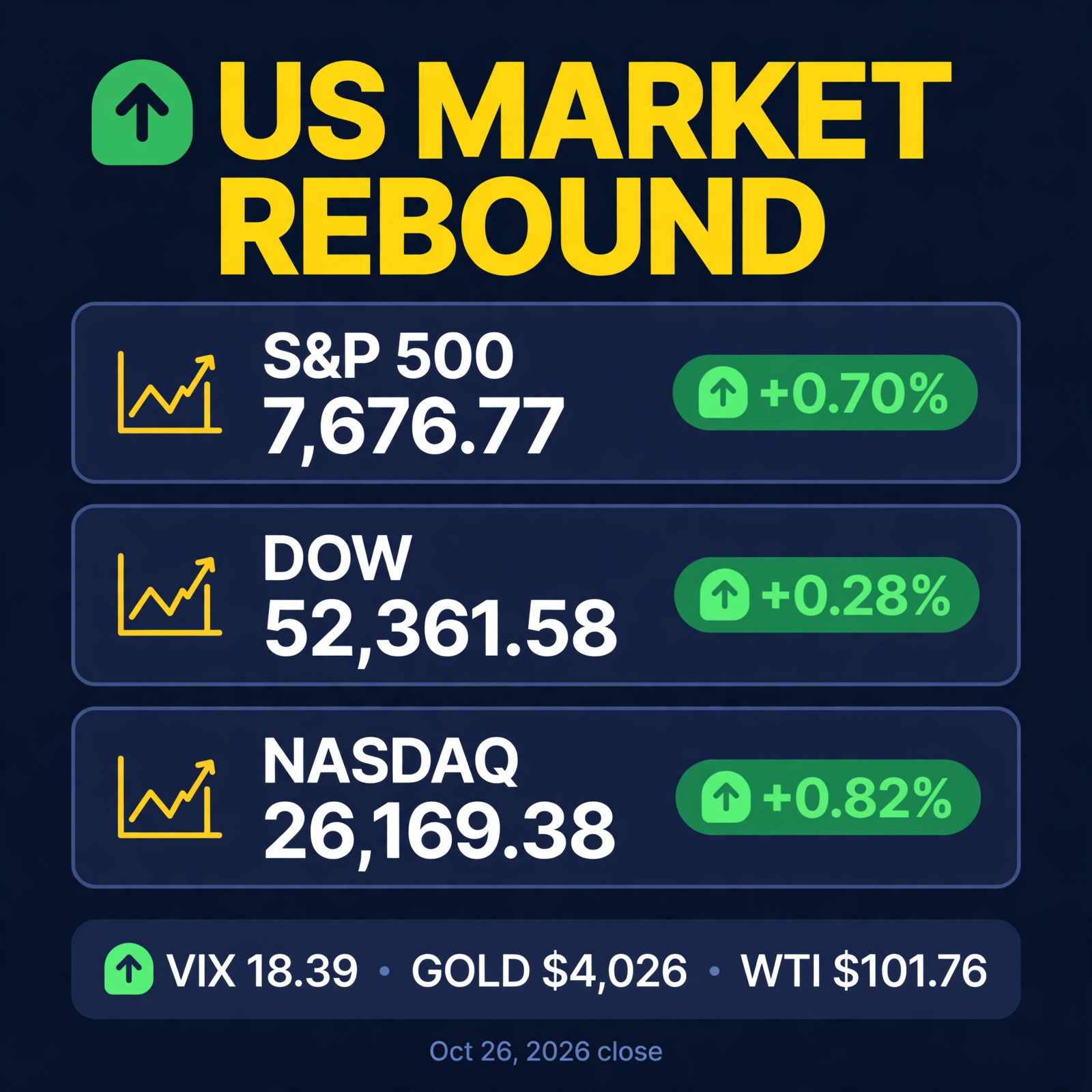
On October 26, the day of the filing, markets rebounded. The Nasdaq rose 0.82% and the S&P 500 rose 0.70%, while the Philadelphia Semiconductor Index gained 2.74%, Nvidia gained 2.39% and Micron gained 2.98%. The read is that the Anthropic IPO filing acted as a trigger for the AI stock rebound. But one day’s rebound does not guarantee a successful listing. How the offering price and share count are set, and what the next quarterly results show, are the real tests.
Four checkpoints follow. First, how the offering price and size are set. Second, whether the Q2 profit continues into Q3 and beyond. Third, whether compute intensity falls further from 48%. Fourth, whether purchase-commitment growth slows and customer concentration eases. Judging this listing on revenue growth alone would mean reading only half of the S-1.
Watch the video

Sources & references
- SEC EDGAR — Anthropic, PBC Form S-1 Registration Statement — Full prospectus text (accession no. 0001628280-26-067168)
- Anthropic — Files S-1 with the SEC for Proposed Initial Public Offering — The company's official filing announcement
- SEC EDGAR — Filing Index for Anthropic's S-1 — Filing date and registration number
Related articles
- US Market Close Analysis S&P 500 Up 0.70% Nasdaq Up 0.82% Anthropic IPO Filing AI Rebound (October 27)
Monday, October 26 US close: S&P 500 7,676.77 (+0.70%), Dow 52,361.58 (+0.28%), Nasdaq 26,169.38 (+0.82%). Anthropic's IPO filing brought AI buyers back and semiconductors led the rebound, while Meta fell 1.88% on a $95 billion equity raise plan.
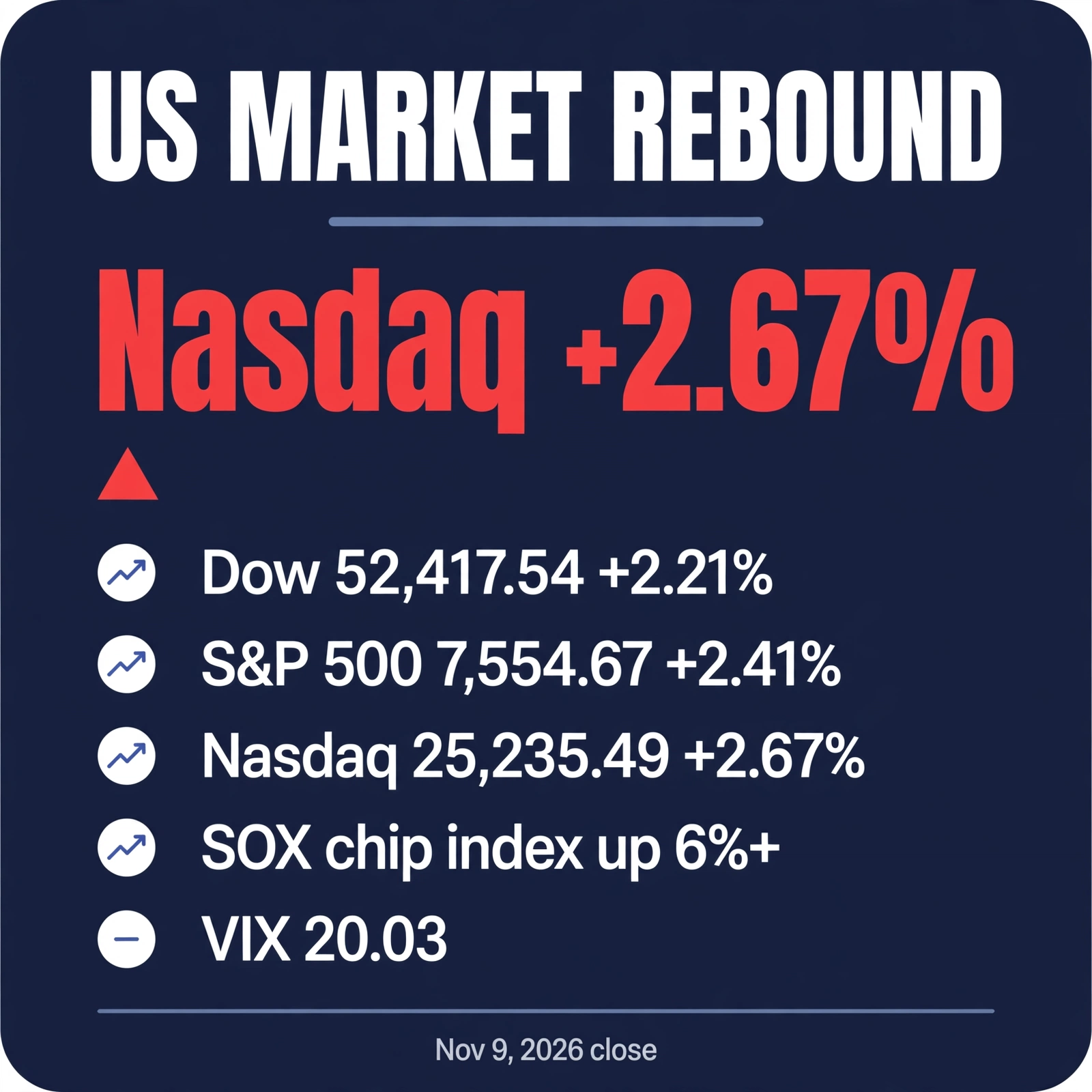
- US Stock Rebound Analysis: Nasdaq +2.67% as Oil Slides and Chips Surge
US stocks jumped more than 2% across all three major indexes on Monday, retracing about half of Thursday's AI rout. Sliding oil eased inflation worries, and chips surged — all except Nvidia. Monday's session, with Tuesday's CPI as the next test.
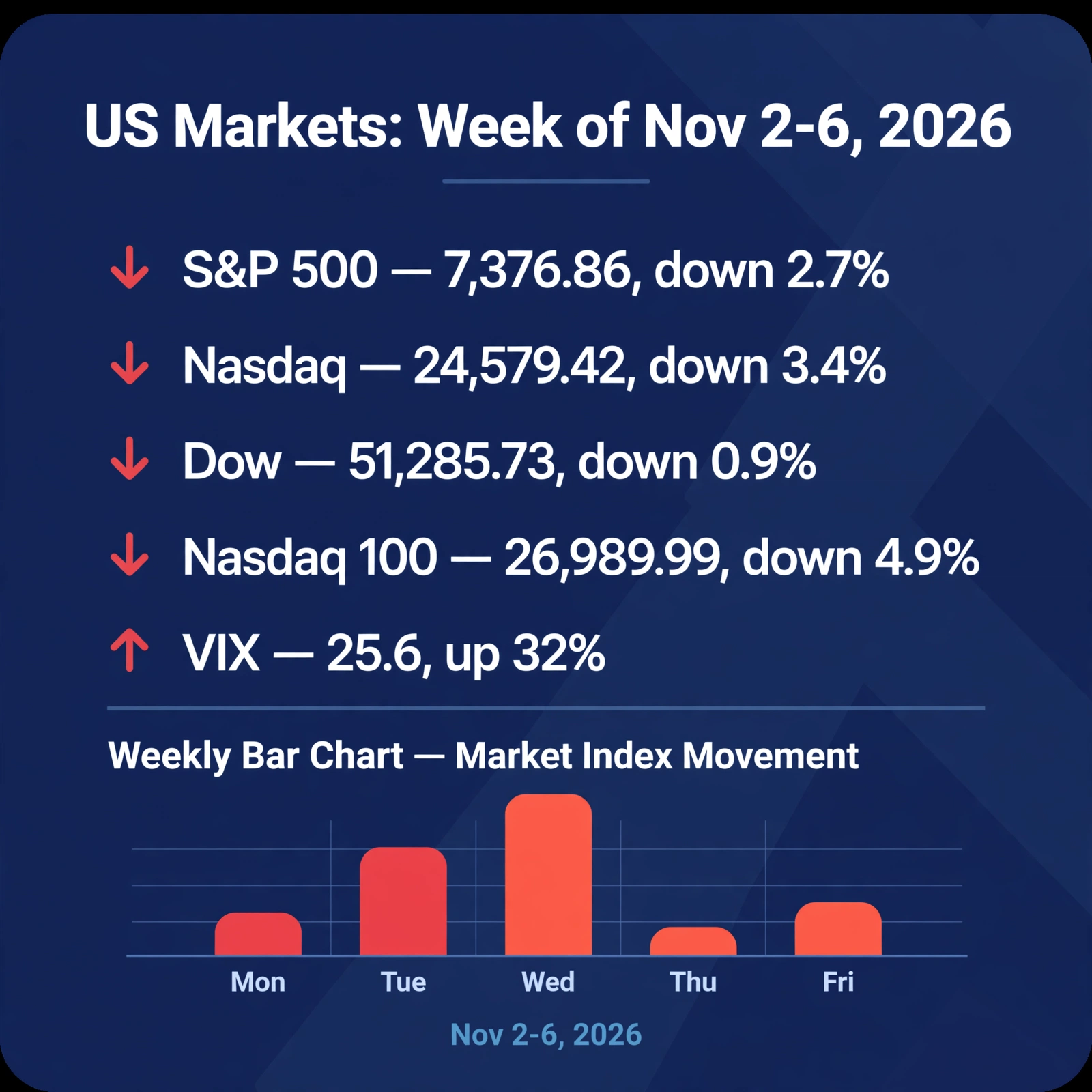
- US Stock Market Weekly Recap Nasdaq Falls 3.4 Percent Thursday AI Rout and Correction Analysis
US stock market weekly recap for November 2–6. The S&P 500 fell 2.7%, the Nasdaq 3.4% and the Dow 0.9%, and Thursday's AI sell-off pushed the Nasdaq into correction territory. Midterms, the jobs report and the Hormuz oil plunge, plus next week's CPI and PPI checkpoints.
5minbrief on YouTube
The briefs also come as videos. Get the daily market wrap on YouTube.
Subscribe on YouTube