 5-minute briefs
US Stocks Dow Drop Oil Surge Analysis Brent $116 10-Year Yield Back at 5% (October 23)
#US stocks#Dow#oil prices#Brent#FOMC#CrowdStrike
Dow drops 652 points while the Nasdaq holds its ground
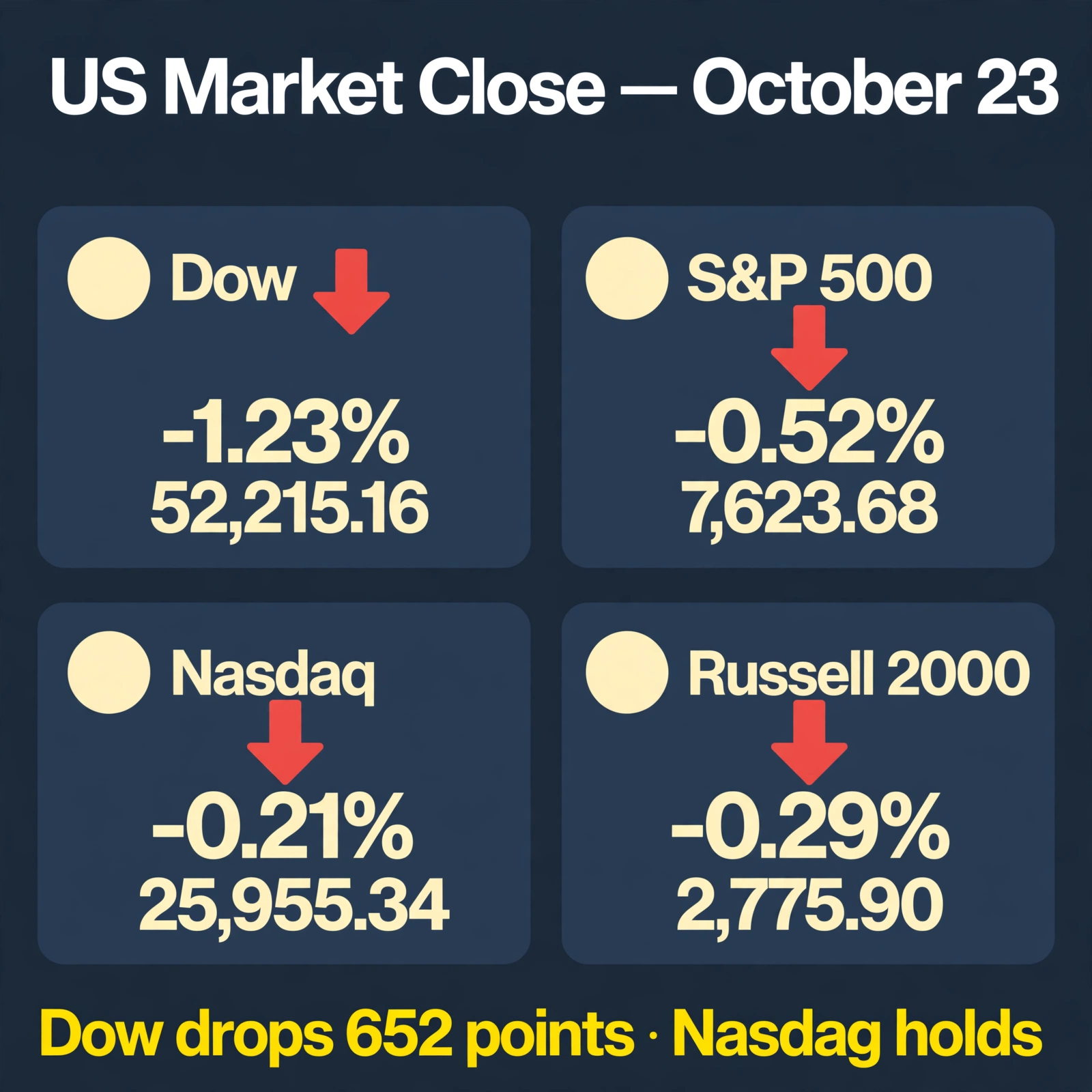
Friday was an “oil and rates” kind of day. The Dow fell 1.23% (−652.82 points) to 52,215.16, the steepest drop of the three majors, while the S&P 500 lost 0.52% to 7,623.68 and the Nasdaq dipped just 0.21% to 25,955.34. The Nasdaq 100 finished essentially flat at 28,957.53 (−1.16 points) and small-cap Russell 2000 slipped 0.29% to 2,775.90.
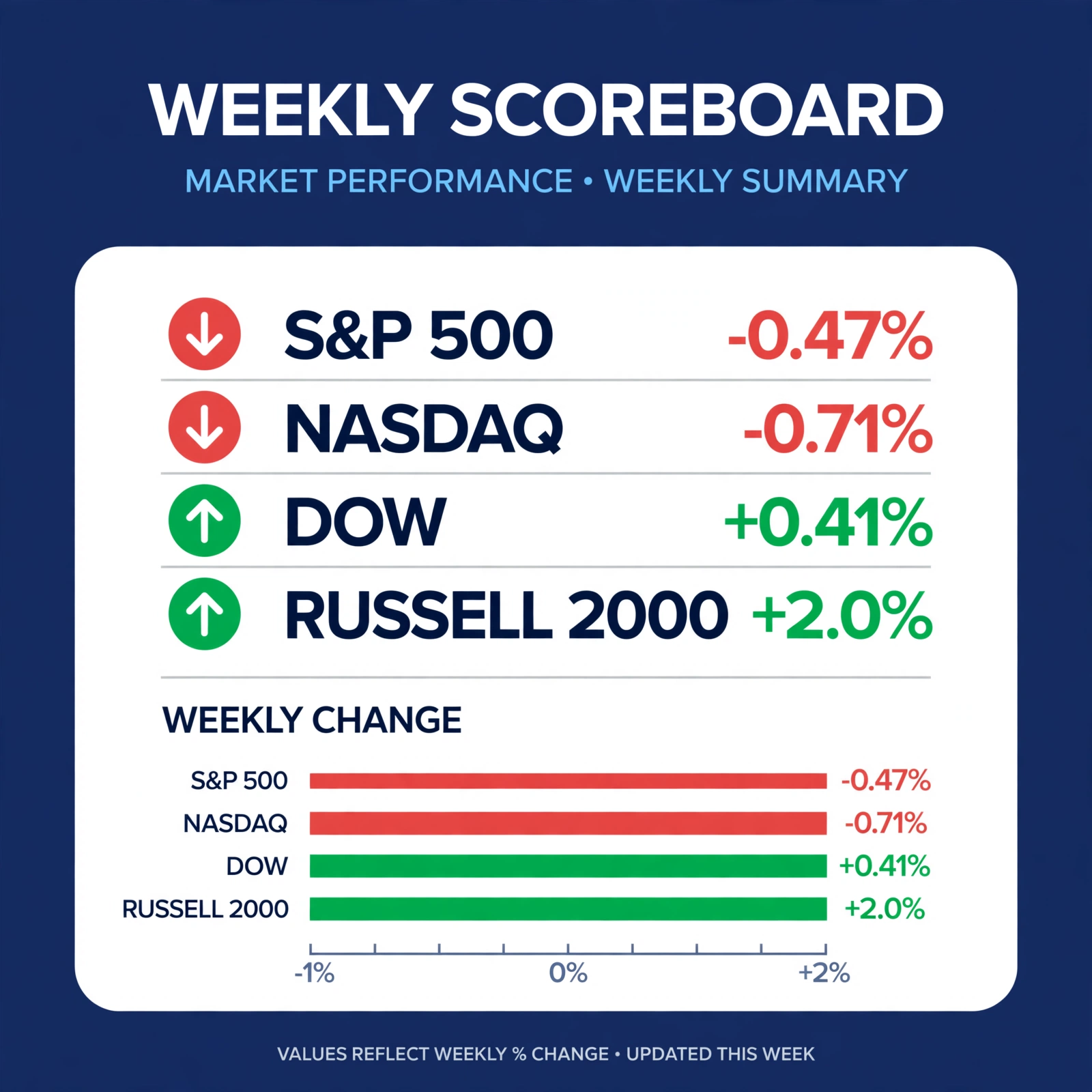
The weekly picture is split. The Dow gained 0.41% and the Russell 2000 rose 2.0% on the week, but the S&P 500 fell 0.47% and the Nasdaq 100 lost 0.79% — Thursday’s AI selloff is still hanging over big tech.
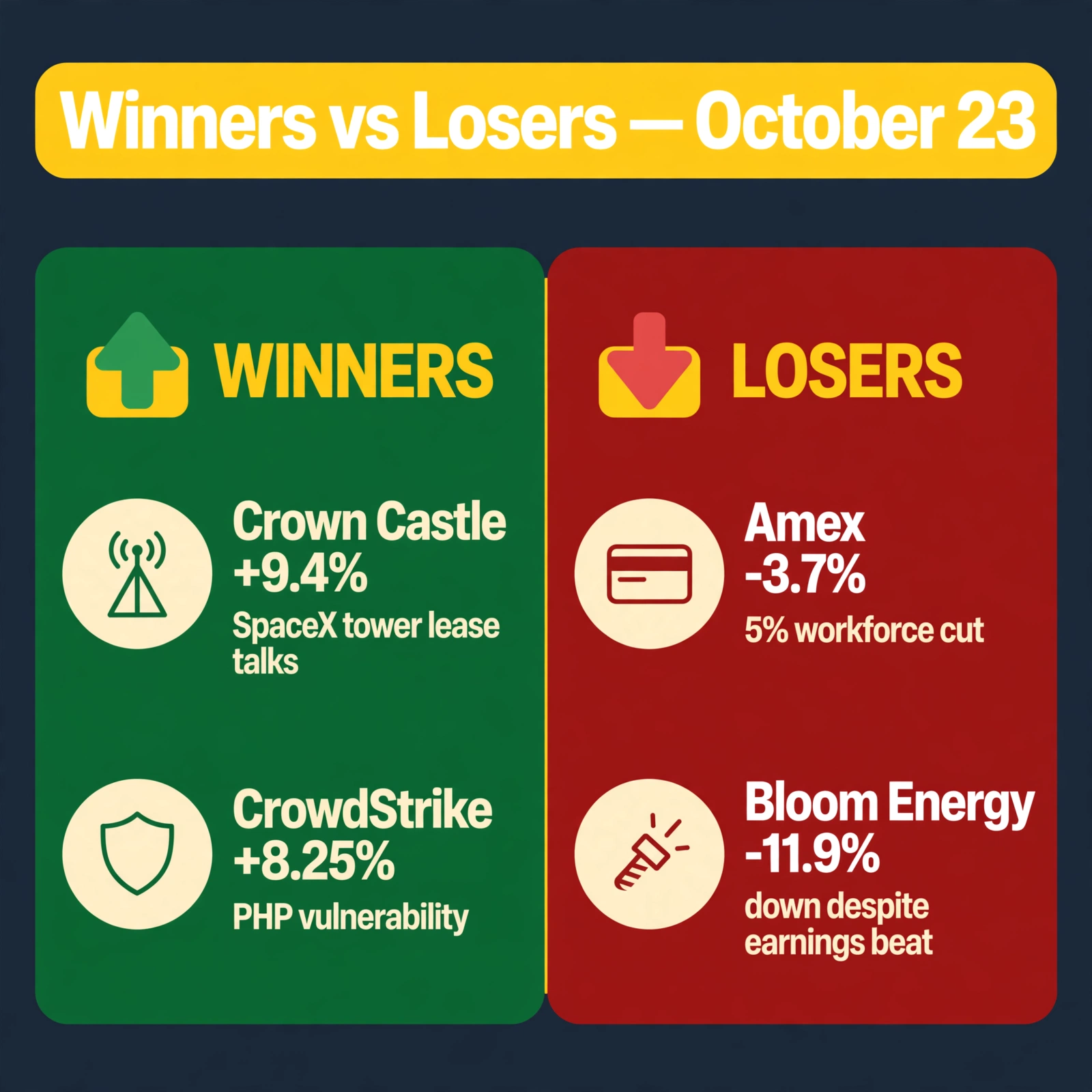
One of the Dow’s biggest drags was American Express (−3.7% to $313.22), which slid after announcing plans to cut about 5% of its workforce. The Dow is price-weighted, so a drop in a $300-plus stock moves the index far more than a cheaper one. The VIX rose 2.21% to 19.45, its second straight daily gain.
Brent at $116, the 10-year at 5% — two warning lights
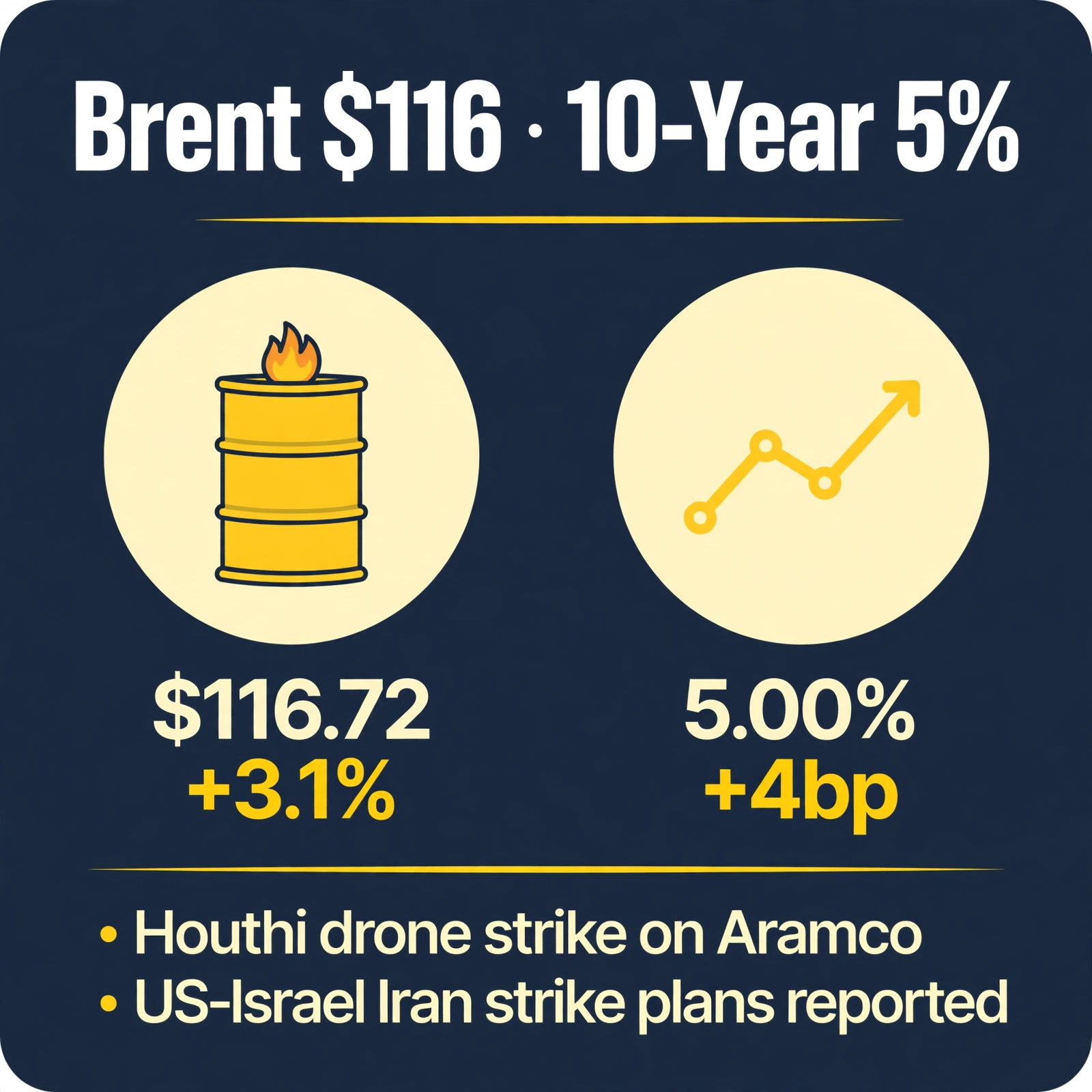
Oil is climbing again. WTI rose 3.8% to $103.27 and Brent gained 3.1% to $116.72 — a third straight gain and a five-month high for Brent.
The trigger is the Middle East. Houthi drones struck Saudi Aramco facilities, and CNBC reported that the US and Israel are discussing plans for renewed strikes on Iran. Iran says it is prepared to strike back, and attacks on vessels in the Strait of Hormuz hit their highest monthly count since March (per UK Maritime Trade Operations). Roughly 20% of global energy flows pass through the strait.
Rates flashed a warning too. Hot PMI data pointing to ≈5% GDP growth revived “higher-for-longer” fears, pushing the 10-year Treasury yield up 4bp to 5.00% — back at the 5% line for the first time in a month. The 2-year sits at 4.69% and the 30-year at 5.33%. Even gold fell 1.3% to $4,007.50, as rising real yields weighed on the safe haven.
- Price-weighted index: an index weighted by share price itself. The Dow is the classic example — a $300 stock moves it 10x more than a $30 stock.
- WTI vs Brent: WTI is the US benchmark, Brent the North Sea one. When Middle East risk flares, Brent reacts more sharply.
- bp (basis point): the unit for rate moves. 1bp = 0.01 percentage point, so +4bp means up 0.04 points.
Winners and losers: Crown Castle and CrowdStrike soar, Amex and Bloom Energy sink
Sectors split to extremes. Energy jumped 2.6%, by far the top S&P 500 sector, with technology (+0.35%) and real estate (+0.23%) also positive. Consumer staples (−1.9%) finished last, followed by communication services (−1.4% to −1.8%), consumer discretionary (−1.4% to −1.7%) and financials (−1.32%). The Philadelphia Semiconductor Index (SOX) rebounded 0.44% to 10,779.46 after Thursday’s 6.7% plunge.
Stock highlights:
Crown Castle (+9.4%) was the S&P 500’s top gainer. Reports that SpaceX is negotiating to lease space on its cell towers — seeking access to at least 80,000 US cell sites for a nationwide wireless network — raised hopes for a deal potentially worth billions. SpaceX’s wireless ambitions read as a windfall for tower REITs.
CrowdStrike (+8.25% to $257.57) surged as a critical PHP vulnerability knocked European government websites offline, spotlighting cybersecurity demand. Palo Alto Networks also climbed for a third straight session ($380.55) after Deutsche Bank named it one of three companies well-positioned for rising AI usage.
Bloom Energy (−11.9%) was the S&P 500’s worst performer despite beating earnings expectations — a classic case of good numbers meeting valuation or guidance worries. Instacart (+9%) jumped on reports it is exploring a sale, with Uber and DoorDash named as preliminary suitors. AbbVie won FDA approval for a subcutaneous induction regimen of its blockbuster drug Skyrizi.
On a weekly basis, the AI-spending debate left clear scars: Meta (−9.4%), Netflix (−6.6%) and Alphabet (−6.0%) were the biggest Big Tech losers, and AI credit-default swaps sit at record highs.
Next Wednesday (the 28th) is the super day
Next week’s spotlight falls on Wednesday, when the FOMC rate decision lands on the same day as Microsoft and Alphabet earnings.
The FOMC meets October 27–28 and announces its decision at 2:00 p.m. ET on the 28th. This is the first meeting since September’s hike to 3.75–4.00% (the first increase since July 2023), and 94 of 100 economists in a Reuters poll expect a hold. But December-hike odds are alive, so one hawkish hint at the 2:30 p.m. press conference could shake markets.
After the bell the same day, Microsoft (fiscal Q1) and Alphabet (Q3) report. Microsoft is expected to post EPS of $4.72 (+14.3% YoY) on revenue of $90.1 billion (+16.8%), with capex forecast at $46.6 billion — 2.4x the $19.4 billion a year ago. With the AI-spending debate raging, the cloud and capex numbers will read like a verdict. Thursday (the 29th) brings the Q3 GDP advance estimate and September PCE inflation (8:30 a.m. ET) plus Amazon earnings. About one-third of S&P 500 companies report next week.
Earlier in the week: the Chicago Fed National Activity Index (September, prior −0.04) and Dallas Fed manufacturing index (October, prior 9.8) on Monday the 26th, then consumer confidence and earnings from Visa, Coca-Cola, Boeing and UPS on Tuesday the 27th.
Sources & references
- Reuters (via The Circuitry) — Dow falls 653 points as Brent crude settles at its highest since April — Oct 23 closing indexes, oil settlement, and American Express slide
- Reuters closing report (via The Evergreen Edit) — October 23 Market Review: Stocks Fell as Oil Rose — Reuters Friday closing figures and weekly index moves
Related articles
- US Stock Market Weekly Recap S&P 500 Down Dow Up AI Spending Selloff Oil Surge Analysis
US stock market weekly recap for October 19–23: S&P 500 -0.47%, Nasdaq -0.71%, Dow +0.41%, Russell 2000 +2.0%. A Thursday AI spending selloff and an oil surge split the week. Next: FOMC, Microsoft, Alphabet, GDP, PCE.
- US Market Close Analysis FOMC Holds Rates at 3.75–4.00% in 10-2 Vote as Microsoft and Alphabet Earnings Split (October 29)
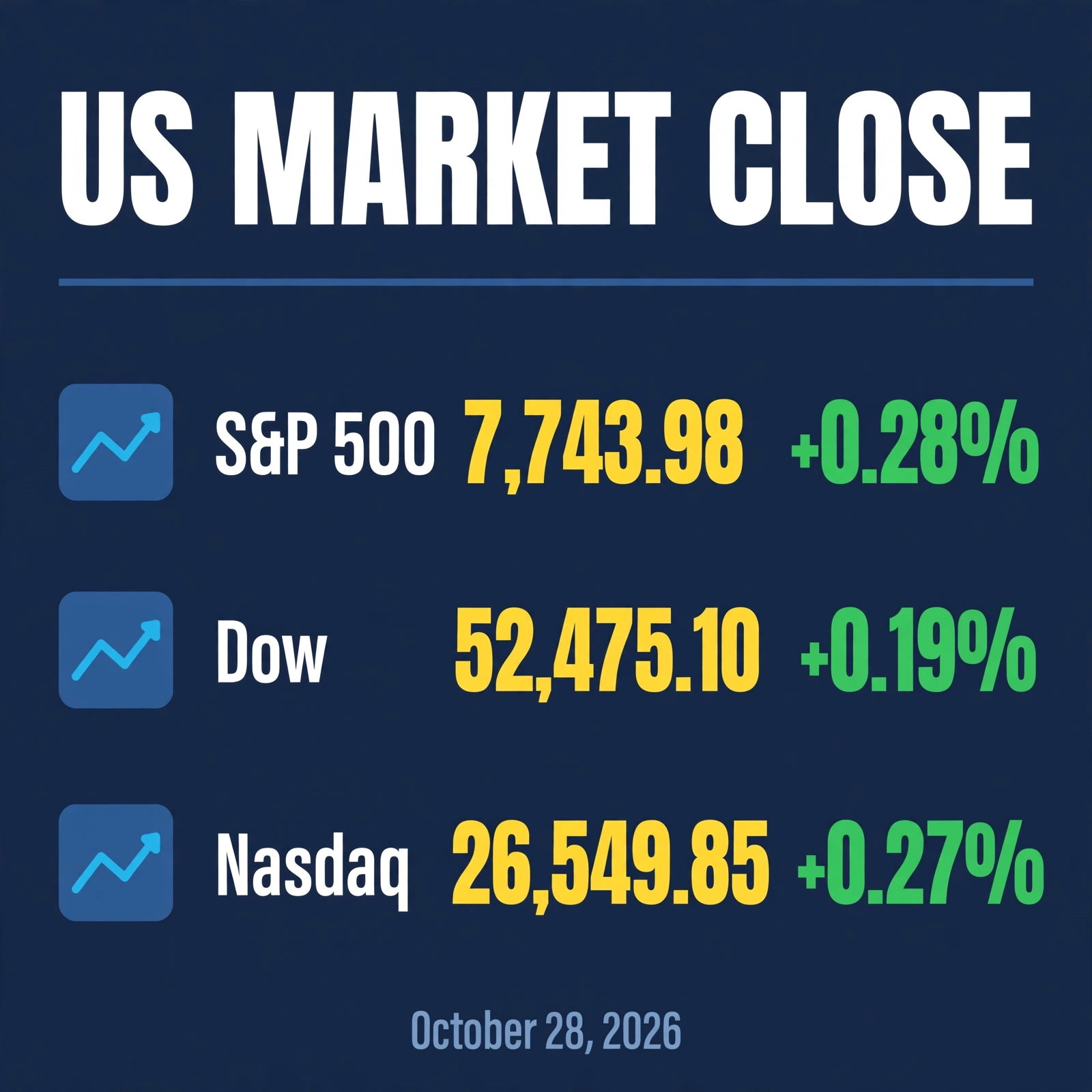
Wednesday, October 28 US close: S&P 500 7,743.98 (+0.28%), Dow 52,475.10 (+0.19%), Nasdaq 26,549.85 (+0.27%). The Fed held rates at 3.75–4.00%, and after the close Microsoft beat estimates while Alphabet's net income fell sharply.
- US Market Close Analysis Nasdaq Up 1.18% Semiconductors Up 3.60% Consumer Confidence Rebound Before FOMC (October 28)
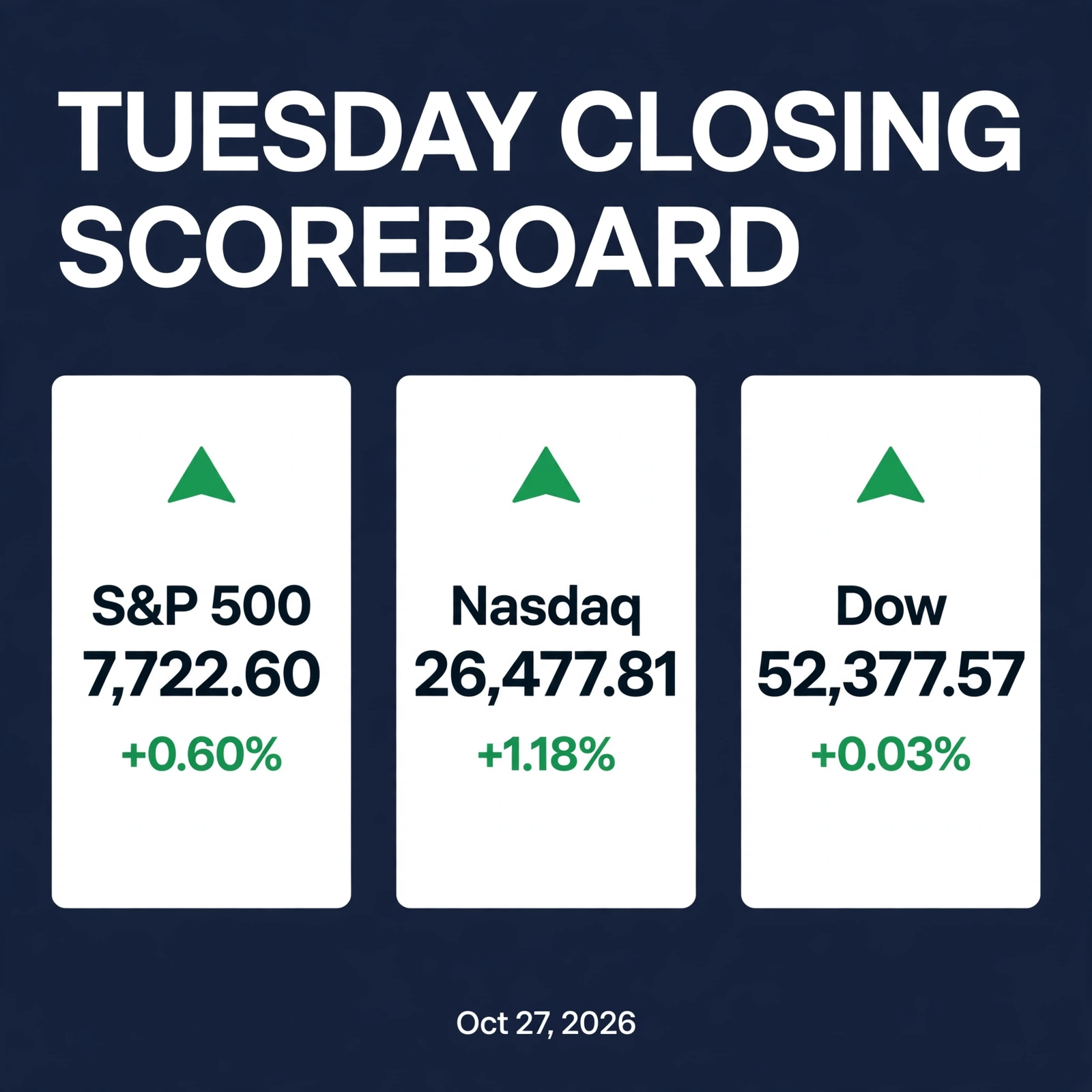
Tuesday, October 27 US close: S&P 500 7,722.60 (+0.60%), Dow 52,377.57 (+0.03%), Nasdaq 26,477.81 (+1.18%). Semiconductors rose 3.60% to lead the rally and consumer confidence rebounded to 91.7, while Boeing plunged 10.69% on a Q3 earnings miss.
5minbrief on YouTube
The briefs also come as videos. Get the daily market wrap on YouTube.
Subscribe on YouTube