 5-minute briefs
US Market Close Analysis Nasdaq Up 1.18% Semiconductors Up 3.60% Consumer Confidence Rebound Before FOMC (October 28)
#US stocks#S&P 500#Nasdaq#semiconductors#Broadcom#FOMC#oil prices#gold
Closing scoreboard: Nasdaq strong, Dow flat
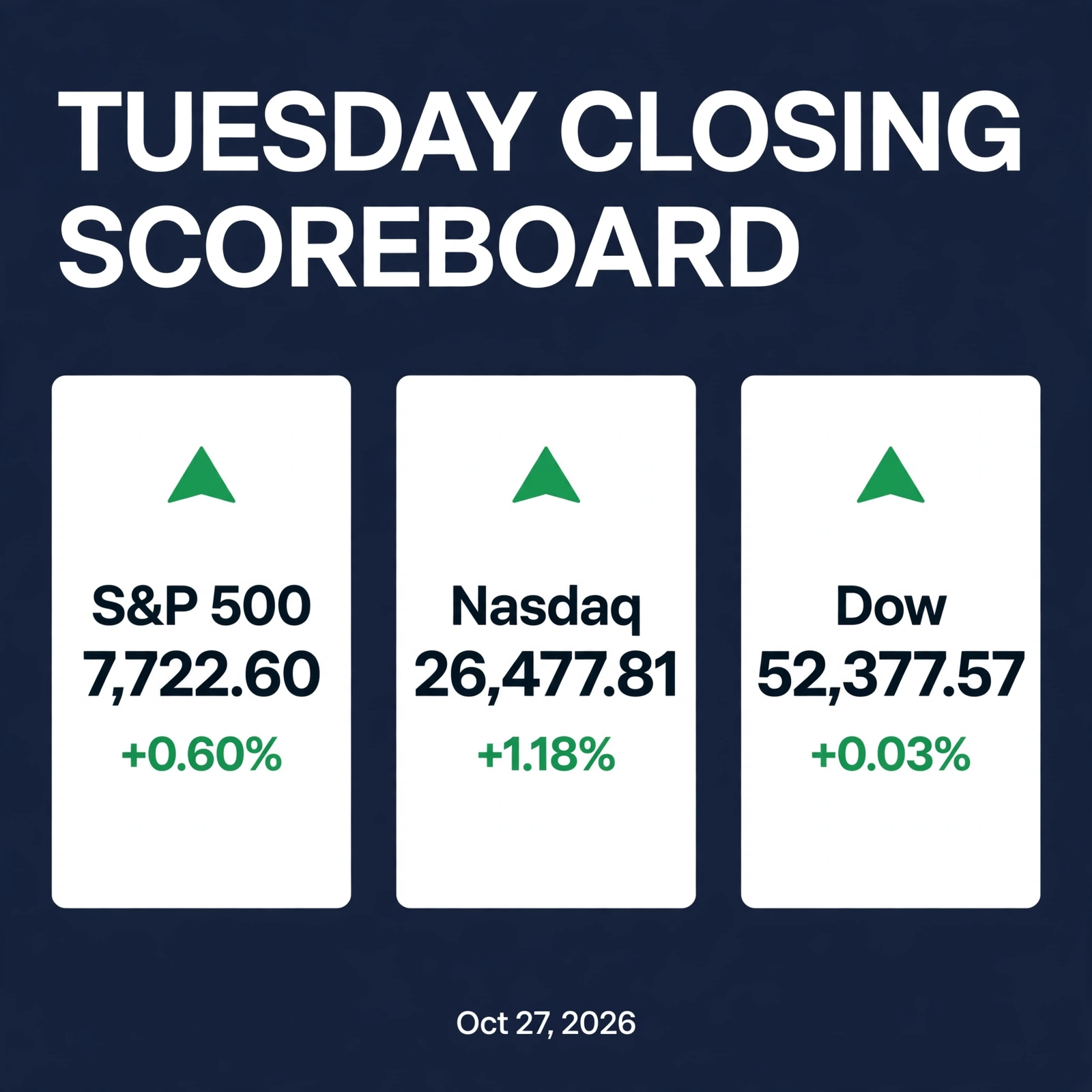
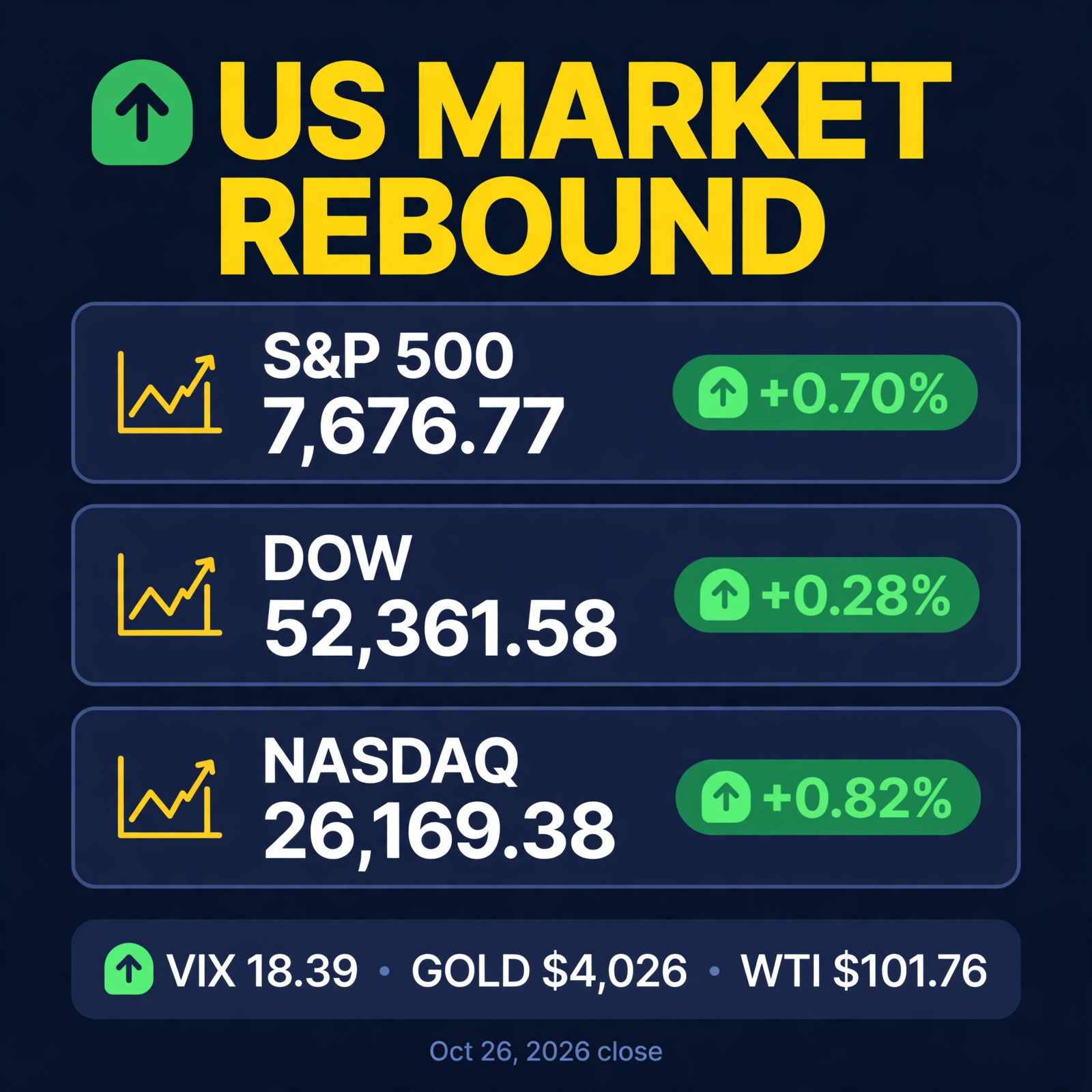
The gap between indexes stands out against Monday’s close. Monday ended with the S&P 500 at 7,676.77 (+0.70%), the Dow at 52,361.58 (+0.28%) and the Nasdaq at 26,169.38 (+0.82%). Tuesday added 45.83 points on the S&P 500 to 7,722.60, 15.99 points on the Dow to 52,377.57 and 308.43 points on the Nasdaq to 26,477.81. The small-cap Russell 2000 rose 1.16% to 2,818.87 and the Nasdaq 100 rose about 1.29%.
Sentiment gauges cooled too. The VIX fear gauge fell 4.73% to 17.52 (from 18.39 on Monday). Gold rose 0.87% to $4,073.40 and the 10-year Treasury yield held just under 5.00%, at about 4.99%. Oil fell: WTI dropped 1.48% to $100.25, back toward the $100 line, as hopes of easing Middle East tensions took some risk premium out of crude. The dollar index rose to a one-and-a-half-week high.
Do not read this as a full-market rebound yet. The equal-weight S&P 500 rose only 0.11%, far weaker than the cap-weighted index (about 0.56%), and the energy sector fell 2.05%. This was a rally carried by technology and semiconductors, not by the whole market. Wednesday’s FOMC decision will judge what kind of rally it is.
The engine: semiconductors up 3.60% and $63 billion of compute finance
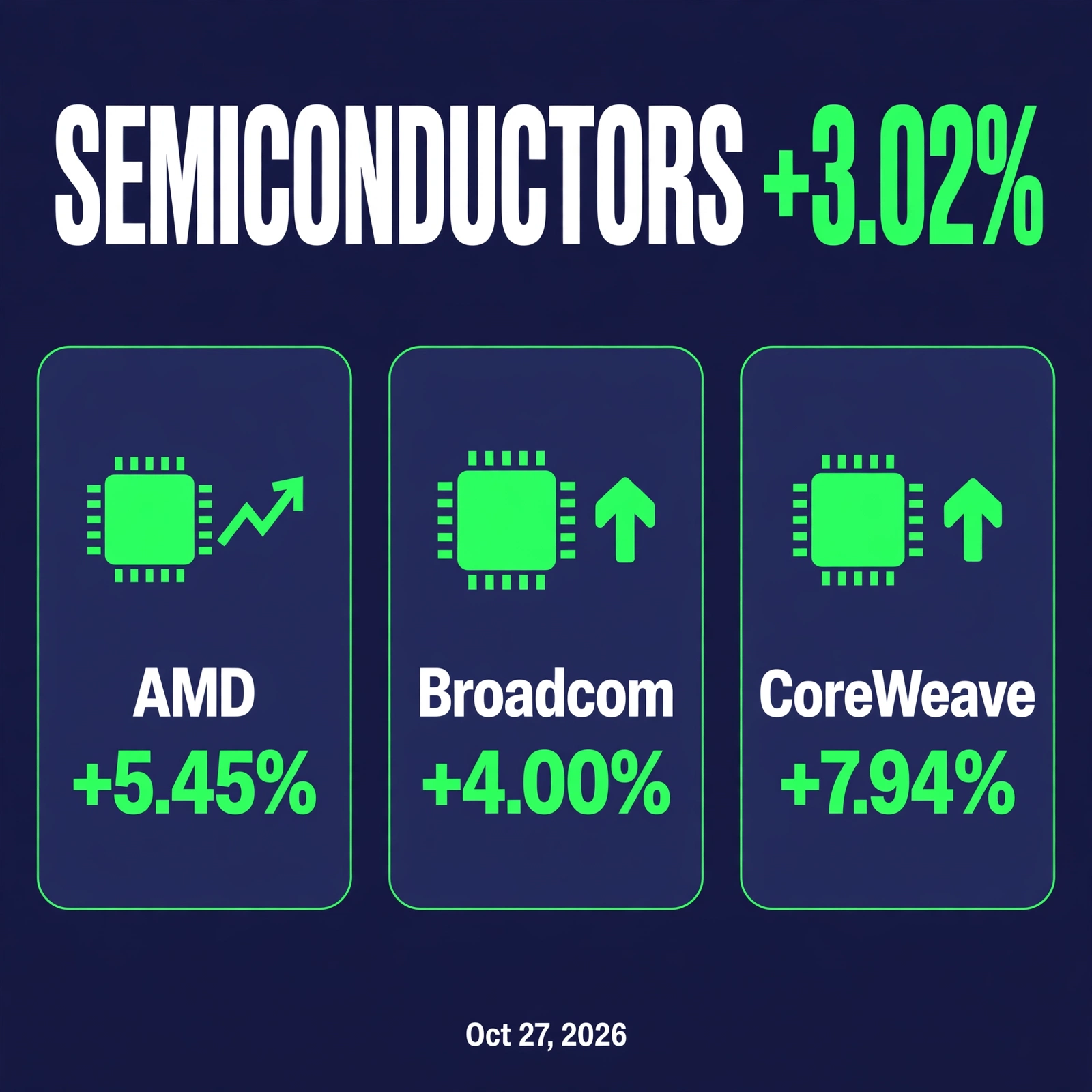
Semiconductors were Tuesday’s engine. The Philadelphia Semiconductor Index rose 3.60% and technology (XLK) gained 1.70%. Among individual names, AMD rose 5.45%, Broadcom rose 4.00%, CoreWeave rose 7.94% and Nebius rose 11.22%. Monday’s Anthropic IPO filing said “AI demand is real”; Tuesday added the money structure behind it.
That structure is $63 billion of Broadcom compute financing. Bank of America, Blackstone, Citi and Morgan Stanley announced the deal on October 26: a newly formed special purpose vehicle will buy Broadcom XPU accelerators and networking equipment and lease them to Anthropic, with deliveries starting in 2027. In plain terms, a financial vehicle buys the chips and rents them out, at a $63 billion scale. Today’s derivative post takes this structure apart in detail.
Big tech split. Tesla rose 4.04% to $407.46 for a second straight day, with Amazon up 1.63%, Alphabet up 1.19%, Apple up 0.92% and Nvidia up 0.89%. By contrast, Meta fell 1.66% for a second straight day and Microsoft slipped 0.19% ahead of its Wednesday report. Nvidia said it will invest $3 billion in Meta’s equity offering.
Consumers rebound, housing splits: two messages from the data
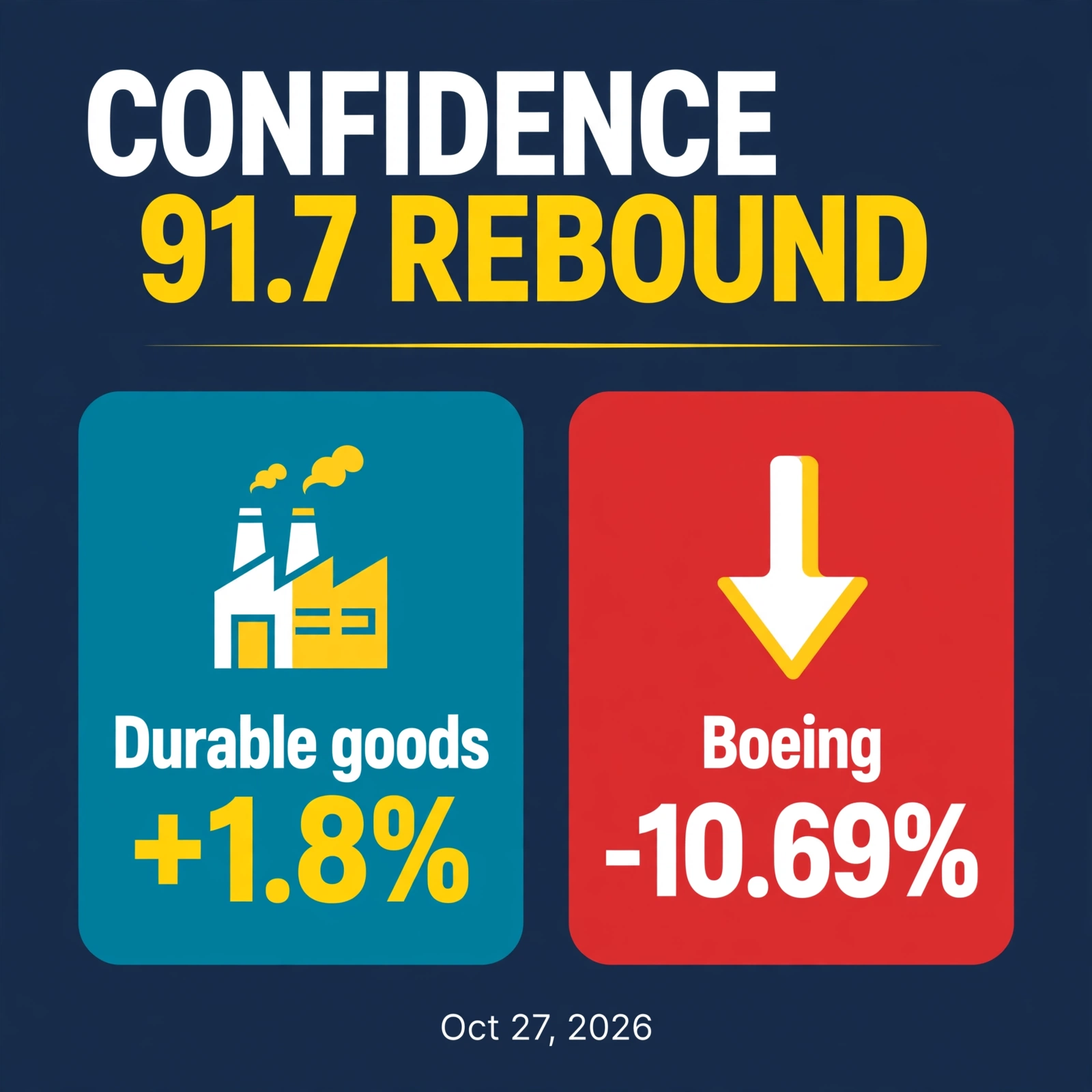
The headline data point was consumer confidence. October consumer confidence rose to 91.7, up 7.5 points from September’s revised 84.2 and well above forecasts of about 81. The present situation index rose 8.6 points to 120.4 and the expectations index rose 6.9 points to 72.6, with steadier gasoline prices cited as a backdrop. But the details are cooler: plans to spend on services and durable goods over the next six months fell, and one-year inflation expectations stayed elevated at 5.8%. The accurate read is “households feel better, but wallets stay cautious.”
Manufacturing data supported the mood. September durable goods orders rose 1.8% to $345.4 billion; excluding transportation they rose 0.5% and core capital goods orders rose 0.5% and core capital goods shipments rose 1.2%. Civilian aircraft orders jumped 28.4%, lifting transportation equipment by 4.6%. Housing split. September new home sales fell 0.6% to a 676,000 annual pace, though that beat forecasts of roughly 615,000–651,000, and the 476,000 homes for sale equal an 8.4-month supply. August Case-Shiller 20-city home prices rose about 0.27% on the month and 2.65% on the year, below inflation running above 3%.
Split earnings: Boeing plunges while UPS, Coca-Cola and SoFi rise
Boeing was Tuesday’s biggest loser. Boeing plunged 10.69% to $168.18. Third-quarter revenue rose 4% to $24.19 billion, but the adjusted loss per share of $0.34 was wider than forecasts of $0.21–$0.24. Commercial airplanes revenue fell 3% to $10.72 billion, with an operating loss of $697 million and a negative 6.5% margin, blamed on a weaker delivery mix, higher projected costs for future production-rate changes and supply-chain costs. News that the 2026 target of about 500 737 deliveries will be missed added pressure. The brighter side: defense and space revenue rose 15% to $7.94 billion, services revenue rose 4% to $5.57 billion, operating cash flow was $1.5 billion, free cash flow was $464 million and the backlog hit a record $745 billion. The summary is “recovery in progress, commercial profitability not yet.”
Earnings elsewhere were better. UPS rose 5.79% to $106.13 on third-quarter revenue of $22.9 billion (+6.7%) and adjusted EPS of $1.69, plus a raised outlook. Coca-Cola grew revenue 7% to $13.4 billion and adjusted EPS 11% to $0.91 and raised guidance, yet its shares fell 1.64% — the “good results, falling stock” pattern again. SoFi surged 13.38% on record quarterly results and JetBlue jumped 18.78%. After the close, Visa, Robinhood and Seagate reported.
- Philadelphia Semiconductor Index (SOX): an index of 30 leading US semiconductor stocks, used as the sector's thermometer.
- Special purpose vehicle (SPV): a company created for one deal only, used to separate an asset purchase and lease from the buyer's balance sheet.
- Consumer confidence index: the Conference Board's monthly survey of US households, covering current conditions and six-month expectations.
- Durable goods orders: new orders for products built to last three years or more, such as cars, aircraft and machinery — an early signal for business investment.
Today and this week: Wednesday is superday
Wednesday, October 28, is superday. The FOMC announces its rate decision at 2 p.m. Eastern Time, followed by a press conference 30 minutes later. This is the first meeting since September’s hike took the benchmark to 3.75–4.00%; a hold is the leading expectation this week, but one hint about December could move markets. After the close, Microsoft and Alphabet report. Thursday, October 29, brings advance Q3 GDP (forecast: 3.0% annualized) and September PCE inflation (core forecast: 3.1% year over year), plus Amazon and Apple earnings. Friday, October 30, brings the Employment Cost Index and the Bank of Japan decision, plus ExxonMobil and Chevron earnings.
Three questions to check today. First, does the semiconductor rally hold into the FOMC? Second, what hint does the FOMC give about December? Third, do Microsoft and Alphabet break the “beat but fall” pattern? If two or more answers are positive, Tuesday’s rally may be the start of a trend; if not, it may be recorded as a one-day bounce ahead of the Fed.
Sources & references
- Longbridge (Hong Kong Economic Times wire) — US stocks close slightly higher; Boeing tumbles, Broadcom rallies — Oct 27 closing indexes and Boeing's drop
- The Conference Board (PR Newswire) — US Consumer Confidence Increased in October — Official consumer confidence release (primary source)
- Bank of America, Blackstone, Citi and Morgan Stanley (PR Newswire) — Announce Landmark $63 Billion Financing Structure in Partnership with Broadcom — Joint $63B compute financing announcement (primary source)
- The Motley Fool — Boeing's backlog grew to $745 billion — Boeing Q3 results and record backlog
Related articles
- US Market Close Analysis FOMC Holds Rates at 3.75–4.00% in 10-2 Vote as Microsoft and Alphabet Earnings Split (October 29)
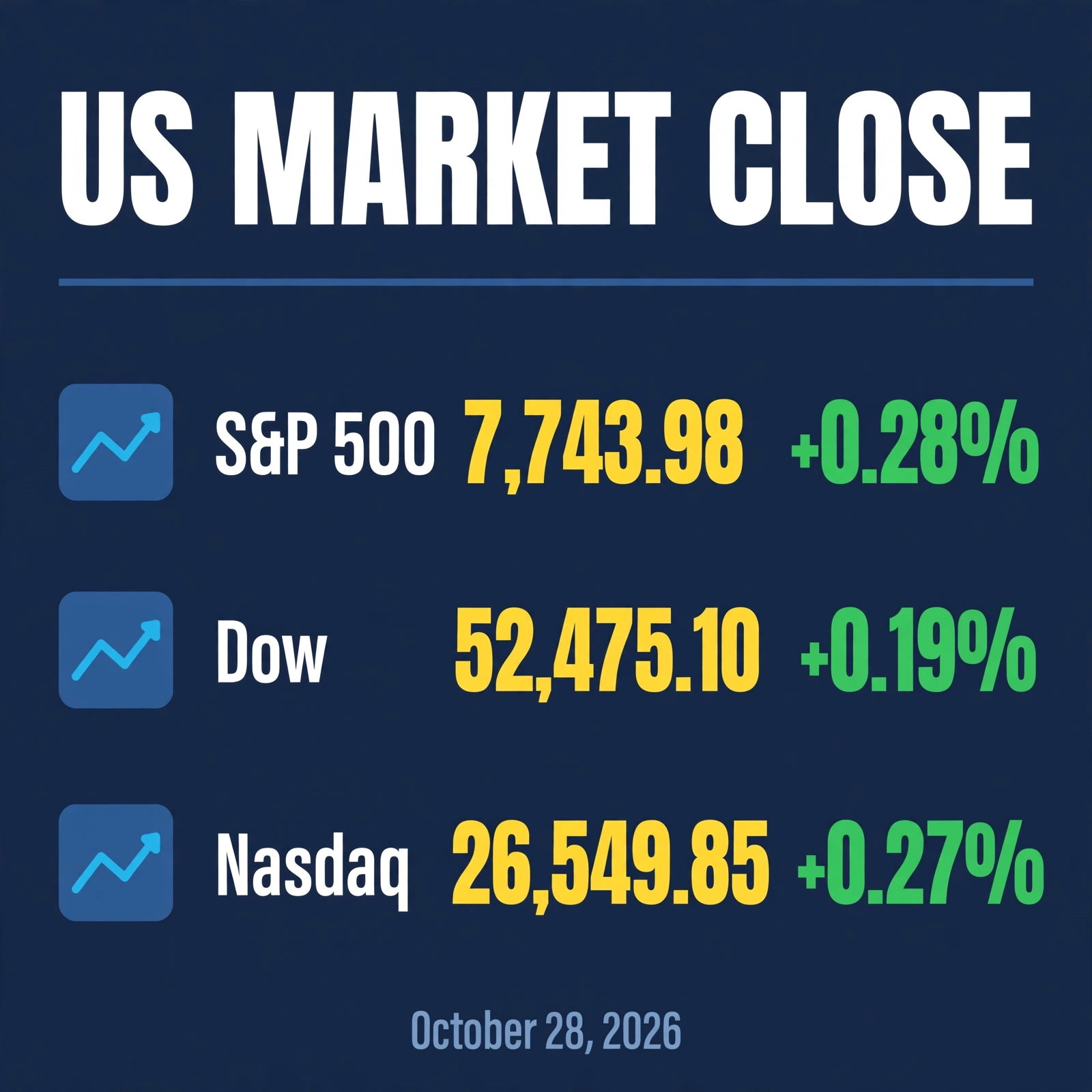
Wednesday, October 28 US close: S&P 500 7,743.98 (+0.28%), Dow 52,475.10 (+0.19%), Nasdaq 26,549.85 (+0.27%). The Fed held rates at 3.75–4.00%, and after the close Microsoft beat estimates while Alphabet's net income fell sharply.
- US Market Close Analysis S&P 500 Up 0.70% Nasdaq Up 0.82% Anthropic IPO Filing AI Rebound (October 27)
Monday, October 26 US close: S&P 500 7,676.77 (+0.70%), Dow 52,361.58 (+0.28%), Nasdaq 26,169.38 (+0.82%). Anthropic's IPO filing brought AI buyers back and semiconductors led the rebound, while Meta fell 1.88% on a $95 billion equity raise plan.
- US Stock Market Weekly Recap S&P 500 Down Dow Up AI Spending Selloff Oil Surge Analysis
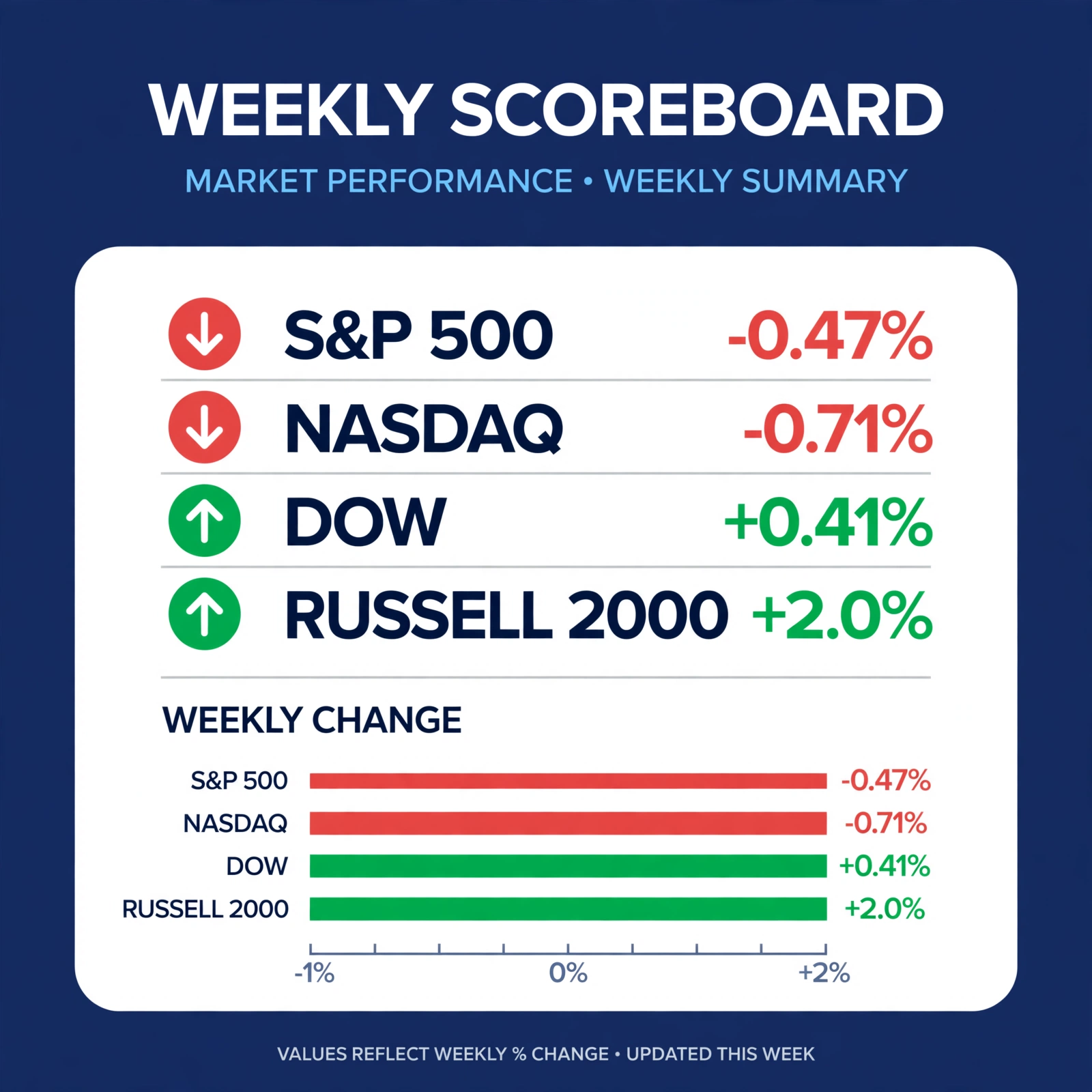
US stock market weekly recap for October 19–23: S&P 500 -0.47%, Nasdaq -0.71%, Dow +0.41%, Russell 2000 +2.0%. A Thursday AI spending selloff and an oil surge split the week. Next: FOMC, Microsoft, Alphabet, GDP, PCE.
5minbrief on YouTube
The briefs also come as videos. Get the daily market wrap on YouTube.
Subscribe on YouTube