 5-minute briefs
Semiconductor Exports $27.5B, 44.7% of Korea's Total Exports — Structure and Earnings Analysis for Samsung Electronics and SK hynix
The record, in numbers
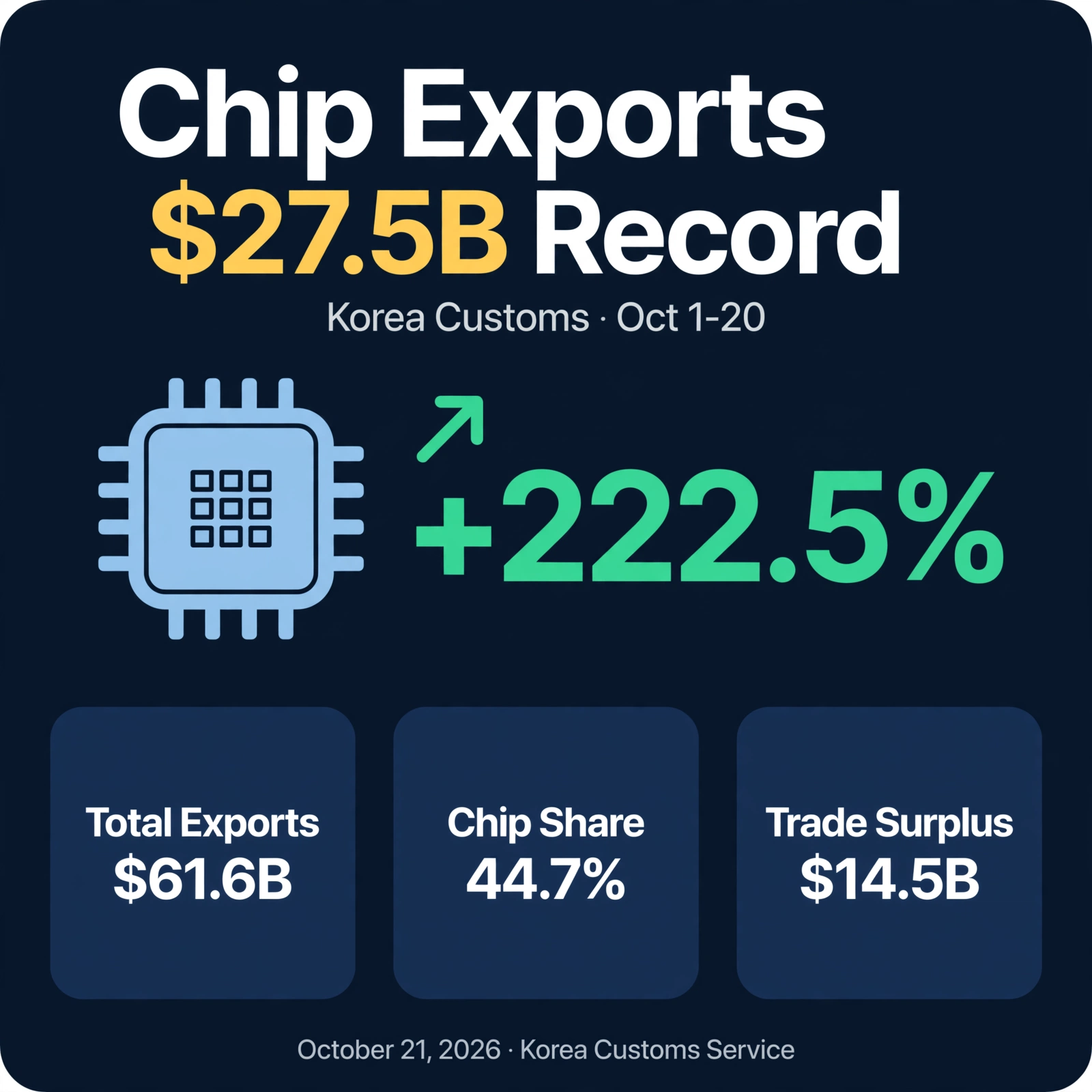
The Korea Customs Service released its preliminary October 1–20 trade data on October 21. Total exports hit $61.6 billion (+105.4%), a record for the period — and nearly half of it was one product category.
| Item | Value | Year-on-year |
|---|---|---|
| Total exports | $61.6B | +105.4% |
| Semiconductor exports | $27.5B | +222.5% |
| Chip share of exports | 44.7% | vs 28.4% a year ago |
| Daily average exports | $4.74B | +65.9% |
| Trade balance | +$14.5B | surplus |
The strength was broad underneath the headline: computer peripherals jumped +424.0% on AI server demand, petroleum products rose 68.3% and cars 40.9%. By destination, exports to China rose 154.4% and to the US 154.9% — this was not a single-market story.
Why this is an earnings story, not just a trade story
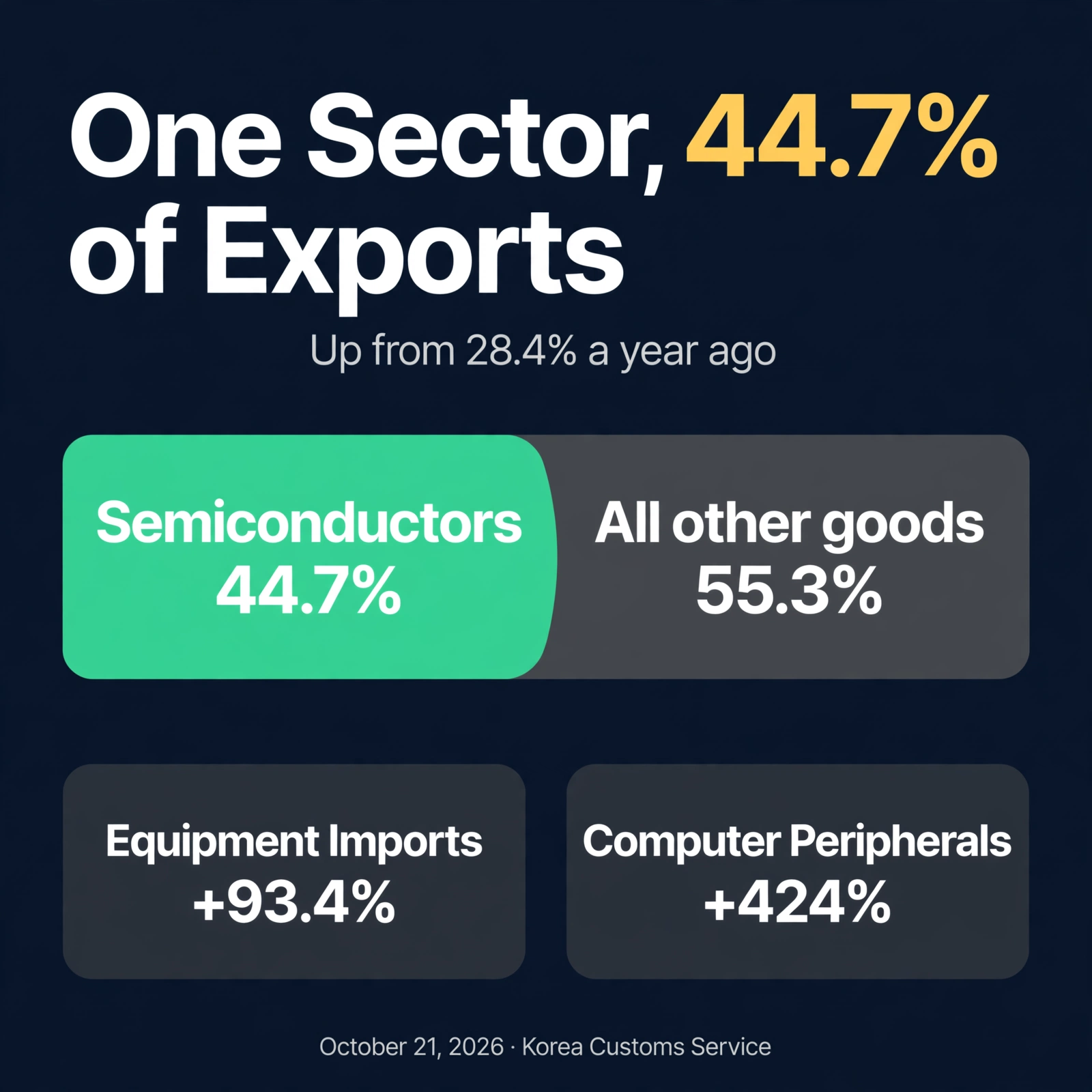
Export value is price × volume, and both legs are running. TrendForce estimated Q3 DRAM contract prices rose 13–18% quarter-on-quarter and NAND 10–15%, while the product mix keeps shifting toward high-priced HBM for AI servers. Capital spending confirms the cycle: imports of semiconductor manufacturing equipment jumped +93.4% ($1.85 billion) in the same 20 days — Korean chipmakers are building capacity as if the demand lasts.
Two of the three numbers that matter are already in:
- Samsung Electronics pre-announced Q3 on October 8: revenue of ₩195 trillion and operating profit of ₩107.4 trillion (+782.5% year-on-year), a 55.1% operating margin. The October 29 release adds the segment detail — the size of the chip (DS) division’s profit is the number to check.
- SK hynix reports October 28. Consensus (FnGuide) sits at ₩98.2 trillion in revenue and ₩77.0 trillion in operating profit, above Q2’s record ₩60.5 trillion (a 76.3% margin). Watch the HBM commentary — and the governance angle: SK hynix is expected to unveil additional shareholder-return plans alongside results, following its August announcement of a ₩40 trillion buyback-and-cancellation program.
For foreign holders, this is also where the won comes from. A $14.5 billion surplus in 20 days means exporters selling dollars, which is a big part of why USD/KRW closed at 1,325.2 — a fourth straight year-low. Strong exports are simultaneously propping up Korean equities and the currency your returns are denominated in.
The concentration question to price in
The flip side of 44.7%: when one sector is half the export engine, a memory downcycle hits exports, the trade balance, the won and index earnings at the same time. The same leverage that makes Korean equities explosive on the way up applies on the way down — and the full-month October customs print in early November is the first test of whether the 44.7% structure holds.
Three checkpoints:
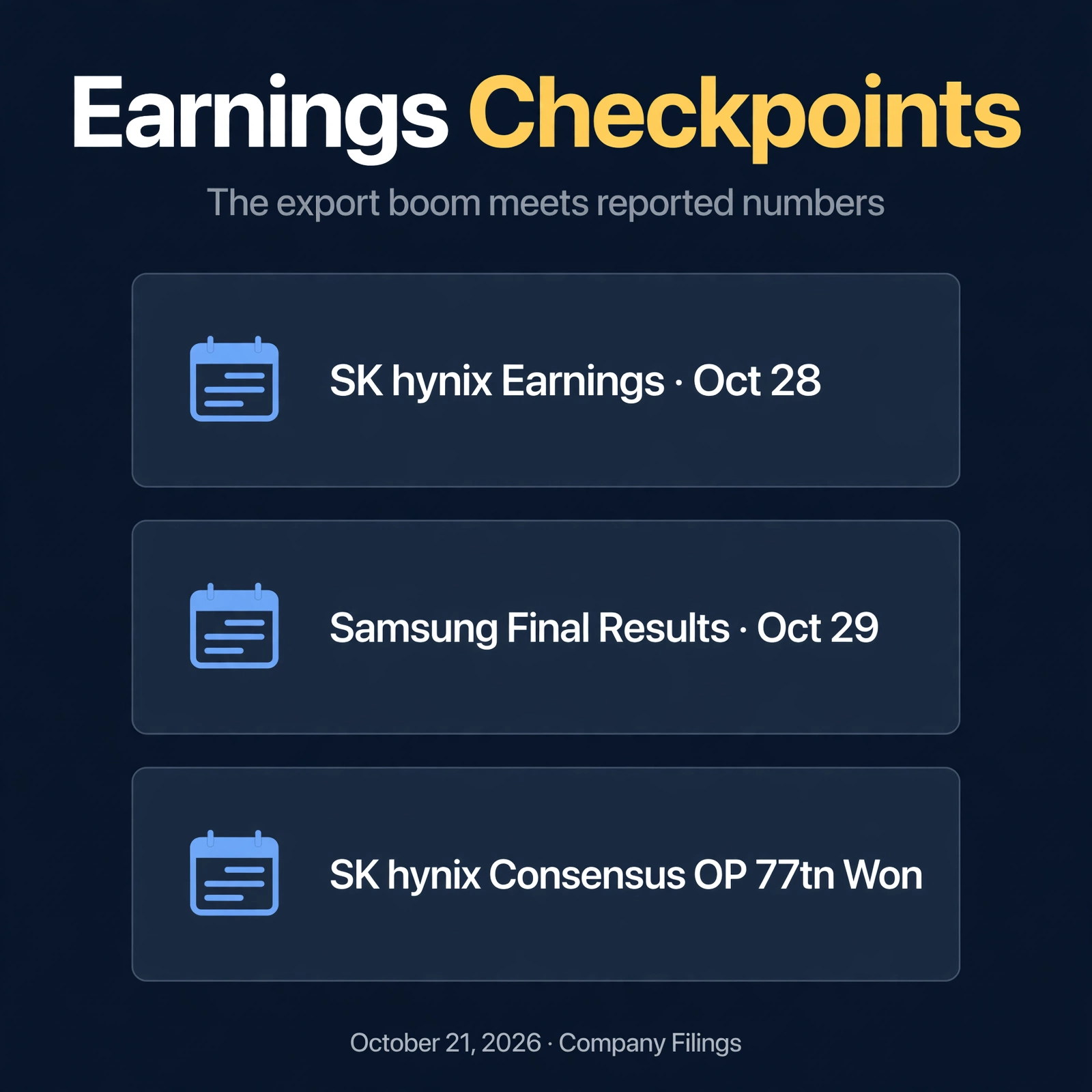
- October 28 — SK hynix Q3: operating profit versus the ₩77.0 trillion consensus, HBM guidance, and the size of the new shareholder-return package.
- October 29 — Samsung Electronics final Q3: DS division profit and HBM commentary behind the pre-announced ₩107.4 trillion.
- Early November — full-month October customs data: whether chips hold near 44.7% of exports over a complete month.
Not investment advice. Figures verified against the Korea Customs Service, Korea Exchange, company disclosures and FnGuide consensus as of October 21, 2026.
Watch the video

Sources & references
- KBS News — Exports hit record $61.6B in Oct 1–20; semiconductors up 222.5% — Report of the Korea Customs Service preliminary trade release
- Samsung Newsroom — Samsung Electronics Announces Q3 2026 Preliminary Earnings — Q3 preliminary earnings release (Oct 8)
- SK hynix Newsroom — SK hynix Announces Q2 2026 Financial Results — Q2 earnings release
Related articles
- KOSPI 6.63% surge back above 6000 SK hynix record profit foreign buying
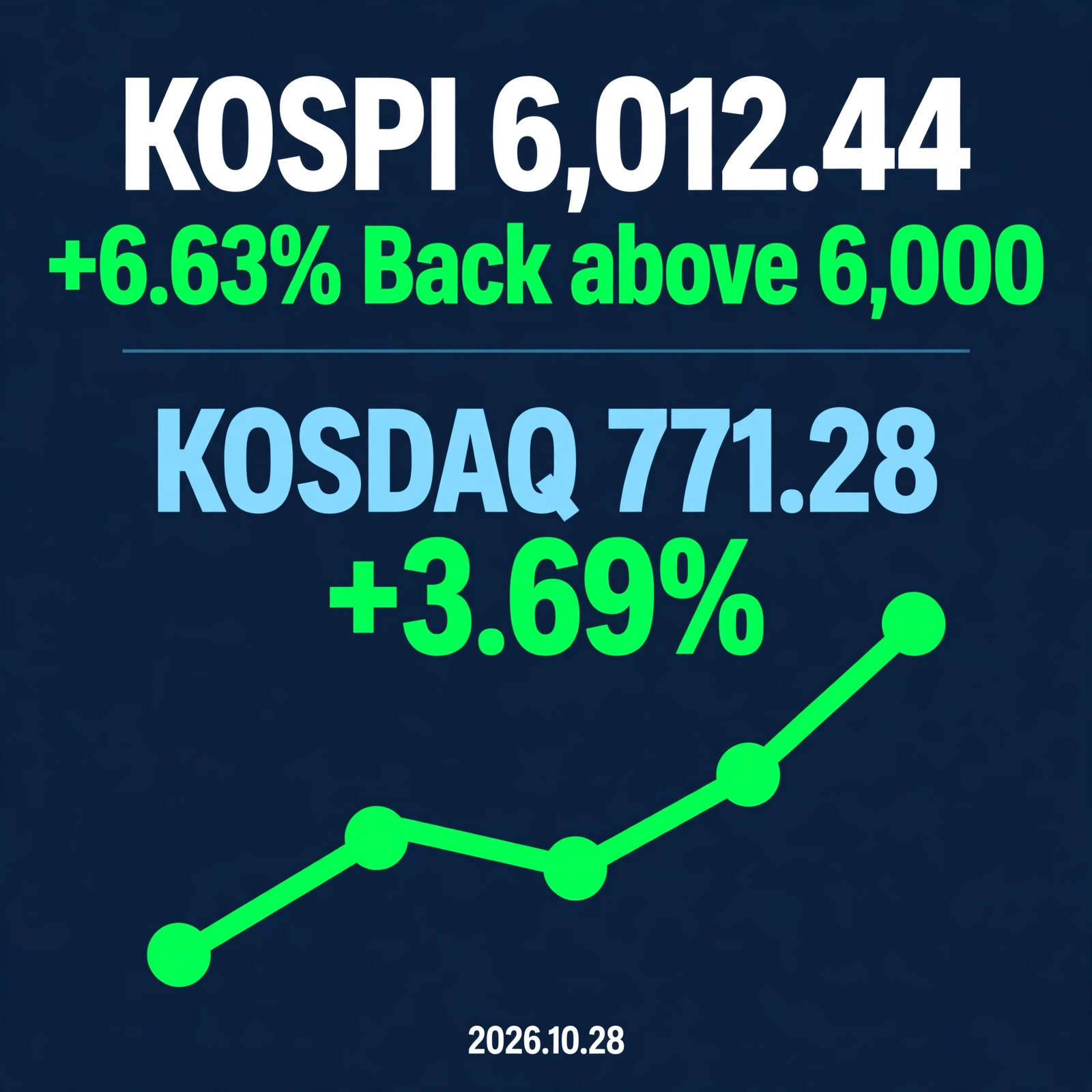
October 28 Korea market brief for foreign investors: the KOSPI jumped 6.63% to 6,012.44, its first close above 6,000 in 10 sessions, after SK hynix posted record third-quarter profit and a KRW 100 trillion shareholder-return plan. Foreigners and institutions bought together for a second day, Samsung rose 9.01% and SK hynix 10.89%. The won weakened to 1,337.7 per dollar.
- Korea Weekend Brief China PMI Contraction US Tech Selloff Samsung Shareholder Return Analysis
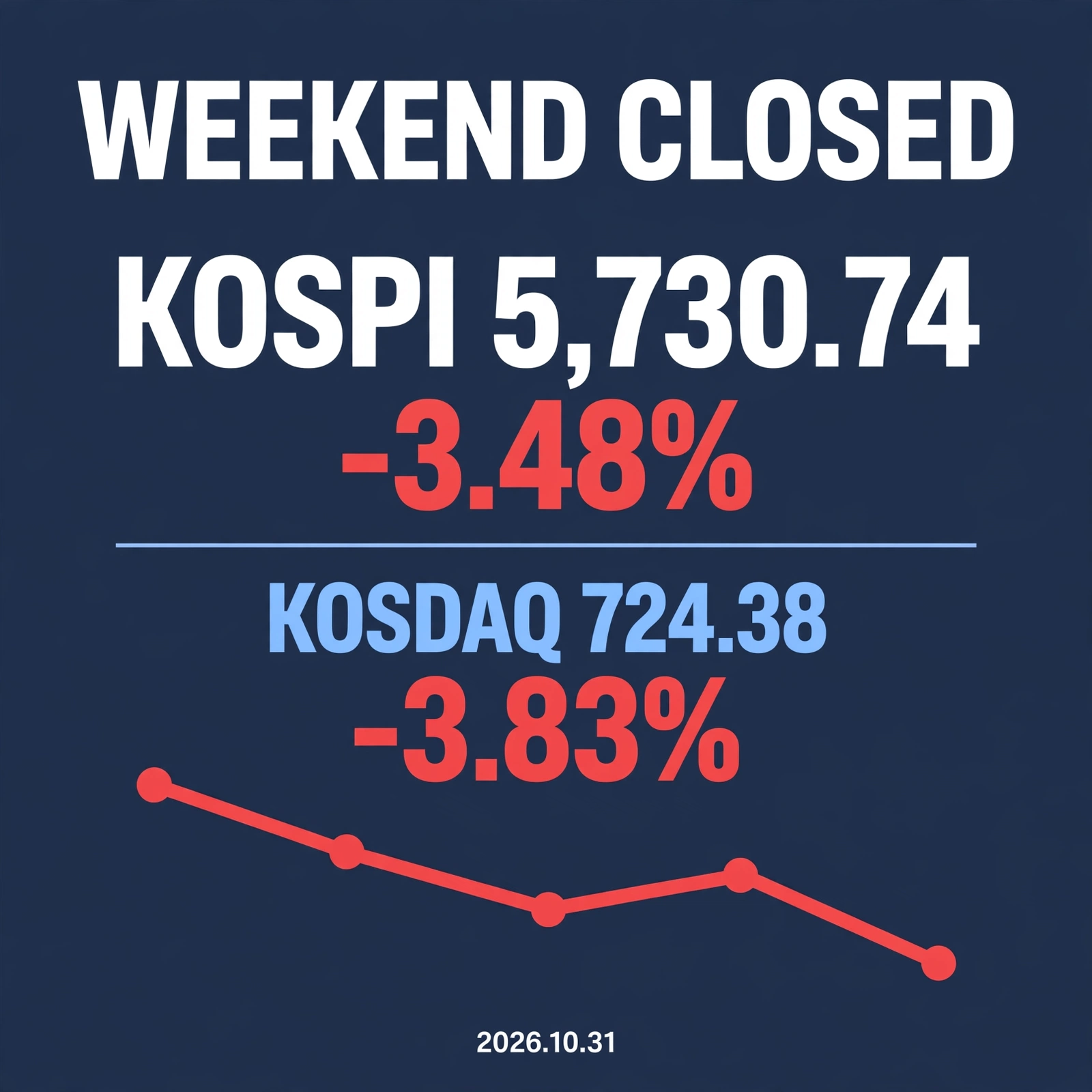
October 31 Korea weekend brief for foreign investors: Seoul is closed for the weekend, with the KOSPI last at 5,730.74 (-3.48%). Overnight the Nasdaq fell 2.86% on Intel's plunge, China's October manufacturing PMI slipped to 49.3, and WTI crude rose to $104.12 on a Strait of Hormuz incident. Samsung's remaining KRW 55–75 trillion ($41–56 billion) of returns awaits a January board decision.
- KOSPI 3.48% plunge Alphabet shock sell sidecar semiconductor fall analysis
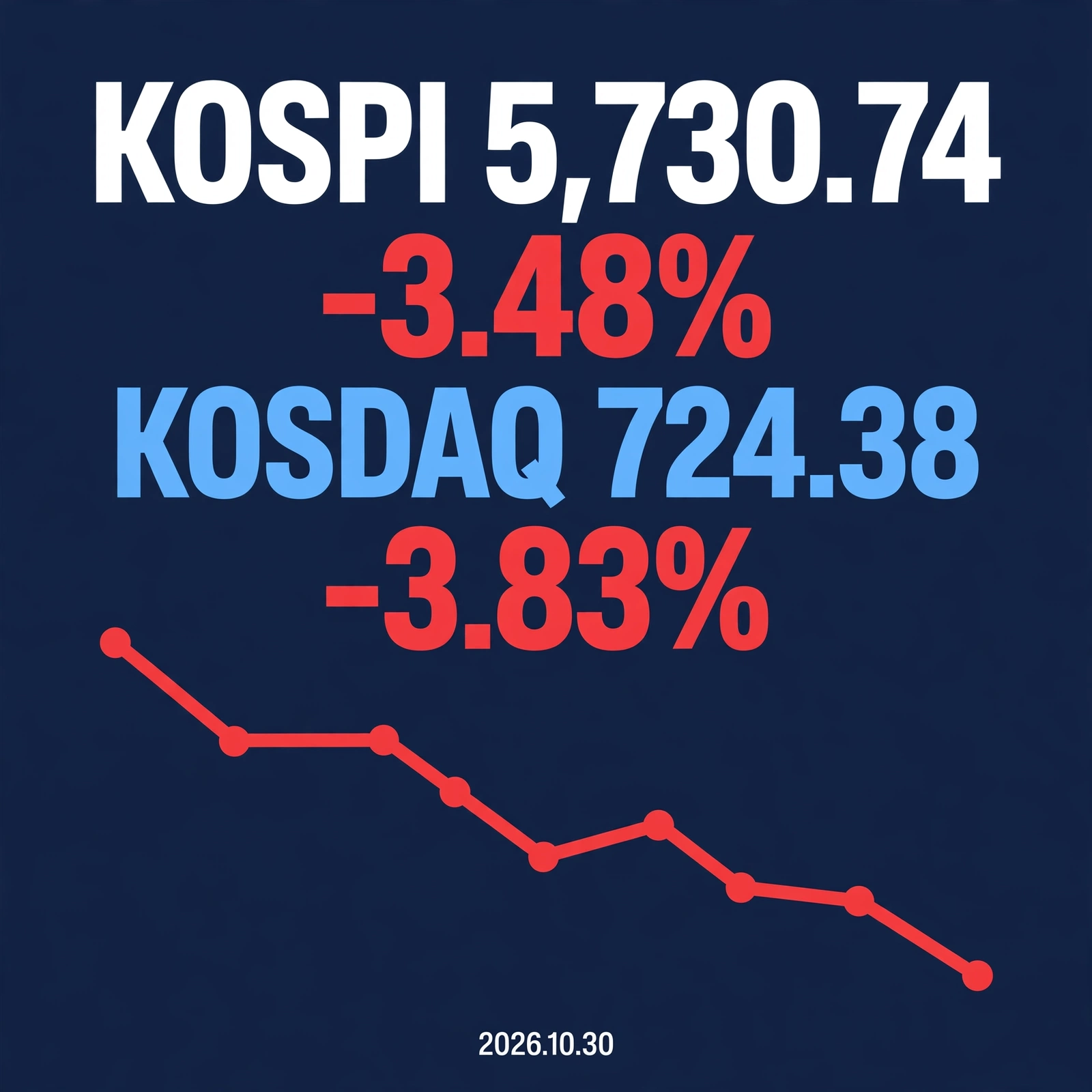
October 30 Korea market brief for foreign investors: the KOSPI fell 3.48% to 5,730.74 and the KOSDAQ fell 3.83% to 724.38 as Alphabet's earnings shock triggered a sell-side sidecar and foreigners sold a net KRW 1.62 trillion ($1.21 billion). Samsung fell 3.02% and SK hynix 7.08%. The won firmed to 1,334.3 per dollar.
5minbrief on YouTube
The briefs also come as videos. Get the daily market wrap on YouTube.
Subscribe on YouTube