 5-minute briefs
Software Stocks Selloff: Twilio -10.6% and AI Disruption Fears, Causes and Outlook
The haven broke
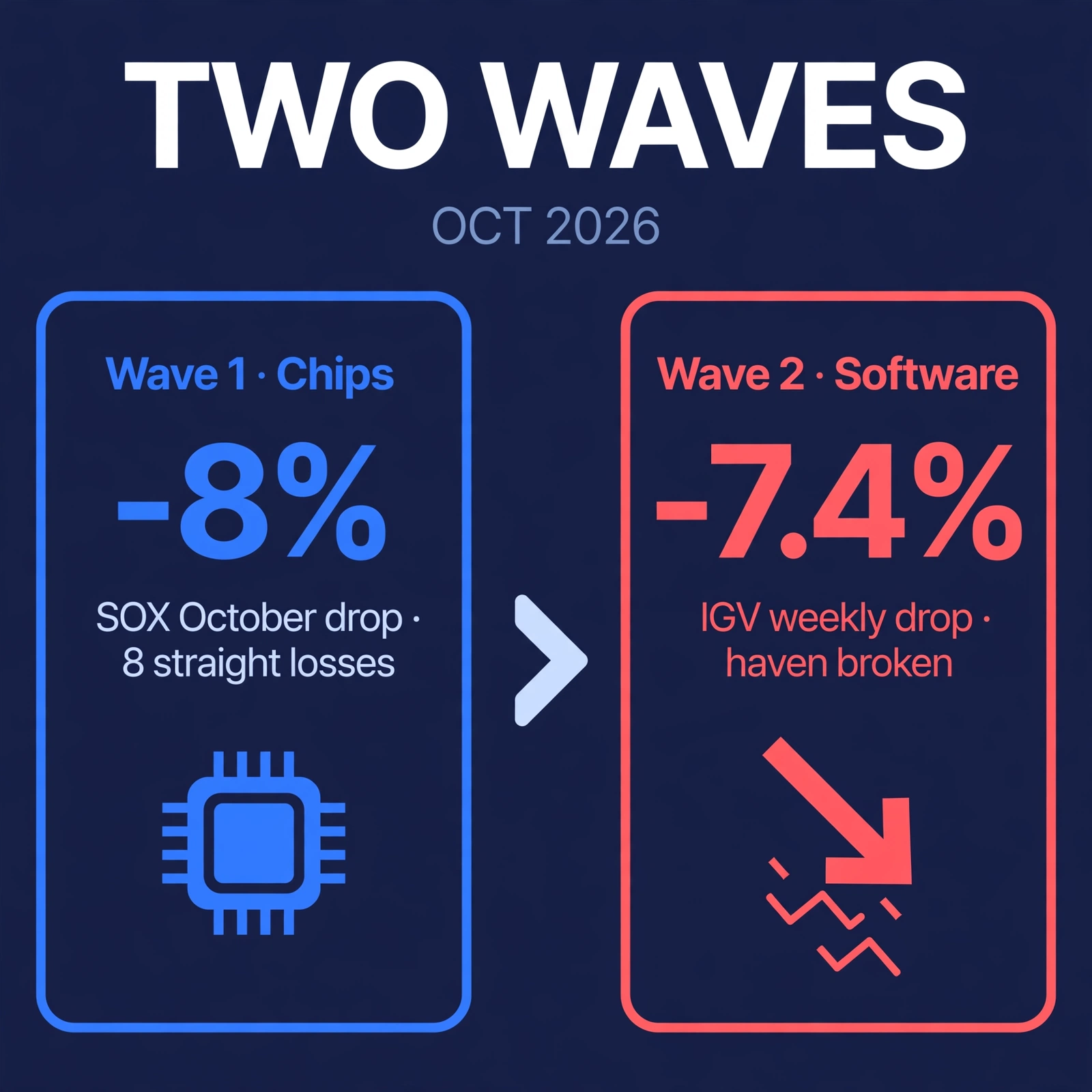
Until early this week, investors’ mental map was simple. Semiconductors took the direct hit from AI infrastructure spending; software, with its steady demand, was the haven. On Friday, that map tore apart.
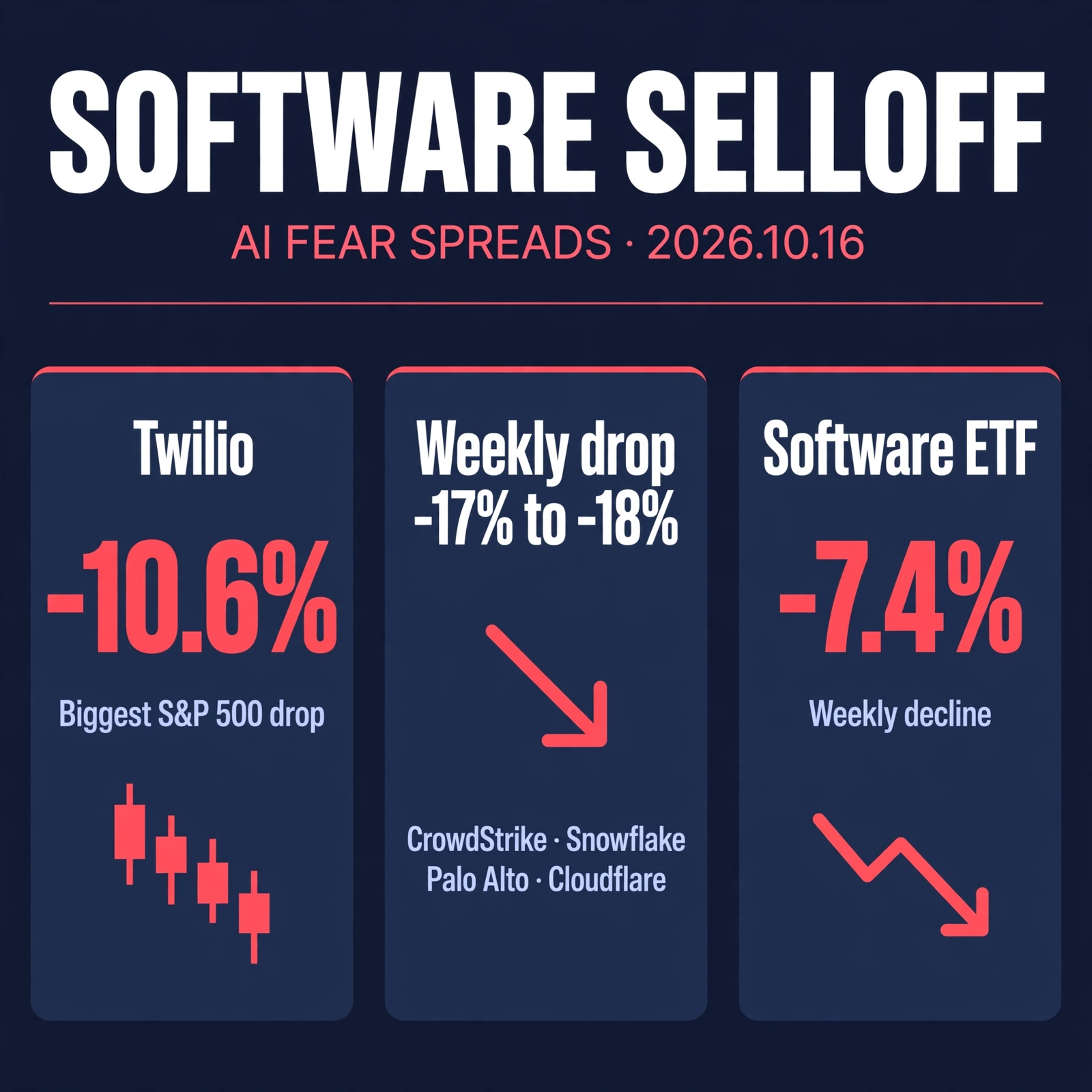
| Stock / index | Friday | Weekly |
|---|---|---|
| Twilio | -10.6% | — |
| Oracle | -5% | — |
| ServiceNow | -4% | — |
| Salesforce | -2% | — |
| CrowdStrike · Snowflake | — | ~ -17% |
| Palo Alto Networks · Cloudflare | — | ~ -18% |
| Software ETF (IGV) | -4.8% | -7.4% |
Wave one: AI spending fear started in chips
The wave began in semiconductors. The PHLX Semiconductor Index (SOX) fell another 3.83% on Friday — its eighth straight loss, down more than 8% in October. AI data-center names CoreWeave and Nebius plunged 11.9% and 12.2%.
The market’s question had changed: not “how big will AI demand be?” but “can companies earn back what they spend on AI infrastructure?” Doubts about whether data centers built with expensive money (5%-plus rates) can pay for themselves dragged chip stocks down.
Wave two: “AI will eat software”
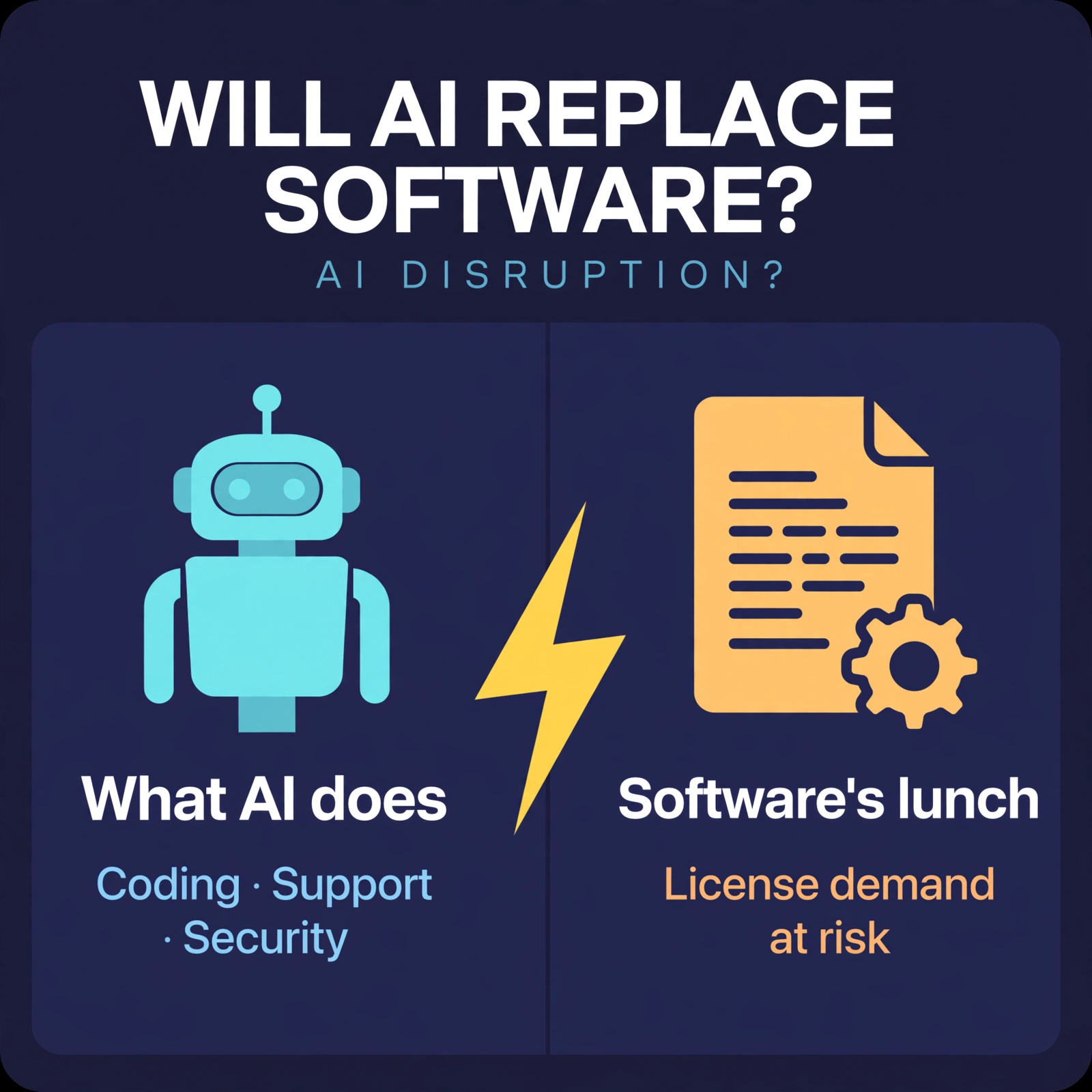
But why did software sell off too? Two doubts collided.
① AI could take software’s lunch. If AI does coding, customer support, and security work directly, companies need fewer software licenses. SaaS names once seen as AI beneficiaries were suddenly recast as AI’s first replacement targets. Stocks that rose “because of AI” started falling “because of AI.”
② Expensive stocks get hit first. When rates are high, distant future profits are worth less. Growth stocks that paid a rich price for future growth (high multiples) correct the hardest — even when earnings are fine. Software is the textbook high-multiple sector.
- Multiple: price divided by earnings (P/E and friends). A high multiple means "we paid richly for future growth" — the first thing to correct when rates rise.
- Disruption: change that upends an industry's structure. If AI does customers' work directly, SaaS demand itself can wobble.
- Safe haven: assets money flees to in a panic. Software played that role early this week — until Friday broke it.
What remains: software earnings season testifies

Now the market’s eyes turn to software companies’ own mouths. This week’s Big Tech earnings (Meta, Tesla on October 21) will judge whether AI spending is justified; software earnings season will face the opposite question: “is AI eating your demand?”
Until that question gets answered, software volatility will likely persist. Wave one (chips) was about “can you spend the money?” — rates and earnings can answer that. Wave two (software) is about “can you keep making the money?” — a doubt about the industry’s structure itself, which heals more slowly.
Not investment advice. Figures verified October 18 from AP, MarketWatch, Investor’s Business Daily, and barchart.
Watch the video

Sources & references
- MarketWatch — Nowhere to Hide: Tech Selloff Hits Software and Chip Stocks Alike — Oct 16 report on the joint software and chip selloff
- The Orbit Post — Nasdaq Falls 2.1 Percent as Tech Sell-Off Caps Its Worst Week Since June — Weekly moves compiled from MarketWatch and IBD reporting
- Portfolio Terminal — Stock Market Close October 16, 2026 — Exact Friday moves for the SOX and neocloud names
Related articles
- Cybersecurity Stock Analysis CrowdStrike 8% Surge PHP Vulnerability AI-Driven Hacking
A critical PHP vulnerability knocked European government websites offline, sending CrowdStrike up 8.25% to $257.57. Palo Alto Networks rose for a third straight session, and seven experts warn AI is accelerating vulnerability discovery, making large-scale outages likely to repeat.
- US Stocks Dow Drop Oil Surge Analysis Brent $116 10-Year Yield Back at 5% (October 23)
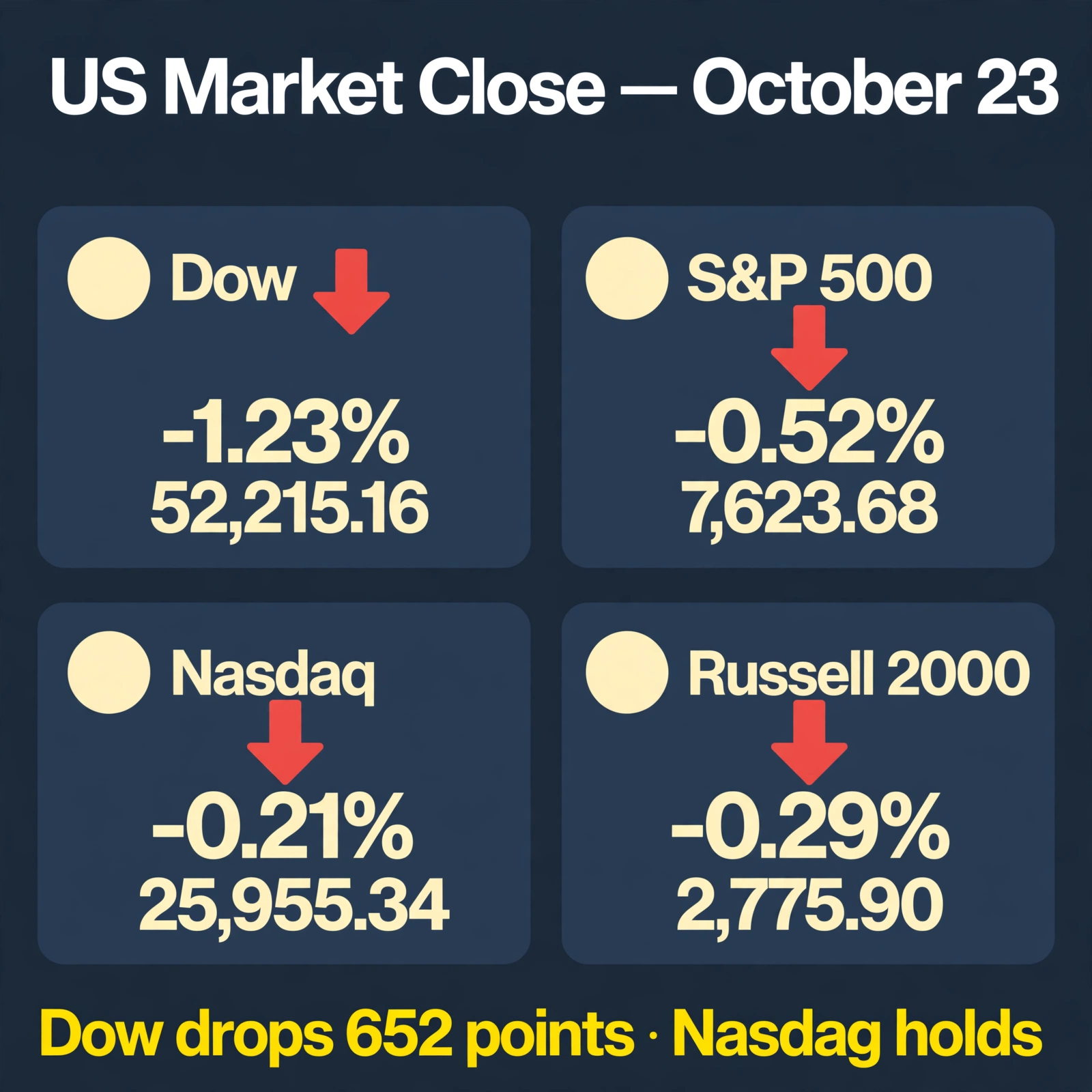
US market close on Friday, October 23: Dow -1.23% (52,215.16), S&P 500 -0.52% (7,623.68), Nasdaq -0.21% (25,955.34). Houthi drone strikes on Aramco and reports of renewed US-Israel strike plans on Iran pushed Brent to $116.72, and the 10-year yield returned to 5.00%.
- Nasdaq Weekly -4.5% AI Fear Software Sector Causes and Outlook (Oct 18)
US markets are closed on Sunday, October 18. Friday's software rout (Twilio -10.6%, CrowdStrike and Snowflake -17% on the week) showed AI fears spread...

5minbrief on YouTube
The briefs also come as videos. Get the daily market wrap on YouTube.
Subscribe on YouTube