 5-minute briefs
Iran Oil Export Blockade: $25 Billion Stopped and the Ghost Fleet
Hormuz news usually focuses on burning tankers. But on the other side of the strait a quieter, larger operation is running. The US maintains a naval blockade on Iranian ports, stopping vessels carrying Iranian crude and LPG from leaving the Gulf of Oman. How much the blockade actually stops, where the holes are, and what leverage it gives in negotiations is the question.
Blockade scoreboard: $25 billion stopped, nine vessels through
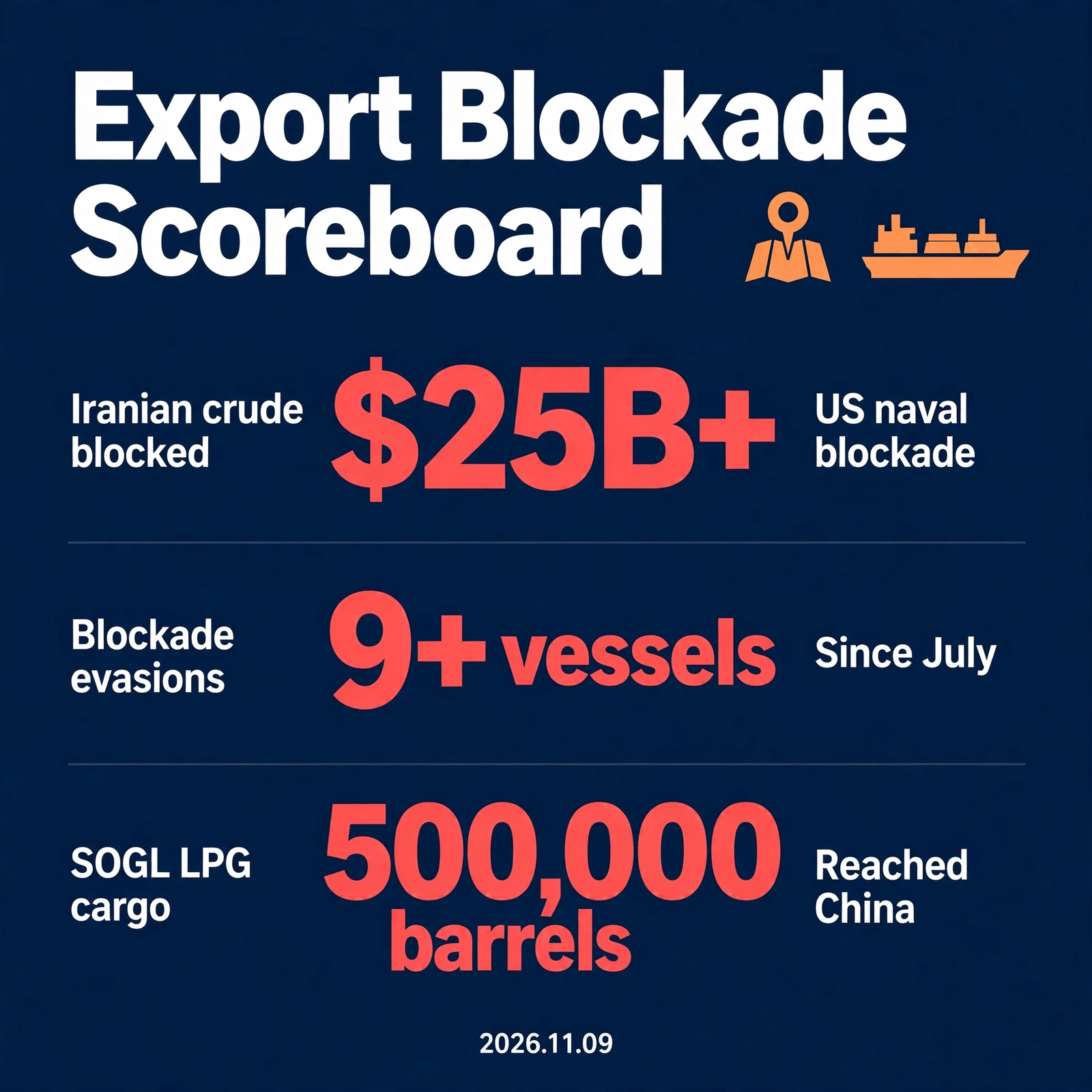
The numbers first. Reports say the US, by tightening its naval blockade, has prevented Iran from exporting over $25 billion in crude oil. United Against Nuclear Iran (UANI), a US advocacy group tracking the blockade, assesses that no Iranian crude has been exported overseas since the US resumed the blockade of Iranian ports in July. In UANI’s words, the blockade has been “overwhelmingly successful”, putting enormous economic pressure on the Iranian regime.
But ships have slipped through. UANI says at least nine vessels carrying Iranian oil or LPG have escaped the blockade through the Strait of Hormuz since July. One of them was the sanctioned SOGL, which loaded about 500,000 barrels of Iranian LPG at Asaluyeh in August and broke through the blockade on September 1. It then sailed thousands of miles to an anchorage off Malaysia, took on fuel and maintenance, and headed for China, where UANI says it discharged the Iranian cargo. UANI filmed the vessel receiving maintenance in Malaysia and published the footage.
Over the weekend the blockade’s enforcement was visible. On Saturday, US Air Force aircraft fired at the stern of a St Kitts-flagged cargo vessel in the Gulf of Oman, disabling it. US Central Command said the ship had visited an Iranian port and tried to breach the blockade. US forces also targeted and disabled the Huda, an Iran-linked bulker built in 1999. CENTCOM said the crew ignored repeated warnings and attempted to violate the blockade. A blockade is not a declaration; it is an operation of warnings and gunfire.
How the blockade works: port blockade, daily operations, shadow fleet
The blockade works in three layers. First, the naval blockade on Iranian ports. The US resumed it in July, focused on stopping vessels carrying Iranian oil and petrochemicals from leaving the Gulf of Oman. Second, daily transit-support operations. Since a June ceasefire memorandum collapsed, the US has run near-daily operations to let other ships and oil exit the strait. The blockade targets Iran-linked vessels; other shipping is helped through. Third, sanctions-evasion tracking — watching for vessels that spoof their positions or hide origin through transfers.
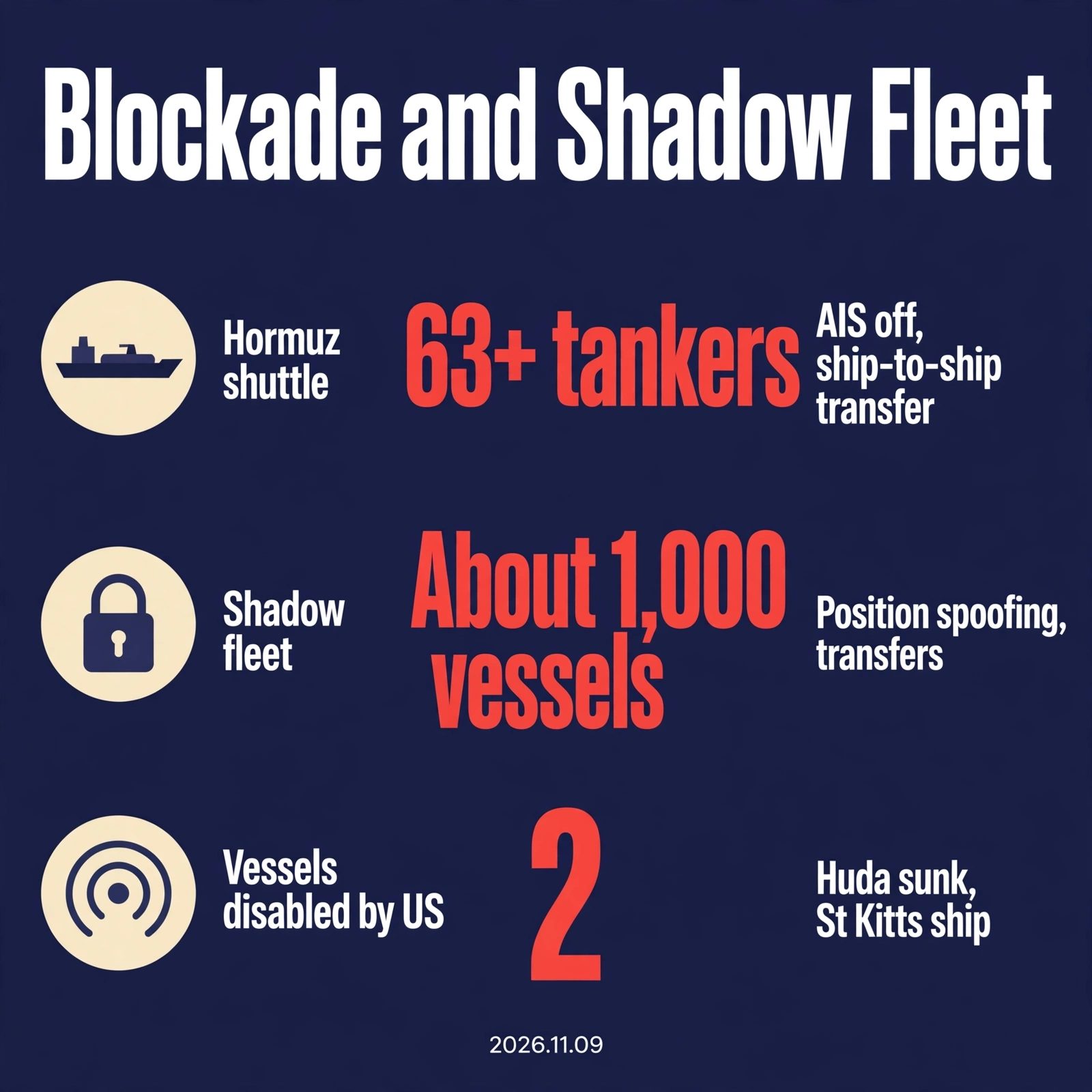
Working against all three layers is the shadow fleet. The shadow fleet is the unofficial shipping network sanctioned states use to export oil, with Iran and Russia the leading cases. After the US left the Iran nuclear deal in 2018 and imposed maximum pressure, Iran expanded its workaround network around the state tanker company. Methods include spoofing a tanker’s position to make Iranian crude look as if it loaded elsewhere, and transferring cargo near the Malacca Strait. Russia has spent about $8.5 billion since 2022 acquiring old tankers, and the shadow fleet is estimated at around 1,000 vessels.
In the strait itself, a variant called the “Hormuz shuttle” operates. Kpler, the energy data firm, counts at least 63 tankers taking part in shuttle transport. A shuttle loads crude in the Gulf, crosses the dangerous strait to the Gulf of Oman, transfers the oil ship-to-ship to a long-haul tanker, and returns to the Gulf. Shuttle vessels switch off their AIS to avoid Iranian surveillance, and tankers more than 20 years old are reportedly used. Running separate shuttle and long-haul vessels, plus specialist transfer crews and tugs, costs a lot. That this expensive workaround exists at all shows how much the blockade and the mining campaign have changed the strait’s economics.
The money flow: recovery, then retreat
The blockade’s effect shows in the flow numbers. Right after the blockade, crude flows through the strait fell more than 80% and oil prices surged. But over seven months of war, flows through the strait recovered considerably. In early to mid-October, crude volumes came close to pre-war levels. Shuttles, transfers and pipelines reopened the corridor. Saudi and UAE pipelines linking the Gulf to the Red Sea bypass the strait, and about 4 million barrels a day now leave through the Hormuz shuttle.
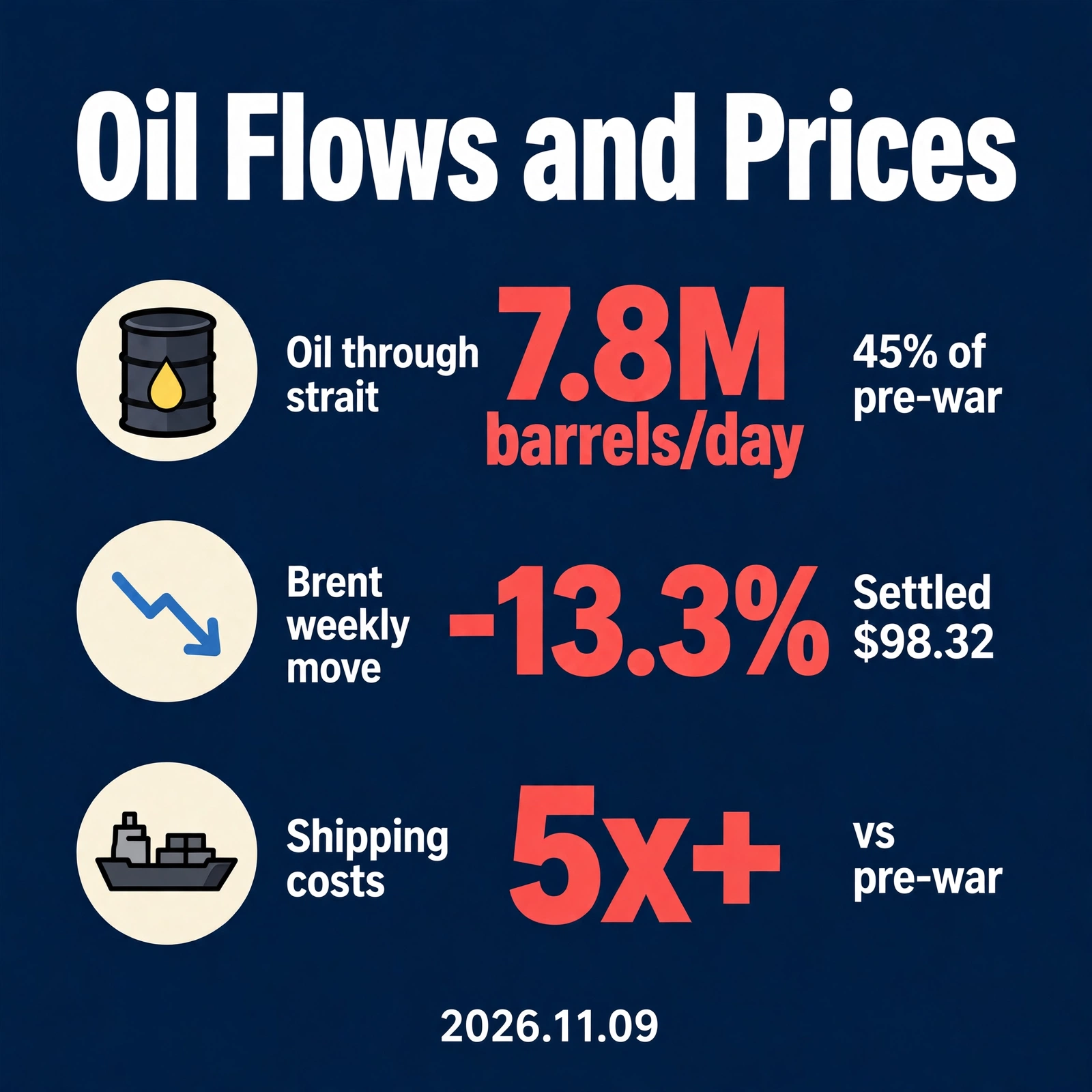
Lately, though, flows have slipped again. According to Kpler, oil passing through the strait averaged about 7.8 million barrels a day in the week to November 1, including ship-to-ship transfers — about 45% of the pre-war level. Transits are down about 65% from before the conflict, and actual crude flows have fallen below 60% of normal. Recovery and retreat alternate, which means the blockade and the mining campaign neither fully close the strait nor fully reopen it.
Where that meets the oil price matters. Brent settled Friday at $98.32, down 13.3% for the week, and WTI at $90.83, down 12.8%. The market is pricing out the war premium on hopes of a deal. But oil moving through the strait sits at about 45% of the pre-war level, and shipping costs are more than five times pre-war. Oil did not fall because the war ended; it fell because the market bet first that the war would end. The gap between the physical reality the blockade and mines create, and the negotiation hopes oil prices reflect, is the market’s central variable right now.
- Naval blockade: using naval power to stop ships entering or leaving specific ports or waters. The US maintains a blockade on Iranian ports.
- Shadow fleet: the unofficial shipping network sanctioned states use to export oil. It hides origin by spoofing positions and transferring cargo at sea.
- Hormuz shuttle: tankers that load crude in the Gulf, cross the strait to the Gulf of Oman and transfer it ship-to-ship to long-haul tankers. At least 63 take part.
- Ship-to-ship (STS) transfer: moving cargo between vessels at sea. Used to pass oil from shuttle tankers to long-haul tankers.
- AIS (Automatic Identification System): the system that broadcasts a ship's position, course and speed. Shuttle vessels switch AIS off to pass the strait unseen.
- UANI: United Against Nuclear Iran, a US advocacy group tracking the blockade's effects. It calls the blockade overwhelmingly successful.
The summary: the US naval blockade has stopped over $25 billion of Iranian crude exports, and since July, Iranian crude exports overseas have effectively halted. But nine vessels slipping through and 63 Hormuz shuttle tankers show the blockade is not complete, and the workaround runs at a high cost. Flows through the strait sit at about 45% of the pre-war level, while oil has fallen 13% on a bet on talks. Lifting the blockade is one of the seven conditions Iran has put forward. So the blockade is not just a military measure but negotiating leverage. The terms on which it is lifted are the terms of the deal — and the pace at which they are set will decide oil’s next direction.
Watch the video

Sources & references
- Times Now — Fresh Flashpoint In Gulf: US Hits Iran-Bound Ship, Tankers Hit Mines Near Strait Of Hormuz — US naval blockade reportedly preventing Iran from exporting over $25 billion in crude oil; US disabled a commercial vessel in the Gulf of Oman
- The Maritime Executive — Tanker Burns After Strike in Strait of Hormuz — US disabled the Iran-linked bulker Huda; CENTCOM on blockade violations; traffic below normal
- Free Malaysia Today — Iran says 3 tankers caught fire in Hormuz — US naval blockade on Iranian ports; strait normally carries about one-fifth of global oil consumption
- The Hindu Business Line — Iran suggests blasts are not US attacks as both sides report ships hit — Both sides reported shipping hit in or near the strait; US disabled a vessel in the Gulf of Oman
Related articles
- Hormuz Naval Mining Campaign: Southern Route Blockade and AIS-Dark Targeting
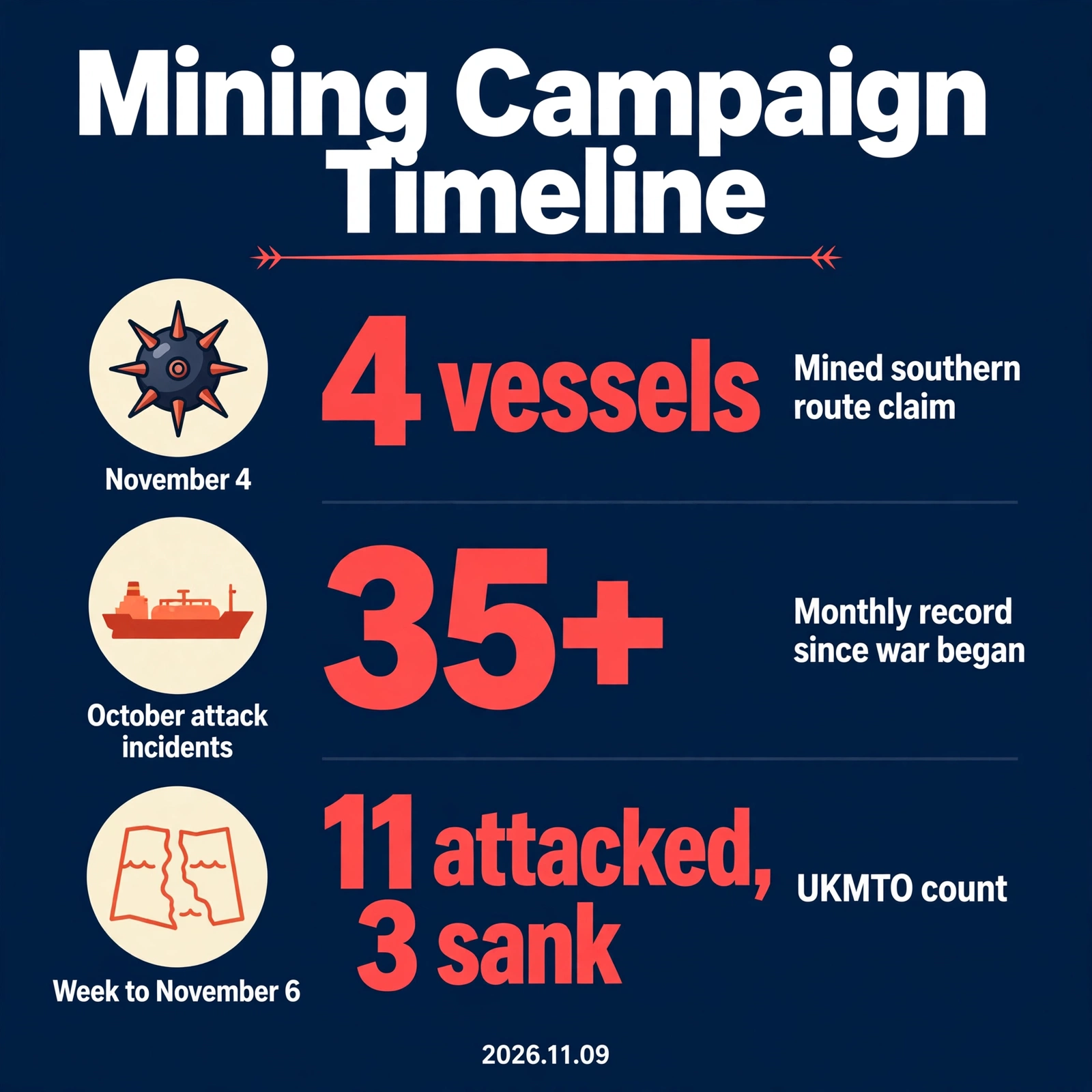
The mining campaign in the Strait of Hormuz is not a series of accidents but a designed blockade tactic. Mined southern routes, AIS-dark vessels as targets, underwater drones and limpet mines — the tactics behind October's record 35 attacks, and the mine-clearance problem left for any deal.
- December FOMC 50bp Hike Scenario Analysis Core CPI 0.3% and Waller Comments
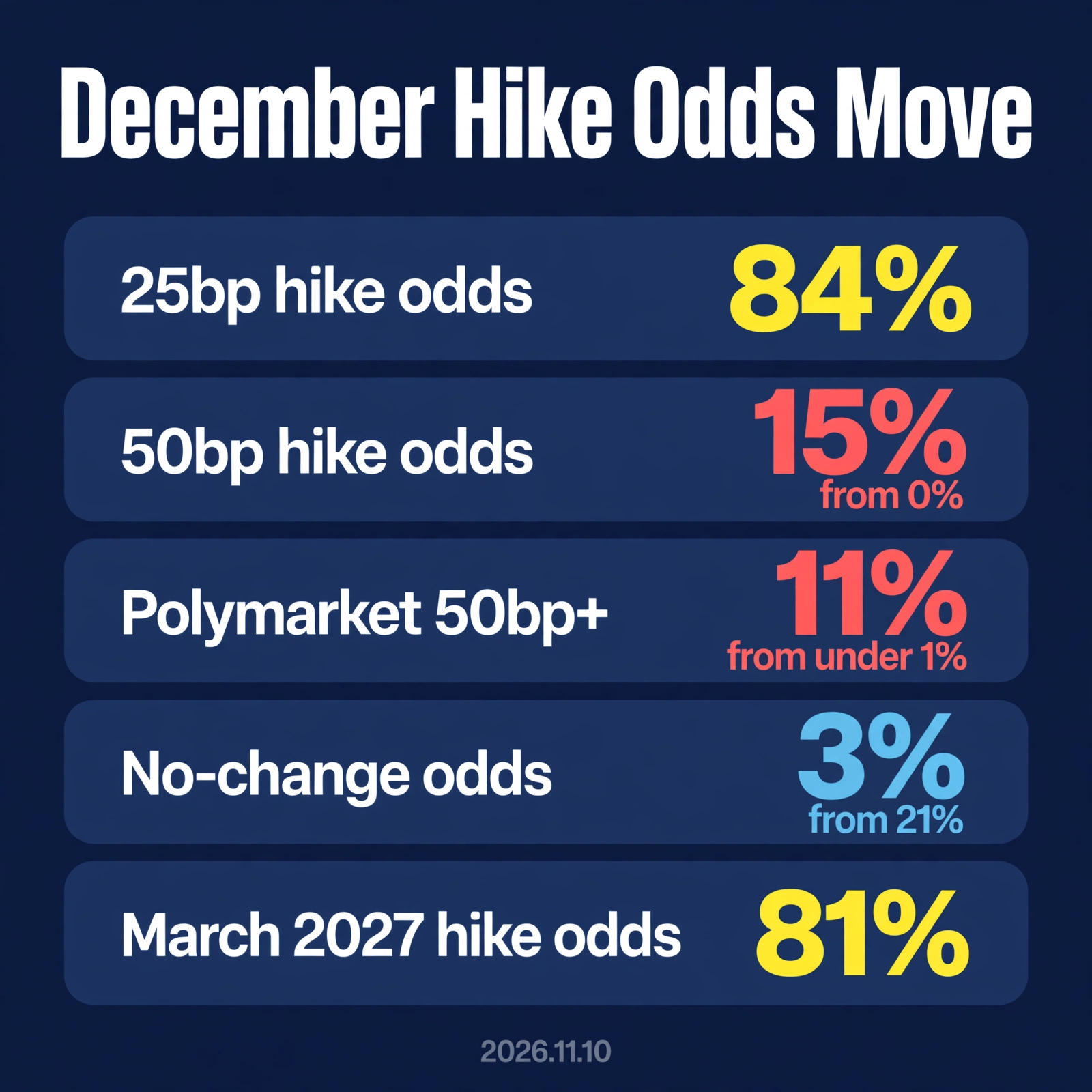
October core CPI ran at 0.3% for a third straight month, and December 50bp hike odds jumped from 0% to 15%. Governor Waller had named 0.3% core as the condition for considering a 50bp move, and November CPI comes out the day after the FOMC. What separates a 25bp hike from a 50bp one.
- Brent Crude Analysis: 18.4% Drop in Six Sessions on Negotiation Hopes
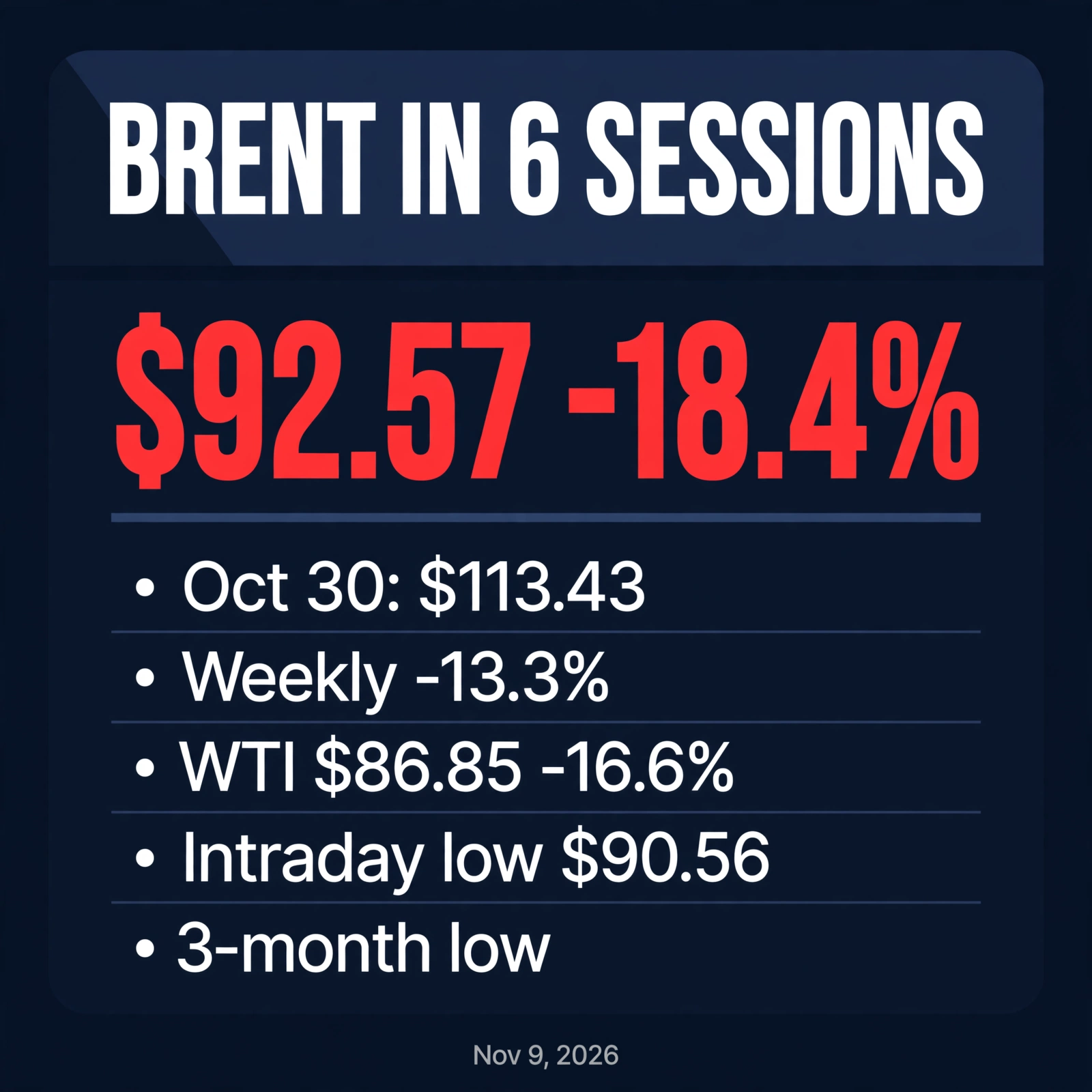
Brent crude has fallen 18.4% in six sessions, from $113.43 on October 30 to $92.57 on November 9. The war premium is unwinding fast — but analysts put renewed strikes at 60%, and that gap sets the terms for a reversal.
5minbrief on YouTube
The briefs also come as videos. Get the daily market wrap on YouTube.
Subscribe on YouTube