 5-minute briefs
US Stocks November 2 Dow Up 0.41% Nasdaq Down 1.07% Apple Earnings Analysis
#US stocks#Dow Jones#S&P 500#Nasdaq#Apple earnings#oil prices#midterm elections
The close: only the Dow rose, tech sold off again
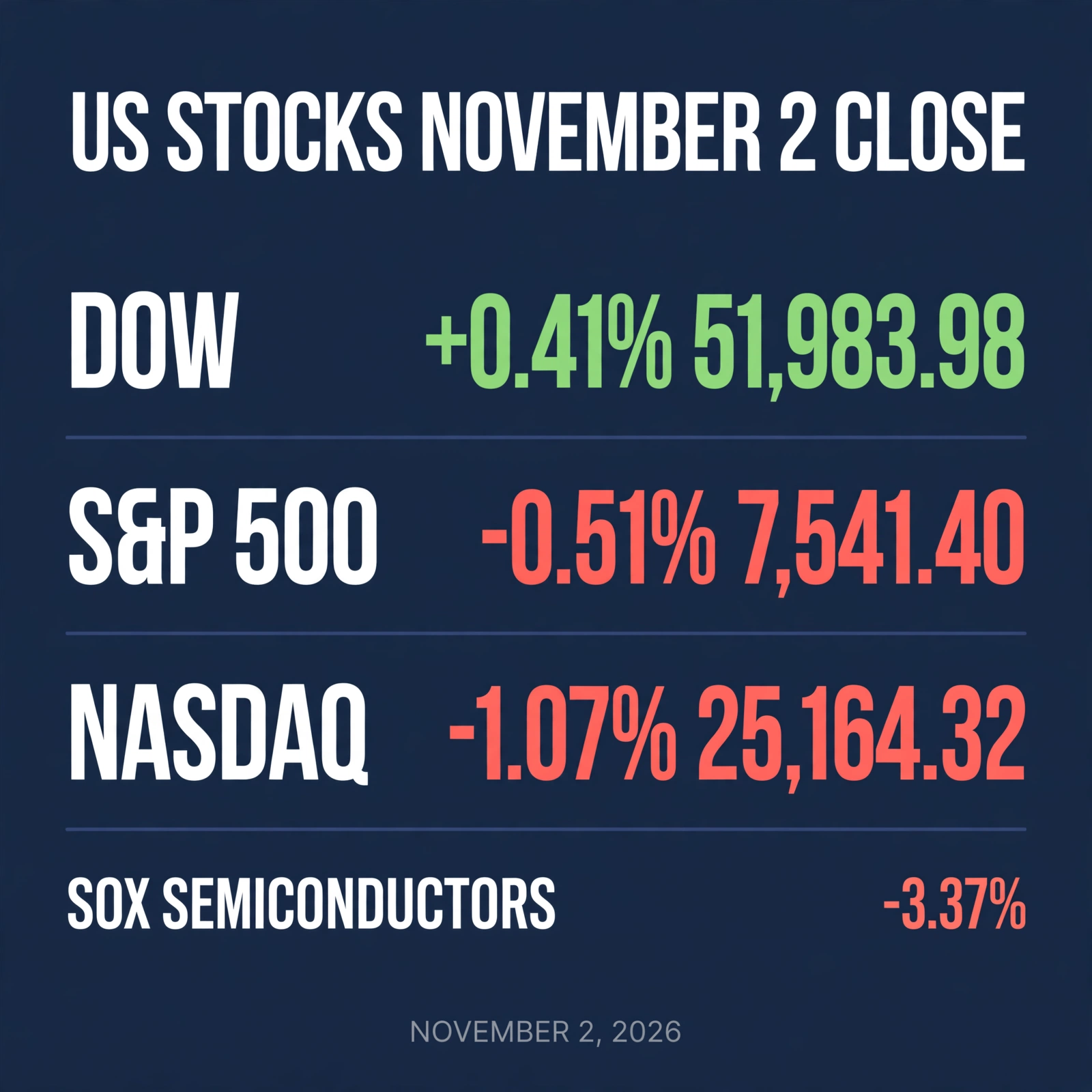
The closing numbers first. The Dow Jones Industrial Average rose 213.67 points to 51,983.98 (0.41%), the S&P 500 fell 38.67 points to 7,541.40 (0.51%), and the Nasdaq Composite fell 272.68 points to 25,164.32 (1.07%). The previous session, October 30, had closed at 51,770.31 for the Dow, 7,580.07 for the S&P 500, and 25,437.00 for the Nasdaq. The shape of the day matters: stocks opened higher on bargain buying after October’s sell-off and a sharp drop in oil prices, but tech selling grew in the afternoon and dragged the S&P 500 and Nasdaq into negative territory. The point is not that the rebound failed, but that it split by sector.
Semiconductors hurt most. The Philadelphia Semiconductor Index (SOX) fell 3.37% to 10,328.33, and Intel, AMD, Micron, and SanDisk fell in a 6–8% range. Two company stories added to the pressure. Marvell fell 12.72% and Lumentum fell 18.59% on the day Marvell announced it would acquire Lumentum in an all-stock deal worth about $115 billion in enterprise value. Both stocks falling on a deal announcement is a sign the market is pricing execution risk strictly. Oracle fell 8.85% to $119.10 after announcing a $10 billion bond offering to fund AI infrastructure investment. Meta was also reported to be considering more than $20 billion in bond issuance, including its first eurobond. The question moving stocks is no longer AI spending itself, but how that spending is financed.
Apple earnings: a beat, but the stock fell in regular trading
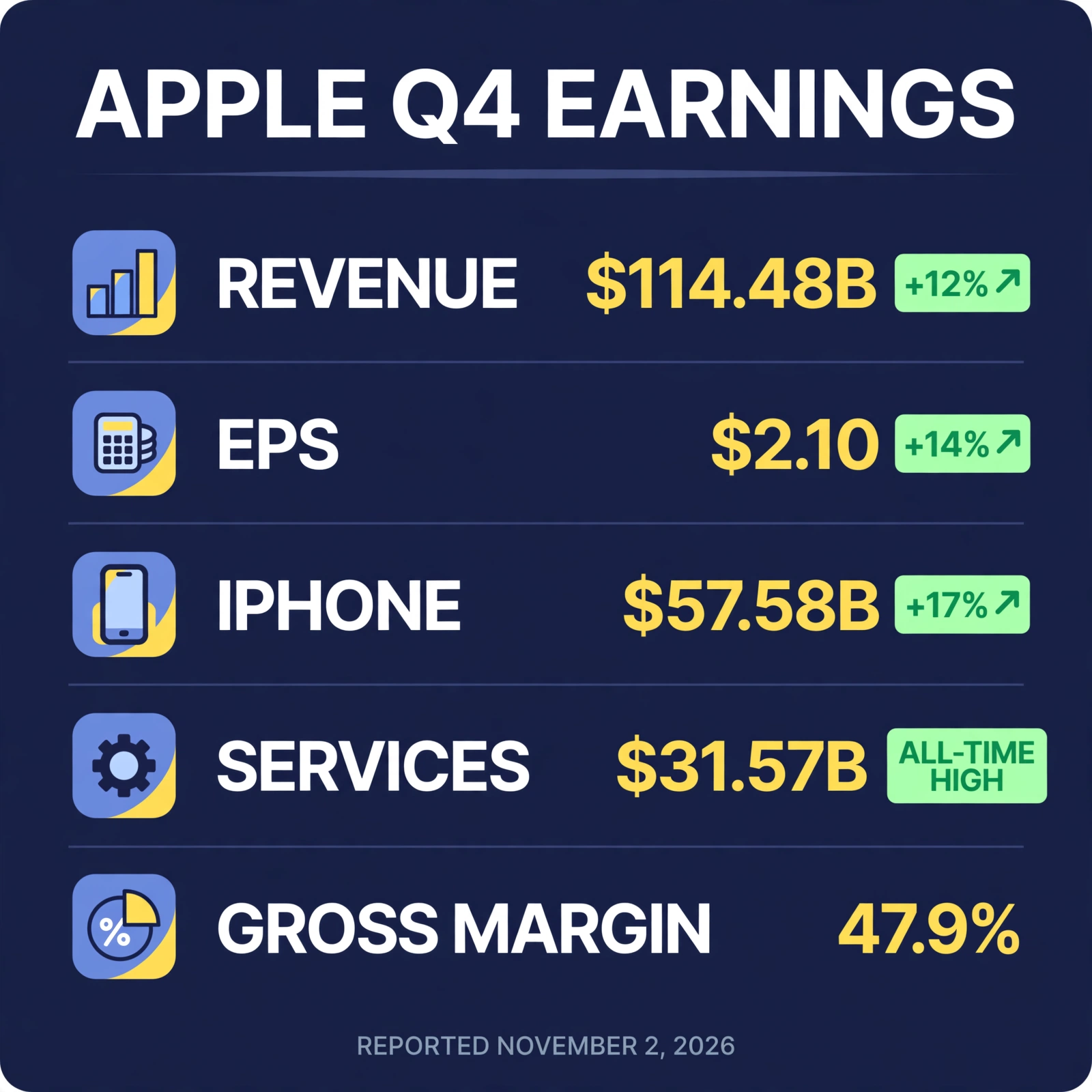
Apple’s fiscal fourth quarter (July–September, ended September 26, 2026), reported after the close, beat expectations. Revenue rose 12% year over year to $114.48 billion, above consensus of $113.39–$113.47 billion. Diluted EPS was $2.10, up 14% year over year and above consensus of $1.99–$2.00. One caveat belongs with the EPS: it includes a $0.05 favorable impact from tariff refunds, so the quality of the beat needs that adjustment in mind.
The segments told different stories. iPhone revenue was $57.58 billion, up 17% year over year and above the $56.49 billion consensus. Mac revenue jumped 24% to $10.79 billion, well above expectations. Services revenue hit an all-time high of $31.57 billion, but growth of 9.8% was essentially in line with expectations. On the other side, iPad revenue fell 10% to $6.23 billion, missing expectations, and Wearables, Home and Accessories fell 7.9% to $8.3 billion. China revenue grew 21% to $17.54 billion but missed the $18.75 billion consensus. Gross margin came in at 47.9%, inside the company’s 47–48% guidance, but it includes about a 1 percentage point favorable impact from tariff refunds. With memory prices rising, holding margin inside guidance matters — and so does the fact that refunds helped.
The regular-session stock move was set before the results. Apple shares closed the regular session down 1.83% at $338.32. A beat paired with a down day says the decline was about broad tech selling, not Apple alone. The report was also the first under CEO John Ternus, who succeeded Tim Cook in September. The quarter captured only nine days of iPhone 18 Pro sales, and the first foldable iPhone Duo (US starting price $1,999), launched October 23, is not in these numbers at all. The real test is not the quarter just reported, but how the Duo and iPhone 18 sell in the holiday quarter. Apple’s press release contained no numeric December-quarter guidance.
Palantir, ISM, and oil: factory expansion meets AI monetization
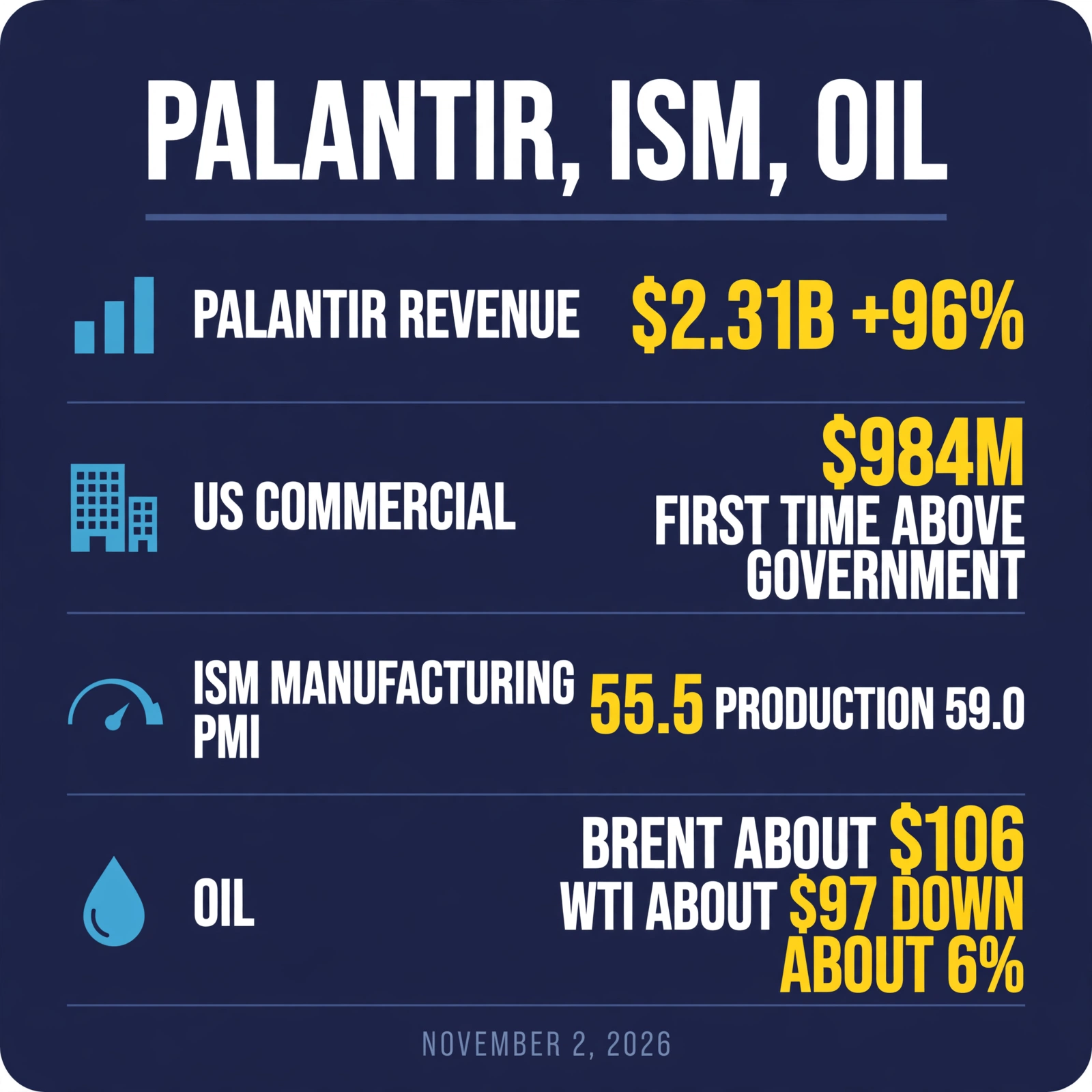
Palantir’s third-quarter results added new evidence to the AI monetization debate. Revenue rose 96% year over year to $2.31 billion, beating the $2.18 billion consensus, and adjusted EPS was $0.44 versus $0.41 expected. The composition is the story: US commercial revenue surged 148% to $984 million, passing US government revenue of $953 million (up 96%) for the first time in company history. Total US revenue grew 119% to $1.937 billion. Fourth-quarter revenue guidance of $2.649–$2.653 billion beat the $2.46 billion consensus, and full-year guidance was raised to $8.53 billion. The stock still split its reaction: shares fell 3.13% in regular trading to $178.34, then turned higher after hours. A strong beat with a down regular session says high expectations were already in the price.
Factory data confirmed expansion. The ISM Manufacturing PMI rose to 55.5 in October from 54.5 in September, beating the 54.5 consensus. The Production Index jumped to 59.0, its highest since November 2021, new orders held at 55.5 for a 10th straight month of expansion, and employment stayed above 50 at 52.4 for a fourth month. But the Prices Index, though down to 75.2 from 77.9, remains elevated, and the share of negative survey comments rose for a third month. The S&P Global manufacturing PMI final reading was revised down to 54.9 from a 56.0 flash estimate. Factories are running harder, but input costs, tariffs, and Middle East uncertainty have not gone away.
Oil helped sentiment. Reports that Iran’s president is authorized by the Supreme Leader to advance negotiations pushed Brent crude down about 6% to around $106 a barrel and WTI to around $97. Talk of reopening the Strait of Hormuz and resuming nuclear talks within two days came with conditions — lifting port blockades, releasing frozen funds, and easing sanctions — so geopolitical risk is reduced, not resolved. One day of lower oil prices does not set a trend.
- Mixed close: indexes ending in different directions. On this day, only the Dow rose while the S&P 500 and Nasdaq fell.
- Gross margin: profit after production costs, as a share of revenue. Apple reported 47.9%, including about 1 percentage point from tariff refunds.
- PMI (Purchasing Managers' Index): above 50 means expansion, below 50 means contraction. The ISM manufacturing PMI at 55.5 marks a 10th straight month of expansion.
- All-stock acquisition: a deal paid for with the buyer's shares, not cash. Lumentum holders receive 4.5 Marvell shares per share held.
- After-hours trading: trading after the regular session. Palantir fell in regular trading, then turned higher after hours.
Three things to watch this week
First, how Apple and Palantir earnings are digested. Both beat expectations yet fell in regular trading. Whether after-hours strength carries into regular sessions will read tech sentiment. Second, the November 3 US midterm elections. With the House majority reportedly hinging on a net gain of just 3 seats, the result could shift expectations for taxes, regulation, and spending. Third, jobs data: the ISM services PMI and ADP employment on November 4, then the October employment report on November 6. One rebound day is not the story; the direction after the earnings, election, and jobs gates is.
Sources & references
- Associated Press — How major US stock indexes fared Monday — November 2 closes: Dow 51,983.98, S&P 500 7,541.40, Nasdaq 25,164.32
- Apple Newsroom — Apple reports fourth quarter results — Revenue $114.48 billion, EPS $2.10, iPhone $57.58 billion, Services $31.57 billion, gross margin 47.9%
- Reuters — Palantir tops third-quarter revenue estimates on strong AI software demand — Revenue $2.31 billion, up about 96%, above the $2.18 billion average estimate
- ISM via PR Newswire — Manufacturing PMI at 55.5%, October 2026 — Manufacturing PMI 55.5, Production 59.0, New Orders 55.5, Prices 75.2
- TradingKey — Nasdaq Falls 1.07%, SOX Drops Over 3% — SOX down 3.37% to 10,328.33, Marvell down 12.72%, Lumentum down 18.59%, Oracle down 8.85%
Related articles
- US Stocks November 3 Dow Falls 0.37% Nasdaq Rebounds 0.82% AMD Earnings Analysis
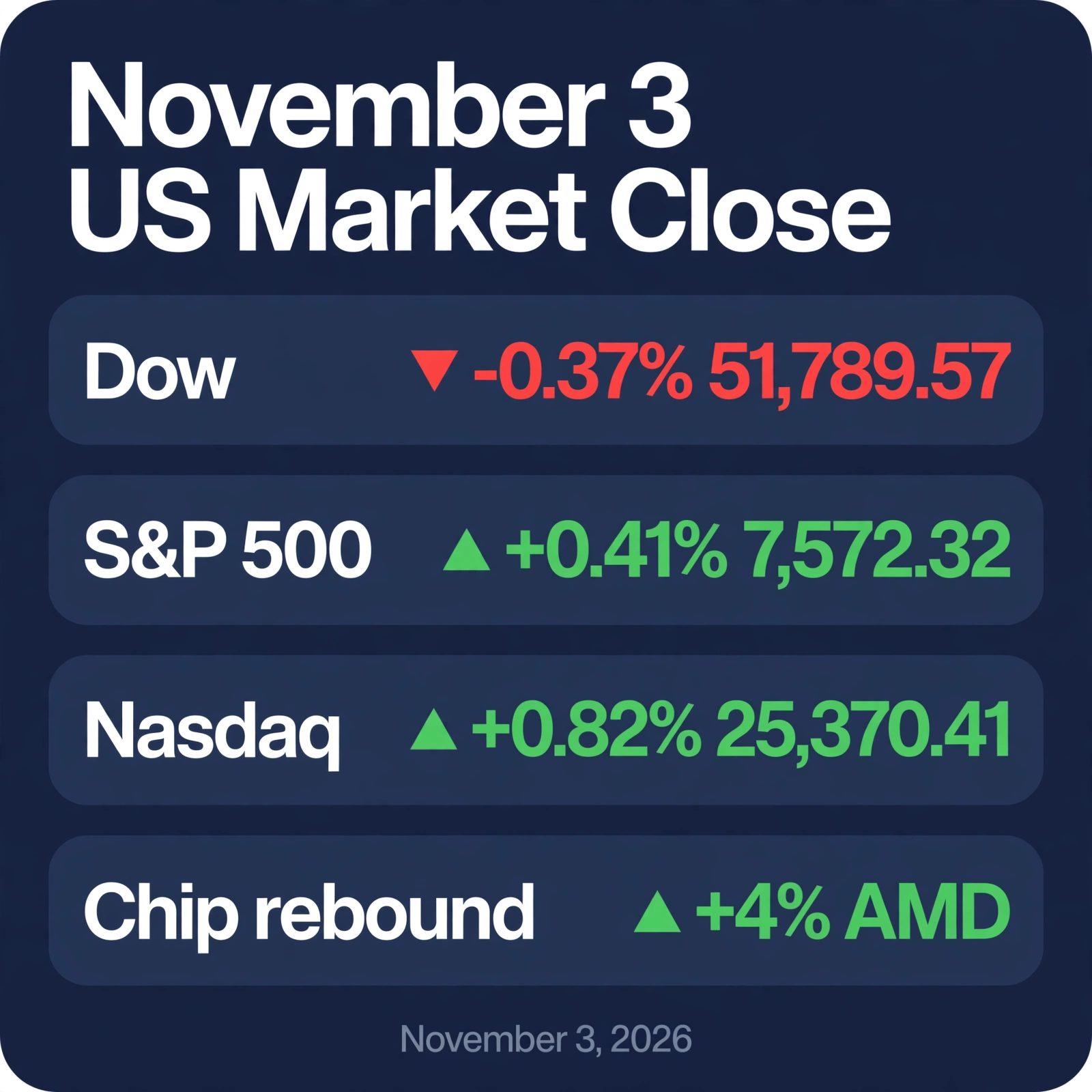
On November 3, US stocks reversed the previous day's pattern. The Dow fell 0.37% while the S&P 500 rose 0.41% and the Nasdaq gained 0.82%. After the close, AMD reported revenue of $13.38 billion and guided fourth-quarter revenue to about $17 billion, above expectations.
- US Stock Market Weekly Recap Nasdaq Falls 3.4 Percent Thursday AI Rout and Correction Analysis
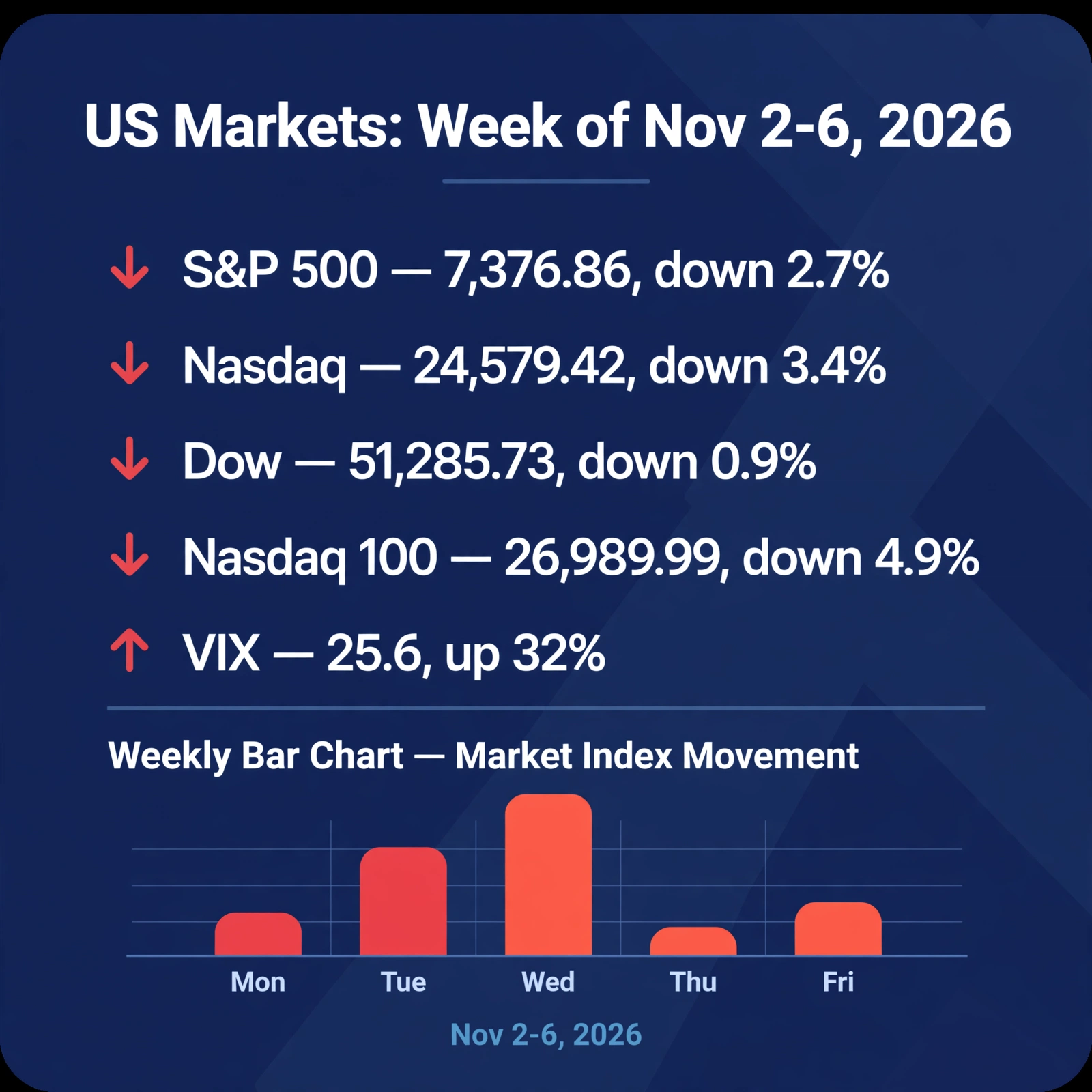
US stock market weekly recap for November 2–6. The S&P 500 fell 2.7%, the Nasdaq 3.4% and the Dow 0.9%, and Thursday's AI sell-off pushed the Nasdaq into correction territory. Midterms, the jobs report and the Hormuz oil plunge, plus next week's CPI and PPI checkpoints.
- US Stock Market Weekly Recap Nasdaq Falls 2 Percent AI Spending Doubts Energy Strength Analysis
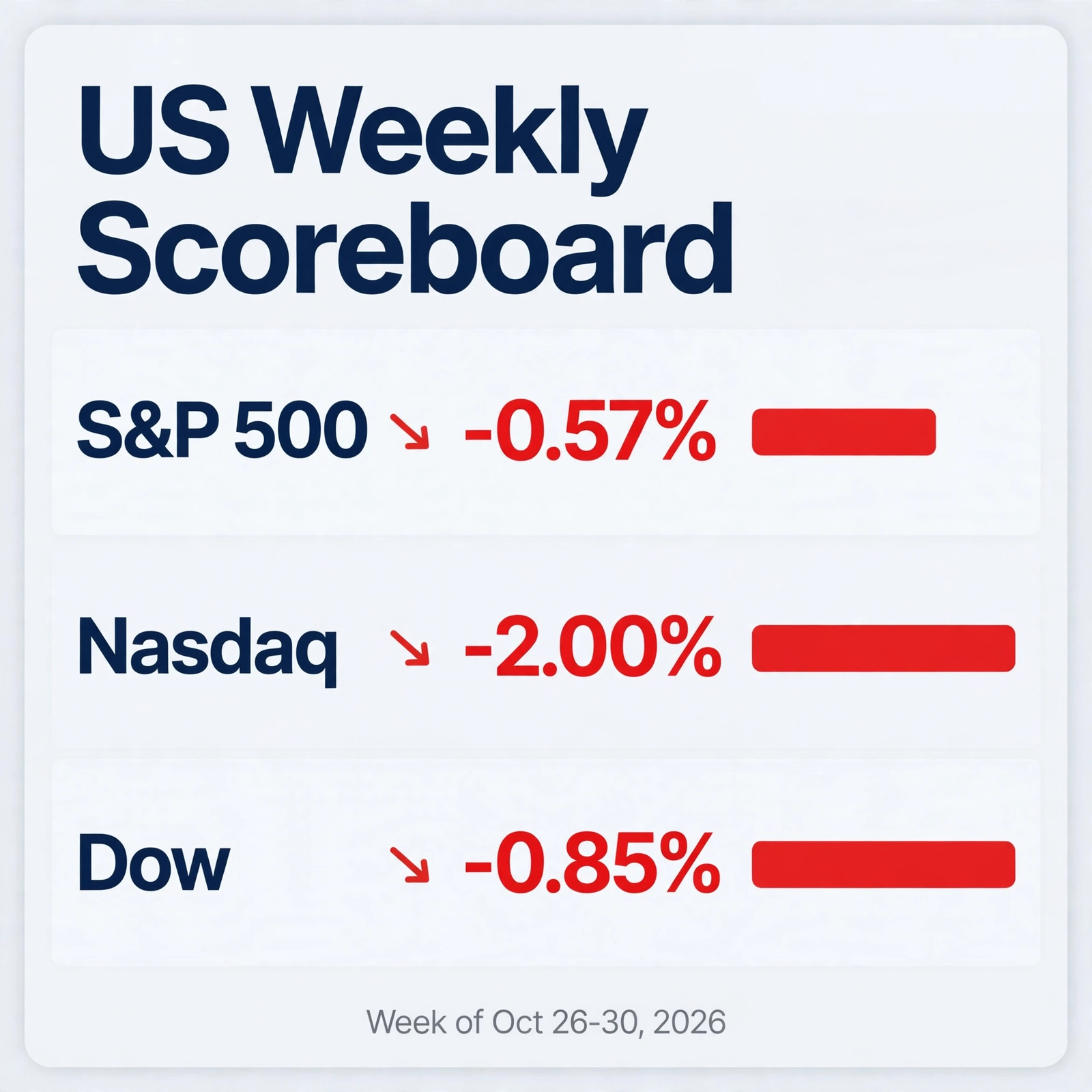
US stock market weekly recap for October 26–30. The S&P 500 fell 0.57%, the Nasdaq 2.00% and the Dow 0.85%, while small-cap Russell 2000 rose more than 1%. A Fed hold, Big Tech earnings, the Binance hack and an oil surge split the week. Next week brings the midterms and the October jobs report.
5minbrief on YouTube
The briefs also come as videos. Get the daily market wrap on YouTube.
Subscribe on YouTube