 5-minute briefs
AI Funding Fear KOSPI Transmission Analysis Hyperscaler Bonds Foreign Selling
Step 1 — the funding headline: Oracle’s $20 billion, Meta’s bond review
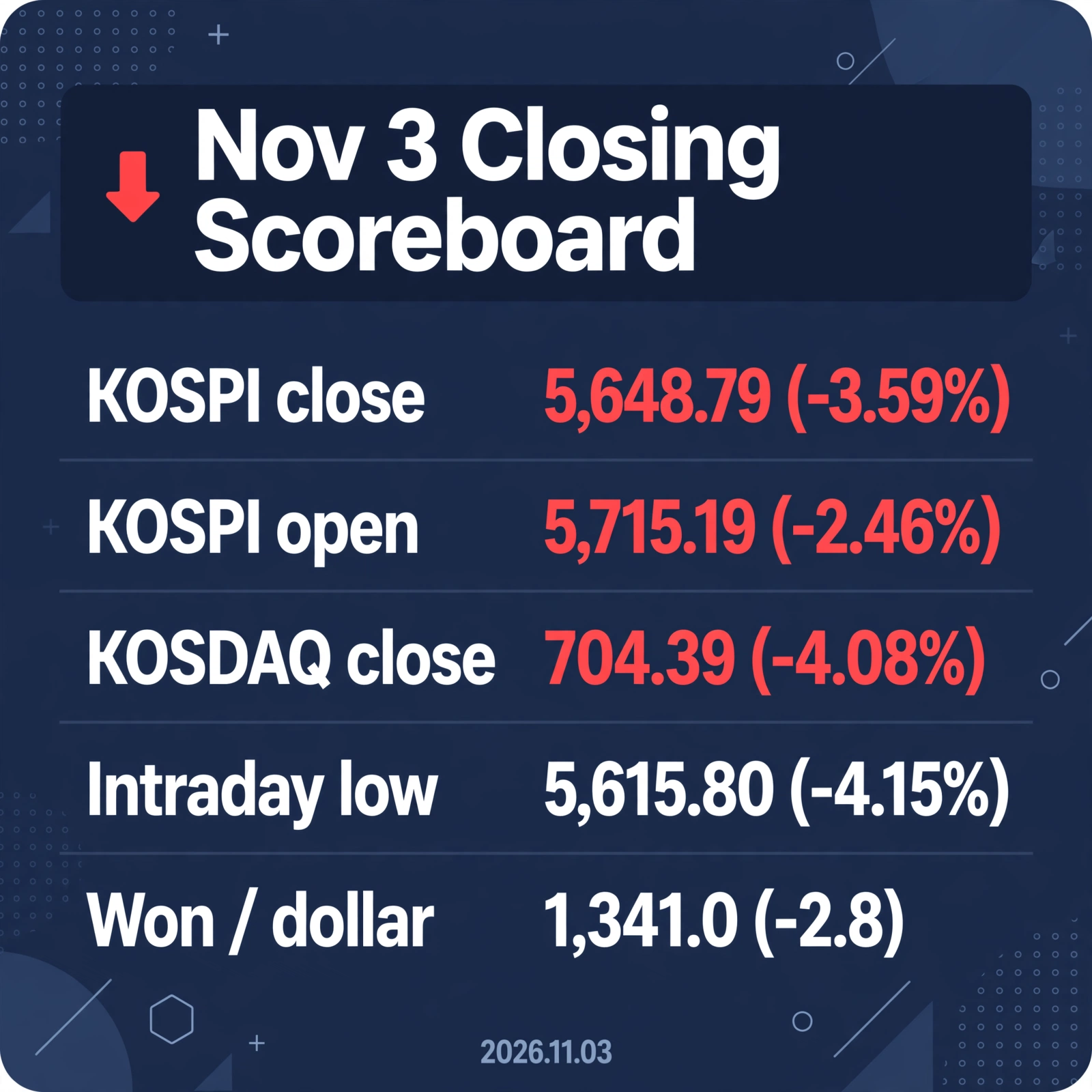
The chain started in the United States. Oracle fell 8.8% on plans to raise $20 billion through stock and bond sales for AI infrastructure, reports said Meta is considering a bond issue of more than $20 billion, and Anthropic’s amended filing showed large spending commitments alongside rising revenue. On November 2 in New York, the Nasdaq fell 1.07% and the PHLX Semiconductor Index fell 3.37%.
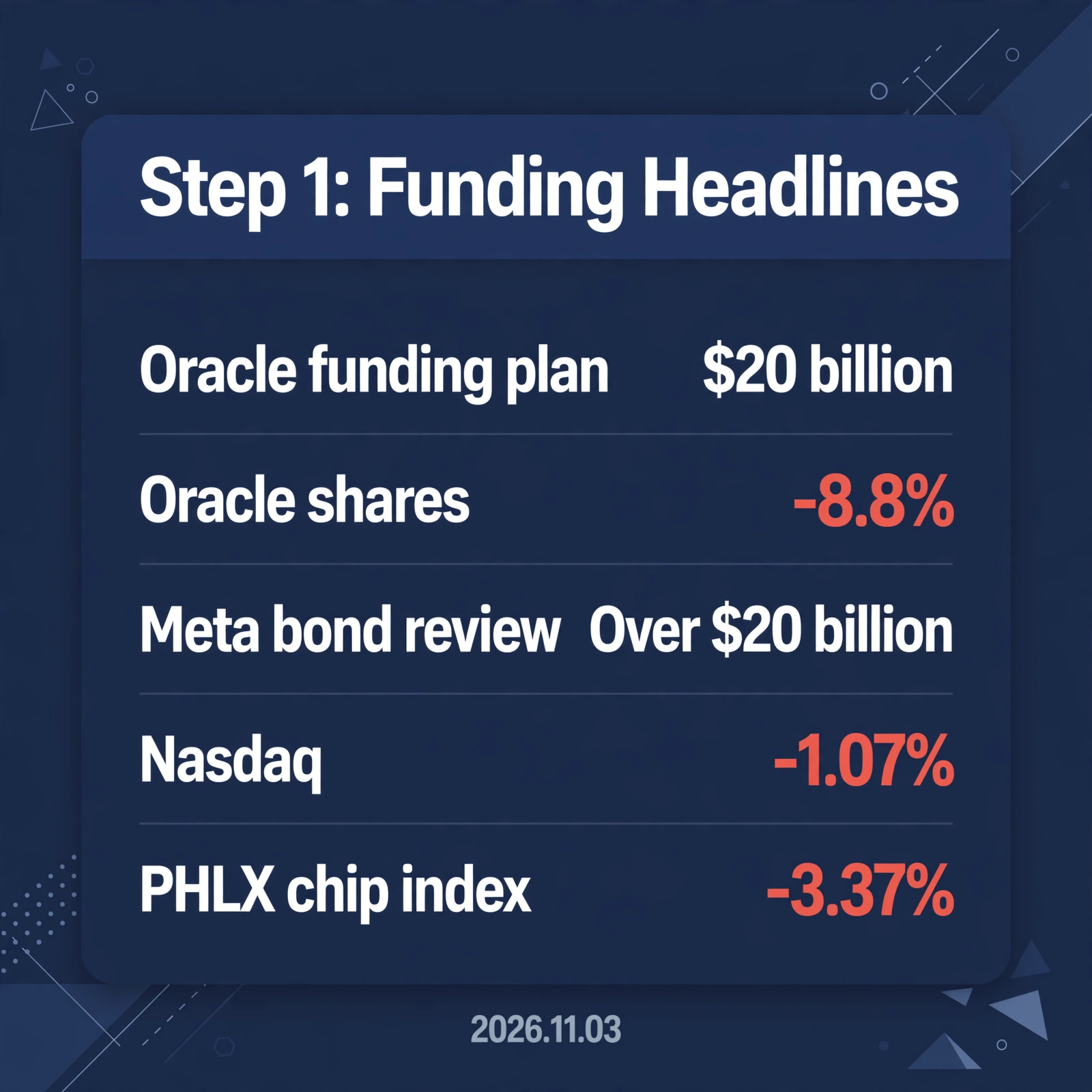
The distinction matters. Investors did not suddenly doubt that AI infrastructure is needed — cloud and AI demand remains large. They doubted whether debt-funded AI spending earns its keep: can the borrower generate enough cash to service the debt? The October 30 debate about Alphabet’s and Amazon’s capital spending versus free cash flow was the first half of that question. The bond headlines are the second half — they force the market to ask about the funding method, not just the investment itself.
Step 2 — foreign selling: the most liquid names get sold first
The bridge to Korea is foreign flows. On November 3, foreign investors sold a net 2.03 trillion won of KOSPI shares and institutions sold a net 0.87 trillion won, a combined 2.90 trillion won. Retail investors bought a net 2.60 trillion won but could not hold the index. Why? When foreigners de-risk, they sell what they can sell first and in size — Samsung Electronics and SK hynix, because those are the names with enough liquidity to absorb a large order in a single day.
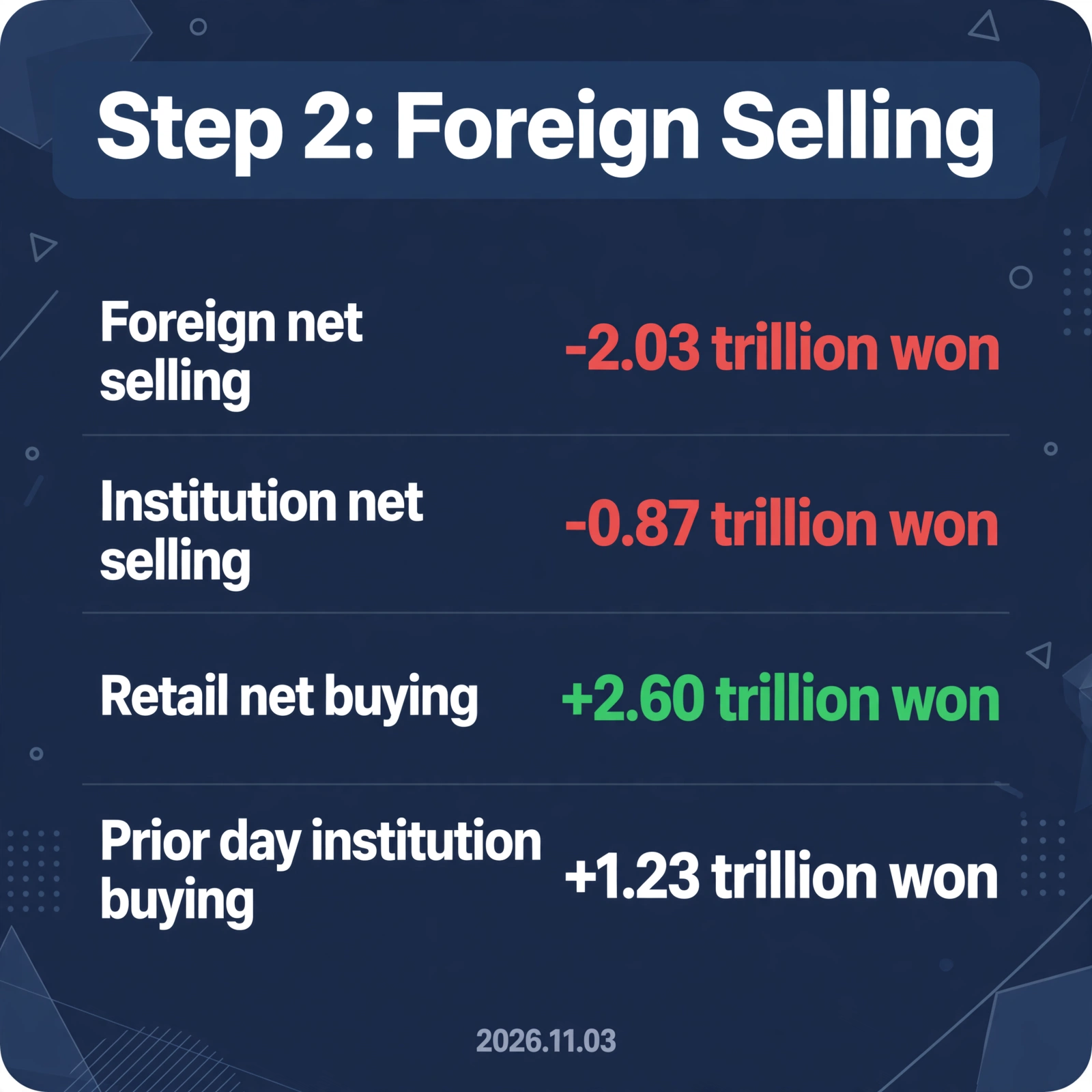
The contrast with the previous day proves the mechanism. On November 2, institutions bought a net 1.23 trillion won and led a rebound, while foreigners — net sellers overall — still bought a net 121 billion won of Samsung Electronics. Stock selection was alive. On November 3, selection vanished into blanket selling. Once the worry was framed as a market-wide funding problem rather than a single company’s problem, foreigners cut exposure without discriminating.
Step 3 — amplification: why a 1.07% Nasdaq fall becomes a 3.59% KOSPI fall
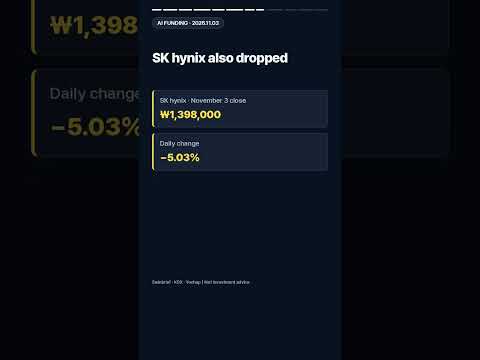
The final step is amplification. Samsung Electronics fell 4.15% to 219,500 won and SK hynix fell 5.03% to 1,398,000 won, with Samsung Electro-Mechanics (–7.38%), SK Square (–5.37%) and LG Energy Solution (–5.06%) falling alongside them. Seoul fell more than three times as much as the Nasdaq not because Korea is riskier in general, but because the Korean index is far more exposed to a single theme — semiconductors. In the US, the Dow actually rose 0.41%, spreading the shock. In Korea, there was little else to spread it to, apart from pharmaceuticals (+0.58%) and Samsung Biologics (+2.11%).
This is a repeating structure, not a one-off. On October 30, the PHLX Semiconductor Index plunged 7.20% and the KOSPI fell 3.48%; on November 2 it rebounded 2.24%; on November 3 it plunged again. The chain — US AI funding news → foreign selling → chip-giant declines → index plunge — is now a known path, which means the next funding headline will travel down it too.
What breaks the chain — three signals to watch
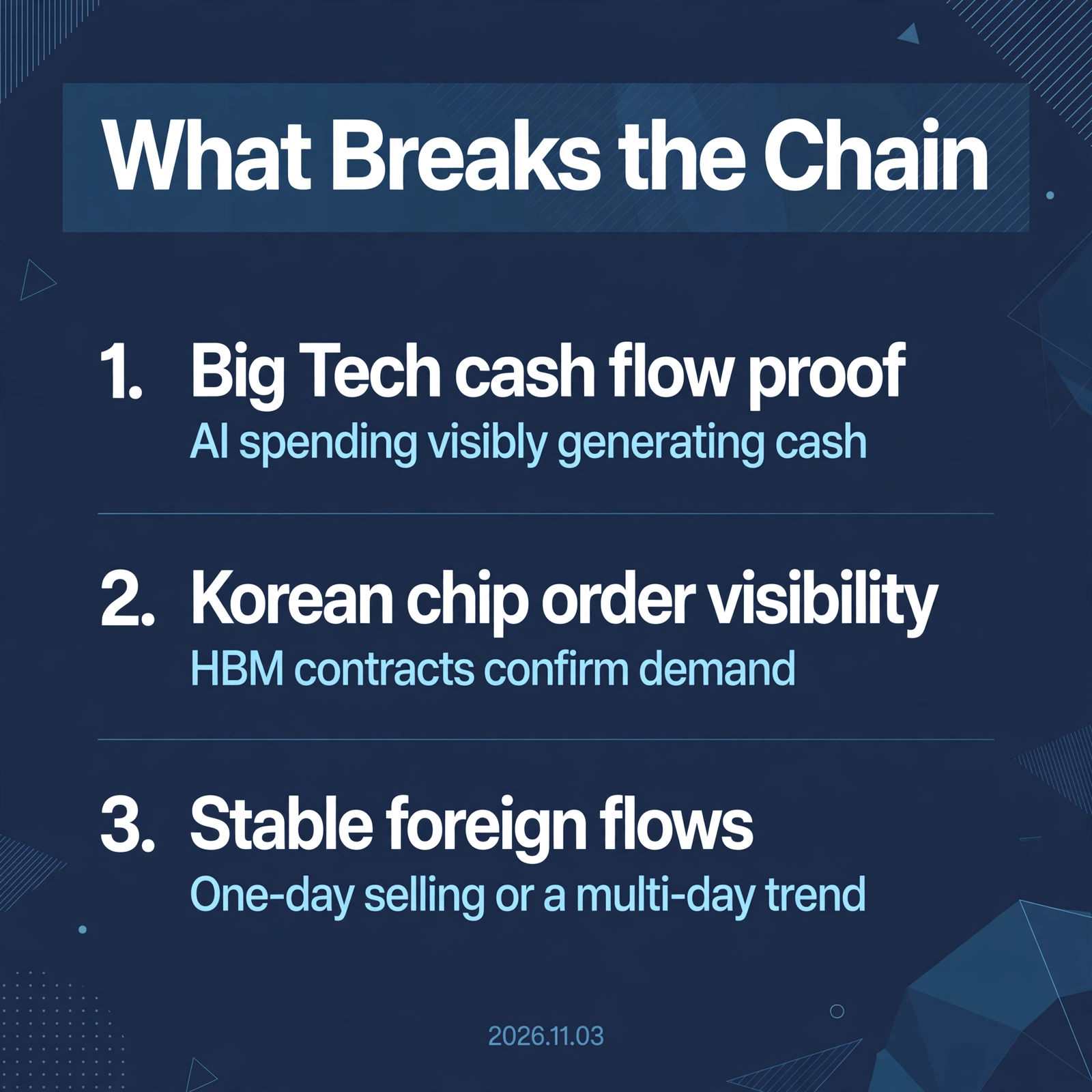
The chain breaks when one of three things changes. First, cash-flow evidence from Big Tech: earnings or guidance showing AI investment actually generating cash would weaken the funding worry. Second, order visibility for Korean chipmakers: confirmed HBM and AI chip contracts would loosen the link between US funding news and Korean chip earnings. Third, stability in foreign flows: if foreign selling stops after one day, November 3 looks like a shock; if it runs for three days or more, it looks like a re-rating.
The practical takeaway for a foreign investor is one sentence: when you hold Korean chip stocks, watch US AI funding headlines before US AI stock prices. Prices are the result; funding news is closer to the cause. The next time an Oracle, Meta or Anthropic funding headline lands, compare how much Seoul moves versus how much the Nasdaq moves — that ratio is the fastest gauge of whether Korea’s AI premium is healing or still fragile.
Not investment advice. Figures are from the Korea Exchange, Yonhap News and Financial News, as verified on November 3, 2026.
Watch the video
Sources & references
- Financial News (English) — KOSPI tumbles 3.59% as AI jitters outweigh lower oil prices — November 3 KOSPI close at 5,648.79 (–3.59%), foreign and institutional net selling, KOSDAQ at 704.39
- Financial News (English) — KOSPI falls more than 3% as foreign and institutional investors sell KRW 2.8 trillion — Meta and Oracle each seeking $20 billion, Anthropic filing, afternoon KOSPI at 5,640.10 (–3.74%)
- Yonhap News — (LEAD) Seoul shares dip over 3 pct amid escalating AI woes — Nasdaq –1.07%, SOX –3.4%, Samsung and SK hynix declines, won at 1,341
Related articles
- KOSPI 3.59% Plunge Foreign Institutional 2.9 Trillion Won Selling AI Funding Fear
November 3 Korea market close: the KOSPI fell 3.59% to 5,648.79 and the KOSDAQ fell 4.08% to 704.39 as AI funding worries and US midterm caution triggered heavy foreign and institutional selling. Retail investors bought a net 2.60 trillion won alone. What it means for EWY holders.
- KOSPI Failed Rebound Analysis 5,018 Close Foreign Selling Streak and Nvidia Probe
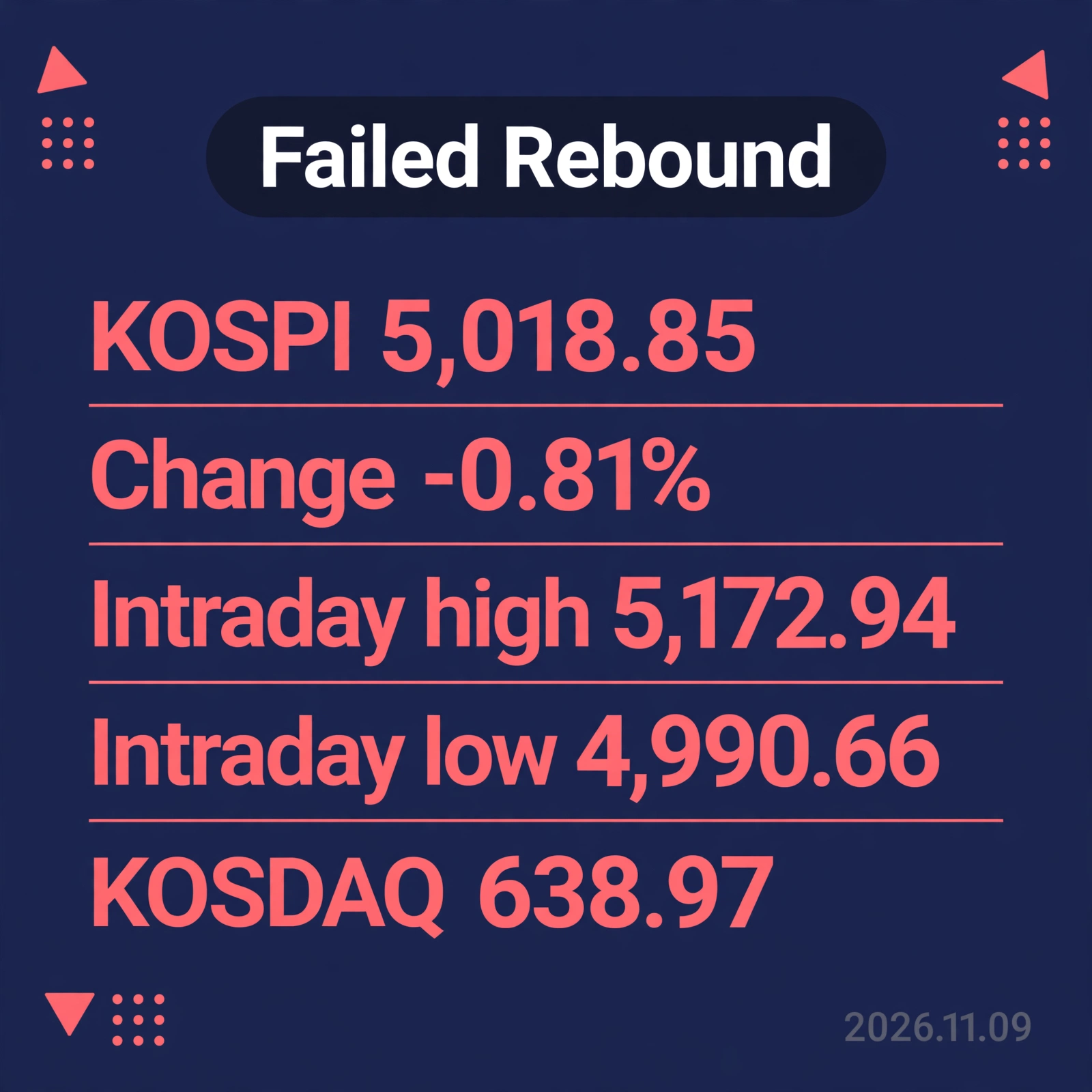
November 9 in Seoul: the KOSPI rallied 2.24% intraday to 5,172.94 but closed at 5,018.85 (−0.81%). Foreigners sold a seventh straight session, an Nvidia board probe capped the rally, and battery stocks gave back the blue-wave rally.
- KOSPI Monday Preview: 10.4 Trillion Won Foreign Selling, Won at 1,356.6, Margin Relief Starts
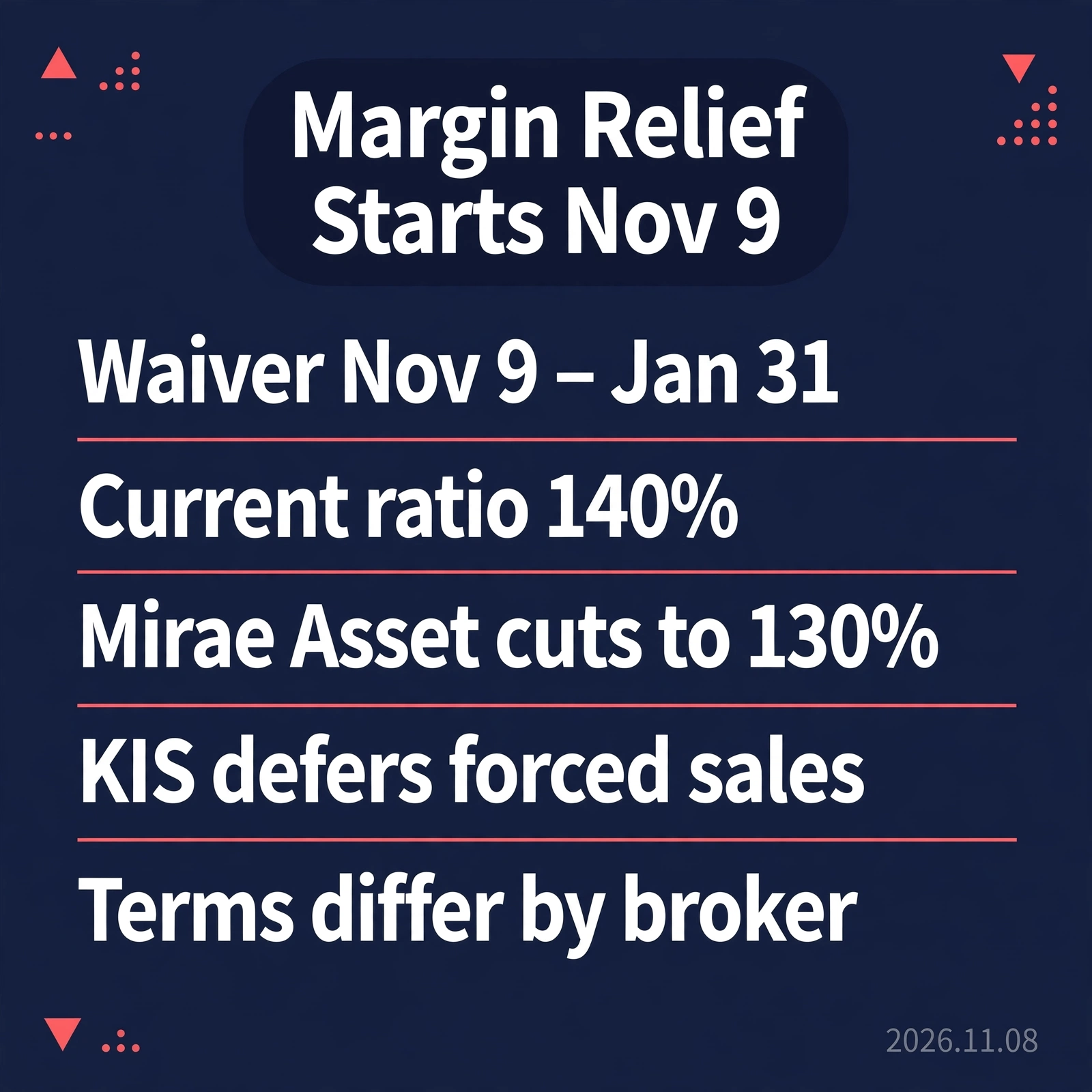
Korea market Sunday edition: Seoul is closed today, but the weekend formalized three months of margin-loan relief starting Monday. Foreigners sold about 10.4 trillion won of KOSPI shares last week, yet the won held at 1,356.6 — semiconductor export dollars and a record current-account surplus did the holding.
5minbrief on YouTube
The briefs also come as videos. Get the daily market wrap on YouTube.
Subscribe on YouTube