 5-minute briefs
China PMI Contraction Korea Export Impact Analysis Manufacturing 49.3 Intermediate Goods Demand
The numbers — production, orders and export orders cooled together
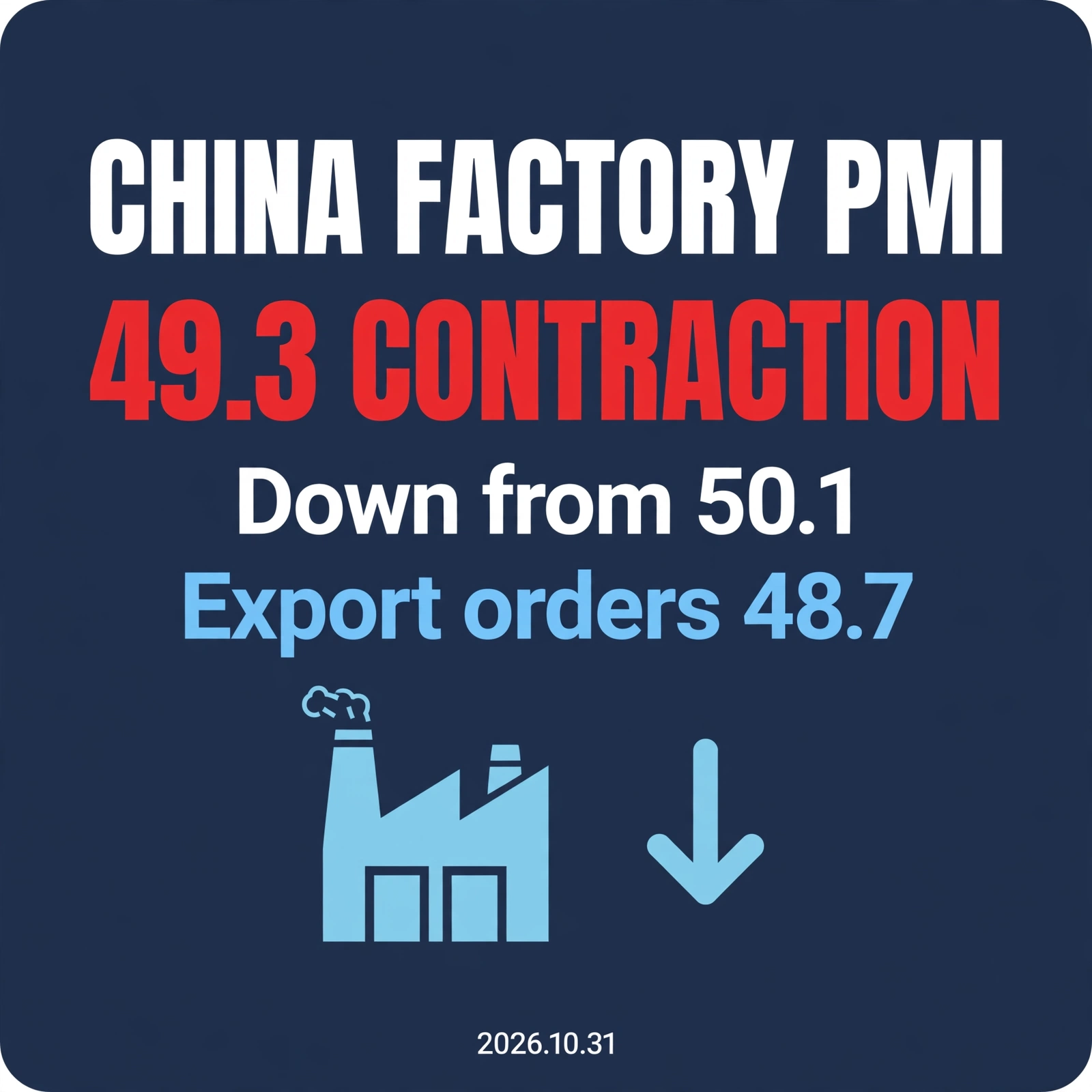
China’s National Bureau of Statistics reported on October 31 that all three headline gauges fell below the 50 line that separates expansion from contraction: manufacturing PMI 49.3 (from 50.1, –0.8 points), non-manufacturing activity 49.7 (from 50.2, –0.5 points) and the composite PMI 49.7 (from 50.7, –1.0 points). The manufacturing reading missed the Reuters consensus of 50.0 and marked the third contraction in four months, after July (49.2) and August (49.8). September’s return to expansion lasted exactly one month.
The sub-indexes matter more than the headline. Production fell to 49.8 (–1.9 points) and new orders to 49.4 (–1.1 points), so supply and demand cooled together, and new export orders fell from 50.0 to 48.7. The statistics bureau blamed demand pulled forward ahead of the National Day holiday (October 1–7) and a complicated international environment. A holiday effect could reverse in November’s data — but the export-order drop was larger than the domestic-order drop, which is harder to explain with the holiday alone.
The split — large firms and high-tech hold, small firms get colder
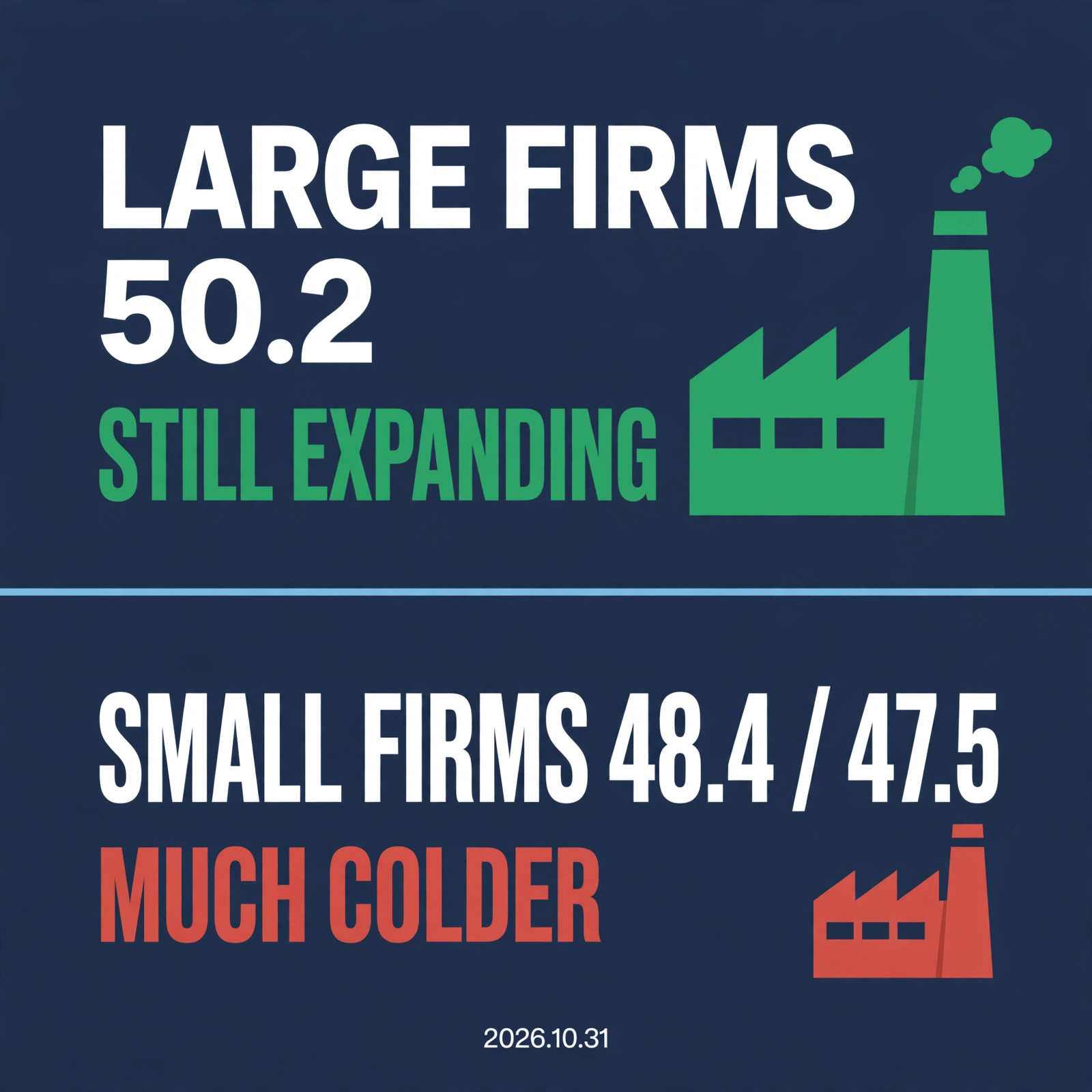
Inside the same 49.3, the temperature differs sharply. Large firms stayed in expansion at 50.2, high-tech manufacturing at 51.3 and equipment manufacturing at 50.6, with production and new-order indexes for railway, shipbuilding, aerospace equipment and computer, communications and electronics manufacturing all at or above 53.0. By contrast, medium firms fell to 48.4 (–1.3 points) and small firms to 47.5 (–1.4 points), and the employment index stayed at 48.4, signaling continued softness in factory hiring.
For EWY holders, the split gives two practical signals. First, do not treat “China demand” as one number: where high-tech and equipment manufacturing hold up, demand for Korean chips, equipment and components has a cushion; where small firms and consumer-goods makers cool, price competition in commodity materials and parts intensifies. Second, watch the policy response: an analyst at the China Federation of Logistics and Purchasing warned that insufficient demand is increasing downward pressure on the economy and urged faster support. If stimulus comes, it is likelier to reach high-tech and equipment makers first — the same pocket where Korean suppliers are exposed.
Why export orders at 48.7 reach Korea
China is Korea’s largest export market, and much of what Korea ships to China is intermediate goods that Chinese factories process and re-export. A fall in Chinese export orders therefore reaches Korea in two steps: lower Chinese factory utilization cuts orders for Korean intermediates, and weaker Chinese final exports confirm softer global demand itself. PMI is a survey, not a shipment count, so it leads actual trade figures by weeks — but as a direction signal it is among the fastest available.
The honest limit matters too. A PMI of 49.3 means more managers reported contraction than expansion versus the prior month; it is not a recession call, and the resilience of high-tech manufacturing shows demand is rotating, not vanishing. The practical message for foreign investors is not “sell all China-exposed Korean stocks” but “confirm direction in Korea’s October trade data and November’s China PMI before adding to China-exposed names”. Commodity chemicals, steel and display materials exposed to both Chinese domestic demand and exports feel this print more directly than memory chips tied to global AI demand.
Three numbers to check next
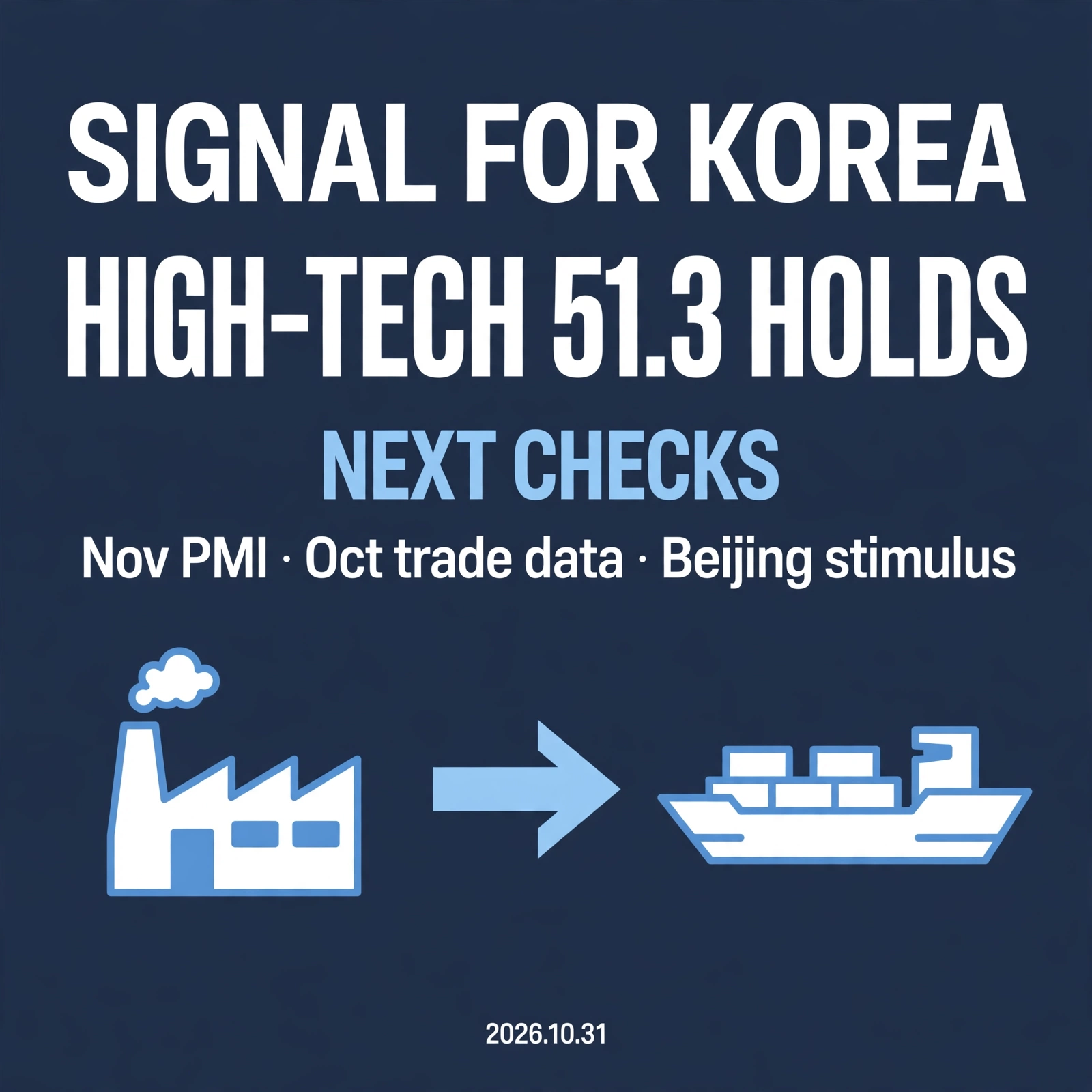
First, does November’s China manufacturing PMI retake 50? With the holiday distortion gone, failure to recover would turn a one-month dip into a trend. Second, do Korea’s October trade figures confirm the signal in shipments to China and in semiconductor exports? The PMI is a lead indicator; the trade data are the receipt. Third, does Beijing respond, and to whom? The size and target of any support — consumer goods versus high-tech manufacturing — decides which Korean exporters benefit. If all three answers come back negative, treat China exposure as a quarter-long headwind for affected Korean names, not a one-week event.
Not investment advice. Figures from China’s National Bureau of Statistics, Yonhap and CNA, checked October 31, 2026.
Watch the video

Sources & references
- CNA — China's factory activity marks third contraction in four months — China October manufacturing PMI 49.3, sub-indexes, demand background
- Yonhap — China's October manufacturing PMI falls to 49.3 — Korean-language cross-check of PMI levels and sub-indexes
Related articles
- KOSPI Rebound Analysis 2.24% Rally Institutional Buying Low PBR First Day
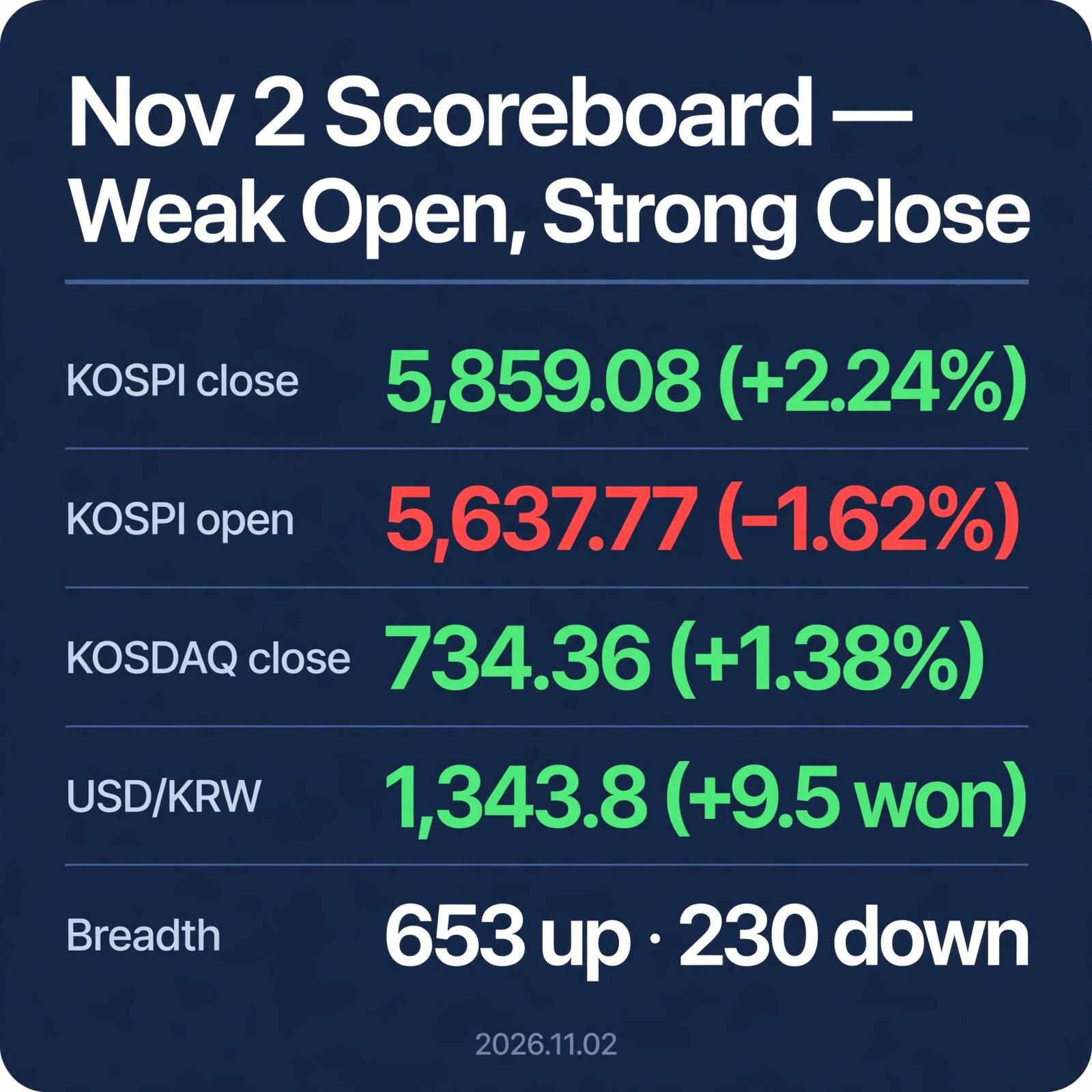
November 2 Korea market brief for foreign investors: the KOSPI opened down 1.62% on the US chip selloff, then rallied 2.24% to 5,859.08 on institutional buying and a strong first day for the low-PBR name list. Foreigners sold a net 373.1 billion won overall but bought Samsung Electronics.
- Korea Weekend Brief China PMI Contraction US Tech Selloff Samsung Shareholder Return Analysis
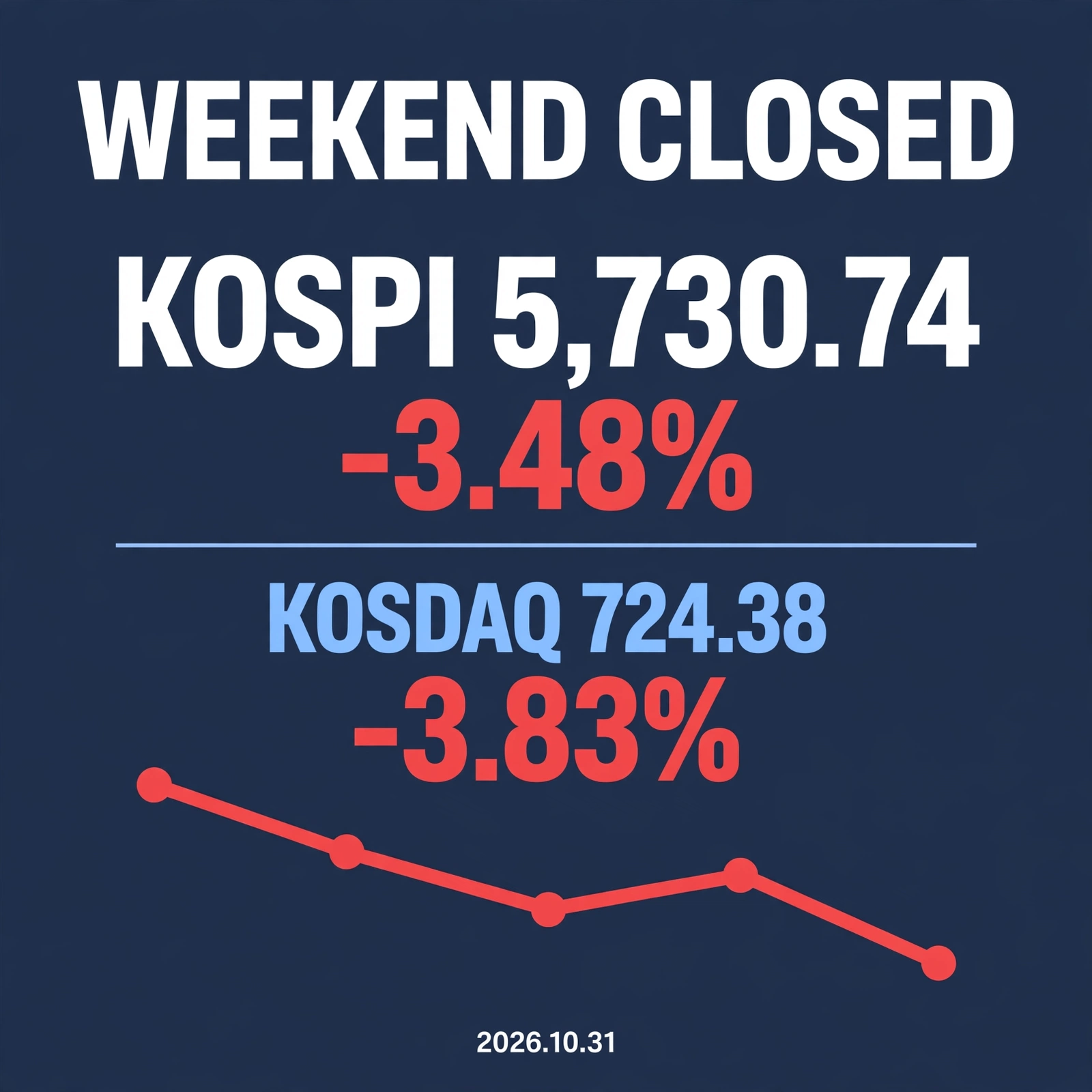
October 31 Korea weekend brief for foreign investors: Seoul is closed for the weekend, with the KOSPI last at 5,730.74 (-3.48%). Overnight the Nasdaq fell 2.86% on Intel's plunge, China's October manufacturing PMI slipped to 49.3, and WTI crude rose to $104.12 on a Strait of Hormuz incident. Samsung's remaining KRW 55–75 trillion ($41–56 billion) of returns awaits a January board decision.
- Korea stocks selloff chaebol market cap loss won strength foreign investors analysis
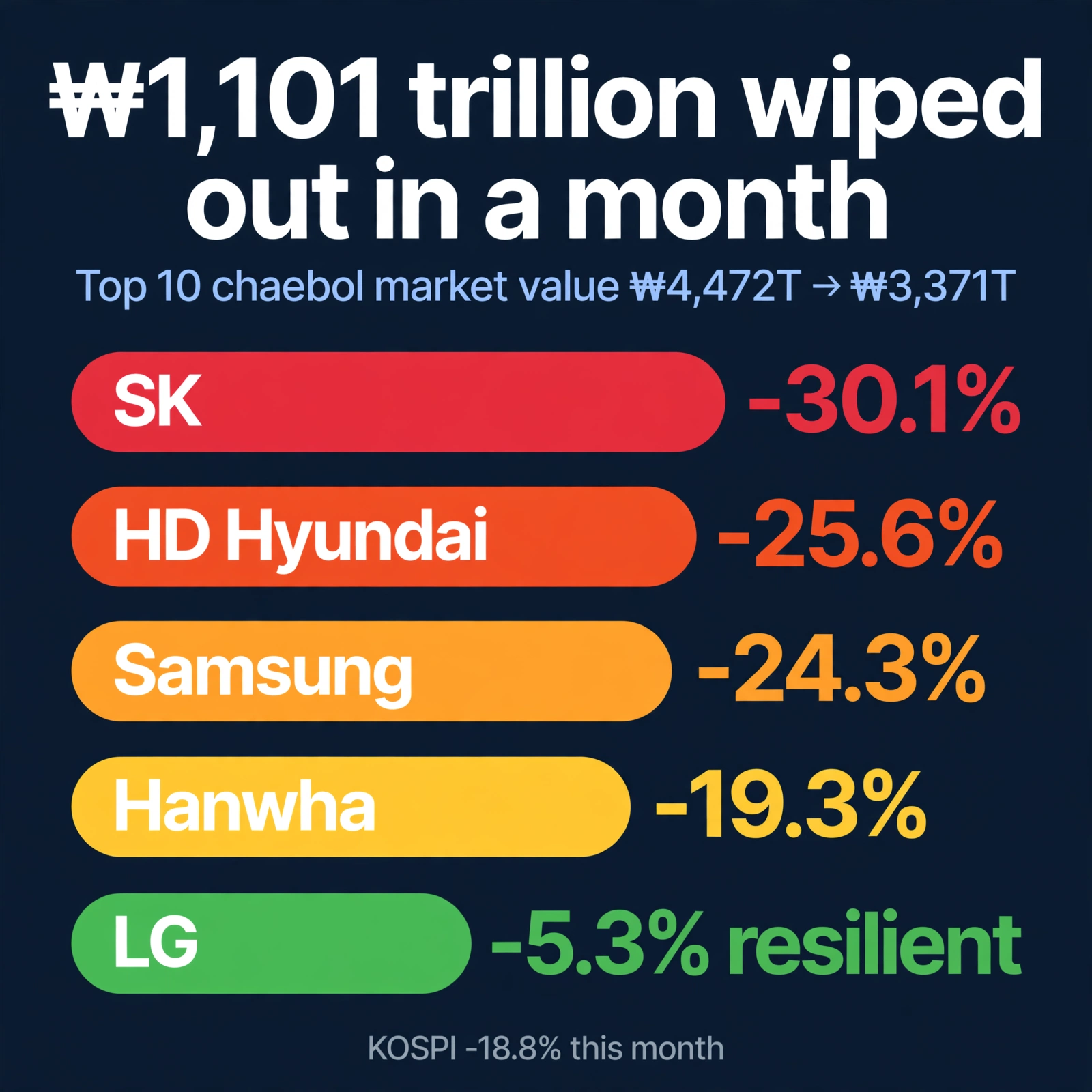
Sunday October 25 is a Korean market holiday. Friday's close: KOSPI 5,550.30 (+0.30%), KOSDAQ 751.69 (-1.62%). This weekend's three stories for global investors: Korea's top 10 chaebol groups lost about ₩1,101 trillion in market value in a month, the won strengthened to a two-year high despite roughly ₩40 trillion in foreign selling, and bank delinquencies hit a near-decade high as the Bank of Korea weighs another hike.
5minbrief on YouTube
The briefs also come as videos. Get the daily market wrap on YouTube.
Subscribe on YouTube