 5-minute briefs
Oil Price Outlook Brent 116 Dollars Saudi East-West Pipeline Attack Hormuz Bypass Risk Analysis (October 26)
What happened on Saturday: separate the claims from what is confirmed
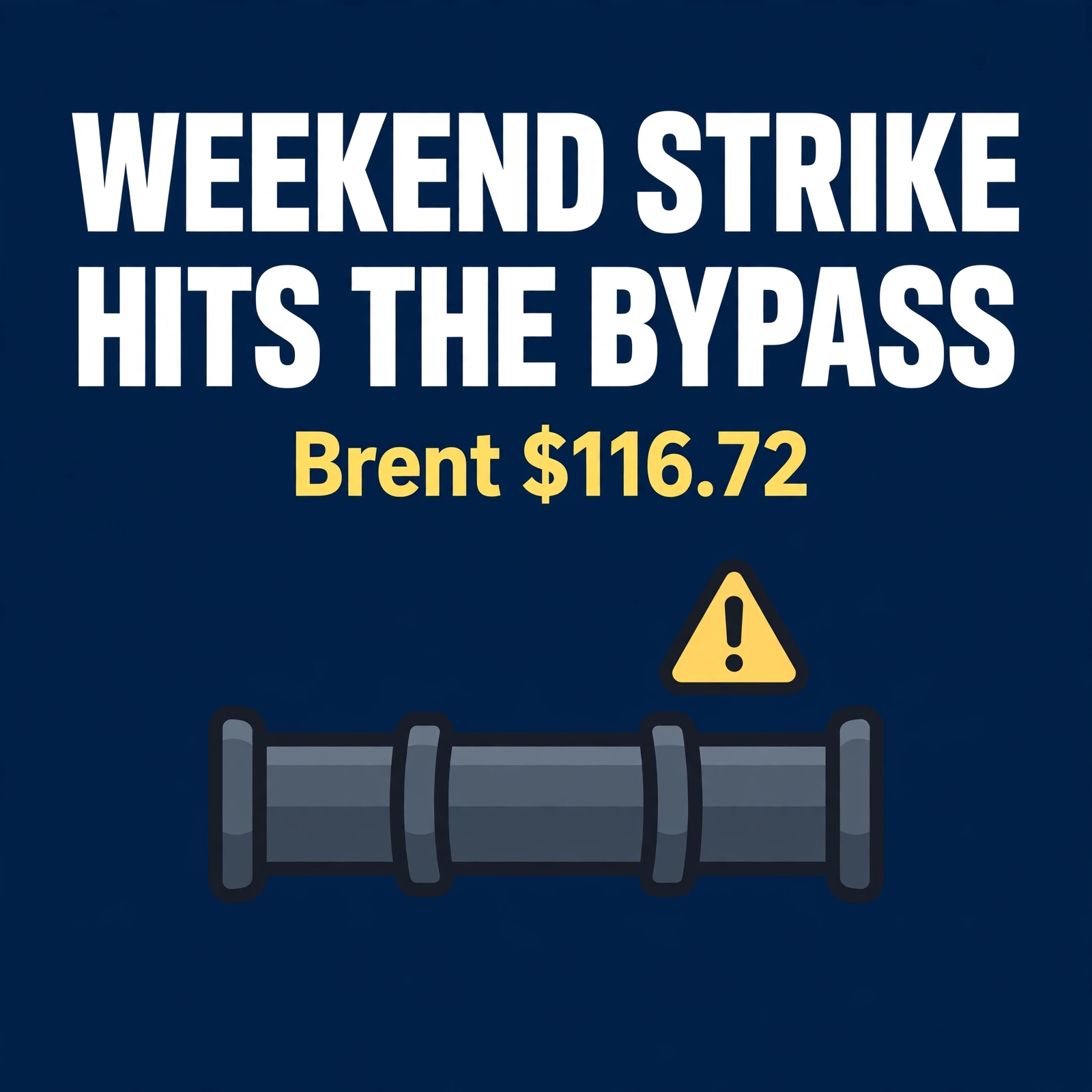
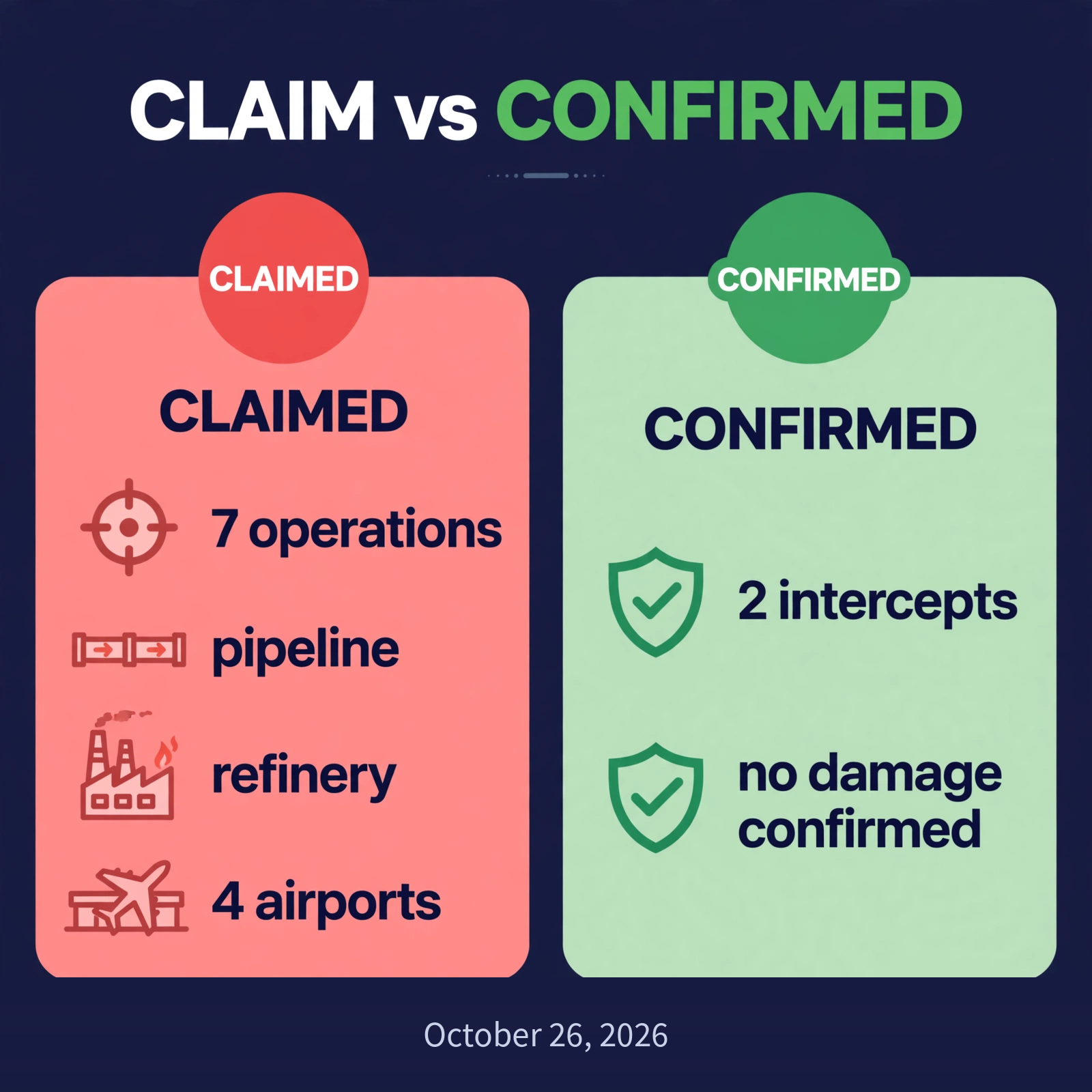
On Saturday, October 24, Yemen’s Houthi rebels claimed seven missile and drone operations. Spokesman Yahya Saree listed the claimed targets: the East-West crude pipeline and pumping stations, the Aramco facility at Yanbu and the Rabigh refinery, plus King Khalid Airport in Riyadh, King Fahd Airport in Dammam, Najran Airport and the Khamis Mushait air base. Four airports and energy sites claimed in a single day is what makes this round stand out.
What Saudi Arabia confirmed is different. The Saudi-led coalition said it intercepted two ballistic missiles aimed at Taif and Yanbu, and the civil defence agency reported interceptor debris falling around Mecca, Jeddah, Taif and Rabigh. Saudi authorities have not confirmed damage to any oil site. The Houthis denied targeting Mecca and Medina, saying their targets were oil facilities and military bases. The current state is therefore “large claims, no confirmed damage.” Riyadh airport said it would resume flights effective Sunday after a suspension that followed an attack on October 10.
The distinction matters because markets price the possibility of a supply disruption, not only an actual one. Confirmed damage would add to the risk premium; confirmed absence of damage would strip it out quickly. Reading weekend claims as a confirmed supply cut would be a mistake.
Why the East-West pipeline matters: the bypass itself became the target
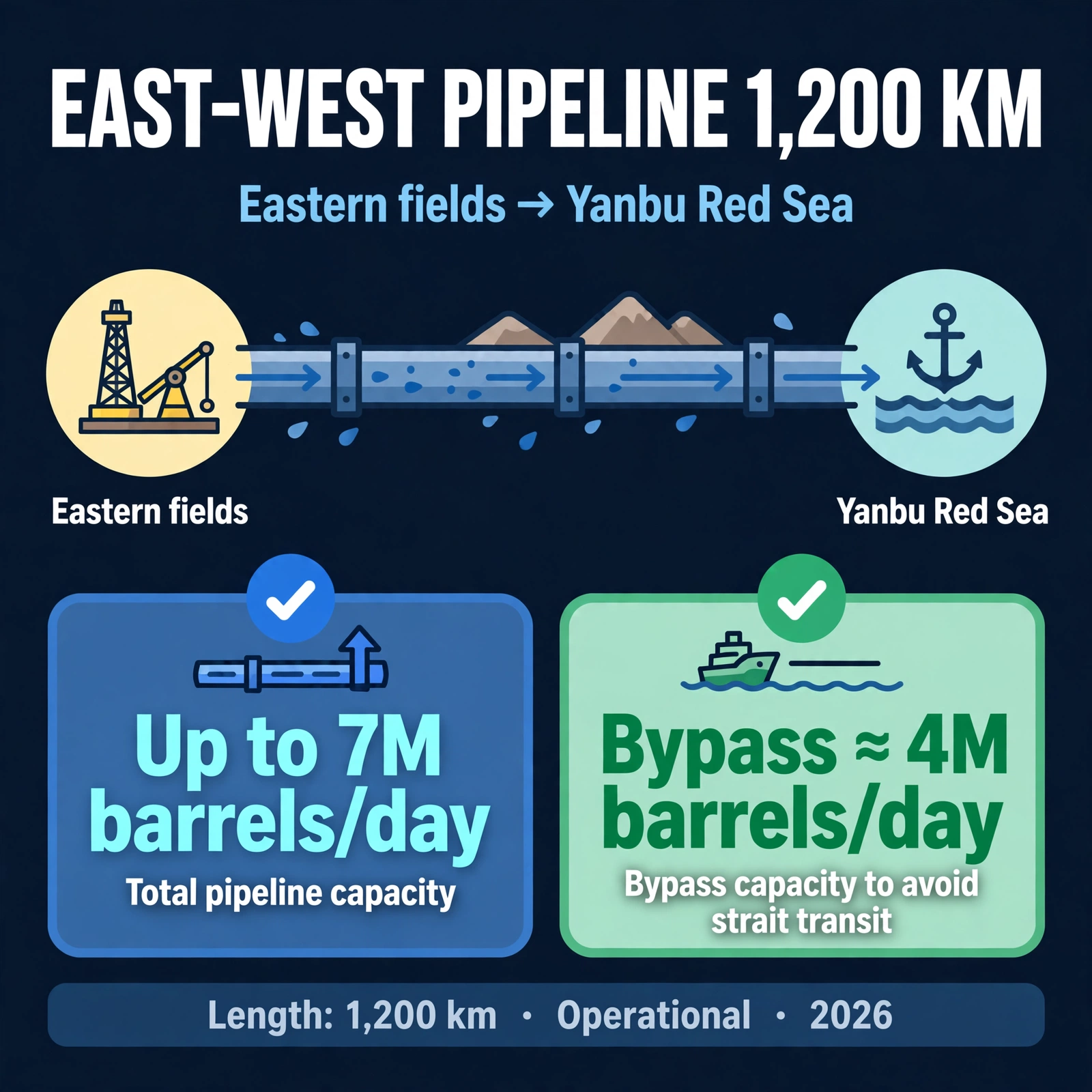
The East-West pipeline, known as the Petroline, is a 1,200 km pipeline built in 1981 that carries crude from the Abqaiq fields in the east to Yanbu on the Red Sea. Its original purpose was to export oil without passing through the Strait of Hormuz. Before the war, about 20 million barrels a day moved through the strait, roughly 20% of world consumption. The existence of a bypass was Saudi Arabia’s insurance policy for its exports.
The scale of that insurance is large. The pipeline’s maximum capacity is 7 million barrels a day, and the Saudi energy minister said on October 6 that flows had recovered to 5.8 million barrels a day. Of that, about 4 million barrels a day rerouted to Yanbu is roughly 4% of global supply. But the pipeline has already stopped once before: a precautionary shutdown followed drone strikes on pumping stations on September 11, with a restart around September 21–22, and August flows fell to about 2 million barrels a day. That the bypass can itself be hit is already proven, and Saturday’s claims aimed at it again.
There is a further limit. The Petroline carries Saudi crude only. Oil from Iraq, Kuwait, the United Arab Emirates and Qatar cannot use it, and the Red Sea shipping route itself sits under Houthi threat. A blocked strait, a shaken bypass and a threatened Red Sea route form a triple bind for Middle East energy flows. That is why Saturday’s claims read not as “one more attack” but as “an attack on the insurance itself.”
How it transmits to markets: oil rose, and futures opened slightly higher
Start with prices. Friday’s close left Brent at $116.72, up 6.4% for the week — the highest settlement since April 29 and the largest weekly gain since the week ending September 11. West Texas Intermediate closed at $103.27, up 4.3% for the week. The 10-year Treasury yield returned to 5.00%, while gold, the usual safe haven, fell 1.3% to $4,007.50. Gold falling despite war risk means the drag from higher real yields outweighed safe-haven demand.
Sunday evening futures opened calmly. Just after 6 p.m. ET on Sunday, S&P 500 futures were up 0.4%, Nasdaq 100 futures up 0.6% and Dow futures up 0.3% (165 points). Reading that as “the market ignored the oil shock” would be hasty. With damage unconfirmed, a small futures rise looks more like “wait until it is confirmed” than relief. If damage is confirmed, or if US military action moves from warning to execution, futures and oil may stop moving in the same direction. The market impact of the weekend attacks is still unjudged.
The next link in the chain is interest rates. The chance of an October Fed hold is priced above 90%, but a December hike is still priced around the 80% range. If oil pushes toward $120, headline inflation pressure grows and December-hike bets can firm up. If de-escalation signals emerge, analysts note the opposite risk: fast profit-taking and a sharp reversal. Both a reason to rise and a reason to fall are priced into oil right now. That neither side is settled is the essence of this issue.
- East-West pipeline (Petroline): a 1,200 km pipeline from Saudi Arabia's eastern oil fields to Yanbu on the Red Sea. It is the kingdom's main export route that bypasses the Strait of Hormuz.
- Strait of Hormuz: the only sea exit from the Persian Gulf. Before the war, about 20 million barrels a day passed through it, roughly 20% of world consumption.
- Risk premium: the extra amount in the oil price that reflects the chance of a disruption, even when no actual supply has been lost. Unconfirmed attack claims alone can add to it.
- Pumping station: a facility along a pipeline that adds pressure to move crude over long distances. If stations stop, the whole pipeline's throughput falls.
Three questions for investors
First, do Saudi Arabia or Aramco officially confirm whether oil facilities were damaged? Confirmed absence of damage would deflate the risk premium; confirmed damage could push oil toward $120. Second, does East-West pipeline throughput hold near 5.8 million barrels a day? The flow itself is the real scoreboard for this issue. Third, do US and Israeli warnings stay words, or turn into action? Washington has warned that fresh strikes could come as early as Sunday, while other reports describe plans to target Iranian energy facilities after the November 3 midterm elections. Warnings and execution are different news and should not be weighted equally. After tonight’s US open at 10:30 p.m. KST, the first clue will be whether futures and oil move together or diverge.
Sources & references
- ANI (via European Sun Times) — Houthis claim string of new attacks on Saudi Arabia — Houthi claims of attacks on the East-West pipeline and Saudi coalition interceptions
- Reuters (via The Circuitry) — Dow falls 653 points as Brent crude settles at its highest since April — Prior session (Oct 23) Brent settlement reference
Related articles
- Brent Crude Analysis: 18.4% Drop in Six Sessions on Negotiation Hopes
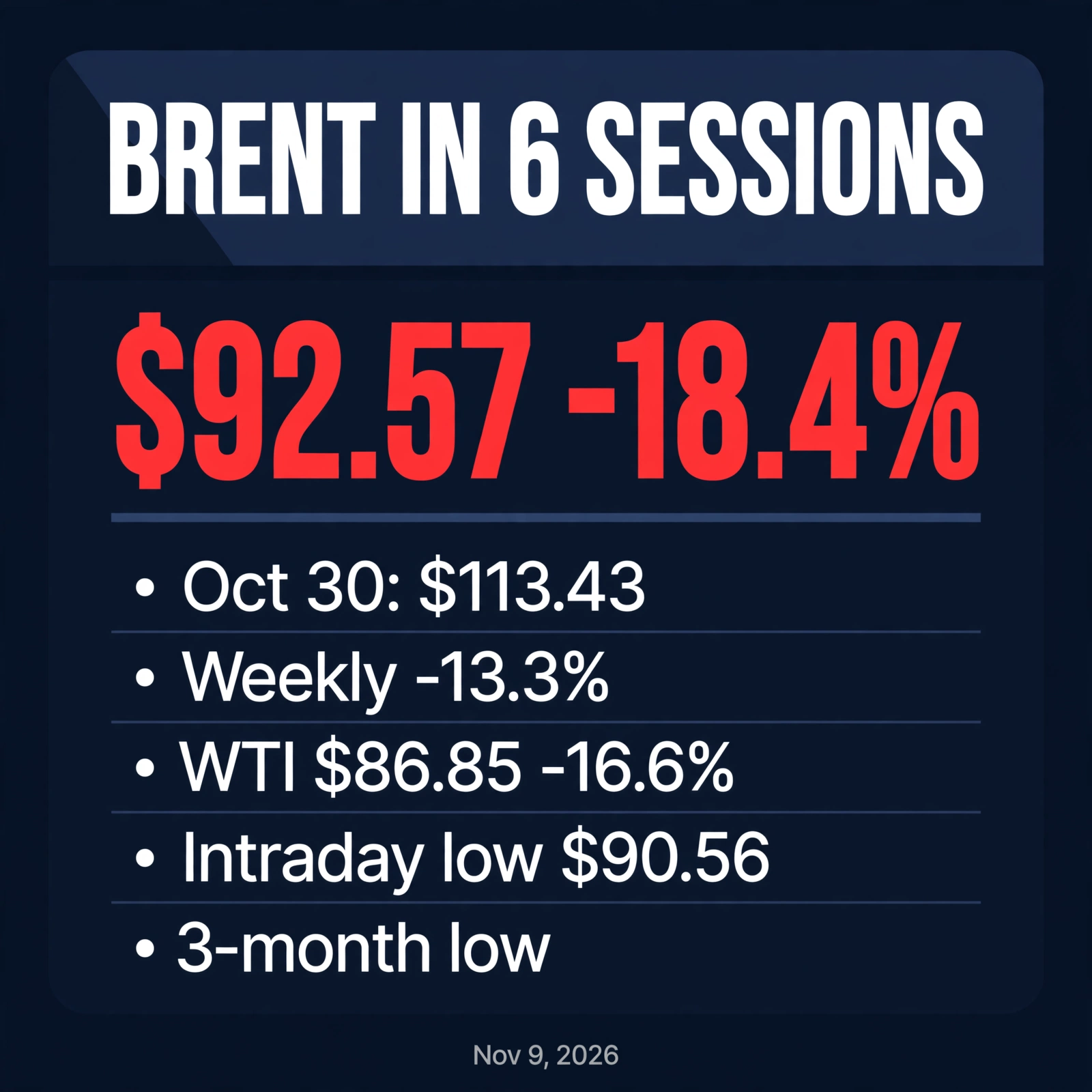
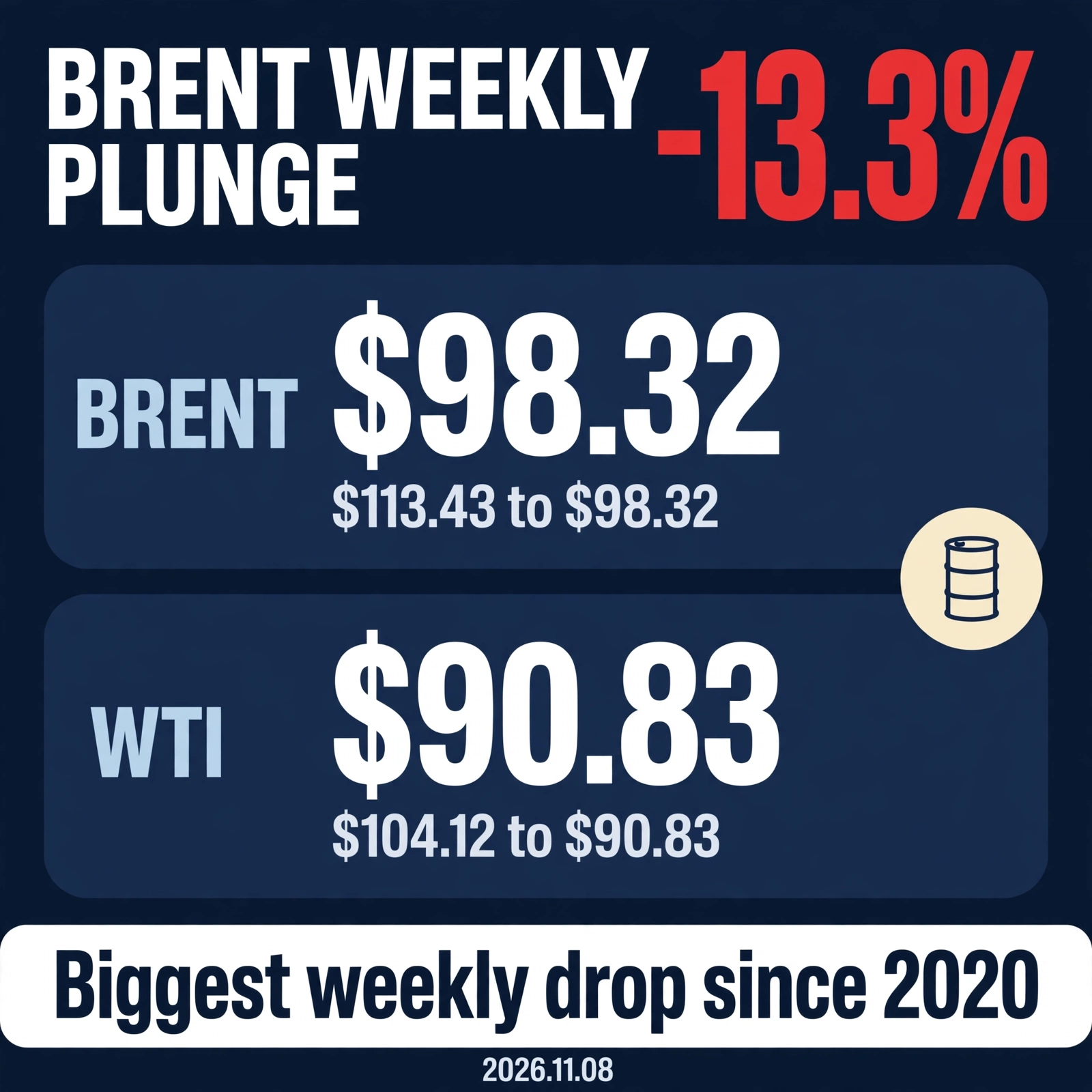
Brent crude has fallen 18.4% in six sessions, from $113.43 on October 30 to $92.57 on November 9. The war premium is unwinding fast — but analysts put renewed strikes at 60%, and that gap sets the terms for a reversal.
- Hormuz Oil Negotiation Analysis: Trump Restraint and Mining War
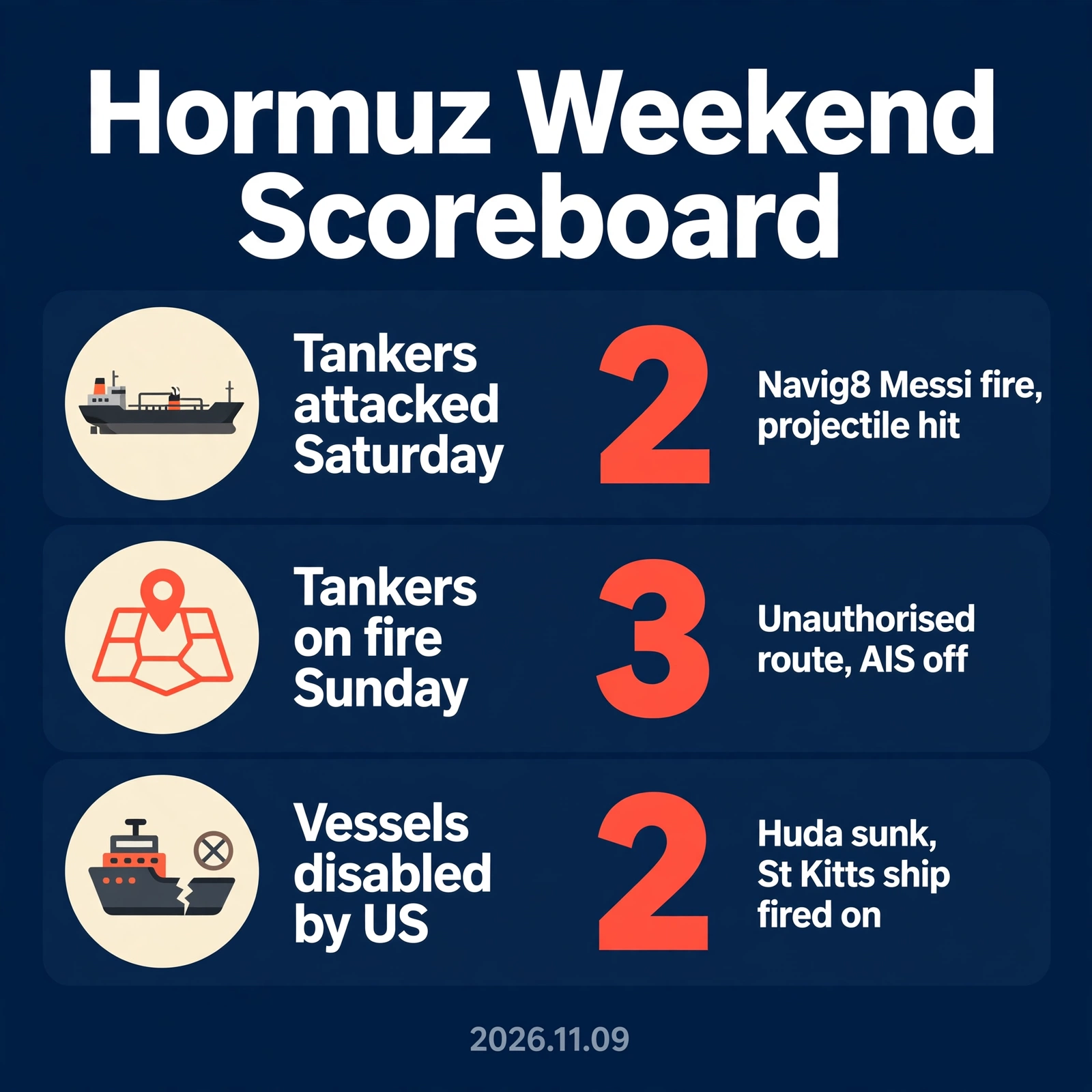
Three more tankers caught fire in the Strait of Hormuz over the weekend. Trump said fresh strikes are 'highly unlikely' if talks progress, while the IRGC keeps mining the strait. The fork Monday's open has to price.
- Strait of Hormuz Oil Price Analysis US Iran Strikes and 13% Weekly Drop
Brent crude fell 13.3% in a week to $98.32 as deal hopes drained the war premium — while attacks on Hormuz shipping ran at a near-record pace and the US struck Qeshm Island. The gap between market pricing and events on the water.
5minbrief on YouTube
The briefs also come as videos. Get the daily market wrap on YouTube.
Subscribe on YouTube