 5-minute briefs
Meta Q3 Earnings: 2-for-1 Stock Split and Nonvoting Shares to Fund AI
Record revenue, tripped up by a litigation charge
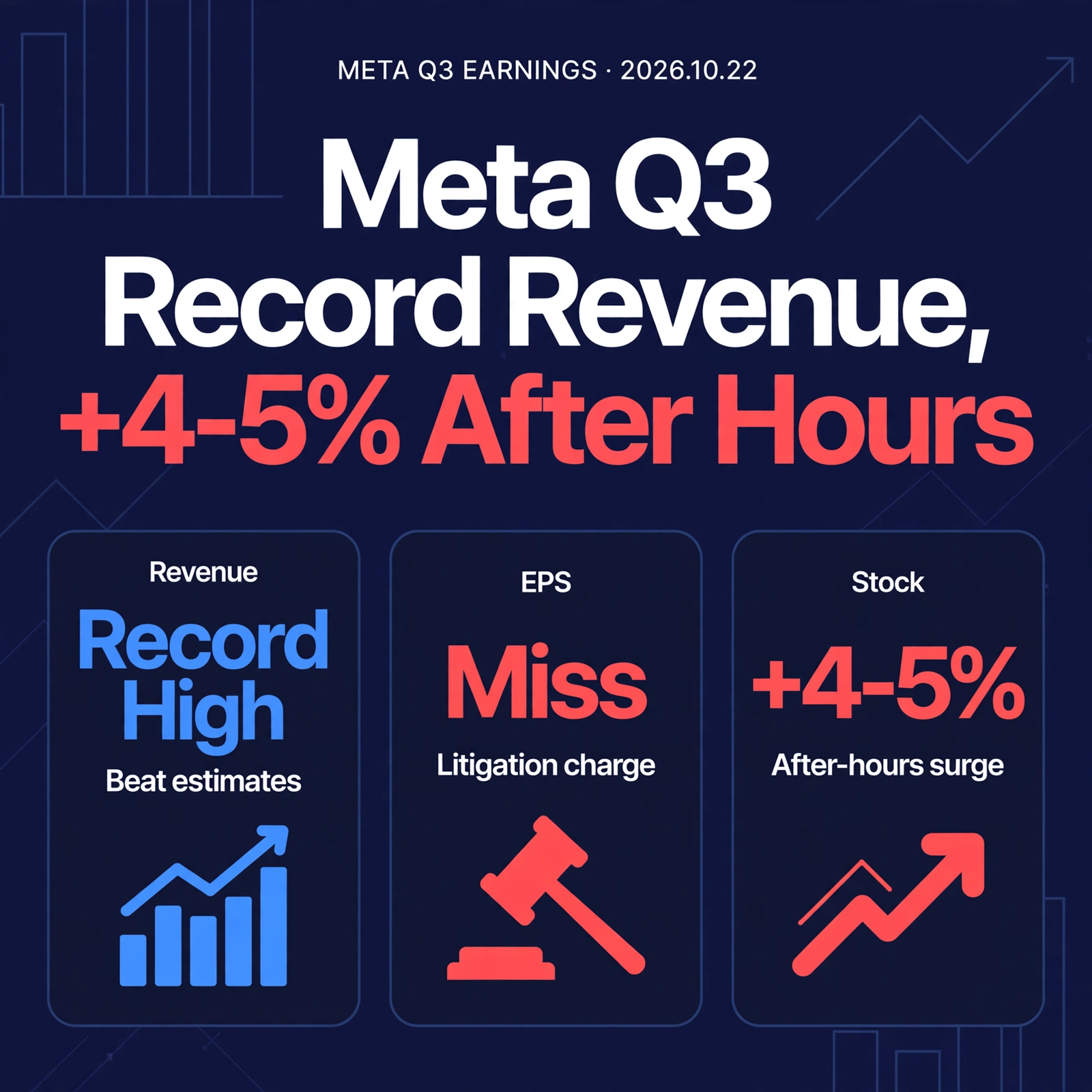
Meta’s Q3 was a tale of two numbers. Revenue was a record, beating Street estimates, but earnings per share missed on a large litigation charge — tied to a New Mexico jury’s $25 billion verdict against the company over data-privacy claims.
The key to reading the quarter is separating one-off costs from recurring profit. The charge hits this quarter only; it’s not a signal that the ad business is weakening. The market seemed to read it that way: after five straight down sessions, shares rose 0.5% to $697.52 in regular trading, then surged after hours.
The 2-for-1 split: what it means for investors
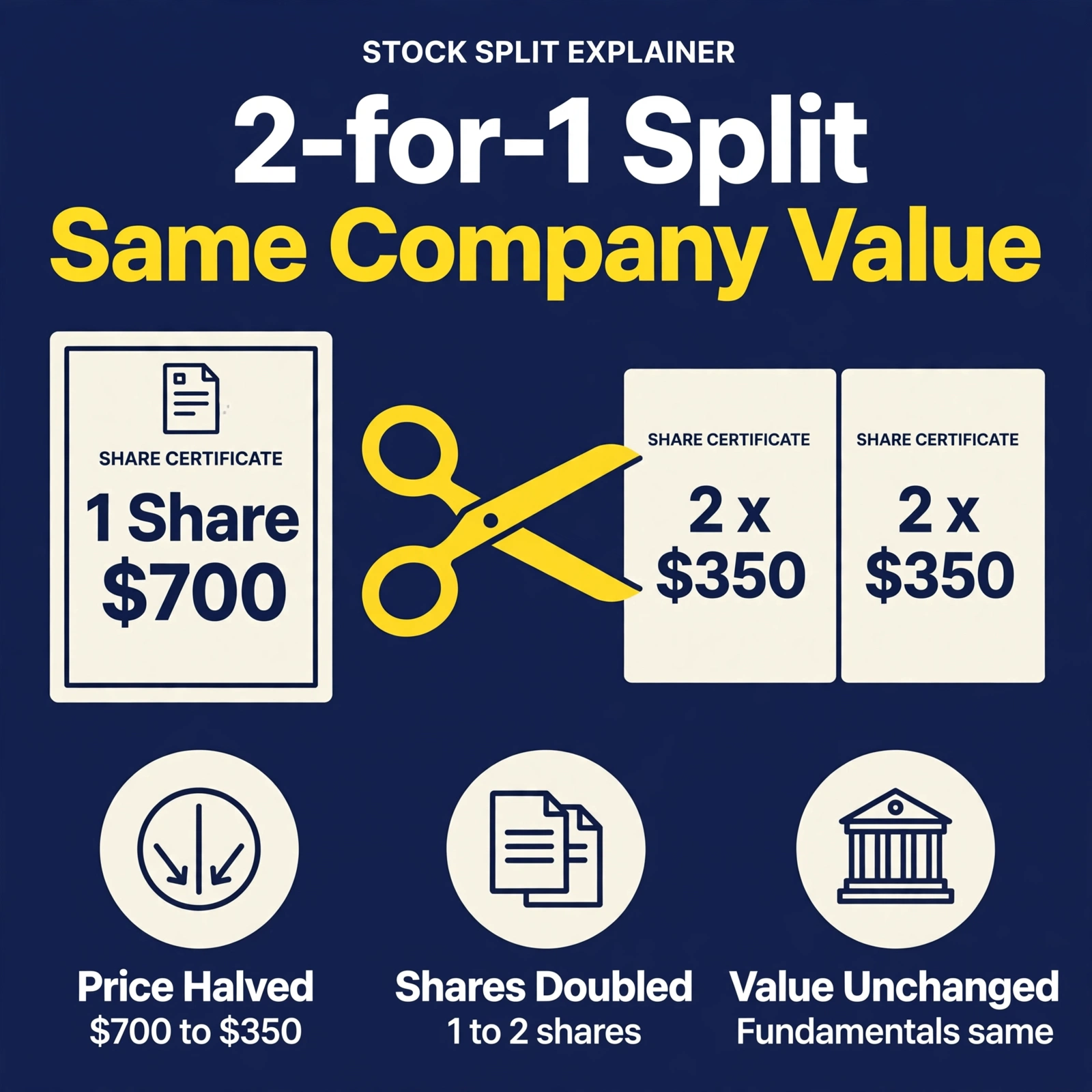
Meta also announced a two-for-one stock split. One share becomes two, the price halves, and the share count doubles. The company’s total value doesn’t change — like cutting a $700 pizza into two $350 slices.
So why do it? Accessibility. A lower per-share price is easier for small investors to buy, and liquidity improves. But beware the “it got cheaper” illusion: a split changes nothing about fundamentals, and the positive reception is mostly a psychological effect.
Nonvoting shares to fund AI — the governance price
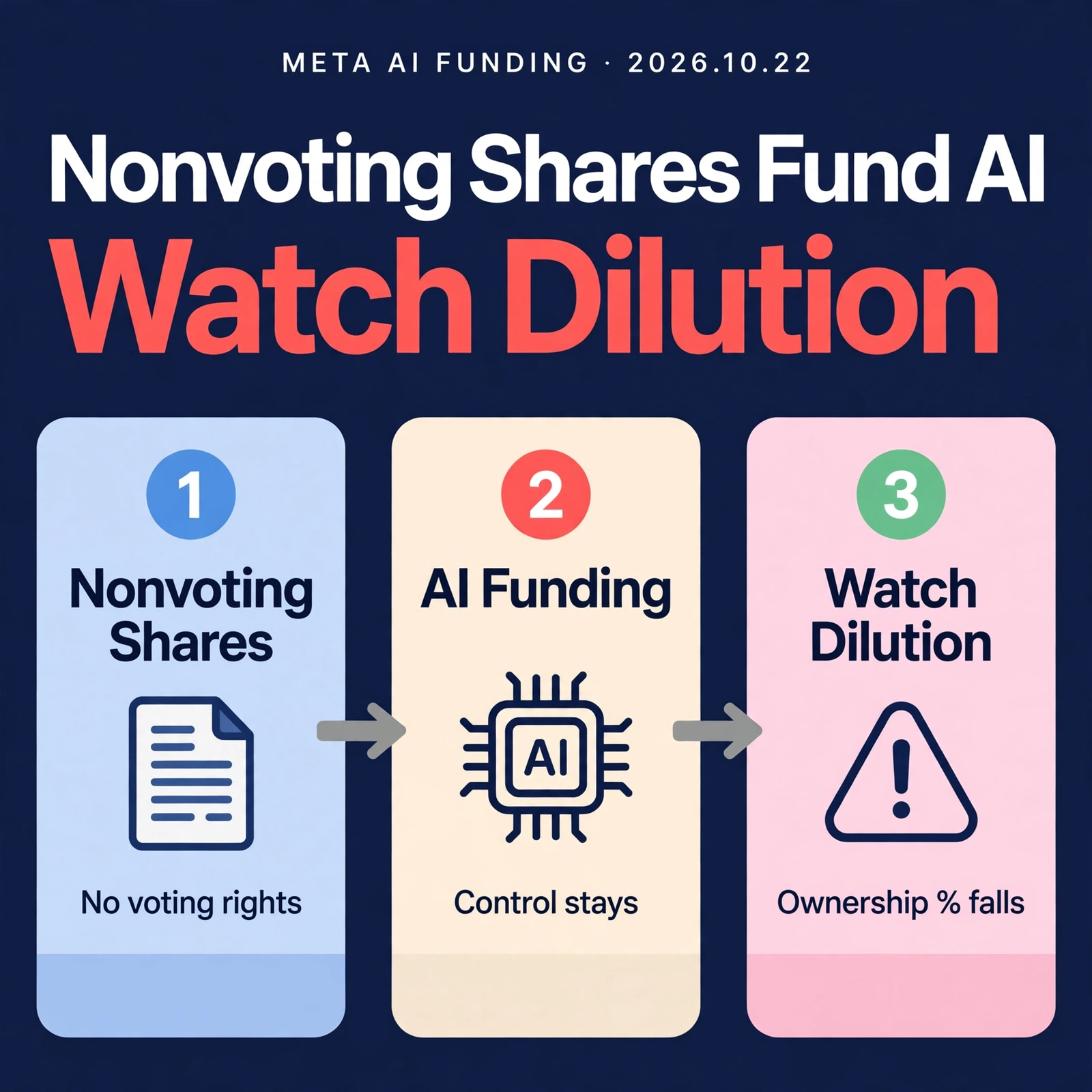
The more interesting move is the planned new class of nonvoting stock. Meta said it will create shares without voting rights to raise the capital it needs for AI models. Selling nonvoting shares raises money while leaving founders’ and management’s control intact.
For investors, the checkpoint is dilution. New shares lower existing holders’ ownership percentage. At the same time, Meta raised the low end of its 2026 capital-spending target, committing to bigger AI investment. Whether the raised money converts into real AI competitiveness decides if the dilution is justified. The size and terms of the issuance aren’t public yet — watch for follow-ups.
- Stock split: Dividing one share into several. Price and share count move inversely; company value stays the same.
- Nonvoting shares: Shares without voting rights. Used as a control-defense tool, they let a company raise capital without diluting control.
- Dilution: Existing holders' ownership and per-share value shrink when new shares are issued. What the money is used for is what matters.
For Korea-based investors
Once the split completes, Meta’s per-share price roughly halves, improving access for small-lot buyers. But remember: a split only changes the price tag. The real bet is whether bigger AI capex converts into ad-revenue growth. Also worth watching: whether Meta’s nonvoting-share funding model becomes the industry standard for Big Tech AI spending.
Not investment advice. Figures verified Oct 22 from Reuters, WSJ, Investopedia, and IBD.
Watch the video

Sources & references
- Meta Platforms — Meta Reports Third Quarter 2026 Results (SEC Form 8-K Exhibit 99.1) — Earnings, the legal charge and the Class C announcement, from the release
- The Desk — Meta Platforms sees operating income dip amid legal settlements in Q3 — The New Mexico $25B ruling and the Class C structure
- Alpha Beta Stock — Meta Q3 2026 earnings: revenue beats at $64.6 billion but AI spending drains cash flow — Revenue beat versus consensus and the after-hours reaction
Related articles
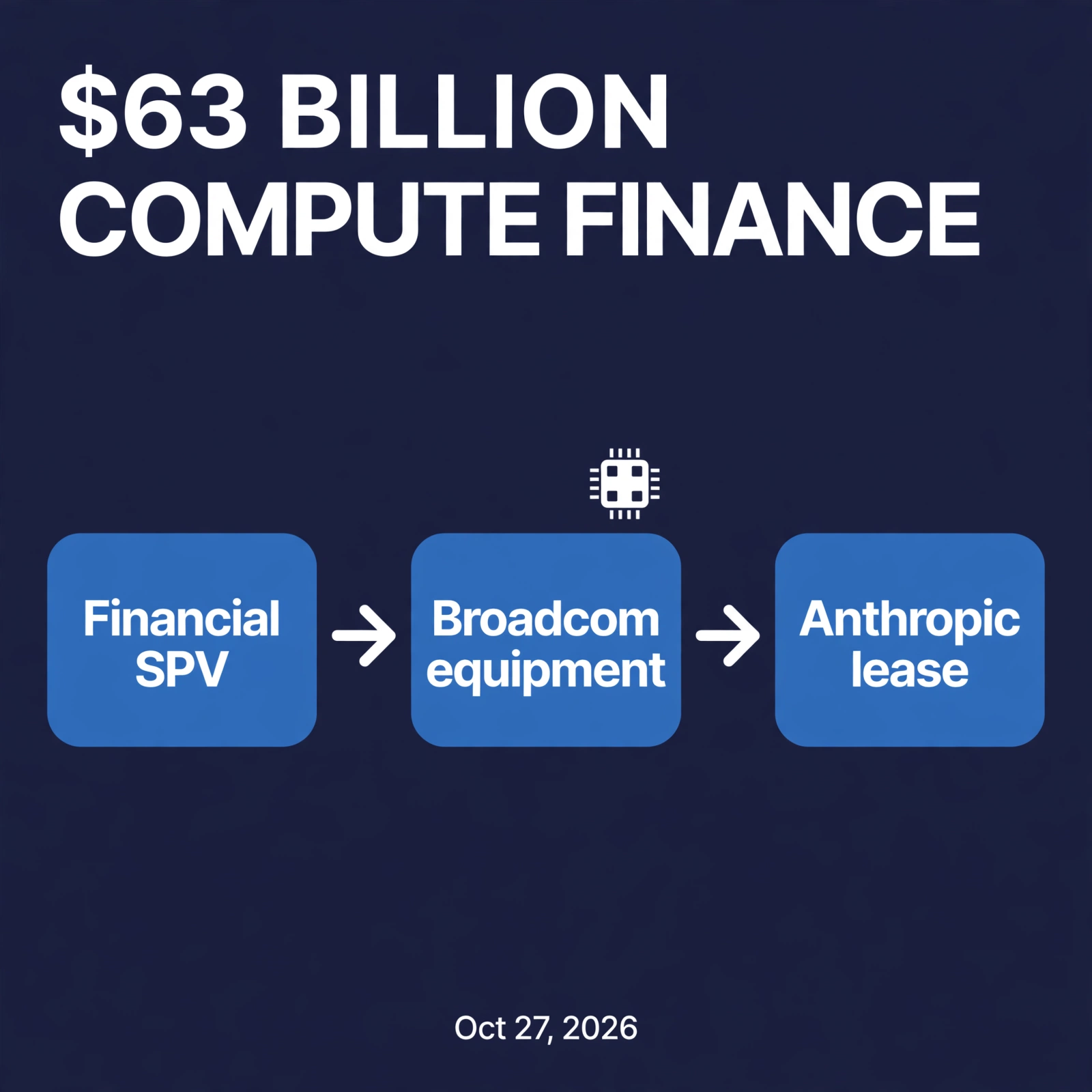
- Broadcom Anthropic AI Investment Analysis $63 Billion Compute Financing SPV Lease Structure and Residual Value Support
Bank of America, Blackstone, Citi and Morgan Stanley announced a $63 billion deal to buy Broadcom equipment and lease it to Anthropic. This post breaks down the SPV structure, first-lien and second-lien split, Broadcom's residual value support, and the questions it raises.
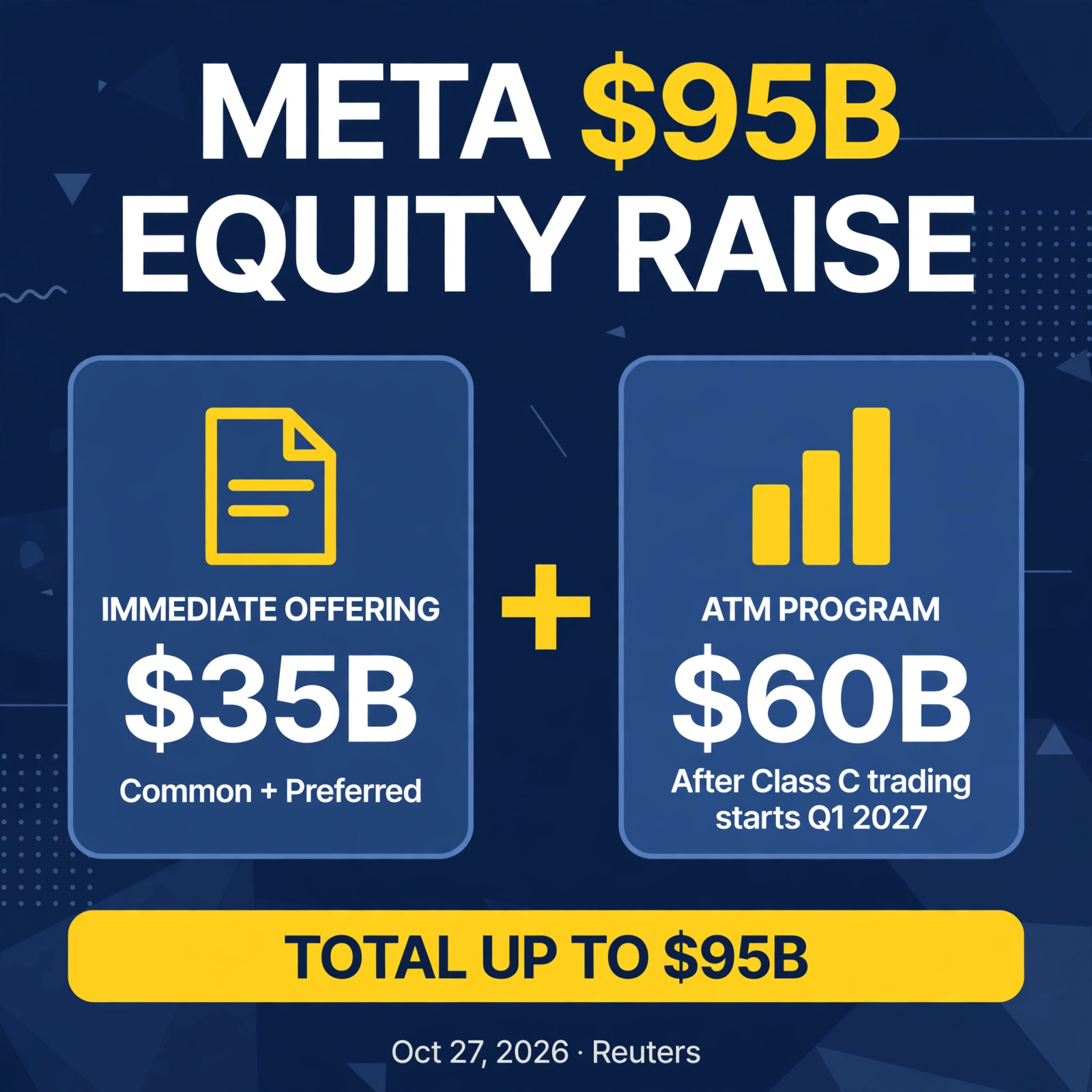
- Meta AI Investment Analysis $95 Billion Equity Raise Nvidia AMD Broadcom Circular Capital Dilution
Meta announced plans to raise up to $95 billion in equity to fund AI infrastructure: an immediate offering of about $35 billion plus an at-the-market program of up to $60 billion after new non-voting Class C shares start trading. Nvidia, AMD and Broadcom expressed interest in up to $5 billion, raising circular-capital questions.
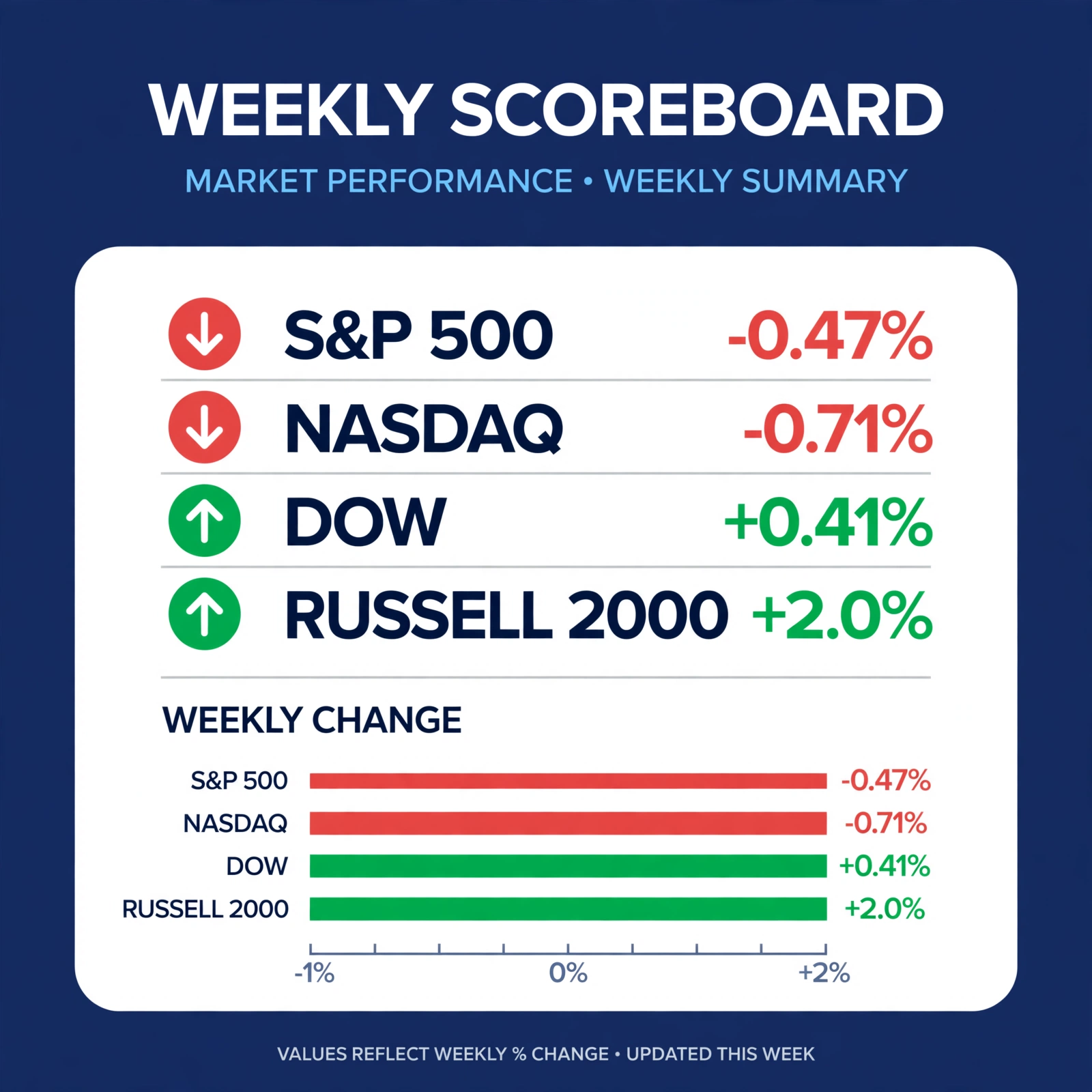
- US Stock Market Weekly Recap S&P 500 Down Dow Up AI Spending Selloff Oil Surge Analysis
US stock market weekly recap for October 19–23: S&P 500 -0.47%, Nasdaq -0.71%, Dow +0.41%, Russell 2000 +2.0%. A Thursday AI spending selloff and an oil surge split the week. Next: FOMC, Microsoft, Alphabet, GDP, PCE.
5minbrief on YouTube
The briefs also come as videos. Get the daily market wrap on YouTube.
Subscribe on YouTube