 5-minute briefs
KOSPI Market Breadth Analysis: 372 Advancers vs 490 Decliners and the 47% Two-Stock Weight
#Samsung Electronics#SK hynix#EWY
A rally most of the market sat out
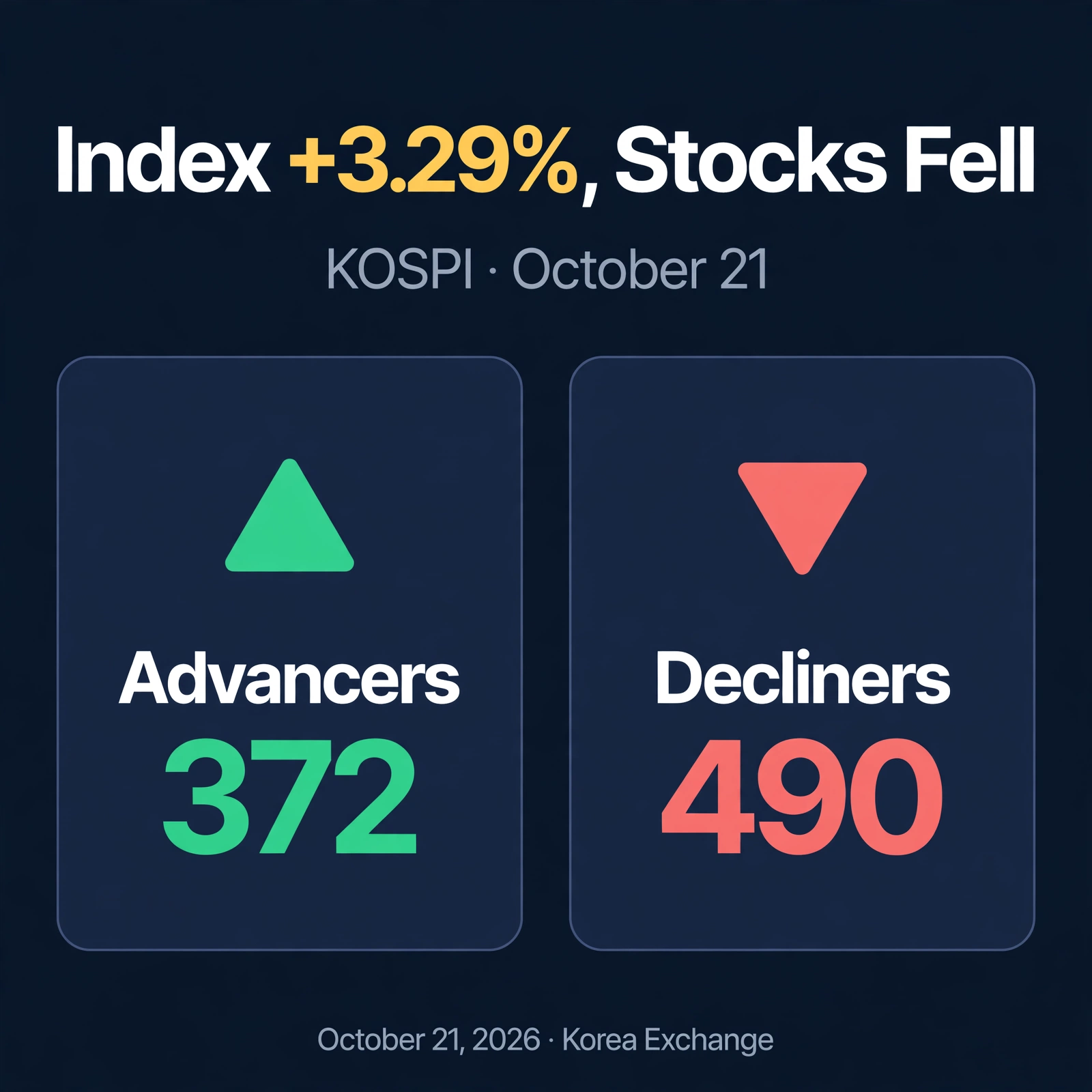
The headline day looked spectacular: KOSPI closed at 5,735.66, up 182.92 points (3.29%), after an intraday run to +4.75% that triggered the first buy sidecar in two months. Underneath, most listed companies went nowhere or down. Mid- and small-caps outside the KOSPI 200 managed just +0.39%.
The move belonged to two names: Samsung Electronics rose 5.67% to ₩223,500 and SK hynix 5.81% to ₩1,294,000, powered by record semiconductor export data and overnight AI earnings surprises in the US. Foreigners net bought ₩760.5 billion on the day, concentrated in the same two stocks.
How concentrated is it, in numbers
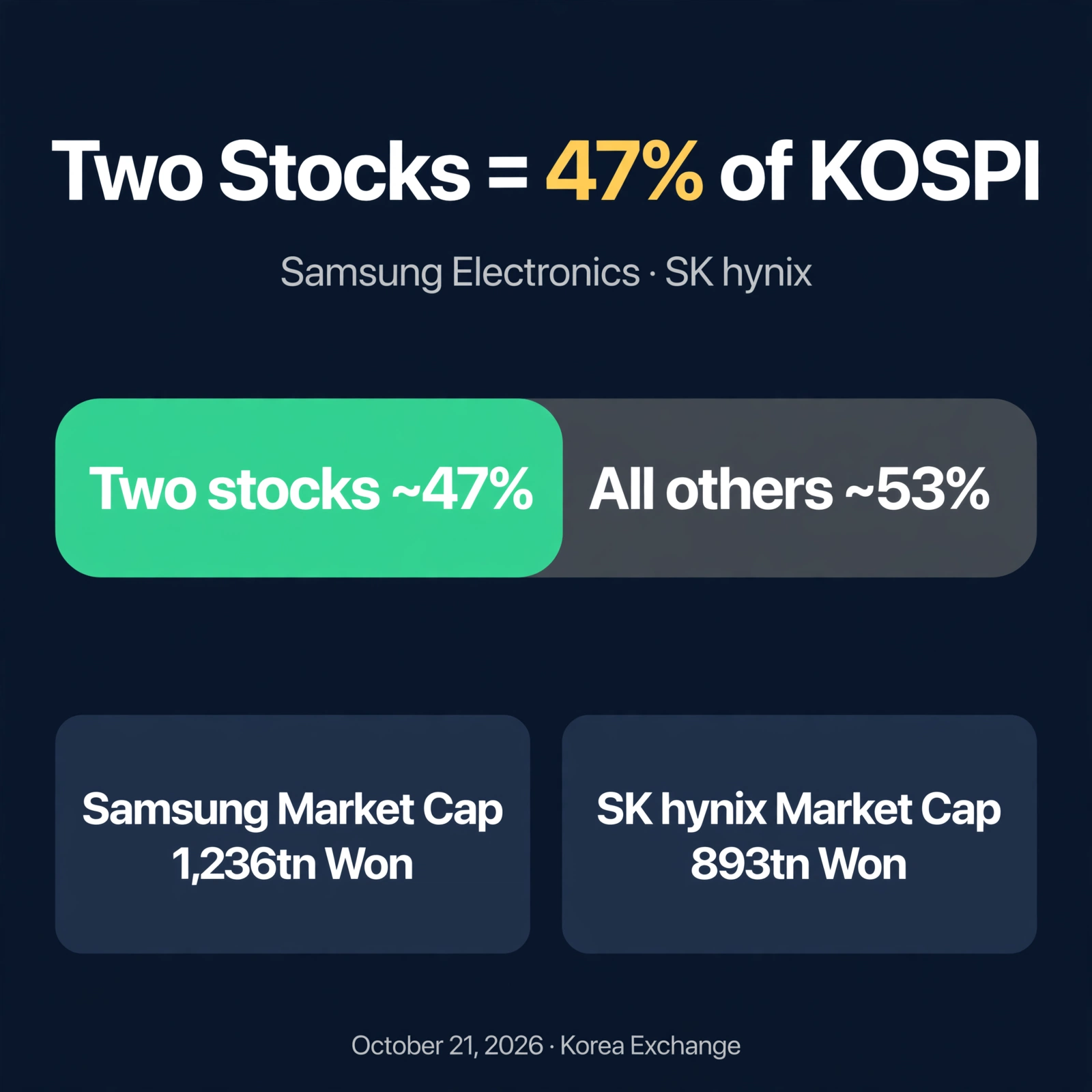
As of the October 20 close (Korea Exchange data), Samsung Electronics’ market cap was ₩1,236 trillion and SK hynix’s ₩893 trillion — a combined ₩2,130 trillion out of KOSPI’s ₩4,584 trillion total, or 46.5%. After today’s outsized rally the share sits around 47%, and on October 12 the pair briefly crossed 50.06% — half the market, in two chipmakers.
| Stock | Market cap (Oct 20) | Share of KOSPI |
|---|---|---|
| Samsung Electronics | ₩1,236tn | ~27% |
| SK hynix | ₩893tn | ~19% |
| Two combined | ₩2,130tn | 46.5% |
| Every other listed stock | ₩2,454tn | 53.5% |
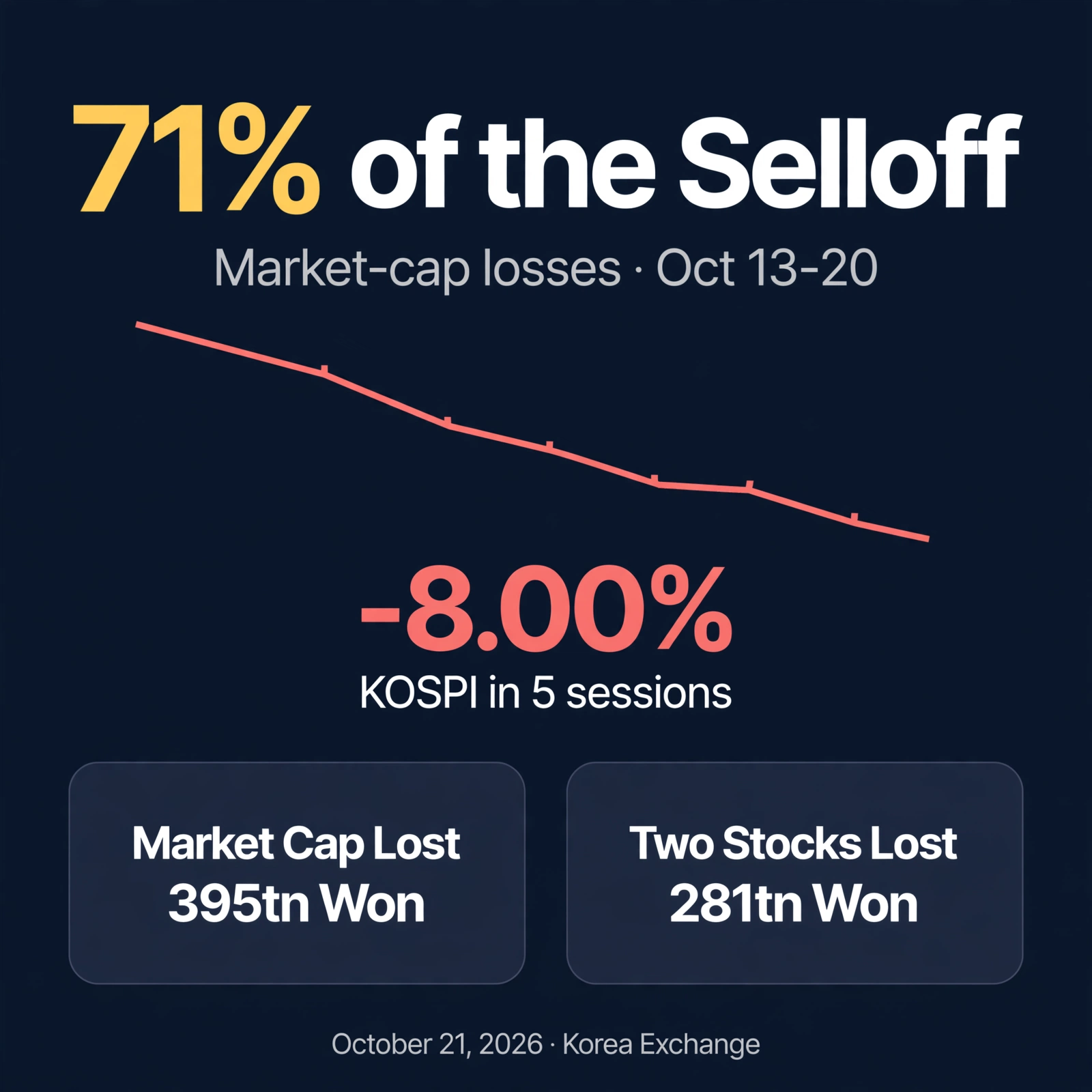
The concentration cuts both ways, and last week proved it. Between October 13 and 20, KOSPI fell 8.00% (6,035.35 → 5,552.74). Of the ₩395 trillion in market value erased, ₩281 trillion — 71% — came from just these two stocks. When they sneeze, the index doesn’t catch a cold; it catches whatever they have.
Among major markets, only Taiwan (TSMC-led, top two ≈51% as of late September) runs a comparable concentration. The US (~13%) and Japan (~6%) are not in the same league.
What this means if you own Korea through an ETF
- Your “diversified” Korea fund is largely a two-stock chip bet. EWY and other KOSPI-linked products are cap-weighted too, so the same two names dominate your holdings. If you also own SK hynix’s ADR (SKHY) or a semiconductor ETF, your look-through chip exposure is larger than any single fund’s factsheet suggests. Add it up before earnings week.
- Index risk and governance risk now overlap. Both giants are chaebol flagships. The debate that drives the Korea discount — capital allocation, buybacks, holding-company structures — is no longer a stock-picker’s niche; it moves your index fund. SK hynix’s expected shareholder-return announcement on October 28 is an index-level event, not a single-stock one.
- Treat the two earnings dates as market events. SK hynix reports October 28 and Samsung Electronics on October 29. In a ~47% two-stock market, those two mornings will decide the index’s week — position sizing should assume index-level volatility, not single-stock volatility.
Not investment advice. Figures verified against the Korea Exchange and Korea Customs Service as of October 21, 2026.
Watch the video

Sources & references
- Yonhap News — KOSPI jumps 3.3% to close at 5,735; KOSDAQ up 1.4% — KOSPI close and buy sidecar on Oct 21
- Dailian — Retail investors fret over US AI jitters; the paradox of chip concentration — KRX tally of the two stocks' combined market-cap weight
- The Economist (Korea) — Two chipmakers are half the KOSPI: the double-edged sword — Concentration structure based on KRX data portal figures
Related articles
- AI capex returns analysis Alphabet Amazon cash flow deficit semiconductor repricing
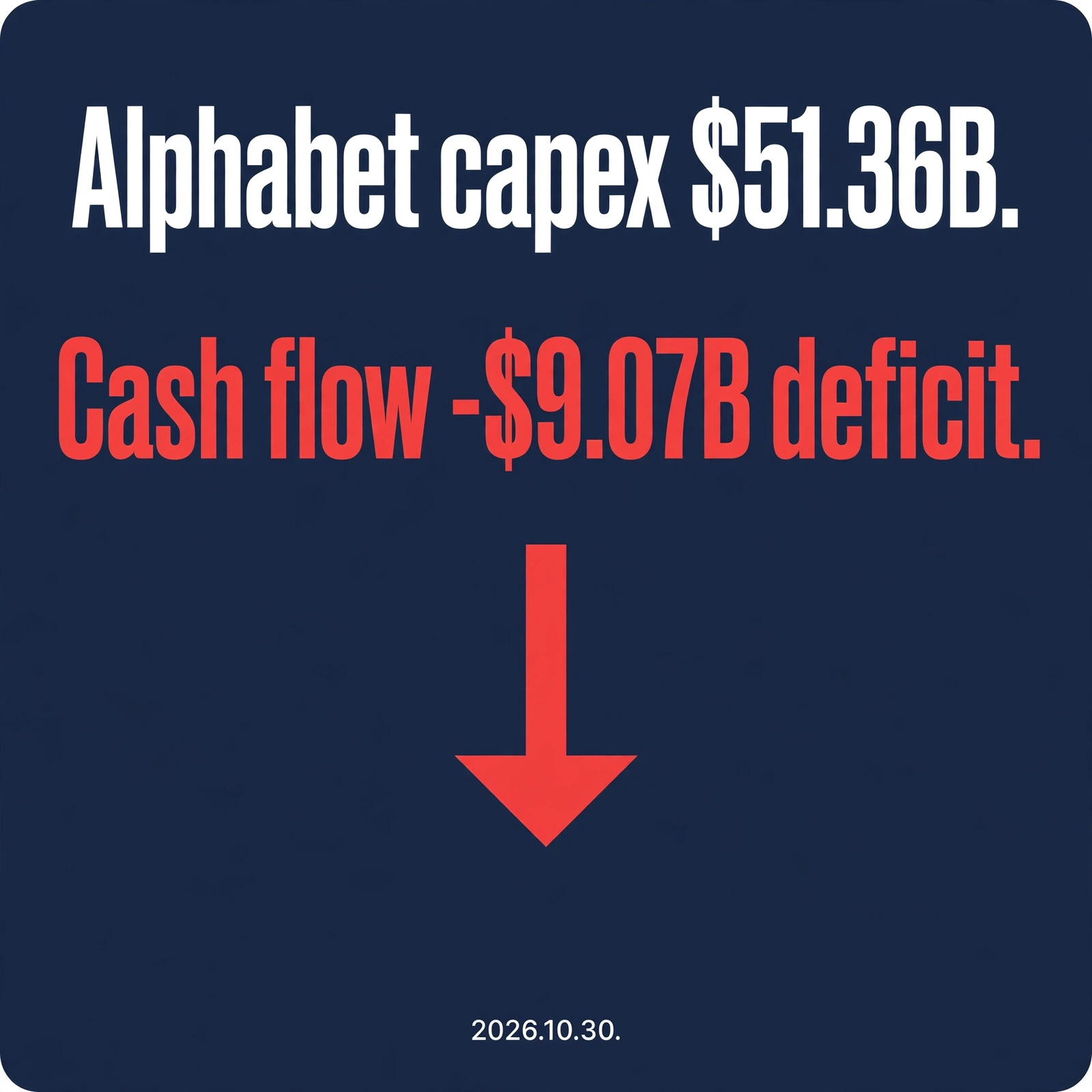
AI capex returns analysis: Alphabet spent $51.36 billion in Q3 capex and posted a $9.07 billion free cash flow deficit, while Amazon kept a $220 billion 2026 capex plan with a $42.4 billion twelve-month cash outflow. Cloud grew 39–103%, yet cash leaked — and that contradiction repriced Korean chip stocks.
- KOSPI 3.48% plunge Alphabet shock sell sidecar semiconductor fall analysis
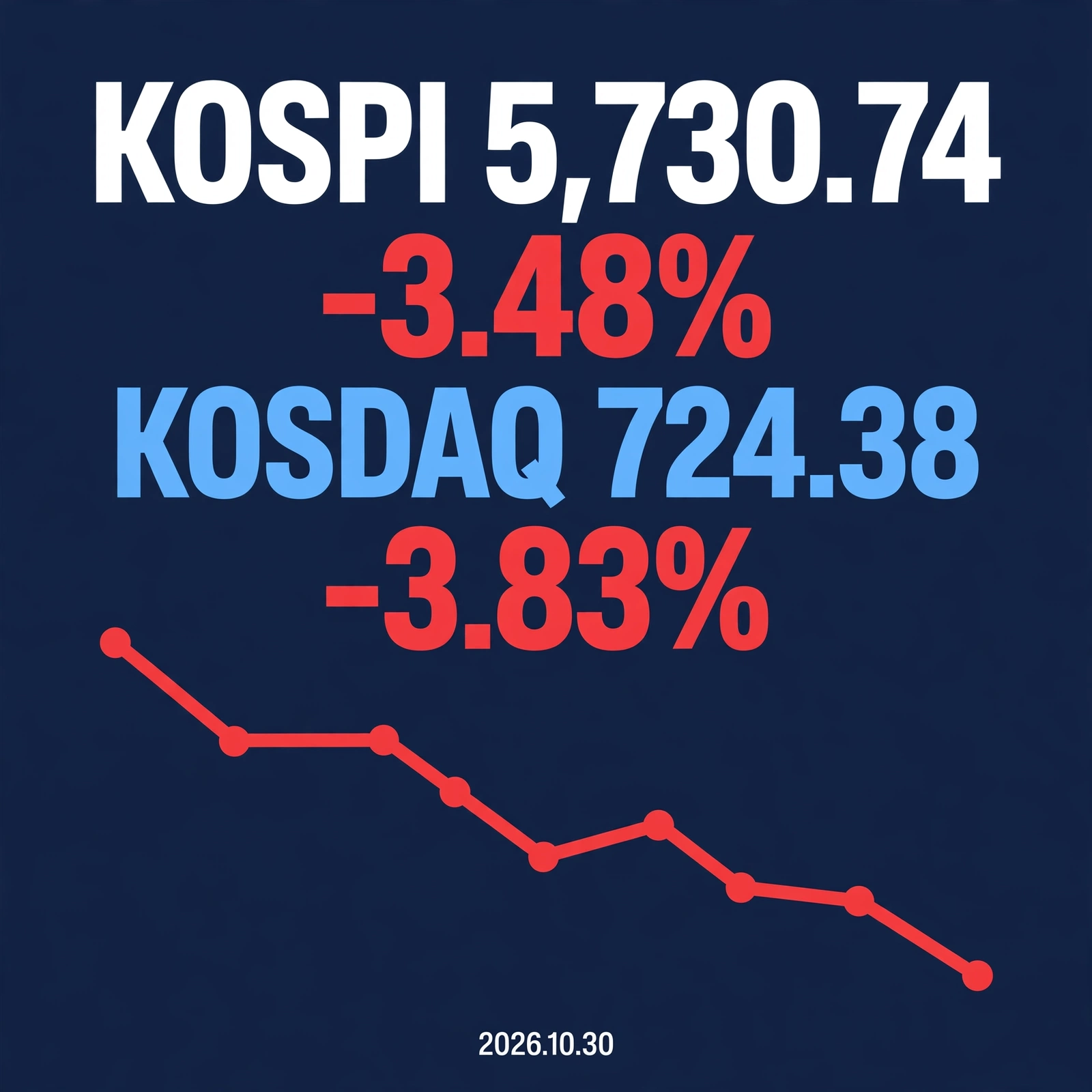
October 30 Korea market brief for foreign investors: the KOSPI fell 3.48% to 5,730.74 and the KOSDAQ fell 3.83% to 724.38 as Alphabet's earnings shock triggered a sell-side sidecar and foreigners sold a net KRW 1.62 trillion ($1.21 billion). Samsung fell 3.02% and SK hynix 7.08%. The won firmed to 1,334.3 per dollar.
- KOSPI 1.24% fall Samsung shareholder return delay 5937 close analysis
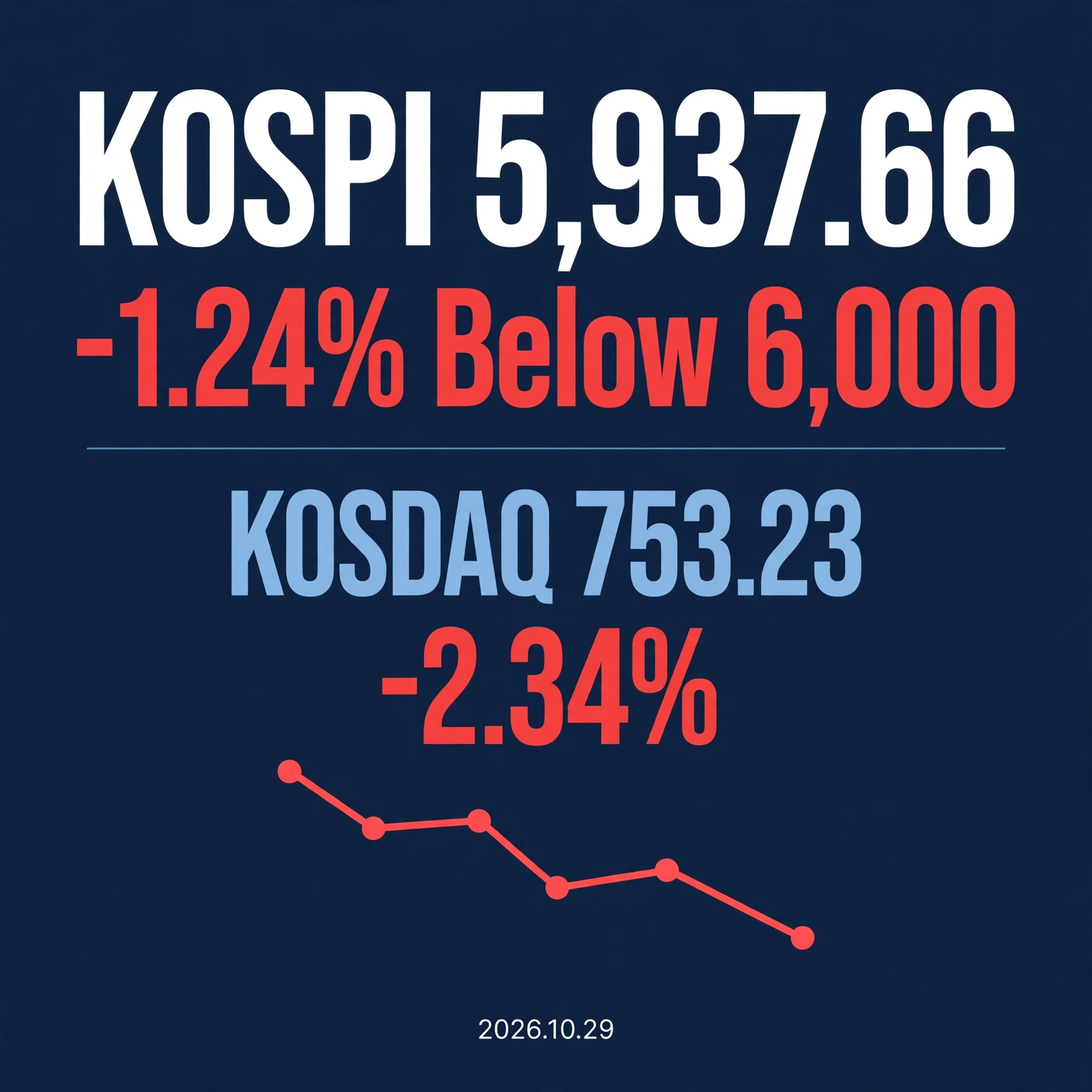
October 29 Korea market brief for foreign investors: the KOSPI fell 1.24% to 5,937.66, giving back the 6,000 line one day after retaking it, and the KOSDAQ fell 2.34% to 753.23. Samsung posted record third-quarter operating profit of KRW 107.44 trillion yet fell 4.13% after deferring shareholder-return details to January, while SK hynix, which spelled out a KRW 100 trillion ($74.8 billion) return plan, rose 2.62%. LG Energy Solution plunged more than 8%. The won firmed to 1,336.8 per dollar.
5minbrief on YouTube
The briefs also come as videos. Get the daily market wrap on YouTube.
Subscribe on YouTube