 5-minute briefs
Trump Russia Sanctions Waiver Energy Market Impact 60-Day Review Analysis
What was waived
Key provisions of the Russia sanctions and tariffs under the Graham Act, signed last month, had their enforcement waived. Done by executive order, the timing was pushed back on presidential authority without new legislation.
The point is that this is a “waiver,” not a “repeal.” The blade stays; only the swing is delayed — preserving its value as a negotiating card. Pressure on Russia can be dialed up or down while avoiding the political cost of a full rollback.
Ukraine’s President Zelensky criticized the move immediately. Coming on the very weekend Ukraine resumed strikes on Russian energy facilities, it reads in Kyiv as a loosening of pressure on Russia.
Why 60 days
Secretary of State Rubio said Trump will take up to 60 days to review the economic impact before deciding. The 60-day window is no accident.
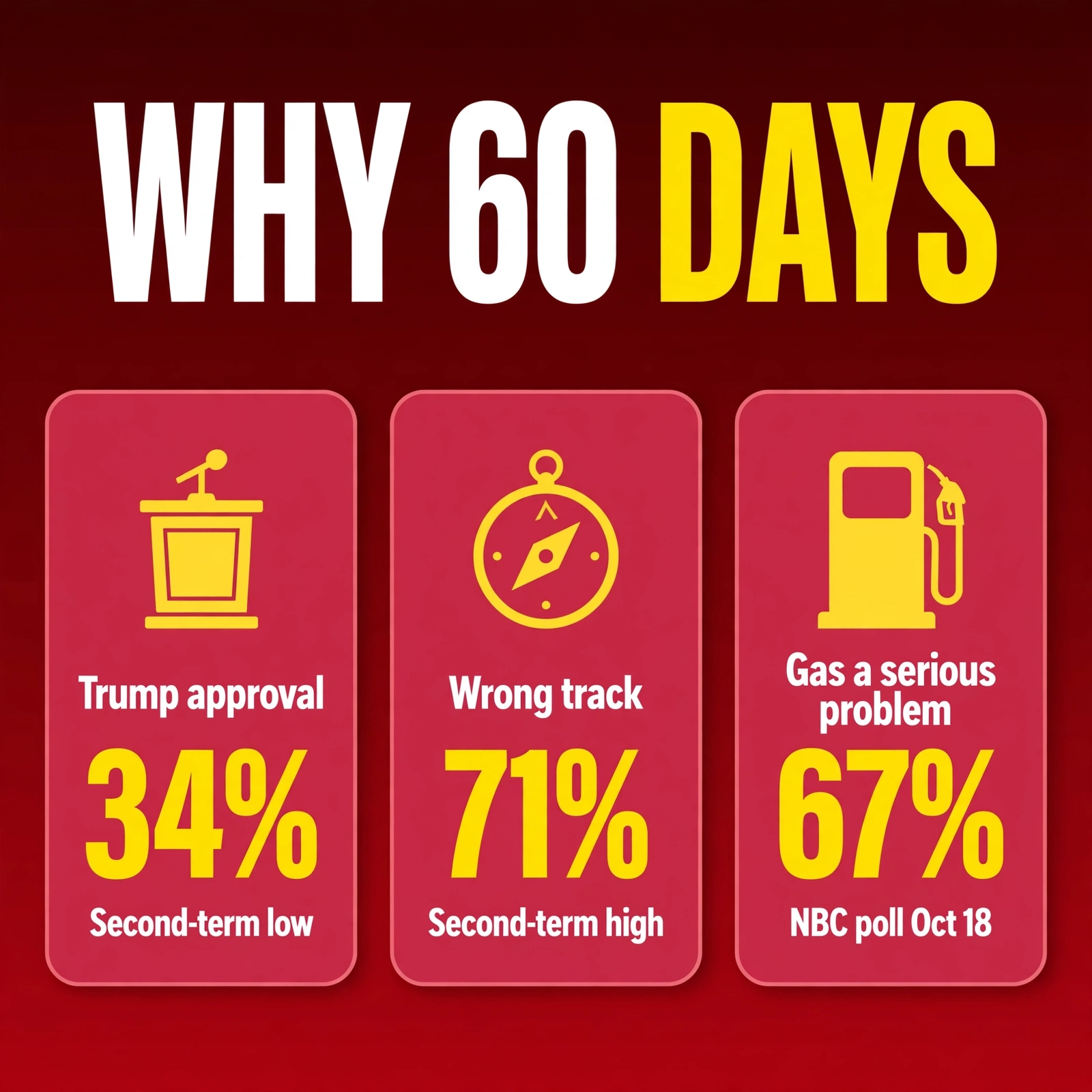
First, the November 3 midterms fall inside it. Second, the review’s subject — “economic impact” — is telling. Keeping sanctions tightens energy supply and lifts oil; higher oil makes gasoline prices — which 67% of Americans call a “serious problem” (October 18 NBC poll) — an election variable.
The same NBC poll put Trump’s approval at 34%, a second-term low, with 71% saying the country is on the wrong track — a second-term high. Where pump prices swing elections, the waiver also reads as an oil-price stabilization card.
The link to energy markets
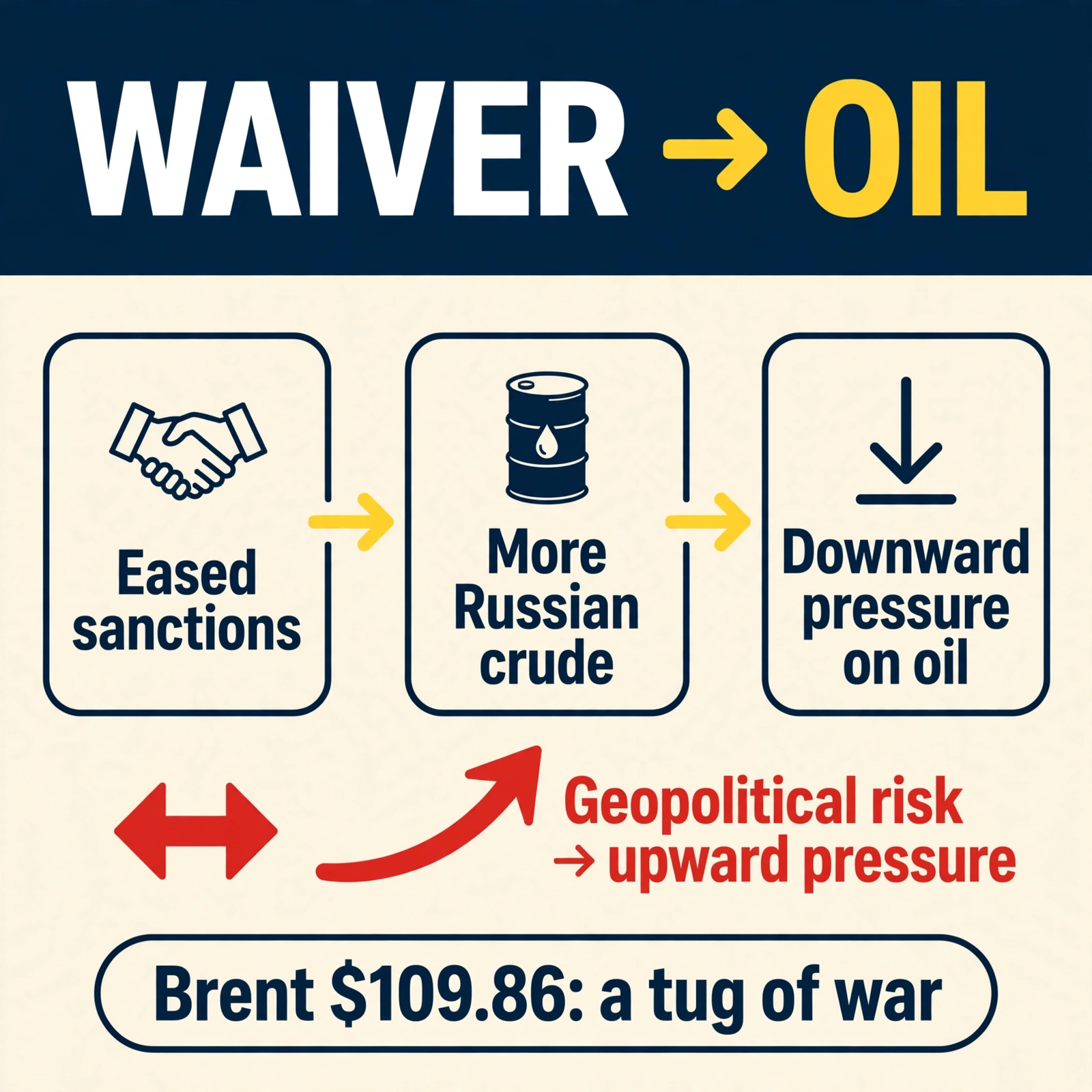
Sanctions and oil connect in one line: eased sanctions → more Russian crude supply → higher global supply → downward pressure on prices. Tighter sanctions pull Russian barrels from the market and push prices up.
Right now oil is moving the other way. Brent closed at $109.86 and broke above $110 on Saturday, as Strait of Hormuz attacks and Ukraine’s strikes on Russian refineries (AFP, October 18) stoked supply fears.
So the market is weighing two opposing forces: geopolitical risk pushing oil up, and a policy variable hinting at supply relief. Where oil sits when the 60-day review ends will be this policy’s report card.
- Executive order: a presidential directive issued without new legislation. Enforcement timing of sanctions falls under executive authority.
- Graham Act: the Russia sanctions bill signed last month, providing the basis for sanctions and tariffs.
- Supply shock: a sudden change in oil supply from war or sanctions — one of the most direct drivers of price moves.
What investors should watch
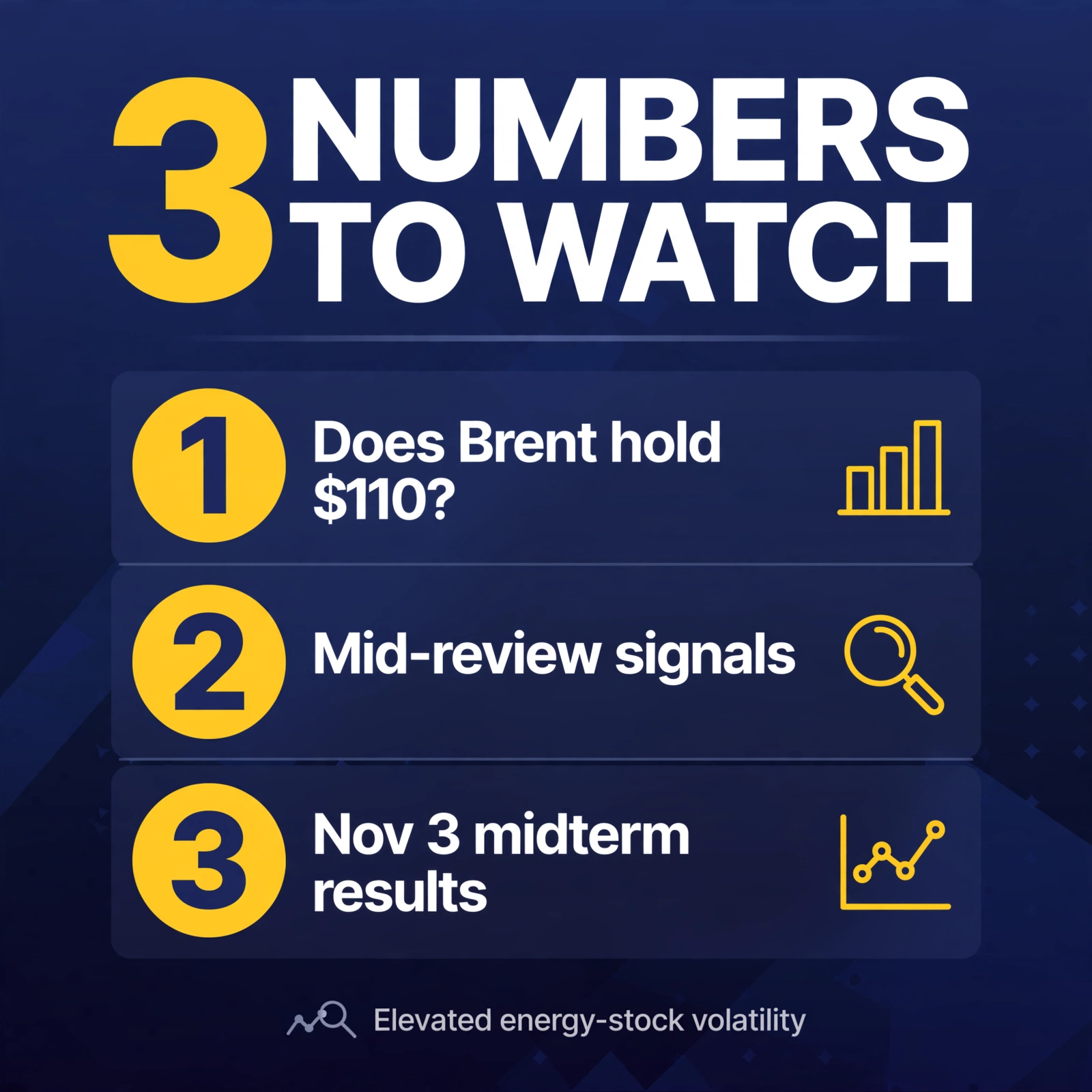
Three numbers matter: ① Brent’s price (does it hold $110?), ② interim signals from the 60-day review (directional hints), and ③ the November 3 midterm results (policy continuity).
It’s a two-way variable for the energy sector. Higher oil helps refiners and shale earnings, but growing waiver expectations cap the upside on supply-growth fears. When geopolitics and policy pull in opposite directions, energy-stock volatility is unavoidable.
Not investment advice. Figures verified against press reports, the NBC poll, and AFP as of October 19.
Sources & references
- The White House — Executive Order 14436, Implementing the Lindsey O. Graham Sanctioning Russia and Iran Act of 2026 — Full text of the sanctions-waiver executive order
- BusinessWorld (Reuters) — Rubio says Trump to take up to 60 days to weigh Russia sanctions — Report of Rubio's October 17 remarks
- anews (NBC report) — Americans increasingly dissatisfied with Trump as midterms approach, poll — NBC News Decision Desk poll as carried by secondary outlets
- Nation Thailand (Reuters-based) — Brent hits US$110 a barrel on October 16 over supply fears — Friday oil close cited against the waiver narrative
Related articles
- Hormuz Oil Negotiation Analysis: Trump Restraint and Mining War
Three more tankers caught fire in the Strait of Hormuz over the weekend. Trump said fresh strikes are 'highly unlikely' if talks progress, while the IRGC keeps mining the strait. The fork Monday's open has to price.
- US Stock Market Weekly Recap Nasdaq Falls 3.4 Percent Thursday AI Rout and Correction Analysis
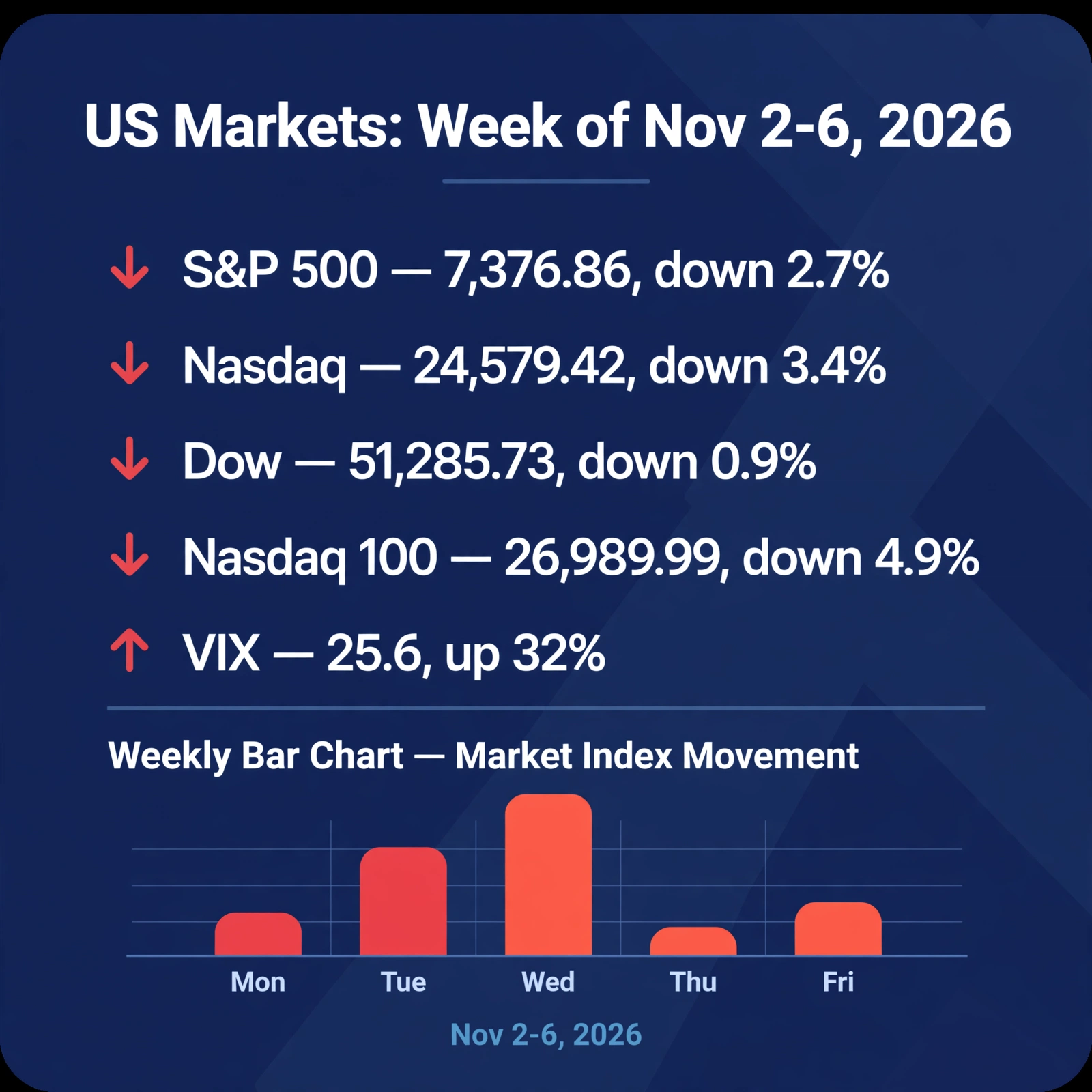
US stock market weekly recap for November 2–6. The S&P 500 fell 2.7%, the Nasdaq 3.4% and the Dow 0.9%, and Thursday's AI sell-off pushed the Nasdaq into correction territory. Midterms, the jobs report and the Hormuz oil plunge, plus next week's CPI and PPI checkpoints.
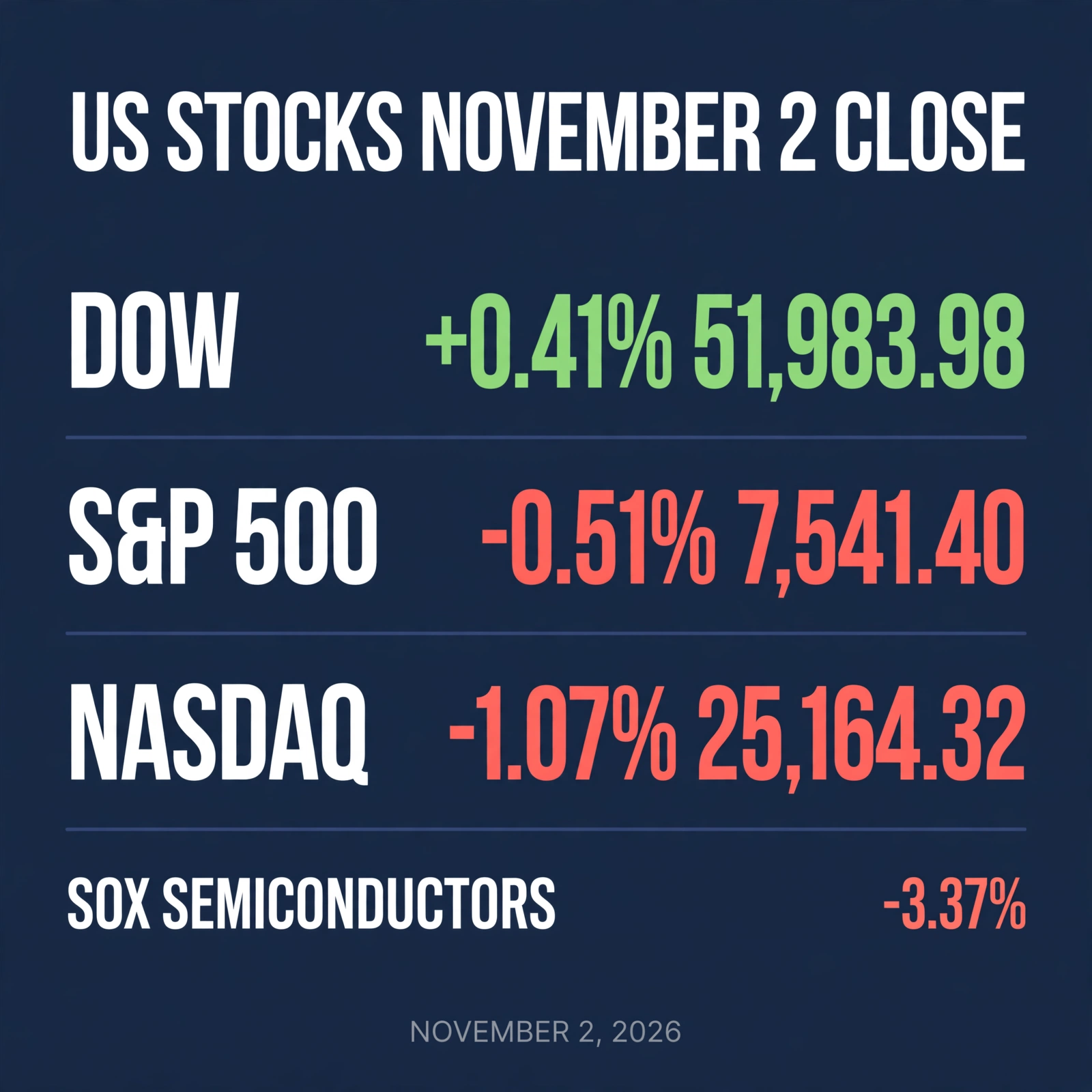
- US Stocks November 2 Dow Up 0.41% Nasdaq Down 1.07% Apple Earnings Analysis
On November 2, only the Dow rose while the S&P 500 and Nasdaq fell. Apple beat expectations with $114.48 billion in revenue, and Palantir's US commercial revenue passed government revenue for the first time.

5minbrief on YouTube
The briefs also come as videos. Get the daily market wrap on YouTube.
Subscribe on YouTube