 5-minute briefs
Bond Prices and Interest Rates: The Inverse Relationship and Duration
What a bond is — a promise that pays interest
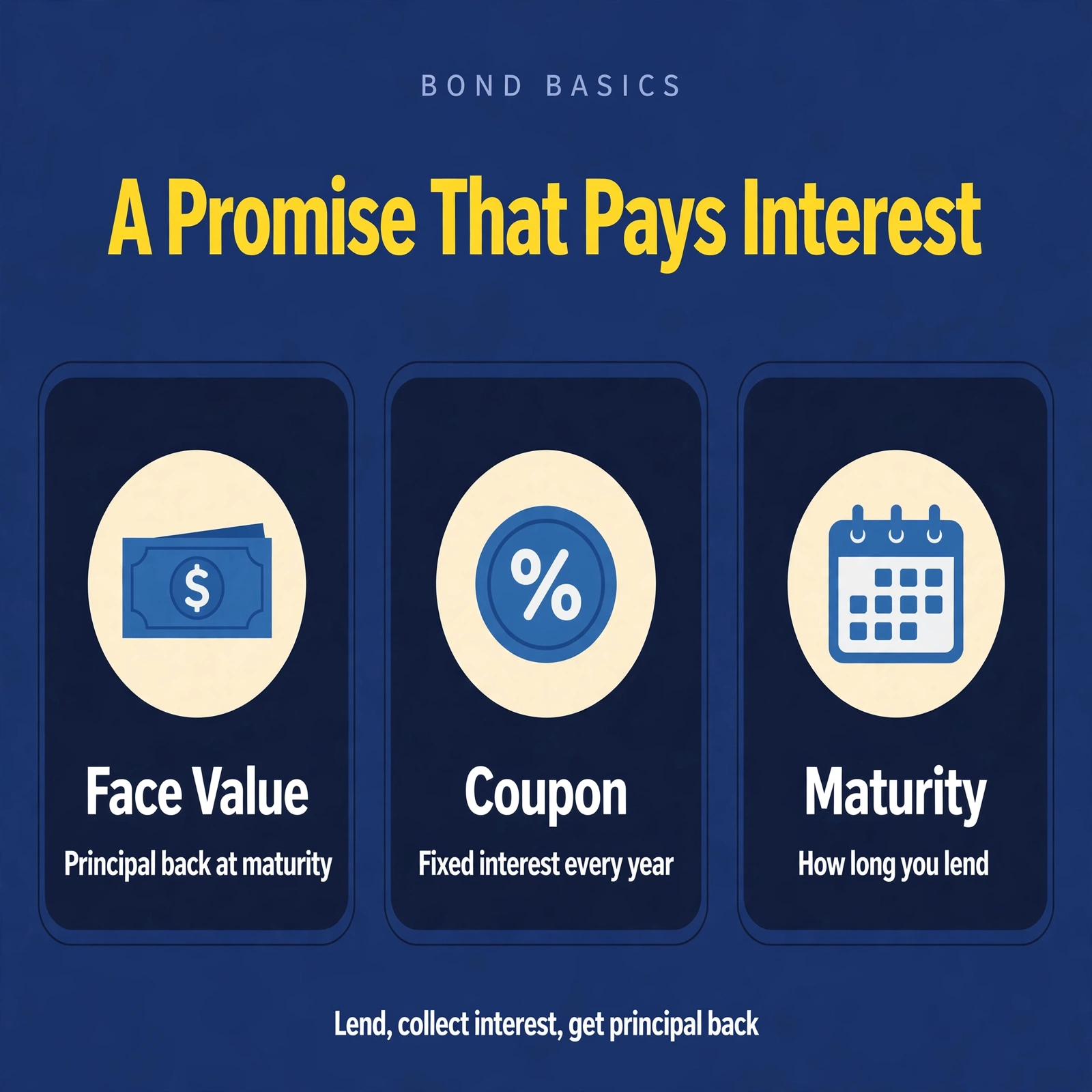
A bond is an IOU you can trade. The borrower (a government or a company) pays interest on set dates and returns the principal when the bond matures. Three terms define it:
- Face value: the principal repaid at maturity.
- Coupon rate: the interest rate paid every year. It is fixed at issue and never changes.
- Maturity: how long the money is lent out — from 1 year to 30 years.
The key point: the coupon is fixed, but the bond’s price (what it trades for) moves every day. The inverse relationship is born in that mismatch — a fixed payout attached to a moving price.
- Market rate: the interest level newly issued bonds pay right now. It moves with central-bank policy and supply and demand.
- Yield to maturity (YTM): the yearly return from buying at today's price and holding to maturity. The number investors actually compare.
- Duration: a sensitivity gauge — roughly how many percent a bond's price moves when rates change by 1 percentage point.
- Paper loss/gain: the loss or profit from price moves before maturity. It only becomes real if you sell.
The inverse relationship — new bonds pay more, old bonds get cheaper
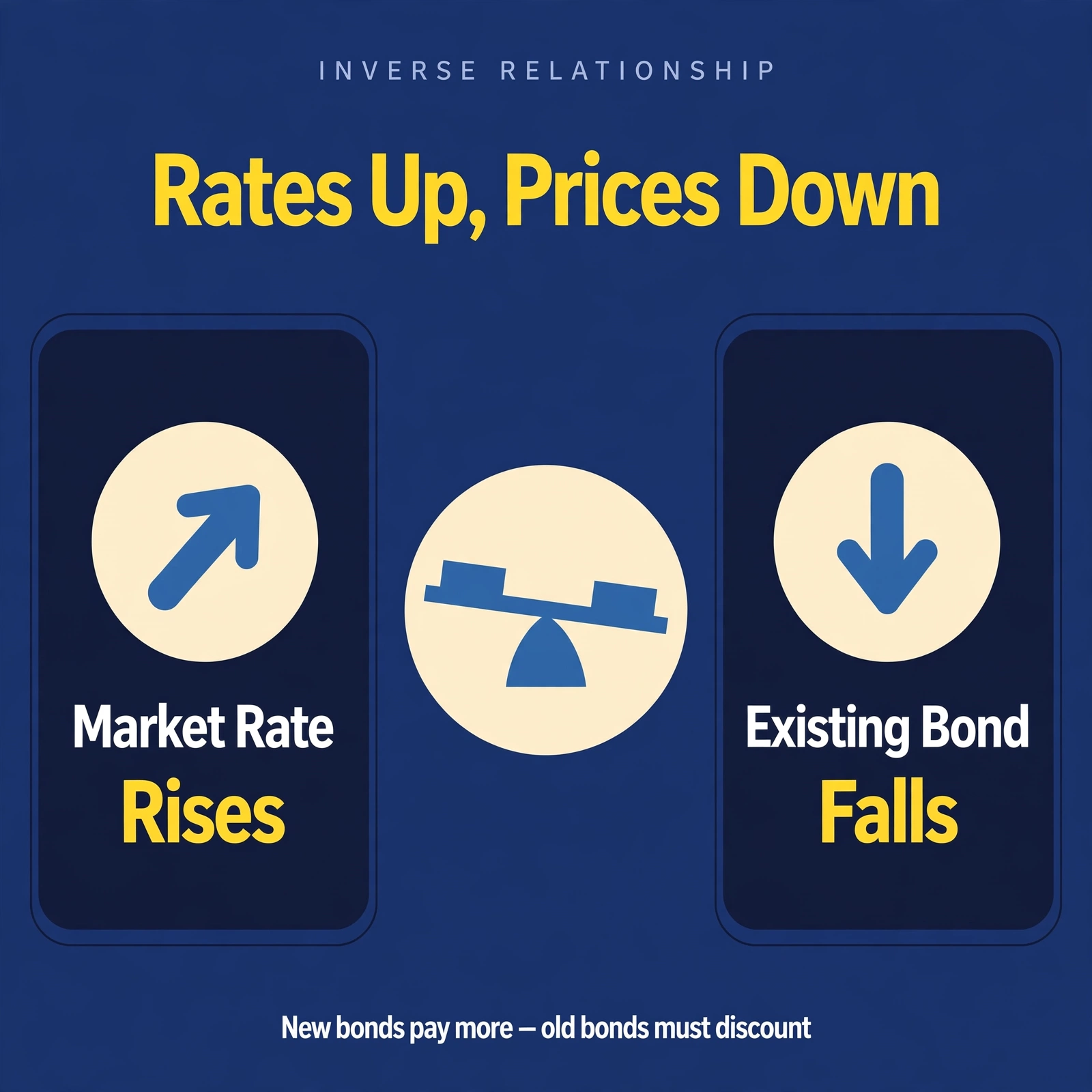
Say you hold a bond with a face value of $100, a coupon of 3%, and one year left to maturity. What you receive at maturity is locked in: principal plus interest, $103, guaranteed (if the issuer holds up).
Now suppose market rates rise to 5%. Brand-new bonds pay $105 in a year for every $100 put in. Nobody will pay $100 for your bond that returns $103. For the yields to match, your bond’s price has to fall to 103 ÷ 1.05 ≈ $98.10. Rates rose 2 percentage points, and the price dropped about 1.9%.
If rates fall to 2% instead, the price rises to 103 ÷ 1.02 ≈ $101. The coupon never changes, so the price does the adjusting — it moves until the bond’s yield lines up with the market. That is why rates and bond prices sit on opposite ends of a seesaw.
This is also why bond funds post negative returns when rates climb: every older bond in the fund gets repriced downward at once. And when rates fall, bonds deliver price gains on top of their interest.
Duration — longer maturity, bigger swings
Not every bond swings the same amount for the same rate move. The difference is maturity: money arriving far in the future is exposed to rate changes for longer, so its present value swings harder.
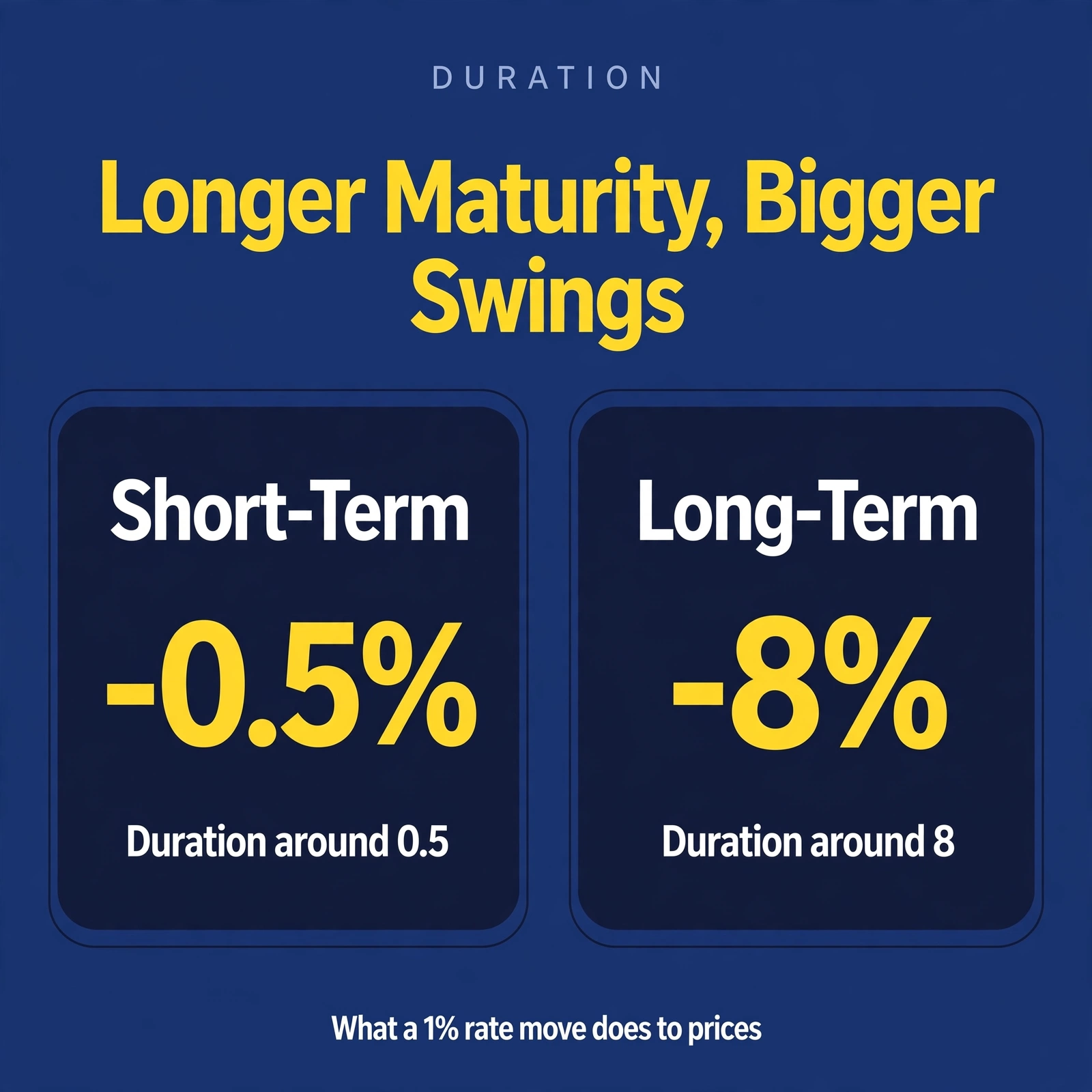
Duration is the gauge for that sensitivity. The rough math is simple: a 1-percentage-point rate move → a price move of about ∓duration percent.
- Short-term bond (duration around 0.5): rates up 1 point → price about -0.5%
- Long-term bond (duration around 8): rates up 1 point → price about -8%
A 30-year government bond, with its large duration, can swing like a stock on a 1-point rate move. The saying “bonds are safe” is really about holding to maturity, and holding short maturities. Investors who expect falling rates buy long bonds for the price gains; investors who fear rising rates park in short ones — same structure, opposite bets.
One relief: if you hold to maturity, the swings in between do not matter. As long as the issuer keeps its promise, the agreed interest and principal arrive in full. A price dip on the way is a paper loss unless you sell.
Bond buying checklist
- Rate direction — is the central bank hiking or cutting?
- Duration — longer maturity means bigger exposure to rate moves
- Holding plan — hold to maturity for locked-in yield, or trade for price gains?
- Issuer credit — can the borrower keep the promise? (government vs corporate)
- Source of return — is the expected return interest, or a price bet?
One sentence to remember: a bond’s price is a scale that balances against market rates, and duration is how sensitive that scale is. Know those two and “rates went up — why is my bond fund down?” answers itself.
Watch the video

Sources & references
- Bank of Korea — Friday Lecture No. 981: Understanding Korea's Bond Market and Recent Trends — Covers the coupon-rate vs yield distinction, yield to maturity, the inverse price–yield relationship, and duration as rate sensitivity
- U.S. SEC, investor.gov — Investor Bulletin: Interest Rate Risk — When Interest Rates Go Up, Prices of Fixed-Rate Bonds Fall — SEC bulletin explaining the inverse rate–price relationship with a worked 3%-coupon bond example
- Ministry of Economy and Finance — Economic Terms Dictionary: 'Duration' — Defines duration as the average recovery period of invested funds and a measure of price sensitivity to rate changes
Related articles
- Nasdaq Weekly -4.5% AI Fear Software Sector Causes and Outlook (Oct 18)
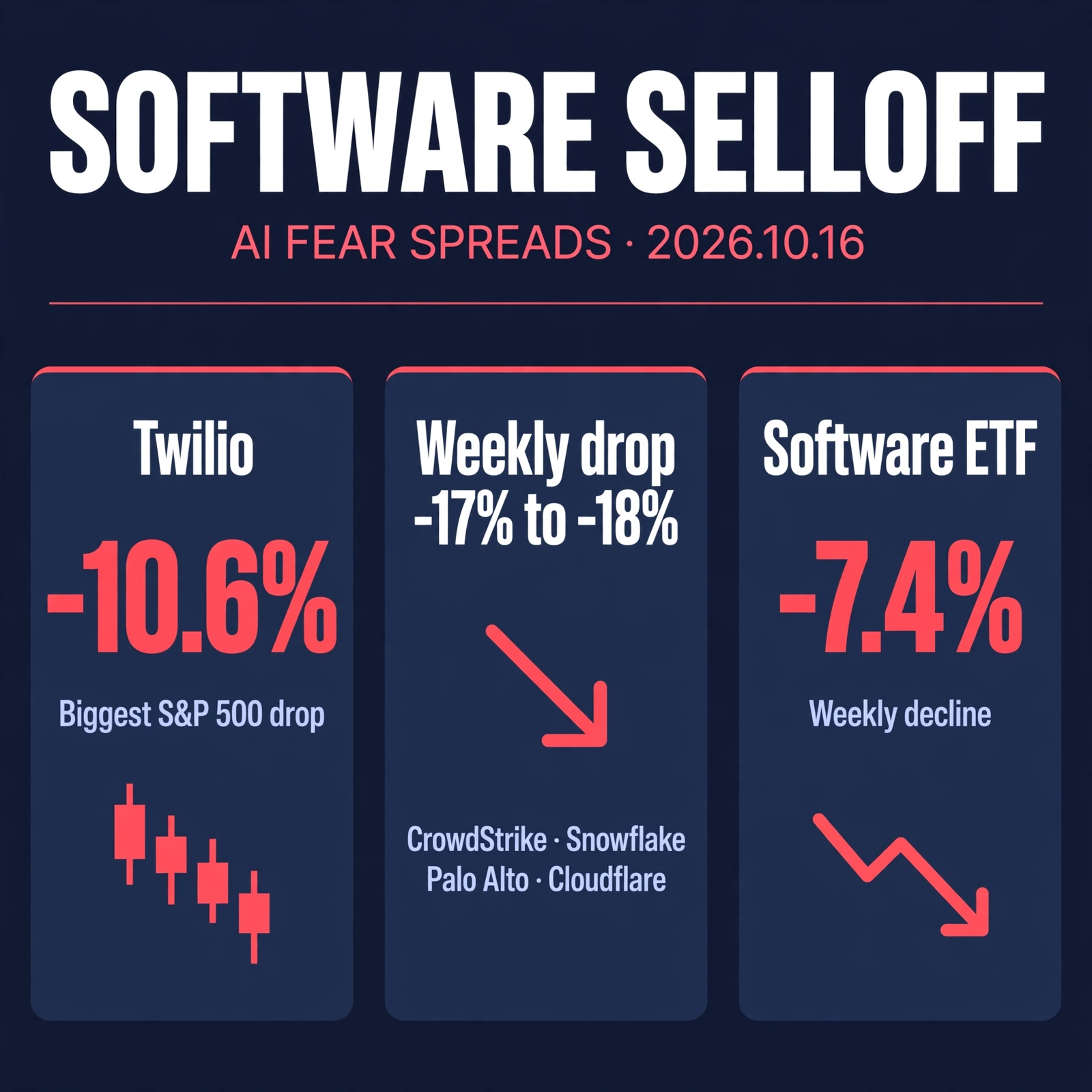
US markets are closed on Sunday, October 18. Friday's software rout (Twilio -10.6%, CrowdStrike and Snowflake -17% on the week) showed AI fears spread...
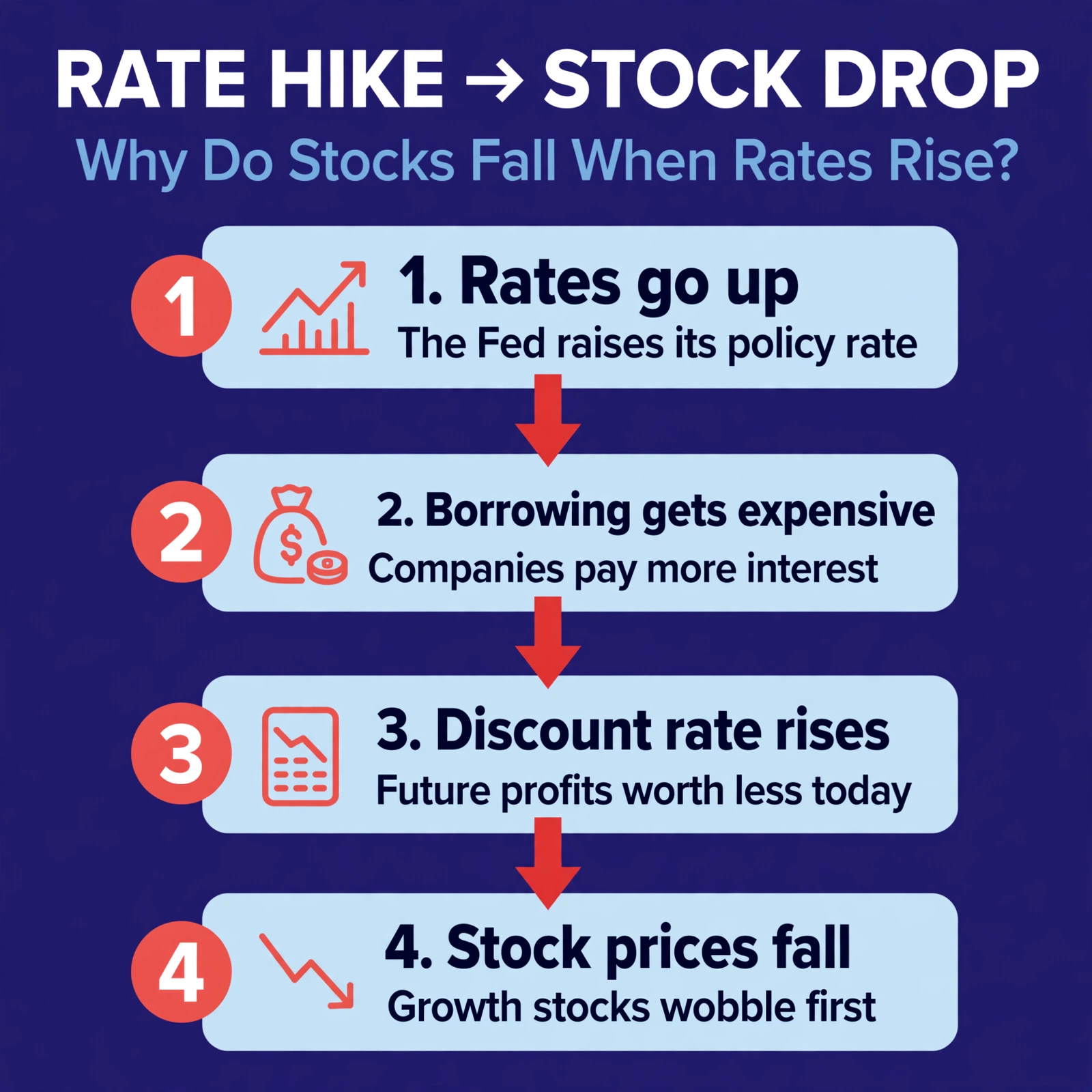
- Interest Rate Hikes and Stock Declines: Growth Stock Valuation Impact Analysis
The two channels from a rate hike to falling stock prices — higher borrowing costs and a lower present value of future earnings.
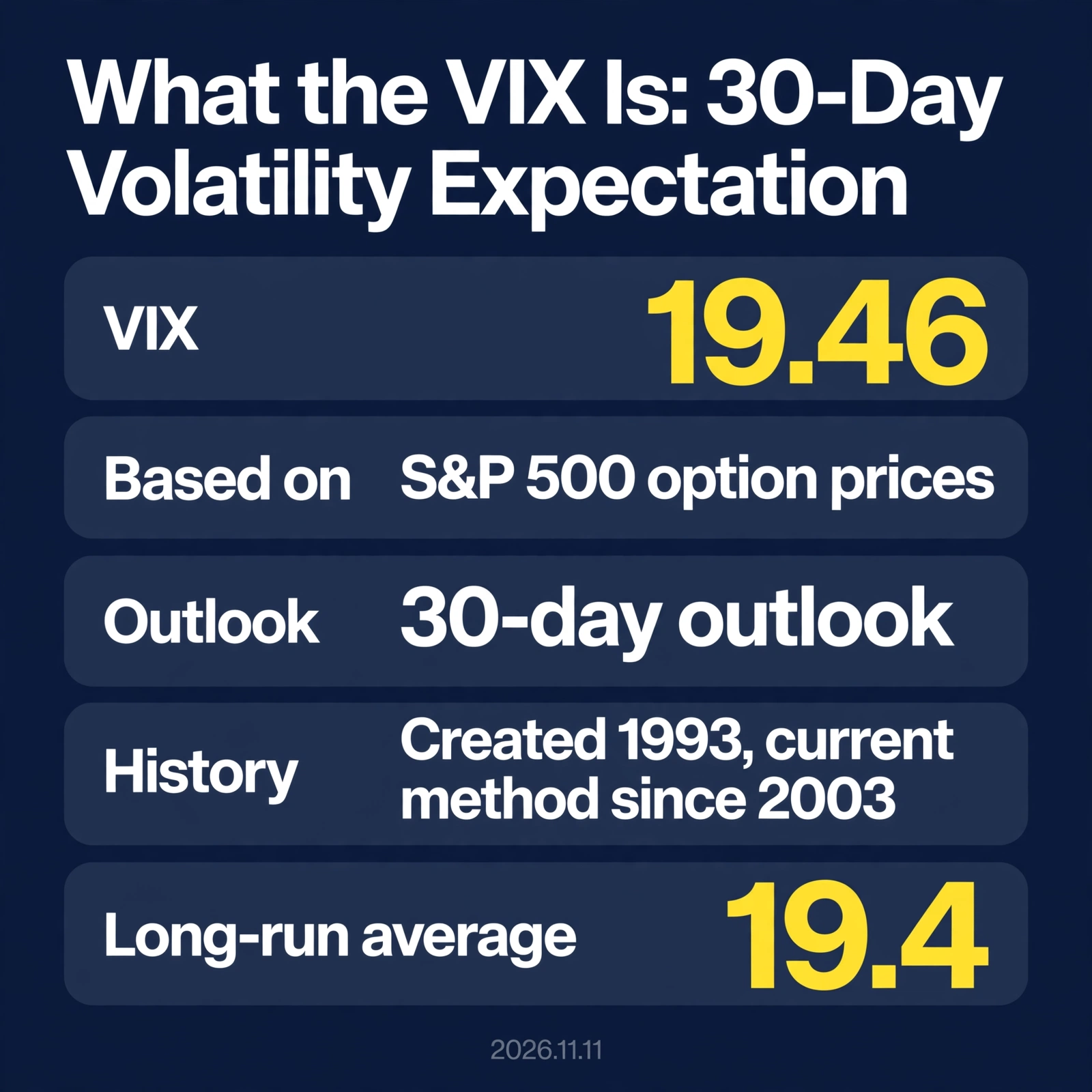
- VIX Fear Gauge Analysis Reading Market Fear at Volatility 19
The VIX is the market's expectation of 30-day volatility implied by S&P 500 option prices. At 19.46 it implies moves of about ±5.6% over a month and ±1.2% a day. With a post-1990 average of 19.4 and a record close of 82.69, here is how to read today's VIX 19.46.
5minbrief on YouTube
The briefs also come as videos. Get the daily market wrap on YouTube.
Subscribe on YouTube