 5-minute briefs
ETF Structure and Index Fund Differences: Total Fees and Premium-Discount
ETF structure — a basket holding an index
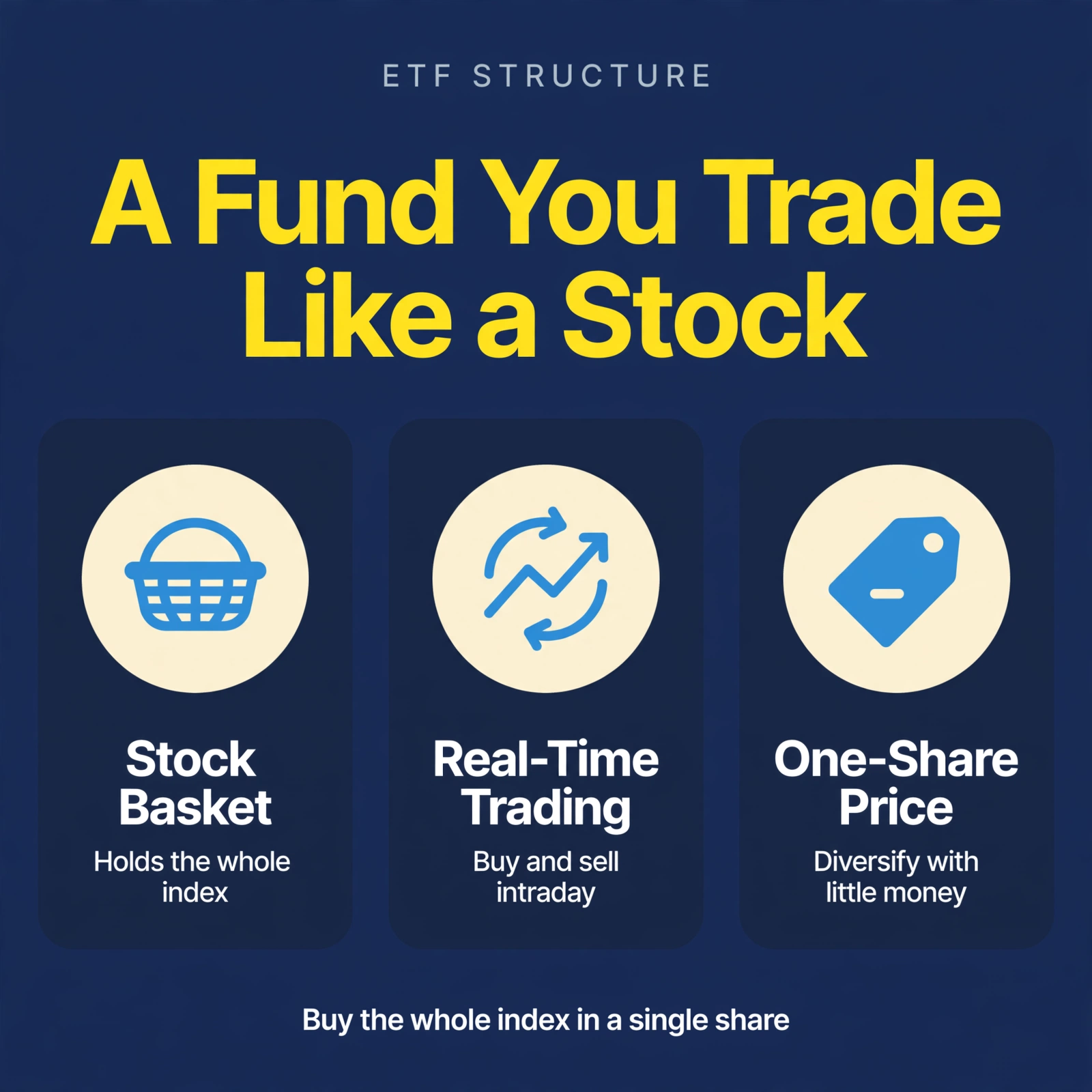
ETF stands for Exchange Traded Fund — literally, a fund listed on an exchange. It packs dozens to hundreds of stocks into one basket that tracks an index like the KOSPI 200 or the S&P 500, then slices the basket into small pieces that trade on the stock market in real time.
Pick individual stocks and your fate rides on one company’s earnings. An ETF spreads your money across an entire index for the price of one share, so a single stock’s stumble barely dents the whole. You hand stock selection to the index and gain trading convenience instead.
- ETF: a fund listed on an exchange, traded in real time like a stock.
- Underlying index: the index the ETF tracks — KOSPI 200, S&P 500, Nasdaq-100.
- NAV (net asset value): the actual value of the stocks inside, per share. The ETF's "fair price."
- Premium/discount: the gap between market price and NAV, in percent. Positive means trading above fair value.
- Liquidity provider (LP): posts continuous buy/sell quotes to keep the price pinned near NAV.
How ETFs differ from index funds and mutual funds
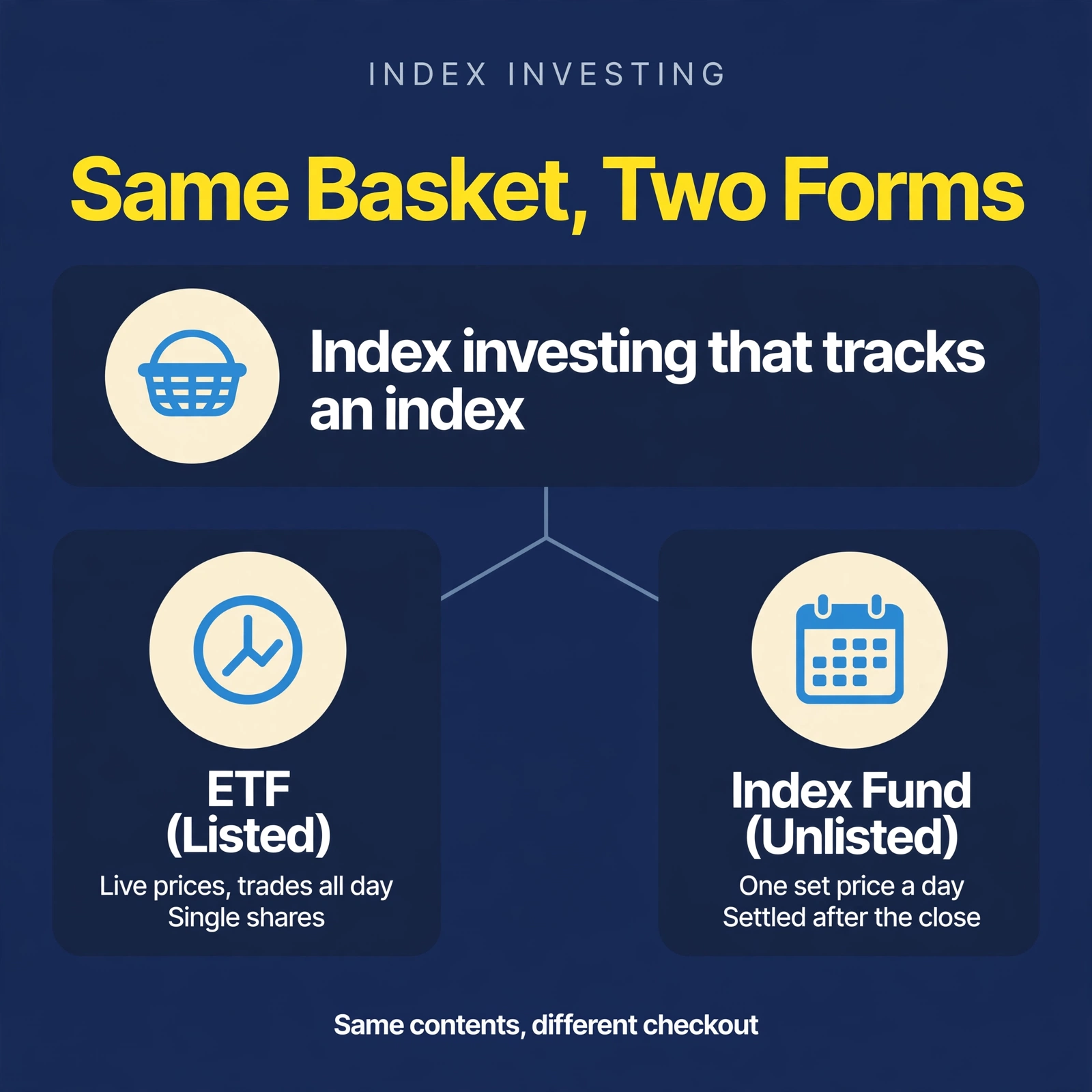
All three can track an index. The difference is not what they hold but how you buy and sell them.
An ETF trades at live prices while the market is open, in single shares, filling the moment you place the order. An index fund (unlisted fund) trades once a day at a single set price — order today and you get tonight’s closing NAV. A mutual fund is the US term for unlisted funds; some track indexes, but many are active funds where a manager picks stocks, so fees tend to run higher.
Strictly speaking, index fund is the umbrella term for any fund that tracks an index — an index-tracking ETF is one form of it. In this article, “index fund” refers to the unlisted (mutual fund) form.
In short: same contents, different checkout. Choose an ETF when you want real-time trading; an index fund is handier for automatic monthly contributions.
Costs and pricing — expense ratio and premium/discount
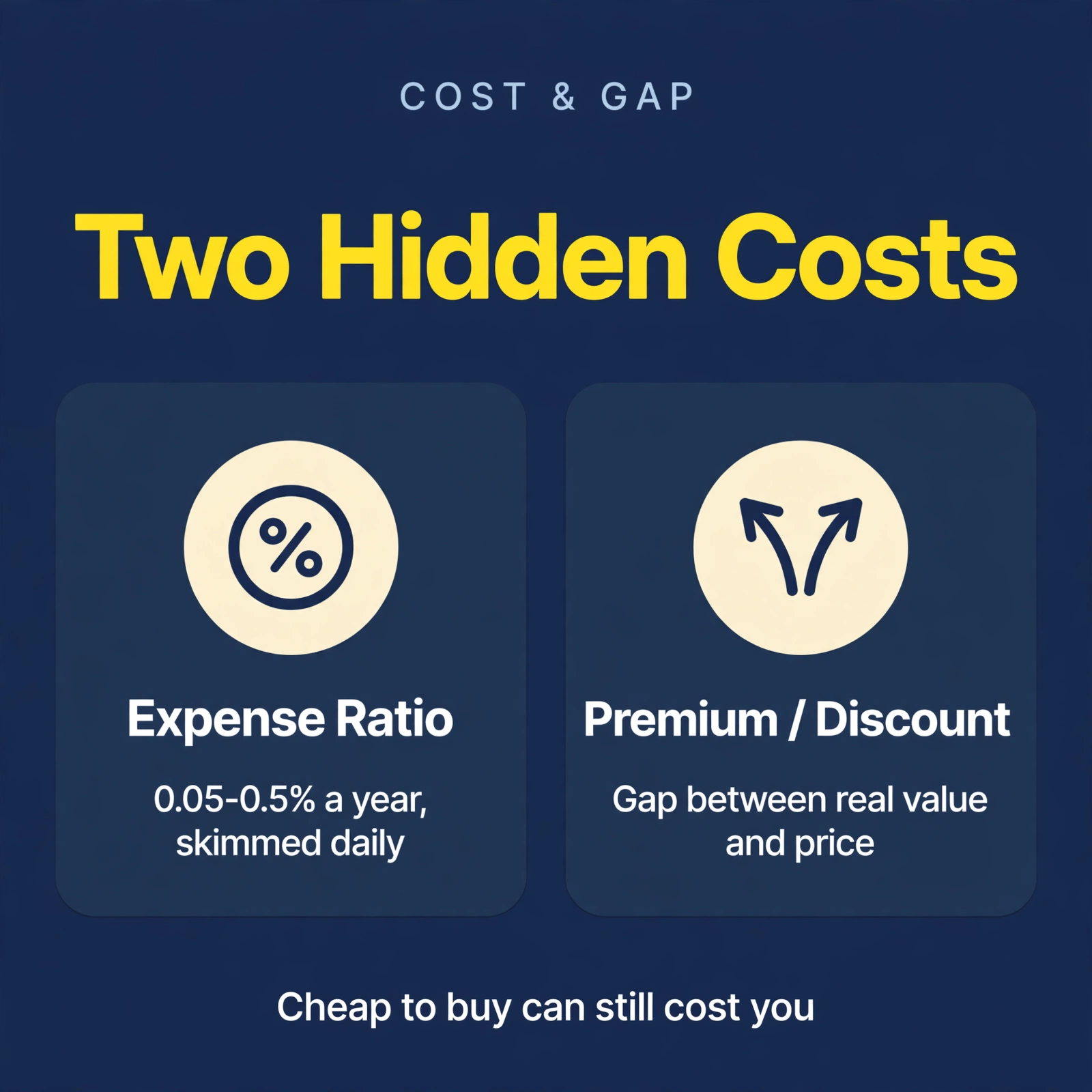
ETFs are cheap, but not free. First, the expense ratio: the fee skimmed off a little every day for running the fund. Index ETFs commonly run 0.05% to 0.5% per year. It looks tiny, but the gap is real — on a $10,000 position, 0.05% costs $5 a year while 0.5% costs $50, a 10x difference that compounds the longer you hold.
Second, the premium/discount. When the market price sits above the value of what’s inside (NAV), you’re paying a premium — buying above fair value — so even if the index rises, your return gets clipped. Liquidity providers normally keep the gap tight with their quotes, but thinly traded ETFs can see premiums and bid-ask spreads widen.
ETF buying checklist
Check these in order before buying an ETF:
- Underlying index — what it holds, and whether the index fits your goal
- Expense ratio — for the same index, lower wins over the long run
- Premium/discount — how far the price sits from NAV when you buy
- Trading volume and fund size — bigger means tighter quotes and a steadier gap
- Distribution policy — paid out in cash, or automatically reinvested
One sentence to remember: an ETF hands stock selection to the index — in exchange, you mind the costs and the price yourself. Know the structure and the same index can give you a different result.
Watch the video

Sources & references
- U.S. SEC Investor.gov — Investor Bulletin: Mutual Fund Conversion to Exchange-Traded Fund (ETF) — SEC bulletin comparing how mutual funds and ETFs trade, are priced, and differ in costs
- Korea Council for Investor Education — What Is an ETF's Premium/Discount (Deviation Rate)? — Investor-education material explaining the deviation rate, iNAV, and the role of liquidity providers
- KB Kookmin Bank (KB Think) — How Are ETF Prices Set? NAV, Deviation Rate and Tracking Error Explained — Guide to how NAV is calculated, the deviation-rate formula, and what LPs do
- KB Kookmin Bank (KB Think) — ETF Basics Guide: Concept, Pros and Cons, and Differences from Stocks and Funds — Introductory guide defining ETFs and comparing them with stocks and funds
Related articles
- VIX Fear Gauge Analysis Reading Market Fear at Volatility 19
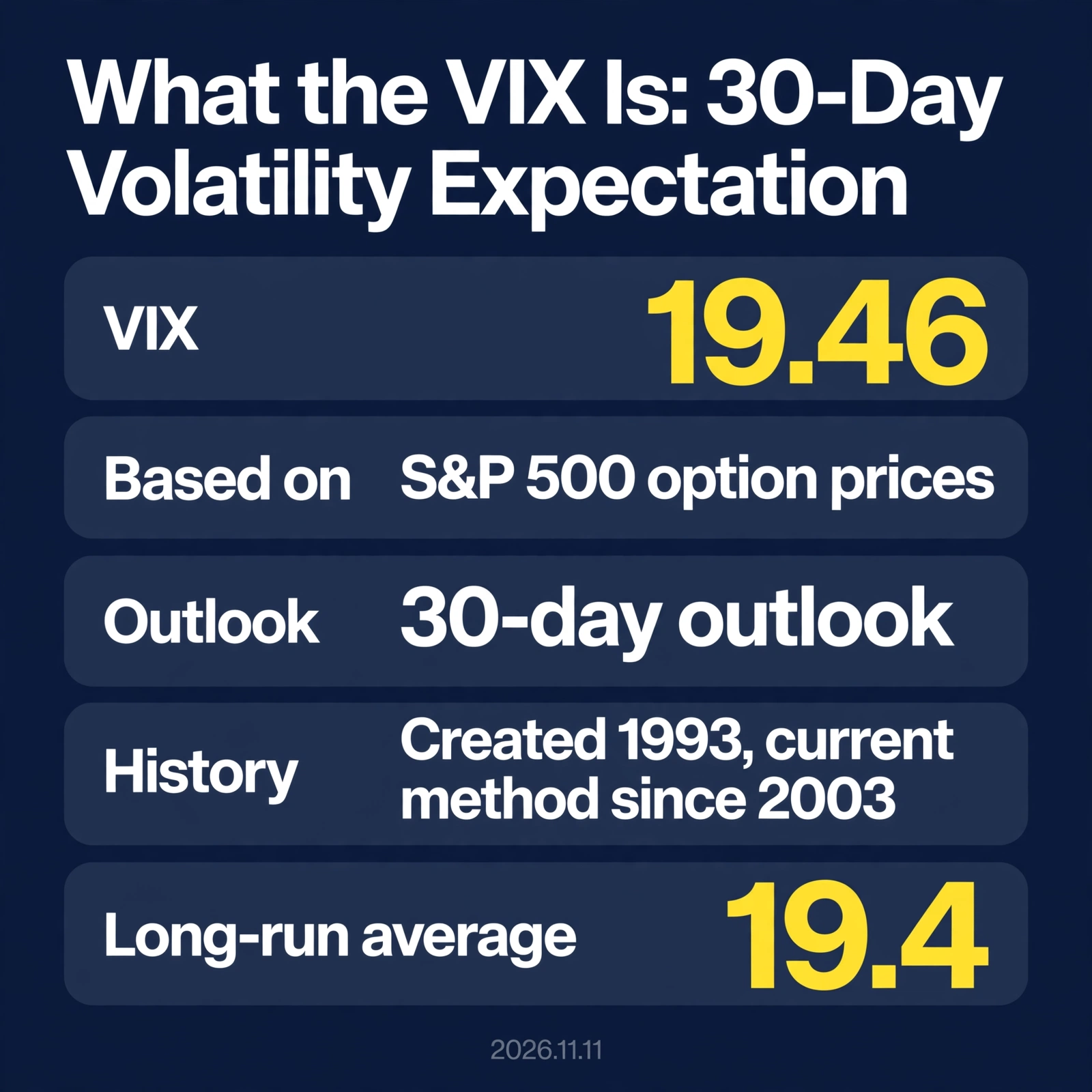
The VIX is the market's expectation of 30-day volatility implied by S&P 500 option prices. At 19.46 it implies moves of about ±5.6% over a month and ±1.2% a day. With a post-1990 average of 19.4 and a record close of 82.69, here is how to read today's VIX 19.46.
- Yield Curve Inversion Analysis: Recession Signal and the 10-Year at 4.86%
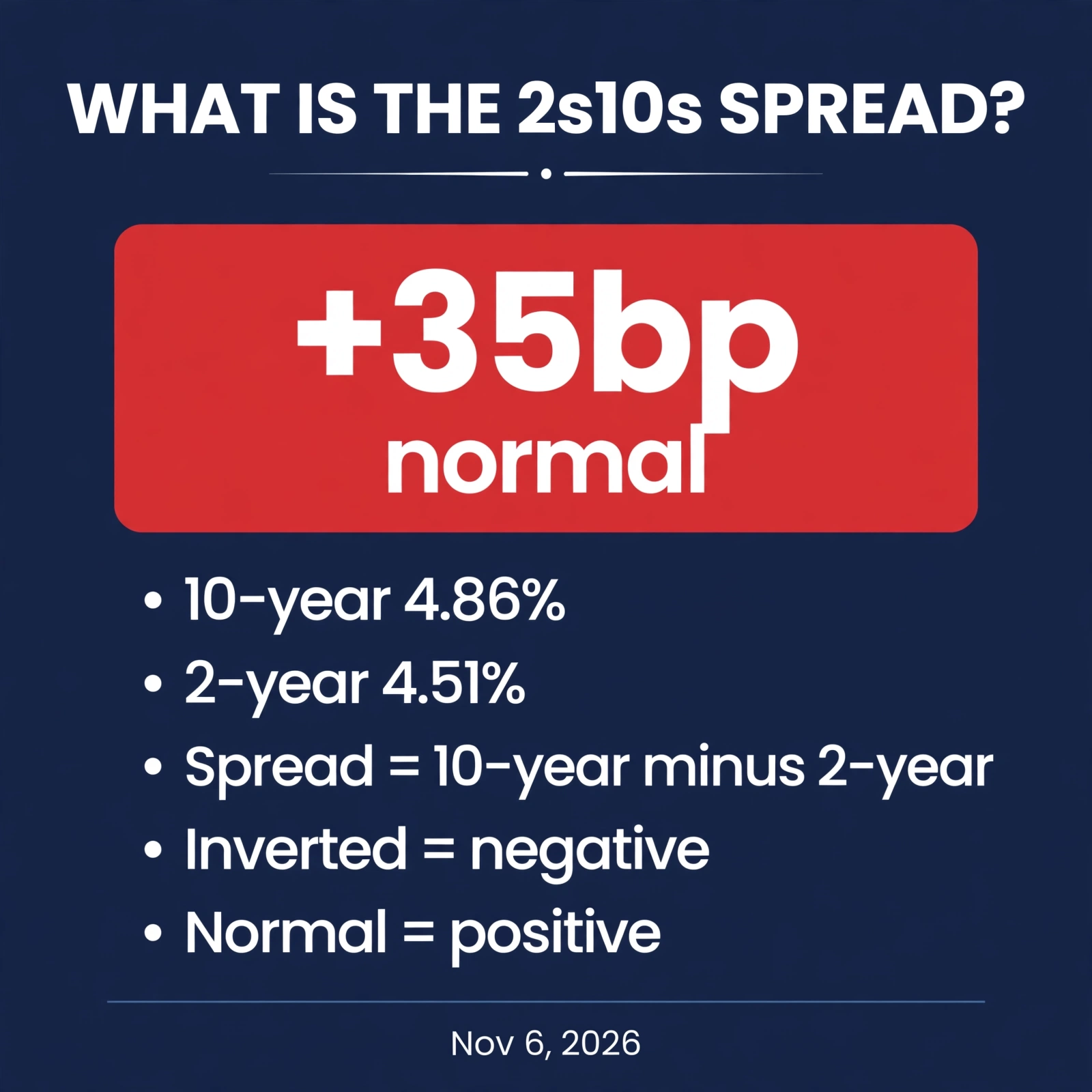
The 2s10s spread is the bond market's most famous recession signal. But the curve is not inverted right now — the 10-year at 4.86% minus the 2-year at 4.51% leaves a +35bp spread, normal territory. How to read it, with the record of the 2022–2024 inversion to −108bp.
- Bond Prices and Interest Rates: The Inverse Relationship and Duration
Why existing bond prices fall when market rates rise, worked out with a 100-dollar face-value bond, and how duration decides how hard bond prices swing.
5minbrief on YouTube
The briefs also come as videos. Get the daily market wrap on YouTube.
Subscribe on YouTube