 5-minute briefs
Intel Earnings Analysis Q3 Beat Overshadowed by Weak Q4 Guidance Stock Plunges 28.58%
#Intel#semiconductors#guidance#AMD#Nvidia
The good quarter: what 78% data center growth showed
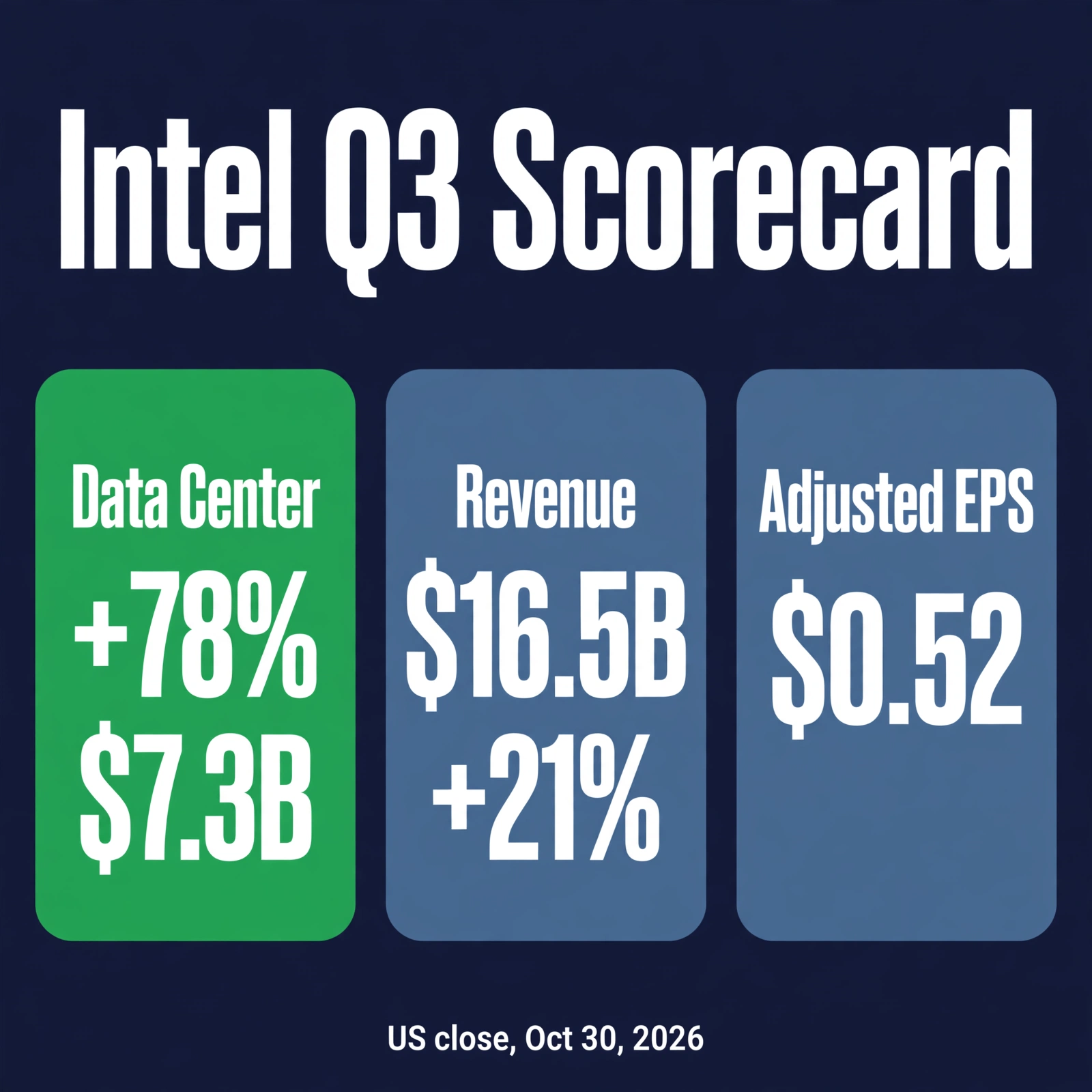
On the numbers alone, Intel’s third quarter looked like a comeback story. Revenue of $16.5 billion grew 21% year over year, and adjusted earnings of $0.52 per share beat the $0.40 consensus. Data Center and AI revenue surged 78% to $7.3 billion, its fastest growth in 15 years, driven by what the company called extraordinary demand for server CPUs. Foundry revenue rose 58% to $6.7 billion, and adjusted gross margin improved to 44.1%. The CEO said the immediate priority was unlocking more supply for the Xeon family.
That was enough for a “turnaround confirmed” reaction, briefly. Then the company published its outlook, and the good quarter became history. In late-season earnings markets, the next quarter’s forecast often matters more than the quarter just reported, and Intel proved it in one session.
The broken outlook: how Q4 guidance changed everything
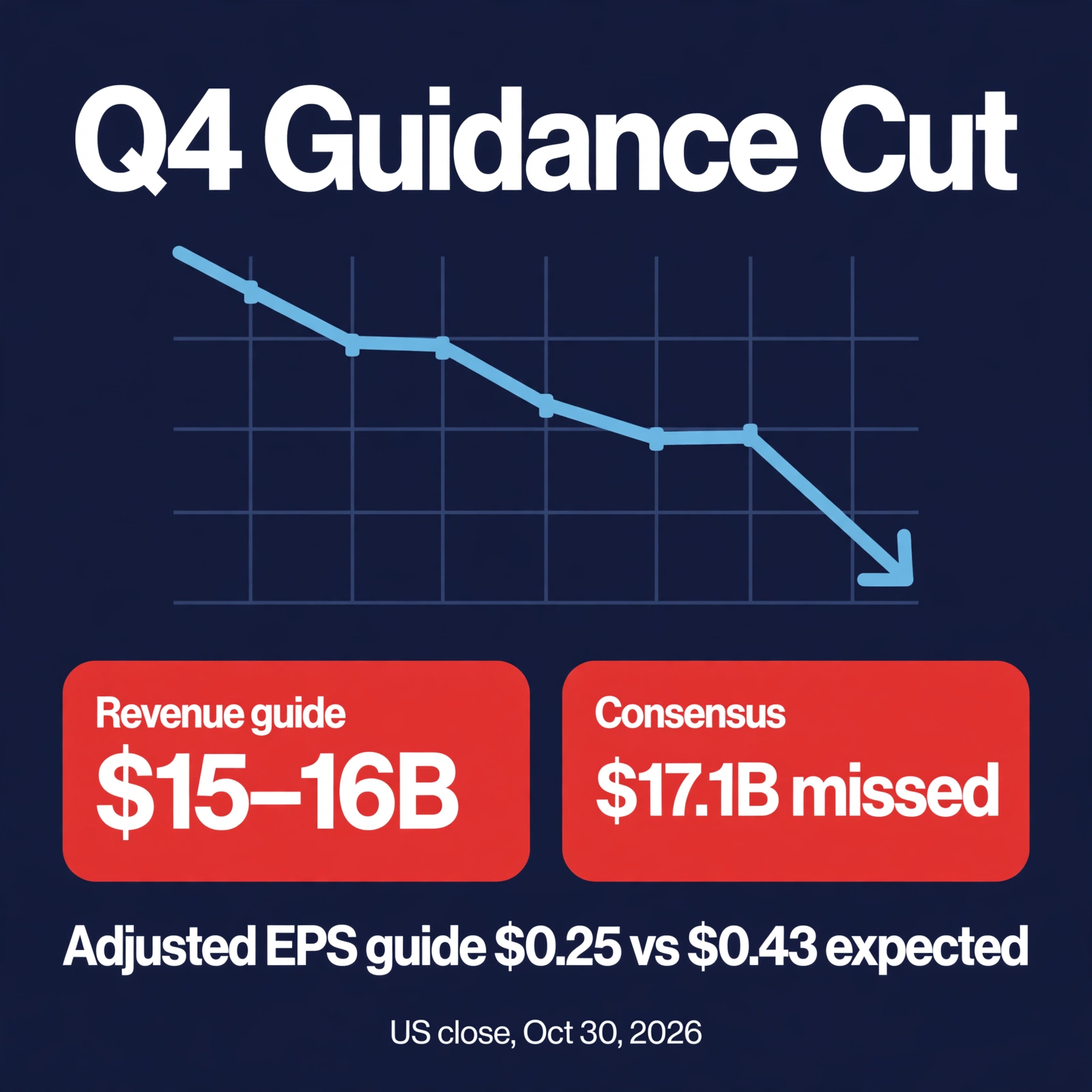
The fourth-quarter outlook missed on three fronts at once. Revenue guidance of $15–$16 billion sits as much as $2.1 billion below the ≈$17.1 billion expected, adjusted earnings guidance of $0.25 per share is roughly half the $0.43 consensus, and adjusted gross margin guidance of 38.0% is 6.1 percentage points below the third quarter’s 44.1%. At the midpoint, revenue falls ≈$1 billion from the third quarter while margins shrink too. The picture flipped from “a growing company” to “a shrinking company” in a single release.
Three causes overlapped. First, the PC slowdown: Client Computing revenue fell 5% to $8.1 billion, and the company said weakness could last at least into the first half of next year, squeezed by industry-wide memory shortages and tight corporate IT budgets. Second, the Israel fab shutdown: an October accident halted 10-nanometer server production, with an estimated ≈$300 million hit to fourth-quarter revenue. Third, seasonality: the fourth quarter is normally softer for PC, and this year the seasonal dip looks steeper.
The stock reacted exactly to the outlook. From $92.07 to $65.76, the 28.58% drop was the worst since the 1970s. An after-hours fall of ≈17% widened in the regular session. The market bet on “the next quarter gets worse,” not on “the last quarter was good.”
The sector spillover: why one stock dragged all chips down
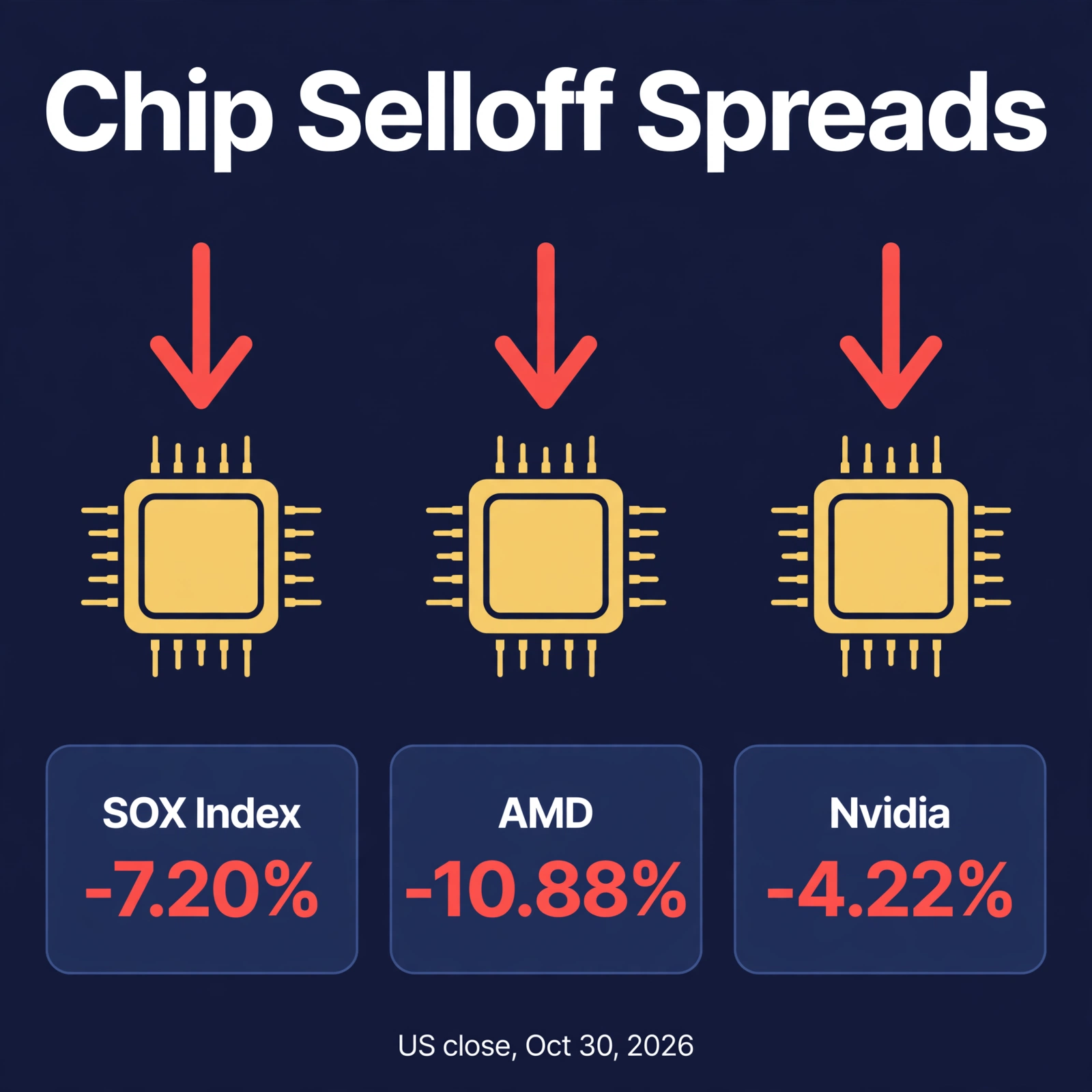
Intel’s plunge did not stay contained. The Philadelphia Semiconductor Index fell 7.20%, AMD fell 10.88%, and Nvidia fell 4.22%. Marvell fell by a double-digit percentage, Broadcom and Micron each fell more than 5%, and SanDisk lost ≈13%. Stocks with little direct overlap with Intel sold off too, which means the market read Intel’s guidance as a warning about PC and chip demand broadly, not just about Intel.
There is a season-long context here. Alphabet plunged 12.6% on surging capex and negative free cash flow, and Amazon slid ≈6% early Friday on its own free-cash-flow turn to negative. The question investors now ask has changed from “how much are you spending on AI?” to “when does the spending turn into profit?” Intel gave the least favorable answer of the week: even 78% data center growth could not offset the weakening parts of the business.
- Does Q4 land inside guidance? Revenue of $15–$16 billion and adjusted EPS of $0.25 will show whether this was the end of the downgrade or the start of more.
- Does the PC slowdown really last into next year's first half? The timing of a Client Computing recovery sets the clock on the turnaround story.
- Does data center growth hold? Whether 78% growth reflects real demand or one-off orders is the next quarter's test.
Conclusion: a market where guidance beats earnings
The lesson of the Intel shock is simple. In the late innings of this earnings season, next quarter’s outlook decides the stock more than last quarter’s report card. Intel beat on revenue, earnings, and data center growth, yet one outlook erased all of it. This is not unique to Intel: Caterpillar fell 9.3% on a soft outlook despite beating earnings, and ServiceNow plunged 27% on guidance disappointment. The same grammar keeps repeating.
For beginner and intermediate investors, there are two ways to read Intel now: “a guidance shock is an oversold opportunity” or “wait until results confirm the outlook.” Either way, the test is the same: whether Intel actually delivers the guided $15–$16 billion in revenue and $0.25 in earnings next quarter, and whether the PC slowdown truly stops within the first half of next year. Until then, Intel is not “turnaround in progress” but “turnaround under verification.”
Watch the video

Sources & references
- Intel — Intel Reports Third-Quarter 2026 Financial Results — Q3 results, segment revenue, Q4 guidance, original release
- Invezz — Nasdaq plunges 2.8% as Intel and Amazon results deepen AI stock sell-off — Intel plunge, chip selloff, sector reaction
Related articles
- Nvidia Stock Analysis: Solo Decline as Chips Surge and SOX Reclaims 10,000
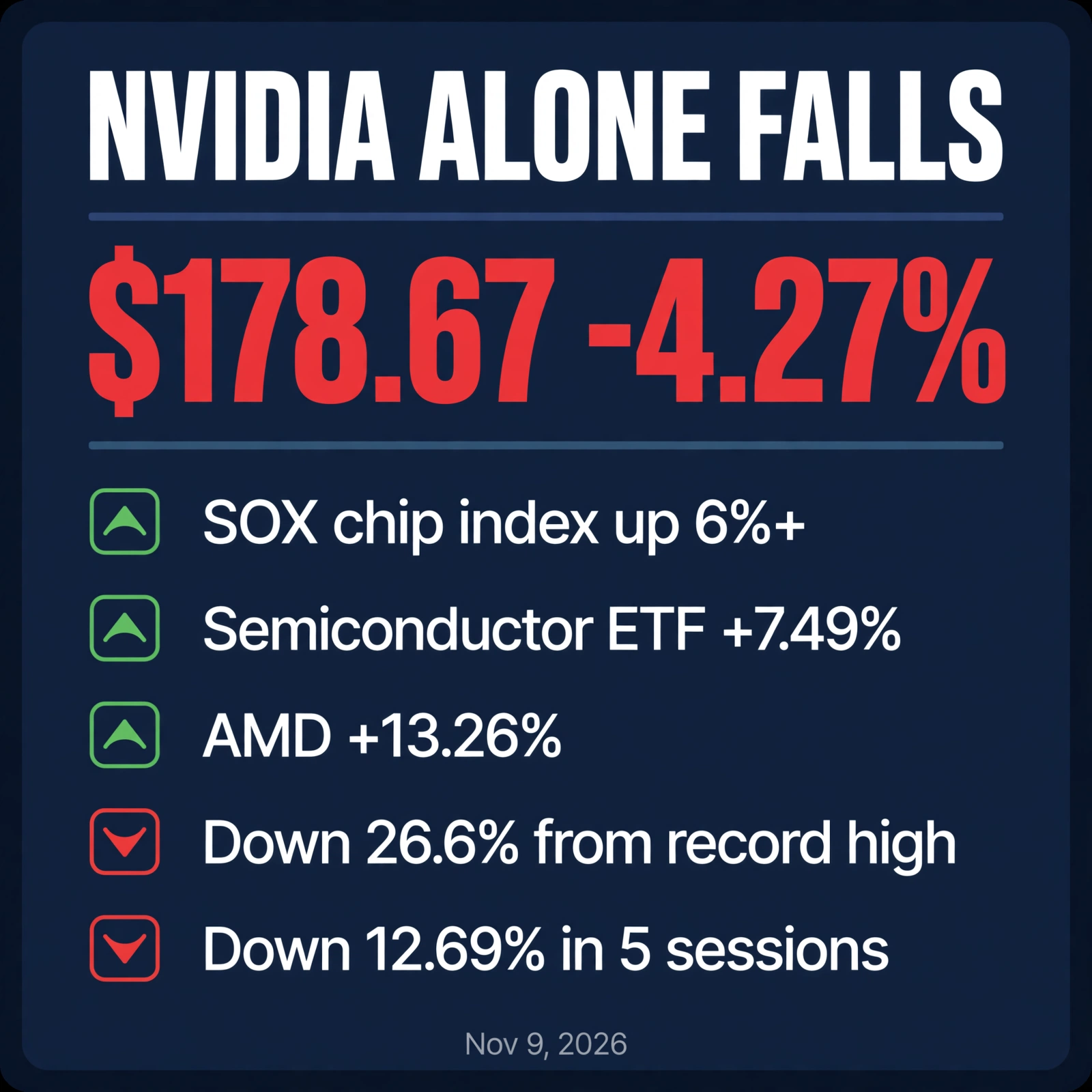
The semiconductor index jumped more than 6% on Monday — but Nvidia fell 4.27%, the only decliner in the SOX. A board investigation into CEO Jensen Huang turned leadership risk into a valuation discount on the AI leader.
- Nasdaq Rebound Semiconductor Index 4.21% Recovery Jobs Surprise Rate Hike Fears Analysis
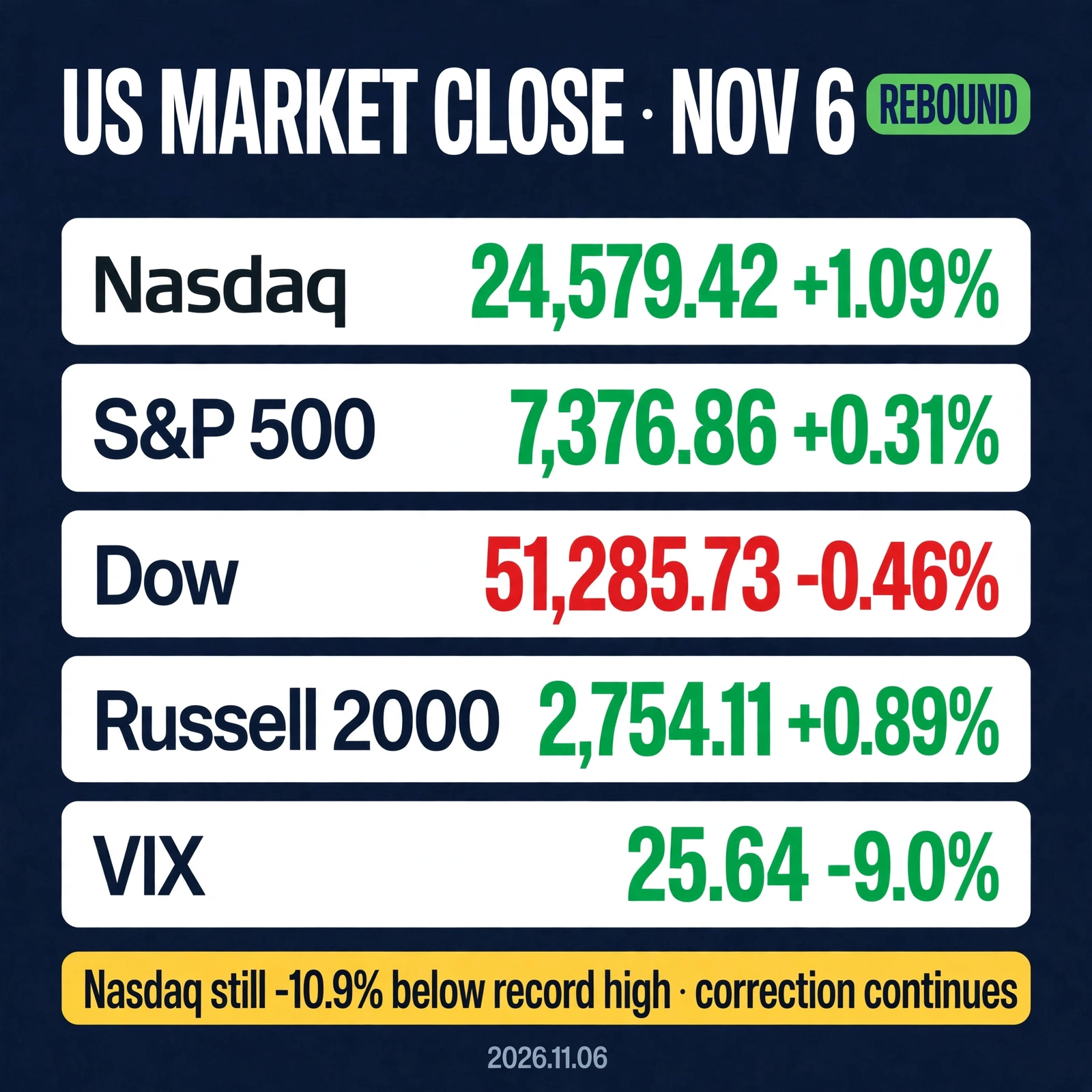
On November 6, US stocks bounced as chip stocks recovered: the Nasdaq rose 1.09%, the S&P 500 gained 0.31%, and the Dow slipped 0.46%. October payrolls jumped 165,000, far above forecasts, lifting December Fed hike odds to 76.8%.
- Semiconductor Rebound Analysis SOX 4.21% Recovery and Three Bottom Confirmation Conditions
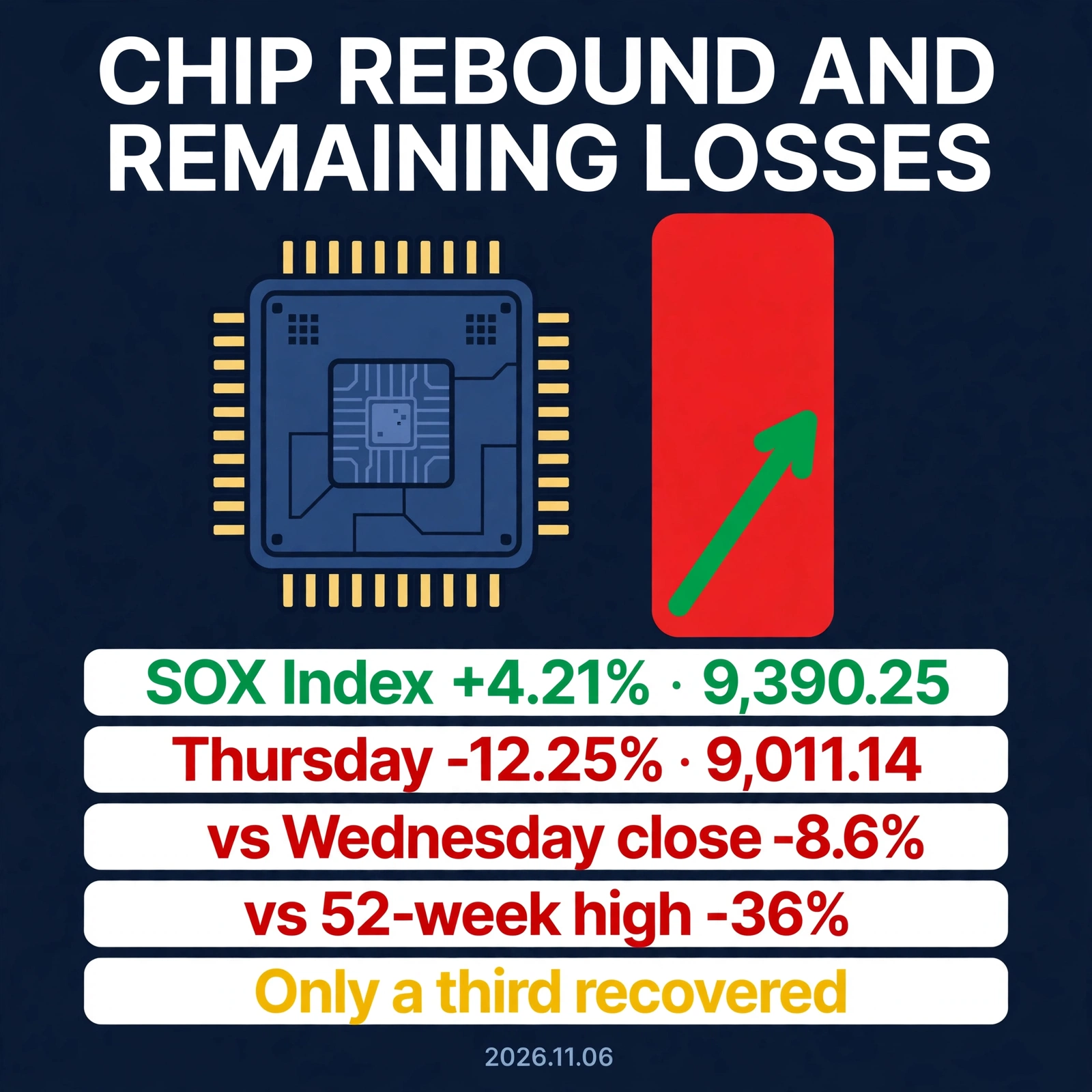
The Philadelphia Semiconductor Index rebounded 4.21% but recovered only a third of Thursday's losses, and gains faded from a 6.6% intraday high. Whether the bounce is a bottom or a retracement turns on three conditions: policy signals, AI demand evidence, and technical support.
5minbrief on YouTube
The briefs also come as videos. Get the daily market wrap on YouTube.
Subscribe on YouTube