 5-minute briefs
SK Hynix Leveraged ETF Analysis Daily 2X Reset Decay and US Fund Liquidation
Two US funds wind down after three months
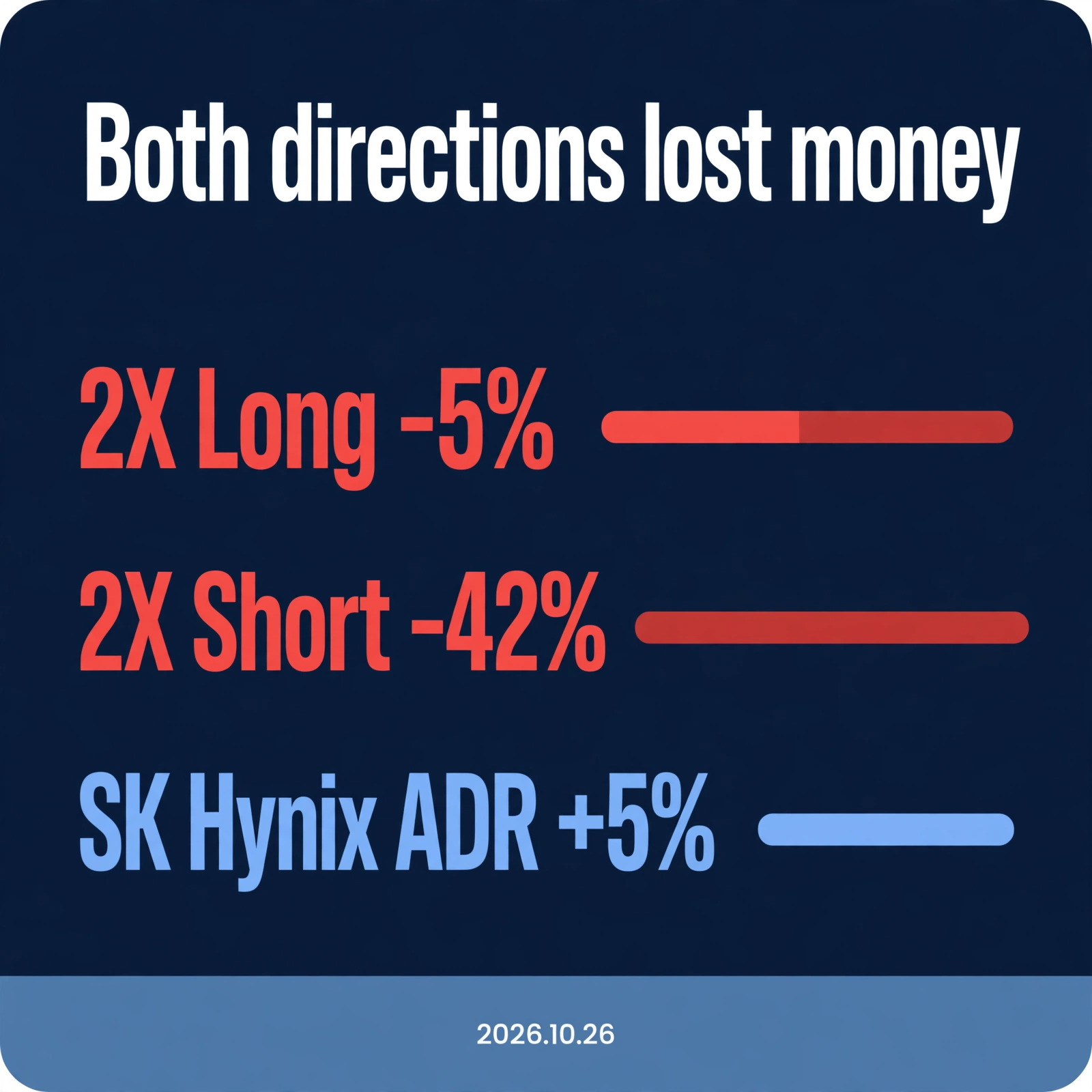
According to Bloomberg and Yonhap News, fund manager Tradr ETFs will end operations for its SK Hynix 2X Long and 2X Short ETFs on November 12. The funds listed on July 28. Trading, creation, and redemption remain available until November 5, after which assets will be liquidated and proceeds distributed to investors.
Both funds track the daily return of SK Hynix’s American depositary receipts (ADRs), at 2X or inverse 2X. SK Hynix listed its ADRs on Nasdaq on July 10, and other managers including ProShares, Leveraged Shares, and Direxion followed with their own SK Hynix leverage products. The Tradr funds’ combined assets now stand at about $1.3 million (about 1.7 billion won), down more than 60% from their peak. Bloomberg cited weakening interest in AI-related investing as the backdrop. SK Hynix shares in Seoul are down 56% from their all-time high.
Why both directions lost: daily reset decay
A leveraged ETF tracks only one day’s return at 2X, then resets. If the underlying moves in one direction for days, the 2X effect compounds in your favor. But in a choppy market, each day’s 2X move eats into the next day’s base, and the fund drifts down even if the underlying ends flat.
A simple example makes it concrete. Suppose the underlying rises 10% on day one and falls 9.09% on day two, ending exactly where it started. A daily 2X fund rises 20% on day one and falls 18.18% on day two. Multiply 1.20 by 0.8182 and you get 0.9818, a 1.82% loss, on an underlying that went nowhere. Volatility itself becomes the cost.
The short fund’s larger loss follows the same logic. While SK Hynix ADRs rose about 5% since listing, the inverse 2X fund fell 42%, because repeated up-and-down moves compounded against the short position. A leveraged ETF is not a leveraged view on a company. It is a daily directional bet repeated every day you hold it. The longer you hold, the less “2X the stock’s return” describes your outcome.
The Korean parallel: down 71.3% while retail keeps buying
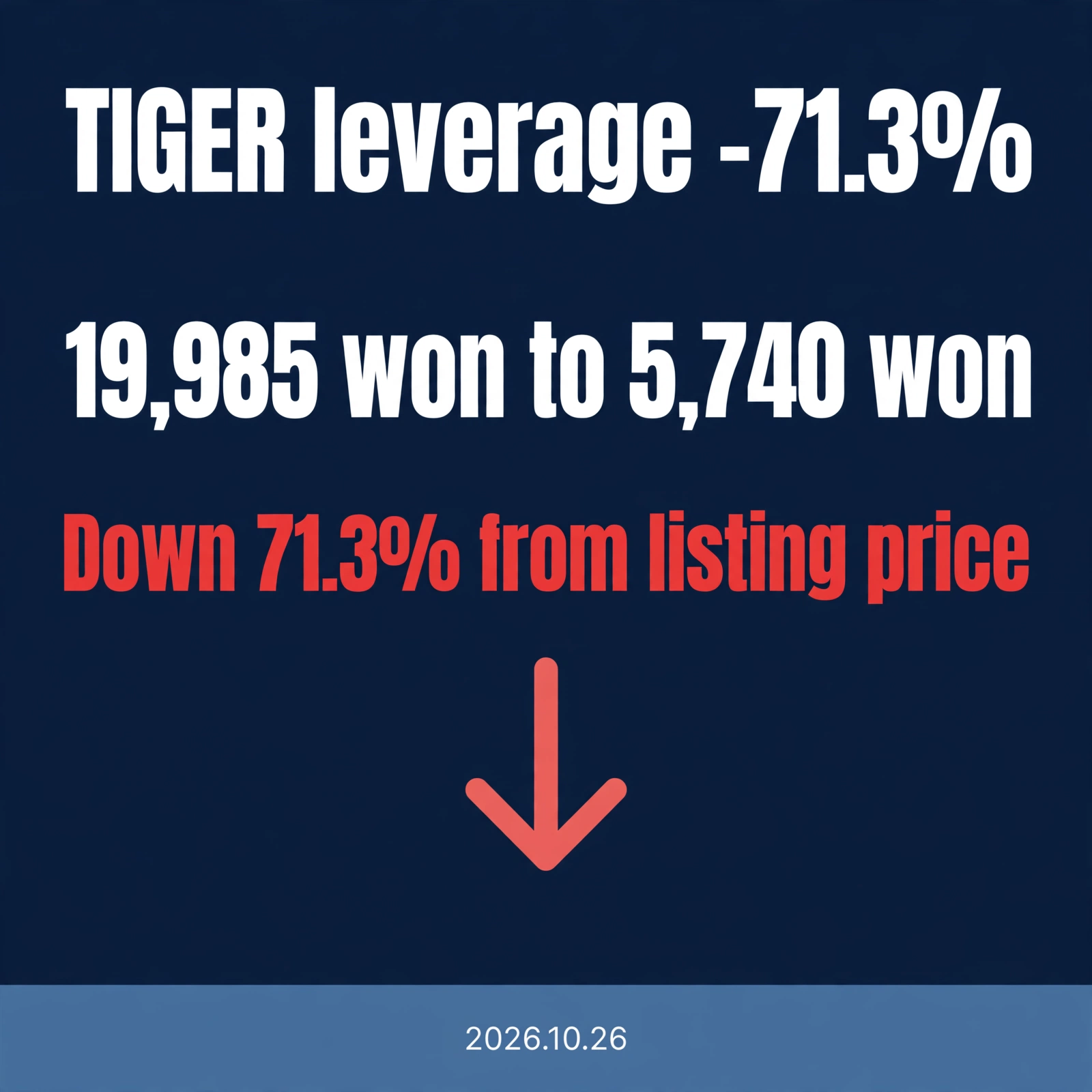
The same structure produced the same result in Korea. According to the Korea Exchange, the TIGER SK Hynix single-stock leveraged ETF closed at 5,740 won on October 14, down 71.3% from its May listing reference price of 19,985 won. The KODEX equivalent trades at 6,750 won, below 10,000 won. The TIGER fund fell more than 40% in two weeks from 9,840 won on October 2.
Over the past three months, SK Hynix shares fell about 25% while the TIGER leveraged fund fell 57.4%. Simple doubling would predict a 50% fall, so the extra 7.4 percentage points are the volatility cost. In recovery terms, a fund down 71.3% needs to rise about 248% to return to its listing price, while the underlying stock needs only about 33% to recover its three-month fall. That gap is the whole lesson in one number.
Yet retail buying continues. According to Coscom ETF Check, individuals bought a net 60 billion won of the KODEX fund and 18 billion won of the TIGER fund over the past month. Financial Supervisory Service data compiled from 10 brokerages and released through a lawmaker’s office estimated retail losses of 2.3 trillion won on Samsung and SK Hynix leveraged products between May 27 and August 14. The recent leg of the decline is not included in that estimate.
Regulation tightens, and a checklist before you buy
Korean regulators moved in July: no new single-stock leveraged ETF listings, higher minimum cash deposit requirements, and mandatory training for retail investors. A plan to raise the trading unit to 20 shares is due next month, with a temporary route under review to let holders of fewer than 20 shares sell through after-hours closing-price trades. Regulators concluded that low issue prices of 10,000–20,000 won encouraged small, short-term trading and overheating.
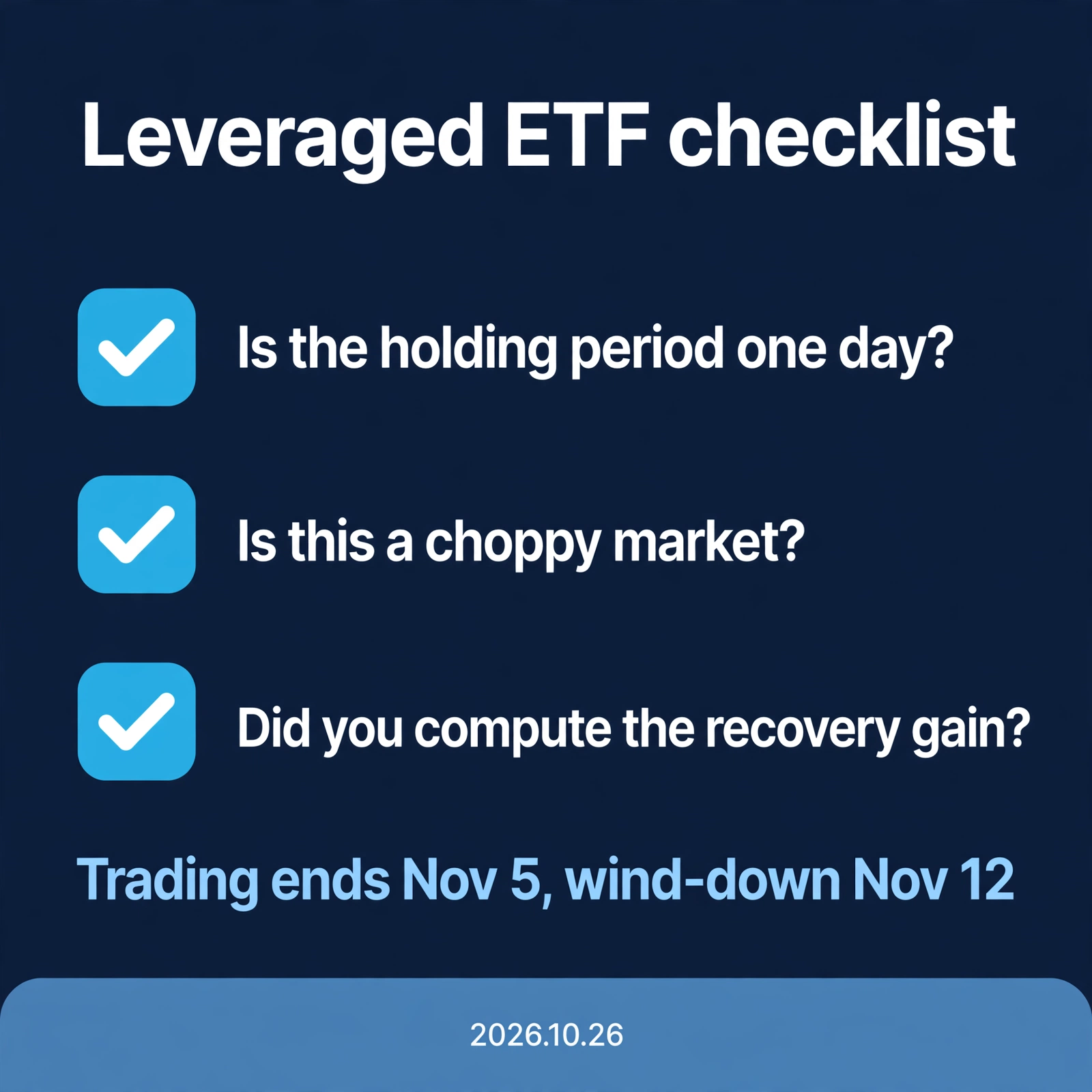
Three questions come before any leveraged ETF purchase. First, is the holding period one day? Beyond a day, the 2X premise breaks. Second, is this a choppy market? In sideways markets, decay accumulates regardless of direction. Third, have you computed the recovery gain? A 50% loss needs a 100% gain to break even, and a 71.3% loss needs about 248%. For the U.S. Tradr funds, remember the dates: trading and redemption until November 5, operations end November 12. The Korean funds trade on separately, but they carry the same structural risk.
- Leveraged ETF: an exchange-traded fund tracking a multiple, here 2X or inverse 2X, of an underlying asset's daily return.
- Daily reset: the fund rebalances each day to its target multiple, so long-term returns diverge from a multiple of the underlying's long-term return.
- ADR: an American depositary receipt, a certificate that lets a foreign company's shares trade in the U.S. market.
- Liquidation: winding down a fund and distributing remaining assets to investors at net asset value.
Not investment advice. Figures are from Bloomberg, Yonhap News, Maeil Business Newspaper, the Korea Exchange, Coscom ETF Check, and Financial Supervisory Service data, as confirmed on October 26, 2026.
Watch the video

Sources & references
- Tradr ETFs — Announcement of Liquidation of SKHA and SKHN (PR Newswire) — The manager's official liquidation announcement
- Maeil Business Newspaper — Two U.S. Leveraged SK Hynix ETFs to End Operations Three Months After Listing — Via Bloomberg and Yonhap: long/short returns and fund assets
- Maeil Business Newspaper — SK Hynix Leveraged ETF Down Over 70% From Listing — KRX closing prices and Coscom ETF Check retail flows
- Maeil Business Newspaper — Retail Realized Losses of ₩2.3 Trillion on Samsung–SK Hynix Leveraged ETFs — FSS data submitted to the National Assembly
Related articles
- SK hynix KRW 100 trillion shareholder returns record profit analysis
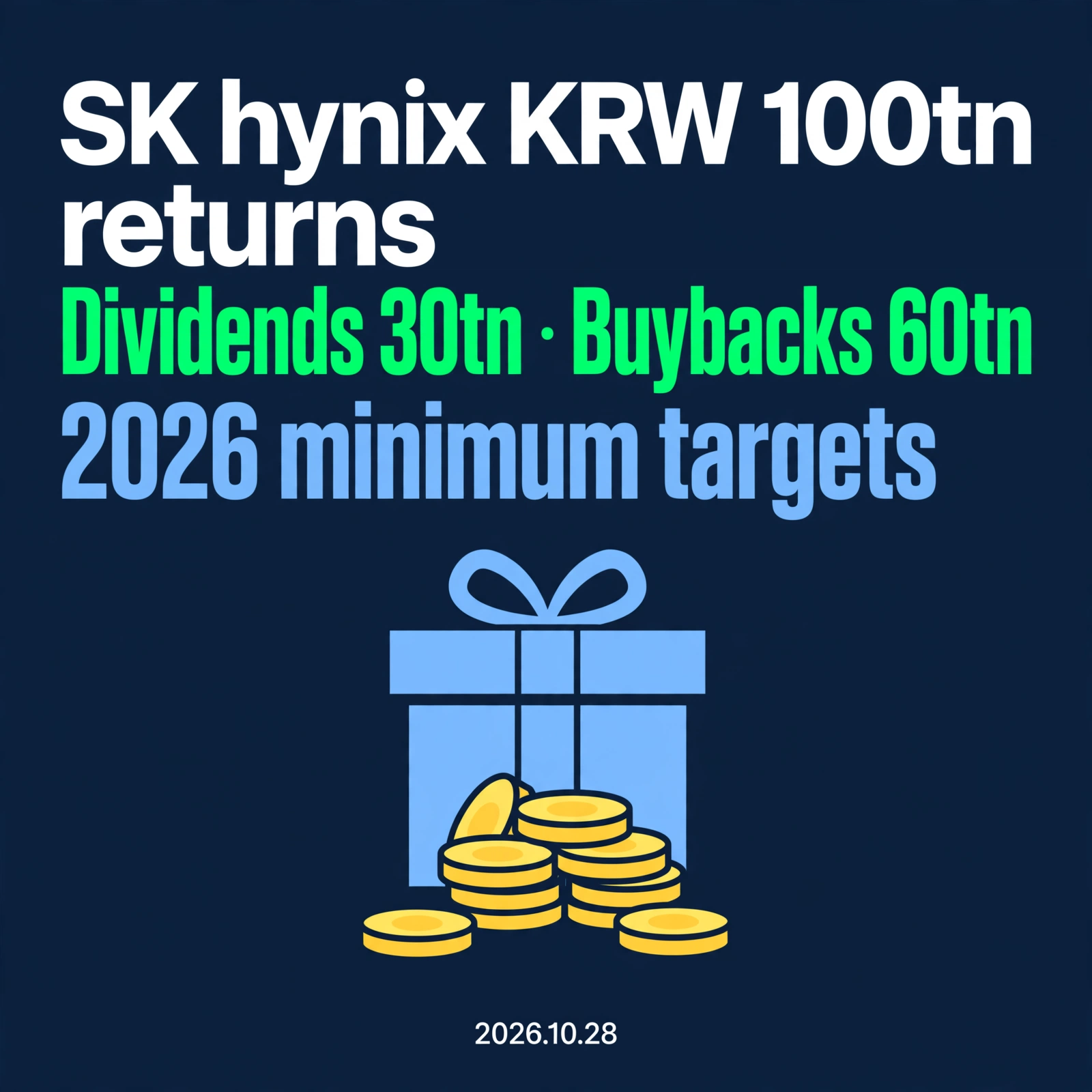
SK hynix's KRW 100 trillion shareholder-return plan, explained for foreign investors: record third-quarter revenue of KRW 104.6 trillion and operating profit of KRW 83.3 trillion at an 80% margin fund at least KRW 30 trillion in dividends and KRW 60 trillion in buybacks and cancellations. What the plan means for the Korea discount, what to verify, and why Samsung's announcement tomorrow is the second half of the story.
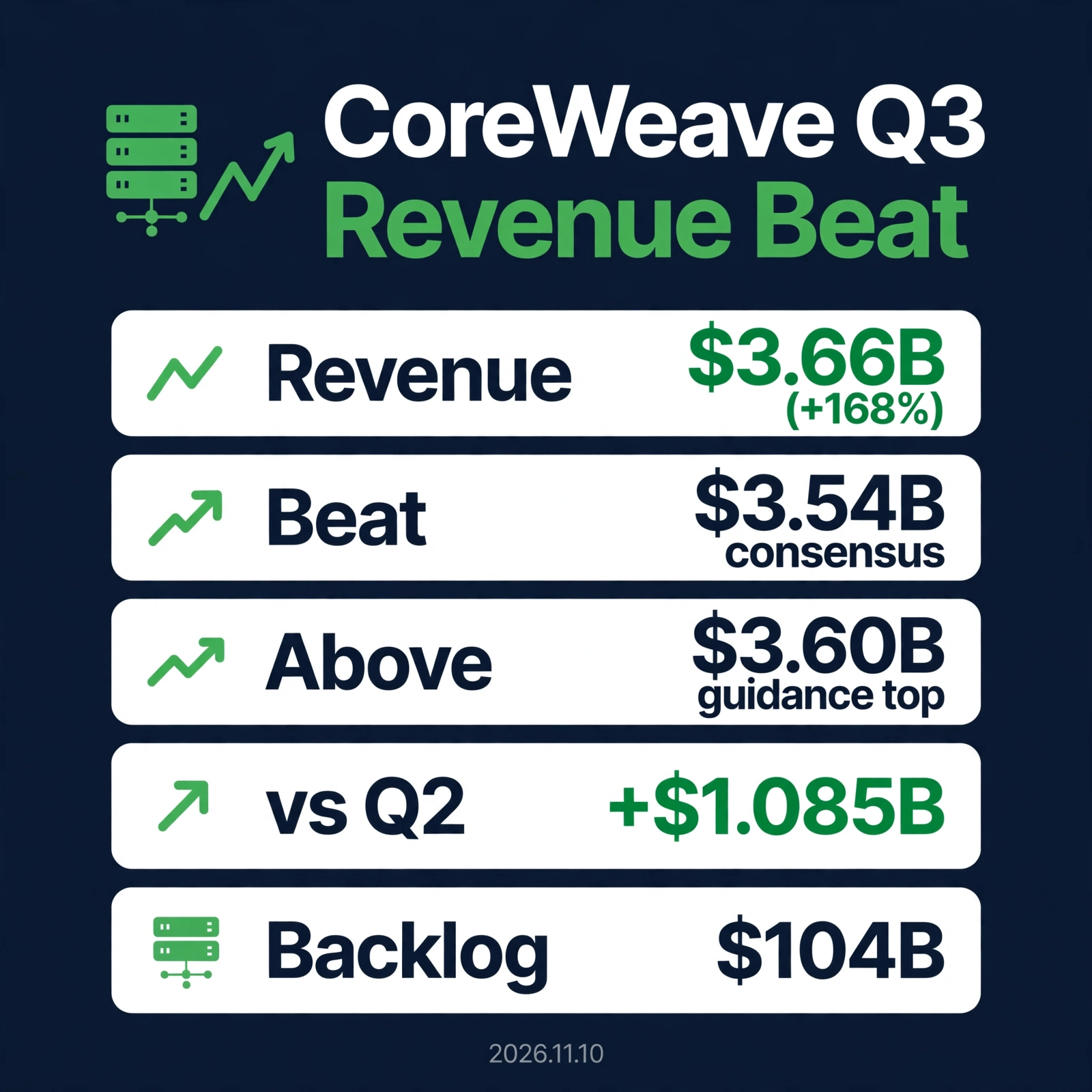
- CoreWeave Q3 Earnings Analysis Revenue $3.66B Beat and $846M Interest Cost Verdict
CoreWeave's Q3 revenue of $3.66 billion beat estimates and the company raised its full-year outlook. But interest expense of $846 million was more than double adjusted operating income of $379 million, and the operating margin fell from 16% to 10%. Demand is proven; the money-making structure is not.
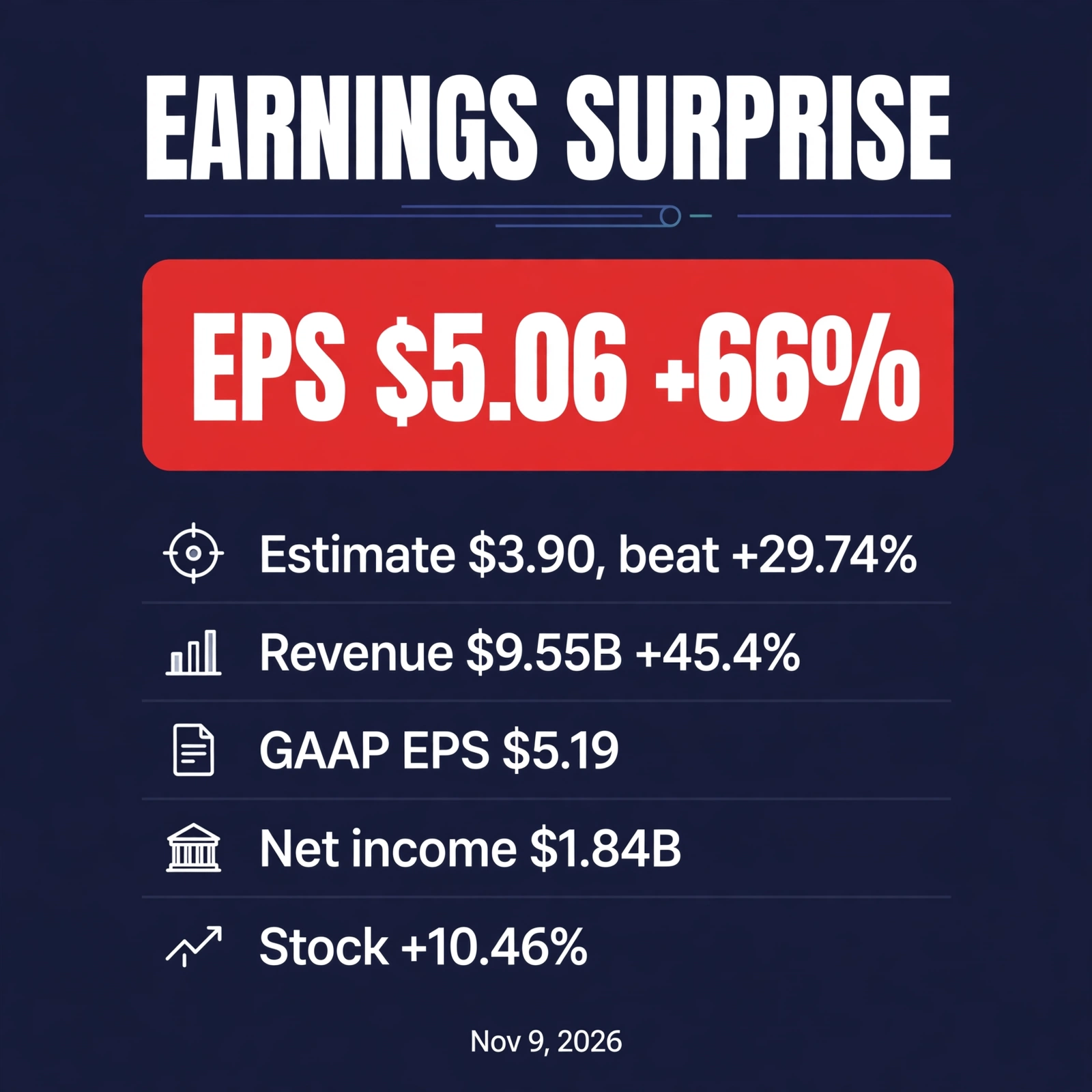
- Constellation Energy Stock Analysis: AI Power Demand and Q3 Earnings Surprise
Constellation Energy jumped 10.46% after third-quarter adjusted EPS of $5.06 beat estimates by 30%. Twenty-year nuclear deals with Amazon and Google show what AI power demand really looks like — while long-term debt has swollen to $19 billion.
5minbrief on YouTube
The briefs also come as videos. Get the daily market wrap on YouTube.
Subscribe on YouTube