 5-minute briefs
ExxonMobil Q3 Earnings Analysis Refining Margin 4.5 Billion Dollar Gain Oil Price Benefit Structure (October 30)
The numbers first: refining up $4.5 billion, upstream down $1.3 billion, divestments up $0.7 billion
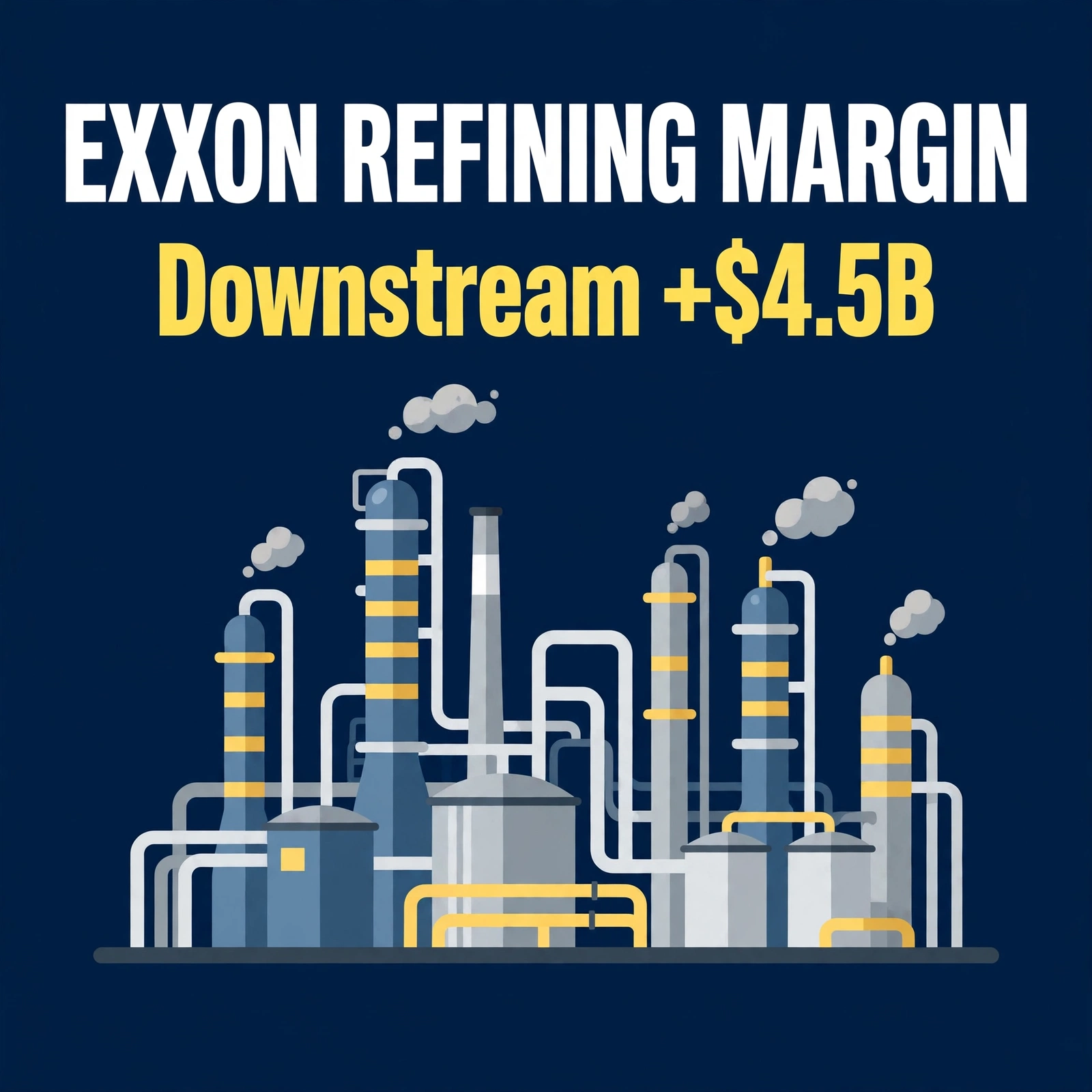
ExxonMobil releases third-quarter results on Friday, October 30, with a conference call at 8:30 a.m. Central Time. Start with the factors the company disclosed in advance. Downstream (refining) profit is expected to rise $4.5 billion from the second quarter, while upstream (oil production) profit is expected to fall $1.3 billion. Divestments add a further $0.7 billion gain. The company also said the Iran war caused no volume-related disruption during the quarter.
Do not mix up the baseline. The second quarter, the comparison period, delivered GAAP earnings of $14.5 billion and adjusted earnings of $14.7 billion. The $4.5 billion figure is not total third-quarter profit; it is the increase in refining profit from the second quarter to the third. And the estimate that refining adjusted net income could reach $8.5 billion comes from a BMO Capital Markets analyst, not from company guidance. Company disclosures and analyst estimates must not be placed on the same line.
Share prices back the refining story. ExxonMobil shares rose 12% over the past month and Chevron rose 11%, while the S&P 500 went essentially nowhere. ExxonMobil is up 48% in 2026 through Wednesday’s close, near its 52-week high. As of October 21, its market capitalization was $731.6 billion with a price-to-earnings ratio of 22.88. It was a month in which energy stocks beat the market, and the driver was refining margin more than the crude price itself.
Why refining margins jumped: crude eased, product prices rose faster

The key is the crack spread: the difference between the price of refined products and the price of crude oil. Refiners buy crude, turn it into gasoline and diesel, and keep the spread. In the third quarter, that spread widened. The company’s own disclosure supplies the evidence: the average closing Brent price fell about 5.6% in the third quarter from the second, which explains the $1.3 billion upstream decline. Product prices, however, stayed stronger. Strait of Hormuz disruptions choked energy exports, and Ukrainian attacks on Russian refineries kept product supply tighter than crude supply. Cheaper crude plus pricier products is the best possible stretch for a refiner.
Whether it lasts is a separate question. Refining margin leans heavily on temporary factors — war and supply disruption. If tensions ease, product prices correct first. If Middle East escalation continues, margins hold, but the cost is higher crude prices pressing on consumer inflation and the interest-rate path. The point where good news for refiners becomes bad news for the wider economy is exactly here. That is why the October 30 report is not only an energy-stock story; it is a window into how the oil shock travels through the economy.
There is a political variable too. President Trump complained in August that ExxonMobil and Chevron were making “too much money.” With the November 3 midterm elections approaching, rising gasoline prices could turn a refining boom into a political target. A beat that does not lift the shares is possible in exactly these conditions. Last week’s AI stocks showed a “beat but fall” pattern; for refiners, the same shape could appear as “boom but political risk.”
Three numbers to check on October 30
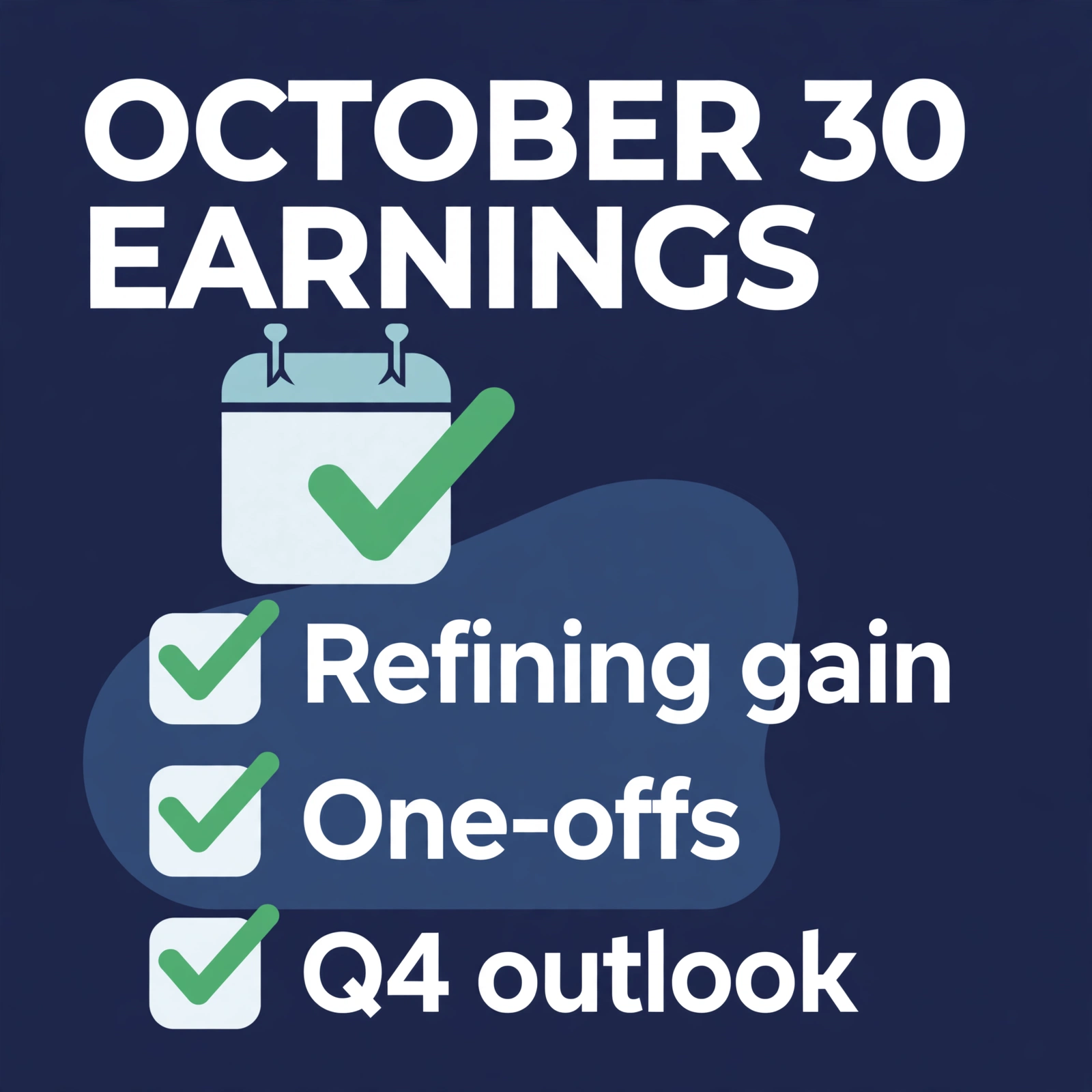
First, does the refining profit gain land near the previewed $4.5 billion? A smaller number would weaken the margin-expansion story. Second, how large are the one-off items, including memo timing effects? The preview summary included negative timing effects alongside the margin gain, so headline and underlying numbers must be read separately. Third, what does management say about fourth-quarter refining margins? Third-quarter results are the past; the conference call’s outlook is the future. Whether margins are described as “structural” or qualified as “temporary” will set the shares’ next direction.
Put together, ExxonMobil’s third quarter is a quarter in which the company “earned like a refiner, not like an oil producer.” Judging energy stocks on the crude price alone misses half of this quarter. Judging them on refining margin alone, and concluding they must keep rising, misses the temporary nature of margins and the political risk. What the 8:30 a.m. conference call on October 30 must answer is not one number, but how long that number can last, in management’s own words.
- Crack spread: the difference between refined product prices and the crude oil price. It is a refiner's core margin: the wider the spread, the larger the refining profit.
- Upstream vs downstream: upstream produces crude oil; downstream refines it and sells products. ExxonMobil is an integrated company with both segments.
- GAAP earnings: profit under US generally accepted accounting principles. Adjusted earnings strip out one-off items, so the two figures should be read together.
- Timing effects: temporary gains or losses from the gap between when prices move and when accounting records them. They can obscure the underlying trend and must be checked separately.
Watch the video

Sources & references
- ExxonMobil — Form 8-K Exhibit 99.1, 3Q26 Market and Planned Impacts to Earnings — The company's official earnings-preview filing
- Reuters — ExxonMobil Signals $4.5 Billion Refining Earnings Boost as Margins Soar — Brent price move and the refining-margin backdrop
Related articles
- Samsung Biologics Stock Analysis 7.7% Surge Strike Risk Easing CDMO Order Recovery (Oct 23)
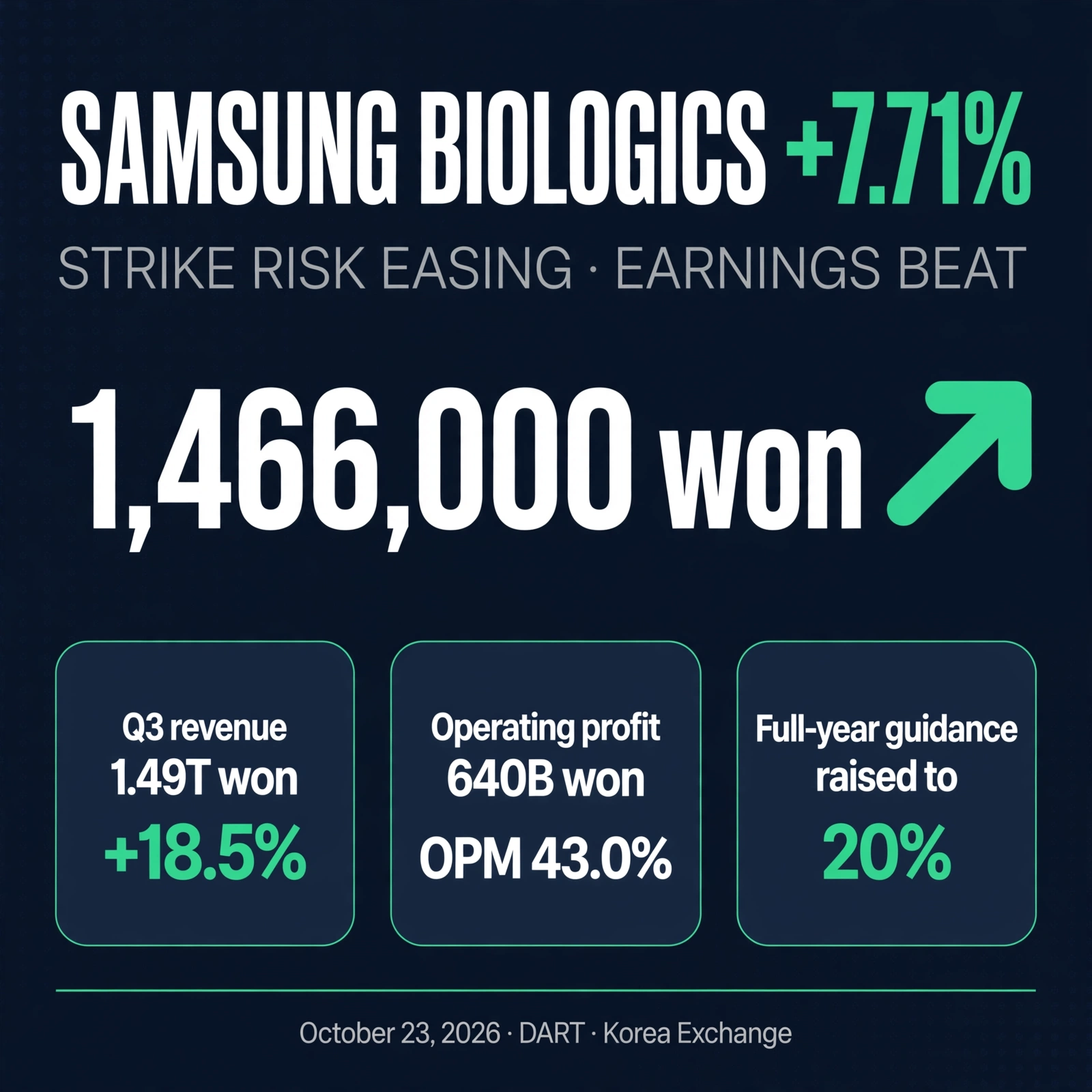
Samsung Biologics surged 7.71% to 1,466,000 won as a court expanded a strike injunction to all nine production processes, easing disruption fears. Q3 revenue of 1.49 trillion won (+18.5%) and operating profit of 640 billion won beat consensus; full-year revenue growth guidance was raised to 20%. What foreign investors should know about Korea's CDMO champion.
- CoreWeave Q3 Earnings Analysis Revenue $3.66B Beat and $846M Interest Cost Verdict
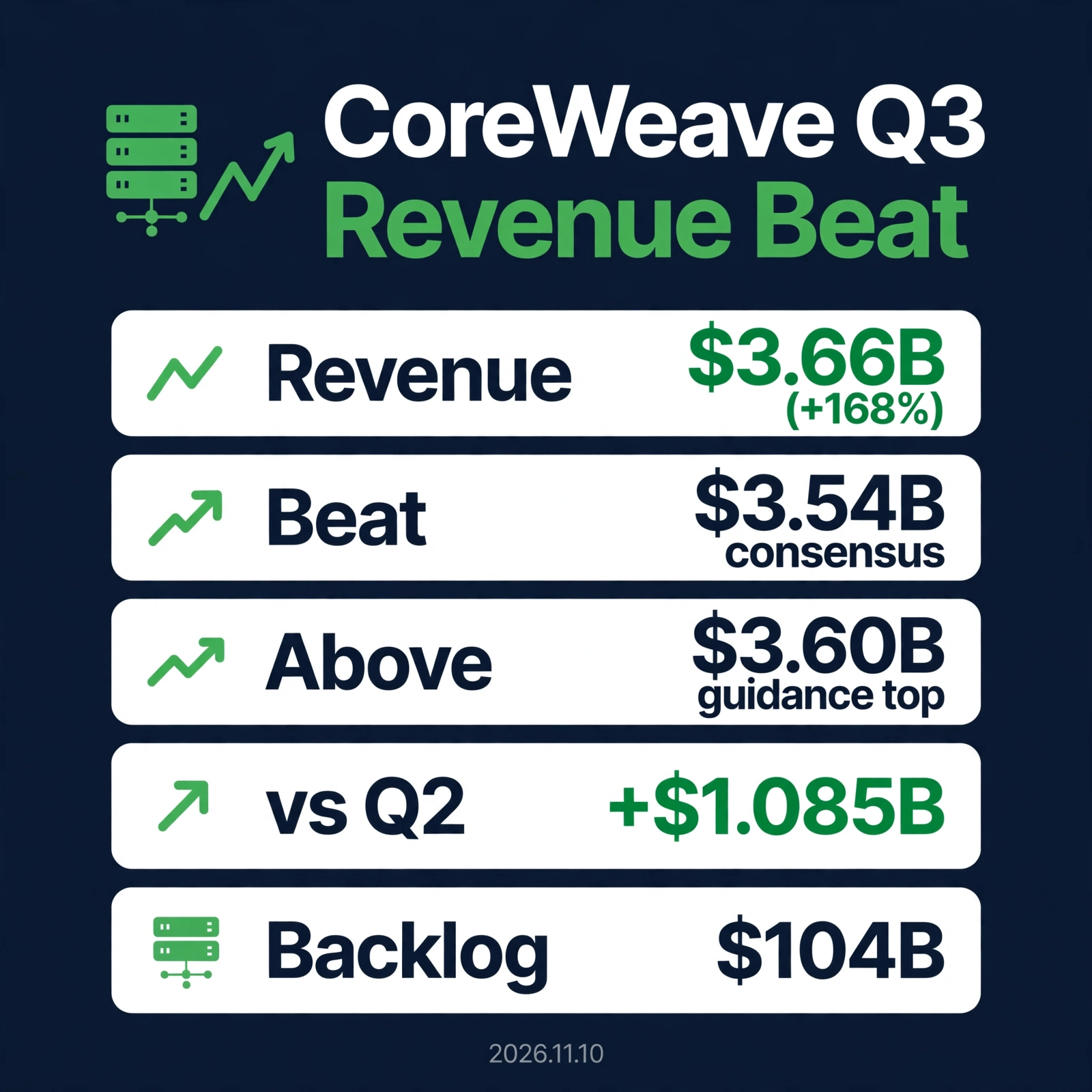
CoreWeave's Q3 revenue of $3.66 billion beat estimates and the company raised its full-year outlook. But interest expense of $846 million was more than double adjusted operating income of $379 million, and the operating margin fell from 16% to 10%. Demand is proven; the money-making structure is not.
- Constellation Energy Stock Analysis: AI Power Demand and Q3 Earnings Surprise
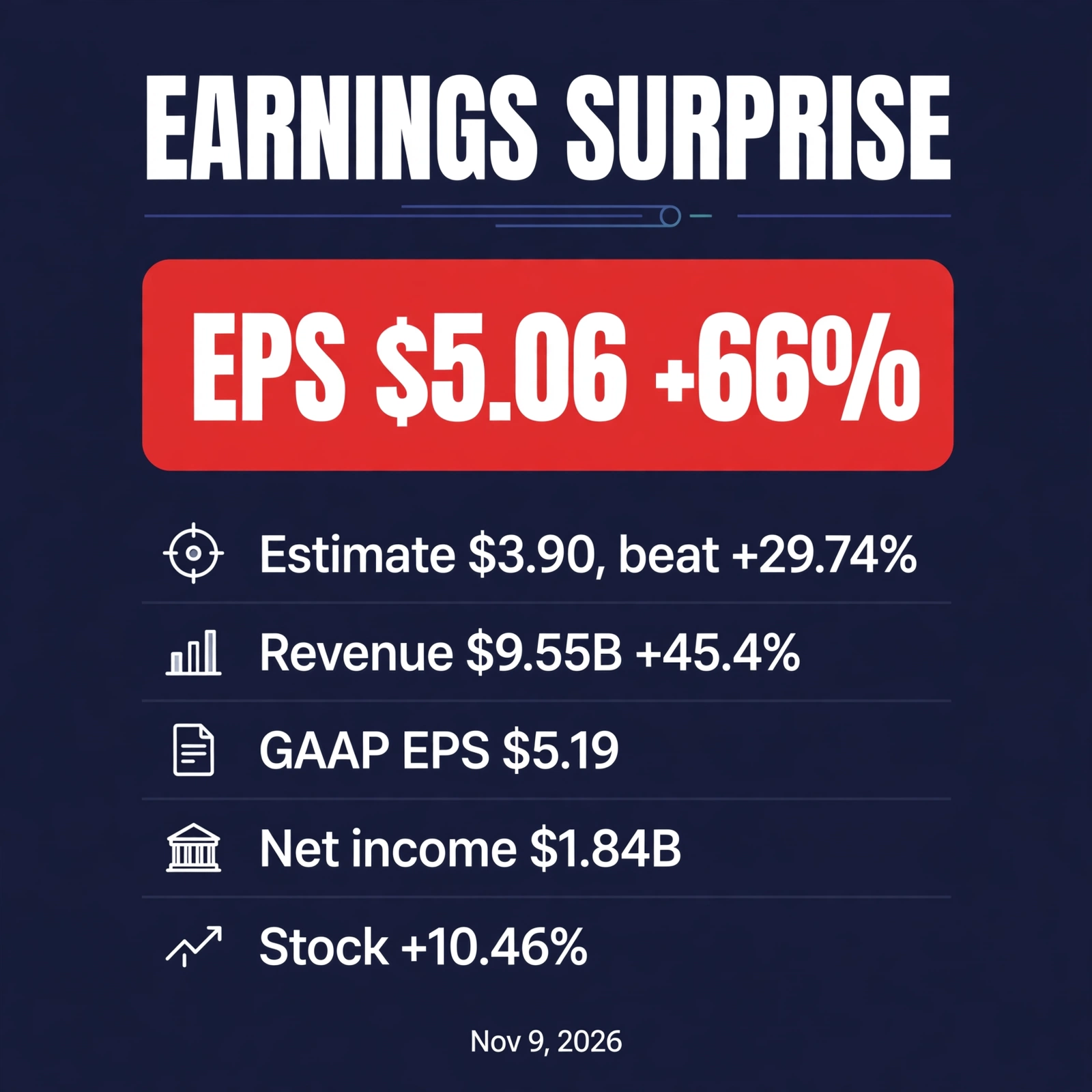
Constellation Energy jumped 10.46% after third-quarter adjusted EPS of $5.06 beat estimates by 30%. Twenty-year nuclear deals with Amazon and Google show what AI power demand really looks like — while long-term debt has swollen to $19 billion.
5minbrief on YouTube
The briefs also come as videos. Get the daily market wrap on YouTube.
Subscribe on YouTube