 5-minute briefs
Tesla AI Investment Debt Analysis Capex Cut FCF Outlook
Beat the quarter, lost the guidance
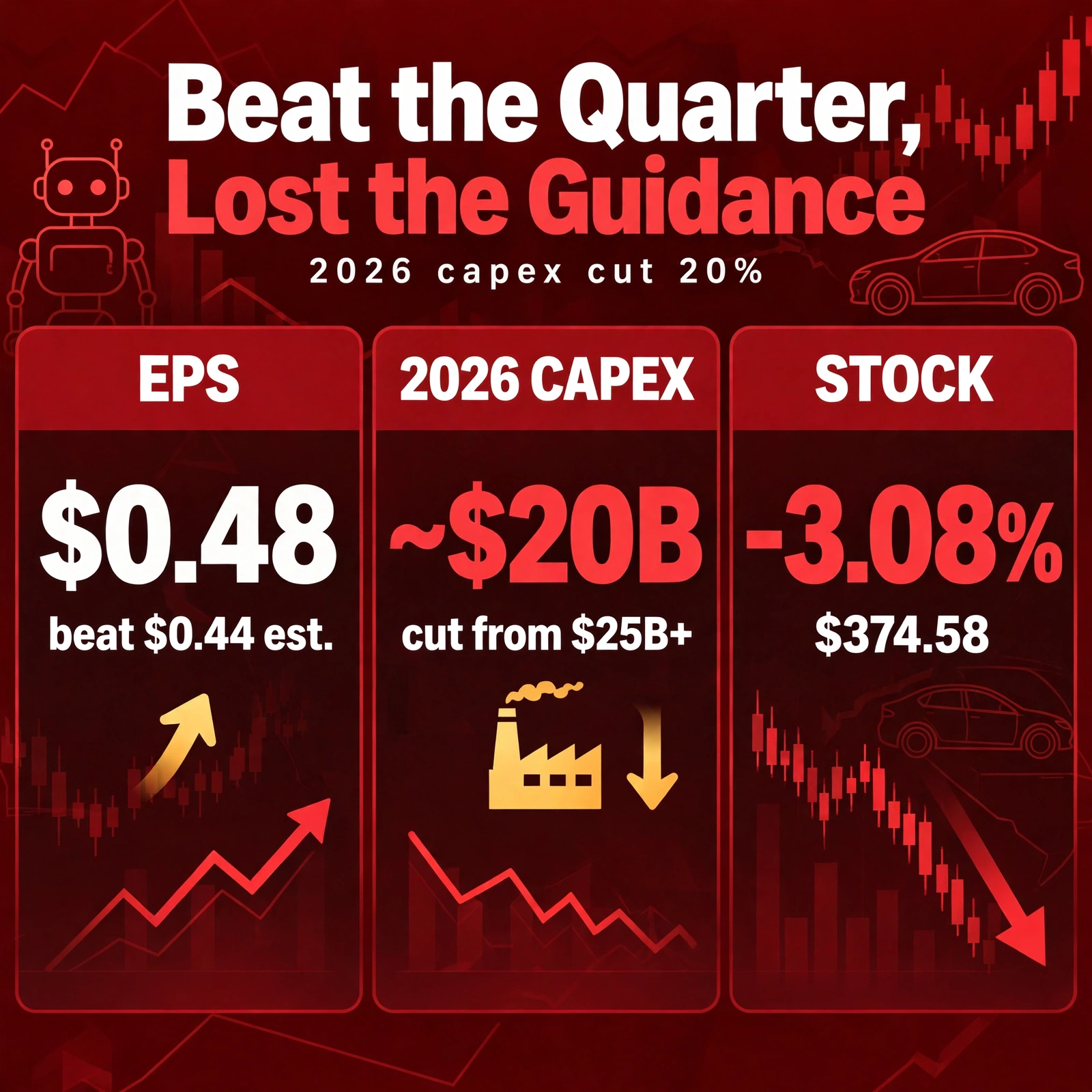
The Q3 report card wasn’t bad. EPS of $0.48 beat the $0.44 estimate, revenue of $28.05 billion came in slightly below the ~$28.44 billion expected, and cutting capex from Q2 levels brought positive free cash flow back.
The problem was forward-looking. Tesla guided 2026 capex at about $20 billion — a cut of 20%+ from the prior $25 billion-plus level. Less spending means better cash flow, but the market read it as: “Is Tesla slowing its AI and robot bets?”
Half of Tesla’s stock price rides on the future growth story, not cars: robotaxi, the Optimus robot, AI infrastructure. Spending less on that story reads like turning down the engine.
Two faces of the spending cut
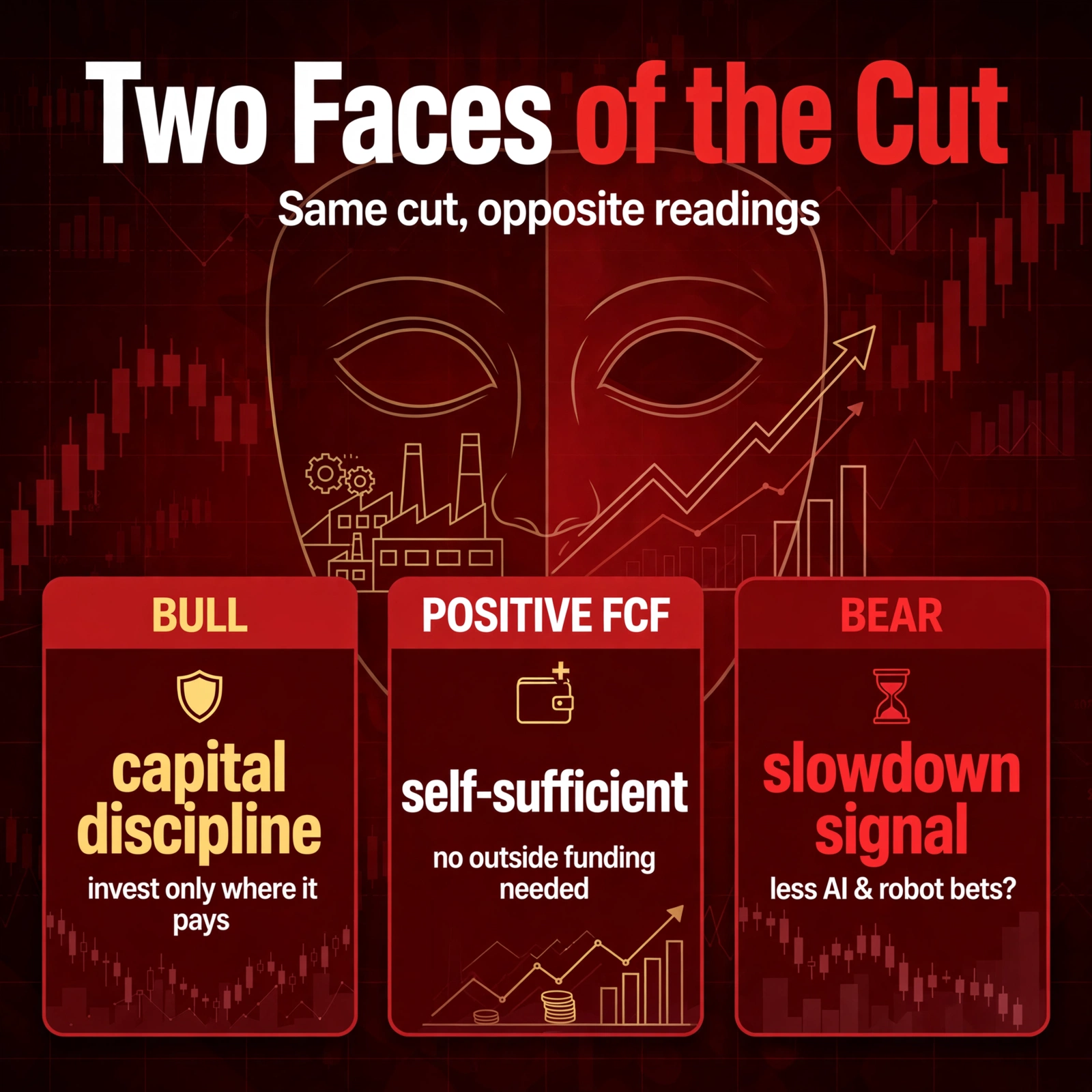
The same “cut” splits into two readings.
Bull case — capital discipline: invest only where it pays instead of expanding recklessly. Positive FCF proves self-sufficiency without outside funding — and in a 5% rate era, that’s arguably better than building on debt.
Bear case — growth slowdown signal: cutting investment at the fiercest moment of the AI and robot race can read as a lack of confidence. The contrast is sharper because Meta is moving the opposite way, raising capex toward $145 billion.
Which is right won’t be settled by numbers but by the timeline: if robotaxi commercialization and Optimus mass production accelerate, it’s “discipline”; if they slip, it’s “slowdown.”
- Capex: investment in factories, equipment, and data centers — bets on the future. Raising it signals growth expectations; cutting it improves cash flow. The market's reading depends on context.
- Positive FCF: cash remaining after capex is subtracted from operating cash. It signals the company can stand on its own without outside funding.
Three investor checkpoints
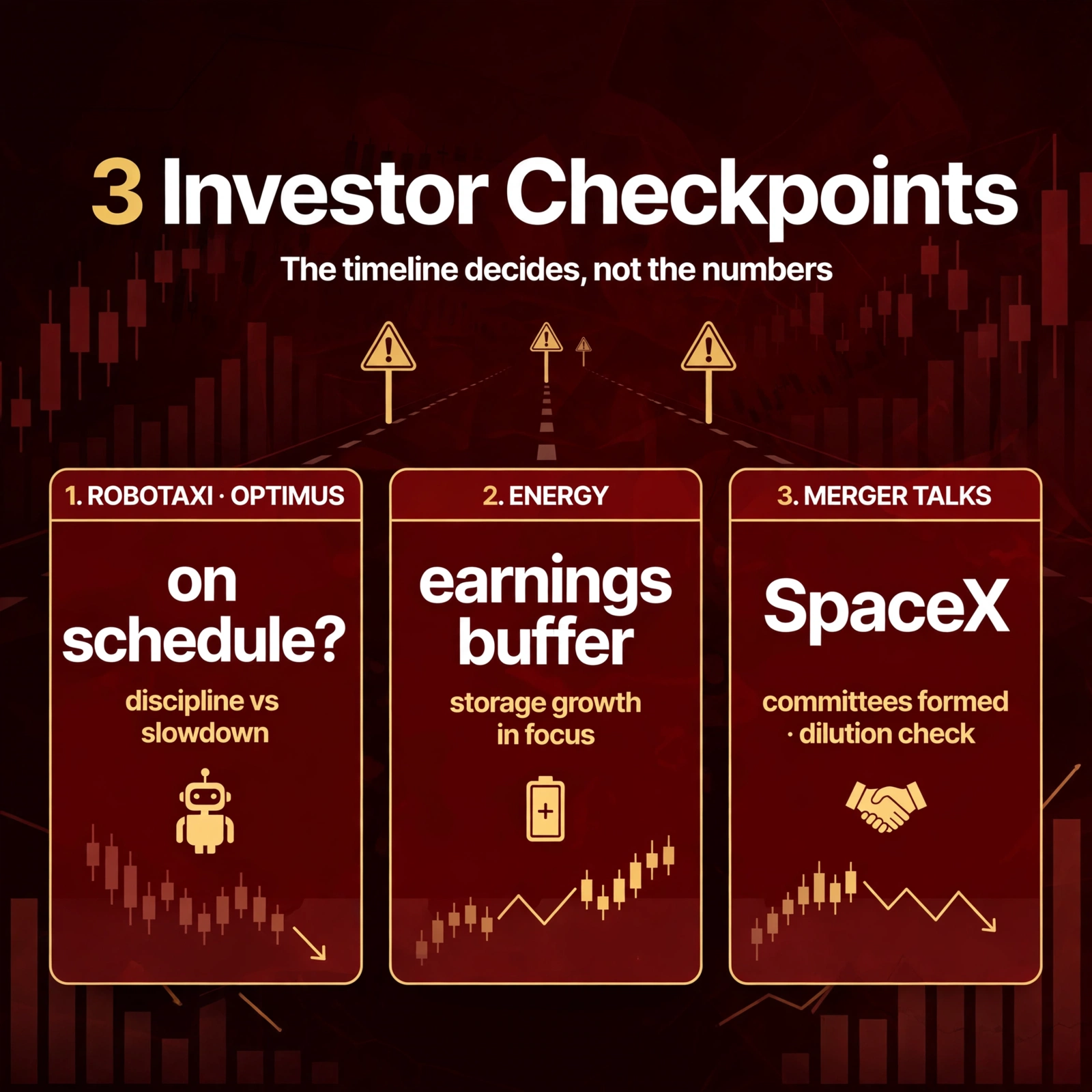
1. Robotaxi and Optimus timelines. The true meaning of the capex cut will be decided by new-business schedules. On track = discipline; delayed = demand or technology issues.
2. Growth of the energy business. With auto margins under pressure, energy storage is becoming the earnings buffer. How much it supports the downside while autos rest matters.
3. The SpaceX merger talks. Both boards have formed special committees to discuss a merger. For Tesla shareholders it’s a potential mega-event adding space and AI assets — but the merger ratio and funding structure could raise dilution concerns.
The irony: Meta got hit for spending too much, Tesla for spending too little. The two stand at opposite poles of the AI spending debate. Next week’s Alphabet and Amazon capex guidance is the debate’s next round.
Not investment advice. Figures verified Oct 23 from Tesla’s earnings release and Finnhub.
Watch the video

Sources & references
- Complete Traders Edge — Tesla Q3 Earnings: The Beat It Didn't Spend — Q3 Update figures (SEC 8-K Exhibit 99.1) and the capex-guidance reversal
- The Motley Fool — Tesla (TSLA) Q3 2026 Earnings Call Transcript — Call takeaways: roughly $20B full-year capex
- Pivot News — Meta and Tesla shares slide as analysts question their AI spending plans (Reuters/Economic Times) — Tesla's October 22 decline and the cut's backdrop
Related articles
- Amazon Earnings Analysis AWS 39% Growth vs Retail Miss $220 Billion Capex After-Hours Drop
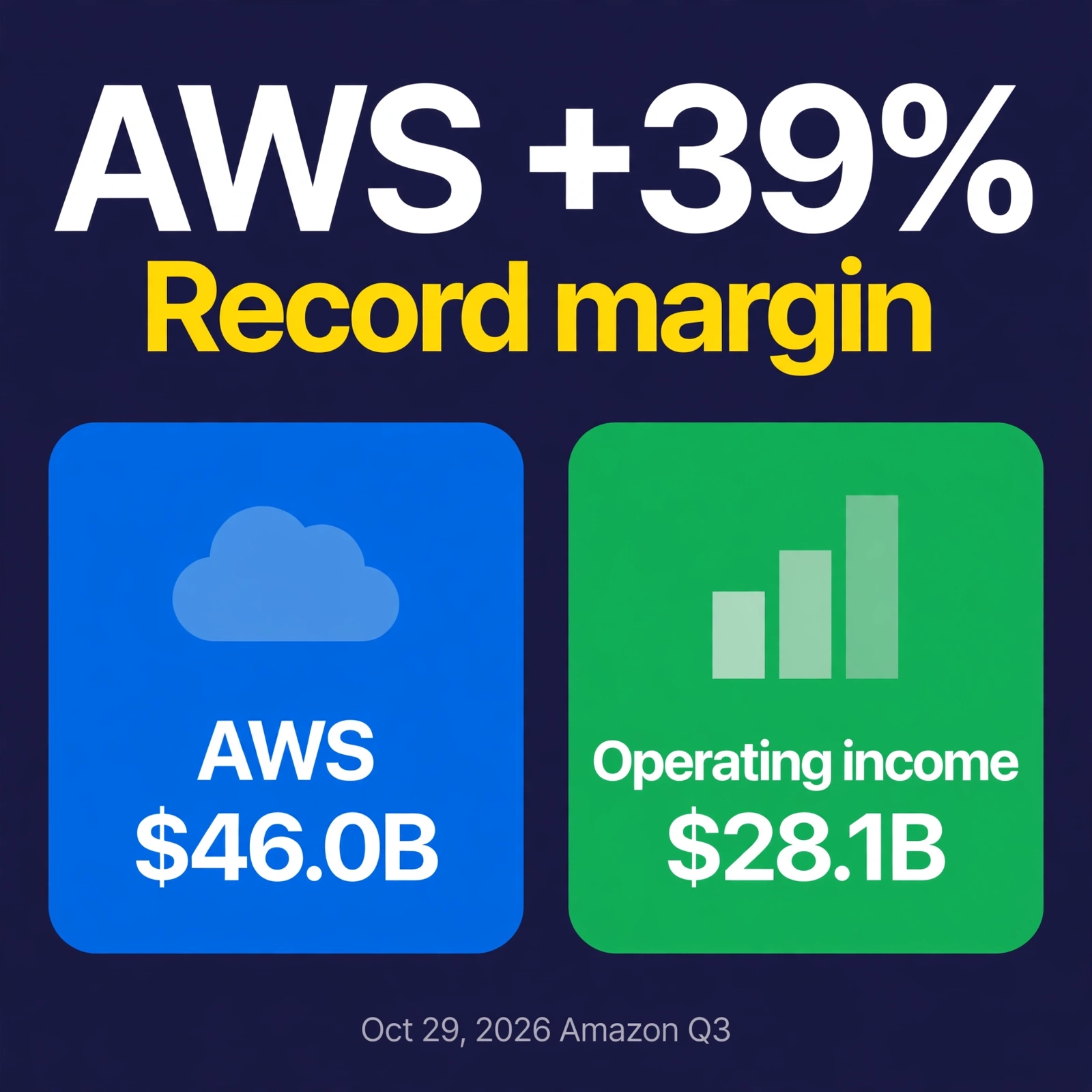
Amazon Q3 analysis: sales $201.9 billion (+12%), EPS $1.89 missed expectations, while AWS hit $46.0 billion (+39%), its fastest growth in nearly five years. Operating income of $28.1 billion and a record 13.9% margin were not enough — a $220 billion capex plan and negative free cash flow drove a 6% after-hours drop.
- AI capex returns analysis Alphabet Amazon cash flow deficit semiconductor repricing
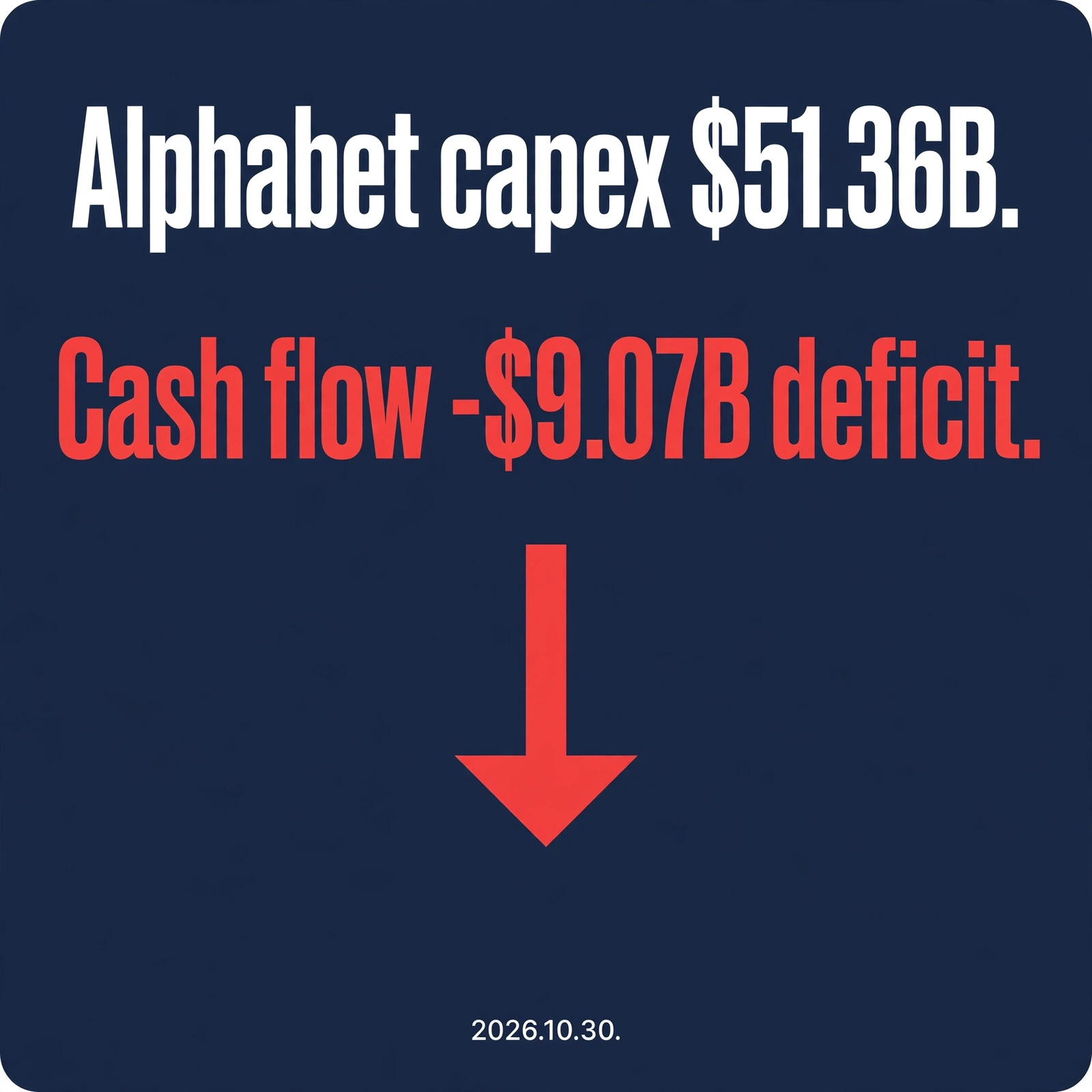
AI capex returns analysis: Alphabet spent $51.36 billion in Q3 capex and posted a $9.07 billion free cash flow deficit, while Amazon kept a $220 billion 2026 capex plan with a $42.4 billion twelve-month cash outflow. Cloud grew 39–103%, yet cash leaked — and that contradiction repriced Korean chip stocks.
- Microsoft Alphabet Earnings Analysis Azure 48% Growth vs Alphabet Profit Drop AI Spending Contrast
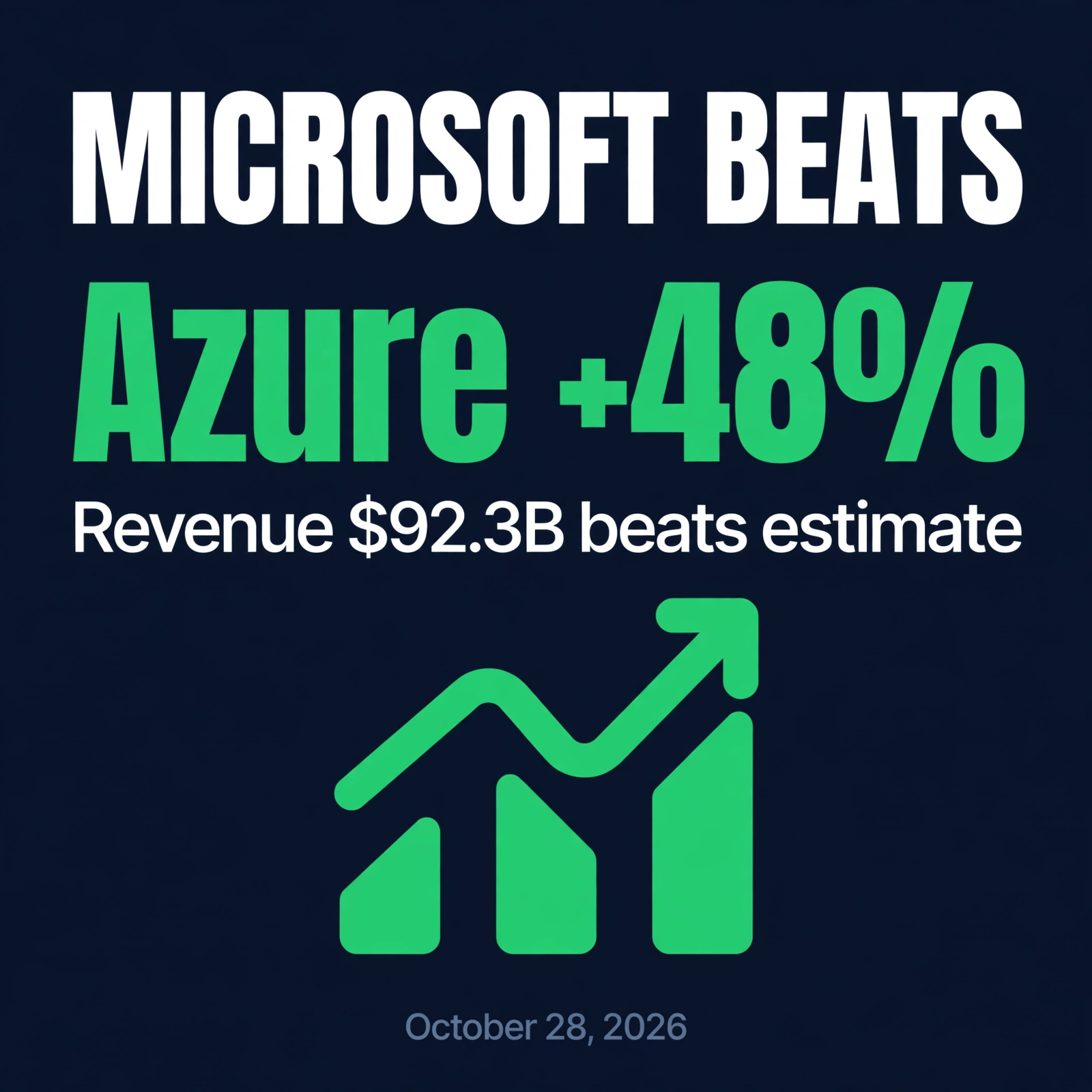
After the close, two big-tech reports split in opposite directions. Microsoft beat with $92.3 billion revenue and 48% Azure growth, while Alphabet's $8.7 billion equity securities loss cut EPS to $2.12 and free cash flow turned negative $9.1 billion.
5minbrief on YouTube
The briefs also come as videos. Get the daily market wrap on YouTube.
Subscribe on YouTube