 5-minute briefs
Meta AI Investment Analysis Record Credit Risk Capex Debt Structure
Good numbers, broken stock
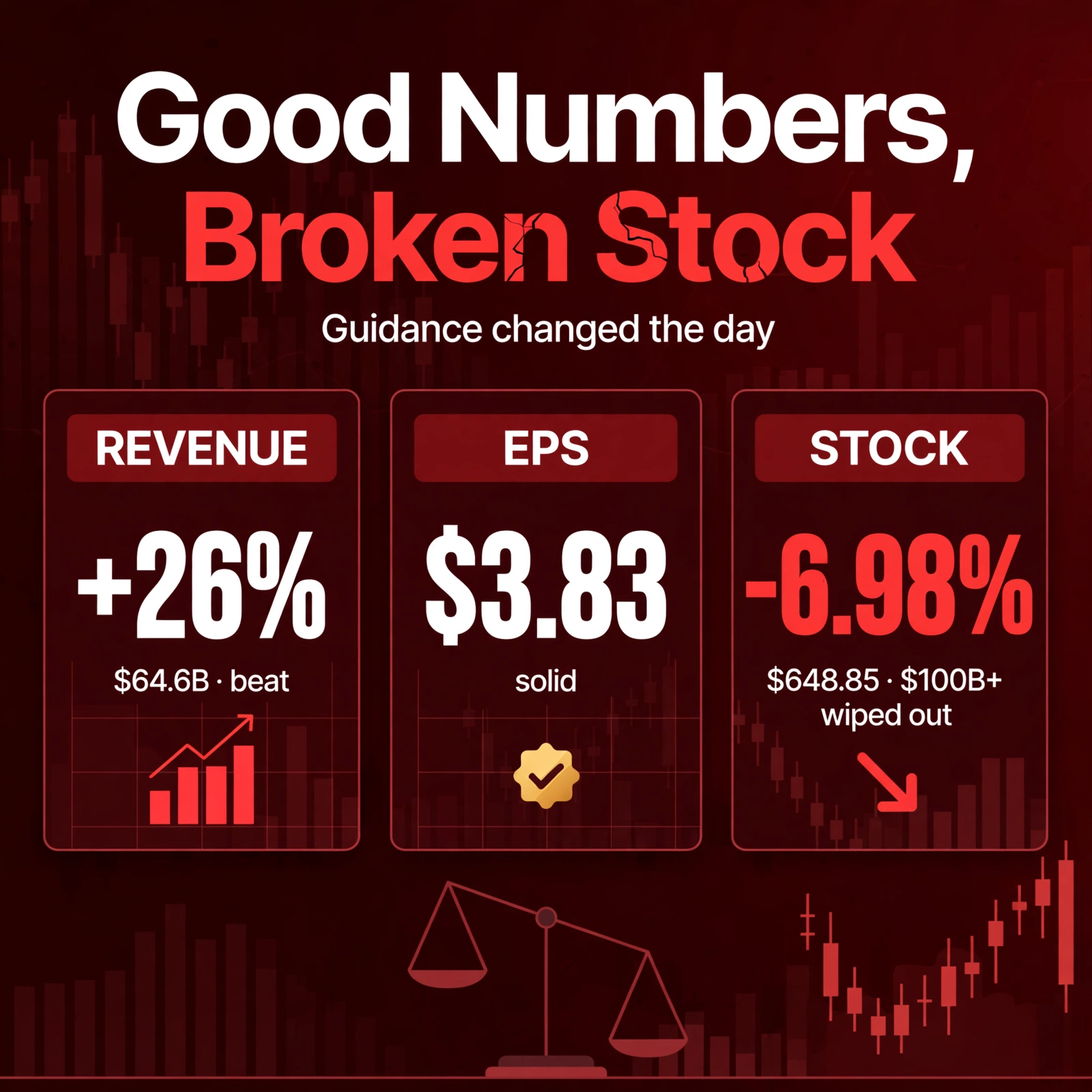
The results themselves were fine. Q3 revenue of $64.6 billion (+26%) beat estimates, and EPS of $3.83 was solid. Shares even rose 4–5% in late trading right after the print.
The mood flipped within a day on guidance. Meta raised its 2026 capex outlook from a $130 billion low end to $135–145 billion, posted a $2.1 billion quarterly free-cash-flow deficit, and unveiled plans for non-voting shares to fund AI. The market’s verdict converged on one line: “Spending on AI is outpacing the money coming in.”
More than $100 billion in market value evaporated in a day; the five-session drop totals -12%.
What record-high credit risk means
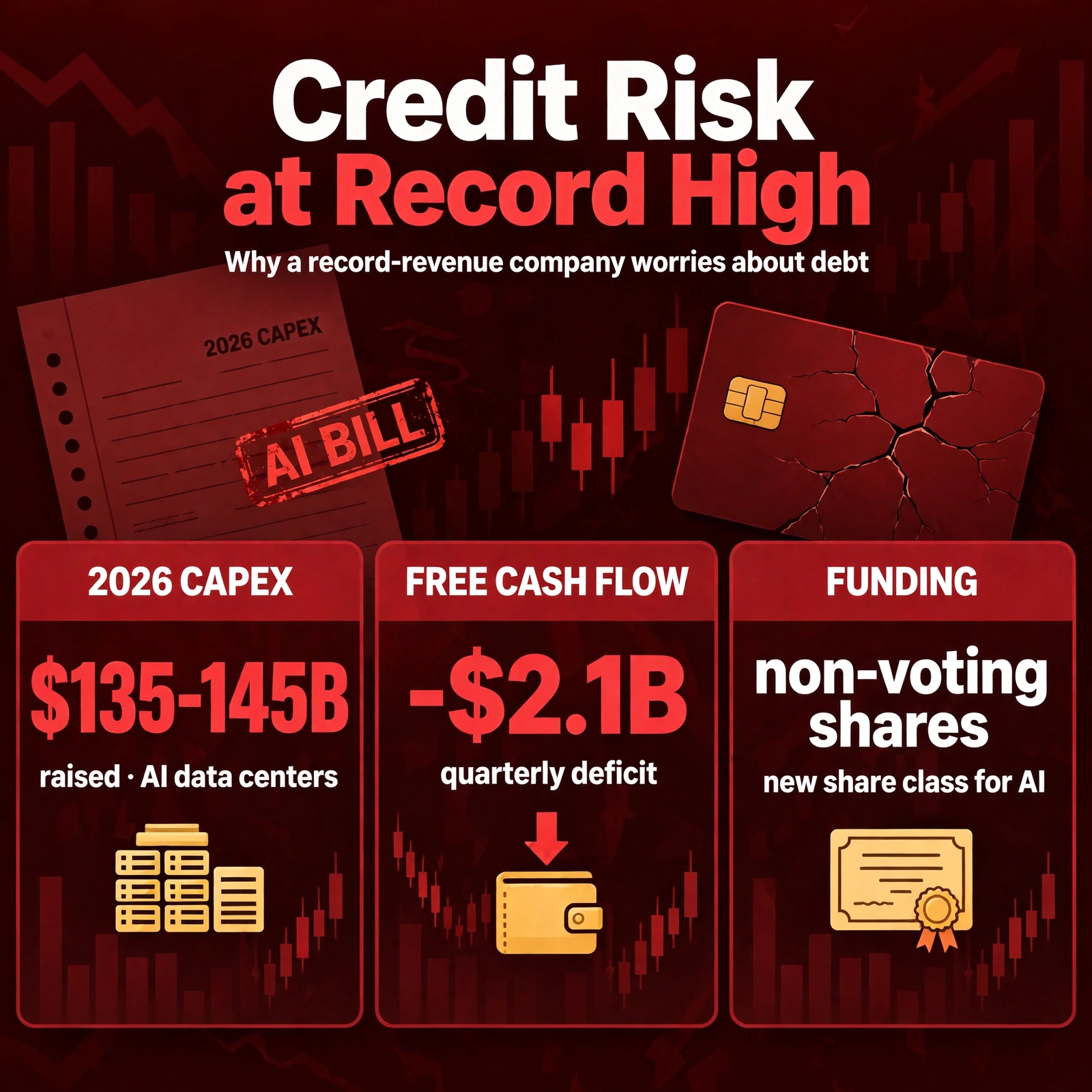
Record-high credit risk means bond markets are starting to question Meta’s ability to service its debt. Meta is a cash-generation machine — which is exactly why the warning matters. It’s about the funding structure of AI capex.
AI data centers cost hundreds of billions to build, but when they pay back is uncertain. As long as ad revenue keeps growing at 20%+, it’s manageable. The moment ad growth bends, that capex becomes an oversized suit. That’s precisely the market’s worry: “if ads wobble, who carries the capex?”
It echoes the Oct 14 CoreWeave “AI debt fear” — but the angle differs. CoreWeave was about the survival of a debt-only neocloud; Meta is about the appropriateness of leverage voluntarily taken on by a cash cow. One asks “can it survive,” the other asks “is it eroding shareholder value.”
- Credit default swap (CDS): a derivative trading a company's default risk. A rising CDS price means the market sees the company's bonds as riskier.
- Free cash flow (FCF): cash left after operating cash minus capex. Negative FCF signals the company can't sustain itself without outside funding (debt or equity).
- Leverage: expanding investment with borrowed money. It magnifies returns — and risks.
Four investor checkpoints
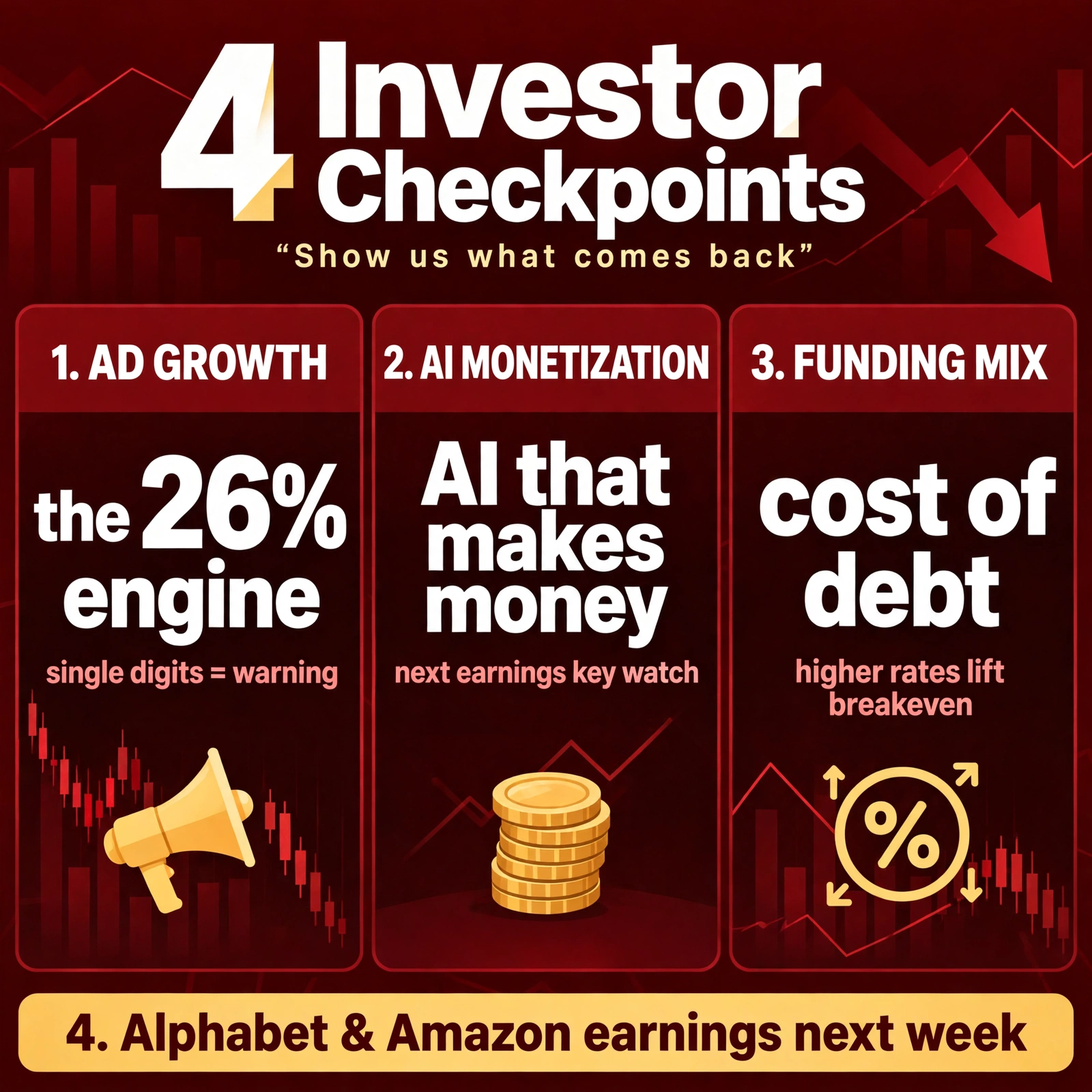
1. Durability of ad growth. The 26% revenue engine is advertising. In a slowdown, ads get cut first. If ad growth slips into single digits, the capex burden gets heavy fast.
2. Evidence of AI monetization. $140 billion of capex must be justified by AI revenue — ad-efficiency gains, AI agent income, concrete numbers for “AI that makes money” are the next earnings’ key watch.
3. Funding mix. Watch the size of the non-voting share issue and bond-issuance terms. Higher debt costs raise the breakeven bar for every AI project.
4. Next week’s Big Tech earnings. Alphabet and Amazon report in sequence. The market’s demand is clear: “we get that you’re spending on AI — show us what comes back.” Meta’s plunge may be the preview of that test.
Separately, a minor-protection trial begins Monday in Santa Fe, New Mexico — a volatility factor independent of fundamentals.
Not investment advice. Figures verified Oct 23 from Meta’s earnings release, Finnhub, and Reuters.
Watch the video

Sources & references
- Meta Platforms — Meta Reports Third Quarter 2026 Results (SEC Form 8-K Exhibit 99.1) — Revenue, EPS, FCF and capex guidance, from the release
- Reuters — Meta's credit risk indicator hits record high on increased AI spending plan (via WNCY) — The original report behind the 'record credit risk' claim
- Pivot News — Meta and Tesla shares slide as analysts question their AI spending plans (Reuters/Economic Times) — Meta's October 22 closing decline
Related articles
- Big Tech $1.2T AI Capex: Profitability Outlook Analysis
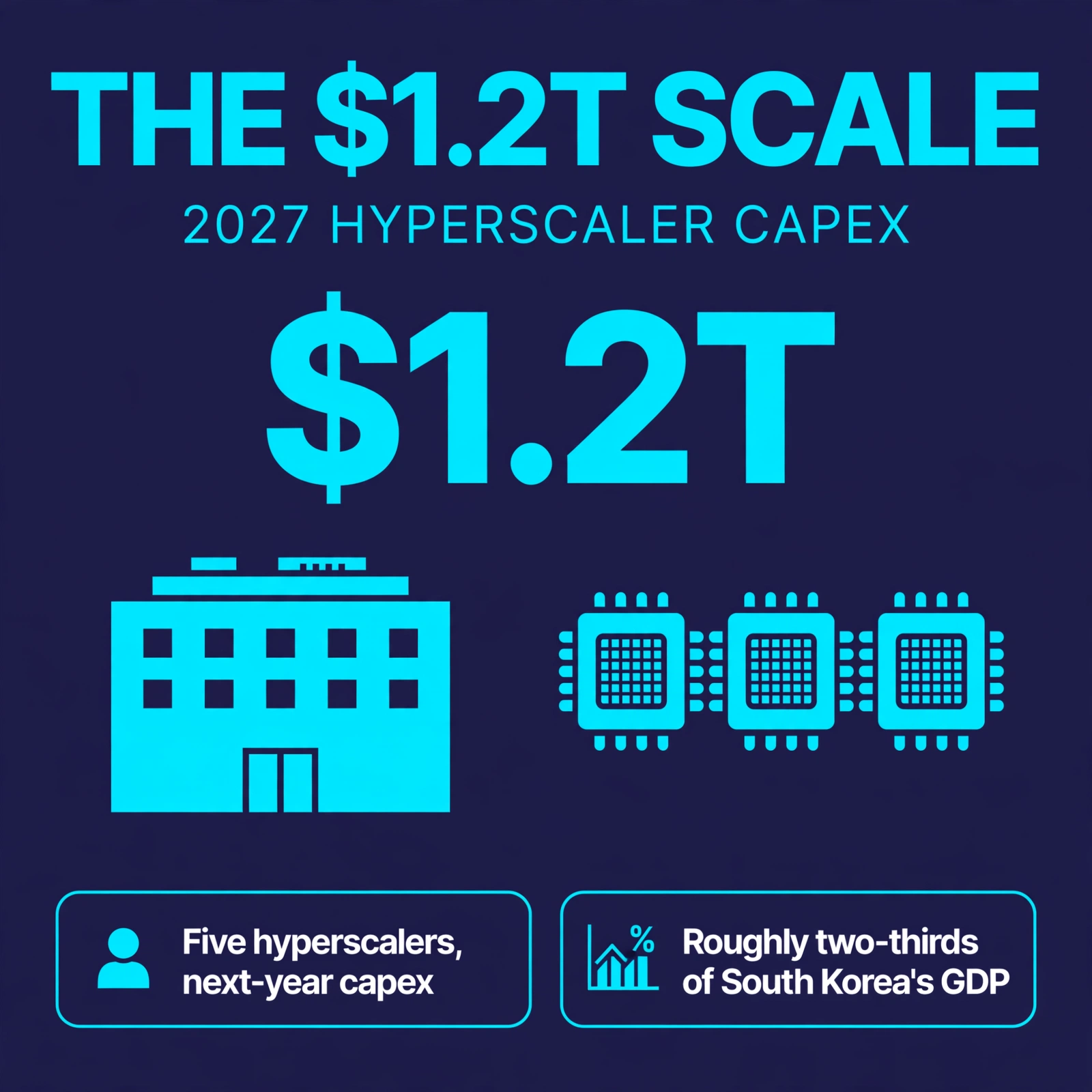
Goldman Sachs estimates the five AI hyperscalers will spend about $1.2 trillion on capex next year.
- US Stock Market Weekly Recap Nasdaq Falls 2 Percent AI Spending Doubts Energy Strength Analysis
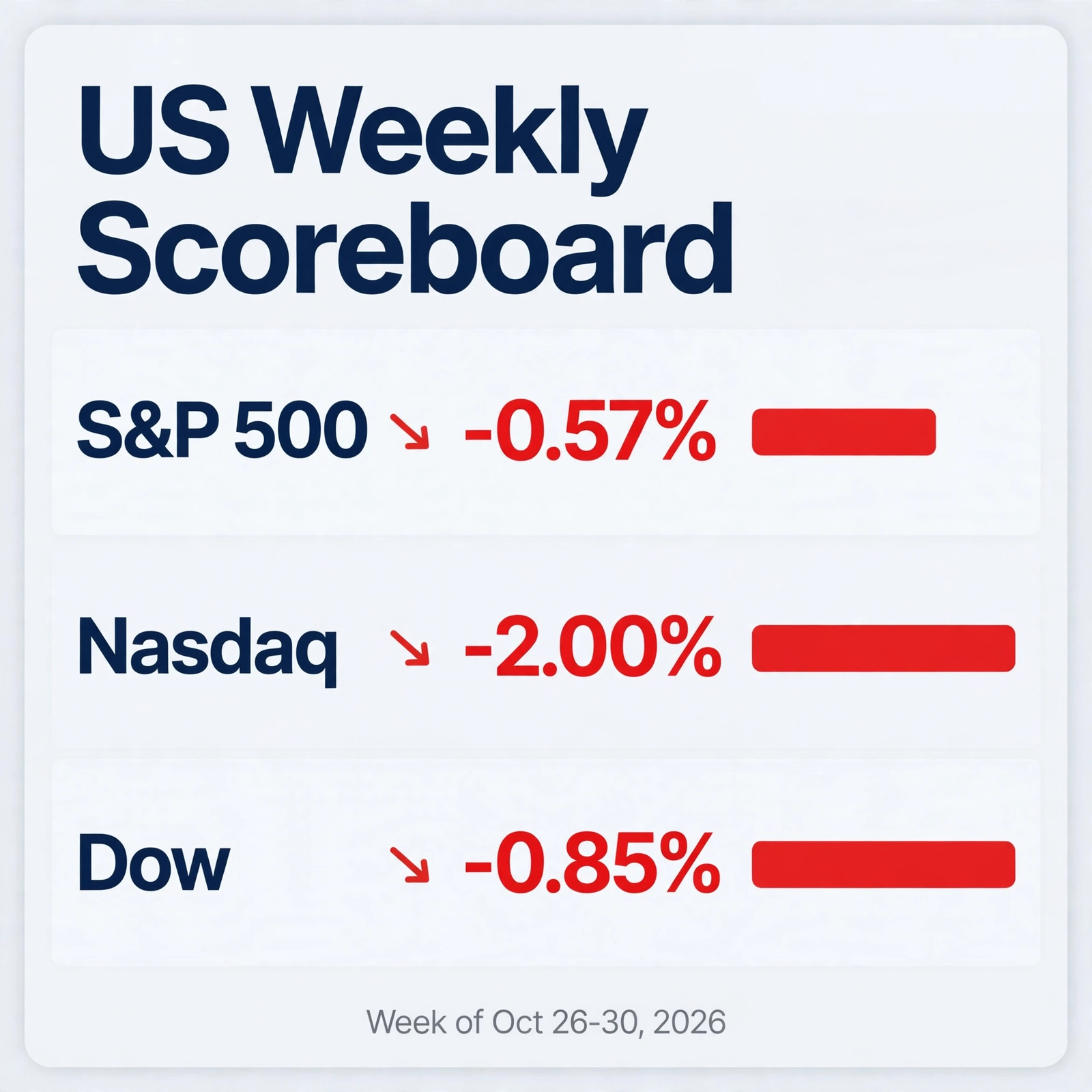
US stock market weekly recap for October 26–30. The S&P 500 fell 0.57%, the Nasdaq 2.00% and the Dow 0.85%, while small-cap Russell 2000 rose more than 1%. A Fed hold, Big Tech earnings, the Binance hack and an oil surge split the week. Next week brings the midterms and the October jobs report.
- AI capex returns analysis Alphabet Amazon cash flow deficit semiconductor repricing
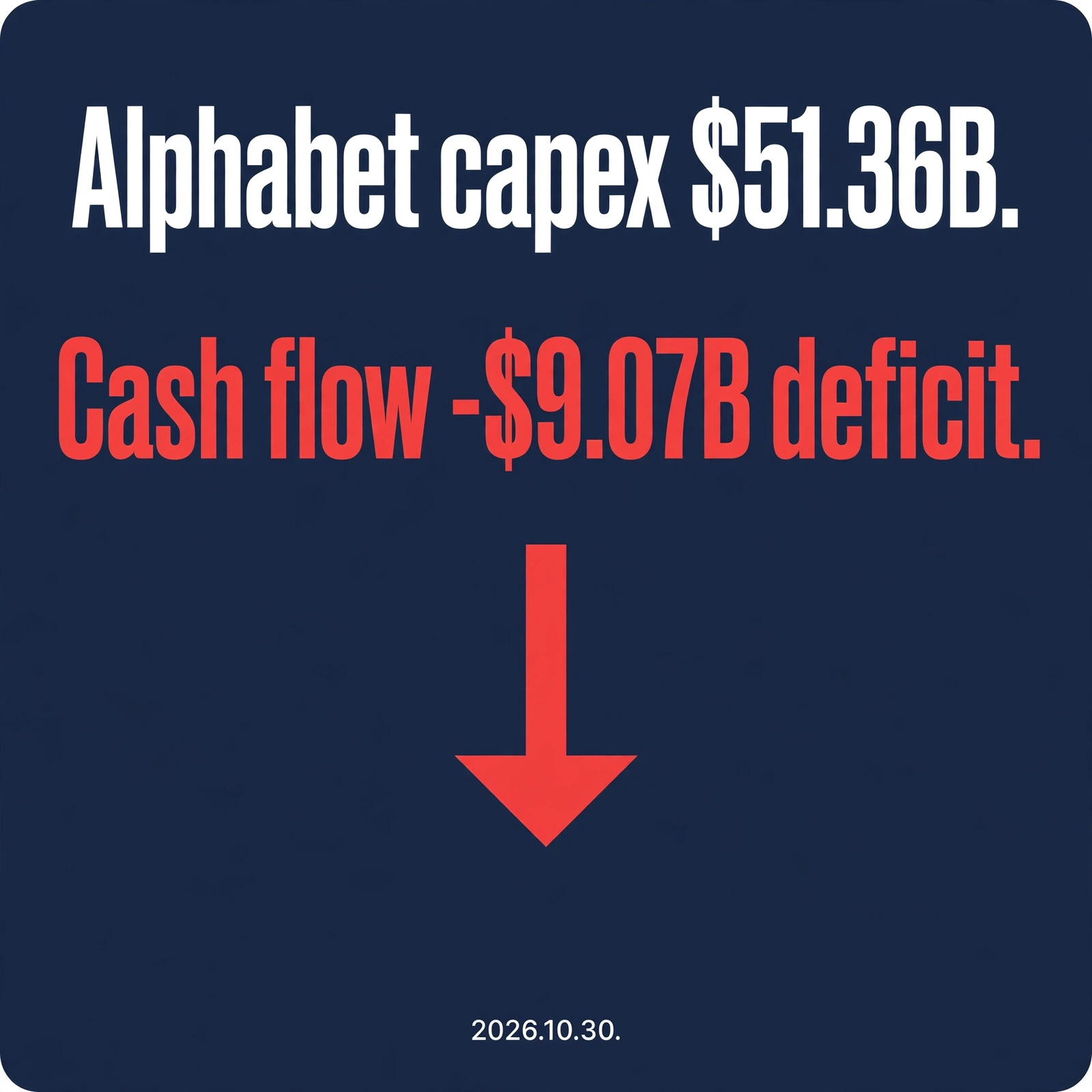
AI capex returns analysis: Alphabet spent $51.36 billion in Q3 capex and posted a $9.07 billion free cash flow deficit, while Amazon kept a $220 billion 2026 capex plan with a $42.4 billion twelve-month cash outflow. Cloud grew 39–103%, yet cash leaked — and that contradiction repriced Korean chip stocks.
5minbrief on YouTube
The briefs also come as videos. Get the daily market wrap on YouTube.
Subscribe on YouTube