 5-minute briefs
Oil Price Outlook Energy Stock Investment Analysis Brent $113 Iran Risk
What drove oil higher
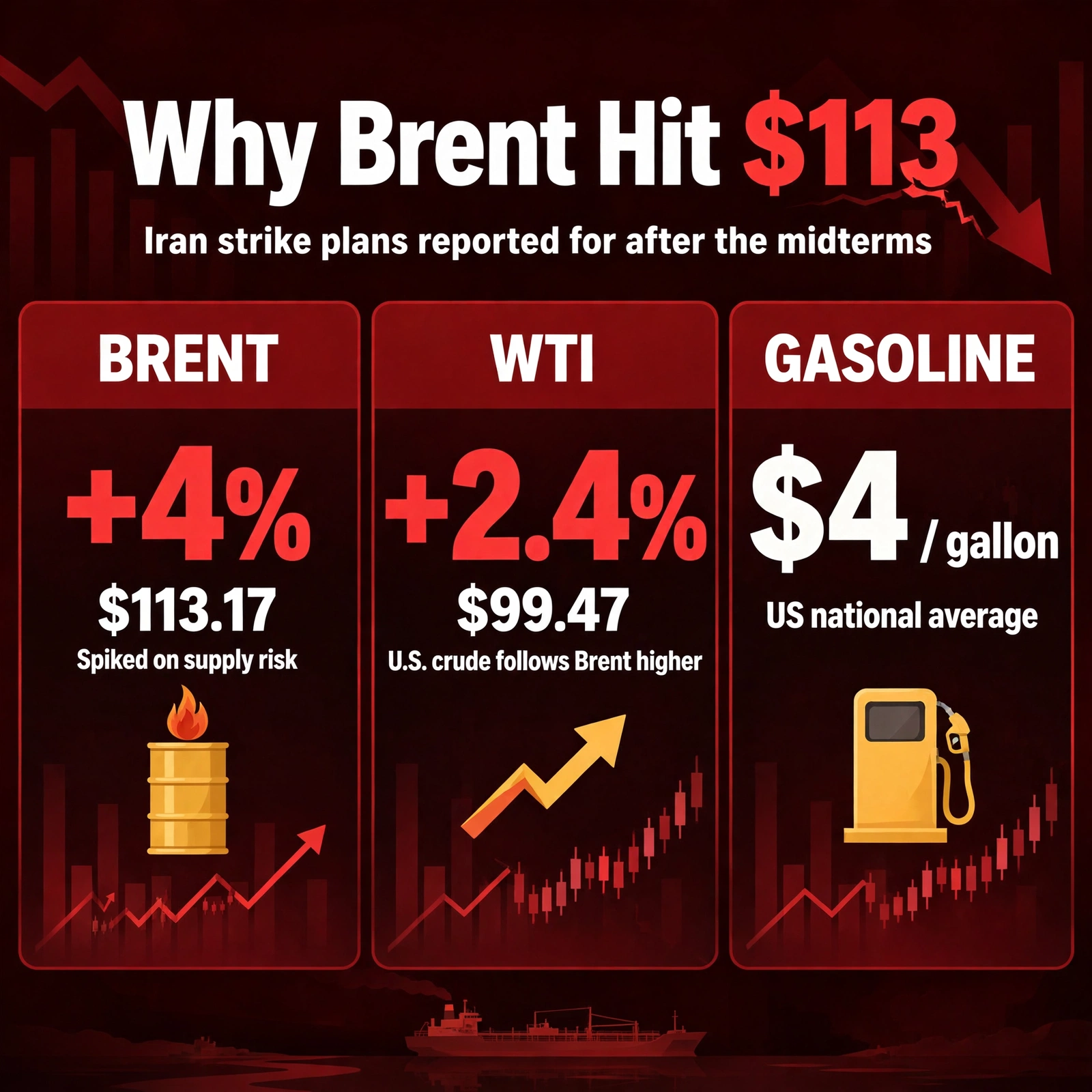
Three headlines stacked up on the same day.
First, the New York Times reported, citing US officials, that the US and Israel have drawn up plans for “short but intensive” strikes on Iran after the midterm elections — a signal that the month-long pause on strikes against Iran could end.
Second, President Trump said “something one way or another” would “happen fairly soon,” openly floating the possibility of strikes, while repeating his pledge of no strikes before the midterms.
Third, the State Department ordered non-emergency personnel and their families to leave Saudi Arabia. Markets read it as a sign that operations may be imminent. A State Department spokesman denied reports of a region-wide evacuation, saying the Saudi move was about Houthi attacks — but nerves didn’t settle. Iran’s IRGC threatened US bases in the region if Washington keeps escorting ships through the Strait of Hormuz.
The result: Brent +4% ($113.17), WTI +2.4% ($99.47). The US national average gasoline price is hovering above $4 a gallon.
Why energy stocks fell as oil rose
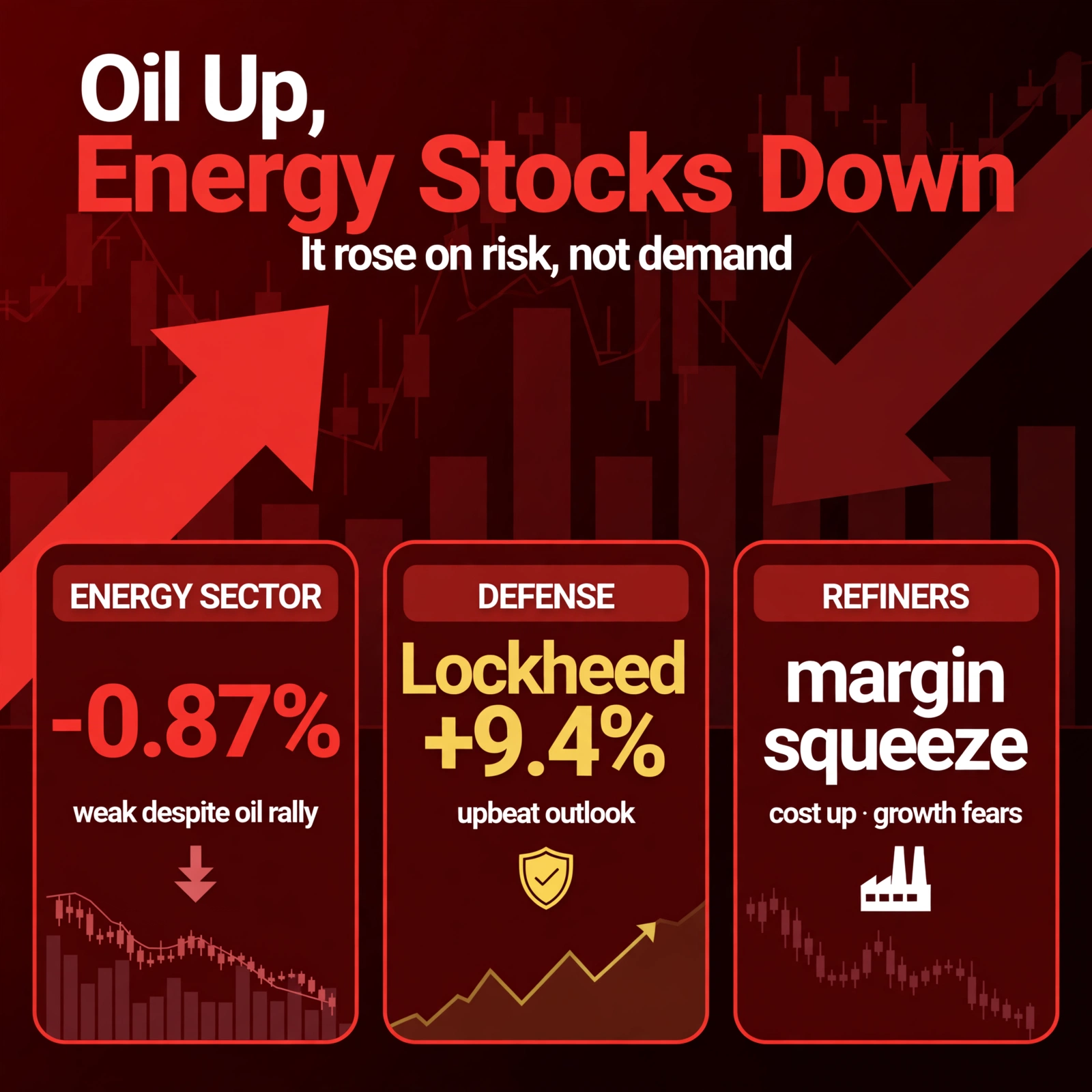
Counterintuitively, the energy sector fell 0.87% on the day oil surged. The reason lies in the nature of the rally.
Oil rising on growing demand is good for energy companies. Oil rising on supply-disruption fears is different: war risk brings slowdown fears with it, and squeezes margins for refiners and chemical companies that consume crude. The market read “higher oil = burden on the economy.”
Defense stocks, meanwhile, climbed. Lockheed Martin rose 9.4% on the week with an upbeat outlook — the other direction money flows when geopolitical risk heats up.
- Brent vs WTI: Brent is North Sea crude and the global benchmark; WTI is US crude and the domestic benchmark. Brent reacts more sharply to Middle East risk.
- Supply shock: a sudden drop in oil supply from war or sanctions. With demand unchanged, prices rise while the economy weakens — stagflationary pressure.
Three checkpoints for investors

1. Inflation and the Fed’s next move. Surging oil stokes inflation expectations. Markets price an ~89% chance of a hold at next week’s FOMC, but ~76% odds of a December hike. Higher oil complicates the Fed’s math.
2. Quality of energy earnings. Major energy companies start reporting this week. With stocks down despite higher oil, the question is whether the “supply-risk premium” converts into actual profits.
3. Escalation vs de-escalation. The post-midterm period is the fork in the road. Real strikes could push oil higher; a pivot to negotiation could unwind it fast. Geopolitical news means two-way volatility — remember that.
The Oct 19 brief covered oil at $110 through the inflation lens; this time the geopolitical trigger is new. Same-looking numbers, different driver — and different responses.
Not investment advice. Figures verified Oct 23 from the New York Times, AP, and Reuters.
Watch the video

Sources & references
- MarketBriefer — The Global Close: October 22, 2026 — October 22 closing wrap
- Financial News English (AP-based) — Oil and geopolitics report, October 23, 2026 — Report covering the oil close and the State Department's position
- IDNFinancials (Reuters cited) — Aramco evacuates HQ as Brent crude jumps 4% — Cross-check for the oil settlement figures
- Morningstar (PR Newswire) — Lockheed Martin Reports Third Quarter 2026 Financial Results — Full text of Lockheed Martin's official earnings release (company release is the primary source)
Related articles
- Hormuz Oil Negotiation Analysis: Trump Restraint and Mining War
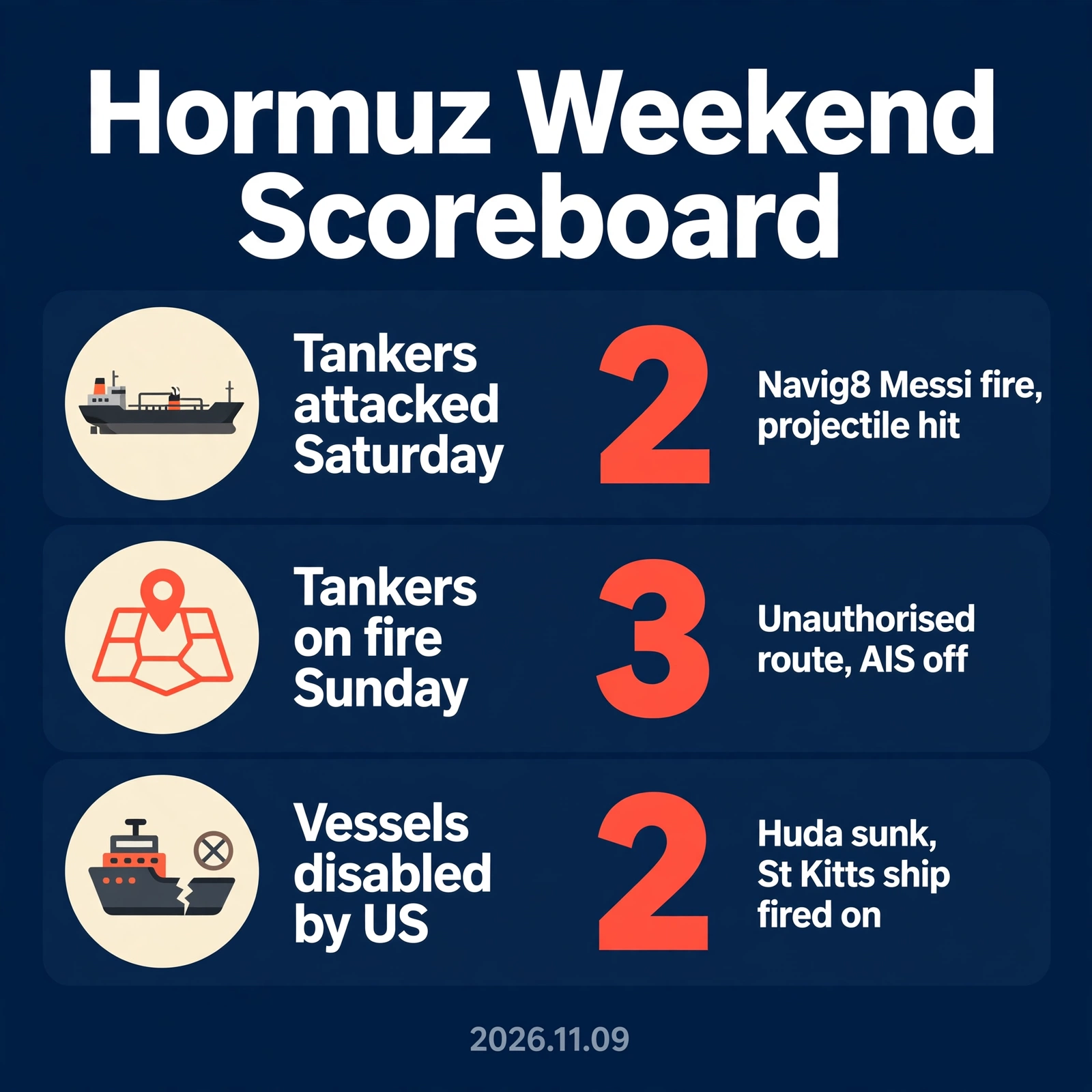
Three more tankers caught fire in the Strait of Hormuz over the weekend. Trump said fresh strikes are 'highly unlikely' if talks progress, while the IRGC keeps mining the strait. The fork Monday's open has to price.
- Strait of Hormuz Oil Price Analysis US Iran Strikes and 13% Weekly Drop
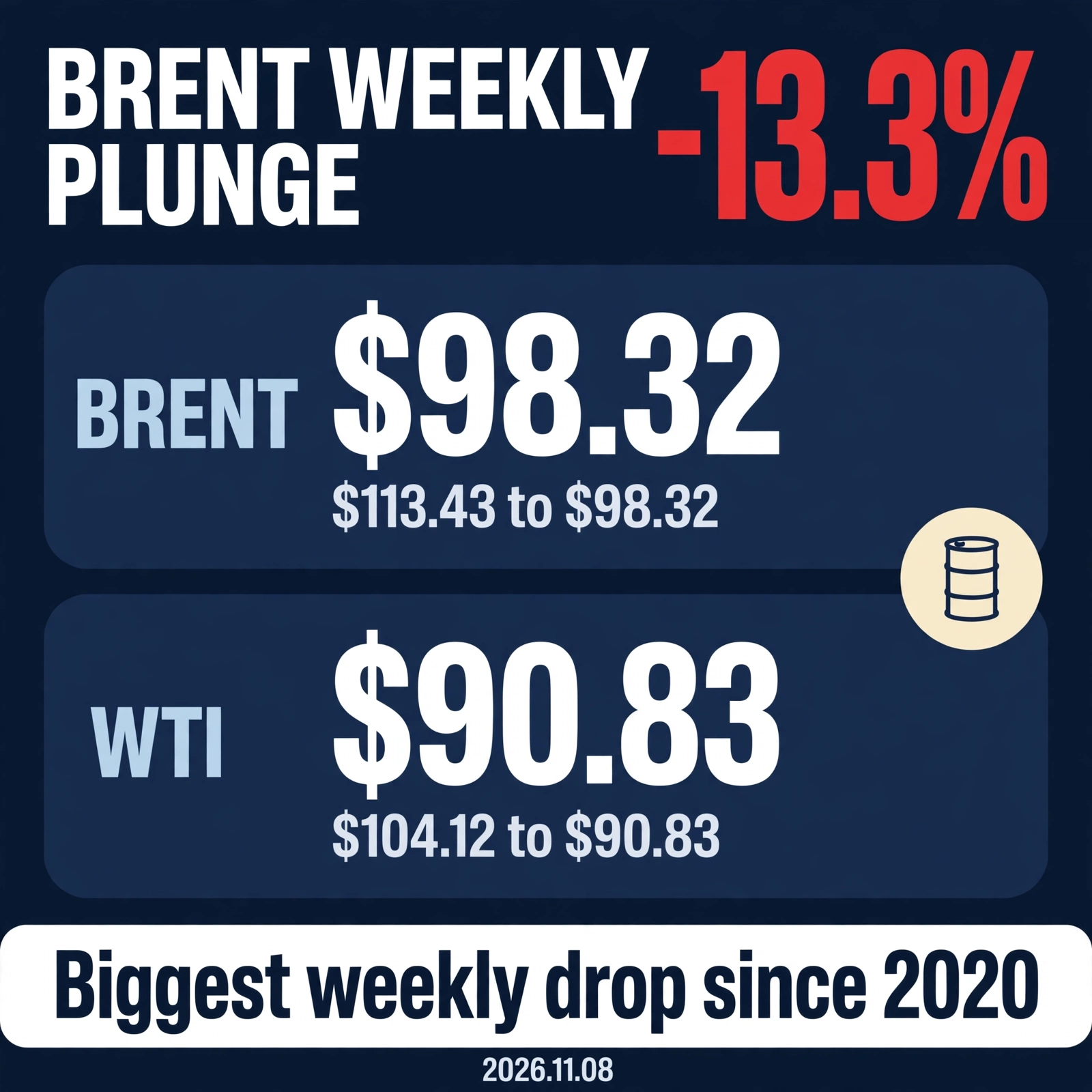
Brent crude fell 13.3% in a week to $98.32 as deal hopes drained the war premium — while attacks on Hormuz shipping ran at a near-record pace and the US struck Qeshm Island. The gap between market pricing and events on the water.
- Oil Price Outlook Brent 116 Dollars Saudi East-West Pipeline Attack Hormuz Bypass Risk Analysis (October 26)
Monday, October 26 US market holiday edition: with no newly closed trading session, this edition covers one issue in depth — Saturday's claimed attack on Saudi Arabia's East-West pipeline. Brent closed Friday at $116.72; the bypass moves up to 7 million barrels a day.
5minbrief on YouTube
The briefs also come as videos. Get the daily market wrap on YouTube.
Subscribe on YouTube