 5-minute briefs
AI Bubble Debate Analysis Burry Warning Neocloud Leverage and Post-Correction Valuation
Why the bubble debate flared up: $2 trillion gone in a day
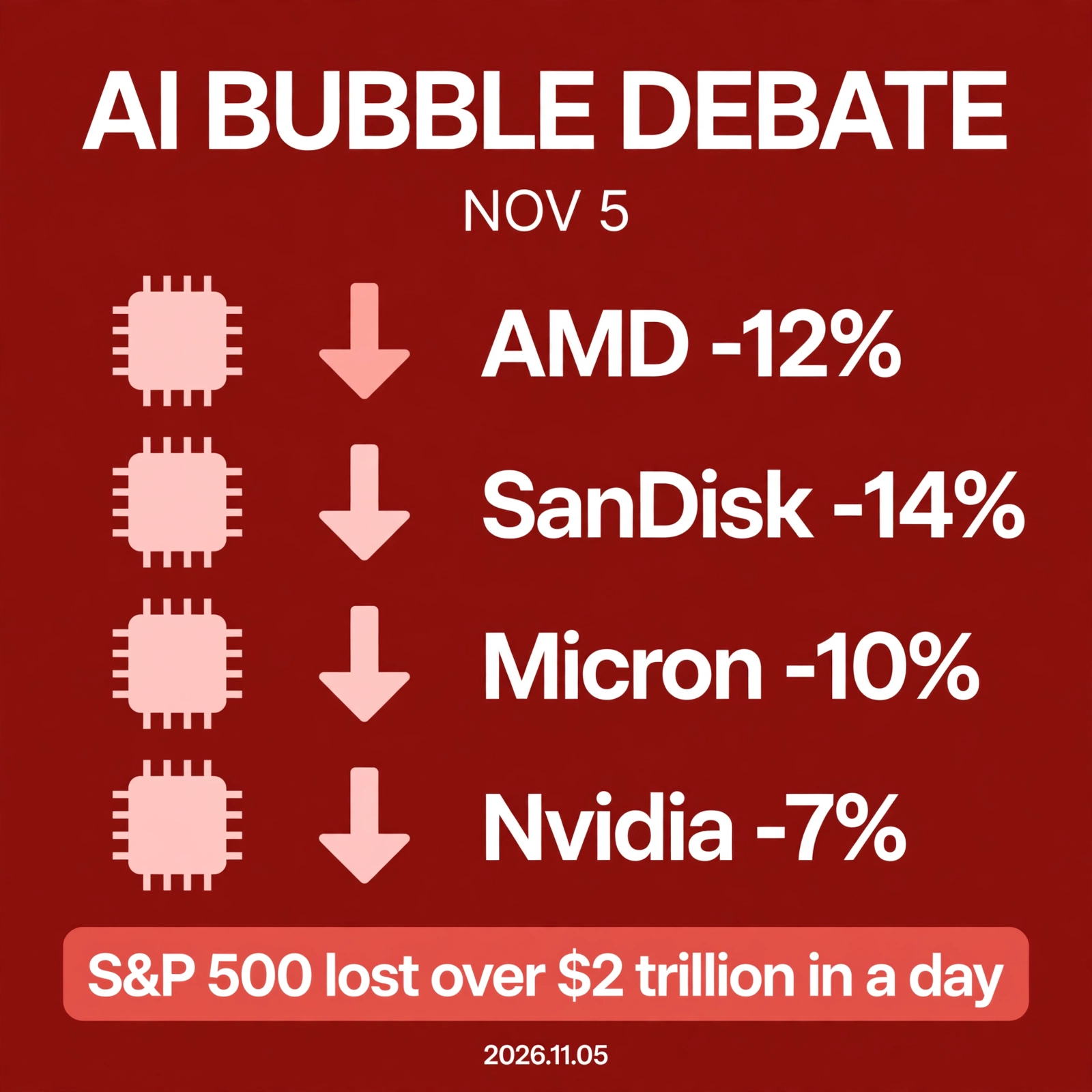
The intraday losses on November 5 spared almost no AI name. AMD fell 12%, SanDisk 14%, Micron 10%, Nvidia 7%, Tesla 9%, and Palantir 8%, and neocloud and power-equipment stocks fell by double digits. More than $2 trillion in S&P 500 market value was wiped out in a single session. A widely shared list of the day’s losers from a Michael Burry tracker account spread fast, and “Burry was right” started appearing everywhere. What lit the debate was not the fall itself but the fact that it spread across the whole AI theme at once.
The case for a bubble rests on three points. First, the pace of spending. Hyperscalers keep pouring money into AI infrastructure while issuing equity and bonds at the same time. Alphabet spent $51.36 billion on capital expenditure in the third quarter, up 114% from a year earlier, and posted a $9.07 billion free-cash-flow deficit, while its long-term debt grew from $21.6 billion a year earlier to $125.1 billion. Growth is fast, but cash is leaking — the contradiction the market keeps pointing at. Second, neocloud leverage. New cloud providers rent out large GPU fleets, buying the hardware with borrowed money, so they are vulnerable when rates stay high and demand wobbles. News that Microsoft took a tougher stance on neocloud projects added to Thursday’s selling. Third, valuation. The semiconductor index is about 31% below its 52-week high — but that also means the high was that elevated.
The case against: demand has not broken
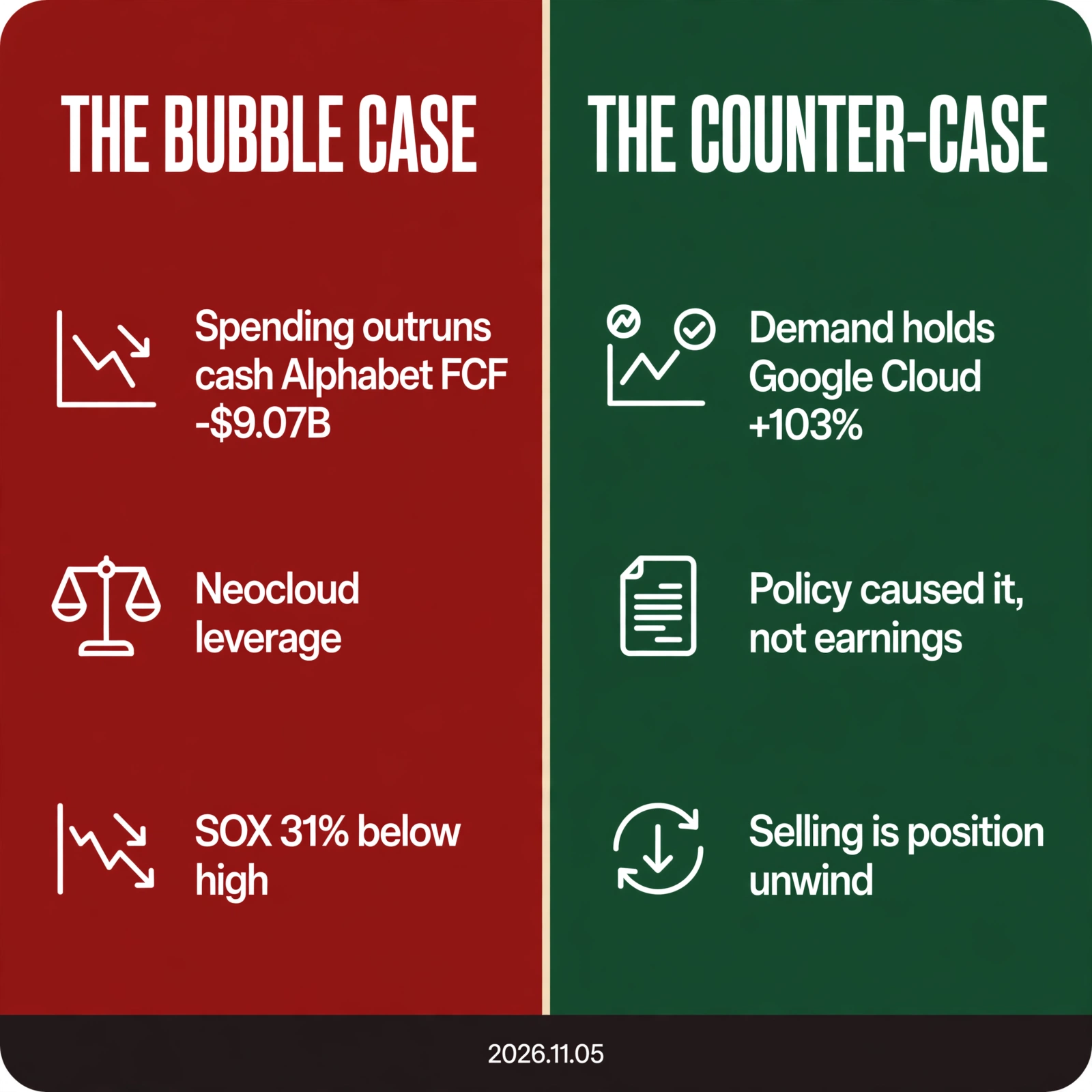
The counter-case is not weak. First, demand indicators have not broken. AMD chief executive Lisa Su said she sees no slowdown in AI chip demand, and Qualcomm kept its $5 billion fiscal 2027 data-center revenue target. Google Cloud revenue grew 103% in the third quarter to $30.71 billion, and AWS grew 39%. Revenue is growing fast alongside the spending — the part that sets this apart from a pure bubble. Second, policy, not earnings, pulled the trigger. The selloff was set off by data-center regulation worries after the midterms. If regulation eases or its direction becomes clear, the reason for the fall weakens. Third, the character of the selling. Nomura’s analysis points to hedge funds locking in profits before year-end and cutting leverage, not deteriorating fundamentals, with momentum trades unwinding sharply for more than a month. If positioning, not fundamentals, drove the selling, the drop looks more like an overheated market cooling off than a bubble bursting.
History is a useful reference. In our own backtest of completed corrections since 1971, the index was higher six months later in 23 of 30 cases. A correction on its own does not mean a bubble burst. Bubbles and corrections are separated not by the size of the fall but by what happens after it. If demand and earnings hold, it ends as a correction; if they do not, history records it as a burst.
The test: three numbers to watch
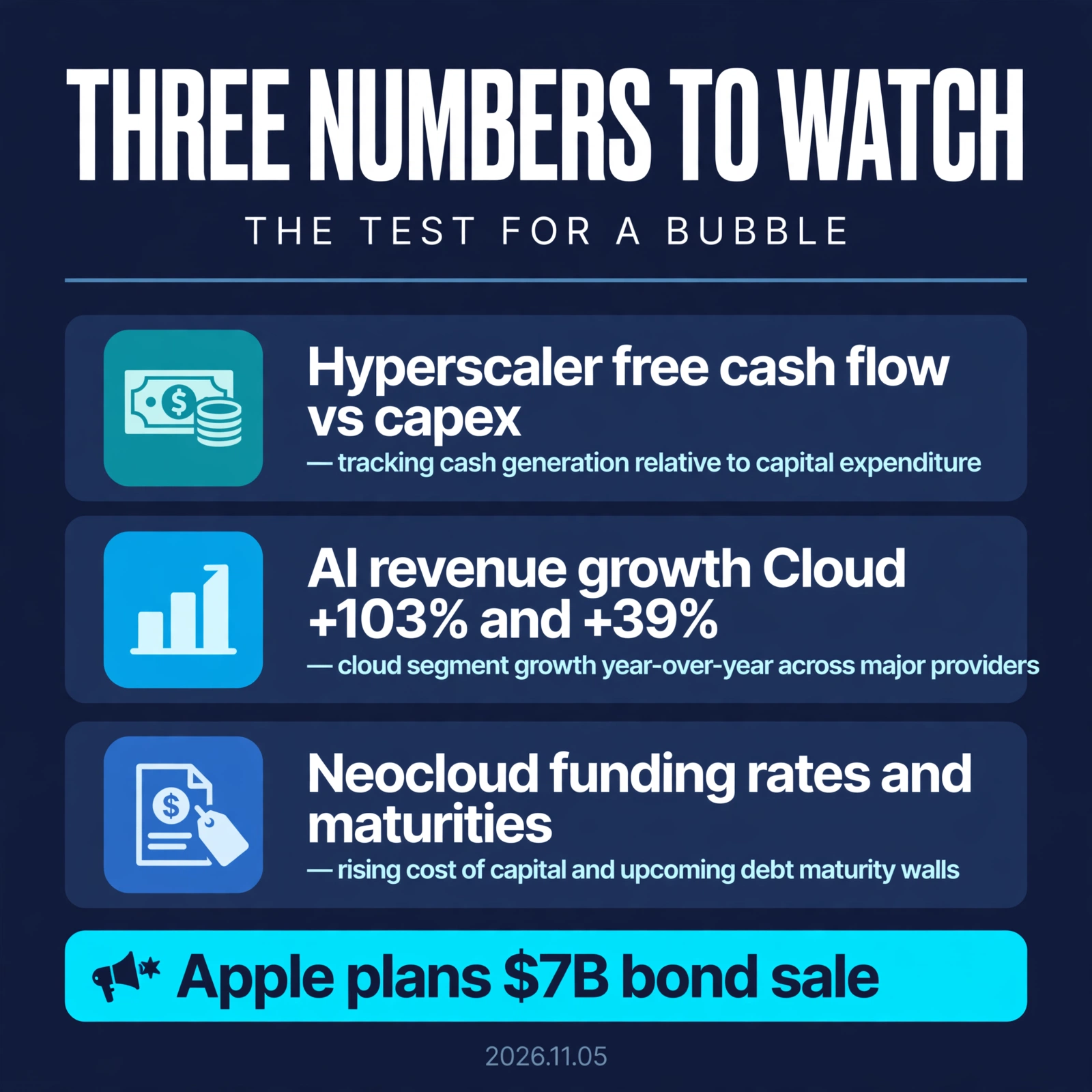
Three numbers will settle the debate. First, hyperscaler free cash flow — how many quarters capital expenditure stays above operating cash flow, and how fast debt grows. Second, AI revenue growth — whether cloud revenue keeps pace with the spending, or spending runs ahead while revenue lags. Third, neocloud funding conditions — the rates and maturities on GPU-backed borrowing, which show how sound the leverage structure is. If these three improve, it reads as a correction; if they worsen, it reads closer to a bubble.
Apple’s move is worth noting, too. Apple plans to raise about $7 billion in an investment-grade bond sale. With tech companies issuing bonds one after another, the terms they get will show how open funding markets remain. The verdict on the bubble debate will come not from opinions but from next earnings season’s numbers.
- AI bubble: the claim that AI-related asset prices have risen far beyond their real earning power. The debate reignited after the November 5 rout.
- Neocloud: a newer cloud provider renting out large fleets of AI GPUs. Its model depends on borrowed money to buy hardware.
- Free cash flow: operating cash flow minus capital expenditure. Alphabet posted a $9.07 billion deficit in the third quarter.
- Leverage: investing with borrowed money. Neoclouds depend on borrowing to buy GPUs.
- Deleveraging: cutting borrowed money. Hedge-fund position cuts are cited as a driver of the selling.
Three things to watch
First, next earnings season’s AI revenue and guidance. Whether hyperscaler cloud growth keeps up with the pace of capital expenditure is the fork in the road for the bubble debate. Second, funding for neocloud and data-center companies. If bond yields and borrowing terms worsen, the leverage structure’s weak points will show. Third, the new Democratic Congress’s first AI and data-center policy signals. Whether regulation curbs demand or merely slows the pace will change the premise of the AI investment story. Bubble or correction cannot be settled today. But the test is already set: watch whether the spending starts earning money as fast as it is spent.
Watch the video

Sources & references
- Economic Times — Was Michael Burry right about the AI bubble? — November 5 intraday: AMD –12%, SanDisk –14%, Micron –10%, Nvidia –7%, Tesla –9%; more than $2 trillion in S&P 500 market value wiped out; Burry warning back in focus
- Reuters — Tech-stock rout accelerates retreat from AI trade — Hyperscalers issuing more equity and bonds to fund AI spending, which is negative for valuations; SOX about 31% below its 52-week high; return-on-AI-spending doubts
- The Private Banker — S&P 500 Plunges 4.3% in Worst Day Since April 2025 — Nomura analysis: unwind driven by hedge funds locking in profits before year-end and cutting leverage; Lam Research –36% over the past month, Applied Materials –30%, AMD –22%, Nvidia –15%
- Zacks — GOOGL Q3 Earnings Miss Estimates, Cloud & Search Aid Top-Line Growth — Alphabet Q3: Google Cloud revenue surged 103% to $30.71 billion; AI capex more than doubled to $51.36 billion; free cash flow negative $9.07 billion
Related articles
- CoreWeave Q3 Earnings Analysis Revenue $3.66B Beat and $846M Interest Cost Verdict
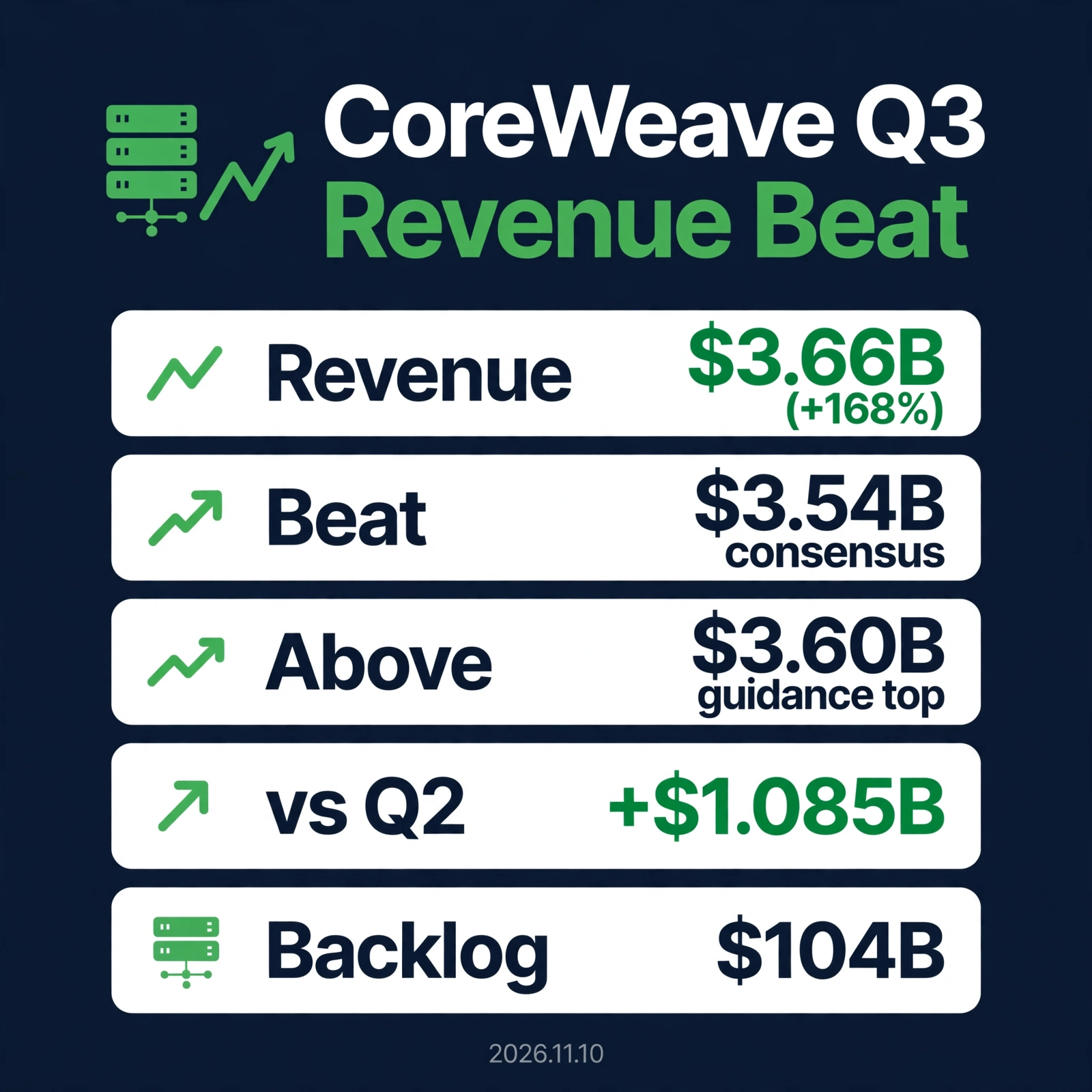
CoreWeave's Q3 revenue of $3.66 billion beat estimates and the company raised its full-year outlook. But interest expense of $846 million was more than double adjusted operating income of $379 million, and the operating margin fell from 16% to 10%. Demand is proven; the money-making structure is not.
- December FOMC 50bp Hike Scenario Analysis Core CPI 0.3% and Waller Comments
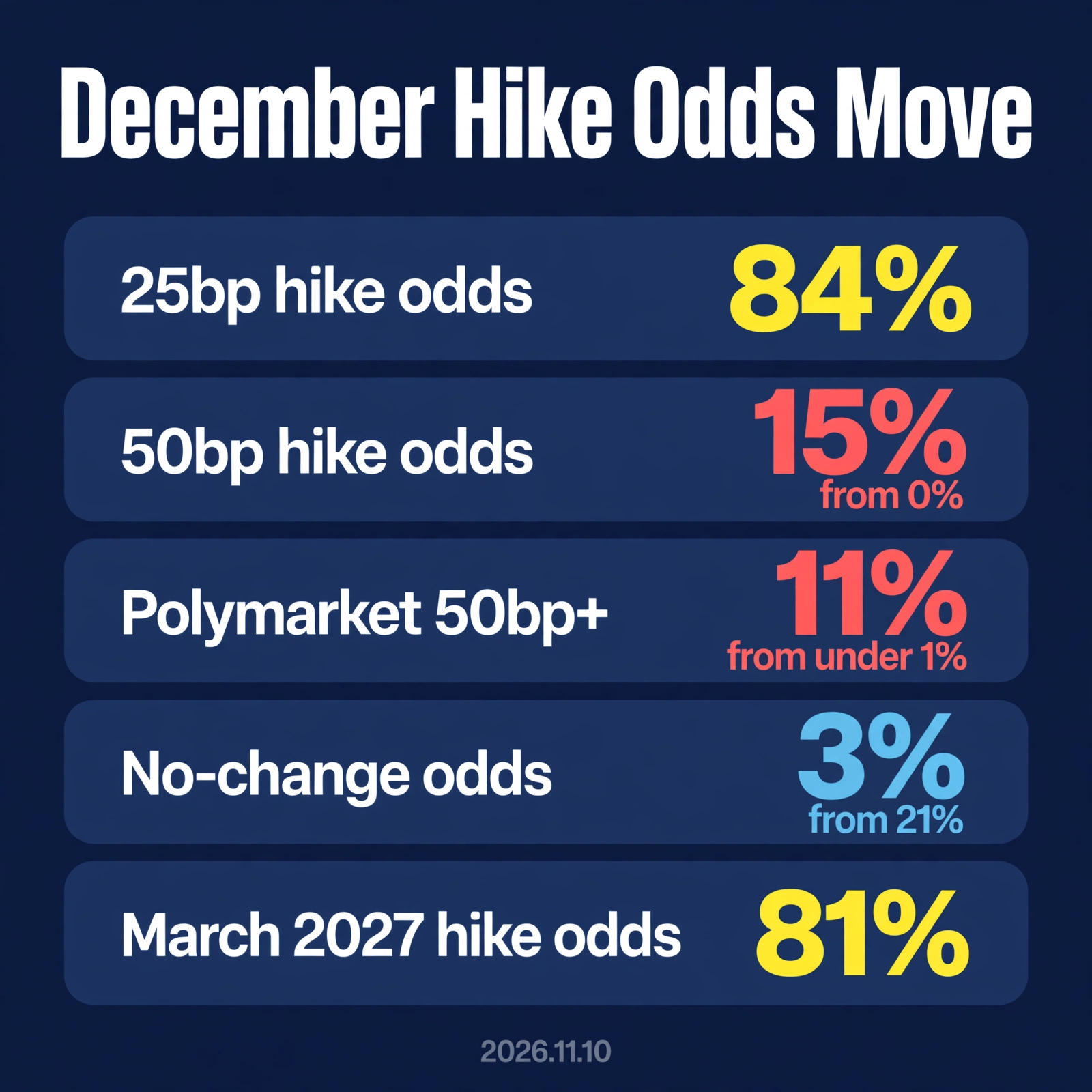
October core CPI ran at 0.3% for a third straight month, and December 50bp hike odds jumped from 0% to 15%. Governor Waller had named 0.3% core as the condition for considering a 50bp move, and November CPI comes out the day after the FOMC. What separates a 25bp hike from a 50bp one.
- Brent Crude Analysis: 18.4% Drop in Six Sessions on Negotiation Hopes
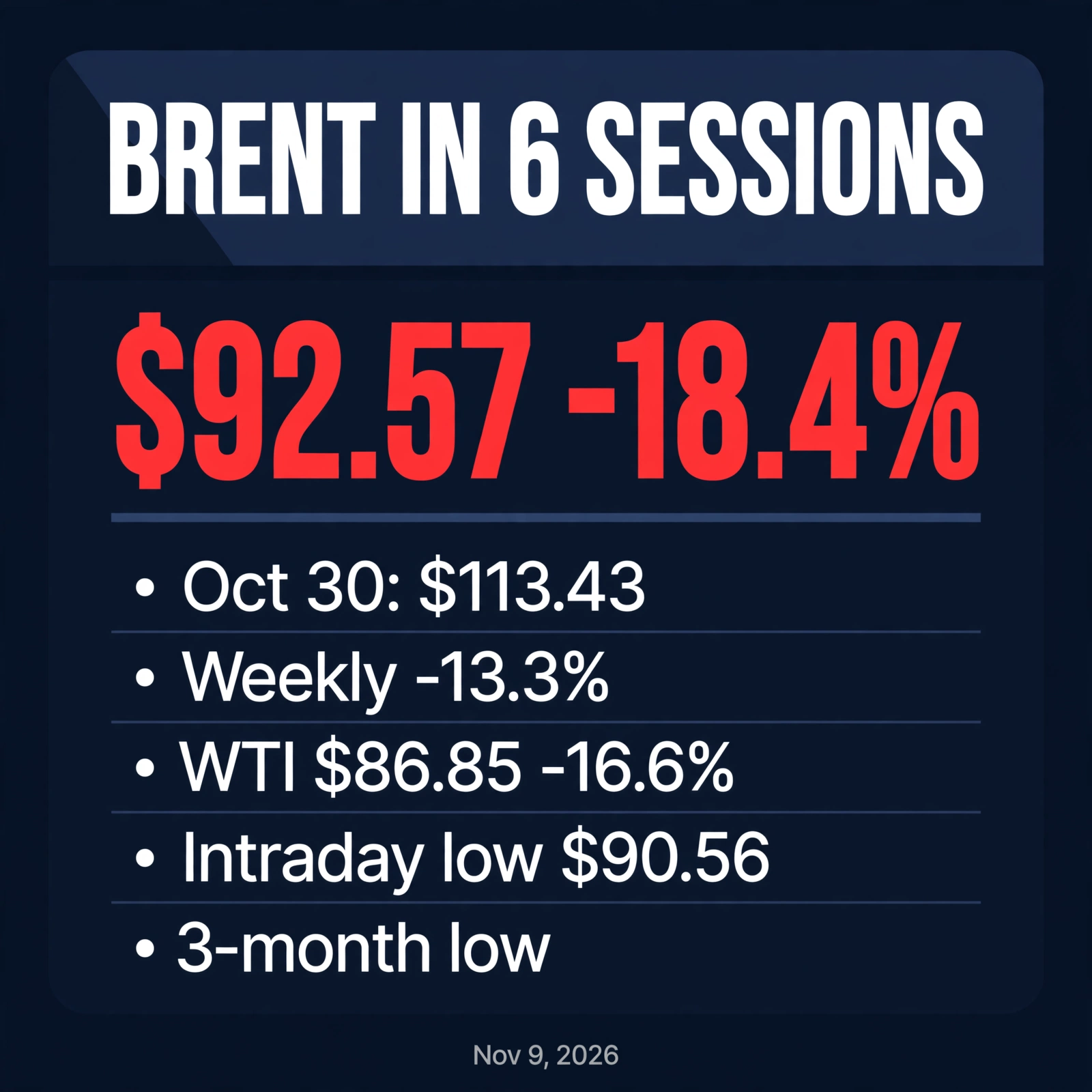
Brent crude has fallen 18.4% in six sessions, from $113.43 on October 30 to $92.57 on November 9. The war premium is unwinding fast — but analysts put renewed strikes at 60%, and that gap sets the terms for a reversal.
5minbrief on YouTube
The briefs also come as videos. Get the daily market wrap on YouTube.
Subscribe on YouTube