 5-minute briefs
KOSPI -3.5% Close 5,534 AI Capex Doubts SK hynix Buyback Ends BOK Hold (Oct 22)
#KOSPI#AI capex#SK hynix buyback
A 3.5% drop — the bid disappeared
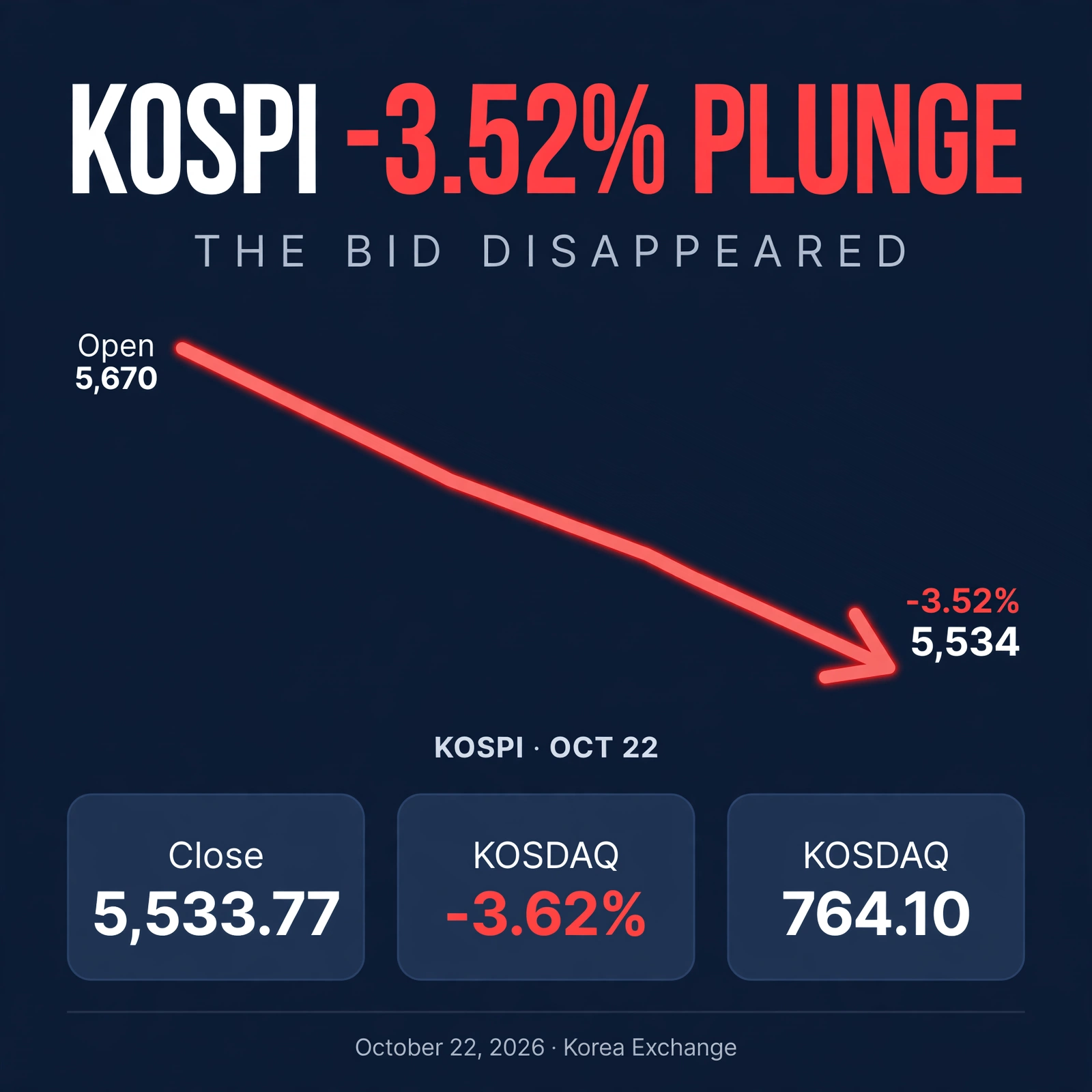
The day started weak and got weaker. KOSPI opened 1.14% lower at 5,670.11, briefly flipped 0.08% positive mid-morning, then slid to an intraday low of 5,485.98 before closing at 5,533.77, down 201.89 points (3.52%). KOSDAQ traced a one-way decline to 764.10, down 28.66 points (3.62%). Only 173 KOSPI stocks rose while 710 fell; on KOSDAQ it was 277 up against 1,393 down.
The critical supply-demand detail: SK hynix’s share buyback program ended on October 21, removing a steady buyer of the index’s second-largest stock. Domestic analysts put it bluntly — Shinhan Investment’s Kang Jin-hyuk said the index slipped below 5,700 because “there is no buying entity,” and Daishin Securities’ Lee Kyung-min noted that even “not very large” foreign and institutional selling produced an outsized drop: fragile supply-demand conditions, confirmed.
| Index | Close | Change | Flows |
|---|---|---|---|
| KOSPI | 5,533.77 | -3.52% | Foreigners +₩61.4bn, retail +₩382.5bn net buying / institutions -₩464.4bn |
| KOSDAQ | 764.10 | -3.62% | Retail +₩220.9bn net buying / foreigners -₩120bn, institutions -₩100.2bn |
Chips and batteries led the fall — one stock surged 16%
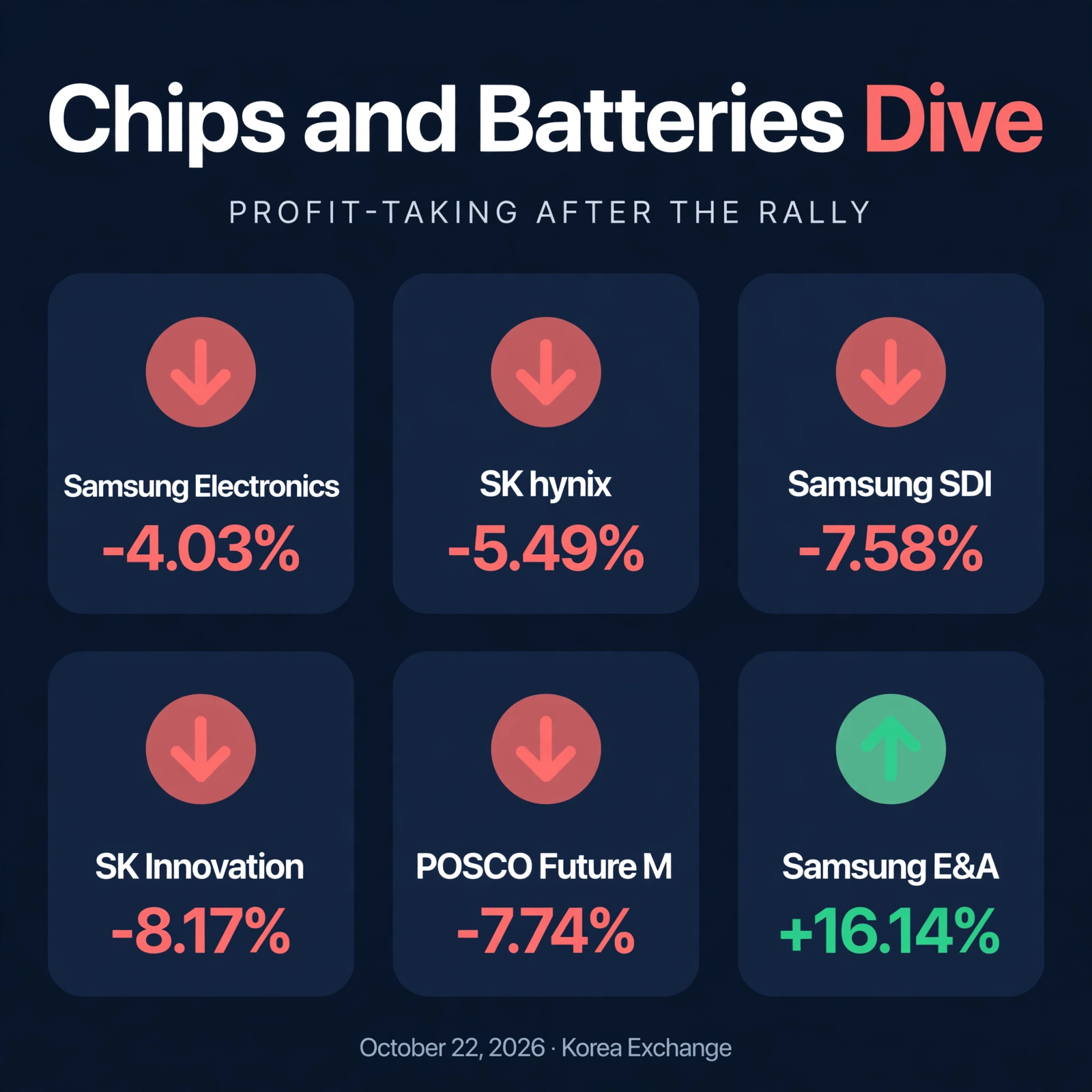
Profit-taking hit yesterday’s winners first. Samsung Electronics fell 4.03% to 214,500 won and SK hynix 5.49% to 1,223,000 won, erasing much of yesterday’s 5%+ tandem surge. The battery complex fell harder: Samsung SDI -7.58%, SK Innovation -8.17%, POSCO Future M -7.74%, LG Chem -6.85%, LG Energy Solution -5.22%.
Against the tape, a few names jumped: Samsung E&A +16.14% to 55,400 won, Samsung SDS +2.73%, and LG CNS +0.83% — a reminder that in a narrow, rotational market, single-stock dispersion is the whole game.
Governance watch: the duplicate-listing rule hits Solidigm, and the BOK talks the won up
For foreign investors, today’s two governance events matter more than the index level.
1. The duplicate-listing rule, applied. Financial Services Commission Chairman Lee Eok-won told parliament today that SK hynix’s US subsidiary Solidigm — the Intel NAND/SSD business SK hynix bought for $9 billion in 2021, about 9% of SK hynix revenue — falls under Korea’s duplicate-listing guideline as it pursues a Nasdaq IPO (Goldman Sachs and Morgan Stanley are reportedly lead underwriters). SK Square and SK hynix must now fulfill five parent-company obligations: shareholder impact assessment, shareholder protection measures, shareholder communication, a board vote, and disclosure. This is exactly the governance discount foreigners price into Korea: subsidiaries listing separately dilute the parent’s existing shareholders. SK hynix says no decision is finalized and that “long-term corporate and shareholder value” is the top criterion — watch whether the five obligations produce concrete protections or just paperwork.
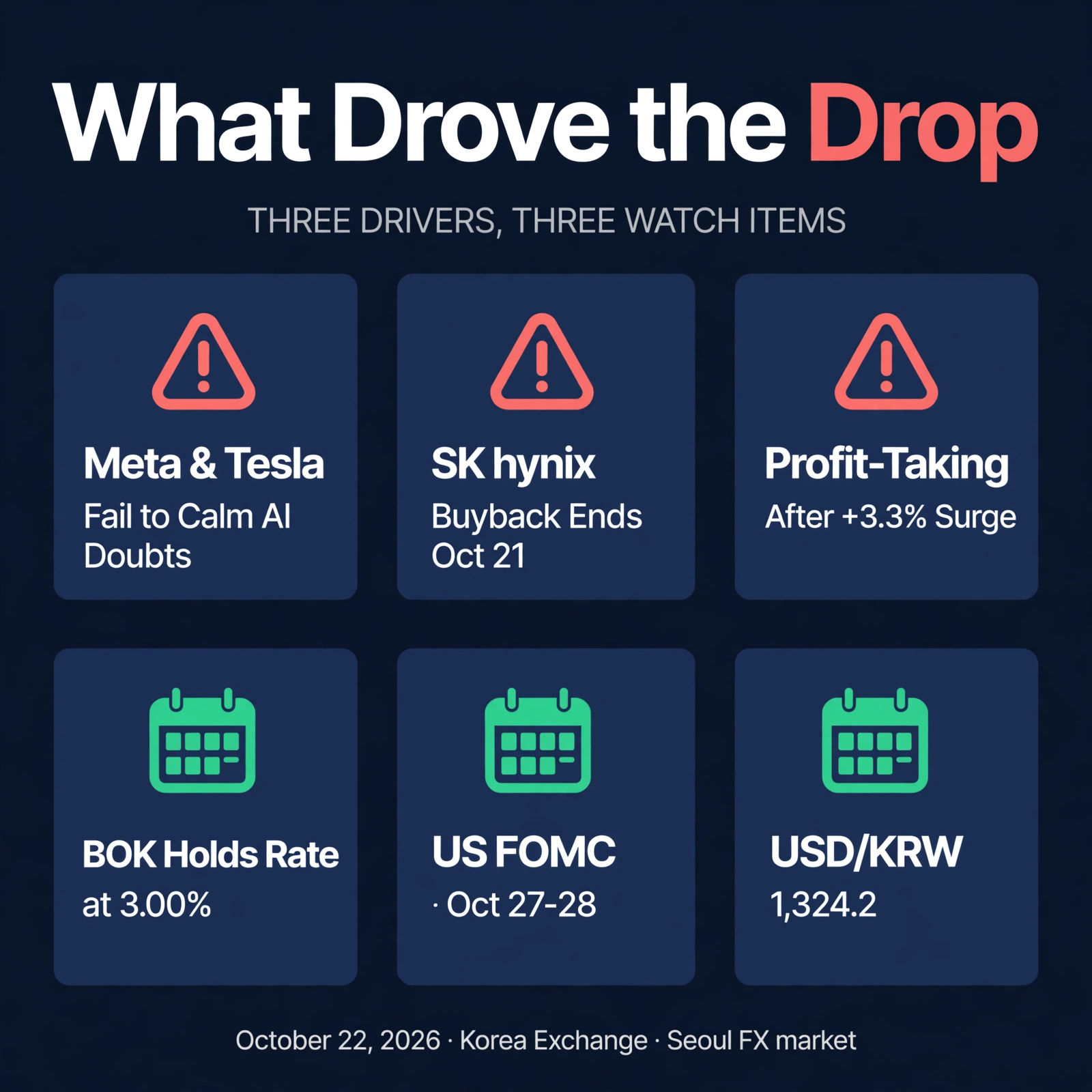
2. The central bank blessed a stronger won. The BOK held its policy rate at 3.00% unanimously — the first hold after July and August hikes — while keeping its “timing and pace of additional hikes” language intact. Governor Shin Hyun-song then said at the press conference that the won is “still weaker than historical levels” on both nominal and real effective measures: an unusually explicit verbal tolerance of further won strength. USD/KRW closed at 1,324.2, down 1.0 won for a fifth straight session — the lowest since October 2024.
Why Meta and Tesla couldn’t save the day
The overnight earnings were good — just not good enough. Meta’s Q3 revenue jumped 26% to $64.6 billion, but a massive litigation settlement pushed earnings below expectations and free cash flow turned negative. Tesla beat revenue estimates, but its Q3 capex fell quarter-on-quarter, feeding doubts about whether AI investment will continue. As one domestic strategist put it, these results “did not provide the same relief as SpaceX.”
Next catalysts: the FOMC meeting on October 27–28, whether foreigners keep buying (two straight days of small net buys on KOSPI), and Korea’s Q3 GDP (October 27) plus October inflation — the data the BOK said it will watch before deciding on a November hike.
Not investment advice. Figures verified October 22, 2026 against Korea Exchange, Seoul FX market, Yonhap, and Electronic Times closing data.
Sources & references
- Yonhap News — KOSPI and KOSDAQ tumble to steep closing losses — Original Oct 22 closing report (via Naver)
- Bank of Korea — Monetary Policy Decision & Opening Remarks to the Press Conference (October 22, 2026) — Primary source for the rate decision (official BOK release)
Related articles
- KOSPI +3.3% Close 5,736 Semiconductor Exports Record Foreign Net Buying (Oct 21)
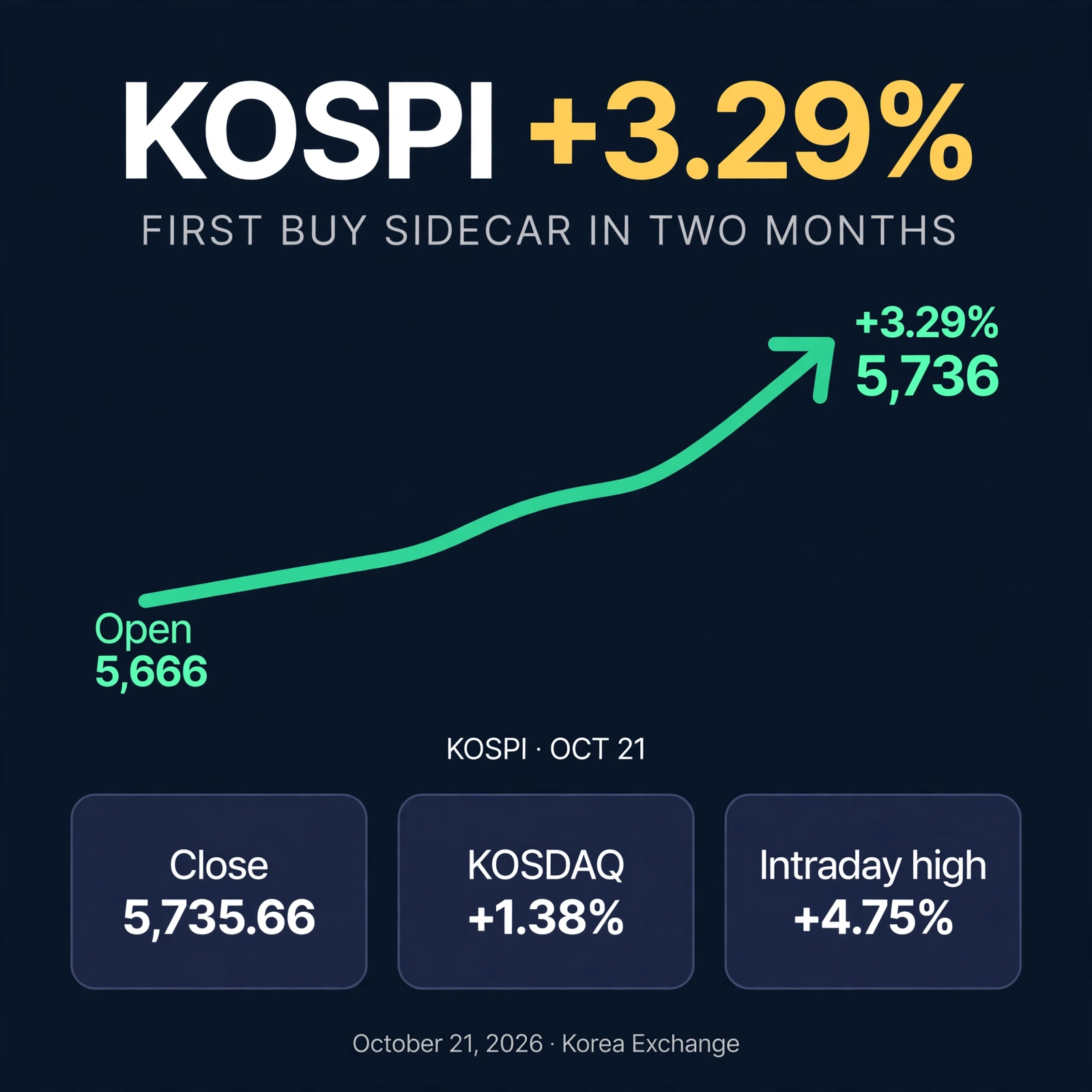
Oct 21 Korea close: KOSPI +3.29% at 5,735.66, KOSDAQ +1.38% at 792.76. SMCI and SpaceX earnings surprises eased AI profitability doubts; Samsung Electronics and SK hynix jumped 5%+. October semiconductor exports surged 222.5% to a record. USD/KRW at 1,325.2.
- US Stock Market Weekly Recap Nasdaq Falls 2 Percent AI Spending Doubts Energy Strength Analysis
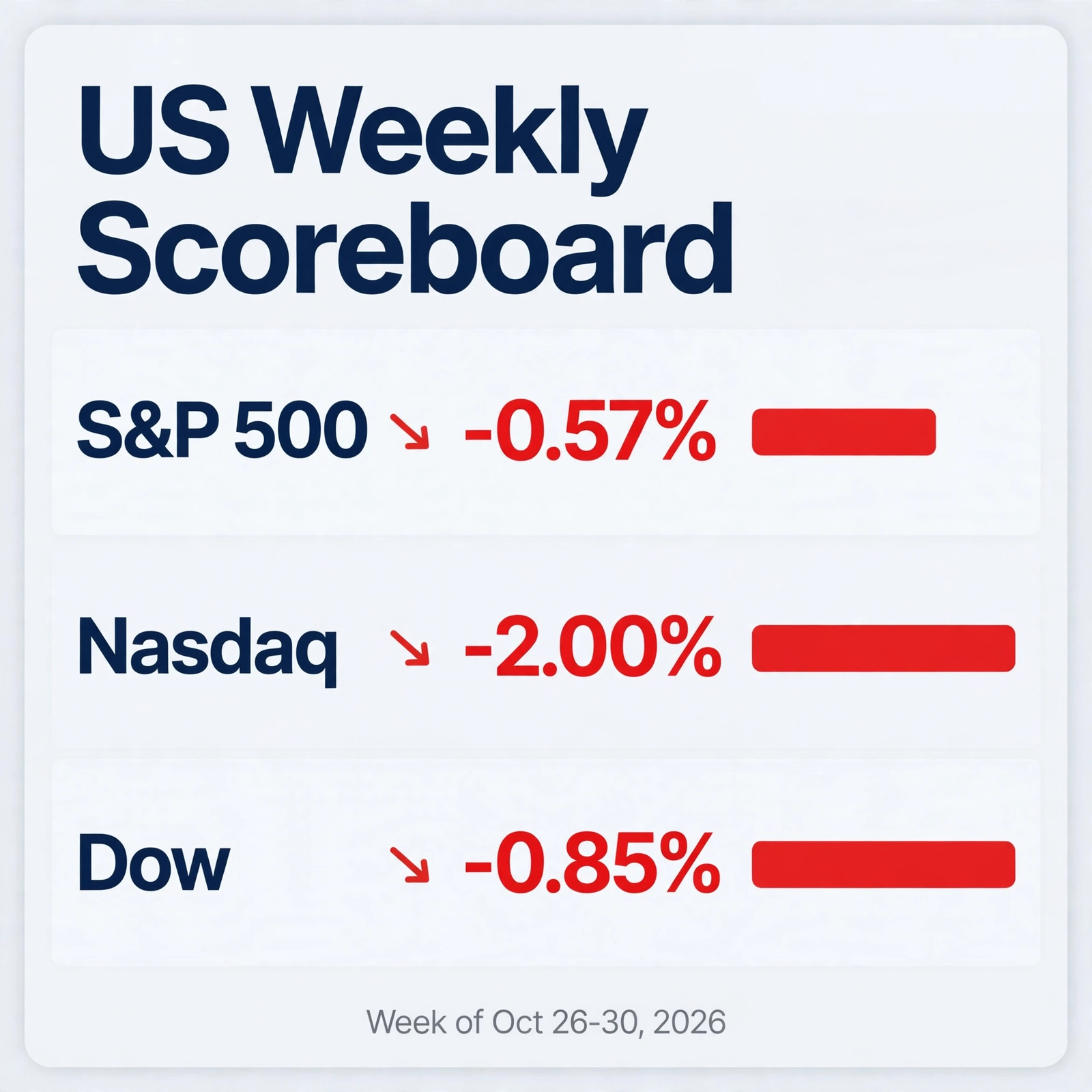
US stock market weekly recap for October 26–30. The S&P 500 fell 0.57%, the Nasdaq 2.00% and the Dow 0.85%, while small-cap Russell 2000 rose more than 1%. A Fed hold, Big Tech earnings, the Binance hack and an oil surge split the week. Next week brings the midterms and the October jobs report.
- Korea Weekend Brief China PMI Contraction US Tech Selloff Samsung Shareholder Return Analysis
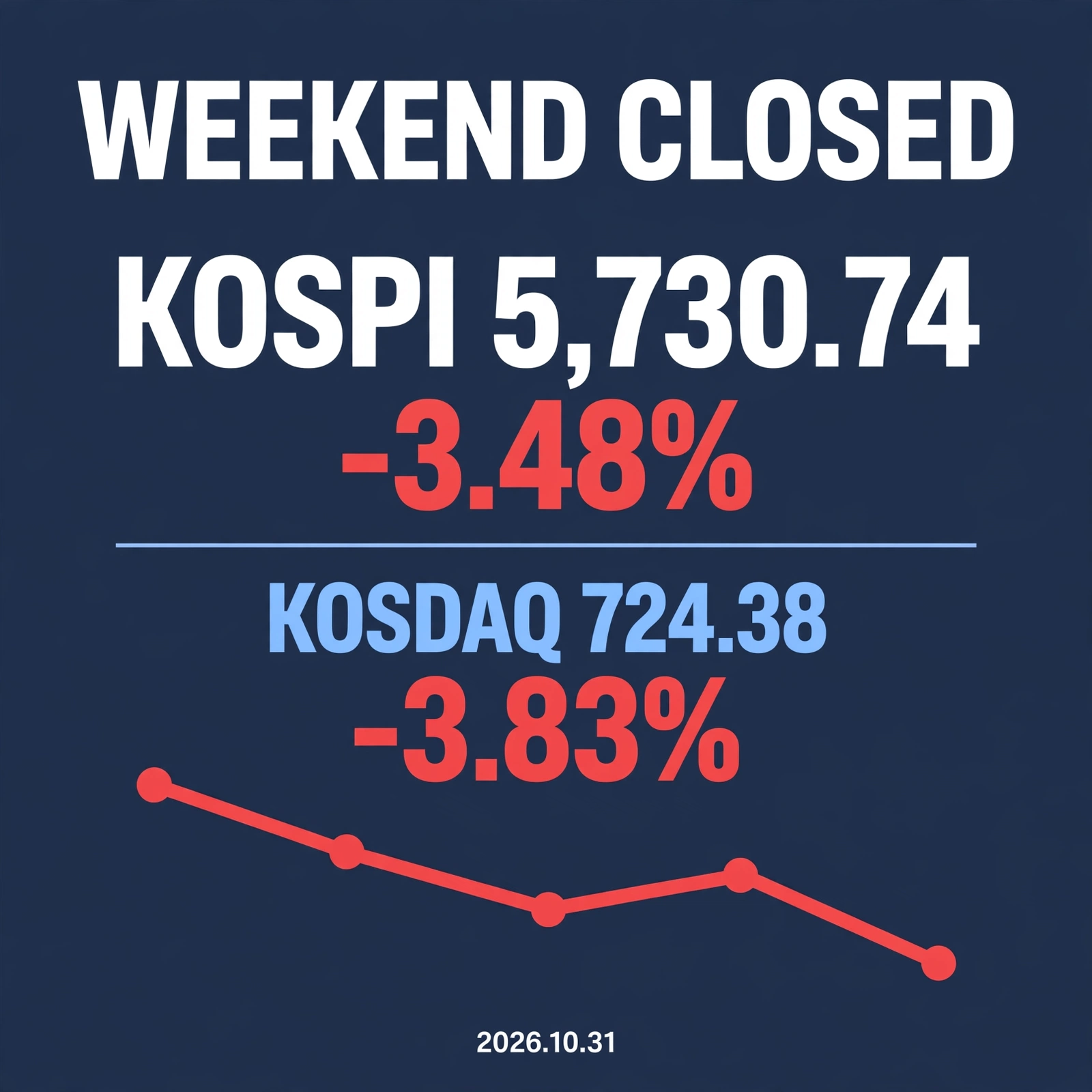
October 31 Korea weekend brief for foreign investors: Seoul is closed for the weekend, with the KOSPI last at 5,730.74 (-3.48%). Overnight the Nasdaq fell 2.86% on Intel's plunge, China's October manufacturing PMI slipped to 49.3, and WTI crude rose to $104.12 on a Strait of Hormuz incident. Samsung's remaining KRW 55–75 trillion ($41–56 billion) of returns awaits a January board decision.
5minbrief on YouTube
The briefs also come as videos. Get the daily market wrap on YouTube.
Subscribe on YouTube