 5-minute briefs
Nasdaq -4.5%, Semiconductors -11.4% Weekly: AI Fear Spread Recap and Meta, Tesla Earnings Outlook (Oct 18)
#SOX#Meta earnings#Tesla earnings#US stocks
The index fell, but 70% of stocks rose
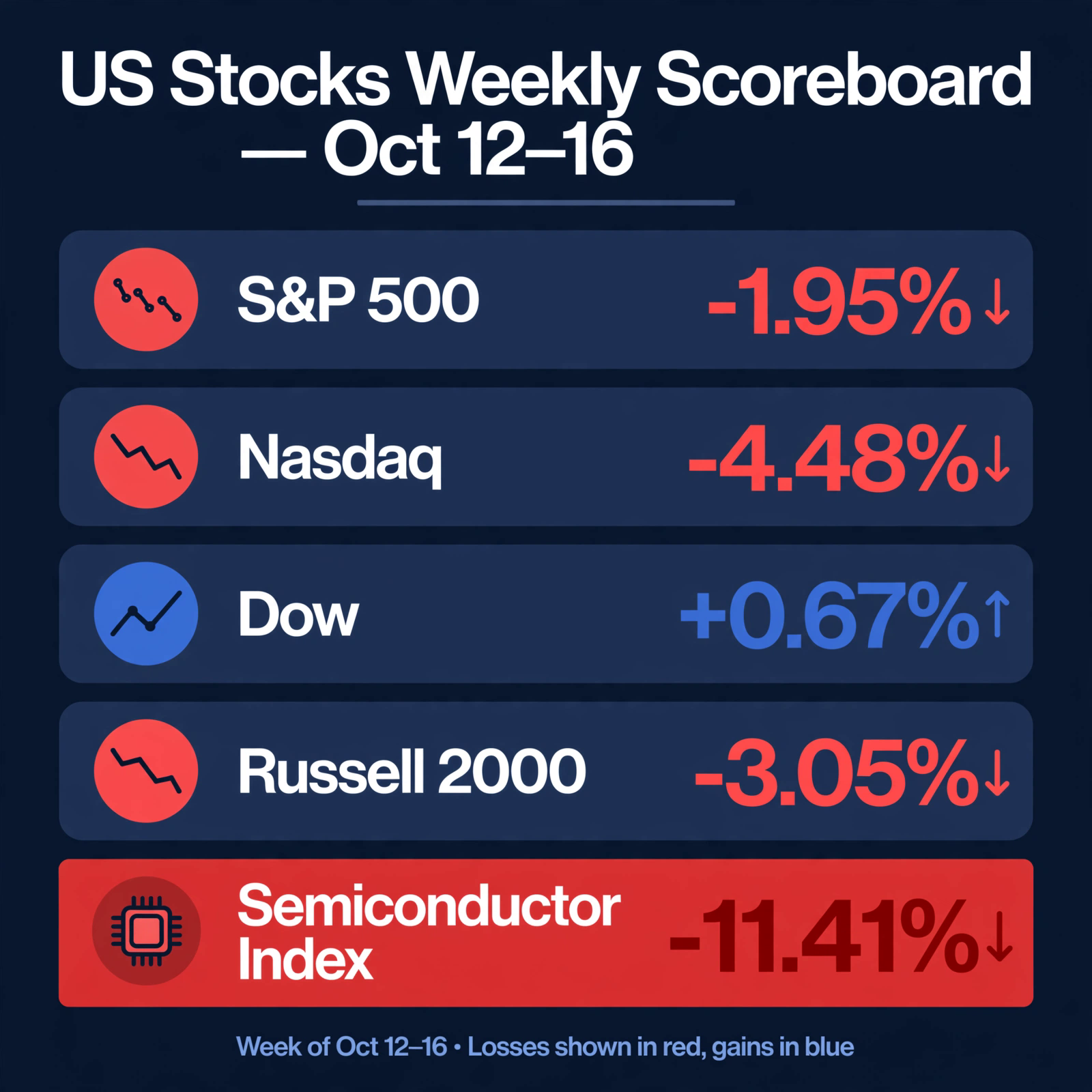
Start with last week’s strangest number. The S&P 500 fell 1.95% for the week — its worst since June — closing Friday at 7,659.44. Yet 350 of its 503 members rose. The equal-weighted S&P gained 0.49%, and the median member returned +2.56%.
| Index | Weekly move | Friday close |
|---|---|---|
| S&P 500 | -1.95% | 7,659.44 |
| Nasdaq | -4.48% | 26,140.03 |
| Dow | +0.67% | 52,002.41 |
| Russell 2000 | -3.05% | 2,721.37 |
| Semiconductor Index (SOX) | -11.41% | — |
In other words, the market didn’t fall — a few giant tech and chip stocks dragged the index down. One analysis estimated 18 chipmakers and equipment suppliers, about a sixth of the index’s weight, accounted for roughly five-sixths of the decline; Nvidia alone explained nearly half a point. Seven of 11 sectors were green: consumer staples rose 5.02% and energy 4.86%, while technology fell 7.70% — the widest staples-vs-tech gap since at least 2018.
Issue 1: Hot inflation revived the rate-hike debate
The week started with prices. September CPI came in at 3.7% year-over-year, above the 3.6% consensus; PPI jumped 1.3% month-over-month, its biggest rise since March 2022.
Markets reacted instantly. Odds of an October rate hike shot up to 37%, and the 10-year Treasury yield touched 5.329% on Wednesday. Import prices rose 8.1% year-over-year, confirming the inflation pressure is real.
By Friday, Fed Chair Kevin Warsh declined to signal a hike, and those odds fell back to about 15%. The 10-year ended the week at 5.098% (down 15 bps). Markets now lean toward an October hold, though Barclays still expects 25-bp hikes in December and January — inflation risk isn’t gone.
- CPI / PPI: the two headline inflation gauges. Hotter-than-expected readings raise rate-hike odds; higher rates cut the value of future earnings, hurting growth stocks.
- 10-year Treasury yield: the benchmark for borrowing costs. Above 5%, it puts real pressure on richly valued tech stocks.
Issue 2: Chips had their worst week since April 2025
The Philadelphia Semiconductor Index fell 11.41% for the week — worst since April 2025 — with 8 straight down closes, tying its longest losing streak since 2008. Last week’s chip pain was a relay of bad news:
- Monday: Broadcom CEO Hock Tan said many AI investors have “no clue” what they’re buying. Intel’s CEO also flagged financing constraints on the AI build-out.
- Wednesday: Hot CPI, plus Gartner’s forecast that “more than 80% of neocloud providers will stop operating independently by 2030.” CoreWeave fell 15.46% in a day as its bonds sold off.
- Thursday: TSMC beat earnings and guided Q4 above Q3 — the chip index fell anyway.
- Friday: The selling continued. Seagate -18.39% for the week, SanDisk -17.86%, Micron -14.59% (China’s CXMT memory news).
CoreWeave ended the week down 25.21%: a Thursday +5.94% bounce after Nvidia CEO Jensen Huang defended its finances gave way to -11.91% on Friday.
The paradox: this crash wasn’t about “no AI demand” — it was about whether AI demand can be financed. Goldman Sachs estimates the five hyperscalers will spend about $1.2 trillion on capital expenditure next year. As BNY’s Kevin Shear put it, “hyperscaler profitability has to outrun the investment pace.”
Issue 3: AI fear spread — from chips to software
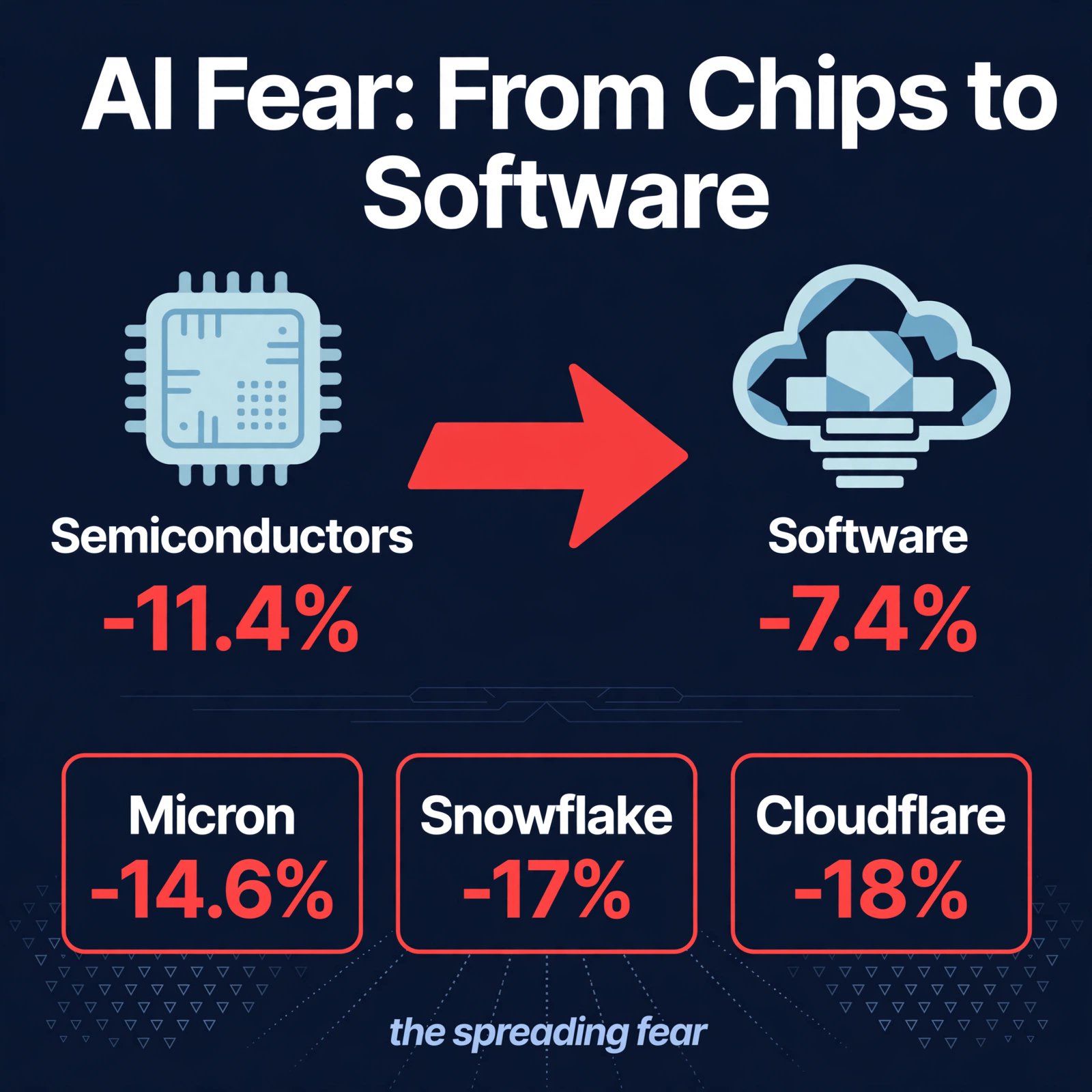
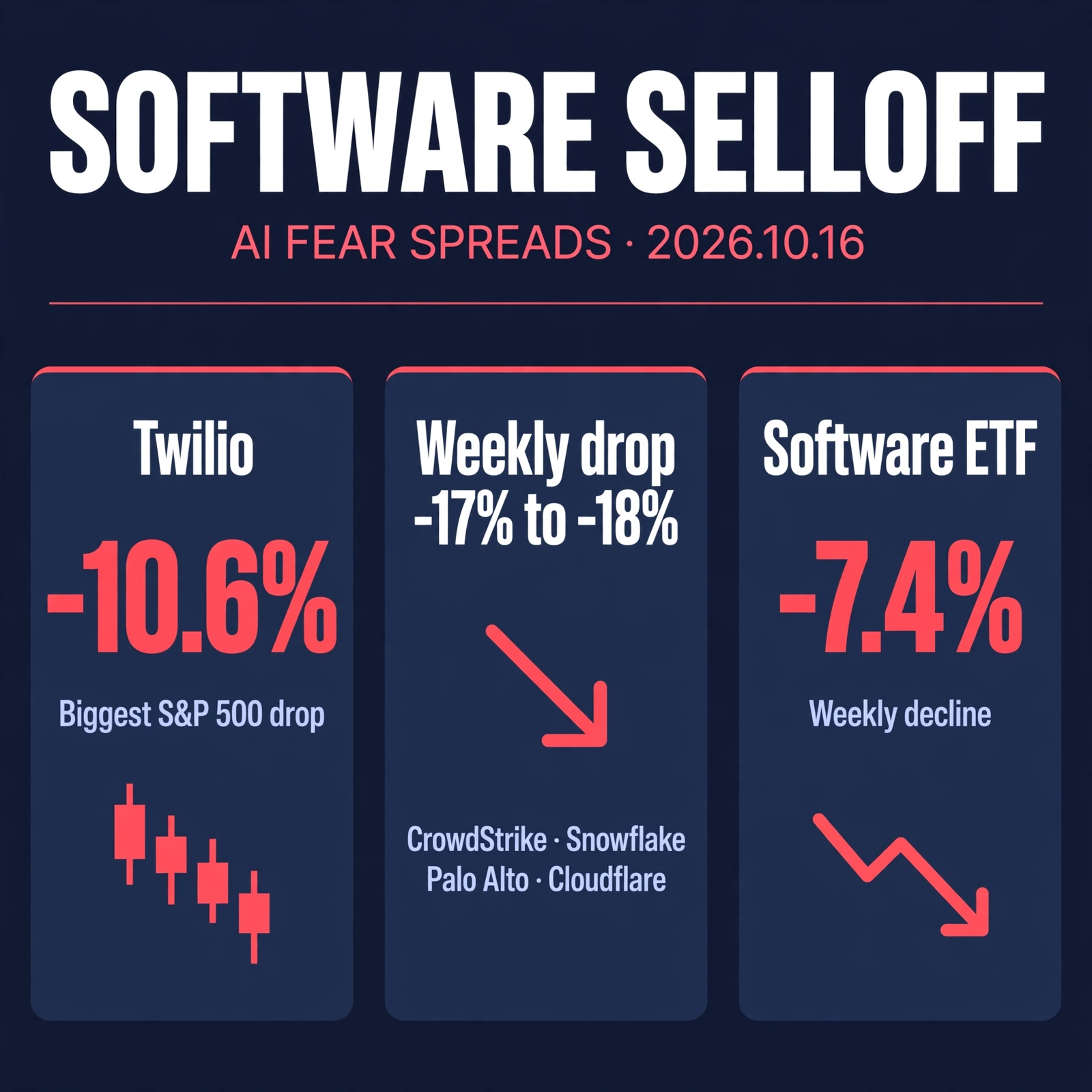
Friday’s (October 16) new face was software. Twilio fell 10.6%, the biggest drop in the S&P 500. For the week, CrowdStrike and Snowflake each lost about 17%, Palo Alto Networks and Cloudflare about 18% each, and the software ETF (IGV) fell 7.4%.
Earlier in the week, investors treated software as “the safer place than chips” — steady demand, less direct exposure to AI infrastructure spending. That haven broke on Friday.
Two suspicions are driving it. First, AI may eat software’s own lunch — if AI replaces coding, customer support, and security tasks, software license demand could shrink. Second, in a high-rate world, stocks priced for distant growth fall hardest. The Fear & Greed index sank to 30 (fear), and the AAII survey showed bears at 41.6% outnumbering bulls at 38.7%.
Issue 4: The haven trade — staples, bonds, dividends
While growth stocks shook, money moved. Dividend stocks (SCHD) +3.96%, long-term Treasuries (TLT) +2.65%, aggregate bonds +0.85% — the mirror image of the Nasdaq 100 (-5.52%) and semiconductors (-10.53%).
This is a move from “growth stories” to “cash flows”: the higher rates go, the more distant profits get discounted and the more companies earning money right now stand out. In the same vein, Apple was the only mega-cap gainer for the week (+2.03%) and crossed a closing market cap of $5 trillion.
The bull market also turned four (started October 12, 2022; S&P 500 more than doubled in four years) — but there was no party mood. The week’s defining question was whether the AI trade had simply become too expensive.
Issue 5: Oil spiked on geopolitics
Escalating attacks in the Strait of Hormuz pushed Brent crude toward $110 a barrel; US crude rose about +10% for the week. Higher oil adds another layer of inflation concern. The oddity: the average US gasoline price actually fell 4.5 cents a gallon — it hasn’t reached consumers’ wallets yet.
Next week: Big Tech earnings take the stand
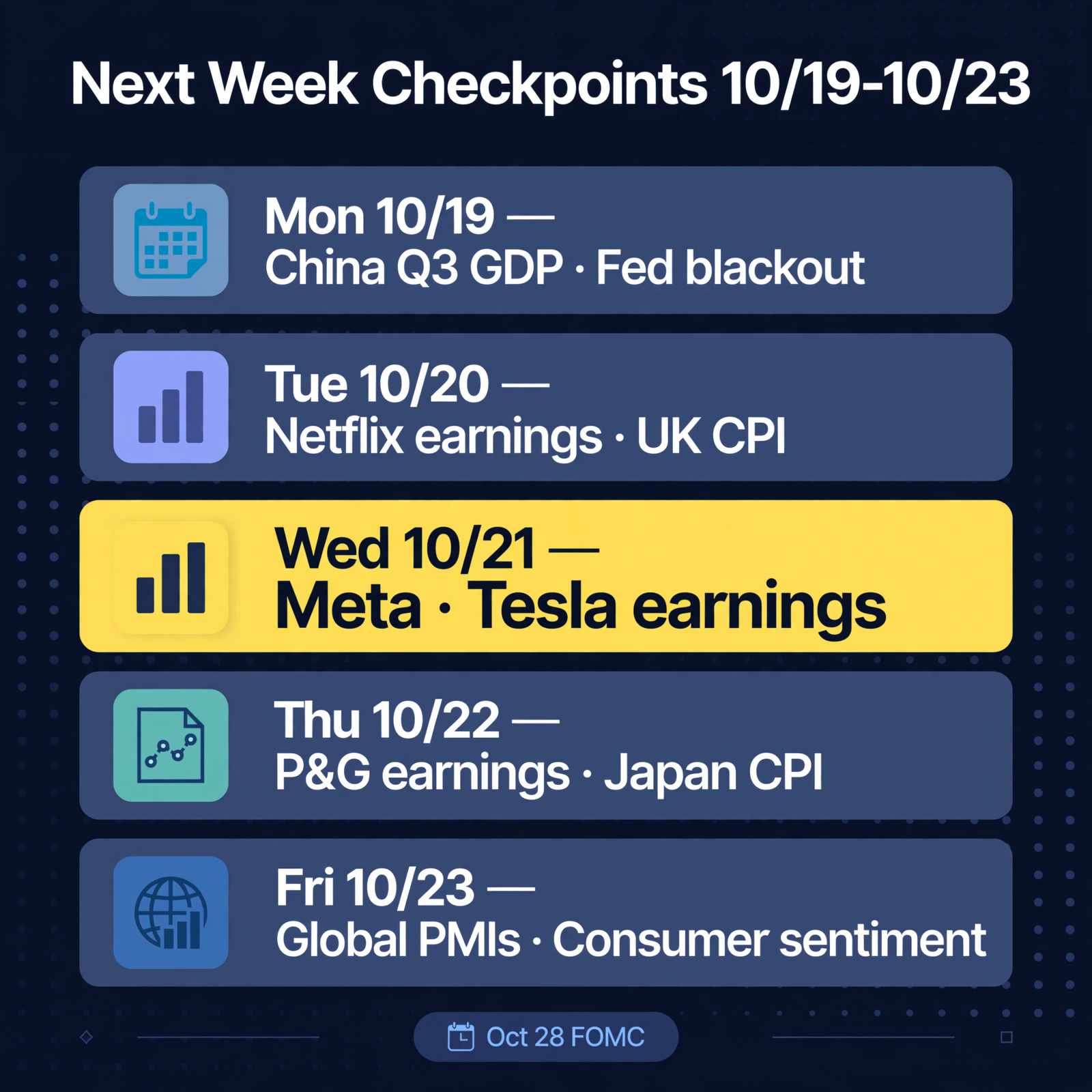
| Day | Event |
|---|---|
| Mon (Oct 19) | China Q3 GDP (est. 4.4%), Fed blackout begins ahead of the October FOMC |
| Tue (Oct 20) | Netflix earnings (first since the CCO change), US housing starts, UK CPI (est. 3.4%) |
| Wed (Oct 21) | Meta and Tesla earnings (Meta is the first hyperscaler to report), Lam Research, Texas Instruments, jobless claims |
| Thu (Oct 22) | P&G earnings, Japan CPI |
| Fri (Oct 23) | Global flash PMIs, Michigan consumer sentiment |
One question dominates: can the Big Tech companies pouring money into AI actually earn it back? LSEG estimates S&P 500 Q3 earnings grew more than 30% year-over-year — mostly driven by AI mega-caps, so a miss would hit hard.
With the Fed entering its blackout period ahead of the October 28 FOMC, this week’s earnings and data are effectively the last inputs for the rate decision.
Not investment advice. Figures verified October 18 against portfolio-terminal, barchart, AP, weekly recap channels (Rtrades, WB014), and capitalinsightbd.
Sources & references
- Portfolio Terminal — Stock Market Close October 16, 2026: Week in Review — Weekly scorecard and day-by-day closes
- U.S. Bureau of Labor Statistics — Consumer Price Index, September 2026 (USDL-26-1574) — Primary source for the week's inflation figures
- U.S. Bureau of Labor Statistics — Producer Price Indexes, September 2026 (USDL-26-1576) — Official September PPI release
Related articles
- Nasdaq Weekly -4.5% AI Fear Software Sector Causes and Outlook (Oct 18)
US markets are closed on Sunday, October 18. Friday's software rout (Twilio -10.6%, CrowdStrike and Snowflake -17% on the week) showed AI fears spread...
- US Stock Market Weekly Recap S&P 500 Down Dow Up AI Spending Selloff Oil Surge Analysis
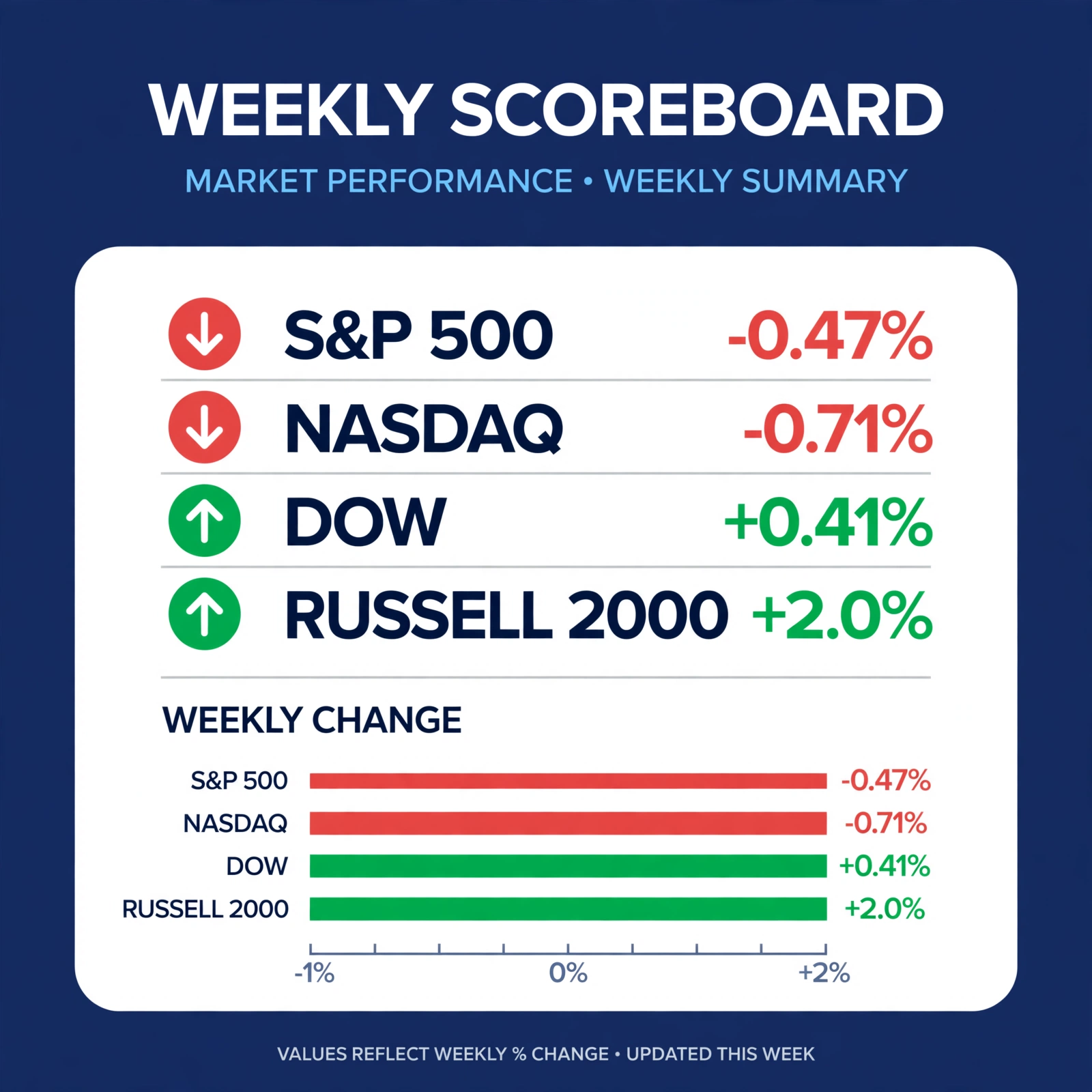
US stock market weekly recap for October 19–23: S&P 500 -0.47%, Nasdaq -0.71%, Dow +0.41%, Russell 2000 +2.0%. A Thursday AI spending selloff and an oil surge split the week. Next: FOMC, Microsoft, Alphabet, GDP, PCE.
- Nasdaq +1.05% on SpaceX's First Profit and Tesla Merger Talks; Meta–Tesla Q3 Earnings Analysis (Oct 21)
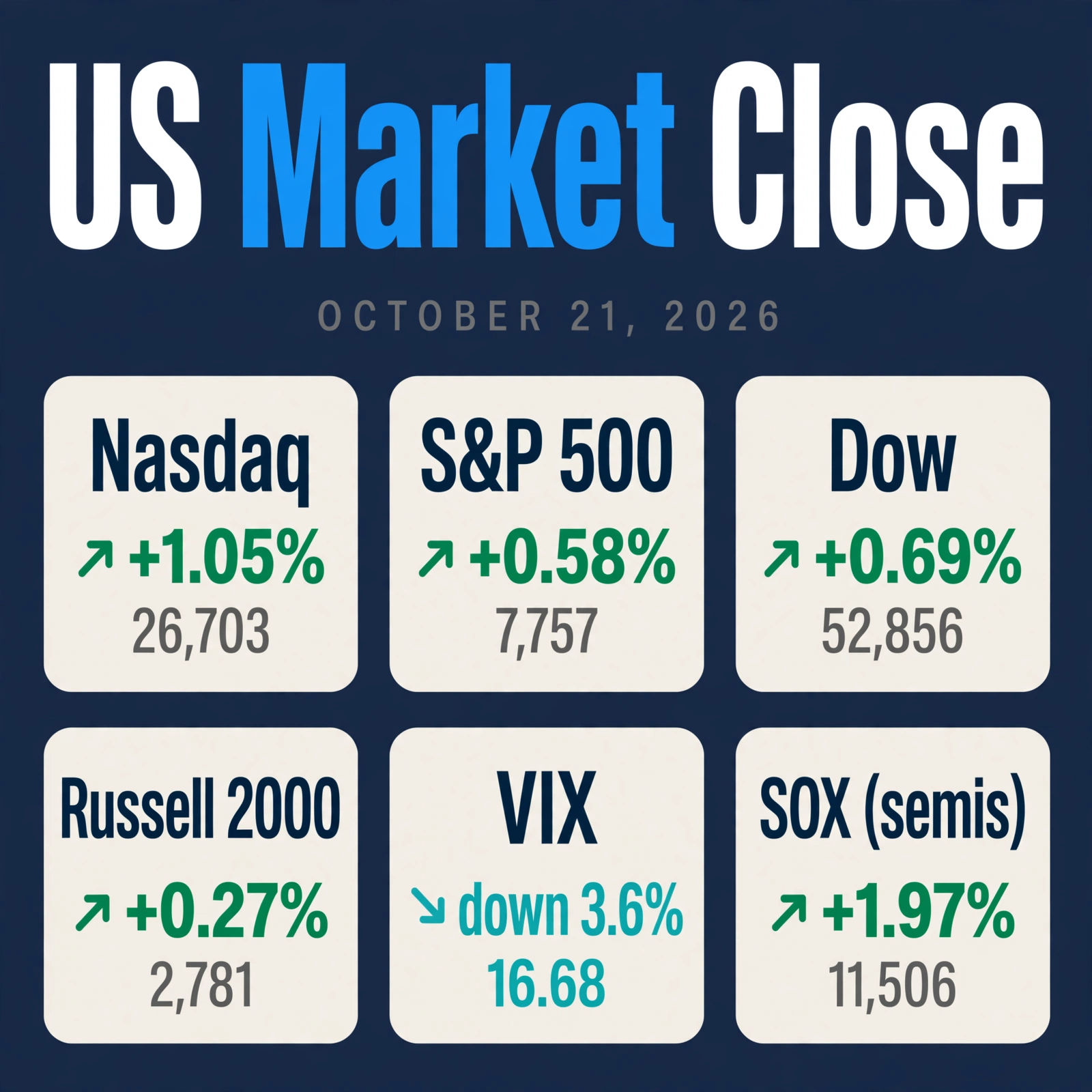
US market close Tuesday Oct 21: Nasdaq +1.05% (26,702.86), S&P 500 +0.58% (7,757.17), Dow +0.69% (52,856.09). SpaceX's first quarterly profit and Tesla merger talks led tech higher; Meta and Tesla reported Q3 results after the close.
5minbrief on YouTube
The briefs also come as videos. Get the daily market wrap on YouTube.
Subscribe on YouTube