 5-minute briefs
Wall Street Rebounds Despite Hot PPI; Dow Jumps 1.1% to One-Month Closing High (Oct 15)
#PPI#wholesale prices#rotation#Dow Jones#Treasury yield
The short version
Wall Street started Thursday on edge. The September Producer Price Index jumped 1.3% from August — more than double what economists expected, and the biggest monthly increase since March 2022.
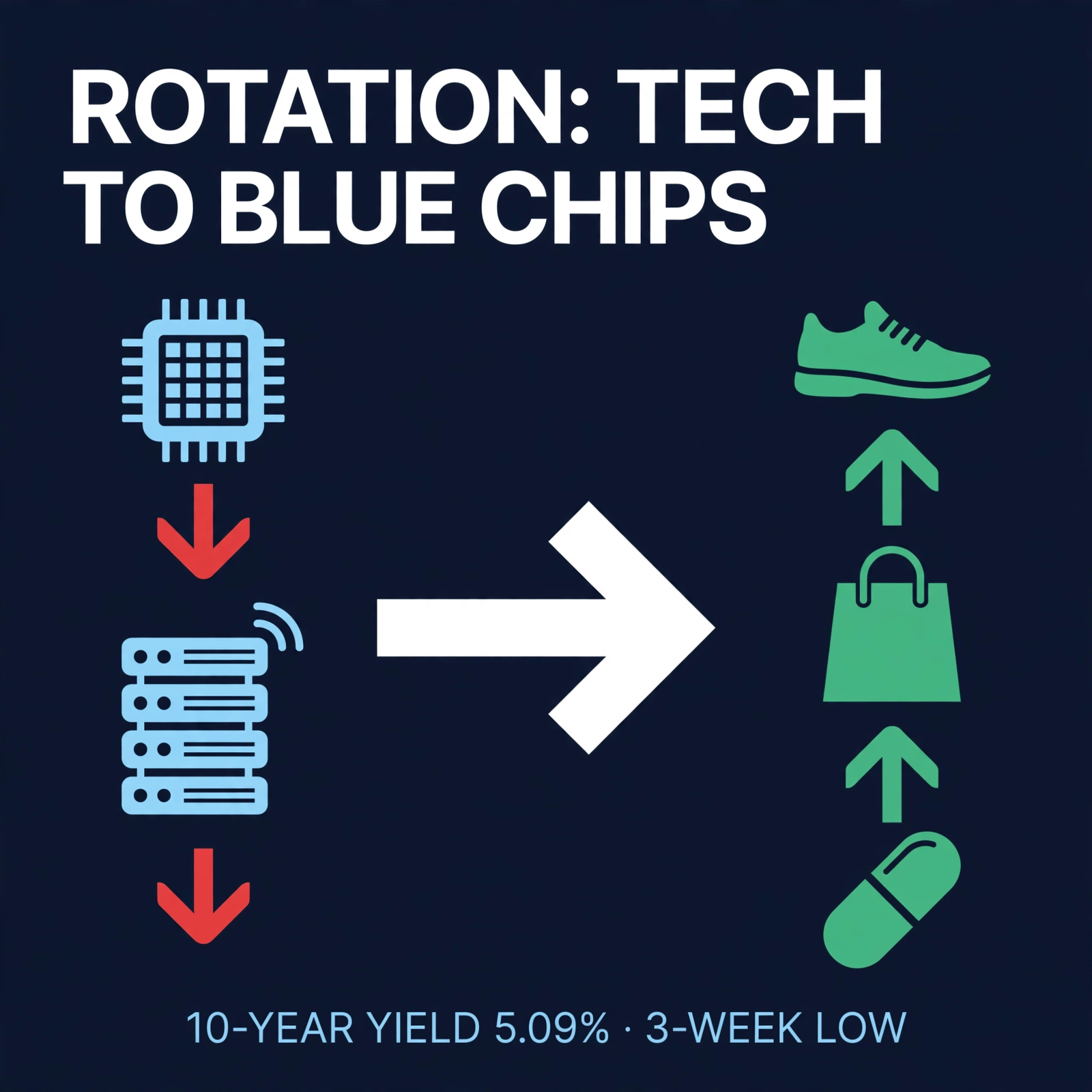
Then the market went the other way. The 10-year Treasury yield dropped to 5.09%, its lowest in three weeks, and stocks clawed back their losses. All three indexes finished higher. The Nasdaq, which sank to its lowest intraday level in almost a month, was saved by bargain hunters into the close.
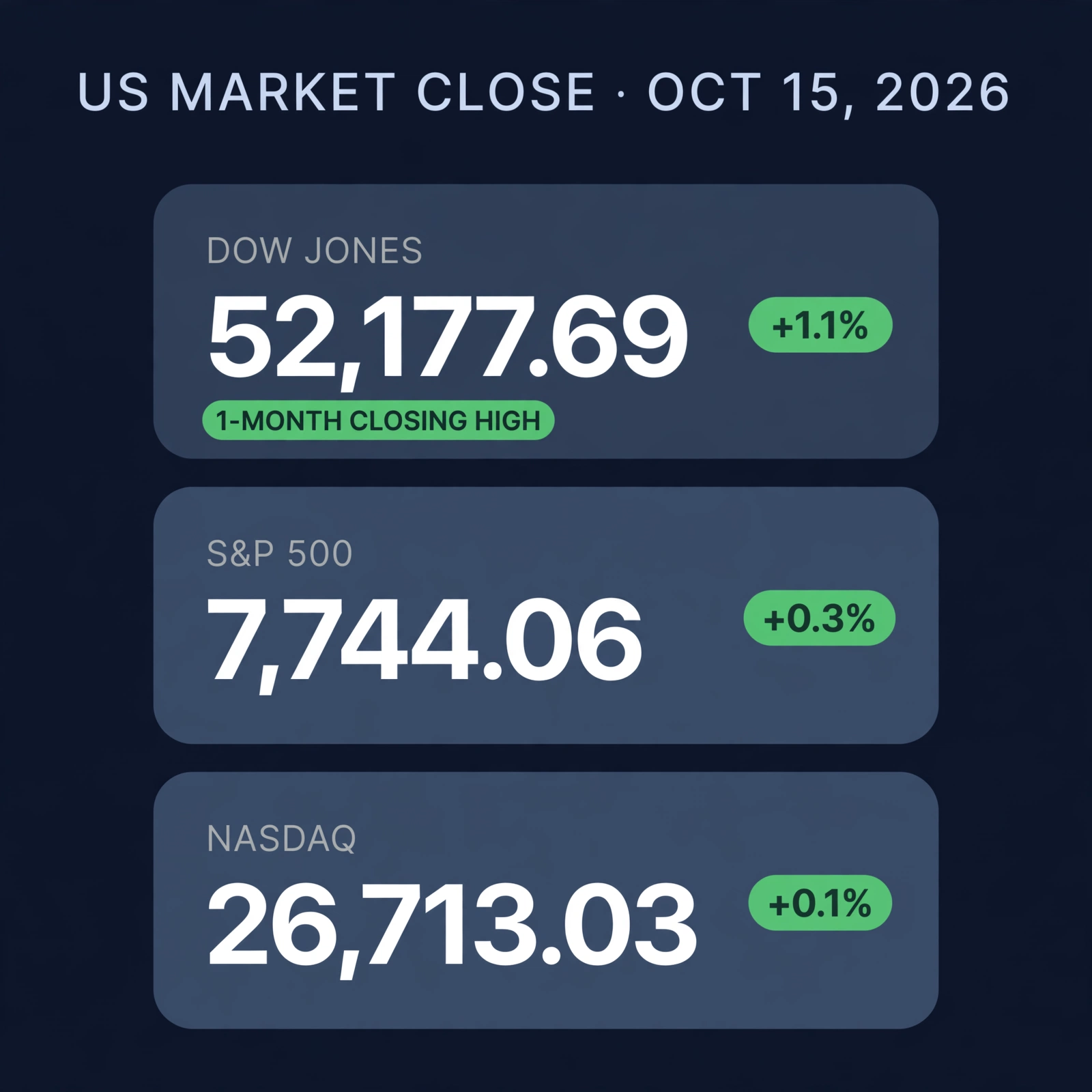
| Index | Close | Change |
|---|---|---|
| Dow Jones | 52,177.69 | +1.1% |
| S&P 500 | 7,744.06 | +0.3% |
| Nasdaq Composite | 26,713.03 | +0.1% |
- PPI (Producer Price Index): tracks price changes in goods and services sold between businesses. Because it comes before consumer prices, it works as a leading indicator for CPI.
- Rotation: money flowing out of one group of stocks into another. On Thursday, it moved from tech into blue chips and defensive names.
- Treasury yield: the interest rate on U.S. government bonds. When it falls, borrowing gets cheaper for companies and stocks look relatively more attractive.
Why the rally: three drivers
1. Treasury yields fell. This was the day’s biggest surprise. The 10-year yield sliding to 5.09% despite hot PPI suggests the bond market believes rates are already restrictive enough to cool the economy. Just a day earlier, the same yield had spiked to 5.33% after the hot CPI print.
2. Money rotated from tech into blue chips. Old-economy giants like Nike, Salesforce, and Home Depot powered the Dow, and 7 of the 11 S&P 500 sectors rose. Healthcare led; information technology lagged most. Thursday was a day the market “swapped AI growth stocks for steady earners”.
3. Dip buyers stepped into the Nasdaq. Tech fell to its lowest level in almost a month before buyers decided prices were cheap enough. Two straight days of 1%+ swings show a market still searching for direction.
What exactly was hot in the PPI report
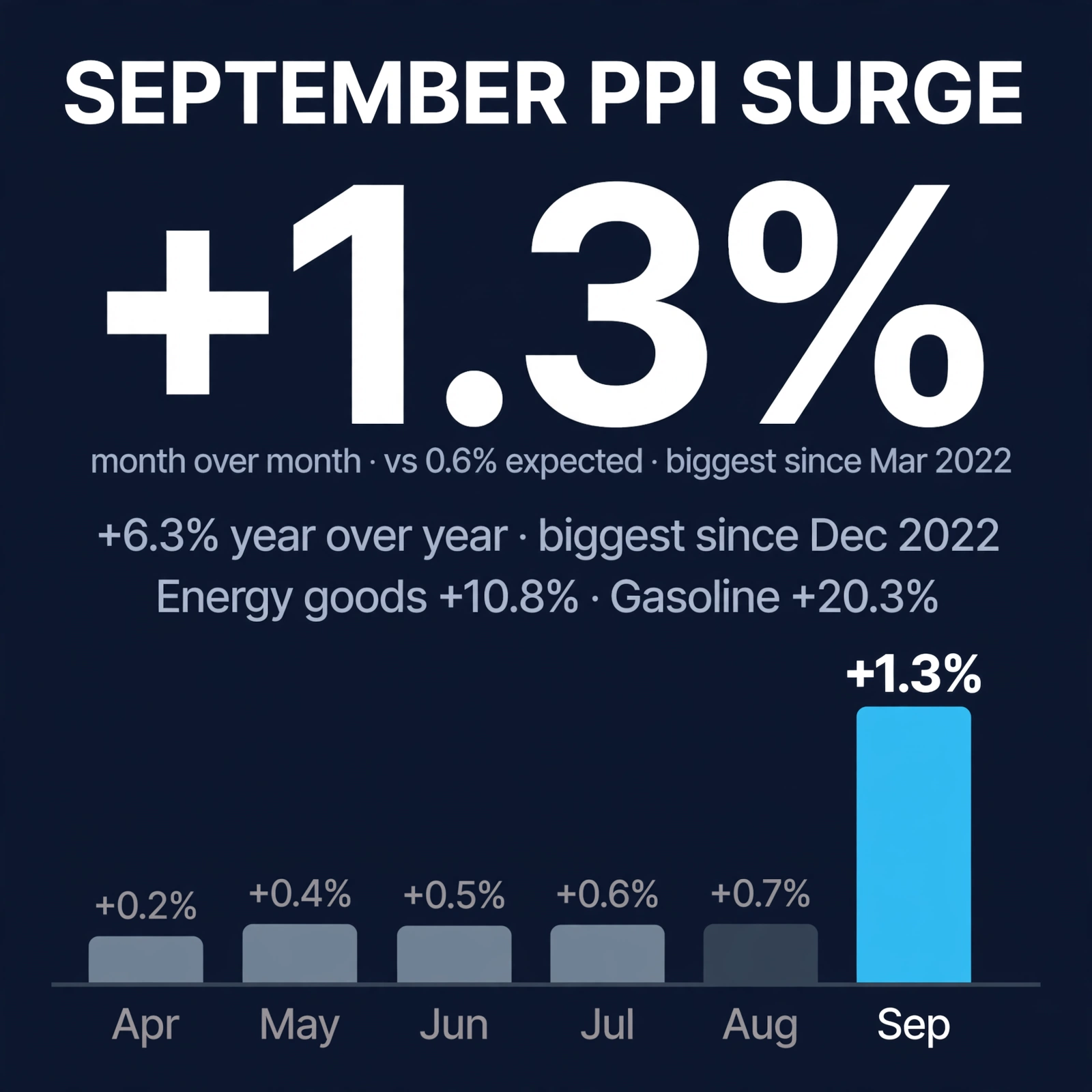
The September PPI numbers in one table:
| Measure | September | Context |
|---|---|---|
| Month over month | +1.3% | vs 0.6% expected; biggest since March 2022 |
| Year over year | +6.3% | biggest since December 2022 |
| Energy goods | +10.8% | gasoline +20.3% drove half of the goods increase |
| Core (ex food & energy) | +0.5% / +5.0% YoY | still hot even without energy |
The main culprit was energy. Tighter oil supply amid Middle East tensions lifted diesel, jet fuel, and crude prices together, and the Labor Department said nearly half of the rise in intermediate goods prices was tied to diesel. There are signs higher energy costs are spilling into other categories.
Don’t relax yet: three overhangs
1. Two straight hot inflation prints. Wednesday’s CPI (+3.7% YoY) followed by Thursday’s PPI both beat expectations. Back-to-back hot readings raise pressure on the Fed. The odds of a rate hike at the October 27–28 meeting have climbed from under 18% a week ago to 34% (CME FedWatch).
2. Retail sales were an illusion. September sales rose 0.8% month over month, beating forecasts — but excluding gas stations, the gain was just 0.2%. The control group (the core measure) rose only 0.1%, missing the 0.3% forecast. In other words, consumers didn’t spend more — gasoline just cost more.
3. Geopolitical risk. A cargo ship sank in the Strait of Hormuz after striking a mine, escalating Middle East tensions. That is the backdrop keeping oil elevated (WTI in the mid-$90s, Brent above $103).
The bottom line
Inflation ran hot two days in a row, yet the market bet that interest rates are close to their peak. The Dow’s one-month closing high alongside the Nasdaq’s barely-positive finish shows a market weighing AI growth stocks against steadier names. Expect more headline-driven swings until the Fed meeting, with every inflation and jobs number moving the needle.