 5-minute briefs
PPI vs CPI Explained: What September's 1.3% Wholesale Price Surge Signals
#PPI#CPI#wholesale prices#consumer prices#inflation
How PPI and CPI Differ
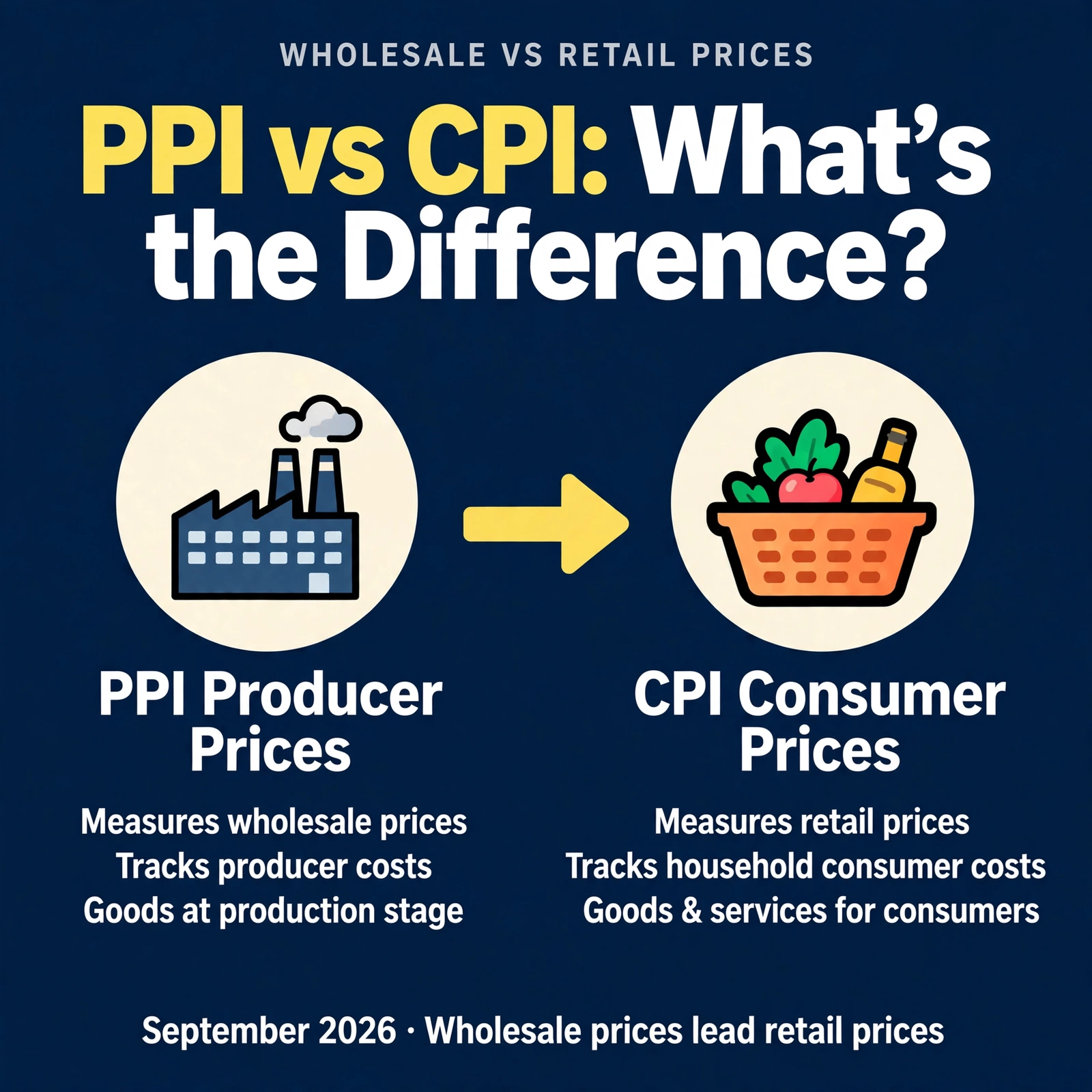
There are two main inflation gauges. PPI (Producer Price Index) tracks prices at the business-to-business stage, while CPI (Consumer Price Index) tracks what households actually pay. Along the chain from crude oil to refiner to gas station to driver, PPI watches the early stages and CPI watches the final one.
- PPI (Producer Price Index): price changes for goods and services businesses buy and sell. It tends to move 1–2 months ahead of CPI, so it works as a leading indicator.
- CPI (Consumer Price Index): price changes for goods and services households buy. The Fed's 2% inflation target is based on this index.
- Core: the index excluding volatile food and energy. It shows the underlying inflation trend.
How Hot Was September PPI?
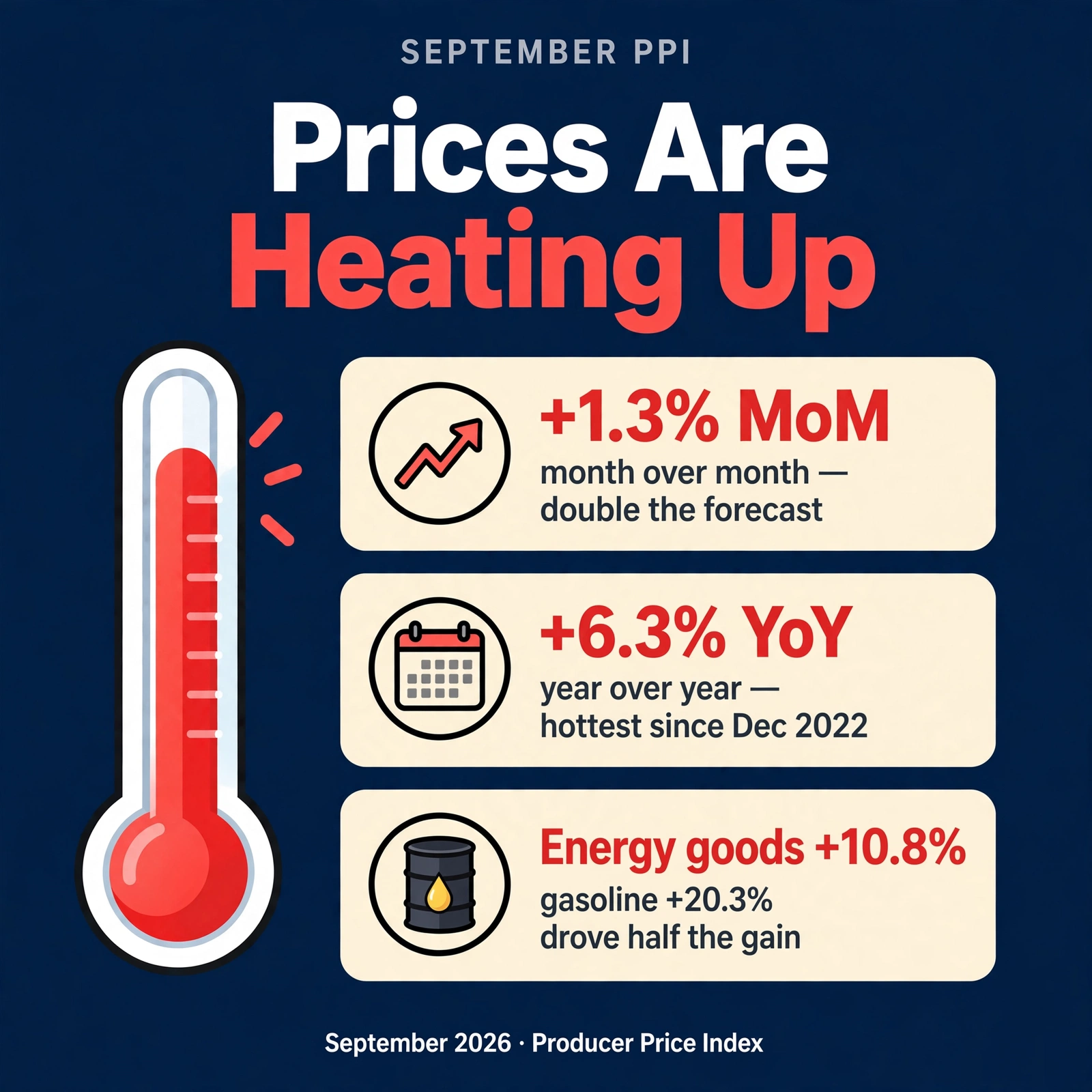
| Item | September | What it means |
|---|---|---|
| Month-over-month | +1.3% | Double the 0.6% forecast, biggest since March 2022 |
| Year-over-year | +6.3% | Biggest since December 2022 |
| Energy goods | +10.8% | Gasoline +20.3% drove half the gain |
| Core (ex-food/energy) | +0.5% MoM / +5.0% YoY | Still hot even without energy |
The culprit is energy. Rising Middle East tensions tightened crude supply, lifting diesel, jet fuel, and crude prices together. The Labor Department said nearly half of the intermediate-goods price gain was linked to diesel.
Why PPI Deserves the First Look
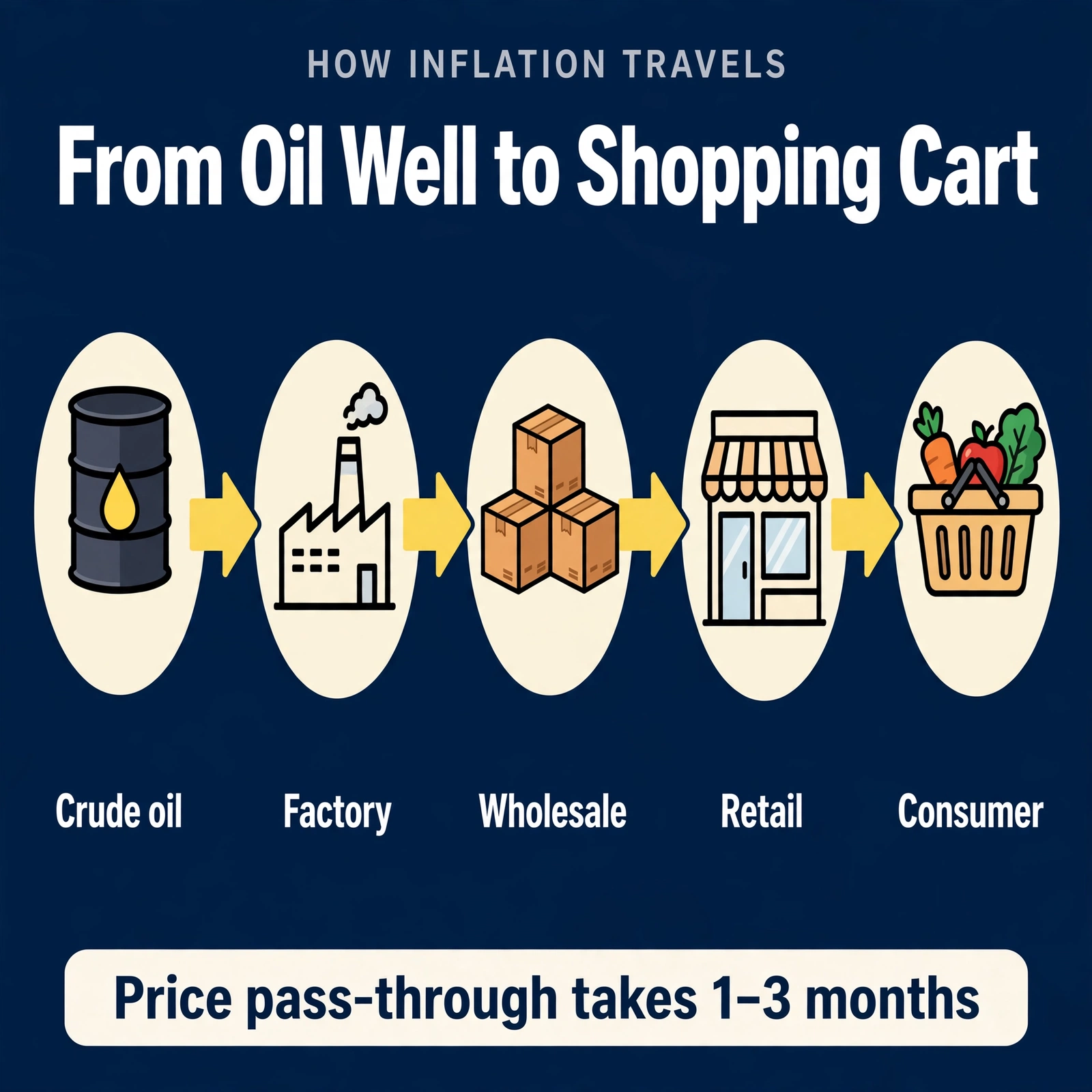
When input costs rise, companies raise selling prices to protect margins. With a time lag, PPI increases typically show up in CPI 1–3 months later. September’s PPI surge is a warning that holiday-season consumer prices could feel pressure.
That said, most of this spike came from energy — if oil prices stabilize, PPI can cool just as fast. An energy-driven PPI spike may prove temporary.
What It Means for Investors
Markets have already reacted. After two straight hot inflation prints (CPI 3.7%, then PPI 1.3%), odds of a Fed hike at the October 27–28 meeting rose to 34% (from under 18% a week earlier). If PPI stays hot, the Fed’s restrictive stance could last longer. The next checkpoint is October CPI — it will show whether wholesale heat reached consumers.