 5-minute briefs
Sector Rotation: Money Moved From Nasdaq Tech Into Dow Defensives
#sector rotation#Nasdaq#Dow Jones#defensive stocks#sectors
Two Indexes, Opposite Directions
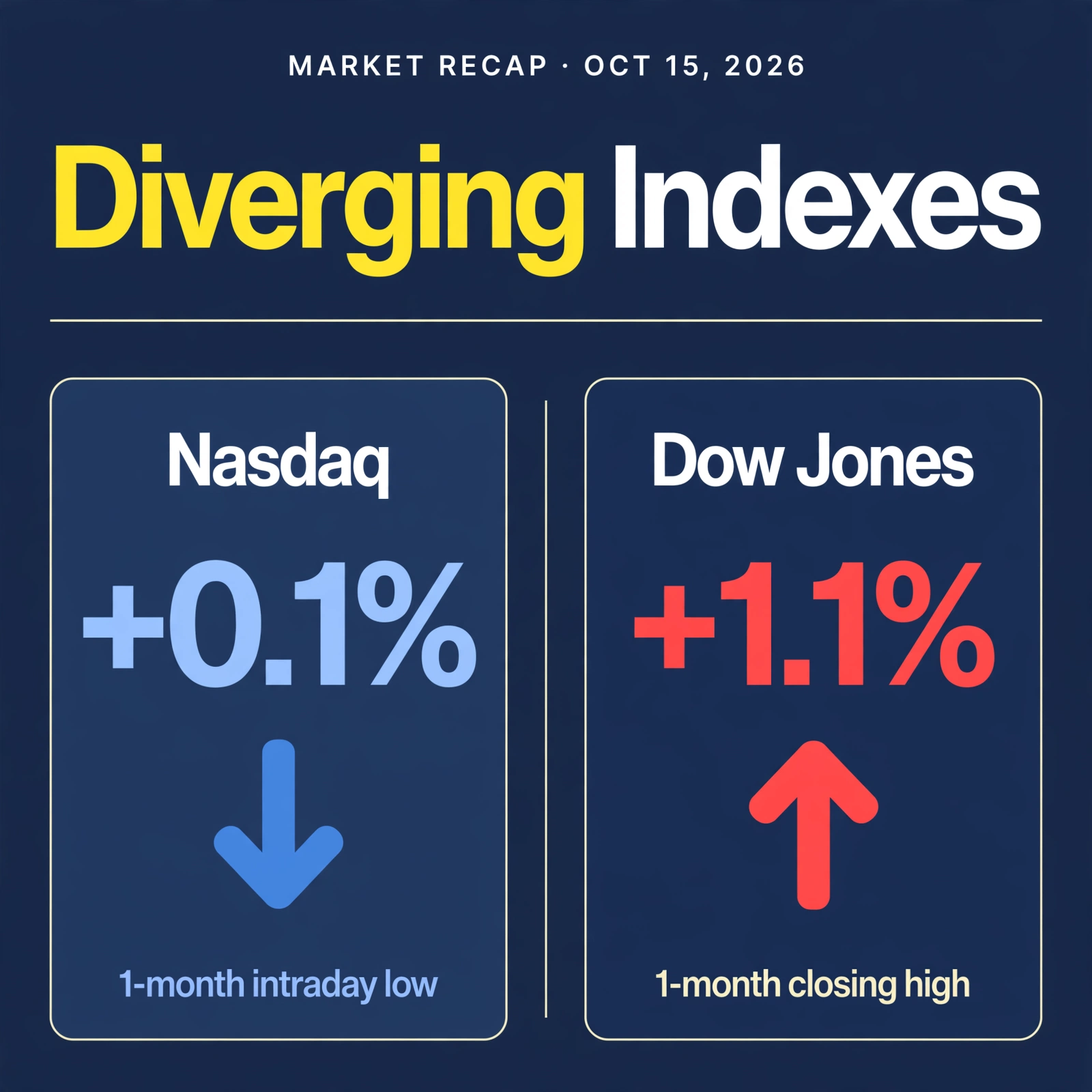
| Index | Close | Change | Intraday story |
|---|---|---|---|
| Dow Jones | 52,177.69 | +1.1% | One-month closing high |
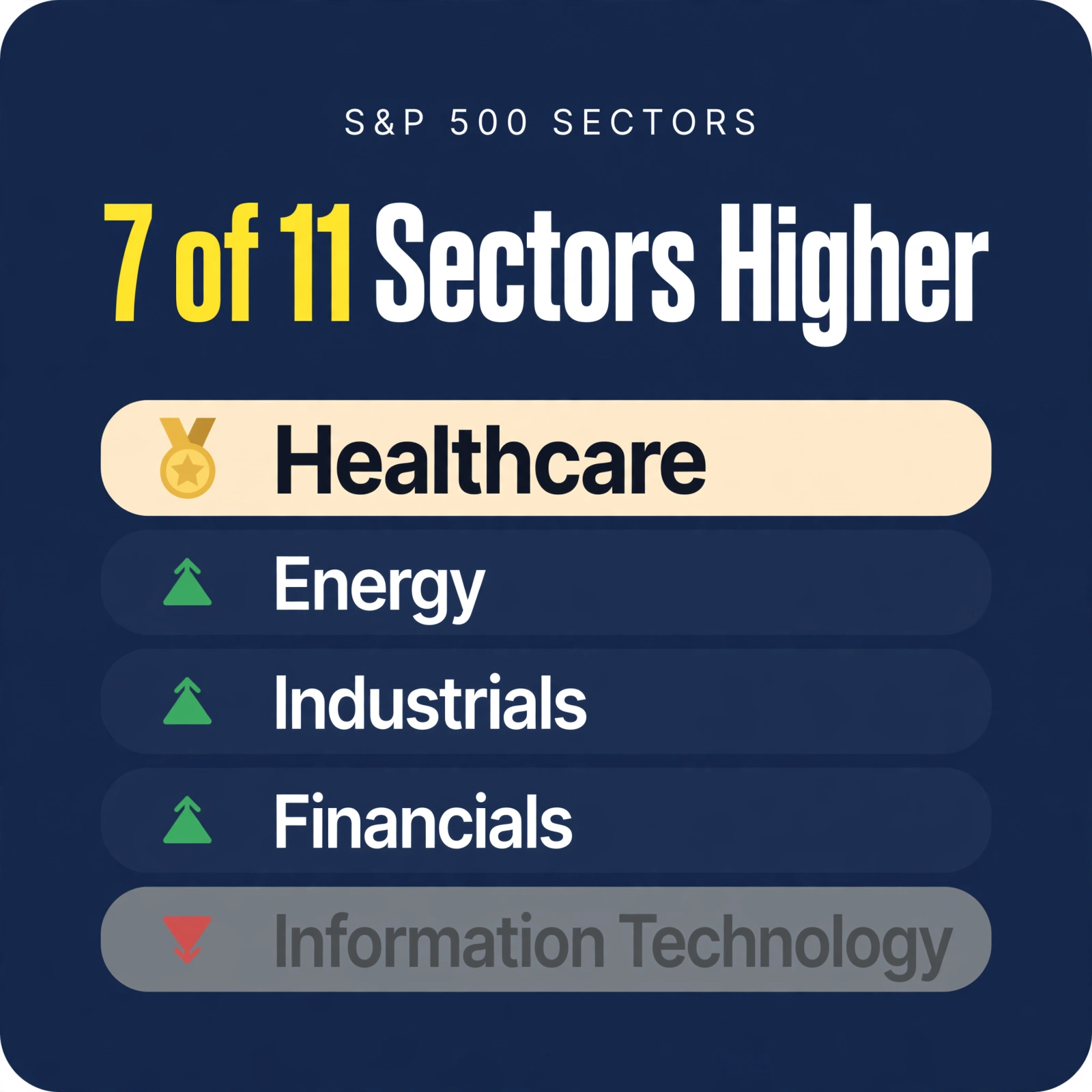
| S&P 500 | 7,744.06 | +0.3% | 7 of 11 sectors higher |
| Nasdaq Composite | 26,713.03 | +0.1% | One-month low, then dip-buying |
Same day, same market, different directions. The Dow was lifted by real-economy blue chips like Nike, Salesforce, and Home Depot. Tech sold off right after the hot PPI (+1.3%) print, then bargain hunters pulled the Nasdaq barely back into the green.
- Sector rotation: capital flowing out of one sector or stock group into another. It often appears at turning points in the economic cycle.
- Defensive stocks: industries with steady demand regardless of the economy (healthcare, staples, utilities). They become shelters when uncertainty rises.
- Index composition: the Dow holds 30 blue chips; the Nasdaq is tech-heavy. They diverge on the same day because they hold different stocks.
Where the Money Went
Of the S&P 500’s 11 sectors, 7 rose. The strongest was healthcare; the weakest was information technology. The pattern is clear:
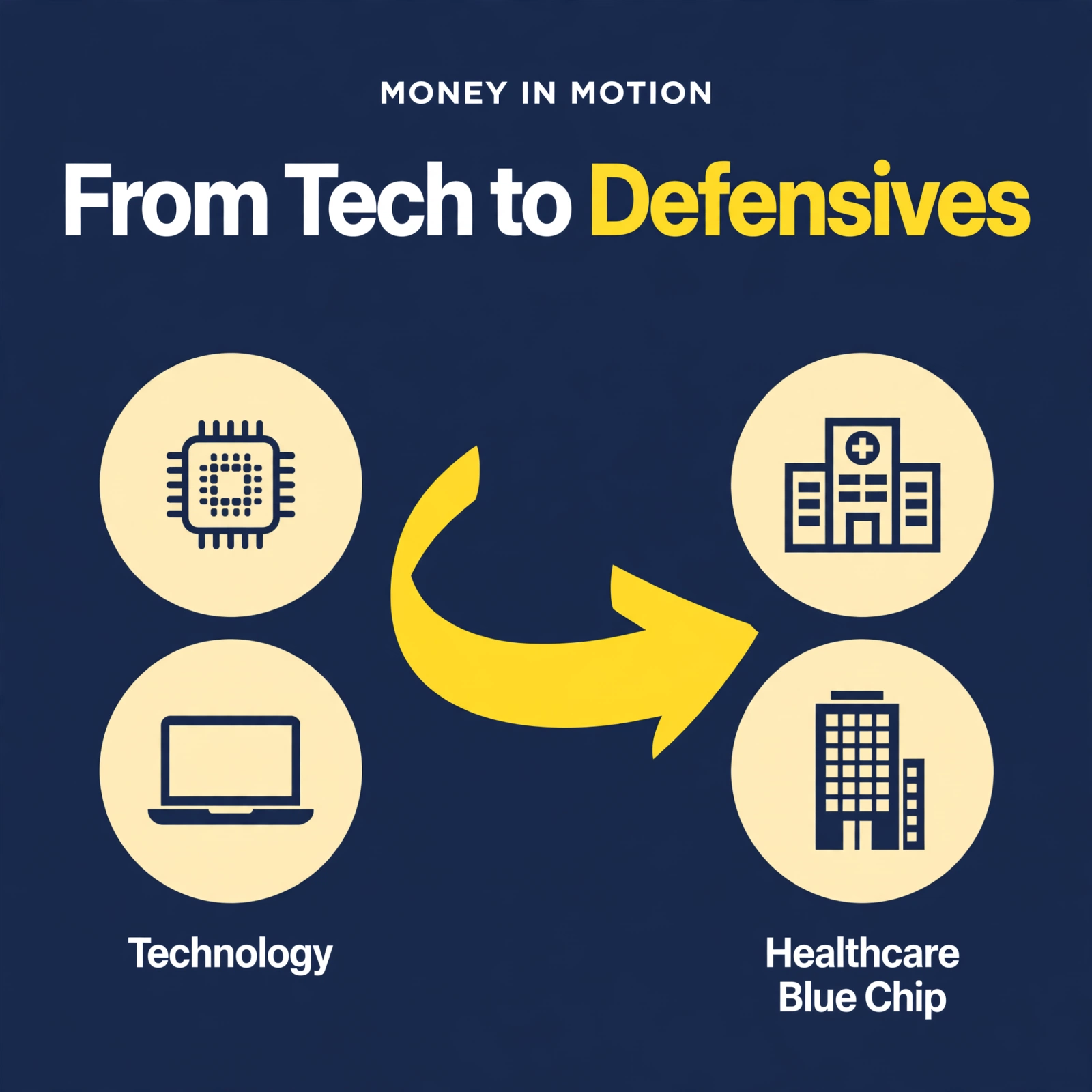
- Outflows: richly valued tech and AI growth names — most sensitive to rate uncertainty
- Inflows: healthcare, blue chips, real-economy large caps — backed by earnings stability
Behind it: falling Treasury yields (10-year at 5.09%, a 3-week low). Lower yields ease funding costs and make neglected value and dividend stocks relatively attractive.
What the Rotation Says About Sentiment
Rotation signals the market is shifting weight from “growth” to “stability.” With back-to-back hot inflation (CPI 3.7%, then PPI 1.3%) pushing October Fed-hike odds to 34%, investors are moving toward places with certain earnings.
Whether this is a trend change or a temporary bounce is still unclear — the Nasdaq’s repeated ~1% swings over two sessions show a market searching for direction. Two checkpoints: October CPI (does wholesale heat persist?) and big-tech earnings (is the AI growth story still intact?).