 5-minute briefs
Semiconductor Stocks Fall Six Days Straight: What's Behind the SOX Slump
#semiconductors#SOX#CXMT#memory chips
What happened
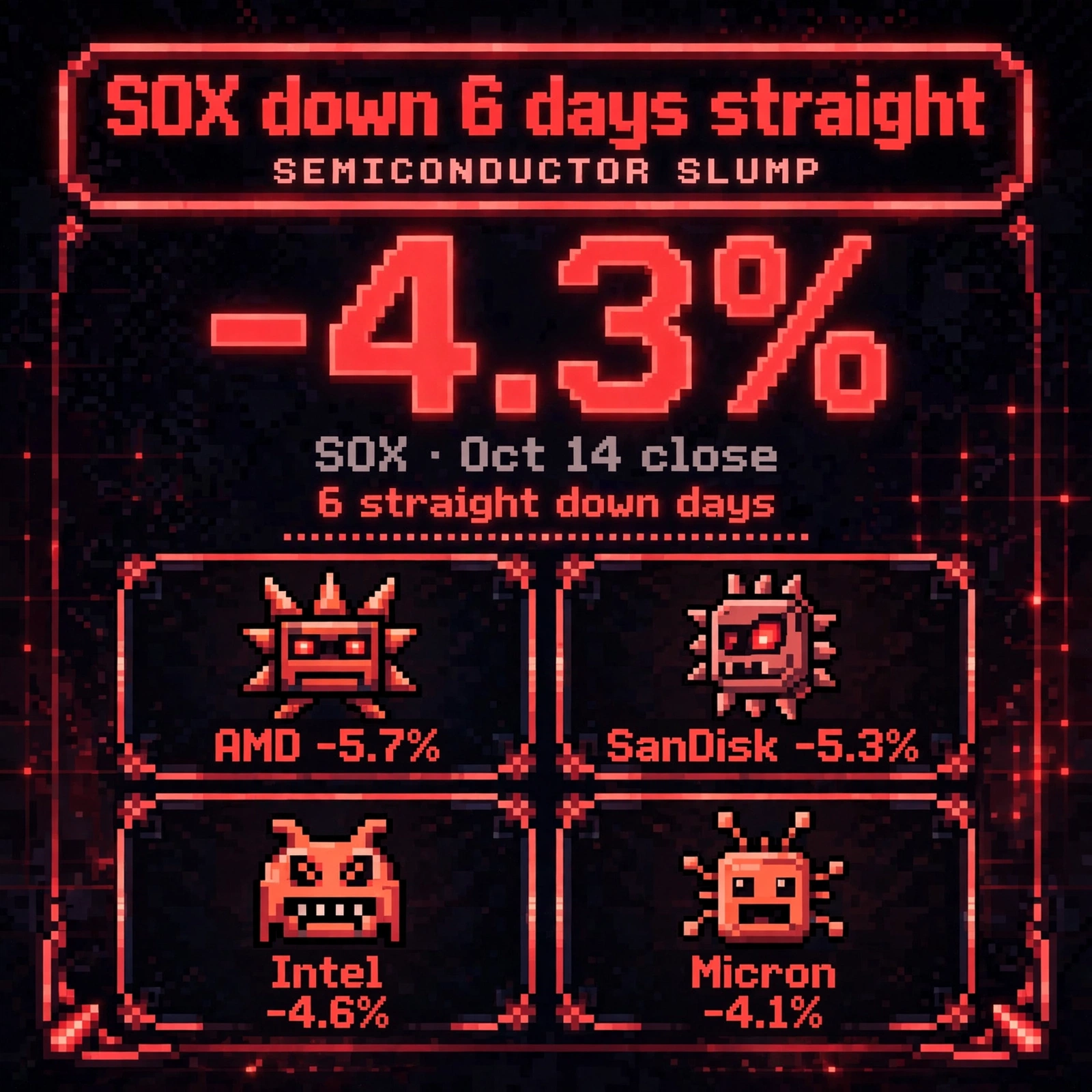
On October 14, the Philadelphia Semiconductor Index (SOX) — a basket of 30 chip stocks — plunged 4.3%, its sixth consecutive down day. The chip selloff has now lasted more than a week. The S&P 500 fell 1.1% and the Nasdaq 1.88% the same day, but semiconductors fell much harder than the broader market.
| Stock | Change |
|---|---|
| AMD | -5.7% |
| SanDisk | -5.3% |
| Intel | -4.6% |
| Micron | -4.1% |
Reason 1: China’s catch-up

The first blow came from China. Chinese memory maker CXMT announced on October 10 its next-generation DRAM plans built on 4F² architecture (DDR5 for servers), fueling fears that China is eating into the memory market.
Why did memory stocks wobble most? DRAM is a standardized commodity — whoever makes it, performance barely differs. So price competition hits earnings directly. If China floods the market with supply, DRAM prices fall and incumbents’ profits shrink. This is a market won on volume and price, not technology gaps — which is why China’s advance hurts so much.
Reason 2: rate-hike fears
The second blow was interest rates. September CPI came in at +3.7% year over year, above expectations, sending October hike odds above 50% intraday. Higher rates raise companies’ funding costs, and growth stocks and semiconductors get hit first since their value rests on future profits. Put simply, higher rates shrink the present value of earnings expected years from now — which is why they’re sold first.
Chinese supply fears and rate-hike fears landing on the same day dealt chip stocks a double blow. Either one alone might have been manageable — together, they weren’t.
- SOX (Philadelphia Semiconductor Index): a basket of 30 chip stocks — the sector's bellwether.
- DRAM: the memory chips in computers and phones. A commoditized product with fierce price competition.
- CXMT: China's DRAM manufacturer, at the front of Beijing's chip self-sufficiency drive.
What to watch

Three checkpoints will decide whether the weakness continues or reverses.
- China’s memory ramp-up — the key question is when CXMT’s next-gen DRAM reaches actual mass production. An announcement and volume shipments are different things.
- Next inflation and Fed events — CPI releases and the FOMC will clarify the rate path. If hike fears fade, chips can breathe again.
- Memory spot prices — the most direct signal is whether DRAM prices actually fall. Right now DRAM prices are running at record highs, but CXMT-led supply fears could break the run. If prices hold, stocks have room to hold too.
Not investment advice.