 5-minute briefs
Why Do Stocks Fall When Interest Rates Rise?
#interest rates#rate hike#growth stocks#Fed
How rate hikes reach stock prices
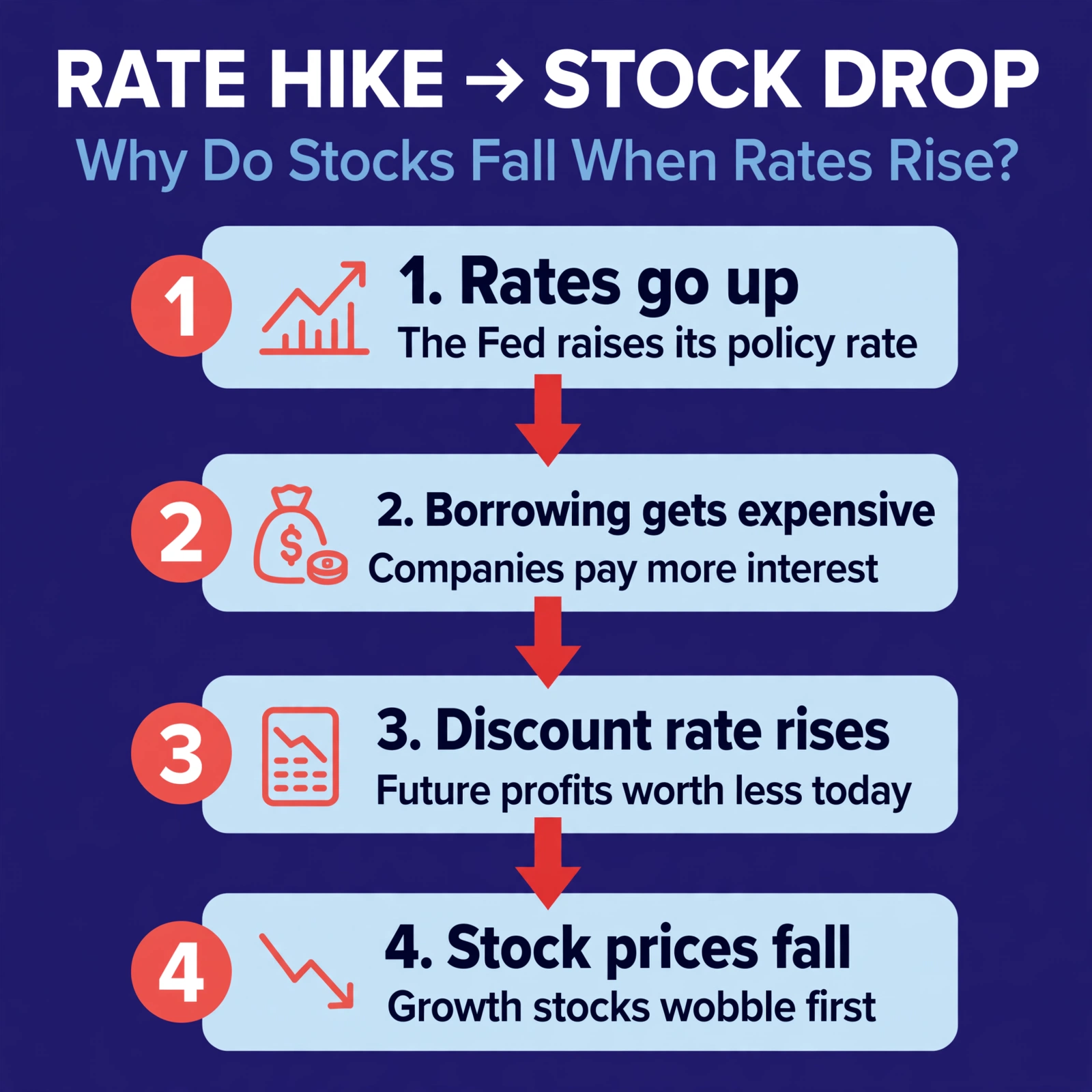
Higher interest rates mean, simply, that money itself gets more expensive. That reaches stock prices through two channels.
First, companies pay more to borrow. Businesses borrow to build factories and expand. When rates rise, interest expenses grow and leftover profits shrink, and stocks struggle when profits shrink.
Second, the present value of future earnings falls. A stock is worth the present value of the profits it will earn in the future, discounted at a discount rate. When rates rise, the discount rate rises with them. The same future profit is worth less today when the discount rate is higher. This is the most fundamental reason stocks fall when rates rise.
Why growth stocks get hit first
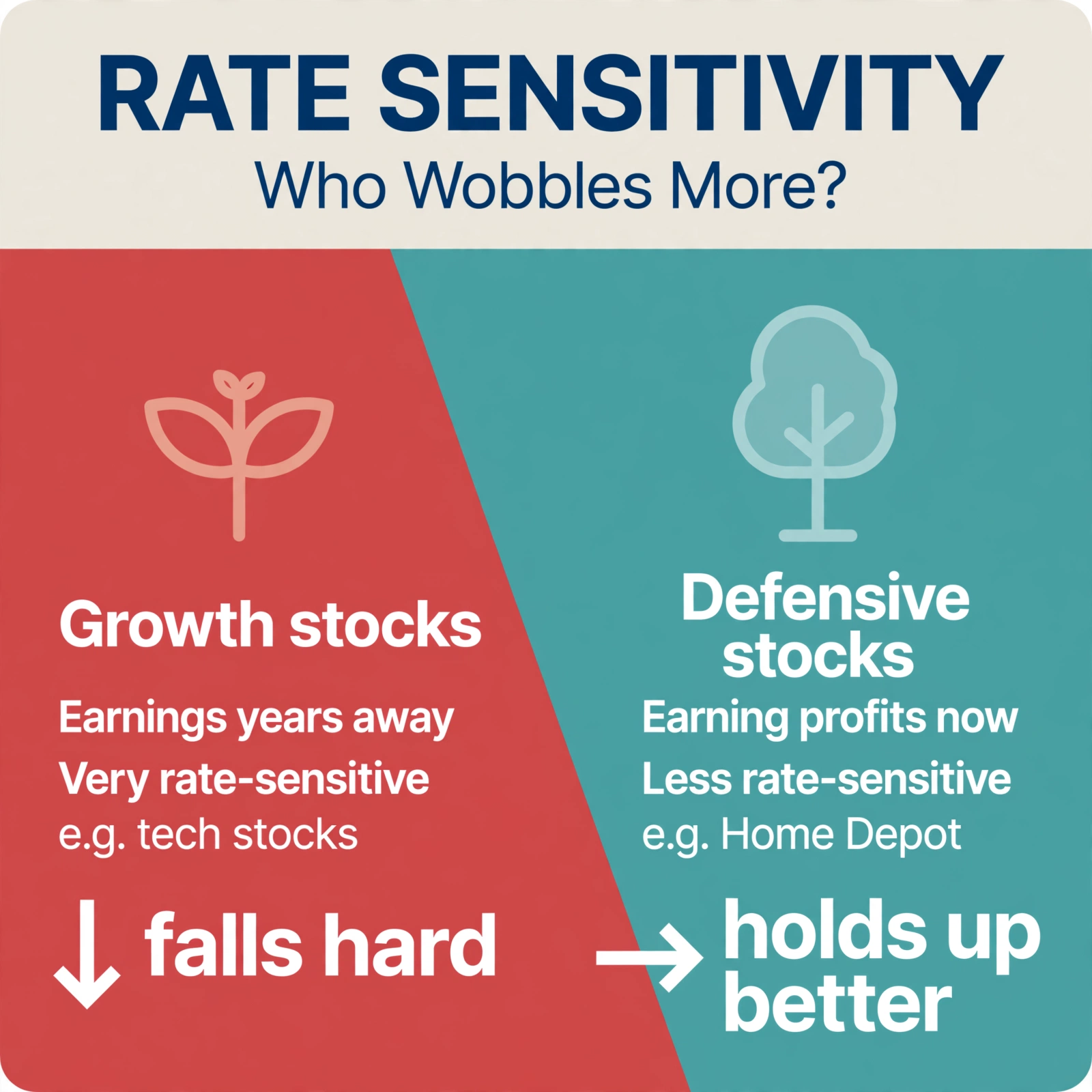
Growth stocks earn most of their profits far in the future. They may be unprofitable today, but their prices reflect expectations of big earnings years from now. The problem: distant future profits are highly sensitive to the discount rate. Even a small rise in the discount rate slashes their present value.
Value and defensive stocks, by contrast, often earn profits right now — consumer staples, pharmaceuticals, and household goods that sell regardless of the economy. Near-term profits wobble less when the discount rate moves. That is why names like Home Depot, Chevron, and McDonald’s tend to hold up relatively well.
- Policy rate: the short-term rate set by the Fed. The starting point for all interest rates.
- 10-year Treasury yield: the interest rate on 10-year U.S. government borrowing. The market's benchmark for long-term rate expectations.
- CME FedWatch: rate-decision odds implied by futures markets — "what traders think the Fed will do," as a percentage.
A real example: October 14, 2026
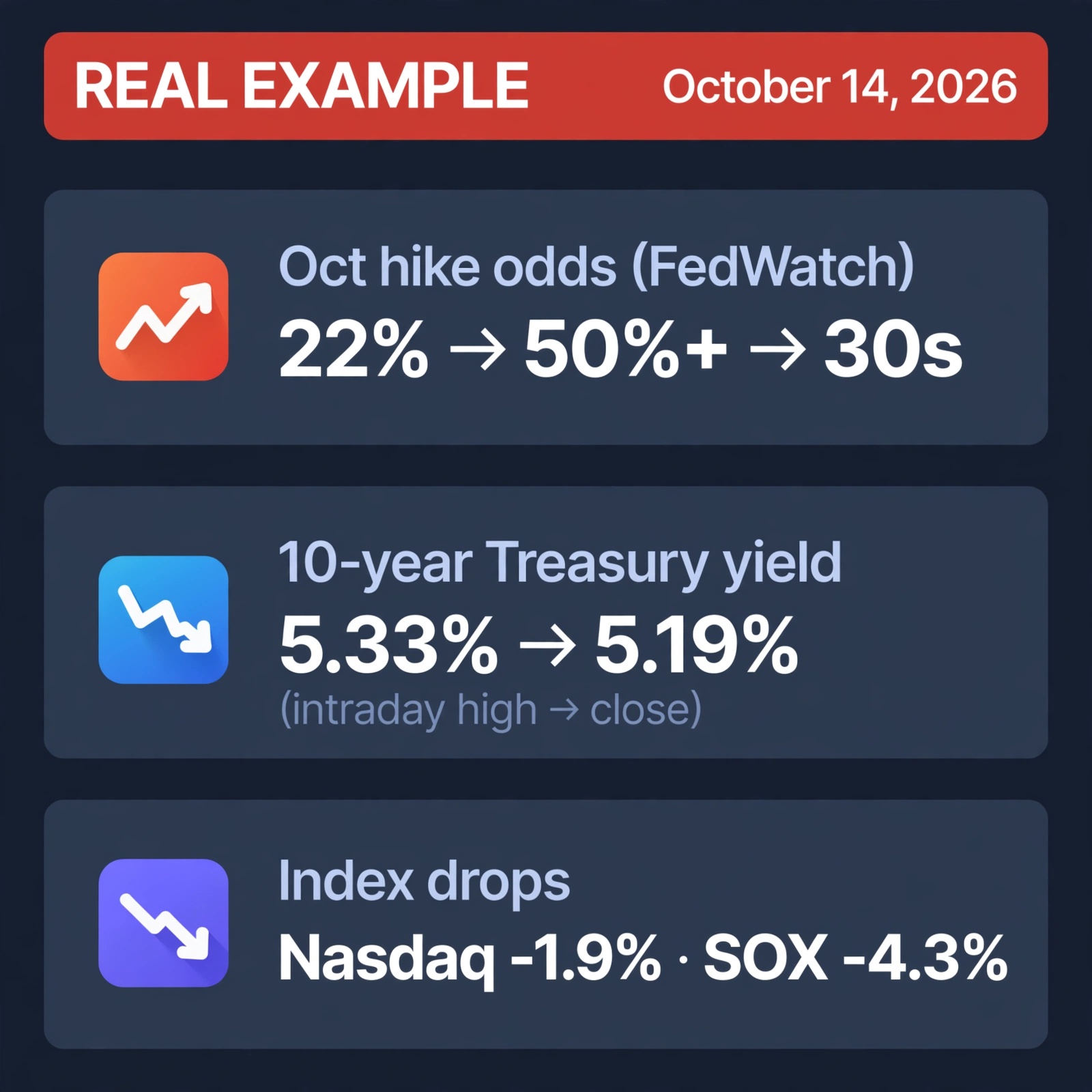
October 14, 2026 was a textbook case of this mechanism. After September CPI came in hotter than expected, markets immediately repriced the odds of a rate hike.
October hike odds (FedWatch) jumped from about 22% the day before to above 50% intraday, before settling in the 30s. The 10-year Treasury yield climbed as high as 5.33% intraday before closing at 5.19%.
The result was exactly what the mechanism predicts. The Nasdaq fell 1.9% and the SOX dropped 4.3%, while the Dow slipped just -0.1%. Growth stocks fell first; defensive stocks held their ground.
What investors should watch
- The FOMC calendar — know when the Fed meets to decide rates. Volatility tends to spike around meetings.
- The 10-year yield trend — it reflects the market’s rate outlook. When it climbs steeply, it is worth reviewing growth-stock exposure.
- Reading FedWatch odds — “50% hike odds” means the market is split down the middle. Watching how this number moves before announcements reveals market expectations.
Not investment advice.